
You don’t have to be a golfer to feel the grip-weakening pain of golfer’s elbow. Whether you’re lifting groceries, shaking hands, or trying to open a jar, that burning ache along the inner side of your elbow can stop you in your tracks. Medial epicondylitis — the clinical name for golfer’s elbow — affects the tendons that connect your forearm muscles to the bony bump on the inside of your elbow. And when those tendons become inflamed or develop micro-tears, even simple daily tasks become a frustrating reminder that something isn’t right.
At Trinity Rehab, we understand how golfer’s elbow disrupts your routine. Our clinicians specialize in evidence-based treatment for medial epicondylitis, helping patients move past the pain and regain the hand and arm strength they depend on every day.
Golfers Elbow Treatment: Why It Matters for Relief for Golfers
Golfer’s elbow (also called medial epicondylitis) isn’t just an inconvenience — left untreated, it can become a chronic condition that progressively limits your ability to grip, lift, and perform everyday movements. The tendons along the medial epicondyle bear constant stress during any activity that involves gripping, twisting, or flexing the wrist. Over time, repetitive strain creates small tears in the tendon fibers that the body struggles to repair on its own, especially if the same movements continue.
Without proper treatment, the inflammation and microdamage can lead to lasting tendon degeneration — a condition known as tendinosis — which is significantly harder to resolve than an acute flare-up. Patients who delay care often find that their grip strength continues to weaken, their pain spreads into the forearm, and activities they once took for granted become sources of daily discomfort.
Research from the National Institutes of Health confirms that early intervention with targeted rehabilitation produces better long-term outcomes for medial epicondylitis than rest alone. Targeted treatment addresses the root cause — not just the symptoms — by rebuilding the tendon’s ability to handle load, restoring pain-free movement, and correcting the biomechanical patterns that triggered the problem in the first place.
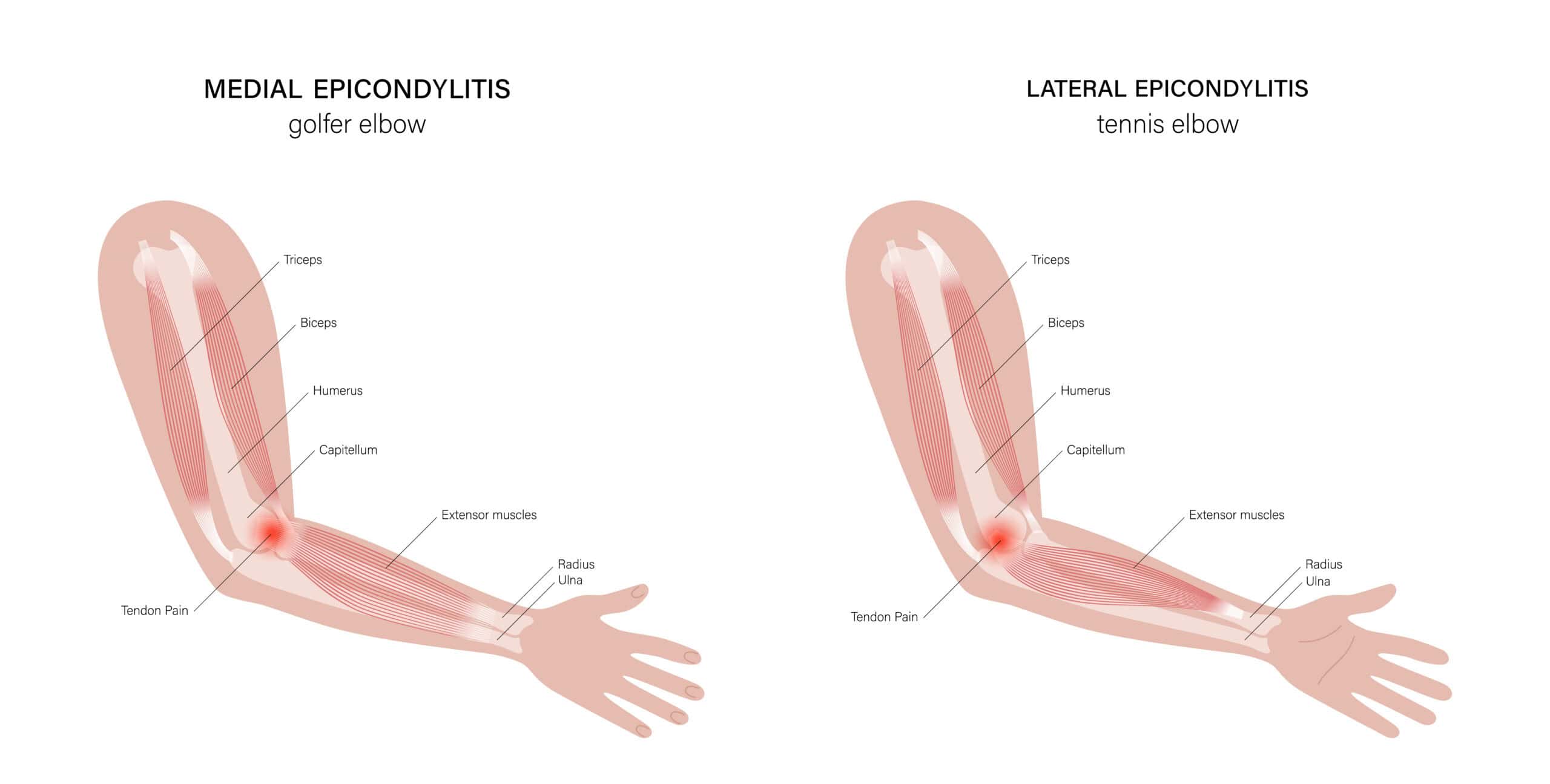
The flexor-pronator mass — which includes the pronator teres, flexor carpi radialis, palmaris longus, and flexor digitorum superficialis — originates at the medial epicondyle of the humerus. When these muscles are subjected to repetitive stress, the common flexor tendon origin becomes the weak link where overuse injuries develop.
Understanding the anatomy of medial epicondylitis helps clarify why targeted rehabilitation is essential: each of these muscles plays a role in gripping, wrist flexion, and forearm rotation — all movements that the treatment plan must address to prevent recurrence.
Importance of Early Intervention
Recognizing the early signs of golfer’s elbow and seeking prompt medical attention is crucial for preventing the condition from worsening. When medial epicondylitis is caught early, treatment can effectively reduce inflammation, relieve pain, and restore normal function before permanent changes occur in the tendon. Delaying care allows microtears to accumulate, which can lead to tendon degeneration (tendinosis) and the formation of scar tissue, which complicates healing and may result in long-term loss of function.
Consulting a rehabilitation specialist or orthopaedic surgeon early allows for a thorough assessment and the development of a targeted treatment plan. This plan may include rehabilitation to restore mobility and strength, activity modifications to reduce strain on the elbow, and, in some cases, corticosteroid injections to manage acute inflammation. By intervening promptly, patients can promote healing, minimize the risk of permanent tendon damage, and maintain their ability to perform daily activities without discomfort.
Taking action at the first sign of elbow pain ensures that the underlying causes are addressed before they escalate. Early treatment not only accelerates recovery but also helps prevent the cycle of reinjury and chronic pain that can develop when medial epicondylitis is ignored. If you notice persistent discomfort in your elbow, don’t wait — early intervention is the key to long-term relief and a full return to the activities you enjoy.
Common Causes of Golfer’s Elbow
Golfer’s elbow develops when the flexor tendons of the forearm are repeatedly overloaded beyond their capacity to recover. The flexor-pronator muscle group — which includes the pronator teres, flexor carpi radialis, palmaris longus, and flexor digitorum superficialis — originates at the medial epicondyle of the humerus. When any of these muscles are subjected to repetitive stress, the common tendon origin becomes the weak point where microtears accumulate.
While the name suggests golf is the primary culprit, the condition is far more common in people who’ve never picked up a club. Studies indicate that medial epicondylitis accounts for roughly 10-20% of all epicondylitis diagnoses, and it affects men and women between ages 40 and 60 most frequently. The real trigger is any activity that demands repeated gripping, wrist flexion, or forearm pronation.
Common causes include:
- Repetitive gripping at work — assembly line tasks, using hand tools, plumbing, carpentry, and typing with poor wrist posture
- Racket sports — tennis, pickleball, and badminton, particularly with improper technique or an oversized grip
- Weight training — exercises like bicep curls, pull-ups, and rows that load the wrist flexors heavily, especially with poor form
- Golf swing mechanics — gripping the club too tightly, an aggressive downswing, or hitting off thick rough repeatedly. Using improperly fitted golf equipment or a club with an incorrect grip size increases the risk of developing medial epicondylitis.
- Throwing and overhead movements — baseball pitching, javelin throwing, and overhead serving in volleyball
- Occupational overuse — frequent computer mouse use, painting, cooking, and gardening with sustained gripping
- Age-related tendon changes — the blood supply to tendons naturally decreases after age 40, making them more vulnerable to overuse injuries
For golfers specifically, maintaining proper swing mechanics and using clubs that are professionally fitted are important preventive measures. Always warm up with dynamic stretches and drills before hitting the course, ensure your clubs are professionally fitted, and gradually increase your swing volume at the start of each golf season. This helps prevent excessive strain and overuse injuries.
Symptoms Patients Often Notice
Golfer’s elbow doesn’t always announce itself dramatically. Many patients describe a gradual onset of symptoms of golfer’s elbow that builds over weeks or months before it becomes impossible to ignore. The most common symptom of golfer’s elbow is inner elbow pain, often accompanied by stiffness and weakness.
Watch for these common signs — the symptoms of golfer’s elbow:
- Inner elbow pain — the hallmark symptom, often described as a sharp or burning sensation at the bony prominence (medial epicondyle)
- Pain on the inner side of the elbow — also referred to as medial elbow pain, frequently localized and activity-related
- Pain that worsens with gripping — squeezing objects, shaking hands, turning doorknobs, or carrying bags intensifies the discomfort
- Weakness in the hand and wrist — difficulty opening jars, holding a coffee mug, or maintaining a firm grip
- Stiffness in the elbow — particularly noticeable in the morning or after periods of rest, making it difficult to fully straighten the arm
- Pain radiating into the forearm — the ache can extend from the elbow down toward the wrist along the inner forearm
- Numbness or tingling in the ring and little fingers — in some cases, the nearby ulnar nerve becomes irritated, adding neurological symptoms
- Pain during wrist flexion — bending the wrist toward the palm against resistance reproduces the symptoms
If these symptoms sound familiar, it’s important to seek treatment early — before the tendon damage progresses from inflammation to degeneration.
Golfer’s elbow is often confused with tennis elbow, but the key distinction is location: golfer’s elbow produces pain on the medial (inner) side of the elbow, while tennis elbow causes pain on the lateral (outer) side. Some patients experience both conditions simultaneously, particularly those whose work or sport demands both gripping and wrist extension. A thorough clinical evaluation can differentiate between the two and identify whether other structures — like the ulnar nerve or the ulnar collateral ligament — are also involved.
Diagnosis and Medical Attention
Diagnosing golfer’s elbow typically begins with a thorough physical examination and a review of your medical history. During the examination, your doctor or clinician will assess the tenderness and pain in the medial epicondyle area, test your grip strength, and evaluate your range of motion. They may ask you to perform specific movements — such as resisted wrist flexion or forearm pronation — to reproduce your symptoms and pinpoint the source of the problem.
In most cases, imaging is not required to confirm the diagnosis. However, if symptoms persist or are atypical, your provider may order an X-ray to rule out other conditions, such as arthritis or fractures. An MRI or ultrasound may be used to assess the extent of tendon damage or to check for associated injuries, such as ulnar collateral ligament involvement or ulnar neuropathy.
Receiving an accurate diagnosis is essential for developing an effective treatment plan. Misidentifying the source of your elbow pain — for example, confusing golfer’s elbow with cubital tunnel syndrome or a cervical radiculopathy — can lead to inappropriate treatment and delayed recovery. A comprehensive evaluation by a qualified clinician or orthopaedic specialist protects your long-term elbow function, allowing you to return to your favorite activities with confidence.
How Targeted Rehabilitation Restores Function
At Trinity Rehab, golfer’s elbow treatment follows a structured, progressive approach designed to eliminate pain, rebuild tendon integrity, and prevent recurrence. Our clinicians create individualized treatment plans based on the severity of your condition, your daily demands, and your recovery goals. as part of a multidisciplinary approach, occupational rehabilitation may also be included to guide task-specific retraining and help you safely return to work or sports.
A personalized treatment program can take weeks to months to show improvement in golfer’s elbow symptoms, and recovery typically takes 3 to 6 months with conservative treatment.
Phase 1: Pain Reduction and Tissue Healing
The first priority is calming the acute inflammation and creating an environment where damaged tendon tissue can begin to heal. Your therapist will use a combination of targeted techniques:
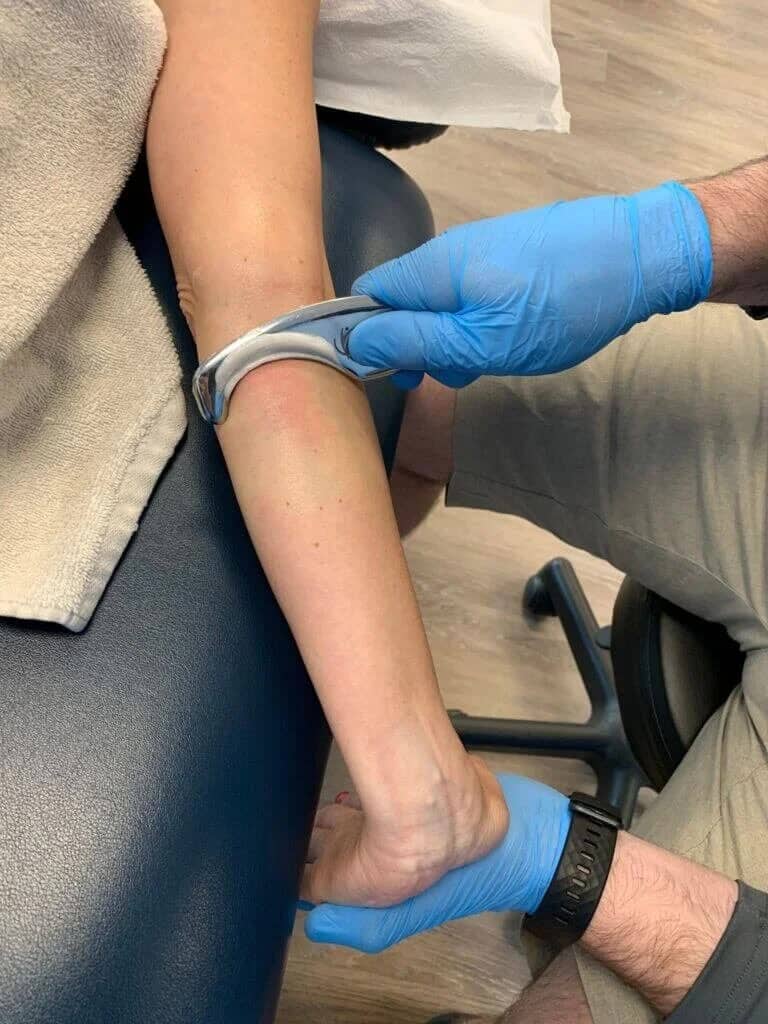
- Manual therapy — hands-on soft tissue mobilization and myofascial release to reduce muscle tension in the forearm flexors and improve blood flow to the injured tendon
- Dry needling — trigger point dry needling targets tight, knotted muscle fibers in the forearm that contribute to tendon overload, producing a rapid reduction in localized pain
- Therapeutic modalities — ultrasound, electrical stimulation, and ice therapy to manage inflammation and promote early-stage tissue repair
- Activity modification guidance — your therapist will help you identify which daily habits and movement patterns are aggravating the tendon, and suggest modifications that let healing occur without stopping your life
Rest and ice application during the initial acute phase can help reduce swelling and provide temporary relief. Your physical therapist may also recommend a counterforce brace or forearm strap to redistribute load away from the irritated tendon during daily activities.
Phase 2: Progressive Strengthening and Tendon Loading
Once the acute pain subsides, treatment shifts to the most critical phase for long-term recovery: progressively loading the tendon to stimulate repair and remodeling.
- Eccentric exercise programs — the gold standard for tendinopathy treatment. Eccentric wrist flexion exercises involve slowly lowering a weight with the wrist, which stimulates collagen production and tendon reorganization at the cellular level
- Isometric holds — sustained contractions at specific joint angles that build tendon tolerance to load while providing significant analgesic effects
- Grip strengthening — progressive resistance exercises using putty, hand grippers, and resistance bands to restore functional grip strength
- Forearm and wrist mobility work — stretches and range-of-motion exercises that maintain flexibility while the tendon heals

Phase 3: Return to Full Activity
The final phase focuses on safely returning you to the activities you love — whether that’s golf, weight training, your job, or simply carrying groceries without wincing.
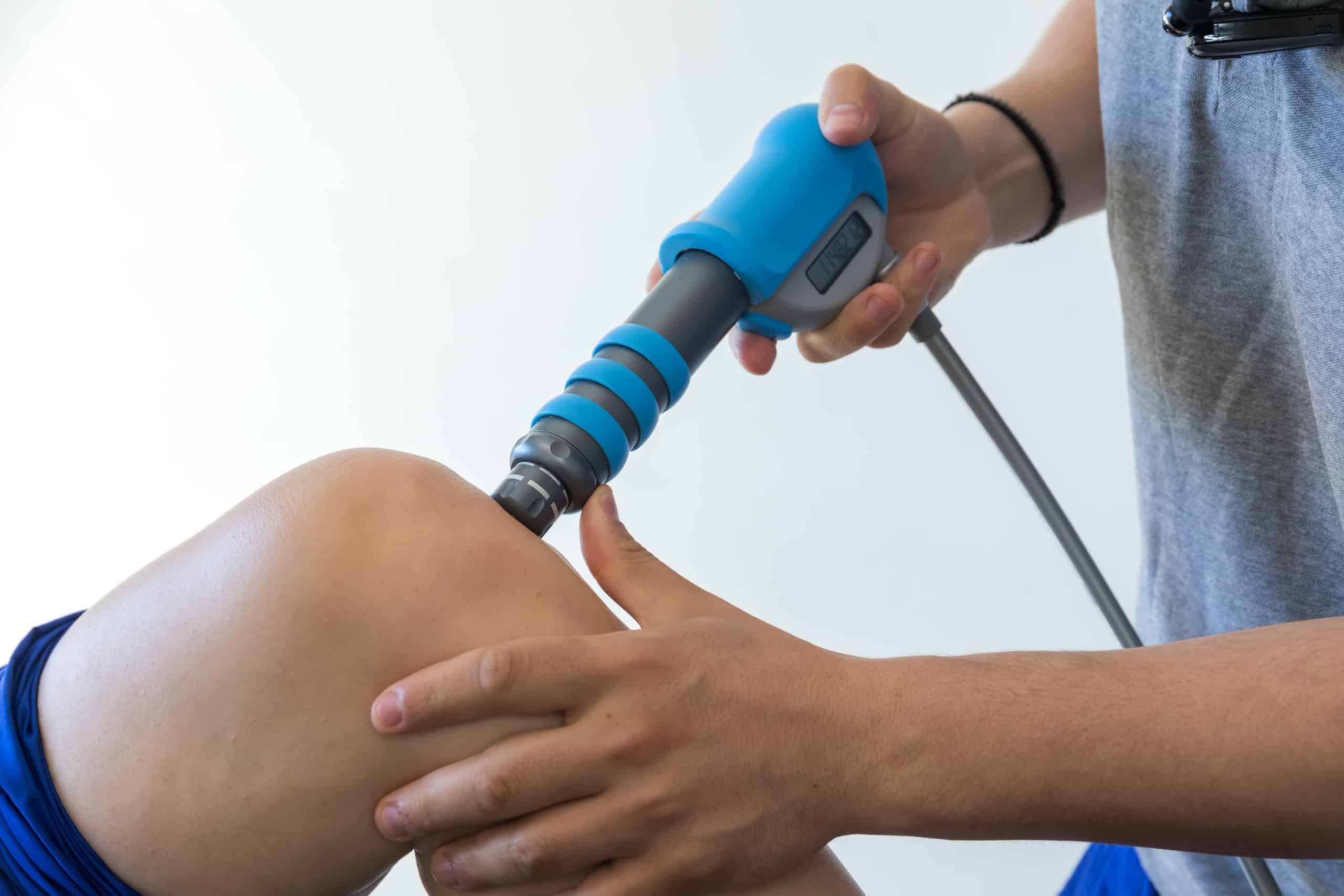
- EPAT / Shockwave therapy — extracorporeal pulse activation technology delivers acoustic pressure waves that accelerate tissue healing, particularly effective for stubborn tendinopathy that has transitioned to tendinosis
- Sport-specific and task-specific training — your therapist simulates the demands of your work, sport, or hobby to ensure the tendon can handle real-world loads before you return. If your occupational demands involve high repetition or heavy lifting, your treatment plan may include work modifications and potentially prolonged rehabilitation to support a safe and sustainable return to work.
- Biomechanical correction — analysis and correction of the movement patterns (grip technique, swing mechanics, lifting form) that led to the injury in the first place. For golfers, this may include video analysis of the swing to identify excessive wrist flexion at impact or an overactive trail arm. For office workers, it may involve evaluating mouse grip, keyboard position, and forearm support.
- Graduated return-to-activity plan — a structured timeline that progressively increases the intensity and duration of your activities while monitoring for symptom recurrence. Your therapist tracks your progress using validated outcome measures like the DASH (Disabilities of the Arm, Shoulder, and Hand) questionnaire and grip dynamometry to ensure objective improvement before advancing you to the next stage.
Golf-Specific Performance and Technique
For golfers dealing with medial epicondylitis, addressing the mechanics of your golf swing is a critical part of both treatment and prevention. The repetitive nature of the golf swing, combined with the high forces generated during the downswing and impact, places significant stress on the flexor-pronator mass and the medial epicondyle.
Common swing faults that contribute to golfer’s elbow include gripping the club too tightly, leading with the wrists during the downswing, and making contact with the ground before the ball (hitting “fat” shots). These errors increase the eccentric load on the forearm flexors and can accelerate tendon breakdown over time.
Your physical therapist at Trinity Rehab can guide you through golf-specific rehabilitation, including grip pressure drills, swing tempo training, and progressive return-to-play protocols. Proper warm-up routines — including dynamic wrist, forearm, and shoulder stretches — should become a standard part of your pre-round preparation. Additionally, ensuring your clubs are properly fitted (correct grip size, shaft flex, and club length) can significantly reduce the mechanical stress on your elbow during play.
Prognosis and Complications
The outlook for golfer’s elbow is generally favorable, especially when treatment begins early and is followed consistently. The majority of patients — over 90% — recover fully with conservative treatment, including physical therapy, activity modification, and progressive tendon loading exercises. Most patients experience significant pain relief within 4 to 6 weeks of starting treatment, with full functional recovery typically achieved within 3 to 6 months.
However, when golfer’s elbow is left untreated or managed only with rest and anti-inflammatory medications, complications can develop. Chronic tendinosis — the degeneration of tendon tissue — may result in persistent pain and weakness that becomes increasingly difficult to treat. In rare cases, the ulnar nerve can become chronically irritated, leading to cubital tunnel syndrome with numbness and tingling in the ring and little fingers.
Patients who continue to perform aggravating activities without modification are at the highest risk for complications. Repeated corticosteroid injections, while providing short-term relief, have been shown in research to weaken tendon tissue and increase the risk of rupture over time. This is why Trinity Rehab emphasizes active rehabilitation — building tendon strength and resilience — rather than relying on passive interventions that mask pain without addressing the underlying cause.

How to Prevent Golfer’s Elbow from Returning
Recovery from golfer’s elbow doesn’t end when the pain stops. The tendon has been weakened by injury, and without ongoing care, recurrence rates are high. Trinity Rehab patients receive a comprehensive prevention plan that includes strategies to avoid overuse injury recurrence, which is essential for long-term recovery.
- Maintenance exercise program — a daily routine of eccentric exercises, forearm stretches, and grip strengthening that takes 10 minutes and keeps the tendon resilient
- Ergonomic assessment — workstation modifications, tool selection, and posture corrections that reduce the repetitive strain on your forearm tendons
- Proper warm-up protocols — dynamic forearm and wrist warm-ups before sports, weight training, or manual labor
- Equipment optimization — guidance on proper golf club fit and grip size, as well as grip size for rackets, glove use for manual labor, and ergonomic tools for work tasks
- Load management — understanding how to monitor training volume and work intensity to stay within your tendon’s capacity
- Counterforce bracing — when appropriate, your therapist may recommend a golfer’s elbow strap or counterforce brace to distribute stress away from the damaged tendon origin during high-demand activities. Bracing works best as a supplement to strengthening, not a replacement for it.
- Nutrition and recovery awareness — adequate protein intake, hydration, and sleep quality all play a role in tendon healing and resilience. Your therapist can provide guidance on supporting your recovery from the inside out.
Postoperative Care
In the rare cases where golfer’s elbow requires surgical intervention — typically after 6 to 12 months of conservative treatment has not provided sufficient relief — a structured postoperative rehabilitation program is essential for a successful outcome. Surgery for medial epicondylitis usually involves debridement (removal of damaged tendon tissue) or, less commonly, tendon repair or reattachment.
Following surgery, your rehabilitation specialist at Trinity Rehab will guide you through a phased recovery protocol. The initial phase focuses on protecting the surgical repair, managing pain and swelling, and maintaining range of motion in the surrounding joints. As healing progresses, gentle range-of-motion exercises for the wrist and elbow are introduced, followed by progressive strengthening of the forearm flexors using isometric and then eccentric loading protocols.
Full return to sport or heavy manual work after golfer’s elbow surgery typically takes 4 to 6 months, depending on the extent of the procedure and the patient’s adherence to the rehabilitation program. Your therapist will monitor your progress with objective measures — including grip strength testing and functional assessments — to ensure you are ready to safely resume all activities before being discharged from care.
Why Patients Choose Trinity Rehab for Golfer’s Elbow Treatment
Trinity Rehab delivers a treatment experience built around results, access, and personalized care. Here’s what sets us apart for medial epicondylitis treatment:
- One-on-one care with your clinician — every session is spent directly with your clinician, not handed off to an aide or technician. Your treatment is individualized, hands-on, and responsive to your progress each visit.
- Advanced treatment technology — we offer EPAT / shockwave therapy, dry needling, and manual therapy under one roof, giving your therapist the full toolkit to address your golfer’s elbow from every angle.
- Evidence-based protocols — our treatment programs are grounded in the latest research on tendinopathy rehabilitation, including eccentric loading, isometric pain modulation, and progressive tendon loading.
- 27 convenient locations across NJ and PA — with clinics throughout New Jersey and Pennsylvania, you’ll find a Trinity Rehab near your home or workplace.
- Fast access to care — most patients can schedule an initial evaluation within days, not weeks. The sooner treatment begins, the better the outcome.
OTHER CONDITIONS WE TREAT
Our physical therapists also specialize in treating tennis elbow, rotator cuff injuries, back pain, knee pain, sciatica, osteoarthritis, plantar fasciitis, ACL injuries, and lumbar disc herniation.
Get Started — Schedule Your Evaluation
GOLFER’S ELBOW TREATMENT NEAR YOU
Trinity Rehab offers specialized golfer’s elbow treatment at 27 convenient locations across New Jersey and Pennsylvania:
New Jersey
Brick ·
Cherry Hill ·
Clark ·
Clifton ·
East Brunswick ·
East Windsor ·
Emerson ·
Flemington ·
Hamilton ·
Howell ·
Manalapan ·
Matawan ·
Metuchen ·
Middletown ·
Piscataway ·
Sewell ·
Shrewsbury ·
Somerset ·
Somerville ·
Sparta ·
Toms River ·
Warren ·
Wayne ·
Woodbridge
Pennsylvania
Doylestown ·
Newtown ·
Upper Dublin (Upper Dublin)
FREQUENTLY ASKED QUESTIONS
What is golfer's elbow, and how is it different from tennis elbow?
How long does it take to recover from golfer's elbow with physical therapy?
Can I still work out or play sports while treating golfer's elbow?
Do I need surgery for golfer's elbow?
Does insurance cover treatment for golfer's elbow?
Getting Back to What Matters
Golfer’s elbow doesn’t have to define your daily routine. Whether the pain started from a weekend golf game, years of repetitive work, or a demanding training program, Trinity Rehab’s clinicians have the expertise and technology to help you move forward — stronger, pain-free, and confident in your body’s ability to handle whatever comes next.
Your Next Steps
Getting started with golfer’s elbow treatment at Trinity Rehab is simple:
- Schedule your evaluation — call your nearest Trinity Rehab location or request an appointment online.
- Meet your clinician — During your first visit, your clinician will perform a thorough evaluation, identify the root cause of your pain, and design a personalized treatment plan.
- Begin your recovery — most patients notice improvement within the first few sessions as pain decreases and function improves.
Don’t wait for golfer’s elbow to become a chronic problem. The sooner you start treatment, the faster you’ll get back to the activities that matter most.