
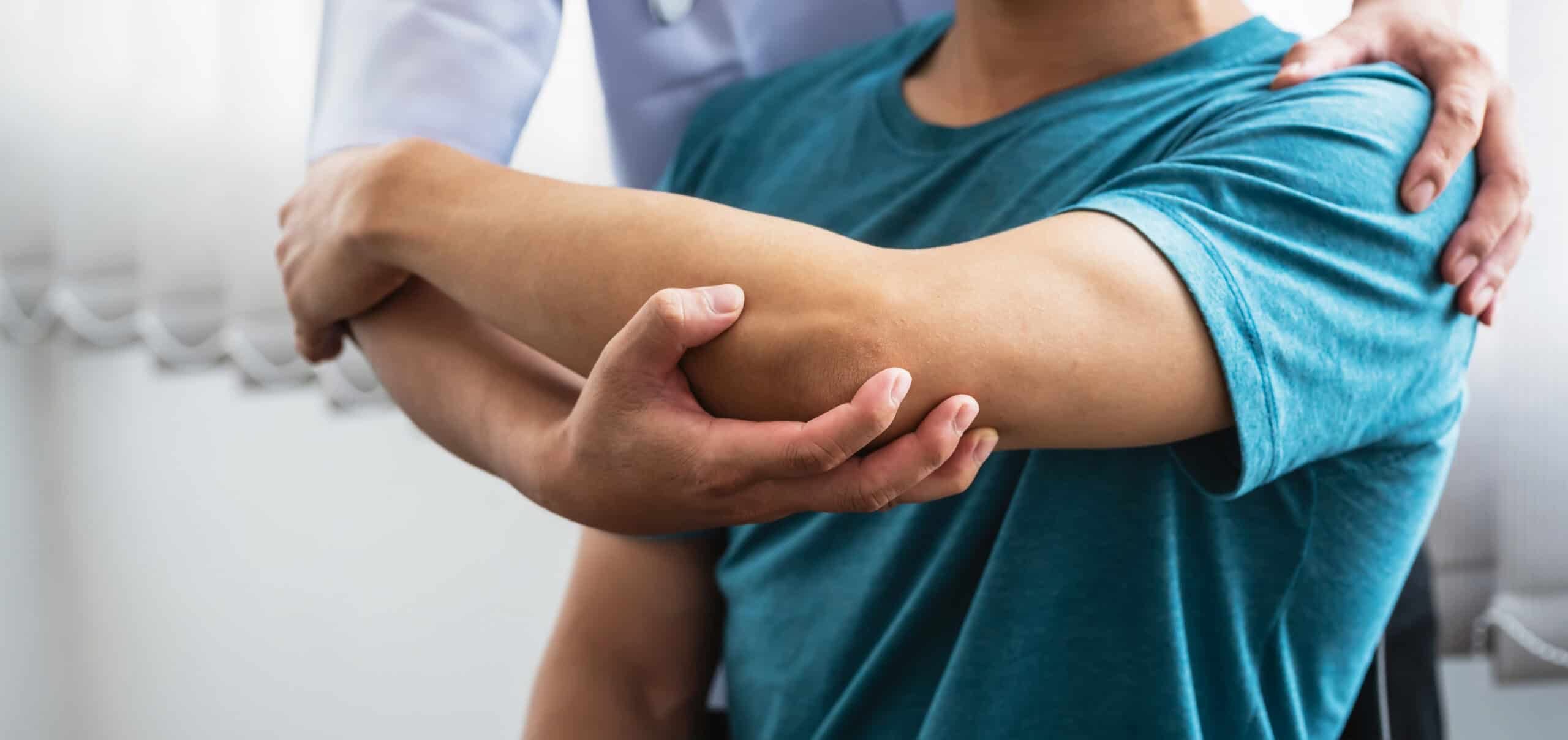
Golfer’s Elbow Treatment in Brick, NJ | Trinity Rehab
Life on the Bay: When Golfer’s Elbow Steals Your Swing
Brick is a thriving Ocean County community where you can see the Barnegat Bay from many neighborhoods, and golf is woven into the fabric of local life. Whether you’re a regular at Bey Lea Golf Course, an active retiree who moved here to enjoy year-round play, or someone who works in construction and trades along the Route 70 corridor, your arms and elbows take a beating from repetitive motion.
You might be that golfer who used to play three rounds a week at Bey Lea without thinking twice. Or perhaps you’re a contractor, electrician, or HVAC technician—professions that dominate Brick’s thriving industrial and trades sector. Maybe you work at Ocean Medical Center or one of the retail operations that line the commercial districts. Whatever your livelihood or passion, when pain starts radiating from the inside of your elbow—that tender spot just above where your arm bends—it’s impossible to ignore.
That’s medial epicondylitis, commonly called golfer’s elbow. And in a community like Brick, where so many residents are either active golfers or hardworking trades professionals, it’s more common than you might think.
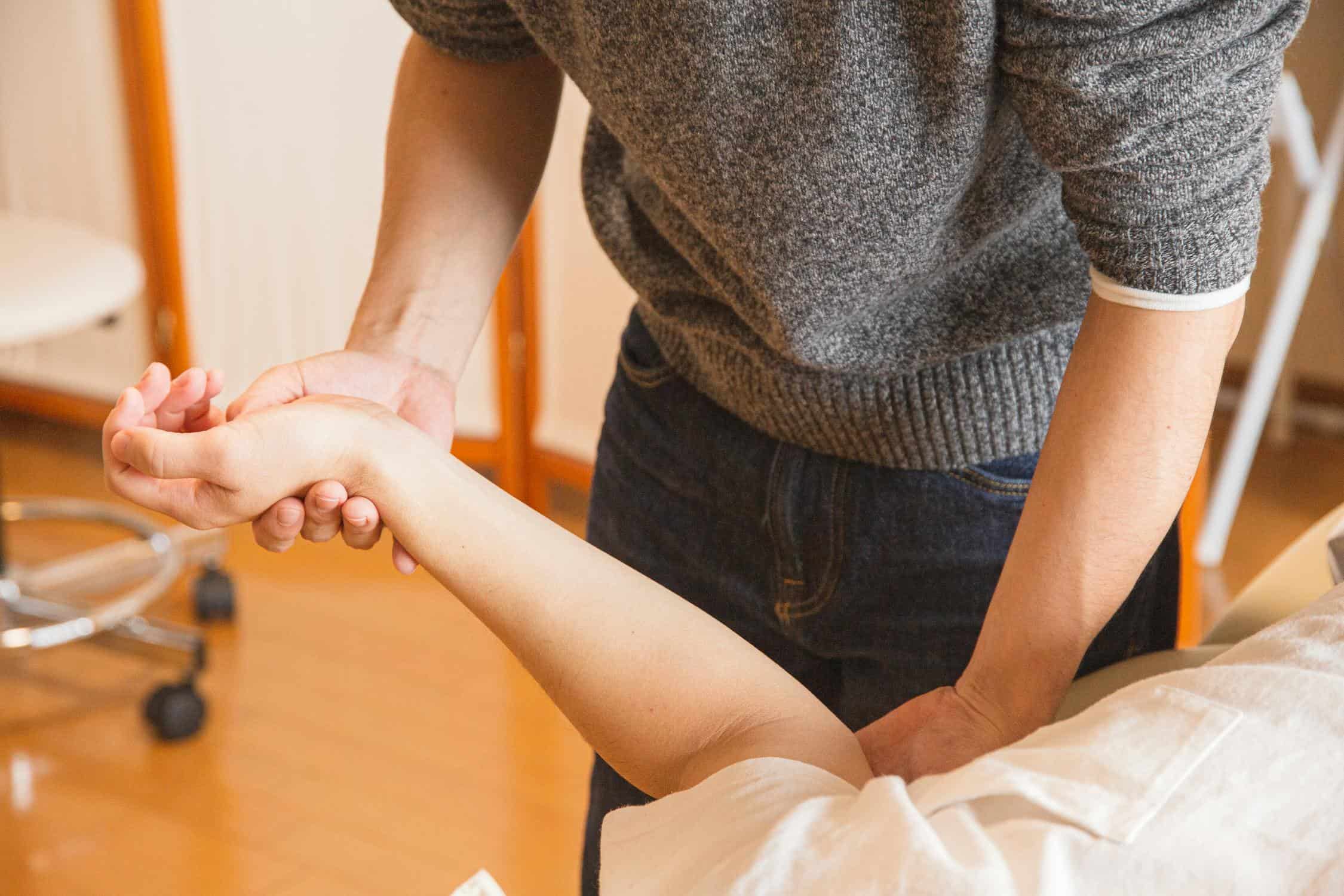
Understanding Golfer’s Elbow: The Anatomy and Why It Happens
Golfer’s elbow is an overuse injury affecting the flexor-pronator muscle group on the inner side of your elbow. These muscles attach to the medial epicondyle, a small bony bump on the inside of your elbow joint. When you swing a golf club, throw a ball, grip tools, or perform any repetitive gripping or flexing motion, these muscles work overtime.
Over time—sometimes weeks, sometimes months—tiny microscopic tears develop in the tendons where these muscles attach. Your body tries to repair the damage, but if the stress continues without adequate recovery and proper rehabilitation, inflammation builds up. You experience pain that can range from a dull ache to sharp, shooting sensations that make you wince when you shake someone’s hand.
The symptoms of medial epicondylitis typically start gradually. You might notice:
- Inner elbow pain that worsens with gripping or bending your wrist
- Weakness in your grip strength, making everyday tasks like opening jars or holding a golf club feel exhausting
- Stiffness in your forearm, especially in the morning or after activity
- Radiating discomfort that travels down your forearm toward your wrist
- Numbness or tingling in your ring finger and pinky (if nerve involvement develops)
For golfers, the pain often shows up first on the follow-through of your swing. For tradespeople, it escalates after a full day of gripping wrenches, hammers, or drill handles.
Who’s at Risk in Brick: Your Profession and Lifestyle Matter
Brick’s demographic and economic profile creates a perfect storm for golfer’s elbow injuries. The community is home to a large and vibrant active-adult population—people in their 50s, 60s, 70s, and beyond who retired here specifically for the golf culture and year-round climate. Many are logging serious hours at Bey Lea Golf Course and private clubs in the surrounding area.
At the same time, Brick is a construction and trades hub. The industrial parks near Route 70 employ electricians, plumbers, HVAC technicians, carpenters, and contractors who perform thousands of gripping, flexing motions daily. Ocean Medical Center and the healthcare facilities scattered throughout the area also employ nursing staff, physical therapists, and other medical professionals who frequently perform repetitive arm movements.
Retail workers at the shopping centers along Route 70 and Route 9—stocking shelves, scanning items, lifting boxes—face similar risks. Factory workers and warehouse staff in Brick’s industrial corridor often develop the condition after months or years of assembly-line work or material handling.
And then there are the younger, more casual golfers and recreational athletes who don’t realize they’re building up stress until pain forces them to confront the problem. The rise of home improvement projects and DIY culture means more Brick residents are spending weekends doing carpentry, landscaping, and renovation work—activities that, done incorrectly or without proper rest, accelerate tendon damage.
Your age is also a factor. Brick’s large active-adult population means many residents are in their 50s and beyond, when tendons naturally lose elasticity and recover more slowly from microtrauma. The combination of age, professional demands, and recreational activity makes golfer’s elbow a very real health concern here.
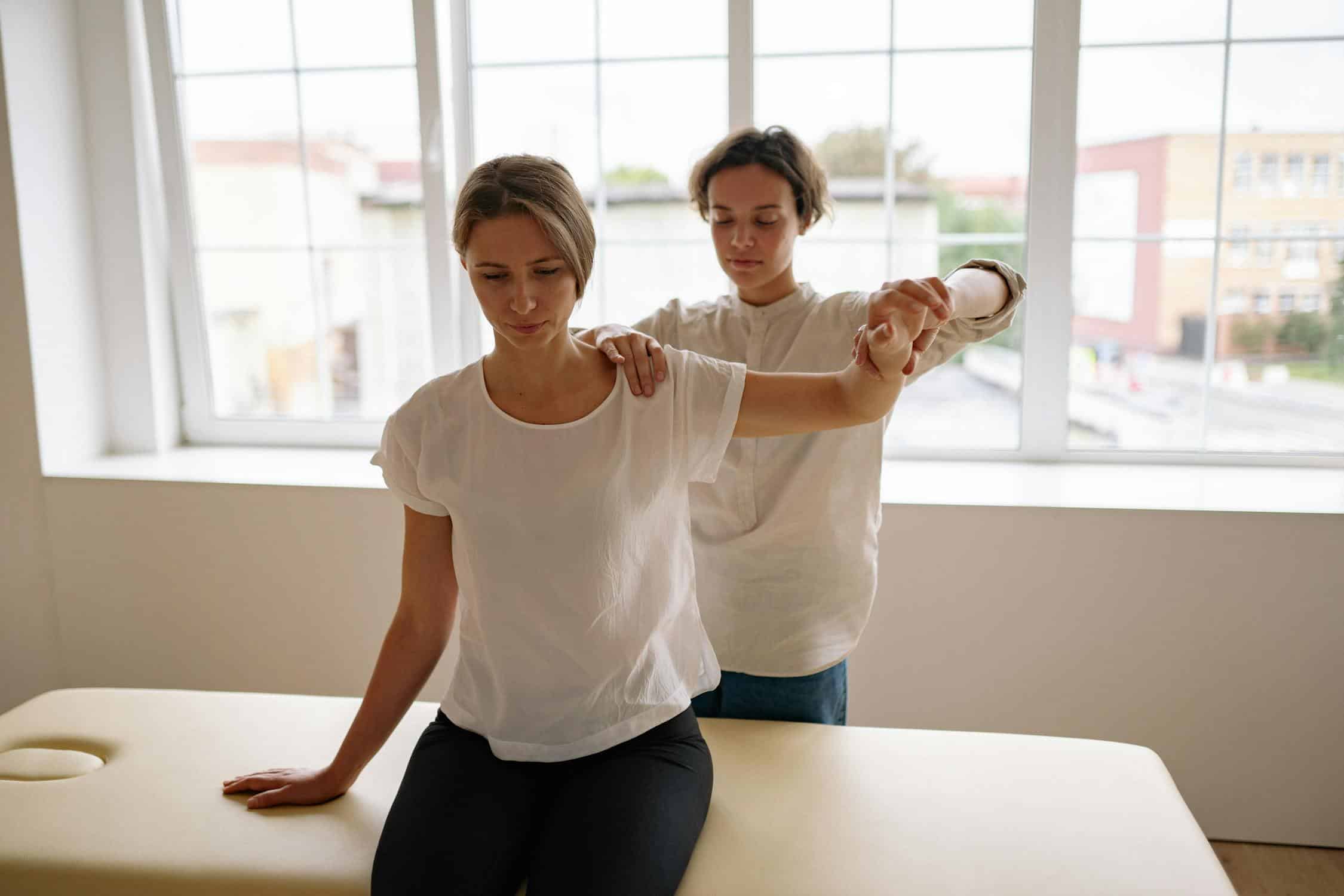
How Trinity Rehab in Brick Treats Golfer’s Elbow
When you come to Trinity Rehab’s Brick location, you’re not just another name on a schedule. Our physical therapists take time to understand your specific situation: Are you a golfer? A tradesperson? Someone who works at Ocean Medical Center? Your circumstances inform every aspect of your treatment plan.
We start with a thorough evaluation that includes range-of-motion testing, grip strength assessment, and specific movement patterns that trigger your pain. We’ll ask detailed questions about your daily activities, hobbies, work environment, and what you want to be able to do again without discomfort.
Your treatment plan typically unfolds in three phases:
Phase 1: Pain Reduction and Protection — Your first 1–2 weeks focus on reducing inflammation and protecting the damaged tissue. This might include ice therapy, ergonomic modifications for your workplace, activity adjustments (like temporarily modifying your golf swing), and gentle range-of-motion exercises. We may recommend bracing or taping to offload stress from the medial epicondyle. Manual therapy techniques help reduce muscle tension in your forearm and upper arm that’s compensating for the injured area.
Phase 2: Progressive Strengthening — As pain subsides, we introduce controlled exercises that target the flexor-pronator muscles without re-injuring them. These exercises gradually increase in intensity and resistance. For golfers, we incorporate sport-specific movements. For tradespeople, we replicate the gripping and lifting patterns of your profession in a controlled setting so your muscles adapt safely. Dry needling and soft tissue mobilization may be added to address scar tissue and trigger points.
Phase 3: Return to Activity — We progressively increase activity demands until you can swing a golf club, use your tools, or perform your job without pain. This phase is all about building resilience and teaching your body to handle the stresses of your sport or profession without reinjury.
Some patients also benefit from advanced treatments like EPAT (Extracorporeal Pulse Activation Technology), a non-invasive therapy that uses acoustic waves to stimulate healing in the damaged tendon. Trinity Rehab offers EPAT for cases that don’t respond fully to conventional physical therapy, and many Brick patients have found remarkable relief through this option.
What to Expect During Your Treatment at Trinity Rehab
Trinity Rehab operates as a hands-on practice. When you arrive for your appointments, you’ll spend 45 to 60 minutes with one of our licensed physical therapists—not a tech, not a trainer, but a highly qualified professional who’s dedicated to your recovery.
Your first visit is a comprehensive evaluation. We perform movement screens, palpate the injured tissue, test your strength and range of motion, and discuss your goals. We’ll take X-rays if necessary to rule out fractures or other bony pathology.
Over the following weeks, your sessions typically follow this pattern:
- Initial treatment: Manual therapy (soft tissue mobilization, joint mobilization, myofascial release) to reduce pain and improve mobility
- Active-assisted exercises: Movements you perform with minimal guidance that begin rebuilding strength
- Resistance training: Progressive strengthening with resistance bands, light weights, or functional movements
- Functional training: Sport or work-specific drills that train your body for real-world demands
- Home exercise program: A customized routine you do between visits to accelerate healing
Most patients see meaningful improvement within 3–4 weeks and return to full activity within 6–8 weeks, though timelines vary based on injury severity, age, and how consistently you follow your home program.
Prevention Tips for Brick Residents
Preventing golfer’s elbow is infinitely easier than treating it. Whether you’re a golfer, tradesperson, or office worker, these strategies protect your elbows:
For Golfers at Bey Lea and Beyond:
- Warm up properly before every round. Ten minutes of arm circles, wrist flexion/extension, and light swings prepare your muscles for the demands of 18 holes.
- Practice proper swing mechanics. Many amateur golfers use their arms instead of their core and legs, overloading the flexor muscles. Consider a lesson with a PGA professional to refine your technique.
- Limit yourself initially. If you’re returning to golf after an injury, play 9 holes instead of 18, and take at least one day off between rounds.
- Strengthen your core and rotational muscles. A strong core reduces the stress your arms and elbows absorb during your swing.
- Use a golf grip that’s appropriately sized. A grip that’s too thin forces your flexor muscles to work harder. Have a pro fit your clubs to your hand size.
For Tradespeople in Brick’s Industrial Sector:
- Use tools with ergonomic handles and grips. Slip into modern, cushioned handles whenever possible; they reduce impact on your tendons.
- Take frequent breaks. If you’re gripping a hammer or wrench for hours, step back every 30–45 minutes and rest your forearms.
- Rotate tasks. Don’t spend an entire day doing the same repetitive movement. Vary your work to distribute stress across different muscle groups.
- Strengthen your forearm muscles proactively. Wrist curls, reverse wrist curls, and farmer’s carries build muscular endurance that protects against injury.
- Maintain proper posture. Poor shoulder and spine positioning forces your elbows and forearms to compensate, accelerating wear and tear.
For Everyone in Brick:
- Stay consistent with stretching. Tight flexor and pronator muscles are more prone to injury. Daily forearm stretches reduce risk.
- Build strength gradually. Don’t suddenly increase activity intensity or volume. Progress slowly over weeks and months.
- Ice after intense activity. If you’ve had a long day of golfing or work, 15 minutes of ice on your inner elbow reduces inflammation.
- Listen to early warning signs. Mild discomfort is your body’s way of saying slow down. Address it now, or it will become chronic pain.

Related Conditions & Treatments
Golfer’s elbow often accompanies or overlaps with other conditions. Trinity Rehab treats a wide range of musculoskeletal conditions:
Related Elbow Care At This Location
Elbow pain patterns can overlap depending on grip, lifting, racquet sports, work tasks, and tendon load. A related same-location page is:
Frequently Asked Questions About Golfer’s Elbow in Brick
Can I keep playing golf while recovering from golfer's elbow?
How long does it take to recover from golfer's elbow?
Do I need imaging, like an ultrasound or MRI?
What's the difference between golfer's elbow and tennis elbow?
How does EPAT help golfer's elbow?
Get Back to Your Game and Your Work
Golfer’s elbow doesn’t have to end your time on the course or sideline your career. With proper diagnosis, targeted physical therapy, and expert guidance, you can recover fully and return stronger than before.
Trinity Rehab’s Brick location is staffed by experienced physical therapists who understand the unique needs of our community—from active retirees to hardworking tradespeople. We don’t just treat the injury; we treat the person, with an eye toward helping you do what you love without pain.
Ready to reclaim your swing and your strength? Contact Trinity Rehab in Brick today to schedule your initial evaluation. We’re here to help you get back to life the way it should be.
Trinity Rehab | Brick, NJ Location One-on-One Physical Therapy | Expert Care for Golfer’s Elbow and More Call today to schedule your free consultation and start your path to pain-free movement.
Visit Trinity Rehab in Brick
Our Brick clinic is conveniently located at 486 Brick Blvd, Brick Township, NJ 08723. Call us at (732) 262-8200 to schedule your golfer’s elbow evaluation today.