
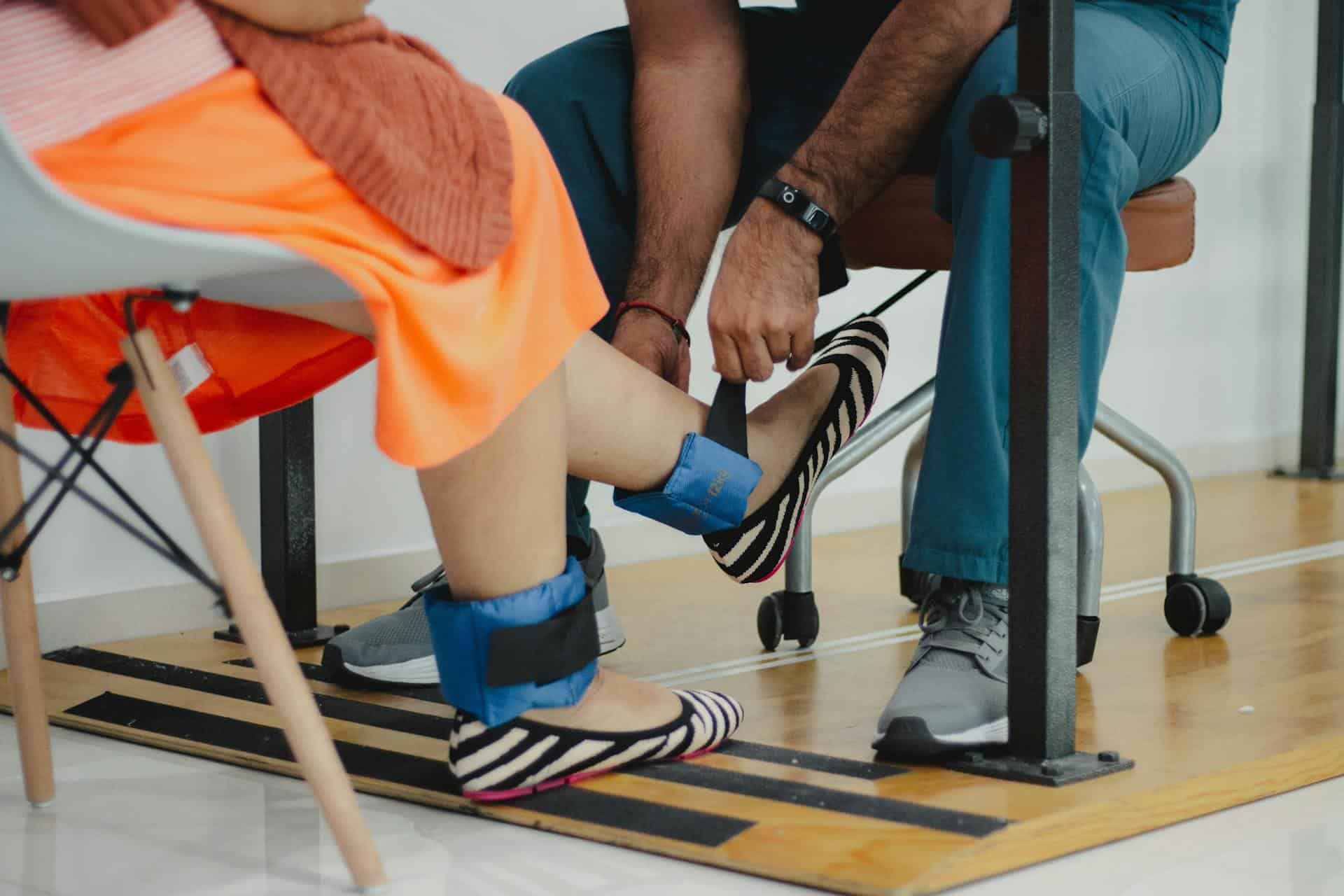
What Ankle Pain Can Mean
Ankle pain can make every step feel uncertain. Trinity Rehab helps patients across New Jersey and Pennsylvania recover ankle mobility, strength, balance, walking confidence, and safe return to work, fitness, sport, and daily life.
Ankle pain is not one single problem. It may follow a sudden ankle sprain, a fall, an awkward step off a curb, a sports cut, a work injury, a long walk, or months of smaller overload. Pain may come from the lateral ankle ligaments, joint stiffness, swelling, tendon irritation, calf weakness, poor balance, gait changes, foot mechanics, or a previous fracture or surgery. That is why the first job is not to guess. The first job is to understand how the ankle behaves when you stand, walk, use stairs, balance, squat, run, or return to the activity that matters to you. A useful plan connects the diagnosis to the movement problem in front of you. If the ankle is swollen and irritable, treatment starts differently than it would for an athlete who has no pain walking but cannot cut, jump, or trust the ankle on the field.
Many ankle pain pages stop at generic advice like rest and ice. Trinity’s hub-and-spoke model needs to go further. Patients want to know whether physical therapy can help the actual problem: swelling that returns after errands, stiffness every morning, pain with stairs, fear that the ankle will roll, trouble walking on uneven ground, calf weakness, running pain, or slow recovery after an ankle sprain. Physical therapy can often help by restoring range of motion, improving foot and calf strength, retraining balance and proprioception, improving gait mechanics, and planning a staged return to the activity the patient has been avoiding.
The goal is not to push through pain blindly. The goal is to match the plan to tissue irritability, medical safety, and function. Some people need medical imaging or physician care first. Others can begin with direct access physical therapy when appropriate. Either way, the best ankle rehab should give the patient clarity about what is safe, what needs to improve, how progress will be measured, and what signs mean the plan should change.

Common Symptoms
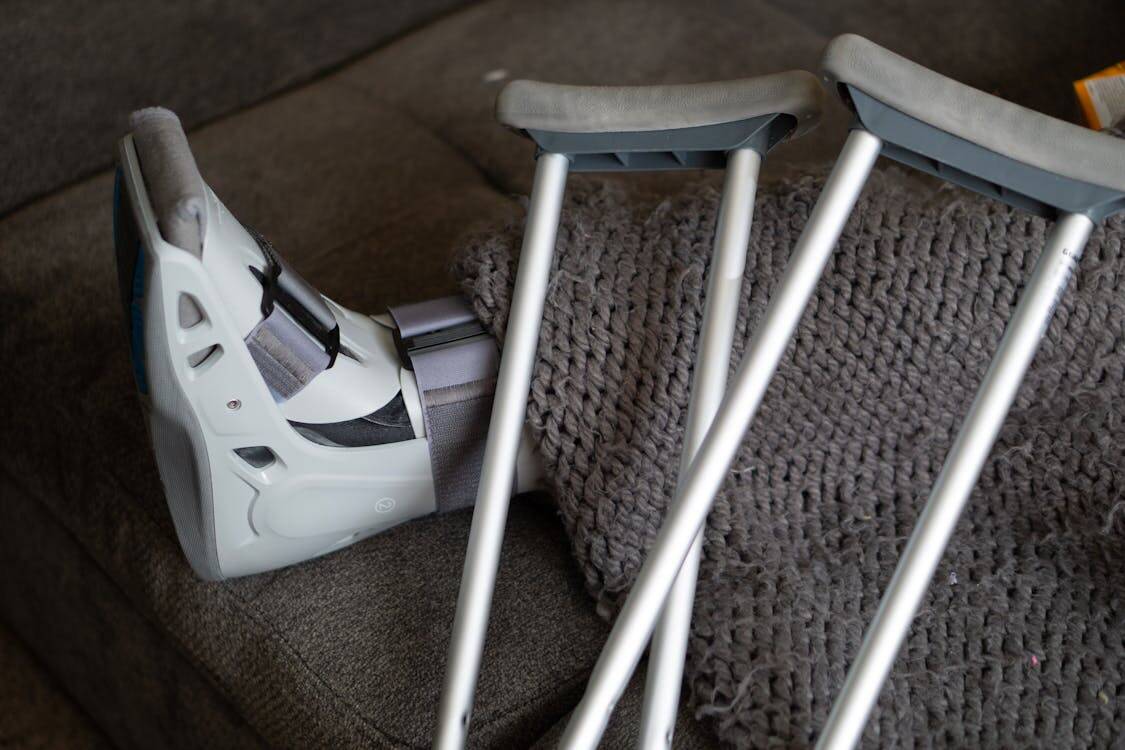
Ankle symptoms can look different depending on the tissue involved and the stage of healing. A fresh sprain may create swelling, bruising, pain with weight bearing, and loss of motion. A chronic ankle instability pattern may feel less painful but more unreliable, especially on uneven ground or during sports. Tendon-related ankle pain may build gradually with walking, running, hills, stairs, or changes in footwear. Post-fracture or post-operative ankles may feel stiff, weak, swollen, or hesitant even after the bone or surgical site has healed.
- pain on the outside or inside of the ankle
- swelling after walking, sports, or a twist
- stiffness with stairs or first steps
- feeling that the ankle may give way
- difficulty pushing off while walking
- pain with running, cutting, jumping, or uneven ground
- bruising or tenderness after an ankle sprain
- reduced balance or confidence on one leg
- calf tightness or weakness
- foot and ankle pain that changes daily activity
- pain that returns when activity increases too quickly
- difficulty walking normally after sitting or sleeping
- reduced confidence with curbs, grass, trails, or crowded places
Seek urgent medical care for severe pain after trauma with inability to bear weight, visible deformity, numbness, coldness, color change, open wound, signs of infection, rapidly increasing swelling, calf swelling with warmth, shortness of breath, or symptoms that are worsening instead of improving.
Why Ankle Pain Keeps Coming Back
A common pattern after an ankle sprain is early symptom improvement without full physical recovery. Swelling decreases, walking gets easier, and the person assumes the ankle is healed. But range of motion, calf strength, foot control, balance, proprioception, and confidence may still be behind. When that patient returns to stairs, running, grass, gym work, pickleball, basketball, soccer, tennis, hiking, or a long work shift, the ankle may not be ready for the demand. That gap can lead to repeated sprains or chronic ankle instability.
Other ankle pain problems are more load-related. Achilles tendon pain, posterior tibial tendon irritation, peroneal tendon pain, plantar fascia symptoms, ankle impingement, and post-fracture stiffness can all be influenced by strength, mobility, gait, footwear, training load, and how quickly activity was increased. Physical therapy should identify which factors can be changed and which require medical follow-up.
Related Conditions We Consider
Ankle pain often overlaps with ankle sprain, chronic ankle instability, Achilles tendinopathy, posterior tibial tendon pain, peroneal tendon irritation, plantar fasciitis with ankle mobility limits, ankle impingement, post-fracture stiffness, post-operative ankle rehabilitation, balance and gait dysfunction. A careful evaluation helps decide whether the plan should emphasize mobility, strengthening, balance, gait retraining, return-to-sport work, footwear strategy, physician coordination, or a combination.
How Trinity Rehab Evaluates Ankle Pain
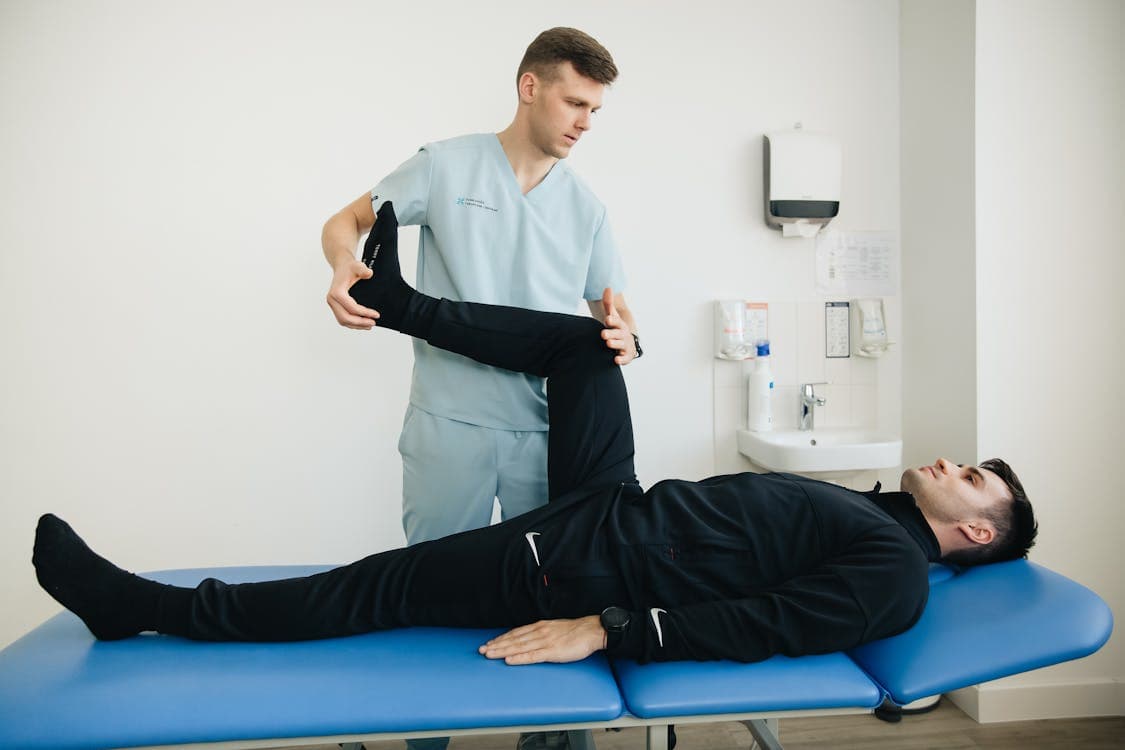
Your first visit should make the problem clearer. The therapist reviews how the pain started, how symptoms behave through the day, whether there was trauma, whether you can bear weight, what activities are limited, and whether there are warning signs that need medical evaluation. Then the exam connects that story to movement: ankle range of motion, swelling, tenderness, strength, balance, walking pattern, stair control, single-leg control, calf capacity, and the work or sport tasks that matter most.
- screening for red flags, fracture concern, circulation changes, infection signs, or unsafe weight bearing
- ankle and foot range-of-motion testing, including dorsiflexion and plantarflexion
- strength testing for the calf, foot, hip, knee, and lower leg
- balance and proprioception testing on stable and unstable surfaces when appropriate
- gait, stairs, squatting, jumping, cutting, or running review when relevant
- brace, taping, footwear, work, and sport discussion
- a home exercise plan that fits the current stage of recovery
The evaluation should also protect the patient from two common mistakes: doing too little for too long, or doing too much before the ankle has earned it. The right plan progresses based on response, not just the calendar.
Physical Therapy Treatment Plan
Ankle pain physical therapy works best as a staged plan. Early care may reduce swelling, restore comfortable motion, normalize walking, and calm irritated tissue. Middle-stage care builds calf strength, foot control, hip and knee support, balance, and confidence with stairs and uneven ground. Later-stage care should look like the patient’s real life: faster walking, work tasks, running, jumping, cutting, sport-specific drills, longer errands, or balance confidence for older adults.
Phase 1: Calm Pain And Restore Motion
Your therapist may use education, swelling strategies, manual therapy, ankle mobility drills, gentle strengthening, walking guidance, taping, or bracing advice. If symptoms suggest fracture, major ligament injury, nerve or circulation concern, infection, or another medical issue, the plan shifts toward medical referral instead of routine rehab.
Phase 2: Build Strength And Control
As symptoms allow, treatment progresses into calf strengthening, foot intrinsic strengthening, hip and knee support, therapeutic exercise, balance training, proprioception drills, and gait retraining. The ankle must learn to accept force again in a controlled way. That includes slow strength work and practical tasks like stairs, curbs, carrying items, and walking on different surfaces.
Phase 3: Return To Activity
The final stage depends on the patient. A runner may need walk-jog progression and landing mechanics. A court-sport athlete may need cutting and jumping progression. An older adult may need balance confidence, fall-risk reduction, and uneven-ground practice. A worker may need standing tolerance, ladders, squatting, lifting, or footwear strategy. The plan should bridge the gap between feeling better and being ready.
Progress Should Be Measured In Real Life
An ankle can look better in the clinic and still fail the patient’s real day. That is why progress should be measured with functional markers: less swelling after errands, more ankle dorsiflexion for stairs, better push-off while walking, less pain after work, improved single-leg balance, stronger calf raises, more confidence on uneven ground, and a clear path back to sport or fitness. If the patient wants to return to running, the plan should include a running progression. If the patient wants to stop worrying about curbs and grass, the plan should include balance and uneven-surface practice.
This is also where local care matters. Trinity’s clinics serve patients who need ankle rehab for work, commuting, school activities, community walking, youth sports, weekend fitness, shore trips, golf, pickleball, and active older-adult routines. A good hub page can explain the condition, but the clinic visit turns that information into a plan for a real person in a real place.
The page also needs to be honest: not every ankle needs only physical therapy. Severe trauma, inability to bear weight, deformity, numbness, color change, infection signs, or concerning calf symptoms need medical evaluation. For the right patient, though, physical therapy can be the difference between waiting for pain to fade and actively rebuilding the ankle’s capacity.
Brace, Footwear, And Home Exercise Decisions
Patients often ask whether they should wear a brace, tape the ankle, change shoes, use an insert, or stop activity until pain is gone. The honest answer depends on the evaluation. A brace or tape can help a recently sprained or unstable ankle feel safer during walking, work, or sport progression, but support should not become the whole plan. The ankle still needs range of motion, calf strength, foot strength, proprioception, gait control, and graded exposure to the surfaces and speeds the patient needs in real life.
Footwear can also matter. Some patients need a more stable shoe while swelling and pain calm down. Others need help returning from a stiff shoe or brace to normal foot and ankle control. Runners, court-sport athletes, workers on hard floors, and older adults with balance concerns may all need different guidance. Trinity’s plan should make those decisions practical instead of generic: what to wear now, what exercises to practice at home, what activity dose is reasonable this week, and what signs mean the ankle is ready for the next step.

Find Ankle Pain Physical Therapy Near You
Choose your closest Trinity Rehab clinic for localized ankle pain physical therapy information. These local spokes are intentionally hidden from the top menu and are built for patients searching by condition plus location.
- Brick, NJ
- Cherry Hill, NJ
- Clark, NJ
- Clifton, NJ
- East Brunswick, NJ
- East Windsor, NJ
- Emerson, NJ
- Flemington, NJ
- Hamilton, NJ
- Howell, NJ
- Manalapan, NJ
- Matawan, NJ
- Metuchen, NJ
- Middletown, NJ
- Piscataway, NJ
- Sewell, NJ
- Shrewsbury, NJ
- Somerset, NJ
- Somerville, NJ
- Sparta, NJ
- Toms River, NJ
- Warren, NJ
- Wayne, NJ
- Woodbridge, NJ
- Doylestown, PA
- Newtown, PA
- Upper Dublin, PA
Related Foot, Ankle, And Lower-Body Pages
Ankle pain may overlap with foot pain, plantar fascia symptoms, knee pain, hip pain, balance problems, sports injuries, and lower-body weakness. These related pages help patients and search engines understand the full treatment context.
Patient Reviews
Reviews help patients see that Trinity Rehab is a real clinic network with real patient experience across New Jersey and Pennsylvania. Local review widgets are also built into each spoke page.
Frequently Asked Questions
Can physical therapy help ankle pain?
Often, yes. Physical therapy can help restore ankle range of motion, reduce swelling and guarding, improve calf and foot strength, rebuild balance and proprioception, and guide a safe return to walking, stairs, work, running, or sport when the injury is appropriate for rehab.
Do I need an X-ray before physical therapy?
Not always, but trauma with severe pain, visible deformity, inability to bear weight, rapidly increasing swelling, numbness, color change, or symptoms that are worsening should be medically checked. Your therapist will refer you for medical evaluation when the exam suggests imaging or physician care is needed.
Why does my ankle keep rolling after a sprain?
Some people develop chronic ankle instability after an ankle sprain, especially when range of motion, strength, balance, and sport-specific control are not fully rebuilt. Rehab should progress beyond early pain relief into single-leg control, cutting, stairs, uneven ground, and the demands of your actual activity.
What does ankle rehab include?
A plan may include manual therapy, swelling control, mobility work, calf strengthening, foot intrinsic strengthening, balance and proprioception training, gait retraining, stair practice, running progression, return-to-sport drills, and brace, taping, or footwear guidance when useful.
How long does ankle pain physical therapy take?
It depends on the diagnosis, severity, irritability, tissue healing, strength, balance, and goals. A mild sprain may progress quickly, while chronic instability, Achilles pain, tendon problems, fracture stiffness, or post-operative rehab can take longer and need staged progression.
When should ankle pain be urgent?
Seek urgent medical care for severe trauma, inability to bear weight, visible deformity, numbness, coldness, color change, open wound, signs of infection, rapidly increasing swelling, calf swelling with warmth, shortness of breath, or symptoms that are getting worse instead of better.
Start With A Clear Ankle Plan
If ankle pain, swelling, instability, stiffness, walking limits, running pain, or fear of another sprain is changing your day, start with an evaluation. The goal is to understand what is driving symptoms and rebuild the ankle for the activity you actually need.