
LUMBAR DISC HERNIATION TREATMENT IN HOWELL, NJ
If you have ever pushed through the last mile of the five-mile perimeter trail at Manasquan Reservoir and felt a sudden, searing bolt of pain shoot down your leg, you already know how quickly a back problem can rewrite your weekend plans. For the roughly 54,000 residents of Howell Township, lumbar disc herniation is one of the most common reasons an active lifestyle gets put on hold. Whether the pain started during a shift at one of the warehouses along Route 9, after a Friday-night football collision at Howell High School, or simply while bending down to pull weeds in your backyard, Trinity Rehab is here to help you recover — without surgery — through a progressive, evidence-based physical therapy program designed for the way Howell residents actually live.
WHAT IS A LUMBAR DISC HERNIATION?
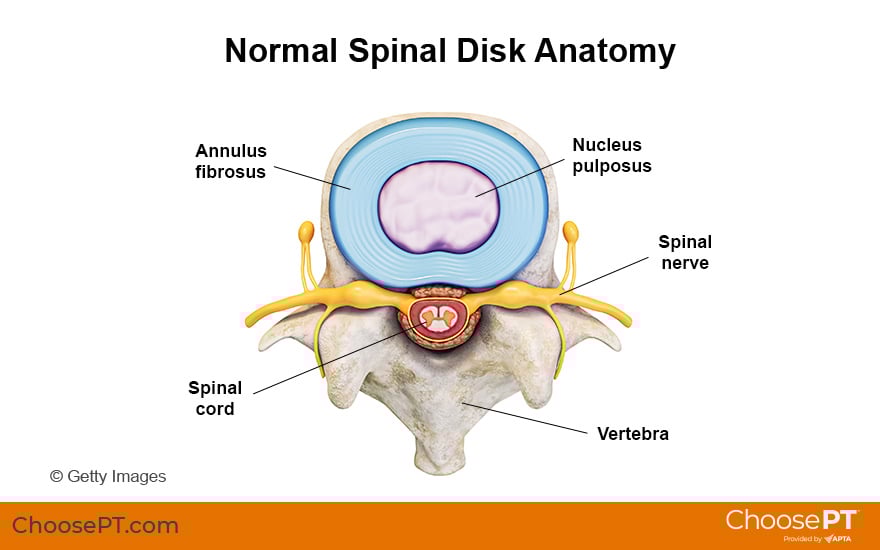
Your lumbar spine is made up of five vertebrae separated by intervertebral discs. Each disc has a tough outer ring called the annulus fibrosus and a gel-like center called the nucleus pulposus. A herniated disc occurs when part of the nucleus pulposus pushes through a tear in the annulus fibrosus and presses on a nearby nerve root. The most common levels affected are L4-L5 and L5-S1, which is why disc herniation so often produces sciatica — radiating pain, numbness, or tingling that travels from the low back through the buttock and down one leg.
According to a comprehensive review published in StatPearls, lumbar disc herniation affects an estimated 2-3 percent of the population, with peak incidence between the ages of 30 and 50 — right in the demographic sweet spot of Howell’s working, commuting, and sports-playing population (StatPearls, 2024).
WHY HOWELL RESIDENTS ARE AT RISK
LONG COMMUTES AND SEDENTARY SITTING
Howell’s average commute clocks in at roughly 36 minutes each way, and 82 percent of residents drive alone. That means many people spend well over an hour a day seated in a car, a posture that increases intradiscal pressure and places sustained load on the posterior annulus fibrosus. Over months and years, this repetitive stress weakens the disc wall and raises the risk of herniation.
WAREHOUSE AND PHYSICAL LABOR
The corridor along Route 9 is home to major distribution centers for Walmart, Target, and ALDI, along with smaller logistics operations. Repeated bending, twisting, and heavy lifting in warehouse environments is one of the top occupational risk factors for lumbar disc injury. Even a single awkward lift — picking up a 50-pound box with a rounded spine — can create enough force to push nucleus pulposus material through a compromised annulus.
YOUTH AND ADULT SPORTS
From Rebels football and lacrosse at Howell High School to North Howell Little League, ice hockey leagues, and adult pickleball at local parks, Howell is a sports town. Contact sports generate rotational forces through the lumbar spine, and repetitive extension activities like hockey skating and wrestling put direct stress on the posterior disc. A 2024 review in Deutsches Ärzteblatt International confirmed that high-impact and rotational sports are significant contributors to disc herniation in younger populations (Deutsches Ärzteblatt, 2024).
YARD WORK AND TRAIL RUNNING
Howell is the largest municipality in Monmouth County — 61 square miles of suburban-rural landscape. That means big yards, seasonal clean-up, and plenty of opportunities to bend, shovel, and rake your way into a back pain episode. Meanwhile, runners who train on the trails around Manasquan Reservoir, Big Brook Park, or nearby Allaire State Park absorb repetitive impact forces that can accelerate disc degeneration over time.
RECOGNIZING THE SYMPTOMS
Not every case of back pain is a herniated disc, but certain red flags should prompt you to seek professional evaluation:
- Radiculopathy: Sharp, shooting pain that follows a specific nerve path from your low back into your buttock, thigh, calf, or foot
- Numbness or tingling in one leg, often along the outside of the calf or the top of the foot
- Muscle weakness that makes it hard to push off while walking, climb stairs, or stand on your toes
- Pain that worsens with sitting, bending forward, or coughing/sneezing — all movements that increase intradiscal pressure
- Decreased range of motion in the lumbar spine, especially when bending or twisting
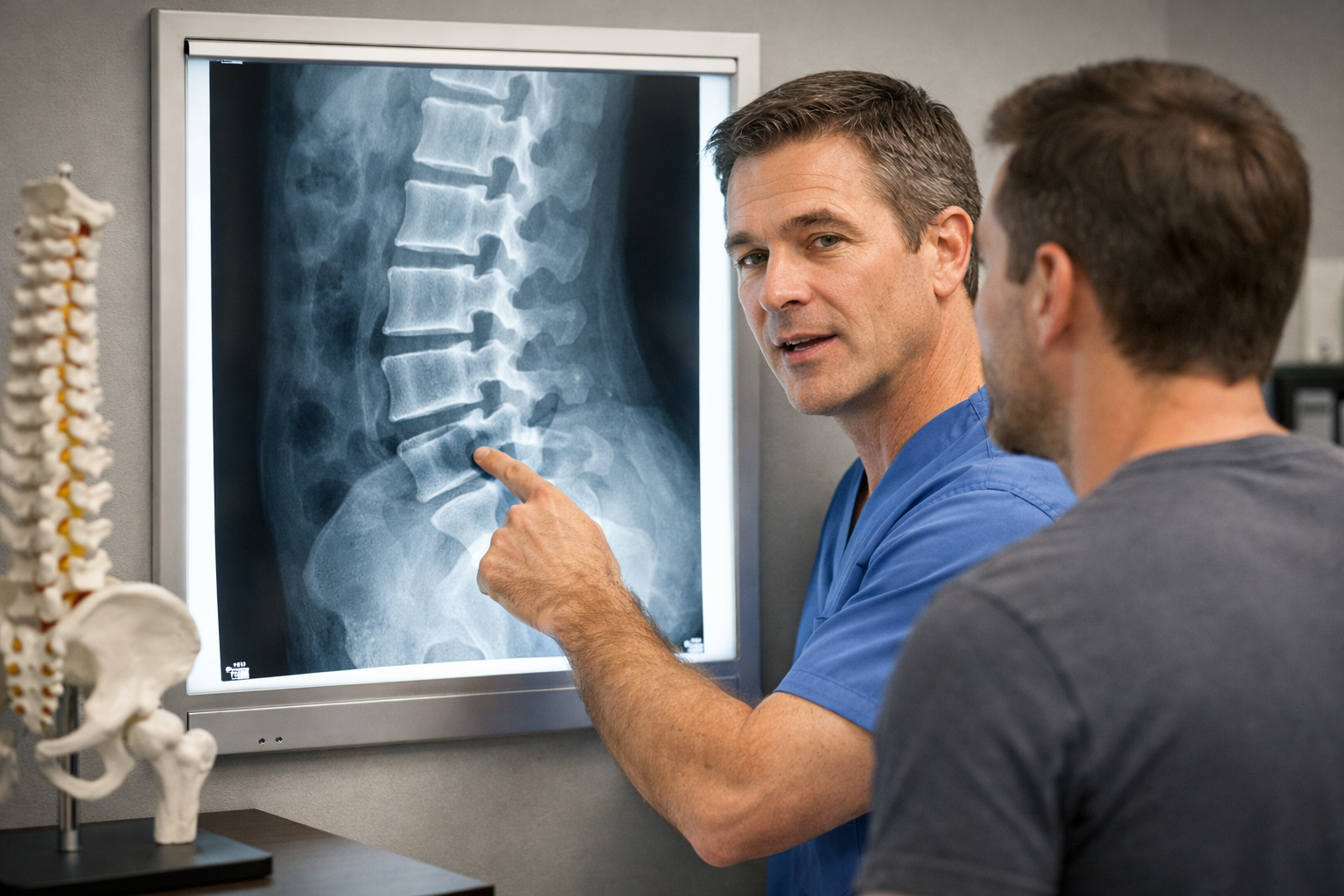
If you are experiencing any of these symptoms, an evaluation at Trinity Rehab can determine whether disc herniation is the source and what treatment approach will work best for you.
OUR THREE-PHASE TREATMENT APPROACH
At Trinity Rehab, we treat lumbar disc herniation through a structured, progressive program that respects the biology of disc healing while getting you back to the activities you love as quickly and safely as possible. Every session is one-on-one with a licensed physical therapist — you are never handed off to an aide or left to exercise alone.
PHASE 1: PAIN REDUCTION AND NERVE CALMING
The first priority is to reduce your pain and calm the irritated nerve root. During this phase, your therapist may use:
- McKenzie method / directional preference exercises: We identify the specific movement direction that centralizes your pain — drawing symptoms away from the leg and back toward the spine — and use repeated movements in that direction to shift disc material away from the nerve root. For many patients, this technique provides noticeable relief within the first few visits.
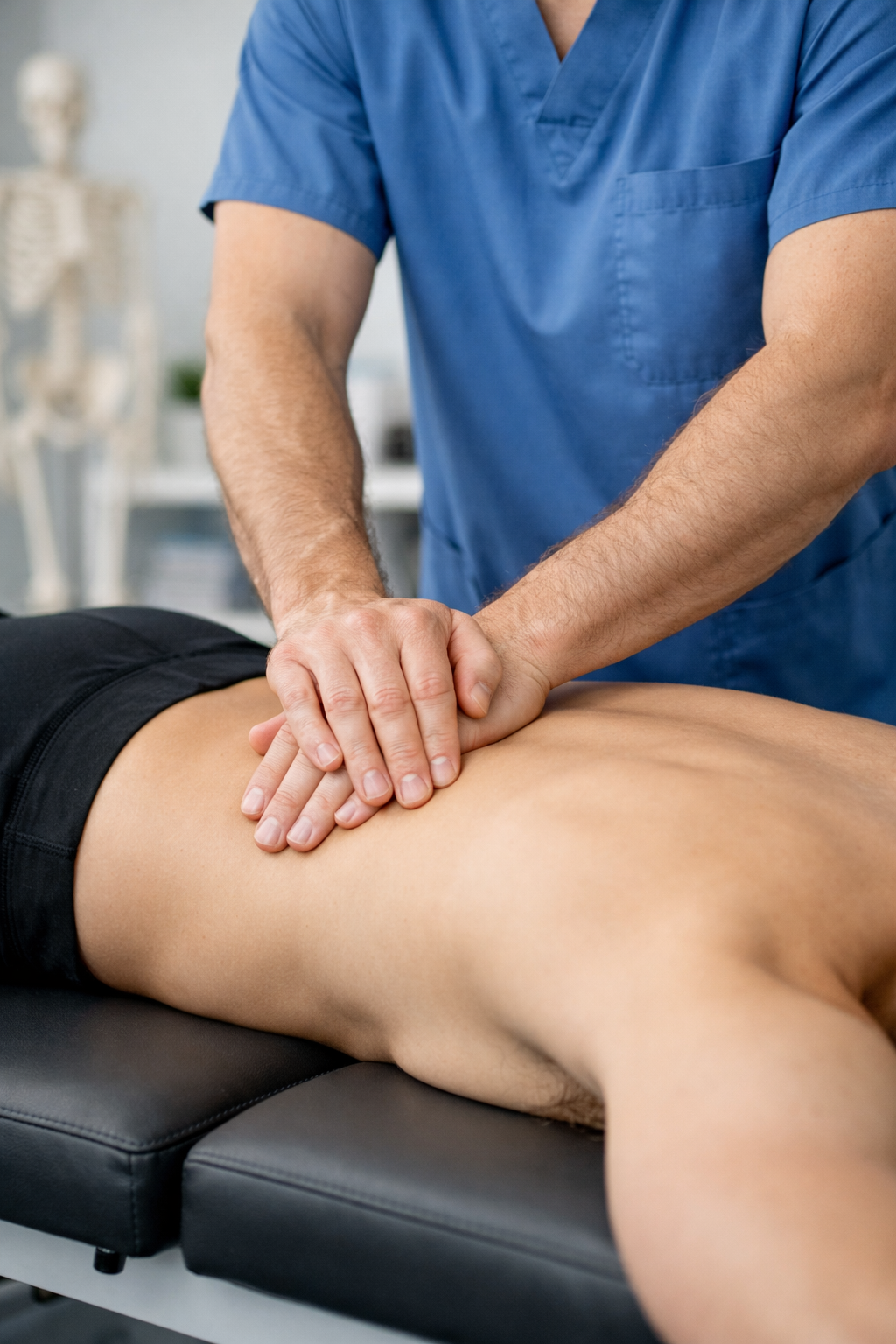
- Manual therapy: Hands-on joint mobilization and soft tissue techniques reduce muscle guarding, improve segmental mobility, and create an environment where the disc can begin to heal.
- Neural mobilization: Gentle nerve gliding exercises (sometimes called nerve flossing) reduce adhesions around the affected nerve root and decrease neural sensitivity without aggravating the herniation.
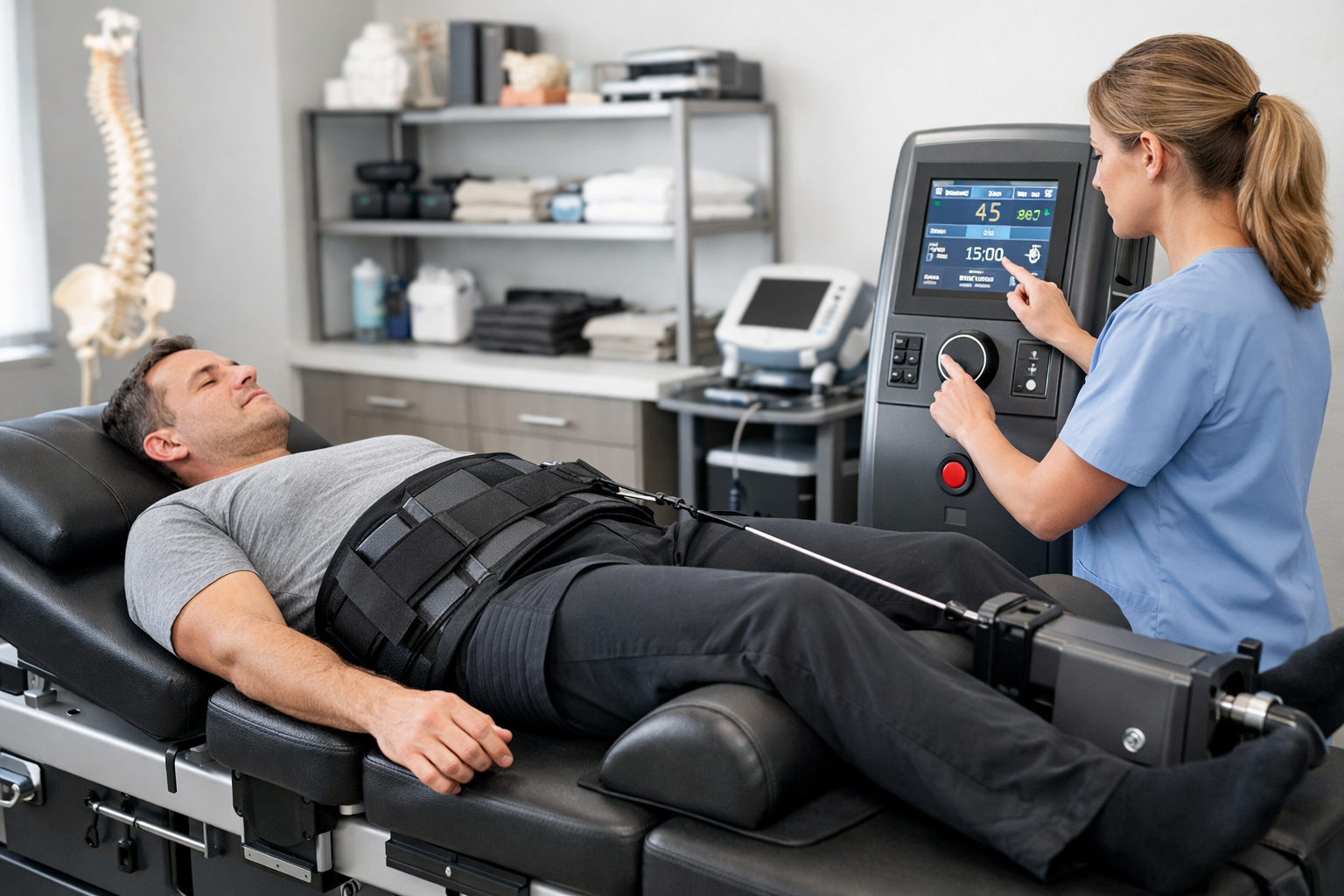
- Modality support: When appropriate, we may incorporate dry needling to release deep muscle trigger points in the paraspinals or piriformis, or EPAT (shockwave therapy) to accelerate tissue healing and reduce inflammation.
- Postural education: We teach you how to sit in your car during that 36-minute commute, stand at a warehouse station, and move through daily tasks in ways that minimize intradiscal pressure.

PHASE 2: CORE STABILIZATION AND PROGRESSIVE STRENGTHENING
Once your acute pain has decreased and your nerve symptoms are centralizing, we shift focus to rebuilding the muscular support system around your lumbar spine:
- Core stabilization training: We progress you from basic abdominal bracing and pelvic floor activation through increasingly challenging exercises that teach your deep stabilizers — transversus abdominis, multifidus, diaphragm — to fire automatically during movement.
- Hip and glute strengthening: Weak gluteal muscles force the lumbar spine to absorb loads it was never designed to handle alone. Targeted bridging, clamshells, and lateral band walks rebuild this critical foundation.
- Flexibility work: Tight hip flexors, hamstrings, and thoracic spine all contribute to excessive lumbar stress. We address each area with specific stretching and mobility drills.
- Functional movement retraining: We begin incorporating movements that mimic your real-world demands — bending to pick up a box, rotating to swing a lacrosse stick, sitting comfortably for a long drive.
PHASE 3: RETURN TO ACTIVITY AND LONG-TERM PREVENTION
The final phase is about bridging the gap between the clinic and your life in Howell:
- Sport-specific training: If you play hockey, pickleball, or golf at Howell Park Golf Course, we design drills that replicate the rotational, extension, and impact demands of your sport while maintaining proper spinal mechanics.
- Work-hardening protocols: For warehouse workers, we simulate the lifting, bending, and carrying tasks you perform on the job, ensuring your core stabilization patterns hold up under load.
- Running progression: For trail runners who use the Manasquan Reservoir loop or Allaire trails, we build a graduated return-to-running plan that respects disc healing timelines.
- Home exercise program: You leave with a personalized prevention program that keeps your core strong, your body mechanics sound, and your risk of recurrence low.
PREVENTING RE-INJURY: TIPS FOR HOWELL RESIDENTS
Living in Howell means your spine faces specific challenges. Here are practical strategies to protect your back:
- Commute smarter: Use a lumbar roll or rolled towel behind your low back during your drive. Stop and walk for two minutes every 30-40 minutes on longer trips.
- Lift at work with your legs: Whether you are stocking shelves or unloading pallets, keep loads close to your body, hinge at the hips, and brace your core before every lift.
- Warm up before trail time: Before hitting the path at Manasquan Reservoir, Deerwood Park, or Soldier Memorial Park, spend five minutes on dynamic stretches that wake up your glutes and core.
- Rotate yard work tasks: Alternate between raking, shoveling, and lighter tasks every 15-20 minutes to avoid sustained flexion loading.
- Stay active year-round: Consistent exercise is the single best predictor of long-term spinal health. Even 20-30 minutes of walking three to four days a week makes a measurable difference.
WHY HOWELL RESIDENTS CHOOSE TRINITY REHAB
When your disc herniation forces you to miss a Rebels game, skip the reservoir trail, or struggle through another painful commute, you want a clinic that understands your community — not a revolving door of therapists who rush through 15-minute sessions. At Trinity Rehab, every visit is a full one-on-one session with the same licensed physical therapist. We get to know your job, your sport, your goals, and the specific demands your Howell lifestyle places on your spine. That personalized, conservative treatment approach is why the vast majority of our disc herniation patients return to full activity without surgery.
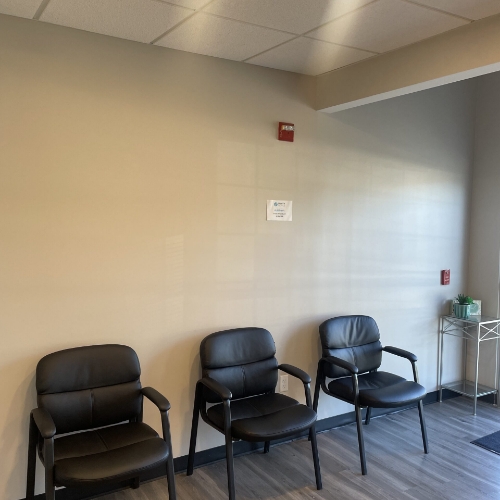
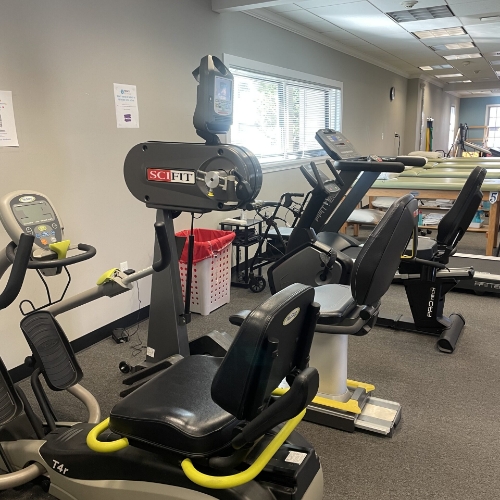
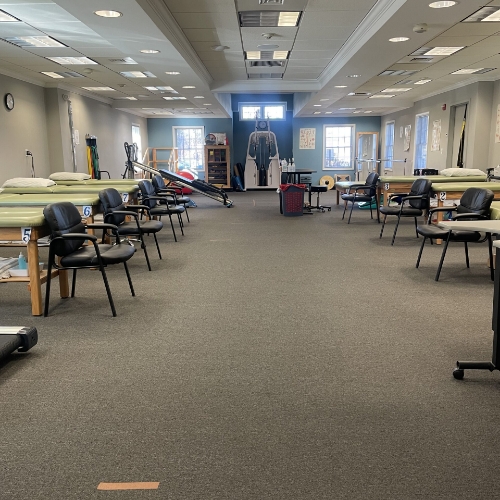
INSIDE OUR HOWELL CLINIC
RELATED CONDITIONS & TREATMENTS
Lumbar disc herniation is just one of the many conditions we treat at Trinity Rehab Howell. Explore our full range of conditions we treat or learn more about specific treatment approaches:
Howell Disc Rehab For Back Pain, Leg Symptoms, And Daily Movement
Lumbar disc symptoms can interrupt sitting, driving, lifting, sleep, work, and exercise. Howell rehab should connect the diagnosis to the positions and movements that actually trigger your symptoms.
Your therapist may assess lumbar mobility, nerve-related symptoms, hip strength, gait, lifting mechanics, sitting tolerance, and warning signs that require medical care before therapy continues.
Patients with related symptoms may also need sciatica treatment, back pain physical therapy, or the Howell physical therapy clinic page.
FREQUENTLY ASKED QUESTIONS
Howell Disc Rehab For Back Pain, Leg Symptoms, And Daily Movement
Lumbar disc symptoms can interrupt sitting, driving, lifting, sleep, work, and exercise. Howell rehab should connect the diagnosis to the positions and movements that actually trigger your symptoms.
Your therapist may assess lumbar mobility, nerve-related symptoms, hip strength, gait, lifting mechanics, sitting tolerance, and warning signs that require medical care before therapy continues.
Patients with related symptoms may also need sciatica treatment, back pain physical therapy, or the Howell physical therapy clinic page.
How long does physical therapy for a herniated disc take?
Can I still exercise with a herniated disc?
Will I need surgery?
Is my herniated disc caused by my commute?
Do you accept my insurance?
TAKE THE FIRST STEP TOWARD RELIEF
You do not have to live with the pain, numbness, or weakness of a lumbar disc herniation. Trinity Rehab’s Howell clinic offers the expert, one-on-one physical therapy you need to get back to the trails, the field, and the life you love. Schedule your appointment today and let us build a recovery plan that fits your life in Howell.
SOURCES
- StatPearls — Lumbar Disc Herniation: https://www.ncbi.nlm.nih.gov/books/NBK560878/
- Deutsches Ärzteblatt International — Lumbar Disc Herniation: https://pmc.ncbi.nlm.nih.gov/articles/PMC11465477/



Sign up for free health tips and tricks