

SCIATICA TREATMENT IN HOWELL, NJ: LASTING RELIEF FOR AN ACTIVE COMMUNITY
Five miles of trail loop around the Manasquan Reservoir. Howell’s Deerwood Park hums with youth hockey and skate activity through the winter. Come summer, families pile into cars for the short drive to the Monmouth County shore. Howell Township isn’t just a bedroom community — it’s a place where people expect to stay active, and where the physical demands of suburban life are real: hauling lawn equipment across half-acre lots, commuting an hour each way to work, and coaching kids through three-season sports schedules.
When sciatic nerve pain enters the picture, all of that gets harder. The reservoir walk that used to clear your head now leaves you limping after the first mile. Sitting through a 50-minute commute becomes something you dread. Picking up your son’s hockey bag sends a jolt of pain from your lower back straight down your leg. That is sciatica — and it is exactly what Trinity Rehab is here to help you overcome.
What Is Sciatica?
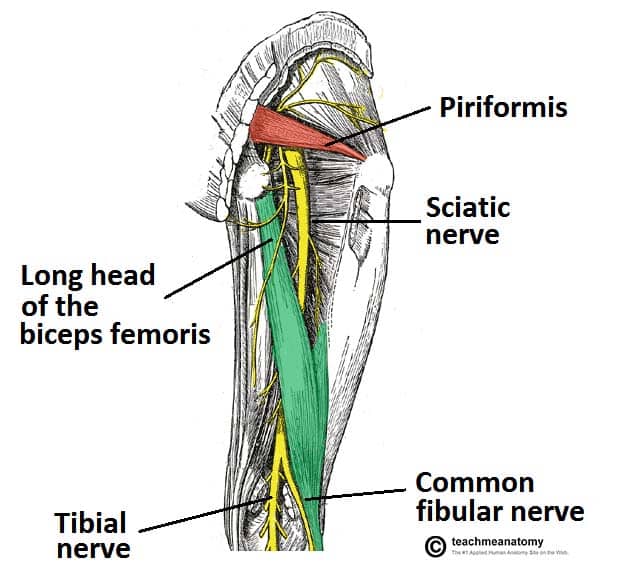
The sciatic nerve is the longest and widest nerve in the human body. It starts as a bundle of nerve roots in the lower lumbar spine (L4, L5, S1) and travels through the buttock, down the back of the thigh, through the calf, and into the foot. When something compresses or irritates one of those nerve roots at the source, the resulting pain follows that entire path — which is why sciatica can produce simultaneous lower back ache, buttock pain, and shooting leg discomfort, all from the same underlying problem.
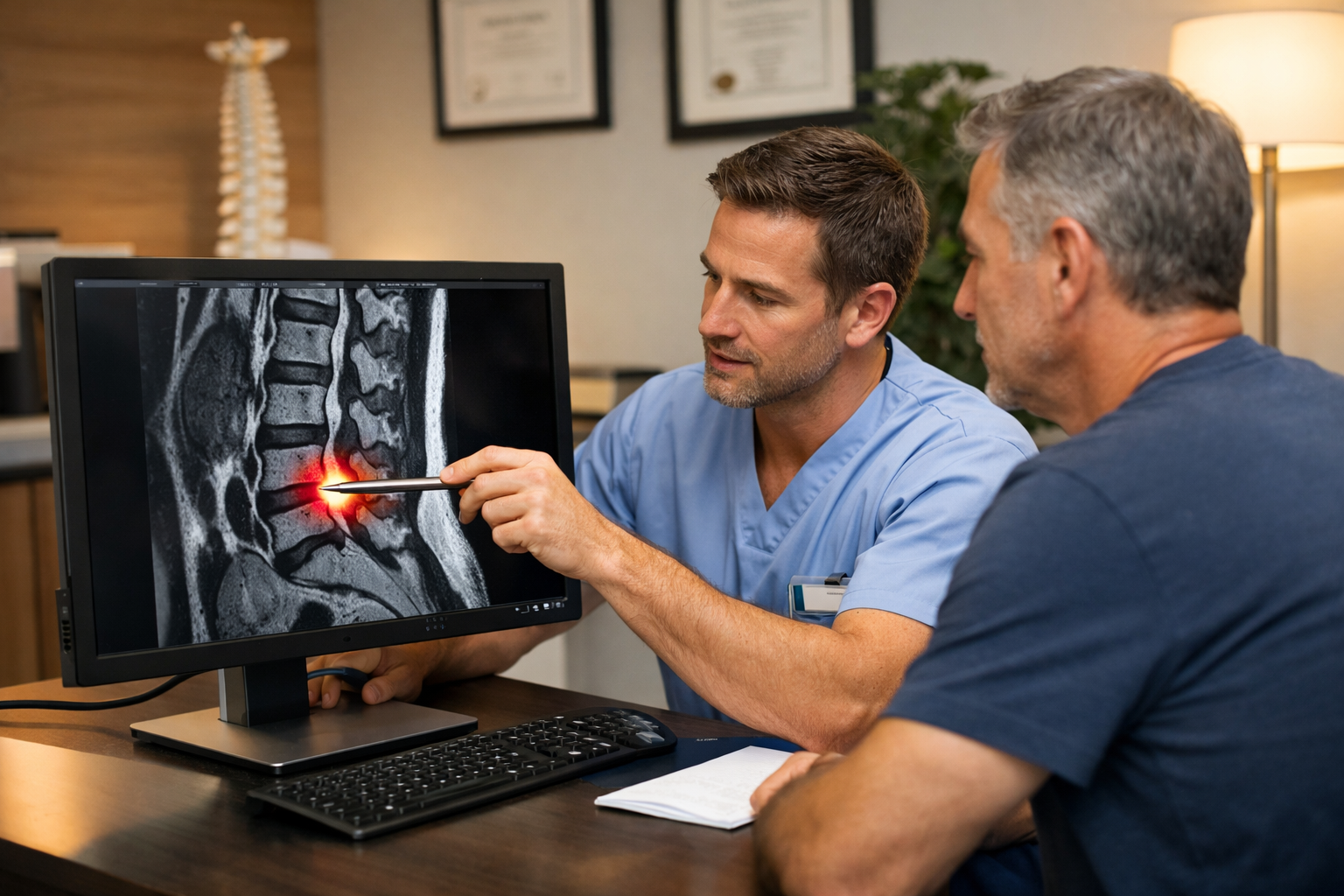
Clinically, this is called lumbar radiculopathy. The cause can be a herniated disc pressing on a nerve root, a tight piriformis muscle compressing the nerve as it exits the spine, spinal stenosis narrowing the nerve canal, or degeneration of the discs that normally cushion and protect the vertebrae.
Understanding which of these is causing your symptoms is what allows us to design a treatment plan that actually resolves the problem rather than simply managing pain.
Why Howell Residents Develop Sciatica
Howell Township’s particular combination of lifestyle, occupational patterns, and recreational activity creates specific risk factors worth understanding.
Long-distance commuters: Howell’s bedroom community character means the majority of working adults commute out of town daily — many driving 45 to 75 minutes each way to jobs in Freehold, Neptune, Monmouth County healthcare systems, or via transit toward New York. Extended periods of sitting, especially in a car with the lumbar spine in a flexed position, increases disc pressure and narrows the space available for nerve roots. Commuters who make this trip every weekday are accumulating repetitive spinal stress.
Retail and commercial workers along Route 9: Howell’s commercial corridor includes major retail employers (Walmart, T.J. Maxx, Target) where workers spend entire shifts on hard floors, standing, carrying stock, and bending to restock lower shelves. This combination — sustained standing on concrete combined with frequent loaded flexion — is a recipe for disc irritation and piriformis strain.
Outdoor and recreational athletes: Hikers, trail walkers, and anglers who frequent the Manasquan Reservoir’s perimeter trail and Echo Lake get meaningful exercise — but also accumulate the repetitive impact that can aggravate degenerative lumbar changes over time. Kayaking on the reservoir engages the lumbar spine under rotation and resistance, which can trigger piriformis and paraspinal muscle tension.
Yard and property maintenance: Howell’s sprawling residential lots mean a lot of mowing, raking, snow shoveling, and landscaping work. Shoveling heavy, wet snow is one of the most consistent annual triggers for acute disc herniation — loading the spine in a flexed, rotated position under high force, often by people who haven’t used those muscles in months.
Youth sports families: Howell Township PAL supports youth basketball, soccer, and lacrosse, and the Highlanders athletic program at Howell High School runs competitive fall, winter, and spring seasons. The parents driving, lifting, and sitting on bleachers for hours each weekend aren’t immune to sciatic strain — and neither are the student athletes pushing through weekend tournaments.
Sciatica Symptoms: What to Watch For
Sciatica produces a recognizable pattern of symptoms that distinguishes it from ordinary muscle soreness or joint pain:
- Radiating pain in one leg — typically described as burning, sharp, or electric, tracking from the lower back or buttock down through the thigh and sometimes into the calf or foot
- Numbness or tingling in the leg, calf, or foot, often described as “pins and needles” or a sense of deadness in part of the leg
- Weakness in the affected leg — difficulty walking on the heel or toe on one side, or noticing one leg fatigues earlier than the other during a walk at the reservoir
- Symptoms that worsen with sitting or driving — a Howell commuter sitting in Route 9 traffic may find that pain peaks after 30 to 40 minutes of driving
- Relief when lying down or walking slowly — moving gently often reduces nerve tension, while sustained static positions make things worse
If you experience sudden loss of bladder or bowel control, rapidly progressing leg weakness, or symptoms following a significant fall or injury, seek medical evaluation before starting physical therapy.
Sciatica Treatment: What Your Recovery Looks Like
Trinity Rehab’s approach to sciatica is built on understanding your individual presentation — the specific cause of your nerve compression, your activity demands, and your goals for recovery. Rather than a fixed routine, your treatment evolves with you across several distinct areas of focus.
Manual Therapy and Nerve Calming
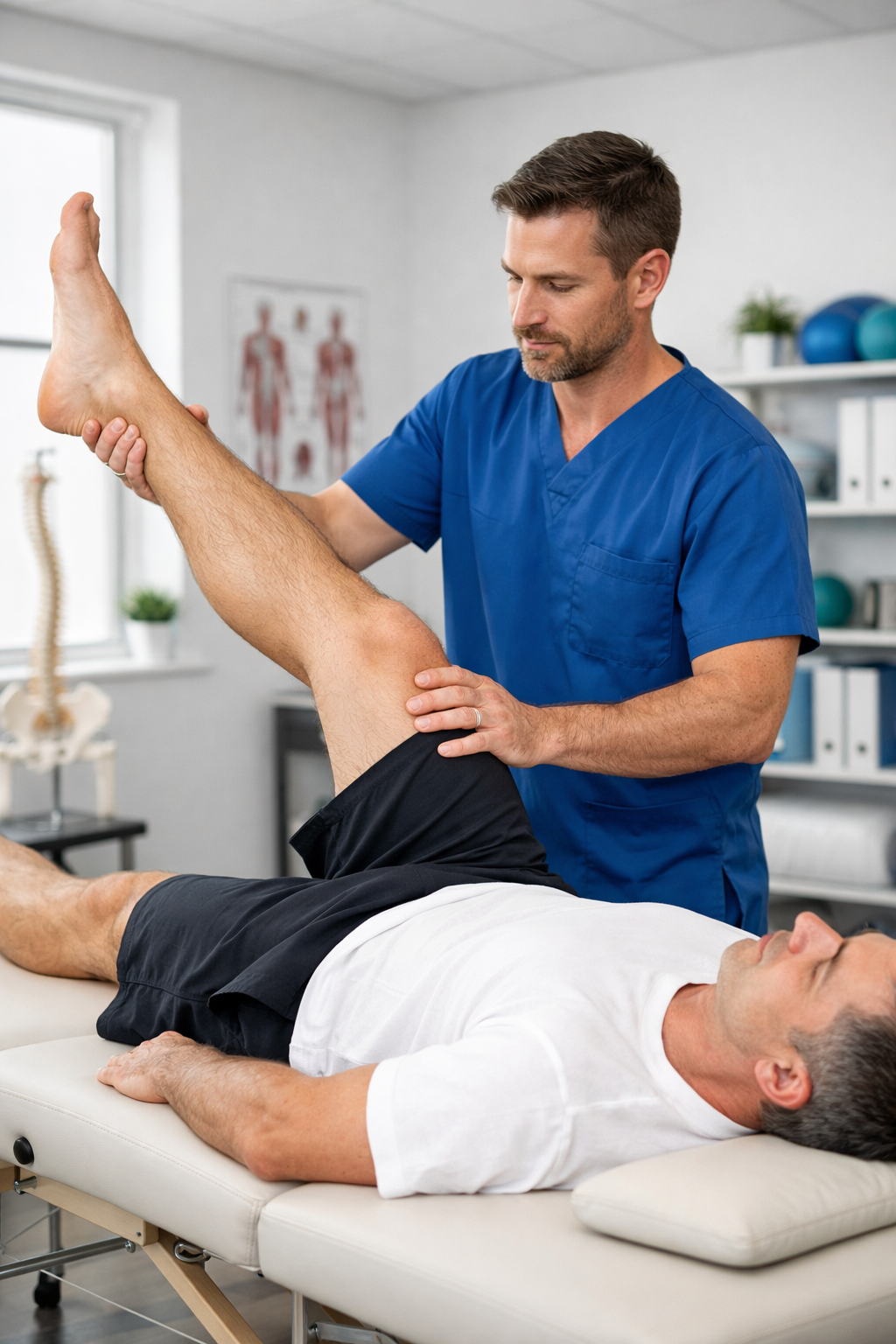
The first priority is reducing the nerve irritation driving your symptoms. Your licensed physical therapist will use manual therapy — hands-on joint mobilization and soft tissue techniques — to decompress restricted lumbar segments, reduce sacroiliac dysfunction, and release tension in the piriformis and gluteal muscles that may be impinging the sciatic nerve directly.
Alongside manual therapy, we use neural mobilization — often called nerve flossing or nerve gliding — to gently encourage the sciatic nerve to move more freely through the surrounding soft tissue tunnels. When a nerve has been compressed or irritated, it often becomes adherent to neighboring structures. Neural mobilization restores its ability to glide with movement, which reduces both pain and the hypersensitivity that makes even minor movements painful.
Core and Hip Strengthening
The lumbar spine doesn’t support itself — it depends on coordinated muscle activity from the deep core stabilizers, the glutes, and the hip musculature. When these muscles are weak or poorly coordinated, the spine absorbs loads it shouldn’t, and the discs and nerve roots pay the price.
Your strengthening program at Trinity Rehab will focus on:
- Deep core activation (transversus abdominis, multifidus) to provide internal spinal support during daily activities
- Progressive glute and hip exercises — bridges, clamshells, step-downs — to offload mechanical stress from the lumbar spine
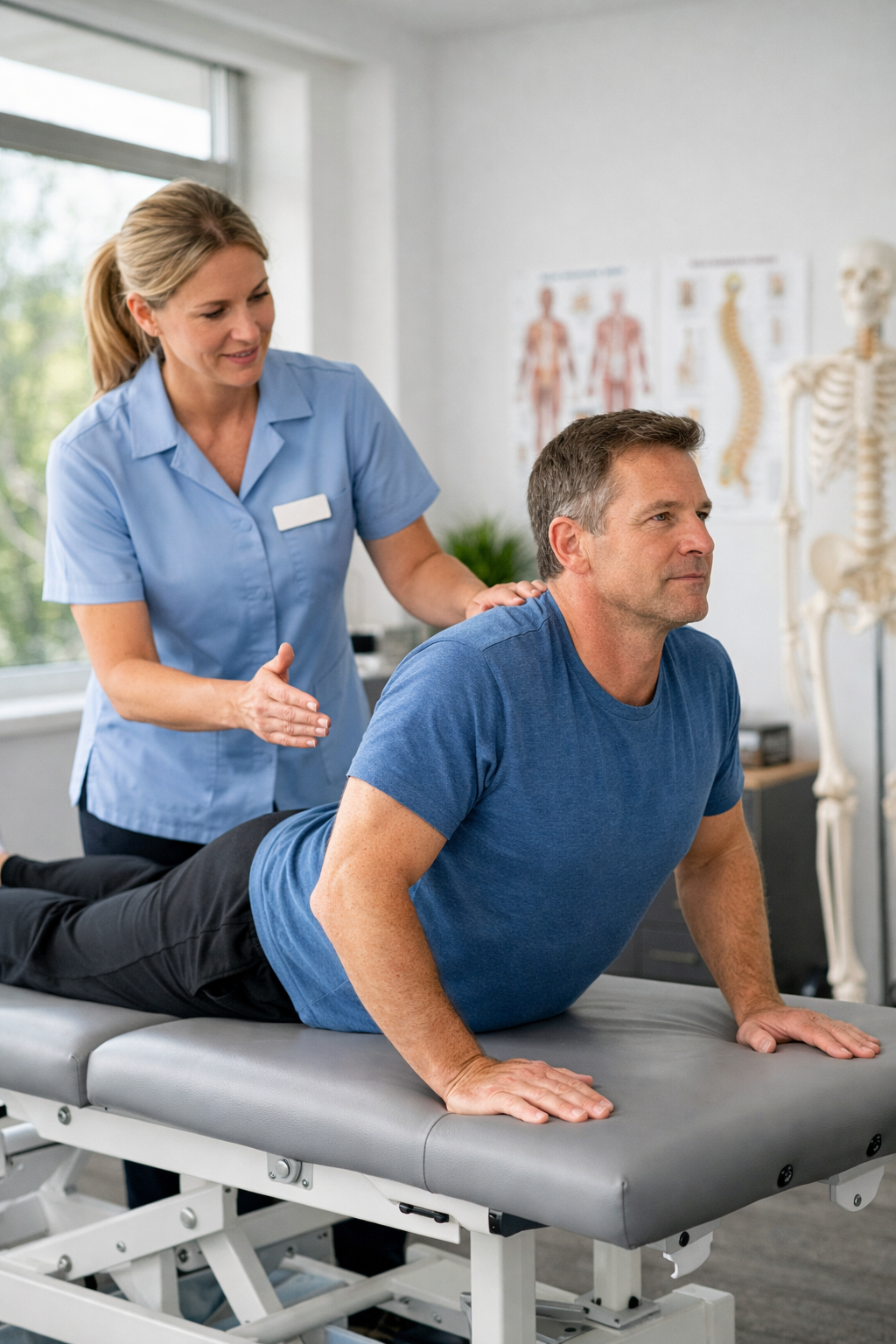
- McKenzie directional exercises for disc-related presentations, helping to centralize pain and reduce nerve root involvement
- Posture and body mechanics training so that the movements you repeat every day — sitting, lifting, carrying — stop being sources of cumulative lumbar stress
Dry Needling for Deep Muscle Release
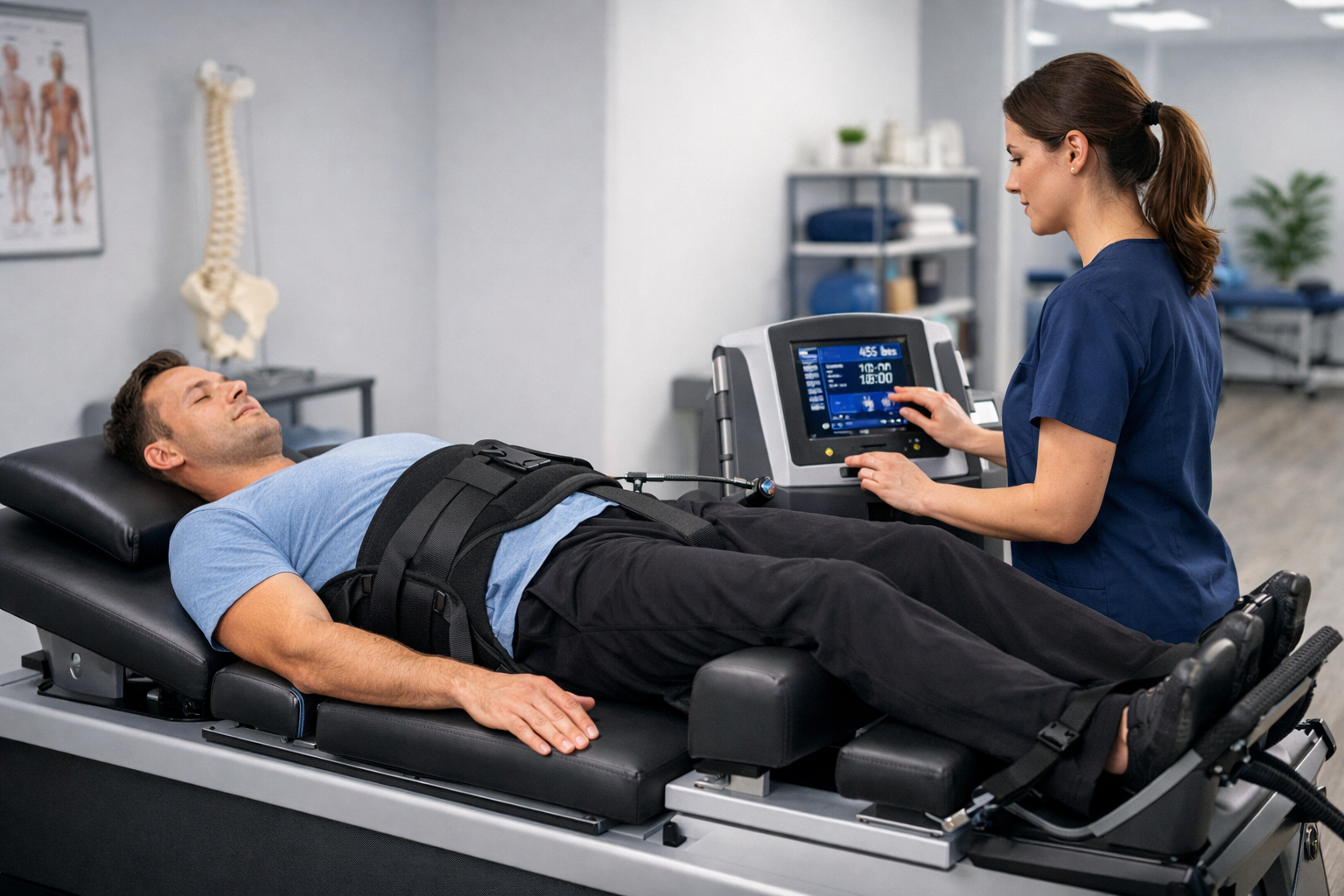
For Howell patients with persistent piriformis muscle tightness, stubborn paraspinal trigger points, or gluteal tension that doesn’t fully release with stretching and manual therapy, dry needling is an effective adjunct. This technique uses fine monofilament needles to target myofascial trigger points in the deep hip and lumbar muscles — releasing the kind of tension that manual therapy sometimes can’t reach on its own. Many patients notice a meaningful reduction in radiating leg symptoms after their first dry needling session.
Return to Activity
The final stage of your treatment is about putting your recovery into action. For Howell residents, that means getting back to the reservoir trail without pain, returning to the Saturday morning soccer sidelines, or making it through a full commute without dreading the drive home. Your therapist will design functional training that mirrors your actual daily life, and provide a clear home exercise program to maintain your gains and prevent future flare-ups.
Why Choose Trinity Rehab in Howell
Trinity Rehab’s Howell clinic is staffed by licensed physical therapists who provide hands-on, one-on-one care at every session. No aides, no group circuits, no being handed a sheet of exercises and left to your own devices.
Key reasons Howell patients choose us:
- Direct access — no referral needed: New Jersey’s Direct Access Law means you can call, book, and begin treatment without waiting for a physician’s authorization. That faster start makes a real difference for outcomes.
- Evidence-based protocols: Our treatment approach is grounded in current clinical research on lumbar radiculopathy, neural mobilization, and neuromuscular rehabilitation — not outdated routines.
- Convenient scheduling: Early morning and evening appointments are available for Howell commuters who can’t afford to take time off work.
- Personalized plans: No two cases of sciatica are identical. We evaluate your specific presentation and build a treatment plan around your goals — whether that’s getting back to the reservoir trails, resuming your golf game at Howell Park Golf Course, or simply sleeping through the night without pain.
Learn more about our approach to back pain treatment.
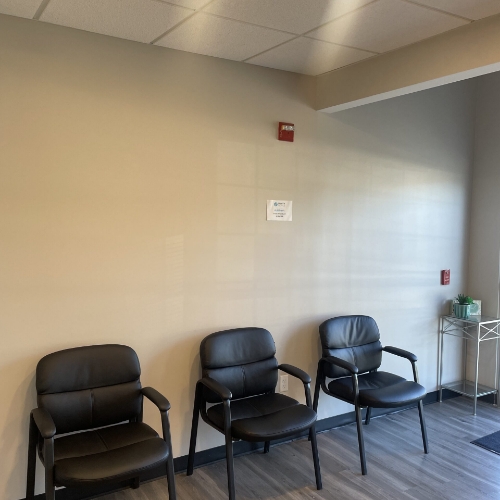
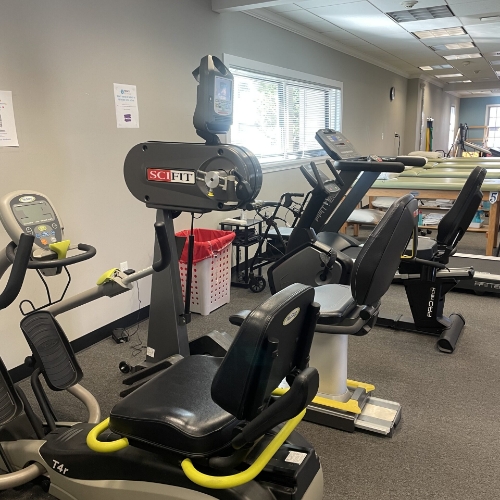
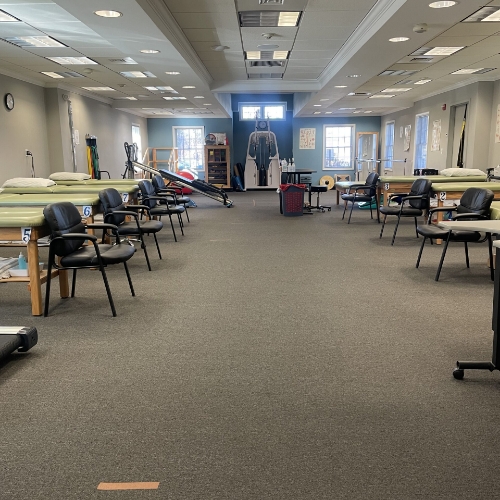
Inside Our Howell Clinic
Related Conditions & Treatments
Sciatica is just one of the many conditions we treat at Trinity Rehab Howell. Explore our full range of conditions we treat or learn more about specific treatment approaches:
- Sciatica Treatment Overview
- Back Pain Treatment
- Hip & Knee Pain Relief
- Manual Therapy
- Dry Needling
- EPAT / Shockwave Therapy
Howell Sciatica Rehab For Leg Pain, Sitting Pain, And Walking Tolerance
Sciatica-like symptoms can make sitting, driving, bending, sleeping, and walking difficult. Howell patients need a plan that separates nerve-related leg pain from back, hip, or muscle-driven symptoms.
Your therapist may assess symptom behavior, lumbar mobility, nerve tension, hip strength, walking tolerance, and positions that calm or worsen symptoms. Progressive weakness, numbness, or bowel/bladder changes should be medically reviewed urgently.
Related spine options include back pain physical therapy, lumbar disc herniation rehab, and the Howell physical therapy clinic page.
Frequently Asked Questions
Howell Sciatica Rehab For Leg Pain, Sitting Pain, And Walking Tolerance
Sciatica-like symptoms can make sitting, driving, bending, sleeping, and walking difficult. Howell patients need a plan that separates nerve-related leg pain from back, hip, or muscle-driven symptoms.
Your therapist may assess symptom behavior, lumbar mobility, nerve tension, hip strength, walking tolerance, and positions that calm or worsen symptoms. Progressive weakness, numbness, or bowel/bladder changes should be medically reviewed urgently.
Related spine options include back pain physical therapy, lumbar disc herniation rehab, and the Howell physical therapy clinic page.
Where can I get sciatica treatment in Howell, NJ?
Does Trinity Rehab Howell accept my insurance?
How quickly will I feel better?
Will I need surgery for sciatica?
Can I continue exercising while treating sciatica?
Howell residents dealing with sciatic nerve pain deserve more than a prescription for rest and over-the-counter medication. Physical therapy addresses the root cause, builds long-term resilience, and gets you back to the active Howell lifestyle you expect.
- Request your appointment — No referral required. Pick a time that fits your schedule.
- Get a thorough evaluation — Your therapist will identify exactly what is driving your sciatica and build a plan around your specific needs and goals.
- Recover with expert guidance — One-on-one care at every session means you’re never guessing. You’ll build strength, reduce pain, and gain the tools to keep sciatica from coming back.
Ready to stop letting sciatica limit your life in Howell? Schedule your appointment at Trinity Rehab today.