Knee Pain Treatment in Warren, NJ: Physical Therapy for an Active Watchung Mountains Community
Warren Township is an affluent, outdoor-oriented community tucked into the eastern edge of the Watchung Mountains. Residents here tend to be highly active — they run the trails at Glenhurst Meadows and East County Park, compete in tennis and pickleball leagues, cheer on Watchung Hills Regional High School Warriors, and commute from a community that values staying fit and staying sharp. The natural terrain — rolling hills, uneven wooded trails, and elevation changes along the Passaic River watershed — is beautiful and demanding in equal measure.
Knee pain in Warren doesn’t just hurt. It interrupts the outdoor lifestyle that drew many residents here in the first place. It slows the morning run, sidelines the tennis match, and makes the Dealaman Nature Trail feel like a liability instead of a pleasure. At Trinity Rehab, we help Warren residents identify the source of their knee pain and restore the function that lets them enjoy what Somerset County’s hill country has to offer.
Knee Injury Risk in Warren: Who Gets Hurt and Why
Warren’s combination of active recreation, competitive high school athletics, and an affluent professional population creates a specific set of knee stress patterns.
Watchung Hills Regional High School Warriors compete in 29 varsity sports within the Skyland Conference — one of New Jersey’s more competitive athletic associations. The lacrosse program has won multiple state titles; football, softball, wrestling, and track are all highly active programs. Athletes cutting, jumping, and pivoting at competitive intensity are among the most at-risk population for ACL tears, meniscus injuries, and patellofemoral syndrome. Many Warriors athletes train year-round or participate in club sports in addition to high school programs — increasing the overuse component of injury risk.
Trail runners and hikers on the Watchung Mountain terrain face the same fundamental challenge as any trail athlete on hilly ground: the eccentric loading on the knee during descent. Whether logging miles through Glenhurst Meadows, around Dealaman Nature Trail’s pond loop, or on the paths through East County Park, runners in Warren deal regularly with IT band syndrome, patellofemoral pain, and knee osteoarthritis aggravation. Disc golf players at Greenwood Meadows Park add rotational knee stress to the mix.
Tennis and pickleball players at Warren Health & Racquet Club — and increasingly at community courts throughout the township — make lateral movements that place significant stress on the medial and lateral knee structures. The rapid direction changes of pickleball in particular are correlated with MCL and meniscus stress, especially in adults over 45 who’ve added the sport to their fitness routine.
Corporate commuters and desk workers. Warren Corporate Center, home to PTC Therapeutics, Lightspeed, and numerous other professional services firms, employs thousands of commuters who spend the majority of their day seated before driving 30-plus minutes home. Prolonged sitting compresses the patellofemoral joint, shortens hip flexors and hamstrings, and creates the muscle imbalances that make the knee vulnerable to pain during the weekend athletic activity that breaks up an otherwise sedentary work week. The “weekend warrior” pattern — sedentary during the week, intensely active on weekends — is a reliable setup for knee overuse injuries.
Older adults managing progressive osteoarthritis. Warren’s median age of 44.7 and its high percentage of residents 65 and older (18%) means a meaningful portion of the community is managing age-related knee arthritis. Physical therapy is the most effective non-surgical intervention for knee osteoarthritis at every stage.
Knee Pain Symptoms That Signal It’s Time to Act
In a community where staying active is central to identity, it’s tempting to push through knee discomfort and hope it resolves. These symptoms suggest the situation deserves professional attention:
- Pain that appears predictably after specific activities — a certain trail distance, a set of tennis drills, a morning run — and doesn’t resolve with rest within 24–48 hours
- Morning stiffness lasting more than 15 minutes, especially in the knees and hips
- Swelling that appears after activity and takes days to fully subside
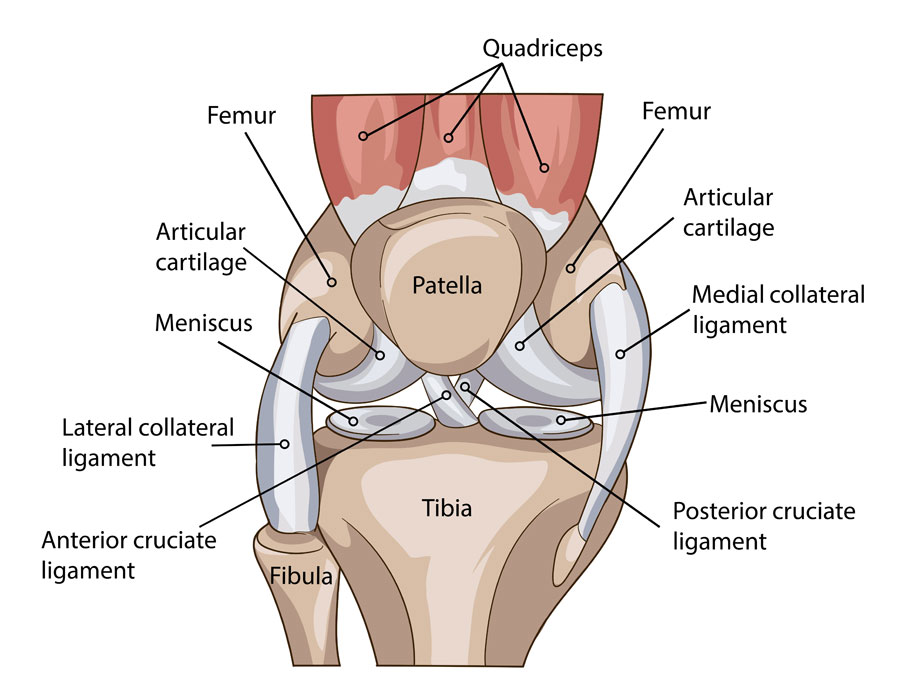
- Any sense of the knee giving way, catching, or locking during movement
- Pain that has gradually worsened over months rather than staying stable
- Knee discomfort that’s limiting how far you’ll walk, which trails you’ll take, or whether you’ll play
Personalized Knee Pain Treatment at Trinity Rehab
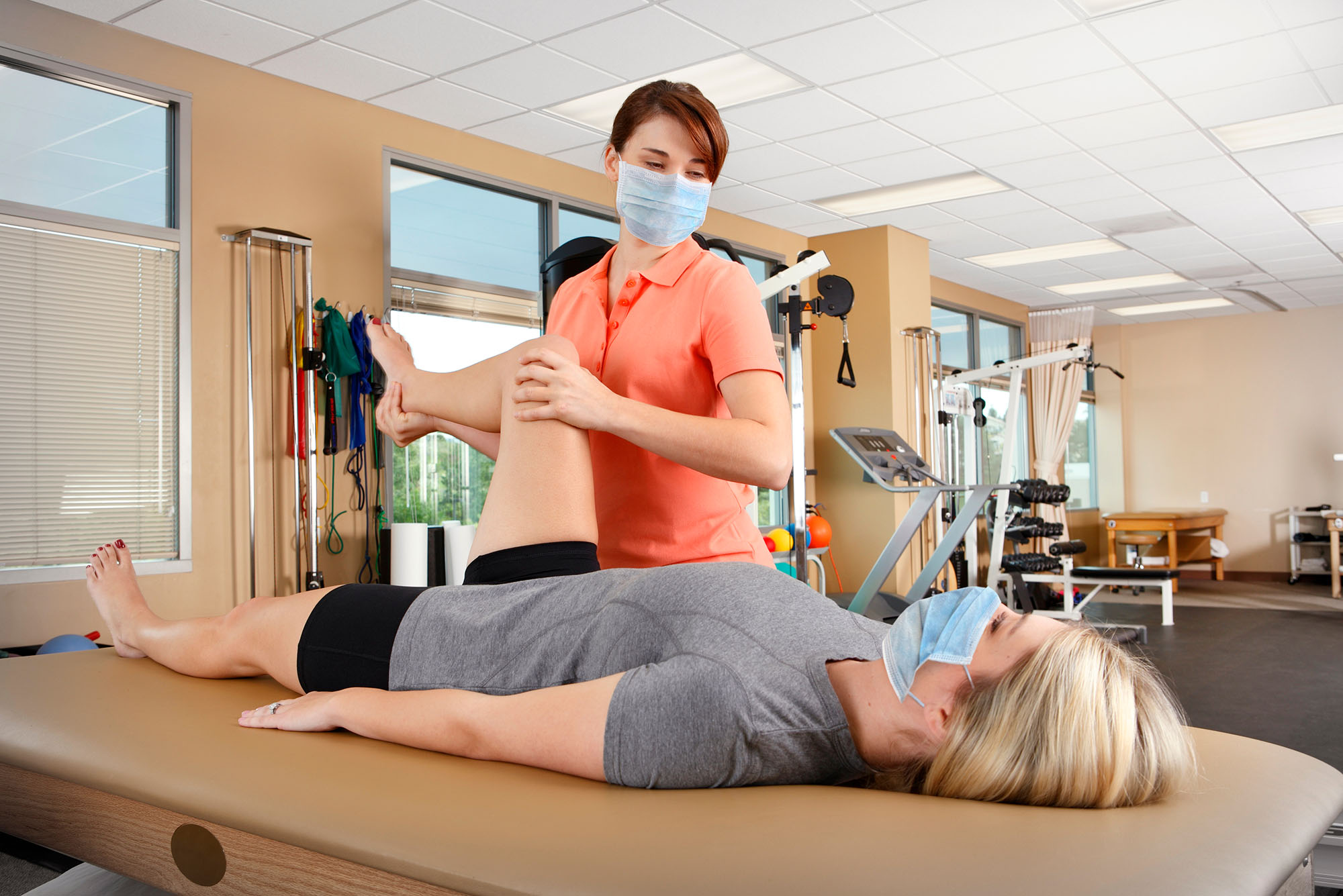
Every treatment plan at Trinity Rehab begins with a thorough evaluation — not a standard intake form but a clinical examination of how your knee moves, where it hurts, what’s weak, and what structures are involved. That evaluation drives everything that follows. Treatment is one-on-one with a licensed physical therapist from start to finish.
Manual Therapy: Hands-On Relief
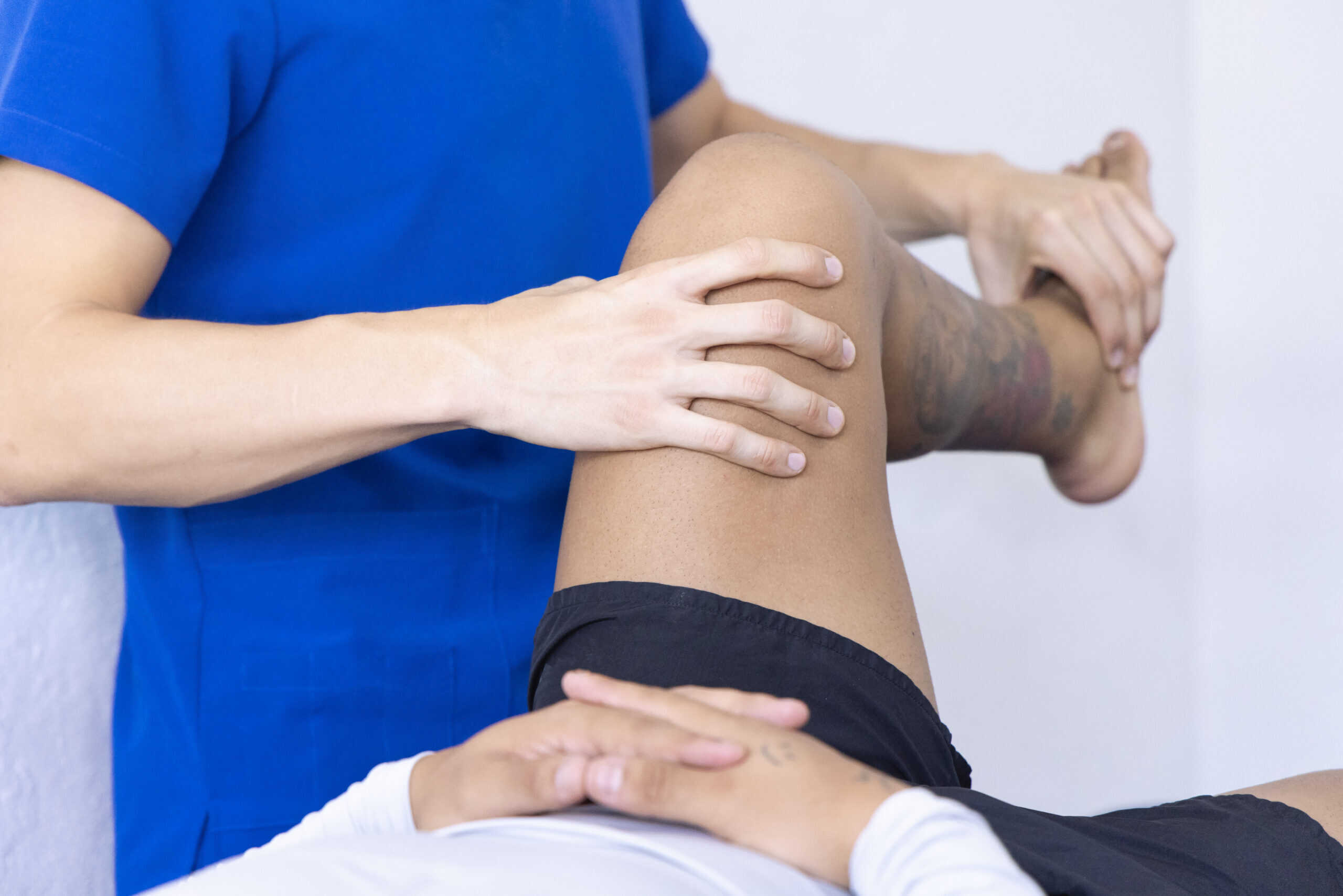
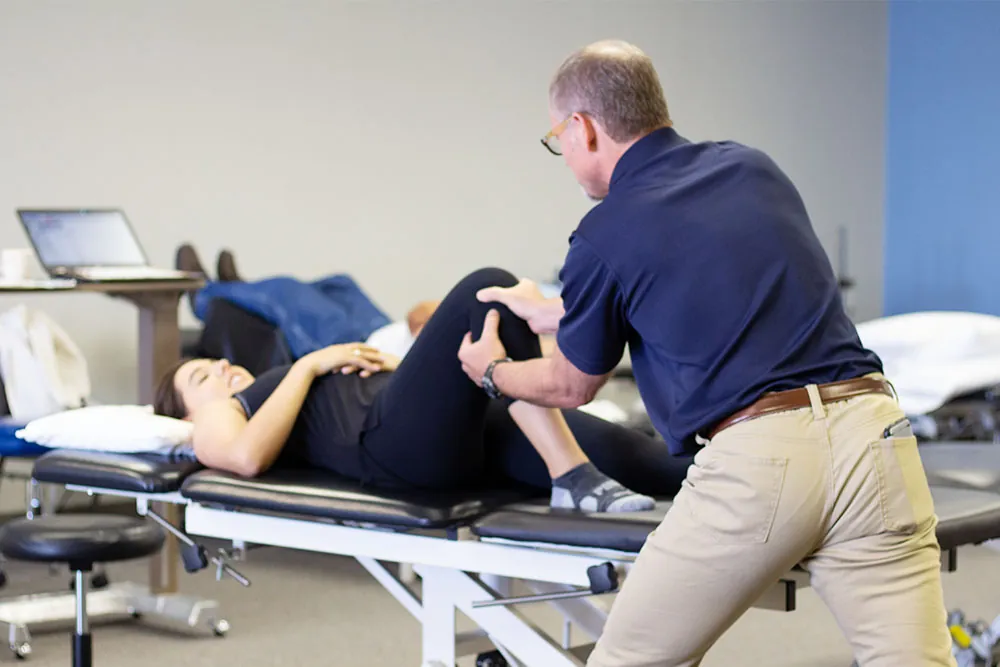
Manual therapy provides immediate, measurable improvements in pain and mobility that exercise alone cannot achieve in early treatment. For Warren patients, this typically includes joint mobilization to restore normal knee mechanics, patellar mobilization to correct tracking issues, and soft tissue work targeting the IT band, posterior chain, and hip structures that contribute to knee loading.
Strengthening: Targeting the Root Cause
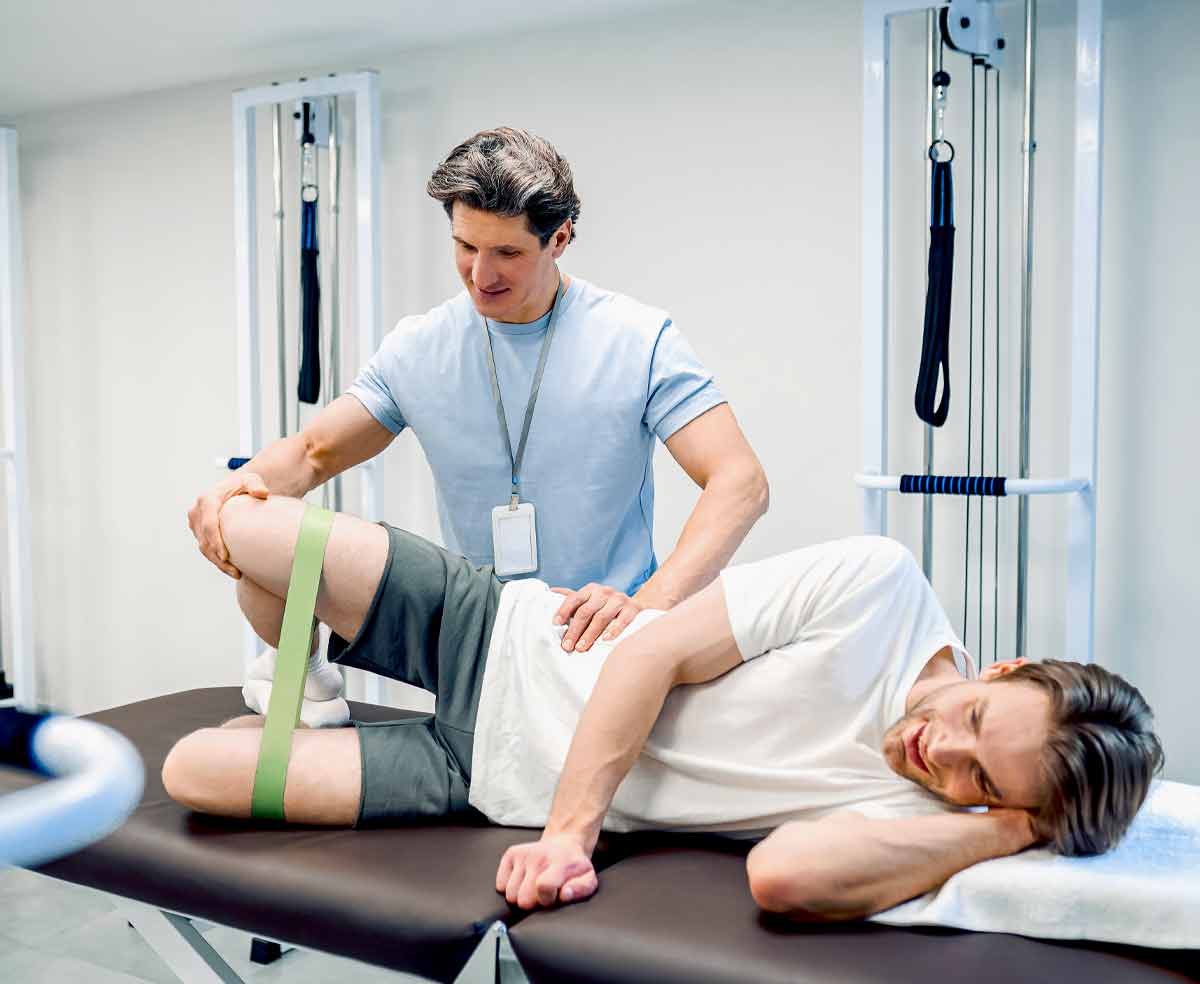
Hip and quadriceps weakness is the mechanical root cause of nearly every knee condition seen in an active population like Warren’s. Your therapist designs a progressive strengthening program specific to your sport or activity — balancing quad and posterior chain development, addressing hip abductor weakness that allows the knee to collapse inward during cutting and landing movements, and building the rotational stability that protects the knee in tennis and pickleball.
For Warriors athletes recovering from ligament or meniscus injuries, sport-specific strengthening progressions return them to competition with the strength and proprioceptive control needed to reduce re-injury risk.
EPAT Shockwave Therapy for Chronic Tendon and Tissue Pain
Warren’s active adults often present with stubborn, chronic tendon pain — patellar tendonitis that has persisted for years, IT band pain that flares with every increase in mileage, or soft tissue conditions that haven’t fully responded to previous treatment. EPAT shockwave therapy addresses these conditions by stimulating the body’s natural healing response at the tissue level, accelerating recovery and reducing pain that has become chronic.
Dry Needling for Persistent Muscle Tension
Active adults in Warren frequently present with significant muscle tension in the quads, glutes, and posterior chain from heavy training loads, prolonged commutes in a seated position, or accumulated compensation patterns around an older injury. Dry needling releases trigger points that stretching and massage cannot fully address, improving muscle activation and accelerating the response to strengthening.
Neuromuscular Training for Trail and Court Athletes
The uneven terrain of Warren’s trail system demands real-time neuromuscular control — the kind of automatic balance and stabilization response that makes the knee safe on a root-covered trail or an unexpected muddy descent. Neuromuscular training rebuilds that capacity specifically, using progressive balance challenges, proprioceptive drills, and functional movement training tailored to the activities you’re returning to.
Conditions We Treat
- IT band syndrome — Common in Warren trail runners on hilly terrain
- Patellofemoral syndrome — Widespread in the running and court sports community
- ACL and meniscus injuries — Frequent in Watchung Hills Warriors athletes
- Knee osteoarthritis — A primary focus for Warren’s significant 65+ population
- Patellar tendonitis — In running and jumping athletes; EPAT provides excellent outcomes
- Post-surgical rehabilitation — Following knee replacement or ACL reconstruction
- MCL and collateral ligament sprains — Common in tennis, pickleball, and contact sports
Related: sports injuries treatment | sciatica treatment
Why Warren Residents Trust Trinity Rehab
Warren’s residents are accustomed to high standards — in their careers, their homes, and their healthcare. At Trinity Rehab, the standard is one-on-one care with a licensed physical therapist for every session. Not group classes. Not aide-supervised exercise time. A therapist who knows your case, tracks your progress, and adjusts your program based on how you’re actually responding.
We’re also equipped with technology that most physical therapy practices don’t offer: AlterG anti-gravity treadmill, EPAT shockwave therapy, and dry needling — integrated into care when the clinical evidence supports them.
No referral needed in New Jersey. You can call Trinity Rehab today and begin treatment without waiting for a doctor’s appointment — getting to care faster means getting better faster.
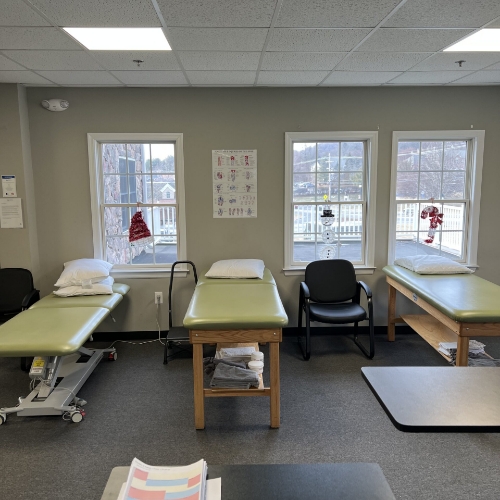
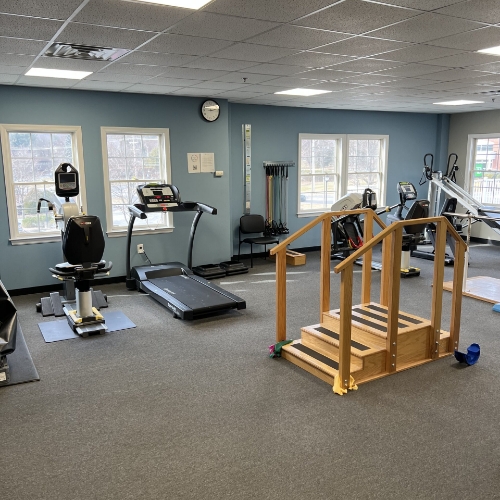
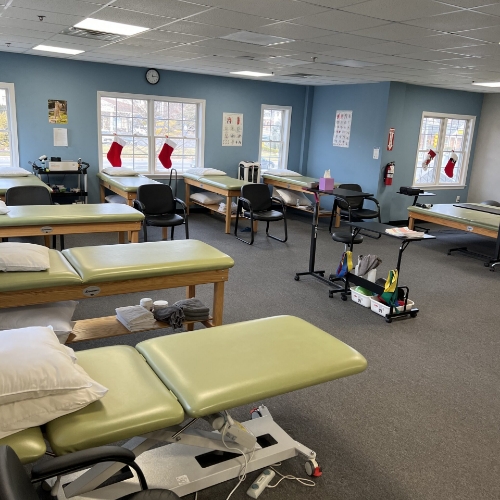
Inside Our Warren Clinic
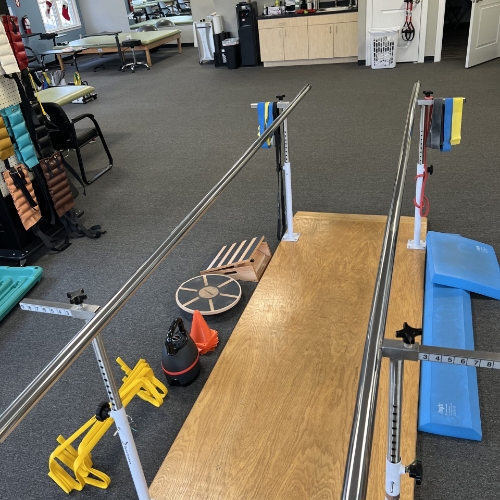
Related Conditions & Treatments
Knee pain is just one of the many conditions we treat at Trinity Rehab. Explore our full range of conditions we treat or learn more about specific treatment approaches:
Warren Knee Rehab For Stairs, Walking, And Daily Confidence
Knee pain can make stairs, walking, exercise, work, and getting in and out of a car more difficult. Warren rehab should identify whether strength, mobility, balance, swelling, or movement mechanics are driving the issue.
Your therapist may assess knee motion, quad and hip strength, walking mechanics, balance, and activity tolerance. The plan can progress from symptom control to stronger, more confident movement.
Related care includes ACL rehab, meniscus tear rehab, and the Warren physical therapy clinic page.
Frequently Asked Questions
Warren Knee Rehab For Stairs, Walking, And Daily Confidence
Knee pain can make stairs, walking, exercise, work, and getting in and out of a car more difficult. Warren rehab should identify whether strength, mobility, balance, swelling, or movement mechanics are driving the issue.
Your therapist may assess knee motion, quad and hip strength, walking mechanics, balance, and activity tolerance. The plan can progress from symptom control to stronger, more confident movement.
Related care includes ACL rehab, meniscus tear rehab, and the Warren physical therapy clinic page.
I run the trails around Warren regularly — why does my knee hurt more going downhill?
My teen plays lacrosse for Watchung Hills — can physical therapy help prevent ACL injury?
I sit at a desk all day and then try to run on weekends. Is this why my knees hurt?
Does physical therapy help avoid knee replacement surgery?
Is a doctor's referral required for physical therapy in New Jersey?
Get Back to the Watchung Hills
Learn more about knee pain treatment
Related resources: Knee Pain Treatment Hub | Hip & Knee Pain Relief | Sciatica Treatment | EPAT Therapy | Sports Injuries
What Our Patients Say



Sign up for free health tips and tricks