
SCIATICA TREATMENT IN SHREWSBURY, NJ
There is a particular cruelty to sciatic nerve pain when you live in Shrewsbury. On any given Saturday morning, you might be looking forward to a paddle on the Navesink River, a round at Suneagles Golf Club, or an afternoon coaching your child’s rec soccer team at Shrewsbury Borough fields — and then a sharp, electric bolt from your lower back into your leg stops you cold. For the many Shrewsbury residents who commute to New York City via NJ Transit from Red Bank, that same pain can make a 60-minute train ride feel like an ordeal. Sciatic nerve pain does not care about your weekend plans or your work schedule. But the right treatment does — and that is exactly what Trinity Rehab brings to the Shrewsbury area.
Understanding Sciatica
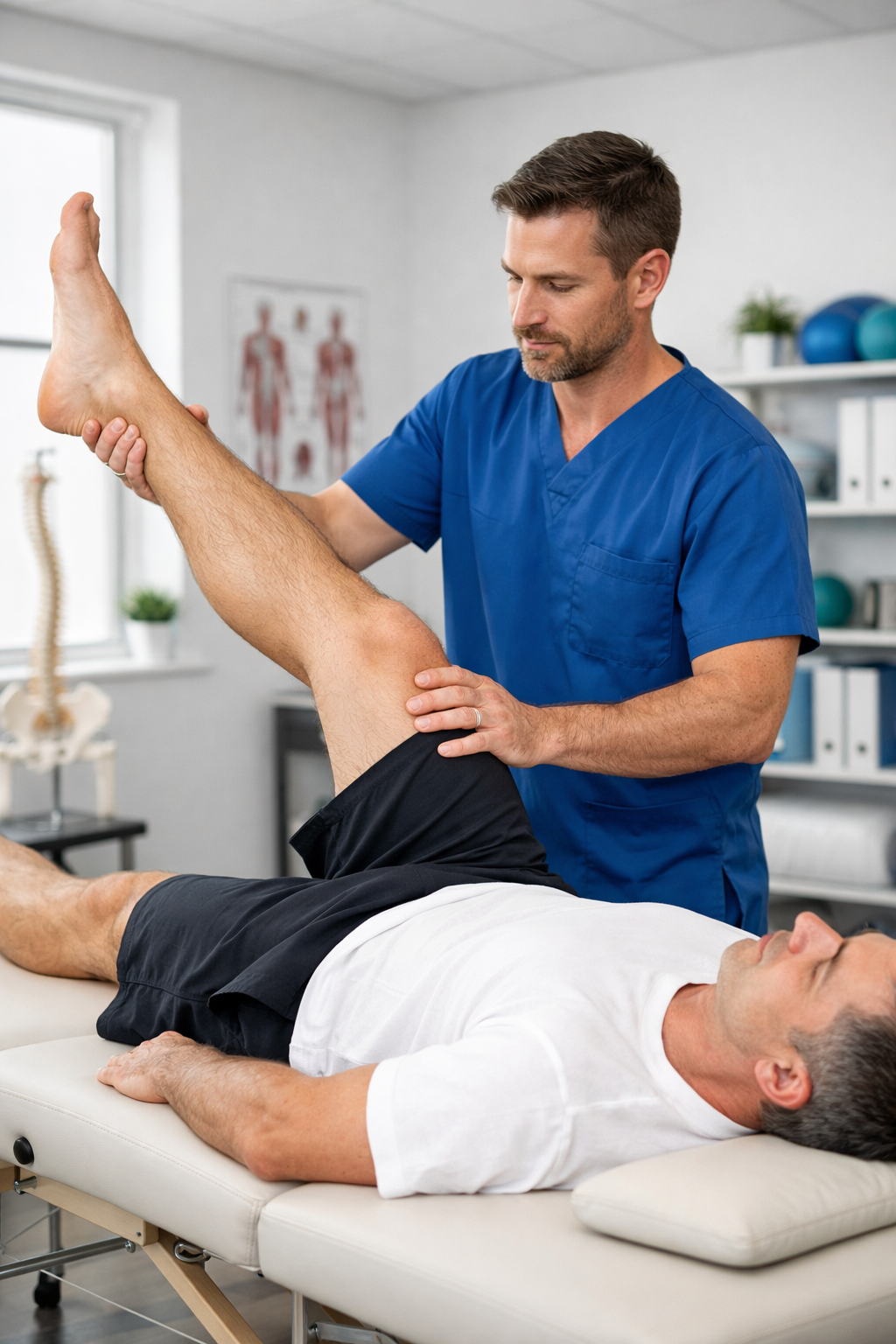
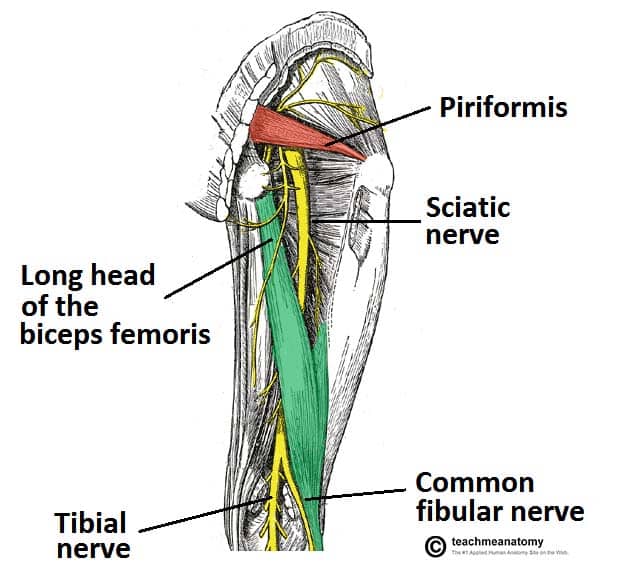
Sciatica is the term used to describe pain, numbness, or tingling that travels along the path of the sciatic nerve — which runs from the lumbar spine through the buttock and down the back of each leg. Clinically, it is known as lumbar radiculopathy: compression or irritation of a nerve root in the lower back that produces radiating symptoms into the leg. The sciatic nerve is the body’s longest, and when it is irritated, every step, every sitting position, and every sneeze can amplify the discomfort.
What distinguishes sciatica from ordinary lower back pain is that characteristic one-sided, downward-traveling sensation. Some patients describe a deep, burning ache; others feel a sharp shock that shoots from the buttock into the calf or foot. Numbness, weakness, or “pins and needles” in the leg and toes frequently accompany the pain. The underlying cause — whether a herniated disc, a tight piriformis muscle, degenerative disc disease, or spinal stenosis — shapes both the symptoms and the most effective treatment approach. That is why a proper evaluation by a licensed physical therapist is always the right starting point.
According to Cleveland Clinic, approximately 40% of adults will experience sciatica at some point. Most cases improve with conservative care — but only when that care addresses the root cause rather than just masking pain.
What Triggers Sciatica in Shrewsbury Residents
Shrewsbury sits at an interesting crossroads of lifestyles that each carry their own sciatica risk factors:
NYC commuters and desk workers. A large share of Shrewsbury’s population commutes to New York daily — via NJ Transit rail from Red Bank station, by ferry from Highlands or Atlantic Highlands, or along the Garden State Parkway. Long stretches of sitting in car seats and train cars compress the lumbar discs and tighten hip flexors, creating the exact conditions in which a disc herniation or piriformis syndrome develops. Many residents employed at Riverview Medical Center (just two miles away in Red Bank) or at the offices and retail establishments in the Grove at Shrewsbury also spend significant portions of their day seated.
Recreational river and water activities. The Shrewsbury and Navesink Rivers offer exceptional kayaking, paddleboarding, and boating, and the proximity to the Jersey Shore means summer often involves beach volleyball, paddleboarding, and surfing at nearby spots. Repetitive rotation through the lower back during paddling, the awkward mechanics of lifting a kayak or paddleboard overhead, and the uneven footing of beach sports all put the lumbar spine and sciatic nerve at risk.
YMCA fitness and racquet sports. With the YMCA of the Jersey Shore headquartered in Shrewsbury and the New Shrewsbury Racquet Club offering year-round indoor tennis and pickleball, many residents are active in lateral-movement sports that load the lumbar spine asymmetrically. Tennis serves, pickleball lunges, and high-intensity fitness classes can all contribute to disc irritation or piriformis tightness over time.
Seasonal yard and garden work. Spring gardening and fall leaf cleanup are a fact of life in this tree-lined community, and the repetitive forward bending of raking and planting is a classic trigger for lumbar disc problems. Shrewsbury winters also bring heavy, wet snow that puts intense strain on the lower back during shoveling — a common culprit behind sudden sciatica flare-ups each January and February.
Historic-district and property upkeep. Shrewsbury’s historic character comes with older homes that require ongoing maintenance — painting, hauling materials, climbing ladders — all of which can load the spine in ways that aggravate existing disc vulnerabilities.
Symptoms That Warrant Attention
Sciatica tends to announce itself clearly, but the severity and pattern of symptoms vary depending on the underlying cause:
- One-sided radiating pain that travels from the lower back through the buttock and into the leg or foot — often described as burning, shooting, or electric
- Numbness or tingling in the affected leg, particularly in the outer calf or sole of the foot
- Leg or foot weakness — difficulty pushing off when walking, or noticing the foot drags slightly
- Pain that spikes with sitting — especially on long NJ Transit commutes or extended desk work sessions
- Relief when walking or lying down — movement can temporarily ease nerve tension for many patients
- Symptoms on one side only — bilateral leg symptoms suggest a different condition and should be evaluated promptly
Picture a Shrewsbury resident who spent a Saturday morning hauling kayak gear to the Navesink River, then sat in traffic for an hour getting home — and woke up Sunday with a searing line of pain from the left buttock to the knee. That gradual-onset pattern, triggered by a combination of repetitive load and prolonged sitting, is a textbook sciatica presentation.
If you are experiencing severe, rapidly worsening leg weakness, loss of bladder or bowel control, or saddle-area numbness, seek medical attention immediately rather than starting physical therapy first.
How Trinity Rehab Treats Sciatica
At Trinity Rehab, treatment is not a one-size-fits-all protocol — it is a structured, individualized process that evolves as you get stronger. Here is how your recovery typically unfolds:
Phase 1: Calming the Nerve and Reducing Pain
The first goal is to reduce inflammation, calm the irritated nerve root, and restore enough comfortable mobility to move forward. Your Trinity Rehab physical therapist will use:
- Manual therapy — hands-on joint mobilization and soft tissue work targeted at lumbar stiffness, disc-related compression, and the hip and gluteal tightness that often drives piriformis irritation of the sciatic nerve
- Neural mobilization (nerve gliding) — gentle, specific movements that encourage the sciatic nerve to glide freely through surrounding tissue, reducing the hypersensitivity that makes every step feel threatening
- Targeted stretching — of the piriformis, hip flexors, and hamstrings, addressing the specific muscular tightness patterns associated with your cause of sciatica
- Modalities for pain control — heat, cold, or electrical stimulation as appropriate to reduce guarding and allow more effective therapeutic movement
Phase 2: Rebuilding the Support System
Once acute pain is under control, therapy shifts to strengthening the muscles that protect your lumbar spine from re-injury. This phase is where lasting recovery is built:
- Core stabilization — activating the deep stabilizers (transversus abdominis, multifidus) that form your spine’s natural brace, so that everyday activities like commuting, paddling, or lifting yard debris no longer overload the disc
- Hip and glute strengthening — targeting the gluteus medius and maximus to reduce compensatory lumbar loading; this is especially important for tennis and pickleball players where lateral hip stability governs lower back stress
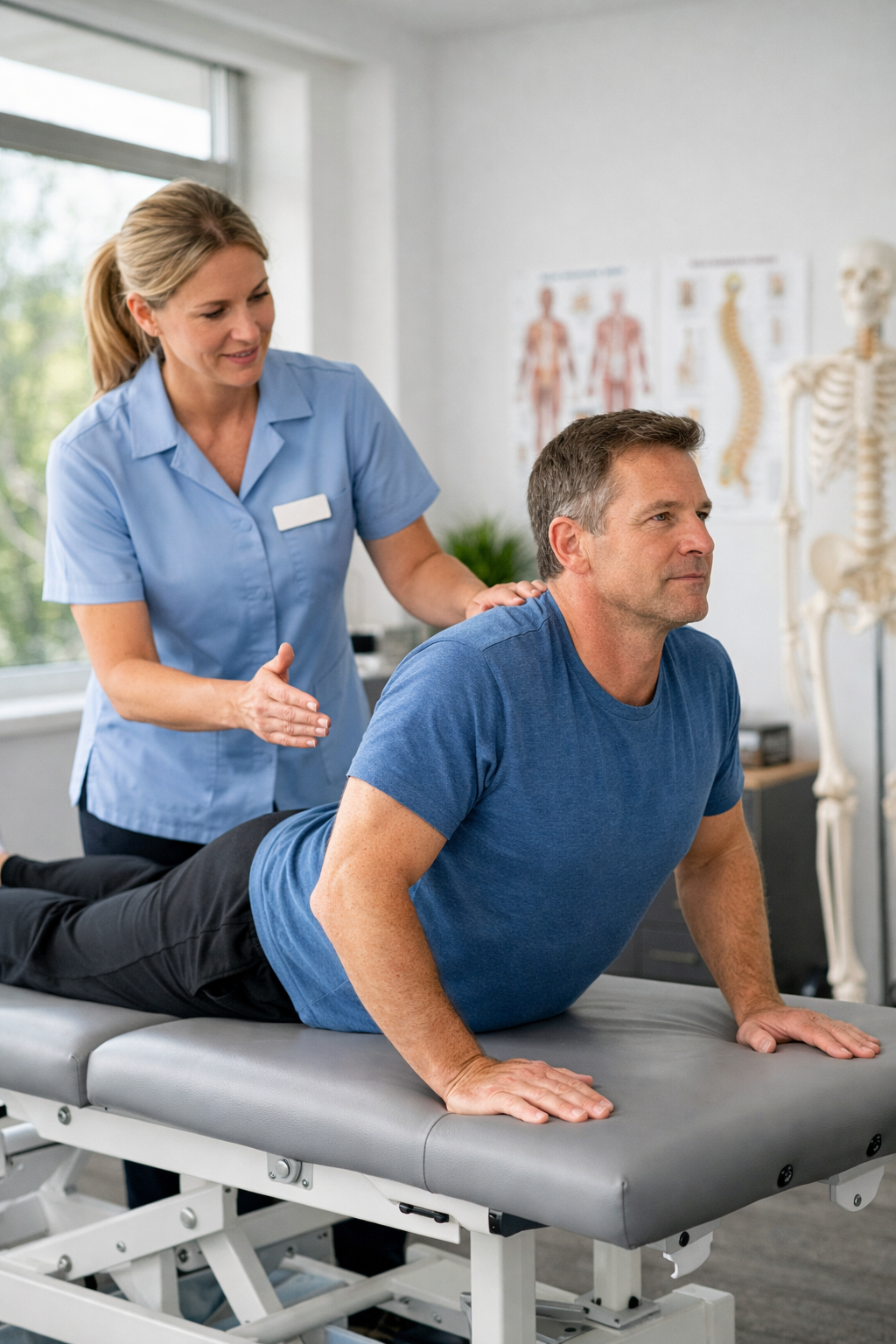
- McKenzie method exercises — a research-backed directional movement approach particularly effective for disc-related sciatica; helps centralize radiating pain and restore full range of motion
- Dry needling — when piriformis or paraspinal trigger points are limiting progress, dry needling releases deep muscular tension that stretching alone cannot resolve
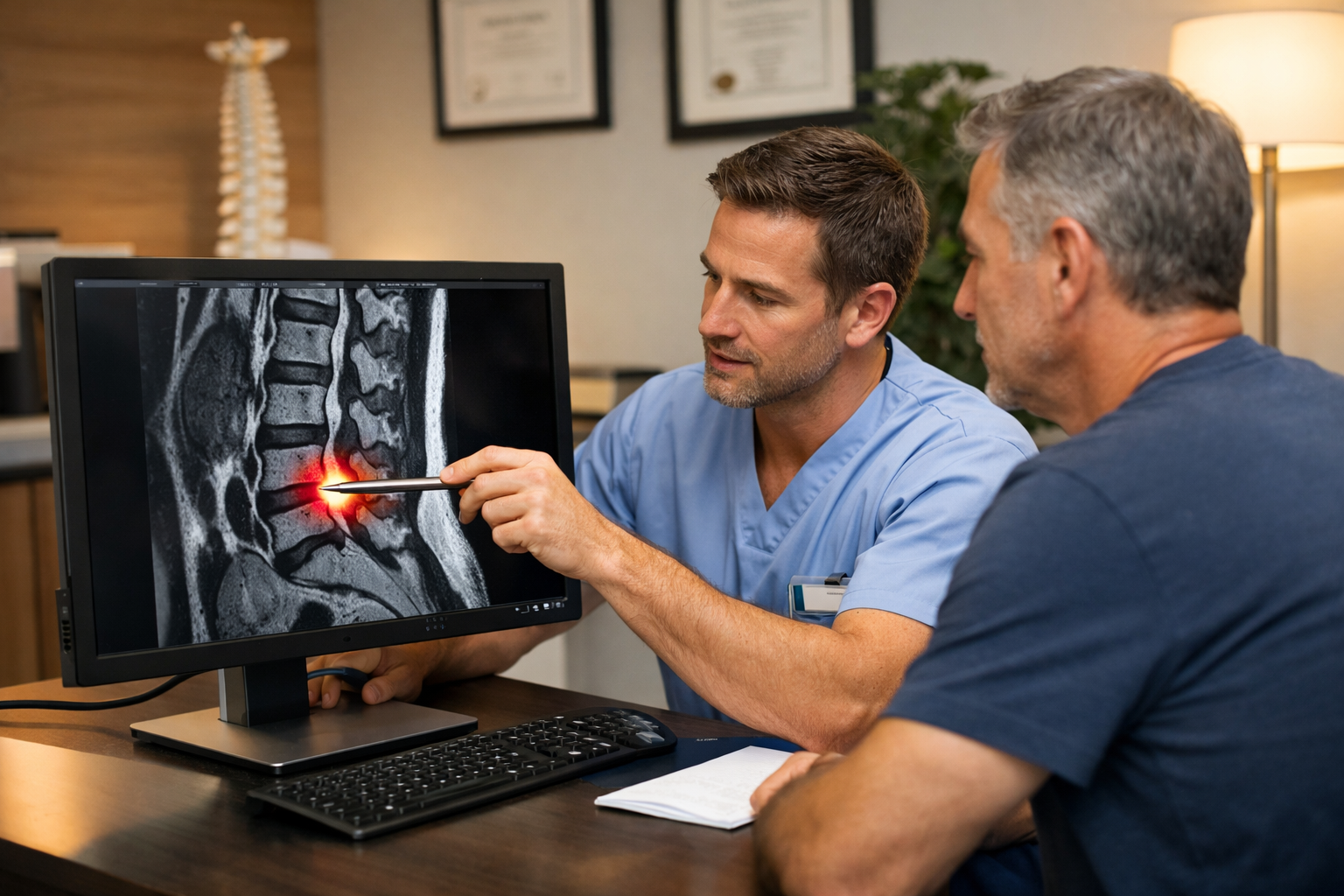
Phase 3: Return to Your Shrewsbury Life
The final phase prepares you for the specific demands of your daily activities — returning to the kayak, the tennis court, the golf course at Suneagles, or the NJ Transit commute without bracing for pain:
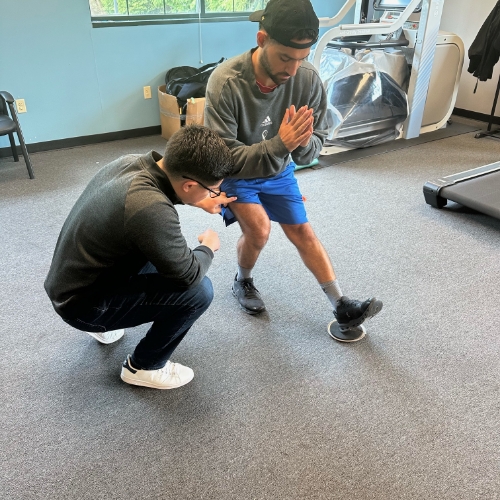
- Functional movement training — exercises that replicate your real activities: the rotation of a paddle stroke, the hip hinge of picking up a golf bag, the sustained posture of a 60-minute train ride
- Sport-specific conditioning — for racquet sport players and water sport enthusiasts, progressive loading through the lumbar spine in sport-relevant planes of movement
- Injury prevention education — understanding your individual risk factors, how to modify activities during a flare-up, and what early warning signs to watch for
- Home exercise program — a simple, sustainable routine you can maintain independently to protect your spine long-term
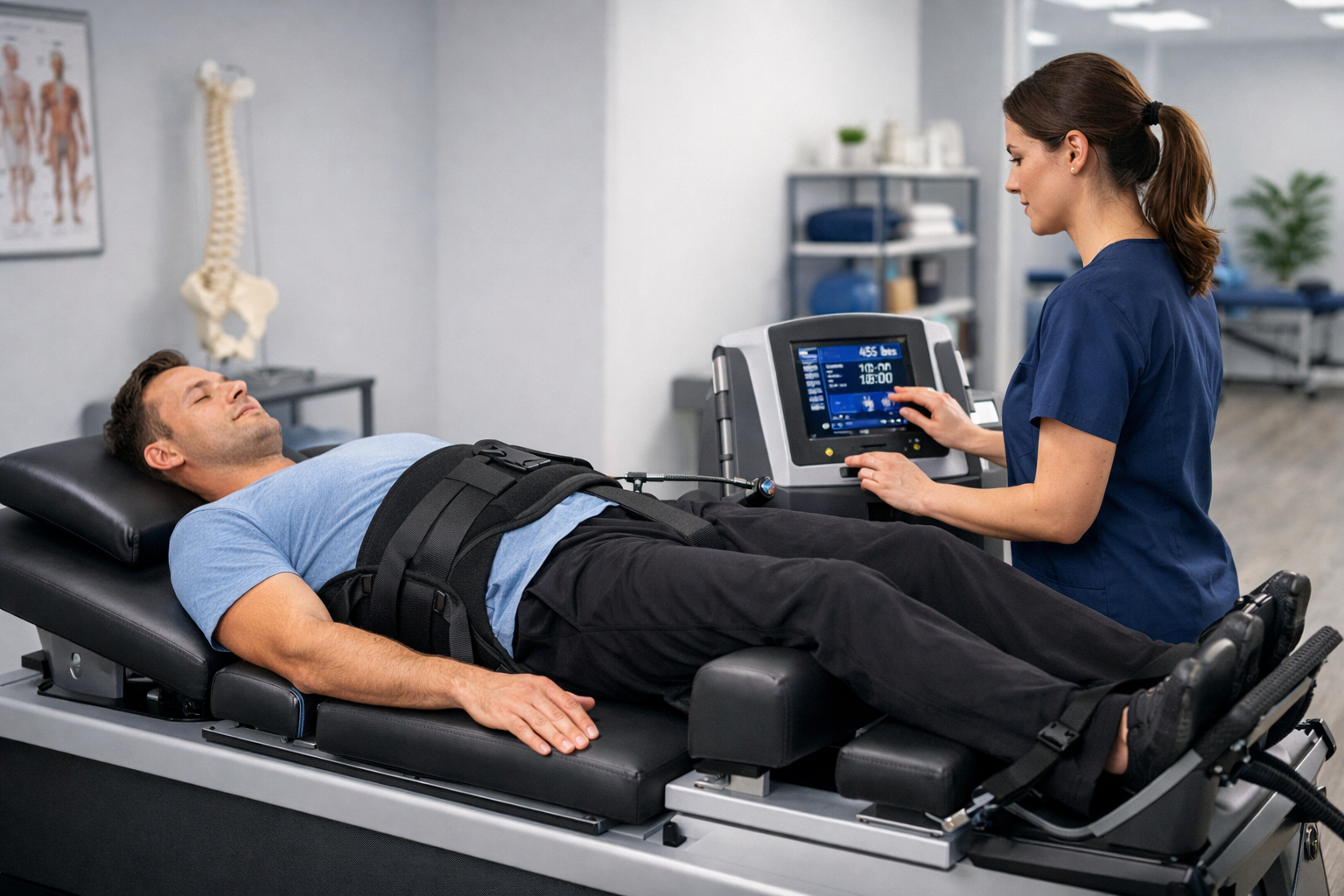
Why Choose Trinity Rehab in the Shrewsbury Area
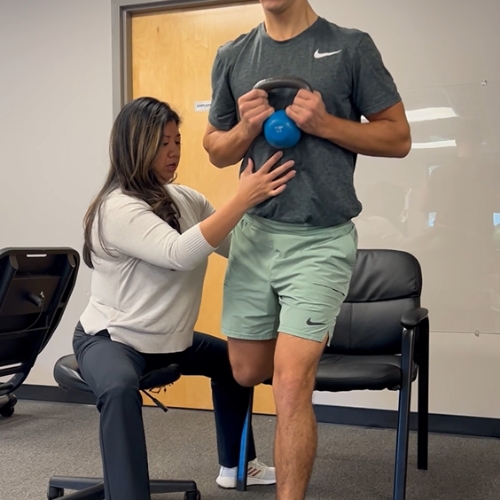
Trinity Rehab’s model is built around something increasingly rare in outpatient physical therapy: one licensed physical therapist with one patient, every single session. You are never handed off to an aide, never left to complete exercises in a crowded gym without guidance. Your PT is engaged with your progress the entire time — adjusting, progressing, and problem-solving alongside you.
For Shrewsbury residents, this matters because sciatica is not a condition that tolerates generic care. The disc herniation of a 38-year-old daily kayaker has different demands than the piriformis syndrome of a 55-year-old executive commuter, even if both present with left-sided leg pain. Trinity Rehab’s evaluation process identifies those differences and builds a treatment plan around them.
No referral required. Under New Jersey’s Direct Access Law, you can schedule an evaluation and begin treatment immediately — without waiting for a doctor’s appointment or a prescription for PT. When sciatica strikes, that speed of access can make a meaningful difference in how quickly you recover.
We also offer flexible scheduling, including early morning and evening appointments, because we understand that life in Shrewsbury is busy — whether you are a commuter with an early train or a parent with kids in after-school activities.
Learn more about related conditions we treat, including back pain.
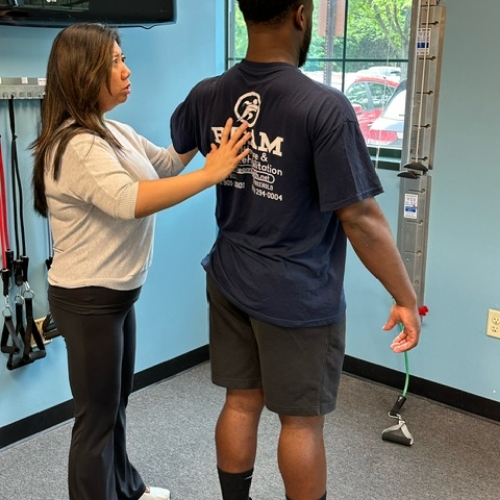
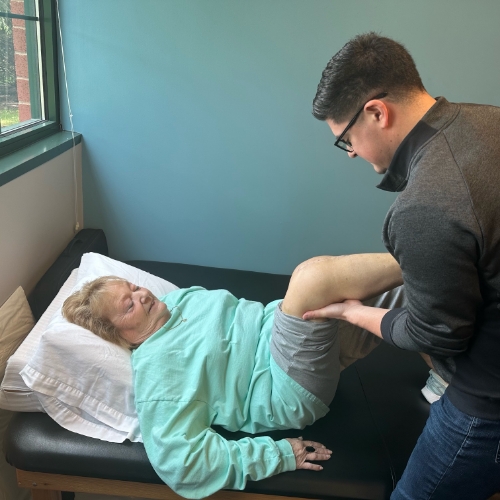
Inside Our Shrewsbury Clinic
Related Conditions & Treatments
Sciatica is just one of the many conditions we treat at Trinity Rehab Shrewsbury. Explore our full range of conditions we treat or learn more about specific treatment approaches:
- Sciatica Treatment Overview
- Back Pain Treatment
- Hip & Knee Pain Relief
- Manual Therapy
- Dry Needling
- EPAT / Shockwave Therapy
Shrewsbury Sciatica Rehab For Leg Pain, Sitting Pain, And Walking Tolerance
Sciatica-like symptoms can make sitting, driving, bending, sleeping, and walking difficult. Shrewsbury patients need a plan that separates nerve-related leg pain from back, hip, or muscle-driven symptoms.
Your therapist may assess symptom behavior, lumbar mobility, nerve tension, hip strength, walking tolerance, and positions that calm or worsen symptoms. Progressive weakness, numbness, or bowel/bladder changes should be medically reviewed urgently.
Related spine options include back pain physical therapy, lumbar disc herniation rehab, and the Shrewsbury physical therapy clinic page.
Frequently Asked Questions
Shrewsbury Sciatica Rehab For Leg Pain, Sitting Pain, And Walking Tolerance
Sciatica-like symptoms can make sitting, driving, bending, sleeping, and walking difficult. Shrewsbury patients need a plan that separates nerve-related leg pain from back, hip, or muscle-driven symptoms.
Your therapist may assess symptom behavior, lumbar mobility, nerve tension, hip strength, walking tolerance, and positions that calm or worsen symptoms. Progressive weakness, numbness, or bowel/bladder changes should be medically reviewed urgently.
Related spine options include back pain physical therapy, lumbar disc herniation rehab, and the Shrewsbury physical therapy clinic page.
Where can I get sciatica treatment near Shrewsbury, NJ?
Does Trinity Rehab accept my insurance?
How long will it take to recover from sciatica with physical therapy?
Can I keep playing tennis or pickleball while receiving treatment?
Is physical therapy better than pain medication for sciatica?
Sciatica does not have to put your Shrewsbury lifestyle on hold. Whether it is the morning paddle, the evening at New Shrewsbury Racquet Club, or simply sitting through a commute without pain — those things are worth getting back.
- Request an appointment — no referral needed, flexible scheduling available
- Receive a personalized evaluation — your Trinity Rehab physical therapist will identify the root cause of your sciatica and build a treatment plan around your specific goals
- Progress with one-on-one guidance — every session, every step of the way
Ready to move without pain again? Book your appointment today.