

SCIATICA TREATMENT IN SEWELL, NJ: SOUTH JERSEY’S EXPERT CARE FOR SCIATIC NERVE PAIN
Sewell and the surrounding Washington Township community have the feel of a place where people put down roots. Washington Lake Park’s trail network — seven named hiking paths through 626 acres of woods and wetlands — draws walkers, runners, and families year-round. The Washington Township Minutemen athletic program is one of the most decorated in South Jersey, with football and softball state championships that span five decades. And for the working families of Gloucester County, the proximity to Philadelphia, accessible highway connections via Routes 42 and 55, and the community character that comes with a population of nearly 50,000 people make this area genuinely home.
Sciatica intrudes on all of that. When the sciatic nerve is under pressure, the Butterfly or Turkey Foot trail at Washington Lake Park stops being a restorative morning walk and becomes a painful reminder of how limited you feel. The daily commute west toward Philadelphia — manageable at 30 minutes on a good day — means sitting through pain. Even attending a Minutemen football game means leaving your seat every quarter just to keep your back from locking up.
Trinity Rehab in Sewell treats sciatica with the individualized, evidence-based physical therapy that helps South Jersey residents move past nerve pain and back into their lives.
What Is Sciatica? Understanding the Nerve Behind the Pain
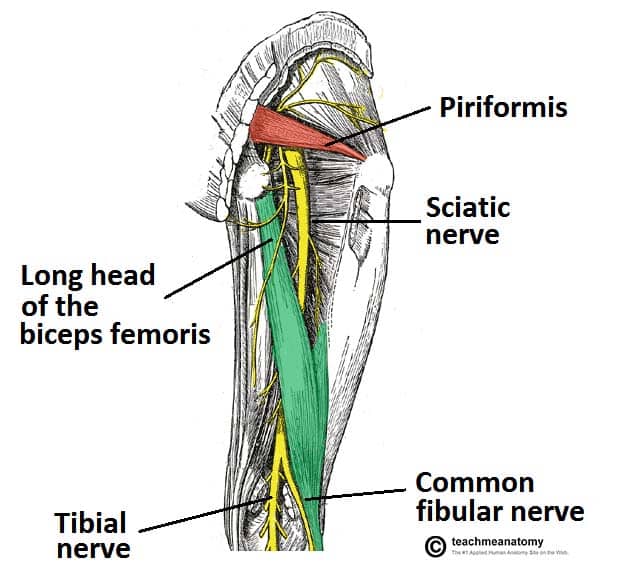
The sciatic nerve begins in the lumbar spine, where nerve roots at the L4, L5, and S1 levels exit between the vertebrae and combine into the single largest nerve in the body. That nerve travels through the deep buttock — passing beneath the piriformis muscle — and continues down the back of the thigh, through the calf, and into the foot.
When one of those lumbar nerve roots is compressed or irritated at its origin, the disruption to nerve signals travels the length of that pathway. That’s why sciatica feels so unusual: the source of the problem is in the lower back or deep buttock, but the pain, burning, tingling, or weakness shows up in the leg, sometimes all the way to the foot.
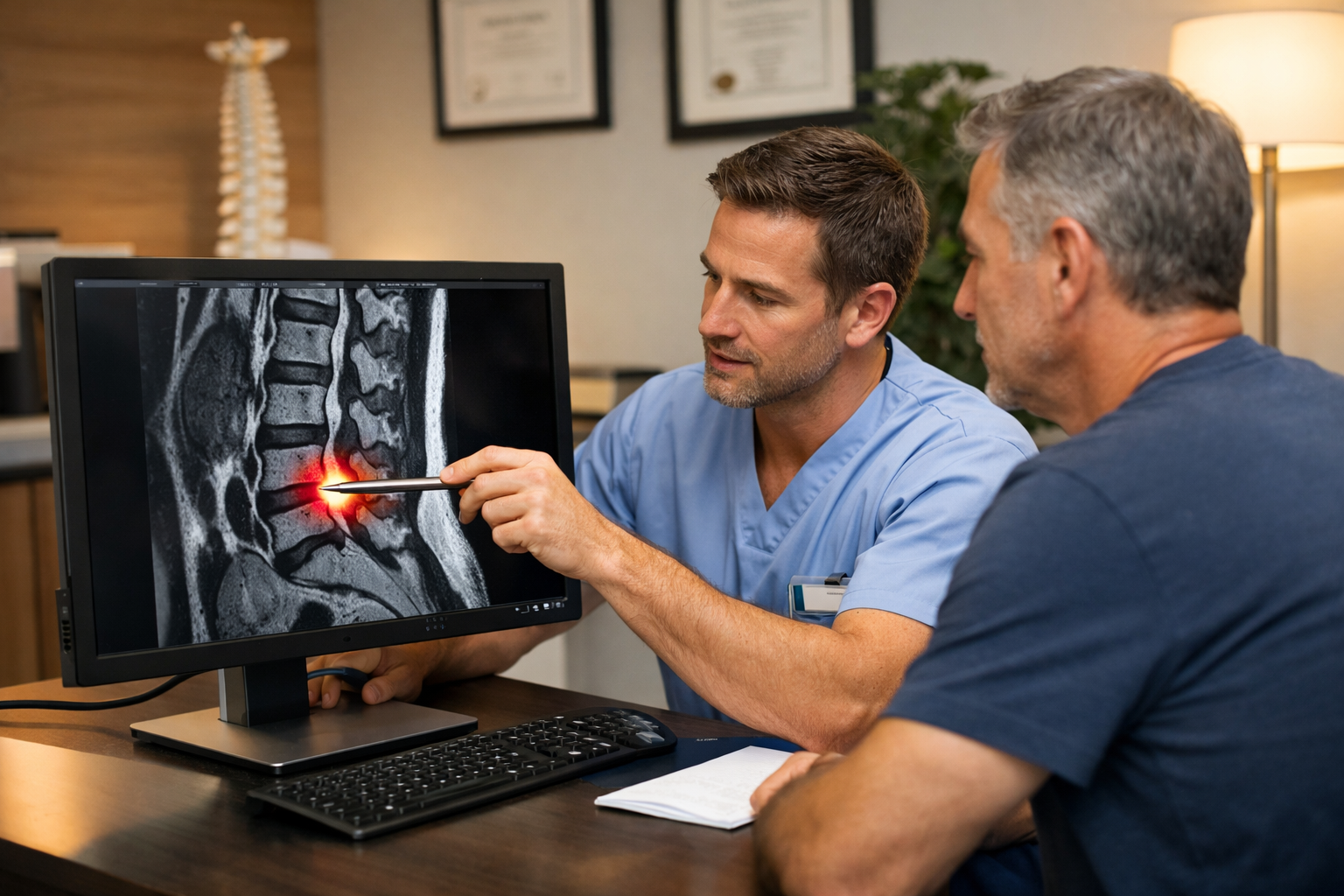
Clinically, this is called lumbar radiculopathy. The underlying cause is almost always something physically compressing the nerve root — most commonly a herniated disc, spinal stenosis, or piriformis tightness — rather than a problem in the leg itself. Understanding what specifically is causing the compression is the essential first step in designing effective treatment.
What Puts Sewell Residents at Risk for Sciatica
Washington Township’s workforce demographics and lifestyle create specific risk patterns for sciatic nerve problems that reflect this community’s character.
Jefferson Washington Township Hospital workers: The hospital is the area’s major healthcare employer and employs hundreds of nurses, technicians, therapists, and support staff. Healthcare workers face a dual occupational risk that makes sciatica particularly common: long shifts that involve both extended standing and frequent patient handling (lifting, repositioning, assisting ambulation), combined with the inevitable desk and documentation time. Nurses who stand for 10-hour shifts and then spend an hour charting at a workstation are loading their lumbar spines in very different ways within the same shift.
Philadelphia-area commuters: A significant portion of Sewell’s workforce commutes into Philadelphia or the surrounding South Jersey employment corridor. The 30-minute average commute via Routes 42 and 55 means daily lumbar loading in a car seat — and for workers in professional or sedentary roles, the sitting continues when they arrive at a desk. This prolonged, accumulated lumbar flexion is a primary driver of disc degeneration and the disc herniation that causes most sciatica cases.
Rowan University and Rowan College staff and students: The Rowan College of South Jersey campus in Sewell, along with Rowan University’s proximity, brings a population of students, faculty, and administrative staff who spend extended periods in desk-based or lab-based postures. Graduate students and researchers are at particular risk due to the combination of sedentary academic work and the physical inactivity that often accompanies intense academic periods.
Warehouse and industrial workers: Gloucester County’s industrial parks include warehouse and logistics facilities in and around Sewell. Workers performing repetitive loading tasks — lifting boxes, bending to pick from lower shelves, operating material-handling equipment — accumulate lumbar stress that significantly elevates their disc herniation risk. Amazon and other distribution operations in the area employ Sewell residents in exactly these roles.
Recreational athletes and Washington Lake Park users: The seven-trail system at Washington Lake Park is a genuine asset — and a place where cumulative running mileage, hiking on uneven terrain, and the hip-loading demands of trail exercise can aggravate underlying lumbar conditions. Washington Township’s athletic culture extends beyond the high school: adult soccer, softball, tennis at RiverWinds, and golf at Wedgwood Country Club all engage the lumbar spine in patterns that can trigger or worsen sciatic symptoms.
Snow shoveling and seasonal yard work: Like all of South Jersey, Sewell residents deal with winter snowfall. Shoveling heavy, wet snow — which involves sustained lumbar flexion under high load — is one of the most consistent annual triggers for acute disc herniation in the region. Spring landscaping and fall leaf cleanup carry similar risks when done without proper body mechanics.
Recognizing Sciatica
Sciatica has a distinctive presentation that separates it clearly from ordinary back stiffness:
- Radiating pain in one leg — the defining feature. A burning, sharp, or electric sensation that travels from the lower back or buttock down through the thigh, calf, or into the foot. This is not like ordinary muscle soreness; it follows a clear nerve pathway.
- Numbness or tingling in one leg or foot — reflecting disruption to the sensory signals traveling through the affected nerve root
- Leg weakness on one side — difficulty lifting the front of the foot when walking, reduced push-off strength, or one leg fatiguing early during a trail walk at Washington Lake Park
- Worsening with sitting or driving — symptoms often peak after the commute home, after prolonged desk work, or during a long car trip
- One-sided presentation — sciatica almost always affects only one leg; bilateral leg symptoms suggest a different diagnosis and warrant medical evaluation
- Morning symptoms — stiffness and pain upon waking that ease as the spine mobilizes through the morning
Sciatica Treatment at Trinity Rehab Sewell: A Phase-Based Recovery Plan
At Trinity Rehab Sewell, every treatment plan begins with a thorough evaluation that identifies your specific nerve root involvement, the underlying cause of compression, your occupational demands, and your activity goals. Treatment then progresses through structured phases that ensure you heal properly and build the foundation to stay well.
Phase 1: Pain Control and Nerve Calming
When you begin treatment in significant pain, the first clinical priority is reducing nerve irritation and restoring enough comfort to allow active participation in your rehabilitation.
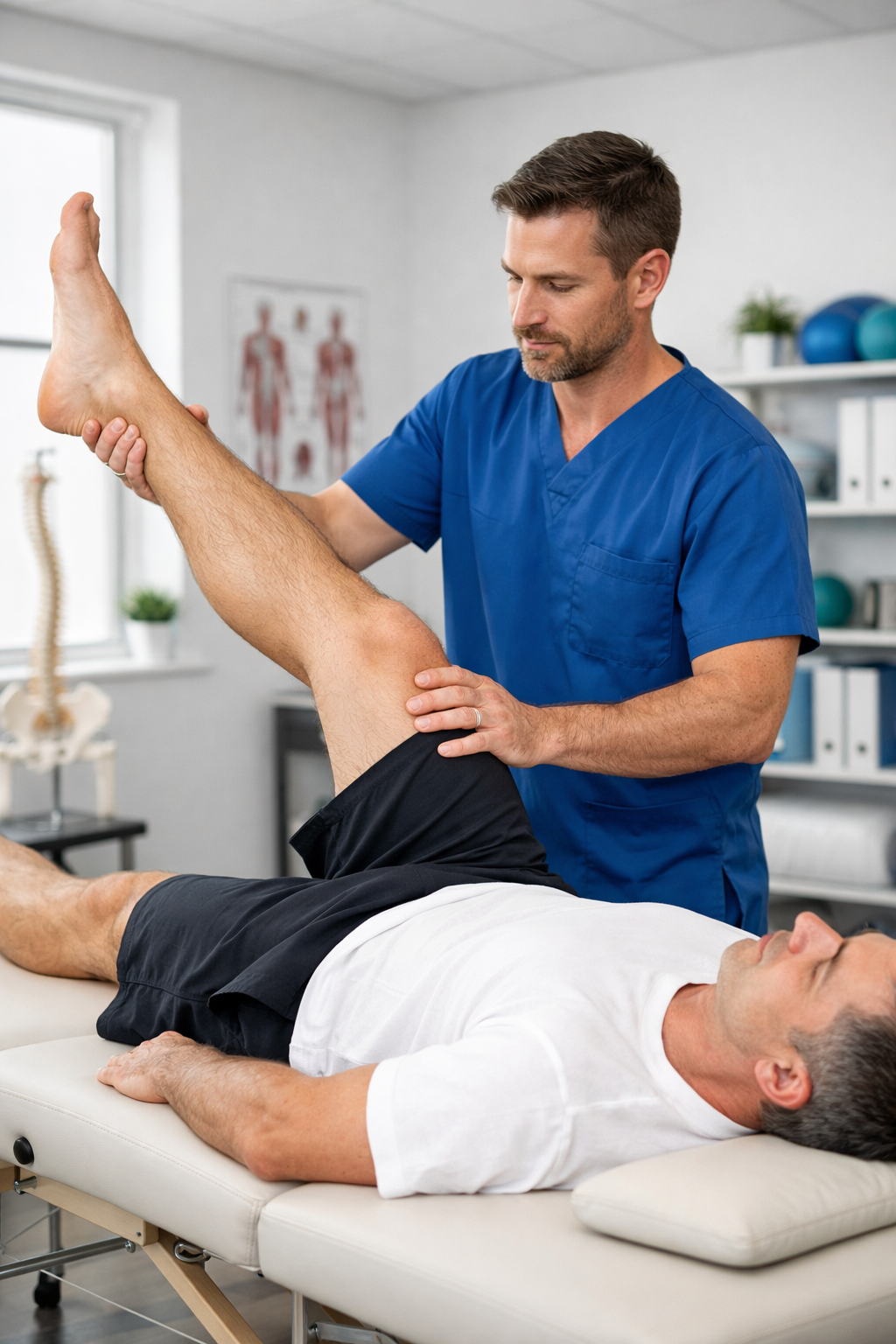
Your licensed physical therapist will use manual therapy as the primary hands-on intervention — applying specific lumbar joint mobilization techniques to decompress irritated nerve roots and restore movement in restricted spinal segments. For patients with piriformis syndrome or deep gluteal muscle tension contributing to sciatic nerve compression, direct soft tissue work in the buttock region provides immediate relief.
Neural mobilization — carefully guided limb movements that encourage the sciatic nerve to glide more freely through surrounding tissue — is introduced early in Phase 1. For many patients, this technique provides the most direct reduction of the radiating leg pain that is often the most disabling symptom of sciatica.
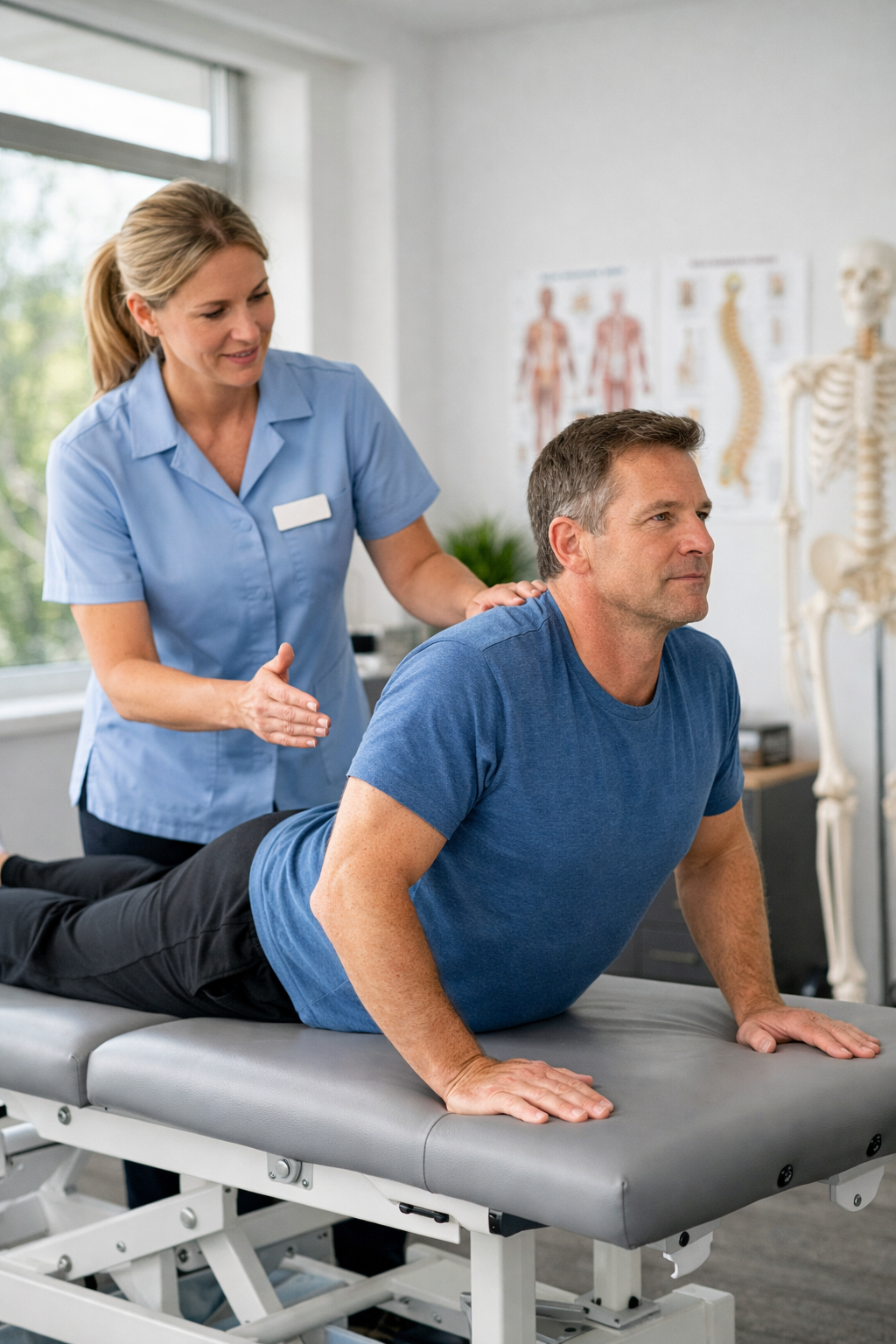
Therapeutic positioning and gentle directional exercises specific to your diagnosis round out Phase 1, helping to centralize pain and begin the process of reducing nerve root irritation.
Phase 2: Strengthening and Stabilization
Once pain is under control, we address the underlying vulnerability that allowed sciatica to develop. For the majority of Sewell patients, this means rebuilding the deep core and hip musculature that supports the lumbar spine under the demands of daily life.
Core stabilization exercises target the transversus abdominis and multifidus — the deep spinal muscles that form a natural internal brace around the lumbar vertebrae. When these muscles are weak or poorly coordinated, the discs and nerve roots absorb loads they shouldn’t.
Hip and glute strengthening — progressive exercises including bridges, clamshells, lateral band work, and single-leg loading — reduces the mechanical stress transferred to the lumbar spine during walking, standing, lifting, and recreational activity. For Sewell’s healthcare workers, this directly targets the postural compensation patterns that accumulate during long clinical shifts.
McKenzie method exercises provide a structured, evidence-validated approach to disc-related sciatica — using directional movements to encourage disc material away from the nerve root and consolidate recovery. For patients with piriformis syndrome, hip flexibility and deep hip rotator stretching programs are the primary strengthening focus.
Dry needling is available as an adjunct when persistent trigger points in the piriformis, gluteal, or paraspinal muscles limit progress. This technique uses fine monofilament needles to release deep muscular tension that stretching and manual therapy alone cannot fully resolve — particularly beneficial for Sewell’s warehouse workers and healthcare staff with accumulated occupational muscle tension.
Body mechanics training is woven throughout Phase 2 for the workers who will return to the same occupational demands that contributed to their sciatica — teaching Sewell’s hospital staff safer patient-handling techniques and warehouse employees how to lift without compromising lumbar integrity.
Phase 3: Return to Full Activity and Long-Term Prevention
The final phase puts your recovery into action. Your therapist designs functional training specific to your life: Washington Lake Park trail walking, returning to recreational soccer or softball, completing a full hospital shift, or navigating a day of yard work without pain. You leave with a practical home exercise program and the knowledge to manage early warning signs before a future flare escalates.
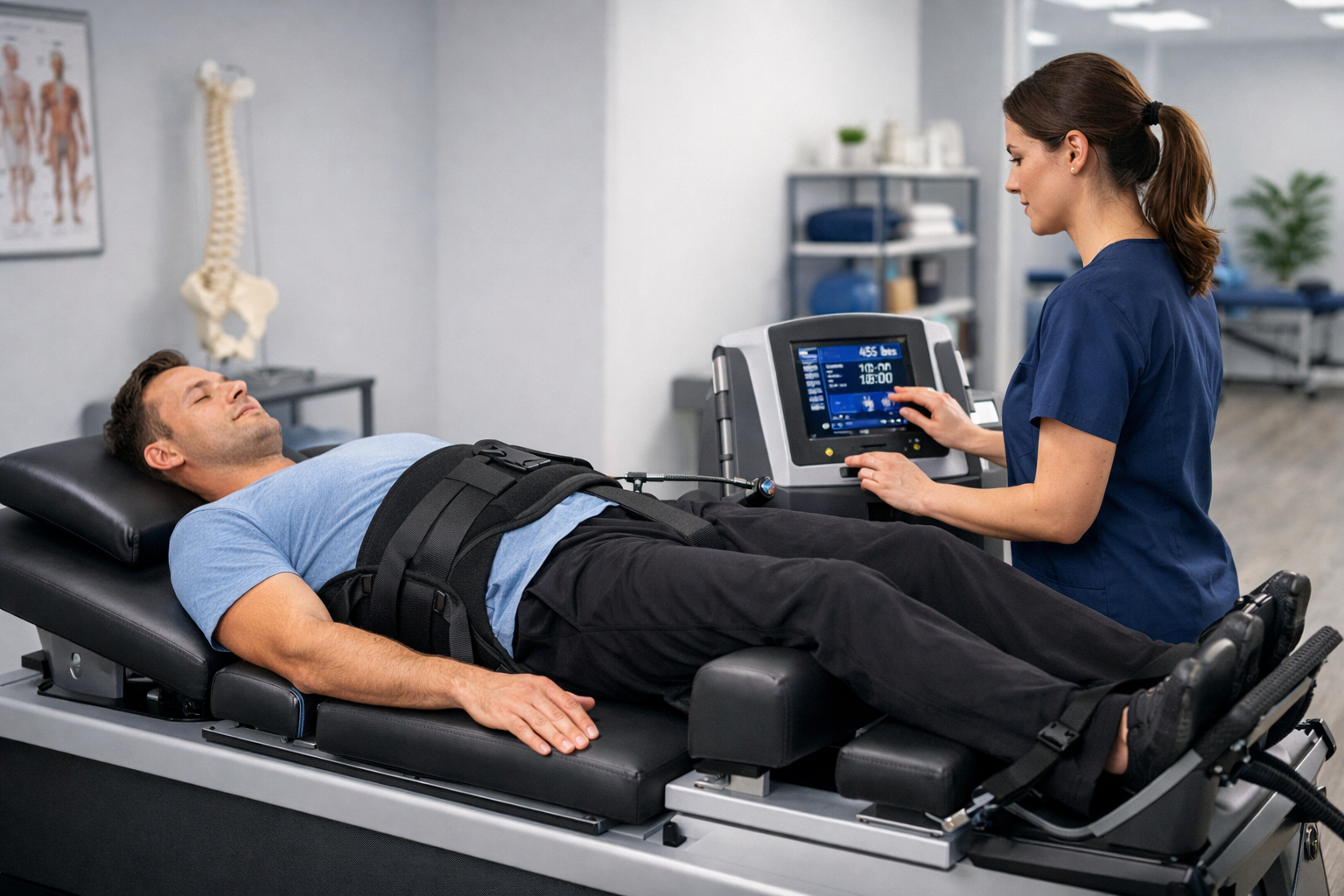
Why Sewell Residents Choose Trinity Rehab
- One-on-one care with a licensed physical therapist every session — you receive full PT attention throughout every appointment, not aide-supervised exercise
- Direct access: New Jersey’s Direct Access Law means no physician referral is required. You can schedule your evaluation today and start treatment this week.
- Individualized evaluation and treatment planning — your therapist assesses your specific anatomy, occupation, recreation habits, and goals before designing anything
- Evidence-based protocols grounded in current research on lumbar radiculopathy, neural mobilization, and neuromuscular stabilization
- Convenient scheduling: Early morning and evening appointments available for Sewell commuters and healthcare workers with demanding shift schedules
Related resources: back pain treatment and dry needling at Trinity Rehab.
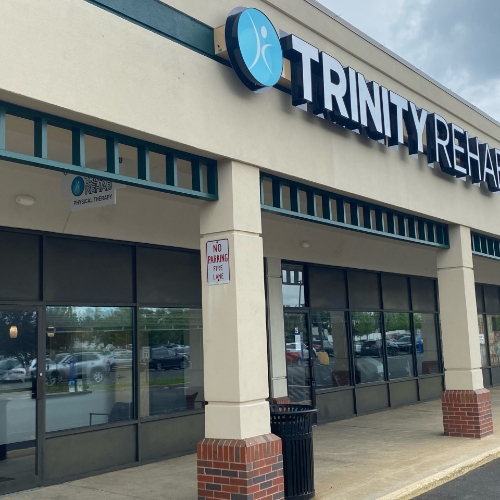
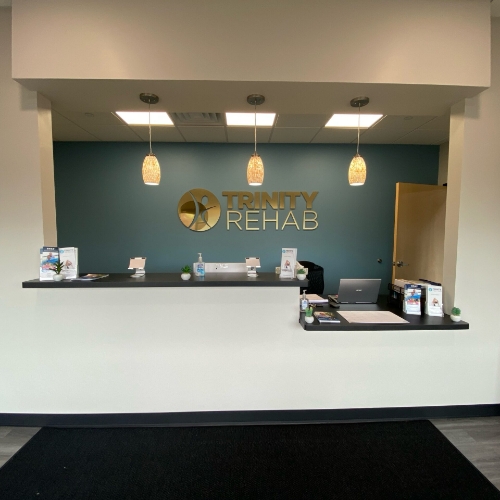
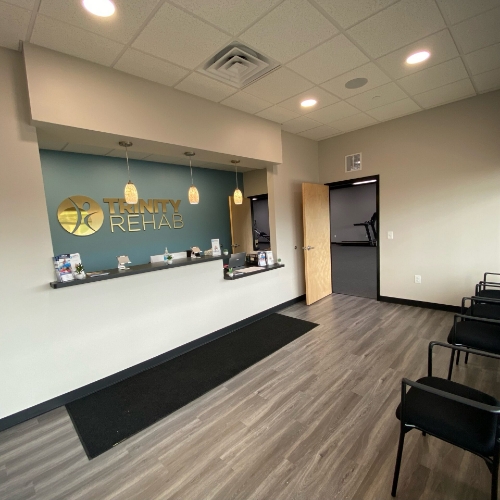
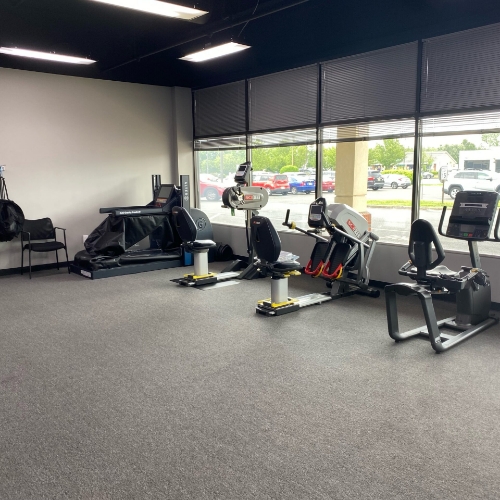
Inside Our Sewell Clinic
Related Conditions & Treatments
Sciatica is just one of the many conditions we treat at Trinity Rehab Sewell. Explore our full range of conditions we treat or learn more about specific treatment approaches:
- Sciatica Treatment Overview
- Back Pain Treatment
- Hip & Knee Pain Relief
- Manual Therapy
- Dry Needling
- EPAT / Shockwave Therapy
Sewell Sciatica Rehab For Leg Pain, Sitting Pain, And Walking Tolerance
Sciatica-like symptoms can make sitting, driving, bending, sleeping, and walking difficult. Sewell patients need a plan that separates nerve-related leg pain from back, hip, or muscle-driven symptoms.
Your therapist may assess symptom behavior, lumbar mobility, nerve tension, hip strength, walking tolerance, and positions that calm or worsen symptoms. Progressive weakness, numbness, or bowel/bladder changes should be medically reviewed urgently.
Related spine options include back pain physical therapy, lumbar disc herniation rehab, and the Sewell physical therapy clinic page.
Frequently Asked Questions
Sewell Sciatica Rehab For Leg Pain, Sitting Pain, And Walking Tolerance
Sciatica-like symptoms can make sitting, driving, bending, sleeping, and walking difficult. Sewell patients need a plan that separates nerve-related leg pain from back, hip, or muscle-driven symptoms.
Your therapist may assess symptom behavior, lumbar mobility, nerve tension, hip strength, walking tolerance, and positions that calm or worsen symptoms. Progressive weakness, numbness, or bowel/bladder changes should be medically reviewed urgently.
Related spine options include back pain physical therapy, lumbar disc herniation rehab, and the Sewell physical therapy clinic page.
Where can I get sciatica treatment in Sewell, NJ?
Does Trinity Rehab Sewell accept my insurance?
I work at Jefferson Washington Township Hospital. Is my sciatica from my job?
How do I know if my back and leg pain is sciatica?
How long does sciatica treatment take?
Sciatica does not typically resolve on its own without addressing the structural causes — and without treatment, episodes often become more frequent and more severe. At Trinity Rehab Sewell, we have the clinical expertise to help you understand what is driving your symptoms and the hands-on, personalized care to move you past them.
- Request your appointment — No referral needed. Schedule online at a time that works for your schedule.
- Receive a comprehensive evaluation — Your licensed physical therapist will identify the root cause of your sciatica and design a treatment plan built specifically around your goals.
- Recover fully with expert, one-on-one guidance — Every session is with your PT. You’ll build real strength, resolve nerve compression, and gain the tools to keep sciatica from coming back.
Sewell residents: you deserve a spine that keeps up with your life. Book your appointment at Trinity Rehab today and start your recovery.