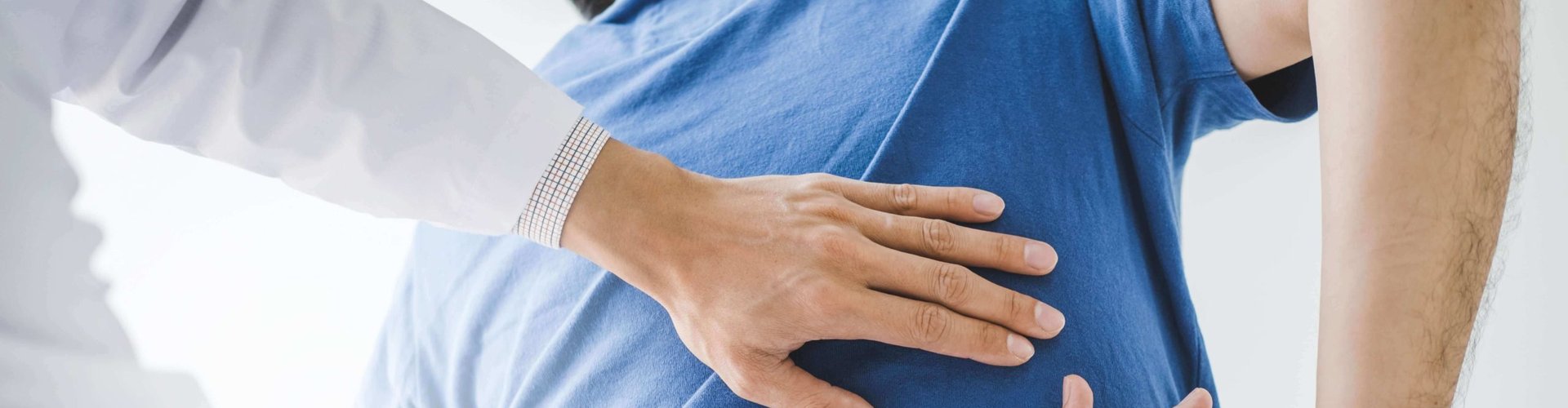
LUMBAR DISC HERNIATION TREATMENT IN SEWELL, NJ
On any given autumn Saturday in Sewell, you can find half the town at Washington Township High School cheering on the Minutemen, while the other half is raking leaves on a quarter-acre lot that somehow produces more foliage than a state forest. Both activities — competitive athletics and vigorous yard work — rank among the leading causes of lumbar disc herniation in suburban communities like this one. If you have found yourself gripping the armrest during the 30-minute drive to Philadelphia with pain radiating down your leg, or wincing every time you bend to pick up a bag of mulch, you are dealing with a problem that will not fix itself. Trinity Rehab’s Sewell clinic offers a structured, three-phase physical therapy program that addresses lumbar disc herniation at its root — one-on-one, hands-on, and backed by the best evidence available.
LUMBAR DISC HERNIATION EXPLAINED
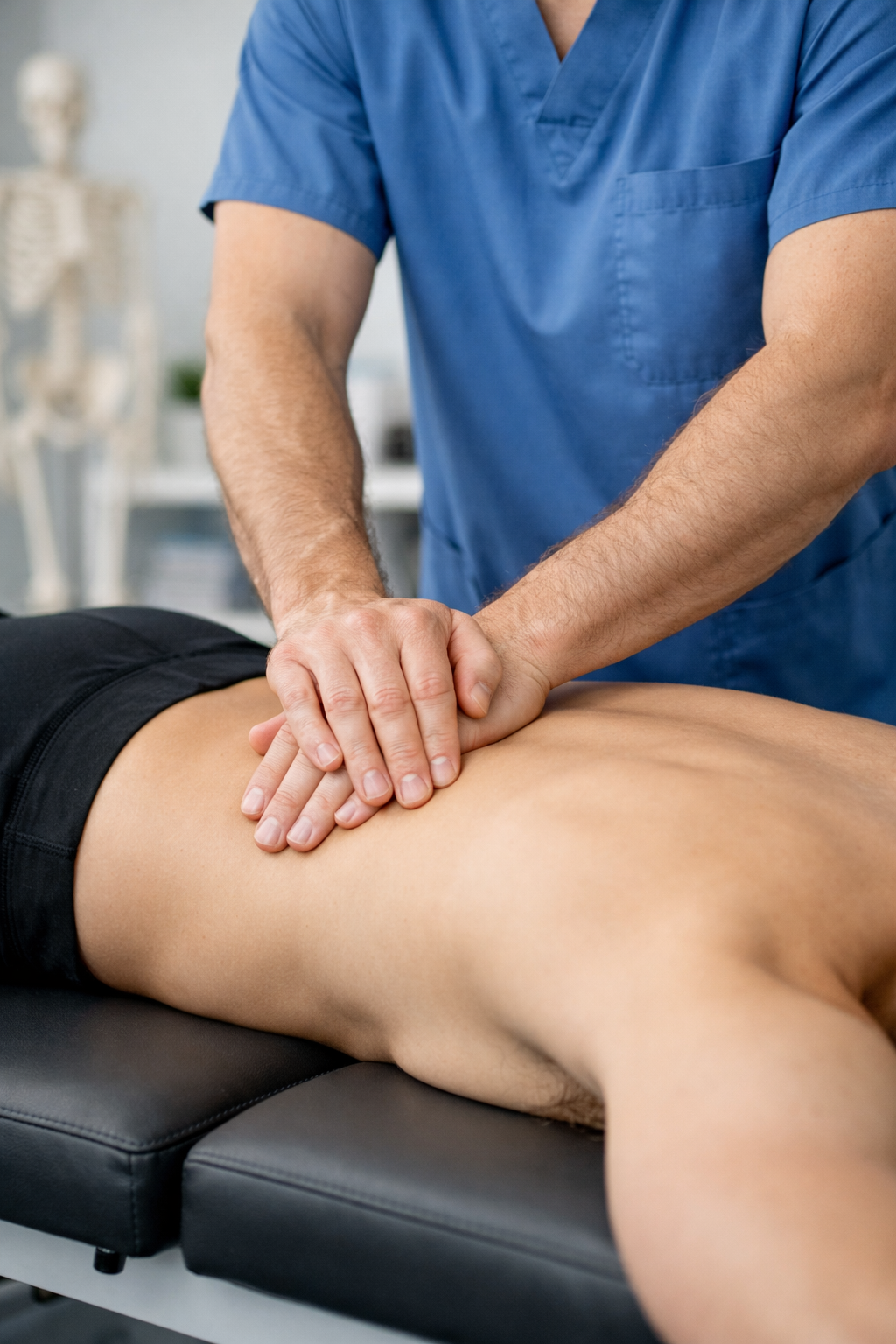
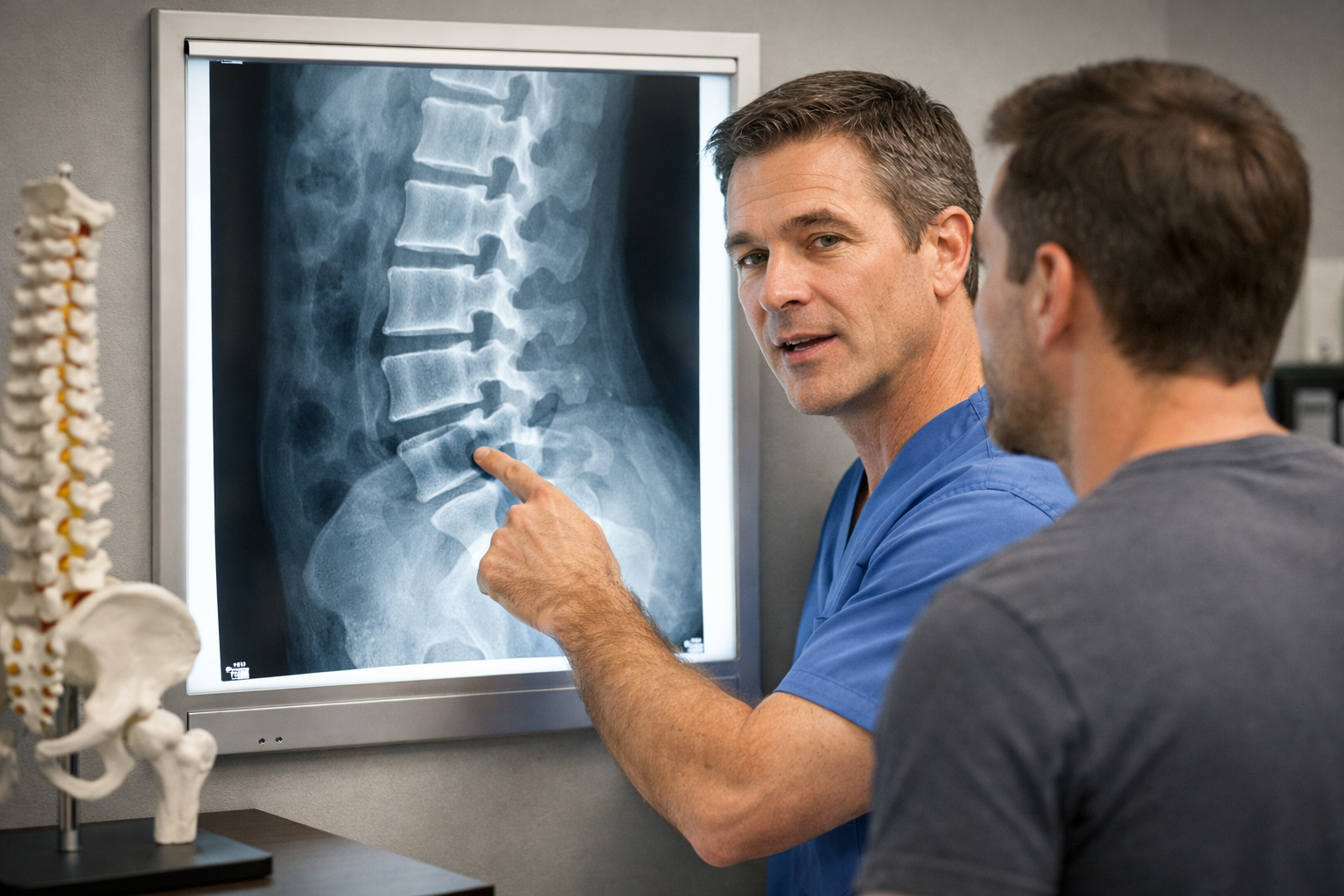
Your lower back — the lumbar spine — is built for both stability and mobility, a demanding combination that makes it vulnerable to injury. Five lumbar vertebrae are separated by intervertebral discs, each with a dense outer wall (the annulus fibrosus) and a hydraulic gel core (the nucleus pulposus). When the annulus develops tears — from repetitive stress, sudden overload, or gradual degeneration — the nucleus can push outward and press against a spinal nerve root. This is a herniated disc.
The L4-L5 and L5-S1 levels are the most commonly affected, and compression of nerve roots at these levels produces sciatica: pain, tingling, numbness, or weakness that radiates from the low back through the buttock and down one leg. The StatPearls medical reference confirms that conservative treatment resolves symptoms in the vast majority of cases, and structured physical therapy is the recommended first-line intervention (StatPearls, 2024).
WHAT PUTS SEWELL RESIDENTS AT RISK
YARD WORK ON GLOUCESTER COUNTY LOTS
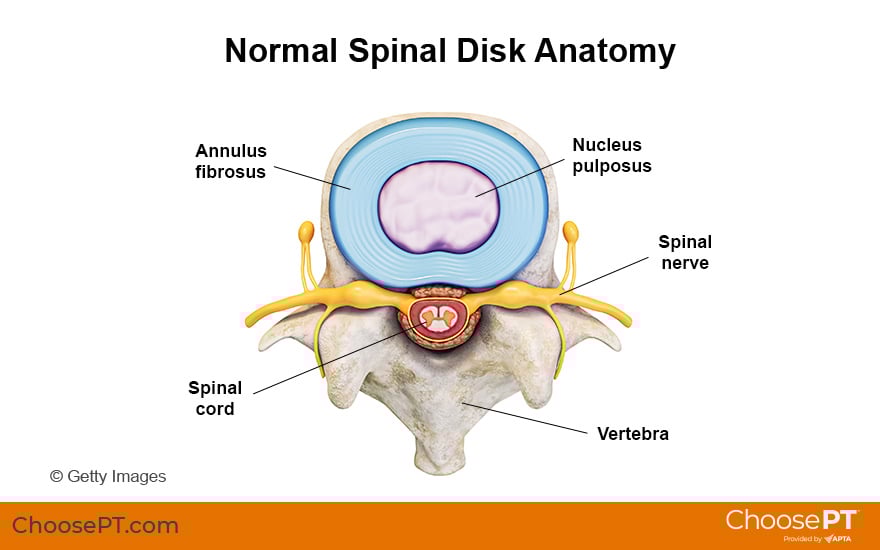
Sewell sits in suburban Gloucester County, where residential properties are large enough to demand serious seasonal maintenance. Raking, shoveling, mulching, pushing mowers, and operating leaf blowers all involve prolonged forward bending — the posture that maximizes pressure on the posterior lumbar disc. Add fatigue, cold muscles on an early spring morning, and the determination to “get it all done in one weekend,” and you have a recipe for an acute herniation event.
THE PHILADELPHIA COMMUTE
More than half of Washington Township’s working residents drive alone to jobs in the greater Philadelphia metro area. That daily commute — typically 30-45 minutes each way through congested corridors — keeps the lumbar spine locked in a flexed, compressed position for extended periods. Road vibration compounds the effect. Research in Deutsches Ärzteblatt International identifies prolonged driving as a significant risk factor for lumbar disc disease (Deutsches Ärzteblatt, 2024).
FOOTBALL AND COMPETITIVE ATHLETICS
Washington Township High School’s Minutemen field competitive teams across multiple sports, and the broader Sewell community supports youth football, adult league play at Total Turf sports complex, and recreational golf at Pitman Golf Course. Football tackles generate enormous compressive and rotational forces through the lumbar spine, while golf swings create repetitive asymmetric loading that targets the posterolateral disc — the most common herniation site.
MANUFACTURING AND MANUAL LABOR
Employers like Coperion K-Tron, McGough Bus Company, and other local businesses involve physical work that demands bending, reaching, and lifting. Even with good training, the sheer volume of repetitive spinal loading over an eight-hour shift accumulates, and one misjudged lift can be the tipping point.
TRAIL RUNNING AND RECREATION
Washington Lake Park offers a network of trails around the lake, and Tall Pines State Preserve provides natural-surface paths for running and hiking. Trail running on uneven ground challenges spinal stabilizers and increases the risk of sudden asymmetric loading — a common trigger for acute disc symptoms in recreational athletes.
SYMPTOM CHECKLIST
Lumbar disc herniation can present in various ways, but the following symptoms strongly suggest nerve root involvement:
- Radiating leg pain (radiculopathy): Pain that shoots or burns from the low back into the buttock, thigh, calf, or foot
- Numbness or tingling in a specific area of the leg, often along a predictable nerve pathway
- Leg weakness: Difficulty pushing off while walking, trouble with stairs, or a “giving way” sensation
- Pain that increases with sitting, bending, or straining and may improve with standing or walking
- Back pain that may be present alongside — or overshadowed by — leg symptoms
If these sound familiar, schedule an appointment at Trinity Rehab for a comprehensive evaluation.
OUR THREE-PHASE TREATMENT PROGRAM
Trinity Rehab treats lumbar disc herniation through a structured progression that respects the biology of disc healing while moving you toward full function as efficiently as possible. Every session is one-on-one with a licensed physical therapist.
PHASE 1: PAIN REDUCTION AND NERVE CALMING
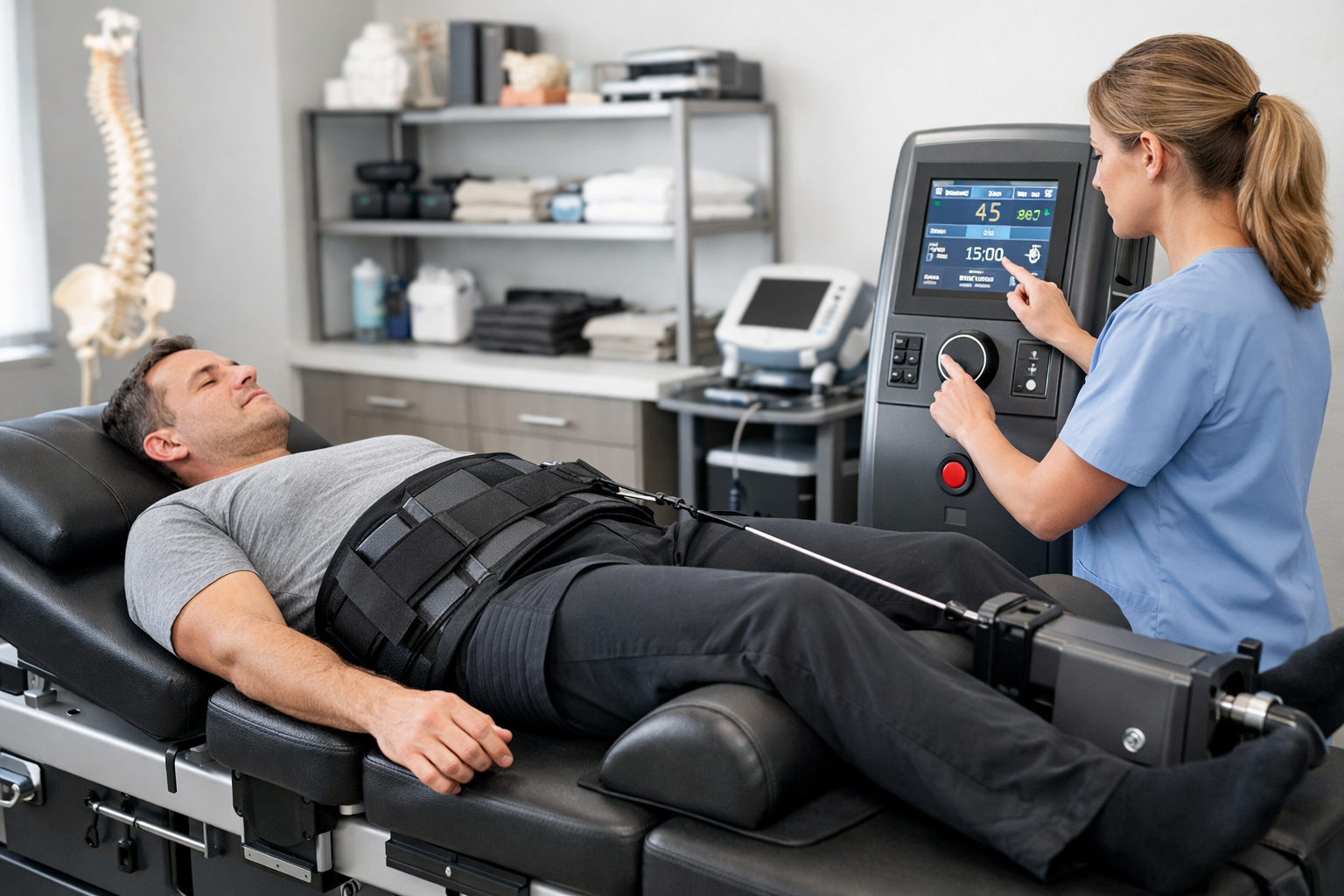
The initial phase focuses on reducing pain, calming the irritated nerve, and restoring basic mobility:
- McKenzie method / directional preference: Your therapist identifies the specific movement direction that centralizes your symptoms — pulling pain out of the leg and back toward the spine. For most herniations, this is extension. You will perform these exercises multiple times daily, giving you a powerful self-treatment tool that works at home, at work, and on the road.
- Manual therapy: Hands-on joint mobilization and soft tissue work reduce muscle guarding, restore segmental mobility, and create the mechanical conditions for disc healing. For Sewell residents who arrive locked up from a tough commute or a long shift, manual therapy provides immediate, tangible improvement.
- Neural mobilization: Gentle nerve gliding techniques address the adhesions and sensitivity that develop around a compressed nerve root. These exercises reduce sciatica without adding mechanical stress to the herniation site.
- Dry needling: When paraspinal or piriformis muscle spasm limits your ability to move and exercise, dry needling delivers rapid relief by deactivating trigger points in the deep musculature.
- EPAT: Shockwave therapy promotes healing, increases blood flow, and reduces chronic inflammation around the disc and nerve root. We use this technology to accelerate the transition from pain to function.
- Posture and ergonomic coaching: We address your specific daily positions — car seat setup for the Philadelphia commute, work station arrangement, lifting strategies for the job — so you stop aggravating the disc between sessions.
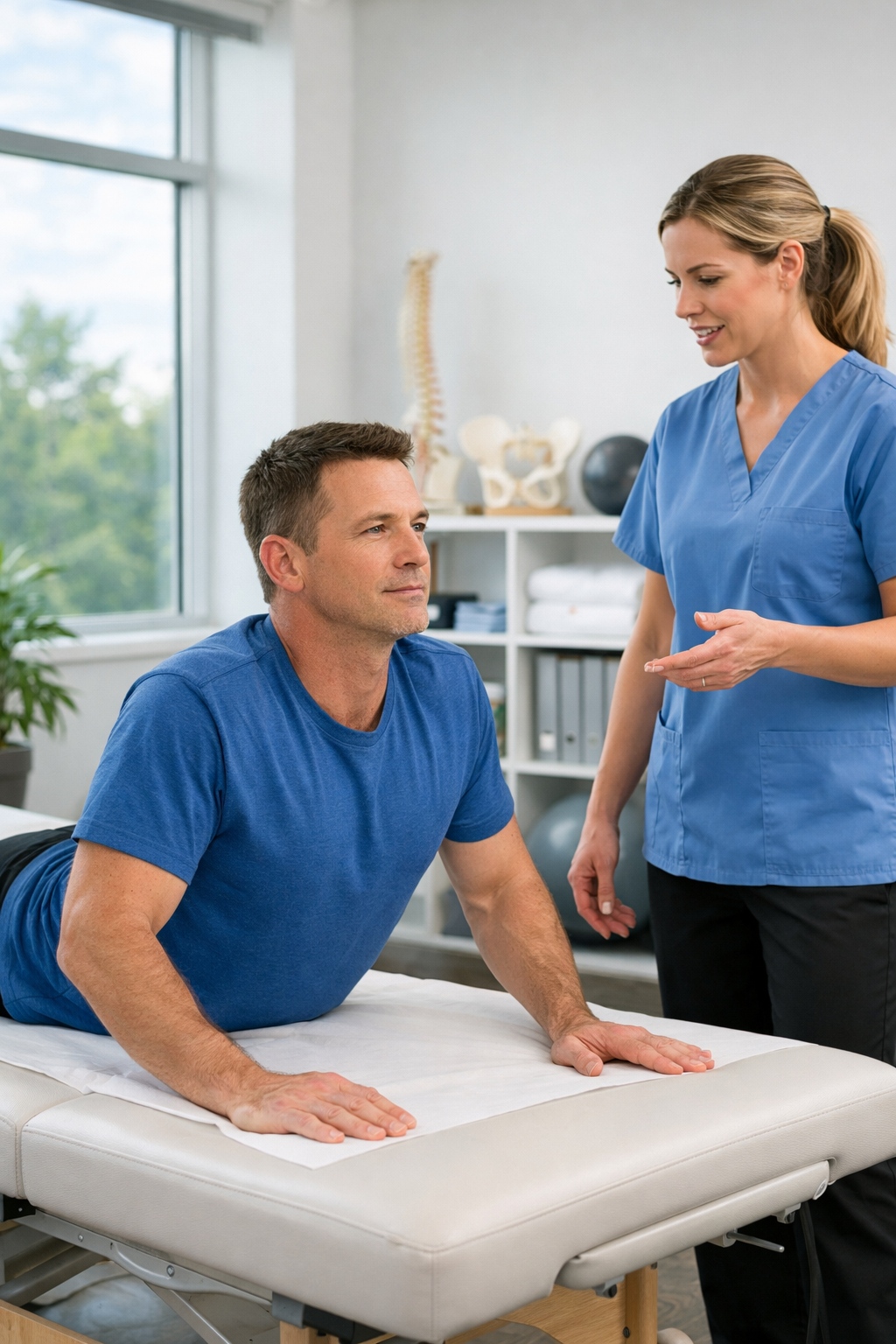
PHASE 2: CORE STABILIZATION AND PROGRESSIVE STRENGTHENING
With pain under control, we rebuild the stability and strength your spine needs to handle the demands of your life:
- Core stabilization: Progressive activation and strengthening of the transversus abdominis, multifidus, pelvic floor, and diaphragm. These deep stabilizers provide the segmental control that protects each vertebral level during movement.
- Gluteal and hip strengthening: Bridges, clamshells, lateral band walks, and single-leg exercises target the hip muscles that absorb forces during walking, running, and lifting. Weak glutes are one of the most common contributors to lumbar overload.
- Flexibility and mobility: Tight hip flexors, hamstrings, and thoracic spine force the lumbar region to compensate with excessive movement. We systematically address each area with targeted stretching and mobility drills.
- Movement pattern retraining: We retrain the fundamental movement patterns — squatting, hinging, lunging, and rotating — that make up the building blocks of everything from picking up a bag of topsoil to swinging a golf club.
PHASE 3: RETURN TO ACTIVITY AND LONG-TERM PREVENTION
The final phase bridges your clinical progress to your everyday Sewell life:
- Sport-specific reconditioning: Whether you play on a PlayMore adult league, compete at Total Turf, or golf at Pitman, we design progressive drills that replicate your sport’s demands while maintaining the spinal protection strategies you have learned.
- Work-hardening protocols: For manufacturing workers and manual laborers, we simulate the physical tasks of your job — bending, reaching, carrying, pushing — under controlled conditions that build confidence and endurance.
- Commute resilience: We ensure your seated tolerance and postural strategies can handle your daily drive to Philadelphia without symptom recurrence.
- Yard work conditioning: Seriously — we practice the bending, raking, and shoveling mechanics that are a genuine part of life in Sewell, so you can maintain your property without destroying your back.
- Home exercise program: A personalized 15-minute routine that maintains your core strength, flexibility, and body mechanics long after your formal treatment ends.
PREVENTION TIPS FOR SEWELL RESIDENTS
- Break up yard work into sessions: Do not try to finish everything in one marathon weekend. Spread tasks across multiple days and alternate between bending and upright activities.
- Set up your car seat properly: Adjust the seatback to a slightly reclined position (100-110 degrees), use a lumbar support, and position the seat so your knees are at or slightly below hip level.
- Warm up before sports: Whether it is football, golf, or trail running, invest five minutes in dynamic movement prep. Glute bridges, hip circles, and standing back extensions activate the muscles that protect your spine.
- Walk Washington Lake Park: Regular walking is one of the best things you can do for disc health. The lake trail offers a pleasant, accessible route for consistent low-impact exercise.
- Do your home exercises: Your core program is not busywork — it is the single most important thing you can do to prevent a recurrence of disc herniation. Consistency beats intensity every time.
WHY SEWELL RESIDENTS CHOOSE TRINITY REHAB
Sewell is a community that values hard work, practical results, and no-nonsense reliability. That is exactly what you get at Trinity Rehab. Every session is spent one-on-one with a licensed physical therapist who knows your history, understands your goals, and delivers treatment tailored to the specific demands of your job, your sport, and your life in Gloucester County. We do not use aides, we do not rush, and we do not stop until you are back to doing everything you did before — plus the exercises that will keep you there.
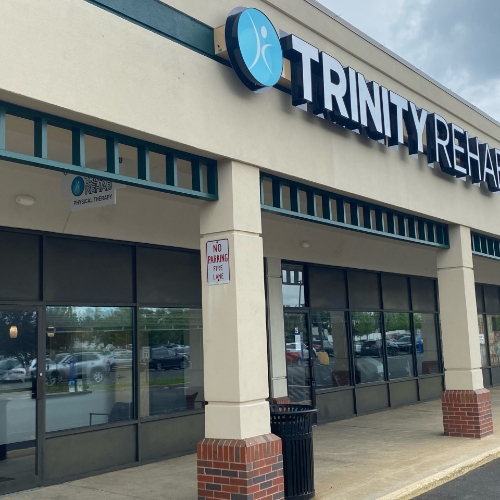
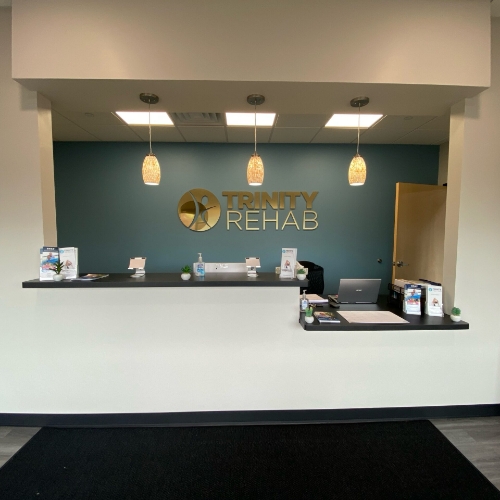
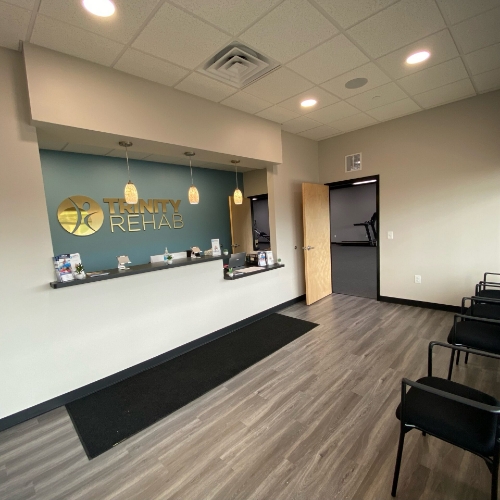
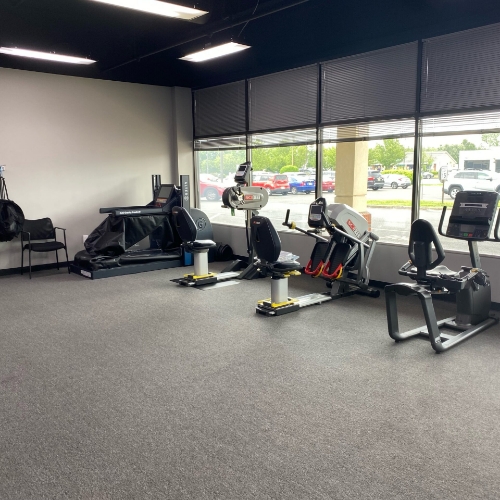
INSIDE OUR SEWELL CLINIC
RELATED CONDITIONS & TREATMENTS
Lumbar disc herniation is just one of the many conditions we treat at Trinity Rehab Sewell. Explore our full range of conditions we treat or learn more about specific treatment approaches:
Sewell Disc Rehab For Back Pain, Leg Symptoms, And Daily Movement
Lumbar disc symptoms can interrupt sitting, driving, lifting, sleep, work, and exercise. Sewell rehab should connect the diagnosis to the positions and movements that actually trigger your symptoms.
Your therapist may assess lumbar mobility, nerve-related symptoms, hip strength, gait, lifting mechanics, sitting tolerance, and warning signs that require medical care before therapy continues.
Patients with related symptoms may also need sciatica treatment, back pain physical therapy, or the Sewell physical therapy clinic page.
FREQUENTLY ASKED QUESTIONS
Sewell Disc Rehab For Back Pain, Leg Symptoms, And Daily Movement
Lumbar disc symptoms can interrupt sitting, driving, lifting, sleep, work, and exercise. Sewell rehab should connect the diagnosis to the positions and movements that actually trigger your symptoms.
Your therapist may assess lumbar mobility, nerve-related symptoms, hip strength, gait, lifting mechanics, sitting tolerance, and warning signs that require medical care before therapy continues.
Patients with related symptoms may also need sciatica treatment, back pain physical therapy, or the Sewell physical therapy clinic page.
How long does recovery from a herniated disc take?
Can yard work really cause a herniated disc?
Will I need an MRI before starting treatment?
Is driving making my disc worse?
What sports can I do during treatment?
READY TO START FEELING BETTER?
A lumbar disc herniation does not have to define your year. Whether the pain started in the yard, on the field, or behind the wheel, Trinity Rehab’s Sewell clinic provides the expert, individualized physical therapy you need to recover fully. Schedule your appointment today and take the first step back to a pain-free life.
SOURCES
- StatPearls — Lumbar Disc Herniation: https://www.ncbi.nlm.nih.gov/books/NBK560878/
- Deutsches Ärzteblatt International — Lumbar Disc Herniation: https://pmc.ncbi.nlm.nih.gov/articles/PMC11465477/
What Our Patients Say



Sign up for free health tips and tricks