

SCIATICA TREATMENT IN MATAWAN, NJ: EXPERT CARE CLOSE TO HOME
Matawan Borough sits at a useful crossroads — close enough to the Jersey Shore for summer afternoons at the beach, within hiking distance of Cheesequake State Park’s salt marshes and wooded trails, and connected enough to New York by the Garden State Parkway that many residents commute north every day. It’s a town where people move — through its historic downtown, along Lake Matawan and Lake Lefferts, and out to its parks and recreational spaces.
Sciatica disrupts all of that. When the sciatic nerve is under pressure, the trail at Cheesequake feels impossible. The commute north becomes an exercise in pain management rather than rest. Even something as ordinary as canoeing on Lake Lefferts — a weekend tradition for many Matawan families — produces a sharp reminder that something is wrong. At Trinity Rehab Matawan, we treat sciatica with targeted physical therapy that addresses the root cause of your nerve compression, so you can get back to the life this town makes possible.
The Anatomy of Sciatica
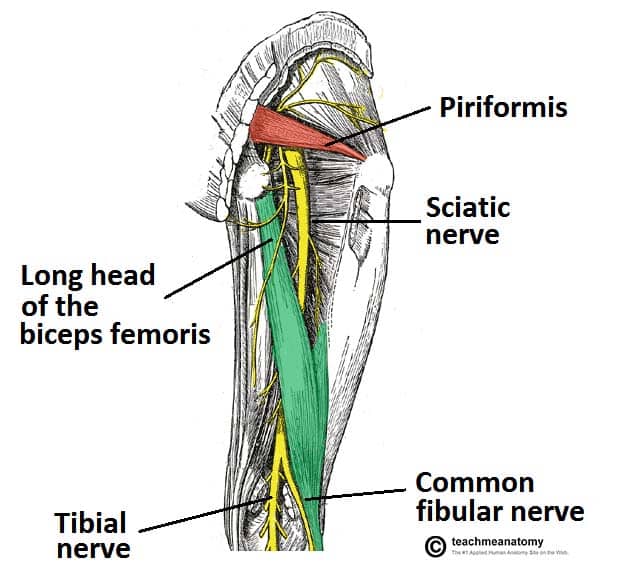
The sciatic nerve originates from nerve roots at the L4, L5, and S1 levels of the lumbar spine. These roots merge into the largest single nerve in the body, passing through the deep buttock muscles, down the back of the thigh, through the calf, and into the foot. When any of those originating nerve roots is compressed — by a herniated disc pushing against it, a thickened ligament narrowing its passage, a tight piriformis muscle bearing down on it from above, or degenerative changes in the disc space — the resulting pain and neurological symptoms can travel the entire length of that pathway.
That radiating, traveling quality is what makes sciatica so recognizable and, for many patients, so alarming. It is also what makes it so treatable: because sciatica follows a consistent anatomical pathway, experienced physical therapists can assess the pattern of symptoms, identify the site of nerve root involvement, and design a highly targeted intervention.
Why Matawan Residents Develop Sciatica
Matawan’s community character shapes its sciatica risk profile in specific ways.
Commuters using the Garden State Parkway and NJ Transit: Matawan is a true commuter town, with a significant portion of the working population making daily trips north toward New York. The combination of prolonged driving on the GSP and sitting on trains or buses means many Matawan residents spend 60 to 90 minutes per day in sustained lumbar flexion. Over months and years, this posture-related disc loading is a major contributor to both disc herniation and sciatica.
Quest Diagnostics and local commercial workers: The commercial and retail employers along Matawan’s Route 34 and 79 corridors employ workers in roles that involve sustained standing, repeated bending, and carrying loads — all of which can increase lumbar strain. Laboratory and clinical workers at Quest Diagnostics, in particular, work in postures that tax the lumbar spine over the course of a shift.
Cheesequake State Park trail users: Cheesequake (off Gordon Road) attracts regular walkers, hikers, and mountain bikers. Its varied terrain — rolling woodlands, open hiking paths, marshy areas — demands ankle and hip stability. Walkers with underlying lumbar weakness or disc changes may find that extended trail time on uneven surfaces flares their sciatic symptoms, particularly in the weeks following a period of reduced activity.
Shore-adjacent recreational activity: Matawan’s proximity to the Jersey Shore beaches means summer carries its own set of physical demands: carrying coolers and beach chairs across soft sand (which destabilizes the lumbar spine and activates compensatory hip muscles), prolonged sitting in low beach chairs, and water activities that engage the core and lumbar structures. These activities are wonderful — but they also tax spines that aren’t properly conditioned.
Residential snow shoveling: Like all of central Monmouth County, Matawan gets its share of winter snowfall. Shoveling heavy, wet snow with a flexed lumbar spine — especially first thing in the morning when the spinal tissues are less supple — is one of the most reliable triggers of acute disc herniation and subsequent sciatica.
Recognizing Sciatica Symptoms
Sciatica presents with a distinctive symptom profile. While every patient’s experience varies depending on which nerve root is involved and what is compressing it, the characteristic signs include:
- One-sided radiating pain — a sharp, burning, or electric sensation running from the lower back or buttock down one leg; this is the defining feature of sciatica versus ordinary back pain
- Leg numbness or tingling — particularly in the calf, shin, or foot, reflecting nerve irritation affecting sensory pathways
- Leg weakness — difficulty lifting the front of the foot (foot drop), pushing off when walking, or one leg tiring noticeably earlier on the Cheesequake trail
- Worsening with sitting or driving — symptoms typically peak after prolonged lumbar flexion, which is why commuters notice their worst pain at the end of a workday
- Stiffness and pain on rising — the lumbar discs rehydrate overnight, and morning movements can be the most symptom-provoking of the day until the spine has warmed up
- Temporary relief with walking — movement that maintains a neutral spine and engages the hip extensors often reduces sciatic nerve tension temporarily
Sciatica Treatment at Trinity Rehab Matawan
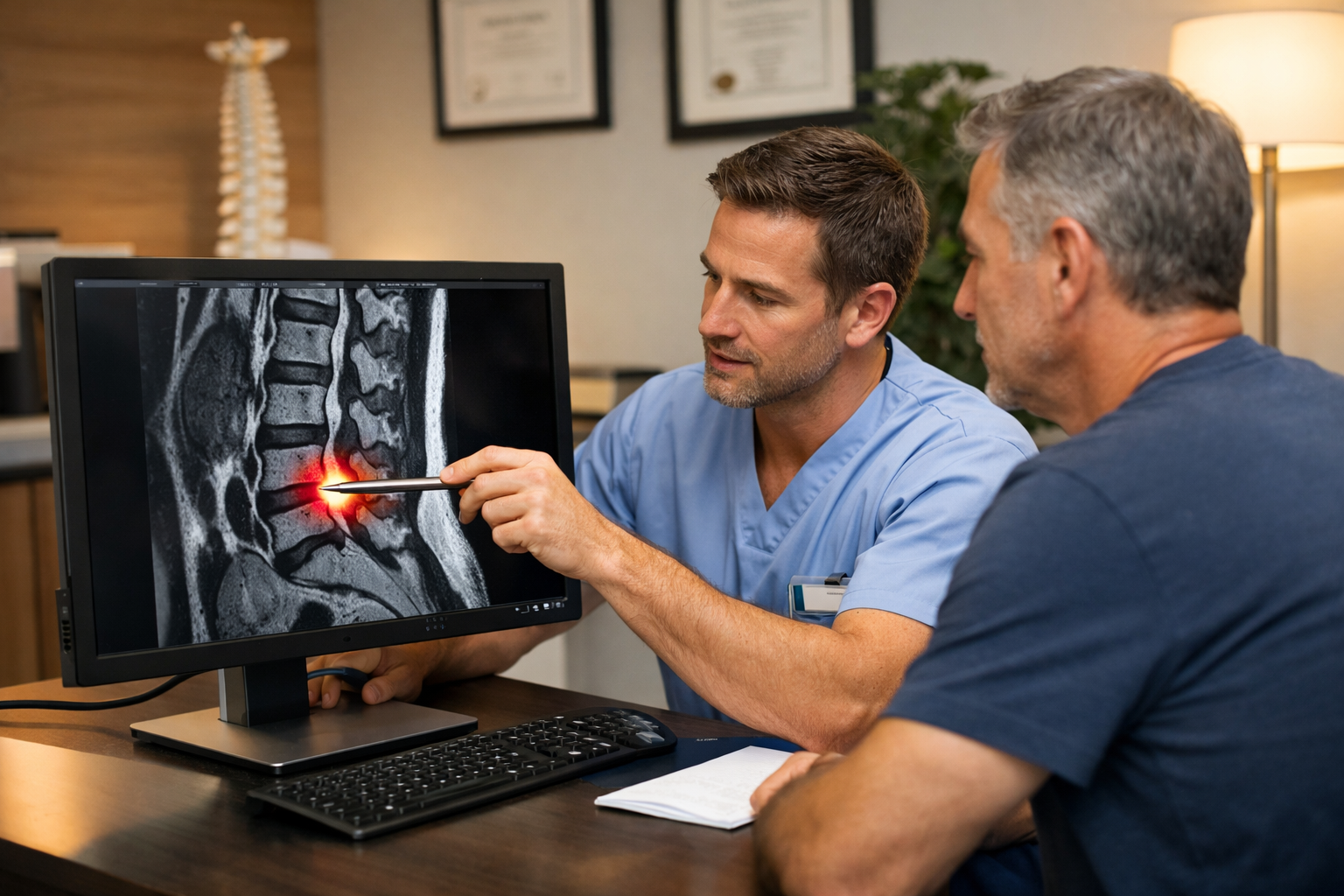
Our treatment approach is built on a thorough initial evaluation that identifies the specific root cause and presentation of your sciatica. No two cases are identical — a Matawan commuter with a disc herniation at L5-S1 requires a different protocol than a trail walker with piriformis syndrome — and our treatment plans reflect that difference.
Phase 1: Immediate Pain Relief and Nerve Settling
When you arrive at Trinity Rehab in acute or significant pain, the first priority is calming the nervous system and creating enough relief that you can participate actively in your own recovery.
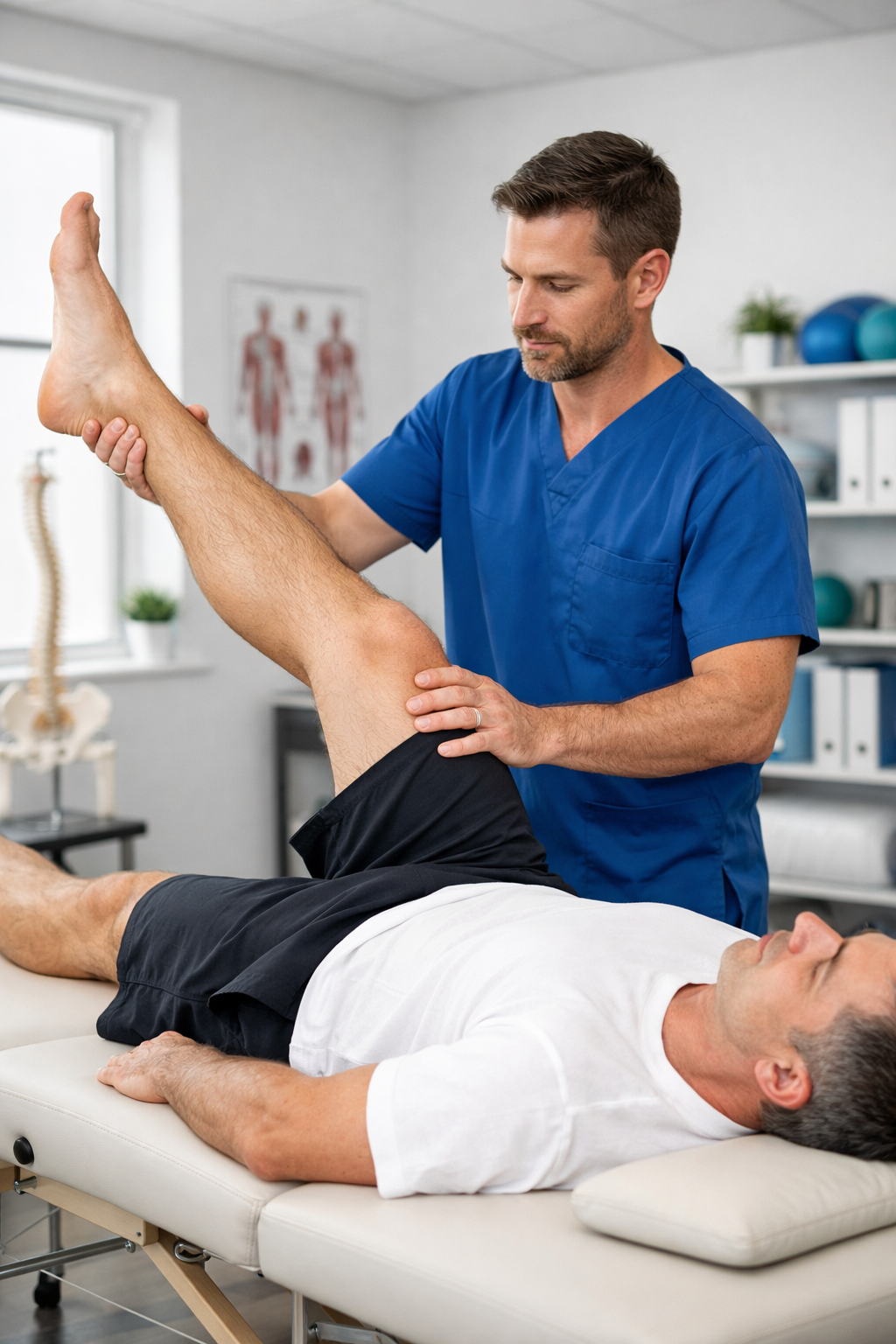
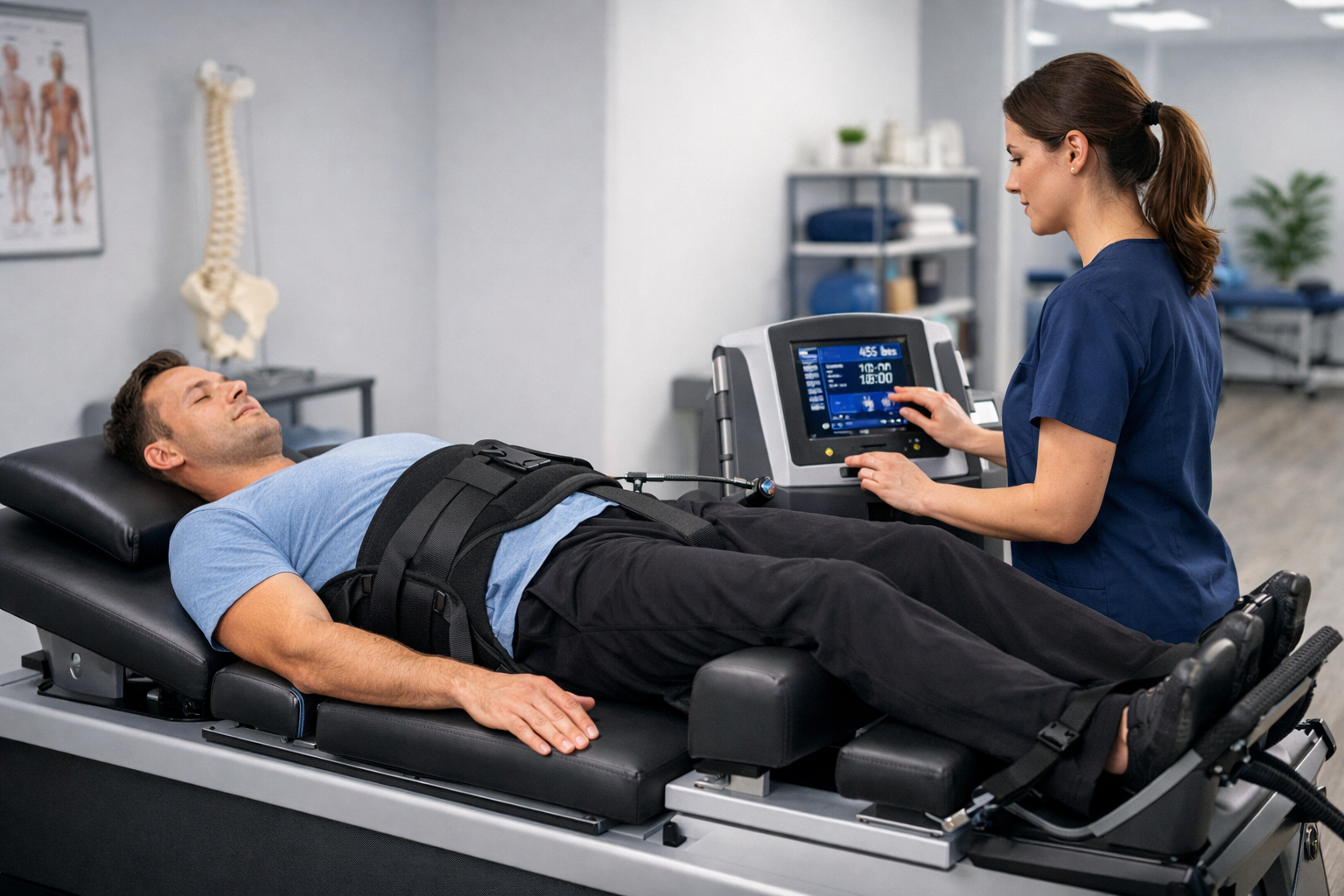
Manual therapy is our primary tool in this phase. Your physical therapist will use hands-on joint mobilization to the lumbar spine and sacroiliac joint, combined with soft tissue work targeting the gluteal and piriformis regions. This reduces joint compression on nerve roots, releases muscular tension contributing to sciatic entrapment, and restores lumbar mobility that may have been restricted by muscle guarding.
Neural mobilization — nerve flossing techniques — is introduced early in treatment. These guided movements encourage the sciatic nerve to glide through its surrounding tissue tunnels with more freedom, reducing the neural tension that makes even minor movements painful for many acute sciatica patients.
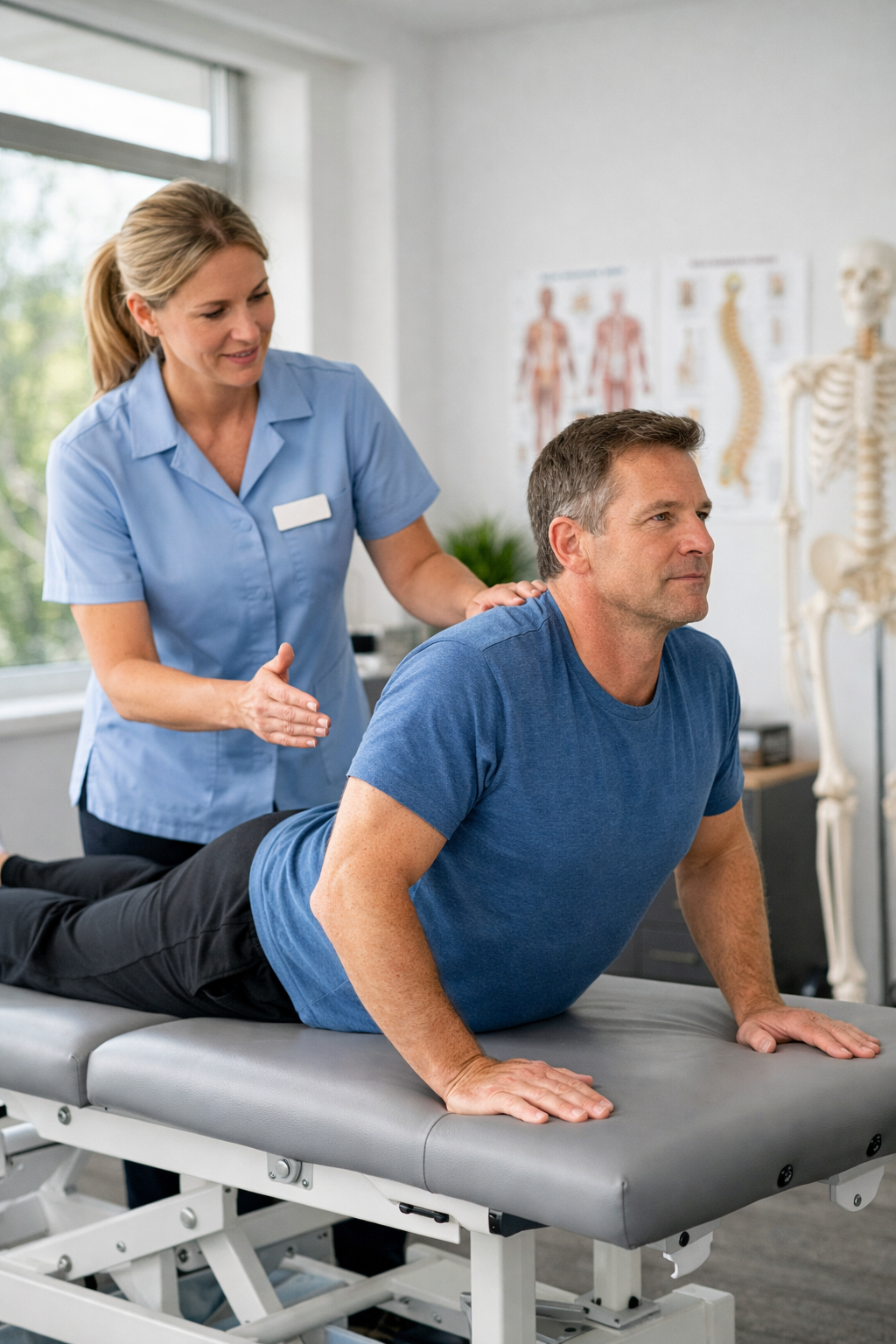
Gentle stretching and positioning specific to your diagnosis round out Phase 1. For disc-related cases, lumbar extension movements may centralize pain and reduce nerve root involvement. For piriformis presentations, targeted deep hip stretches provide direct relief.
Phase 2: Building the Foundation That Prevents Recurrence
Once pain has reduced to a manageable level, the real work begins. Sciatica almost always has an underlying cause related to how the spine is supported and loaded — and addressing that is what prevents the cycle of recurrence.
Core stabilization exercises target the deep spinal muscles (transversus abdominis, multifidus) that protect the lumbar spine from the repetitive stress of commuting, lifting, and recreational activity. Hip and glute strengthening builds the muscular infrastructure that offloads compressive forces from the lumbar discs. McKenzie method exercises — a well-researched directional movement protocol — help consolidate recovery for disc-related presentations.
For patients with stubborn myofascial trigger points that resist manual therapy, dry needling targets the piriformis, gluteal, and paraspinal muscles directly, releasing deep tension that is often a key driver of ongoing sciatic symptoms.
Phase 3: Returning to the Matawan Life You Enjoy
The final phase ensures your recovery holds in the real world, not just in the clinic. Your therapist will design functional training that mirrors the specific demands of your daily life: the commute postures that stress your spine, the physical demands of your job, and the recreational activities — hiking at Cheesequake, kayaking on Lake Lefferts, summer beach trips — that make life in Matawan worth living.
You’ll leave with a clear, practical home exercise program and the education to recognize early warning signs before a flare-up becomes a full episode.
Why Choose Trinity Rehab in Matawan
- One-on-one sessions with a licensed physical therapist at every visit
- Direct access: NJ’s Direct Access Law means no referral is required. You can start treatment this week.
- Individualized evaluation and treatment plan: Your physical therapist assesses your specific anatomy, activity level, and goals before designing anything
- Evidence-based care: Current clinical research on lumbar radiculopathy, neural mobilization, and neuromuscular rehabilitation guides every protocol
- Flexible scheduling: Early morning and evening appointments available for Matawan commuters
Find out more about related conditions at our back pain relief page.
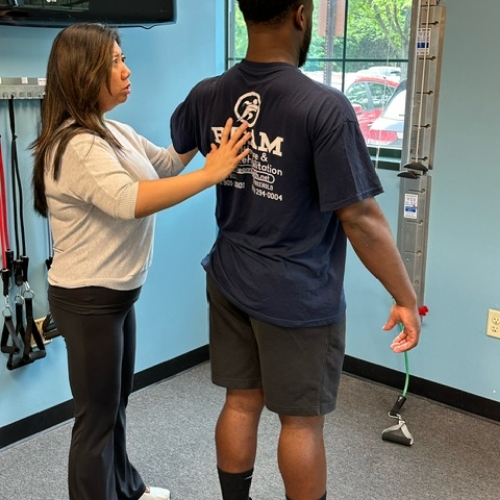
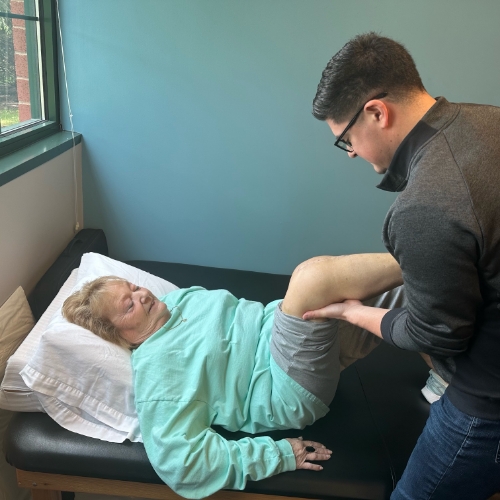
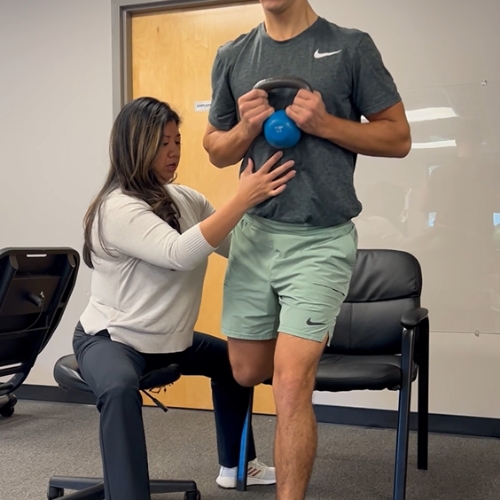
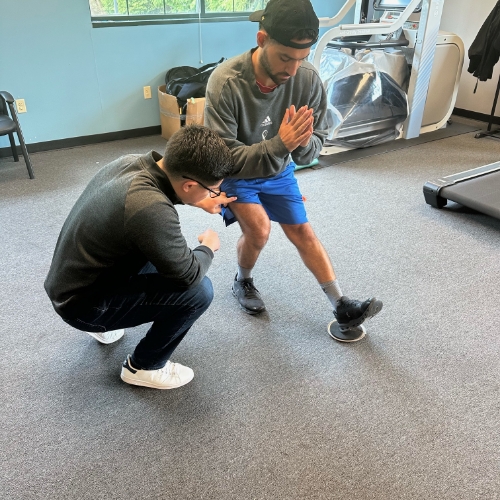
Inside Our Matawan Clinic
Related Conditions & Treatments
Sciatica is just one of the many conditions we treat at Trinity Rehab Matawan. Explore our full range of conditions we treat or learn more about specific treatment approaches:
- Sciatica Treatment Overview
- Back Pain Treatment
- Hip & Knee Pain Relief
- Manual Therapy
- Dry Needling
- EPAT / Shockwave Therapy
Matawan Sciatica Rehab For Leg Pain, Sitting Pain, And Walking Tolerance
Sciatica-like symptoms can make sitting, driving, bending, sleeping, and walking difficult. Matawan patients need a plan that separates nerve-related leg pain from back, hip, or muscle-driven symptoms.
Your therapist may assess symptom behavior, lumbar mobility, nerve tension, hip strength, walking tolerance, and positions that calm or worsen symptoms. Progressive weakness, numbness, or bowel/bladder changes should be medically reviewed urgently.
Related spine options include back pain physical therapy, lumbar disc herniation rehab, and the Matawan physical therapy clinic page.
Frequently Asked Questions
Matawan Sciatica Rehab For Leg Pain, Sitting Pain, And Walking Tolerance
Sciatica-like symptoms can make sitting, driving, bending, sleeping, and walking difficult. Matawan patients need a plan that separates nerve-related leg pain from back, hip, or muscle-driven symptoms.
Your therapist may assess symptom behavior, lumbar mobility, nerve tension, hip strength, walking tolerance, and positions that calm or worsen symptoms. Progressive weakness, numbness, or bowel/bladder changes should be medically reviewed urgently.
Related spine options include back pain physical therapy, lumbar disc herniation rehab, and the Matawan physical therapy clinic page.
Where can I get sciatica treatment in Matawan, NJ?
Does Trinity Rehab Matawan take my insurance?
How does physical therapy treat a herniated disc causing sciatica?
I’ve had sciatica before and it came back. Can physical therapy help?
How do I know if it’s sciatica or something else?
Sciatica does not improve reliably on its own — and every week of untreated nerve irritation makes recurrence more likely. At Trinity Rehab Matawan, we are ready to help you understand what is driving your symptoms and build a lasting recovery plan.
- Request your appointment — No referral needed. Schedule online today.
- Get a complete evaluation — Your therapist will identify the root cause of your sciatica and explain exactly how your treatment plan will address it.
- Recover and prevent recurrence — With one-on-one guidance at every session and a strong home program, you will regain full function and the tools to stay well.
Ready to reclaim your active life in Matawan? Book your appointment at Trinity Rehab today.