
Shoulder Impingement Treatment in Hamilton, NJ
From Pain to Performance: Your Shoulder Recovery Journey
Hamilton is a large, diverse Mercer County township located near Trenton, home to professionals, working families, and residents with varied occupations and lifestyles. Our community includes trade workers, warehouse employees, healthcare professionals, office workers, veterans, and active families managing multiple demands. If you live in Hamilton, you likely understand the reality of balancing work demands, physical requirements, and personal life while trying to stay healthy.
A Day Without Shoulder Pain: What You’re Missing
Imagine your typical day right now with shoulder impingement. You wake up, roll onto your affected side, and sharp pain jolts through your shoulder. Getting out of bed and getting dressed require careful movement—no reaching for the top shelf of your closet without gritting your teeth. Your morning commute involves gripping the steering wheel while your shoulder aches. At work, whether you’re in a warehouse, trade service, healthcare, or office setting, your shoulder pain limits what you can do. You’re frustrated because you know you could do the work, but your shoulder won’t cooperate. By lunch, you’re exhausted—not from the work, but from managing pain and modifying your movements to protect your shoulder. Evening brings relief, but night brings pain that keeps you from sleeping well.
Now imagine the opposite. Picture yourself three months from now, after successful physical therapy at Trinity Rehab Hamilton: You wake up and roll freely without pain, getting out of bed confidently. Reaching into your closet, adjusting the seat in your car, pulling on work clothes—these movements feel normal again. Your commute is quiet and pain-free. At work, you perform your job duties at full capacity without limitation or pain modification. You’re lifting, reaching, and moving as your job demands. Your energy is restored because you’re sleeping well through the night without shoulder pain disrupting your rest. Your confidence is back. You’re no longer thinking about your shoulder every moment of the day. You’ve regained your life.
This transformation is possible. At Trinity Rehab Hamilton, we specialize in getting working professionals and families back to their best selves through evidence-based shoulder impingement treatment. Our licensed physical therapists target the root mechanical causes of your pain, not just symptom management.
Why Shoulder Impingement Requires Professional Treatment
Shoulder impingement syndrome is one of the most common causes of shoulder pain, accounting for 44% to 65% of all shoulder complaints reported in clinical settings. Left untreated, what starts as mild discomfort during overhead activities can progress to chronic pain, significant weakness, and even a rotator cuff tear that may require surgery.
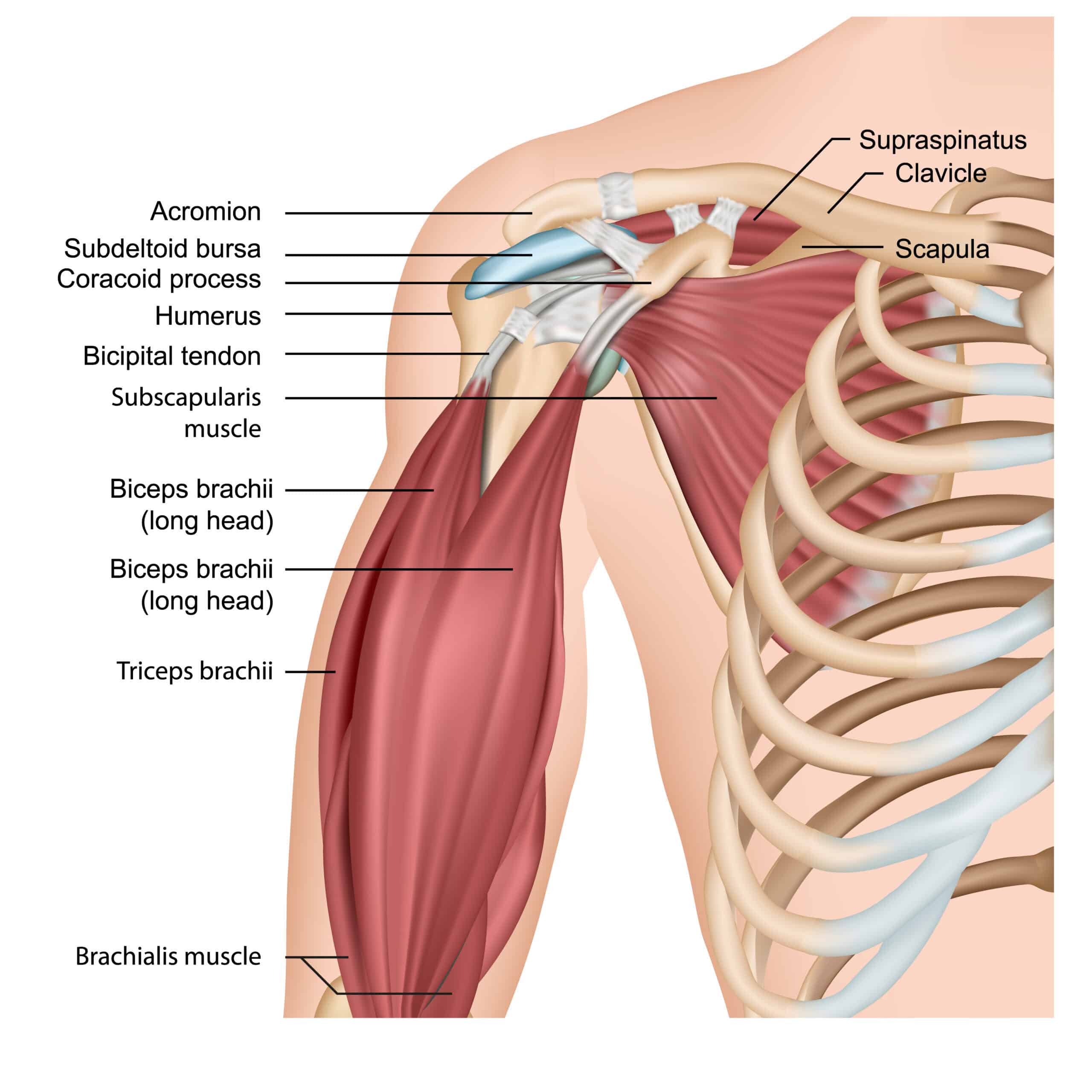
Shoulder impingement is almost always an overuse injury that develops over time due to repetitive stress on the shoulder. The shoulder joint relies on a delicate balance of muscles, tendons, and bones working together within a very tight space. When the tendons of the rotator cuff or the subacromial bursa become irritated and inflamed, they swell. That swelling further narrows the already limited space beneath the acromion bone. This creates a painful cycle: inflammation leads to impingement, and impingement causes more inflammation.
Symptoms of shoulder impingement syndrome often include pain that is dull and aching, localized to the anterolateral shoulder. For Hamilton residents, this pain often intensifies during work tasks, overhead reaching, or activities specific to their occupations and lifestyles.
Physical therapy for shoulder impingement breaks this cycle by reducing inflammation, restoring proper movement mechanics, and strengthening the muscles that keep your shoulder joint stable. Research consistently shows that conservative treatment with physical therapy is effective for the majority of patients, often eliminating the need for cortisone injections or surgical intervention. Early detection and early diagnosis are critical for preventing progressive tendon degeneration and chronic dysfunction. When seeking treatment options, it is important to identify shoulder impingement specialists in Sewell who can provide tailored therapy plans. These specialists utilize a variety of techniques to address individual needs, ensuring a comprehensive approach to recovery. By engaging with professionals equipped to handle such conditions, patients can significantly enhance their chances of a successful outcome.
Returning to Full Work Function: Understanding Your Shoulder’s Mechanical Breakdown
Understanding what’s behind your shoulder impingement helps guide the most effective treatment approach and your recovery timeline. Hamilton residents develop impingement from several factors, often multiple causes working together: shoulder impingement specialists in Wayne can provide targeted therapies that address the specific mechanics of your shoulder joint. By collaborating with these experts, patients can receive personalized care plans that maximize their chances of a full recovery. Early intervention is crucial, as timely treatment often leads to improved outcomes and a quicker return to daily activities. For those seeking shoulder impingement solutions in Warren, it’s essential to consult with professionals who understand the nuances of this condition. These specialists can assess individual cases and recommend exercises and therapies tailored specifically for each patient’s needs. By exploring various options available locally, individuals can find the support they need to regain strength and flexibility in their shoulders. For those seeking shoulder pain relief options in Somerville, it’s important to explore both traditional and innovative therapies. Engaging with local clinics can uncover unique modalities that cater to individual needs. Additionally, joining support groups in the community can provide insights and shared experiences that enhance the healing journey.
Restoring Balance Between Work Demands and Shoulder Capacity
Hamilton’s diverse workforce experiences varied shoulder stressors, and understanding your specific occupational demands is essential to your recovery and prevention of recurrence. Trade workers and contractors perform repetitive overhead motions and heavy lifting that stress the rotator cuff daily. Whether you’re a carpenter reaching overhead to nail roof shingles, a plumber reaching above head height to adjust pipes, or an electrician repeatedly reaching and installing fixtures, your shoulder handles hundreds of repetitions daily without the stabilizer strength to support this volume. Healthcare workers engage in repetitive reaching and patient handling that demands exceptional shoulder stability. Warehouse and material handling workers handle heavy loads without adequate shoulder stabilizer conditioning. Office professionals and administrative workers maintain poor postural habits that gradually narrow their subacromial space. The common thread across all Hamilton occupations: your work demands exceed your shoulder’s current stabilizing capacity. Your job isn’t the problem—your shoulder stabilizer strength relative to your job demands is. This is actually good news: it means rehabilitation can directly address the mismatch by building the strength your specific job requires.
Correcting Postural Dysfunction
Many Hamilton professionals spend hours at desks with forward head posture and rounded shoulders. This postural pattern mechanically narrows the subacromial space and increases impingement risk. Additionally, many manufacturing and warehouse jobs require sustained awkward postures that stress the shoulder. Improper work station ergonomics accelerates impingement development. For trade workers and manual laborers, poor posture during work or poor lifting mechanics create the same subacromial narrowing, leading to progressive impingement.
Rebuilding Your Rotator Cuff and Scapular Stability
When the muscles that stabilize your shoulder blade and humeral head are weak, the ball of your shoulder joint migrates upward during arm elevation, pinching the soft tissues against the acromion. This is particularly common in desk workers whose scapular stabilizers become inhibited from prolonged sitting, and equally common in physically active workers who lack specific rotator cuff conditioning. The mismatch between the demands you place on your shoulder and the stability your muscles provide creates rapid impingement development. This is why someone can be active and strong yet develop impingement—strength in other body systems doesn’t translate to rotator cuff strength without specific conditioning.
Moving Forward Despite Age-Related Changes
After age 40, bone spurs can develop on the underside of the acromion, reducing clearance for the rotator cuff tendons. Many Hamilton residents in their 40s, 50s, and beyond want to maintain active professional and personal lives and don’t want to accept functional limitations. The good news: age-related changes aren’t destiny. With proper rehabilitation and ongoing maintenance, you can maintain full shoulder function throughout your career and beyond.

Symptoms Hamilton Residents Notice
Shoulder impingement syndrome tends to develop gradually, with symptoms worsening over weeks or months. Common signs that bring Hamilton patients to Trinity Rehab include:
- Pain on the front or side of the shoulder, especially when reaching overhead or performing work-specific tasks
- A dull ache that intensifies with activity and may persist at rest
- Weakness when lifting or rotating the arm, affecting work performance and household tasks
- Difficulty sleeping on the affected side due to pressure-related pain, disrupting your rest and next-day performance
- A catching or clicking sensation during certain shoulder movements
- Loss of range of motion, particularly when reaching across the body
- Pain that radiates down the upper arm, though typically not past the elbow
If these symptoms sound familiar, early intervention is key. The longer impingement goes untreated, the more likely it is to cause tendon damage that becomes harder to reverse and may impact your ability to work effectively.
How Trinity Rehab Hamilton Treats Shoulder Impingement
At Trinity Rehab Hamilton, shoulder impingement treatment follows a focused, progressive, and evidence-based approach tailored to each patient’s specific presentation. Our physical therapists emphasize the benefits of restoring your ability to perform daily and functional activities, helping you return to the movements and routines that matter most. We use a combination of hands-on techniques and targeted exercises to reduce your pain, rebuild strength, and get you back to your professional responsibilities and personal life. In addition to our personalized care, we also provide information on shoulder care options in Howell, enabling you to explore various treatment avenues. Our team is dedicated to ensuring you have the resources you need, whether that includes additional therapies, preventative measures, or support groups. By guiding you through these available options, we empower you to take charge of your recovery journey. Our commitment to shoulder impingement relief in Middletown ensures that you receive personalized care designed to expedite your recovery. We also prioritize patient education, empowering you with knowledge about your condition and the techniques required for self-management. By addressing the root causes of your discomfort, we aim to prevent recurring issues and enhance your overall quality of life.
Structured exercise programs consistently outperform placebo or minimal interventions in patients with subacute and chronic subacromial pain, making them a key part of our patient-specific care. Nonoperative management is recommended as the initial approach for patients with shoulder impingement syndrome who do not have a large or acute traumatic rotator cuff tear. Our coordinated, team-based care is designed to enhance patient outcomes by integrating expertise and communication across disciplines for optimal recovery.
Phase 1: Pain Reduction and Inflammation Control (Weeks 1-3)
During the early phase of rehabilitation for shoulder impingement syndrome, treatment focuses on rapid pain control and restoration of comfortable range of motion. The first priority is calming the irritated tissues and reducing the inflammation that’s preventing you from functioning. In most cases, patients experience meaningful pain reduction within the first 2-3 sessions, allowing you to regain confidence and begin the rehabilitation process. Your physical therapist at Trinity Rehab Hamilton uses multiple coordinated strategies including manual therapy for rapid pain relief through joint mobilizations, soft tissue techniques, and massage that improve blood flow and reduce muscle guarding. Modality-based treatments including therapeutic ultrasound, electrical stimulation, and ice/heat therapy help manage acute pain and swelling. Pain management guidance on over-the-counter painkillers can help manage pain. Postural correction and body mechanics modification addresses rounded shoulders and forward head posture immediately, reducing mechanical irritation of the rotator cuff tendons. Specific activity modification for your occupation helps you identify which specific work movements and positions aggravate your symptoms and teaches you strategies to avoid flare-ups while your shoulder heals.

Phase 2: Restoring Mobility and Building Strength (Weeks 3-8)
Once pain is under control, the focus shifts to rebuilding the shoulder’s range of motion and strengthening the muscles that provide dynamic stability. Maintaining some movement in the shoulder is important to prevent stiffness and promote recovery from shoulder impingement syndrome. Engaging in prescribed exercises can help improve range of motion and reduce pain. This is the phase where lasting improvement happens. Scapular stabilization exercises strengthen the muscles that anchor your shoulder blade to ensure proper scapulohumeral rhythm during arm movement. Poor scapular mechanics are one of the most common contributing factors to impingement. Rotator cuff strengthening uses progressive resistance exercises targeting the four muscles that form the rotator cuff. Flexibility and stretching exercises, especially those targeting the posterior shoulder, improve mobility and function. Neuromuscular re-education guides you through movement patterns that retrain your shoulder to move correctly, preventing the compensations that caused impingement in the first place.

Phase 3: Return to Full Activity (Weeks 8+)
The final phase prepares you for a complete return to work and daily life without pain or limitations. Work-specific and activity-specific training customizes progressions to match your specific occupational demands. Trade workers practice lifting and overhead positioning. Office workers practice desk positioning and reaching. Healthcare workers practice patient handling. Dry needling addresses persistent trigger points in the rotator cuff or periscapular muscles that resist conventional treatment, providing rapid relief and improved muscle activation. EPAT/Shockwave therapy stimulates healing in chronic tendon injuries, accelerating recovery in cases where the rotator cuff tendons have undergone degenerative changes. A customized home exercise program ensures you retain your gains and prevent recurrence after discharge.
The Role of Occupational Therapy in Your Recovery
Occupational therapy is an essential part of a comprehensive approach to shoulder impingement recovery, working hand-in-hand with physical therapy to help you regain your independence and comfort in daily and professional life. While physical therapy focuses on restoring strength, flexibility, and movement in the shoulder, occupational therapy zeroes in on how those improvements translate to real-world activities—like working, reaching for items, or performing household tasks.
Occupational therapists are skilled at analyzing the specific tasks and routines that may be aggravating your shoulder impingement symptoms. By observing how you move and identifying potential triggers for pain or limited mobility, they can recommend practical modifications to your environment or technique. This might include teaching you new ways to perform daily activities, suggesting adaptive equipment, or developing strategies to manage pain during essential tasks. For Hamilton residents, this might mean optimizing your work station, improving lifting technique, or modifying how you perform work-specific tasks.
Through personalized therapy sessions, occupational therapists help patients manage their symptoms, reduce pain, and prevent further injury. Their goal is to ensure that improvements made in the clinic carry over into your workplace and home—so you can confidently return to your full professional and personal life. By addressing both the physical and occupational aspects of shoulder impingement, this collaborative approach maximizes your recovery and supports long-term mobility and function.

How to Prevent Shoulder Impingement From Returning
Recovery from shoulder impingement syndrome doesn’t end when your physical therapy sessions do. These strategies will help you stay pain-free for the long term: exploring shoulder pain solutions in matawan can provide additional resources to enhance your recovery journey. Local experts may offer innovative therapies and support groups that foster community and encouragement. It’s important to stay engaged with these avenues to ensure lasting relief and improved mobility. shoulder impingement therapy in Sparta focuses on personalized treatment plans that cater to individual needs. It’s essential to incorporate exercises that target shoulder stability and strength, which can significantly reduce the risk of re-injury. Additionally, maintaining open communication with your therapist will ensure you adapt your routine as needed for optimal recovery.
- Maintain rotator cuff and scapular strength — Continue performing your home exercise program 3-4 times per week. The exercises take just 10-15 minutes and provide ongoing protection against recurrence.
- Practice good posture — Set up your workstation ergonomically with proper screen and keyboard positioning. Take regular breaks from prolonged sitting every 60-90 minutes. Be mindful of your shoulder position during work and daily activities.
- Warm up before overhead activities — Whether you’re starting your work shift with overhead tasks or engaging in recreational activities, 5-10 minutes of dynamic stretching prepares the rotator cuff for the demands ahead.
- Progress activity intensity gradually — Sudden increases in activity volume are one of the most common triggers for recurrence. Follow the 10% rule: increase work demands by no more than 10% per week.
- Listen to your body — Mild soreness after activity is normal, but sharp pain during movement is a warning sign. If impingement symptoms return, early treatment prevents a prolonged setback.
Maintaining musculoskeletal health and overall health through lifestyle modifications—such as regular exercise, balanced nutrition, and patient education—can help prevent recurrence of shoulder impingement syndrome and support long-term recovery. The prognosis for shoulder impingement syndrome is generally favorable with appropriate conservative treatment, especially when diagnosed early.
Why Hamilton Residents Choose Trinity Rehab
Choosing the right physical therapy provider makes a real difference in your recovery. Here’s what sets Trinity Rehab Hamilton apart:
- Comprehensive care team — At Trinity Rehab, your care is supported by an interprofessional team that includes licensed physical therapists, allied health professionals, and physical therapist assistants. These team members play a vital role in patient education, rehabilitation, monitoring, and communication, ensuring collaborative care and improved outcomes.
- Specialized shoulder expertise — Our therapists hold specialist certification, are active members of the American Physical Therapy Association, and regularly participate in continuing education courses to maintain the highest standards of care. They are committed to professional responsibility, staying current with the latest evidence-based techniques for impingement treatment, and upholding ethical practice.
- Integrated approach — We address multiple body systems—including musculoskeletal, neuromuscular, and others—to provide holistic rehabilitation. Our approach incorporates shared decision making, involving you in every step of your treatment plan for optimal results.
- Right here in Hamilton — Located in your community, Trinity Rehab Hamilton is convenient to where you work and live, making it easier to attend consistent appointments without a lengthy commute. You’ll see familiar faces, work with the same trusted therapists throughout your recovery, and benefit from a deep understanding of your community’s healthcare needs.
- Insurance and payment options — We accept most major insurance plans and offer flexible payment arrangements for uninsured patients. You shouldn’t have to choose between physical therapy and your financial wellbeing.
The right physical therapist partnership makes all the difference in your recovery outcome. We invite you to experience the Trinity Rehab Hamilton difference.
Common Questions Hamilton Residents Ask
How long does shoulder impingement take to heal?
Most patients experience meaningful improvement within 2-4 weeks of consistent physical therapy. Complete resolution typically takes 6-12 weeks for mild to moderate cases, though recovery timelines vary based on your individual presentation, age, and adherence to home exercises. Chronicity (duration of symptoms) affects recovery time: longer-standing impingement may require slightly extended treatment duration.
Can I continue working while undergoing physical therapy?
In most cases, yes. We’ll work with you to identify which specific work movements aggravate your symptoms and teach you strategies to modify your work while your shoulder heals. Some patients can maintain full work duties with appropriate modifications, while others may need temporary activity restrictions. Your physical therapist will provide specific guidance based on your job demands and recovery progress.
Do I need a doctor’s referral to see a physical therapist?
New Jersey is a direct access state, meaning you can schedule with a physical therapist without a physician referral. However, you may want to see your doctor first to rule out other conditions and get imaging if needed. If you have insurance, check your plan’s requirements—some plans require a referral for coverage, though many don’t.
Will I need surgery?
Most patients with shoulder impingement recover successfully with conservative physical therapy treatment and don’t need surgery. Research shows that structured exercise programs are effective for the majority of patients. Surgery is typically considered only if conservative treatment hasn’t resolved symptoms after 3-6 months or if imaging reveals a large rotator cuff tear with significant functional loss.
What if I don’t have insurance?
We welcome uninsured patients and offer flexible payment plans to make physical therapy affordable. We also offer affordable self-pay rates and can work with you to find payment arrangements that fit your budget. Don’t let financial concerns prevent you from getting the care you need.
Start Your Shoulder Recovery Today
Shoulder impingement doesn’t have to control your life. Reach out to Trinity Rehab Hamilton today to schedule an evaluation and begin your path back to pain-free function. Our compassionate team is ready to help you regain your confidence, return to work, and reclaim the active life you deserve. Searching for shoulder pain relief in Manalapan has never been easier with our customized treatment plans tailored to your needs. Our team at Trinity Rehab Hamilton utilizes advanced techniques to target the source of your discomfort, ensuring you receive the most effective care. With our support, you can take the first step towards a more active and fulfilling life. If you’re located in Toms River, you can also explore our shoulder therapy services in Toms River that are designed to address your specific needs and promote healing. We prioritize your comfort and recovery, offering a welcoming environment where you can thrive. Let us guide you on your journey toward improved mobility and pain management.