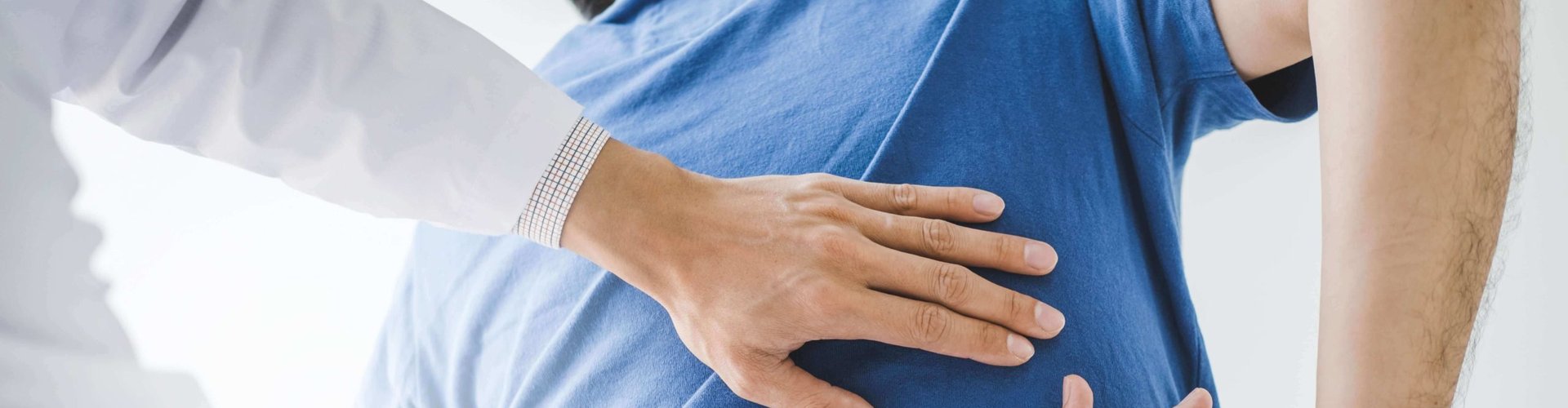
LUMBAR DISC HERNIATION TREATMENT IN WAYNE, NJ
The view from the summit of High Mountain is worth every step of the 856-foot climb — until the descent turns your lower back into a knot of pain and your left foot starts going numb. For Wayne residents, a community woven through lakes, parks, and ridgelines just 20 miles from Manhattan, lumbar disc herniation is a condition that collides head-on with an active, demanding lifestyle. Between the physical toll of weekend hikes, Friday night football at Wayne Hills or Wayne Valley, and the daily grind of an NJ Transit commute to the city, the lumbar spine takes a beating. Trinity Rehab’s one-on-one treatment model is designed to get you out of pain and back to the life you have built in Wayne.
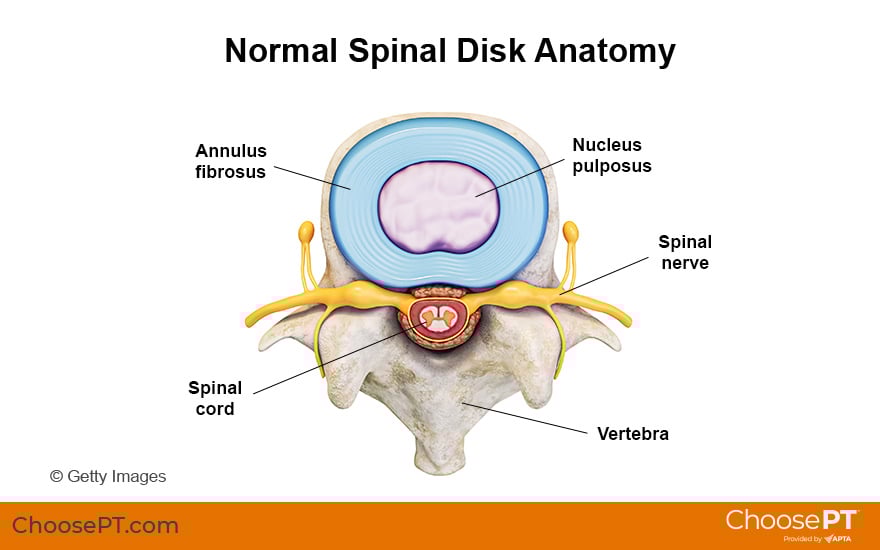
UNDERSTANDING DISC HERNIATION IN THE LUMBAR SPINE
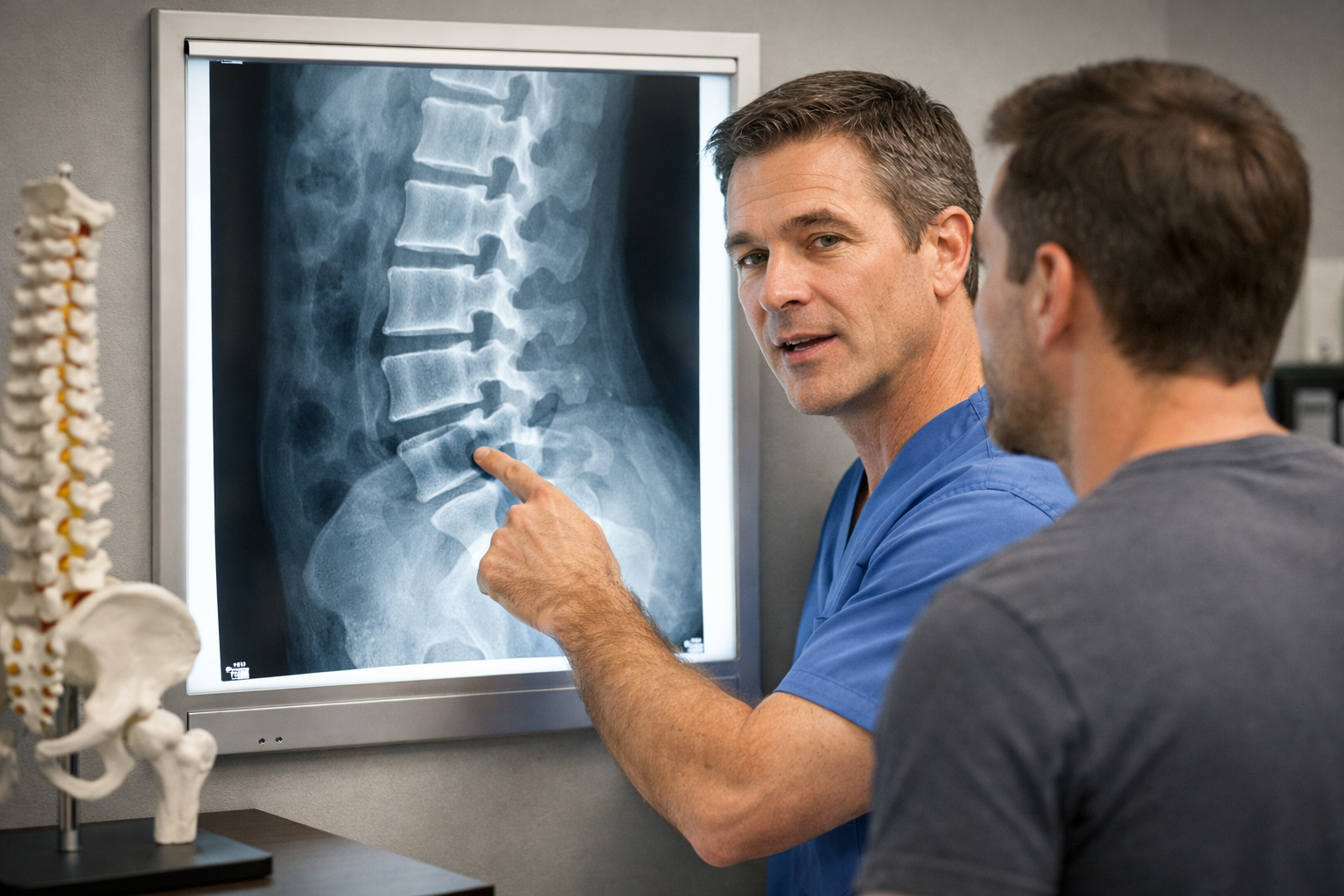
The five vertebrae of your lumbar spine are separated by intervertebral discs that serve as shock absorbers. Each disc has a tough outer ring — the annulus fibrosus — and a softer gel center called the nucleus pulposus. When the annulus tears under excessive load or repetitive stress, the nucleus can push outward and compress a nerve root. The L4-L5 and L5-S1 levels are the most commonly affected because they absorb the lion’s share of your body’s forces.
Compression of a lumbar nerve root produces radiculopathy, and when the sciatic nerve is involved, you experience sciatica — a radiating pain that can travel from the buttock to the foot. The symptoms can be debilitating, but research published in StatPearls demonstrates that most patients recover fully with conservative treatment (source), and a 2024 review in Deutsches Ärzteblatt International confirms physical therapy as the preferred first-line approach (source).
WHAT MAKES WAYNE RESIDENTS VULNERABLE
THE NJ TRANSIT COMMUTE
Wayne’s proximity to New York City means tens of thousands of residents board buses or trains each day for commutes lasting 35 to 60 minutes in each direction. That extended seated posture raises intradiscal pressure significantly. Over months and years, the sustained compression weakens the disc’s outer fibers and sets the stage for herniation — sometimes triggered by nothing more dramatic than reaching for a briefcase on the overhead rack.
TWO-SCHOOL SPORTS RIVALRY
Wayne Hills (Patriots) and Wayne Valley (Indians) fuel one of Passaic County’s most spirited athletic rivalries. Football, soccer, basketball, ice hockey, wrestling, and lacrosse create an enormous pipeline of young athletes who are exposed to spinal loading, collision, and rotational forces. Adult PAL leagues, Ice Vault Arena hockey, and recreational golf at Preakness Valley extend those same risks well beyond graduation.
ELEVATION AND OUTDOOR RECREATION
High Mountain Park Preserve — 1,153 acres of rugged trails climbing to 856 feet — draws hikers and trail runners year-round. Downhill hiking places eccentric load on the lumbar extensors and can jar vulnerable discs. Lake activities at Packanack and Pines Lakes, plus winter snow shoveling on Wayne’s hilly streets, add seasonal risk factors.
COLD STORAGE AND WAREHOUSE LABOR
Wayne is home to cold storage warehouses and industrial operations that require heavy manual labor, often in confined, cold environments where muscles are less pliable. Rapid, repetitive lifting with compromised body mechanics in these conditions is a recipe for disc injury.
SYMPTOMS YOU SHOULD NOT IGNORE
Lumbar disc herniation may present as:
- Persistent back pain in the lower lumbar region, often worse in the morning
- Sciatica — a shooting, burning, or electric pain from the buttock down the leg
- Numbness or tingling in the shin, foot, or toes
- Weakness when lifting the toes or pushing off during walking
- Pain that worsens when sitting, bending, or transitioning from sitting to standing
Early intervention leads to faster outcomes. New Jersey’s direct-access law allows you to start physical therapy without a physician referral, so schedule your appointment at Trinity Rehab as soon as symptoms appear.
TRINITY REHAB’S THREE-PHASE RECOVERY PLAN
Every session is one-on-one — one therapist, one patient, full attention. This model ensures that your treatment plan evolves with you, not according to a one-size-fits-all template.
PHASE 1: PAIN REDUCTION AND NERVE CALMING
The initial phase focuses on dampening the inflammatory response around the compressed nerve root and restoring basic comfort.
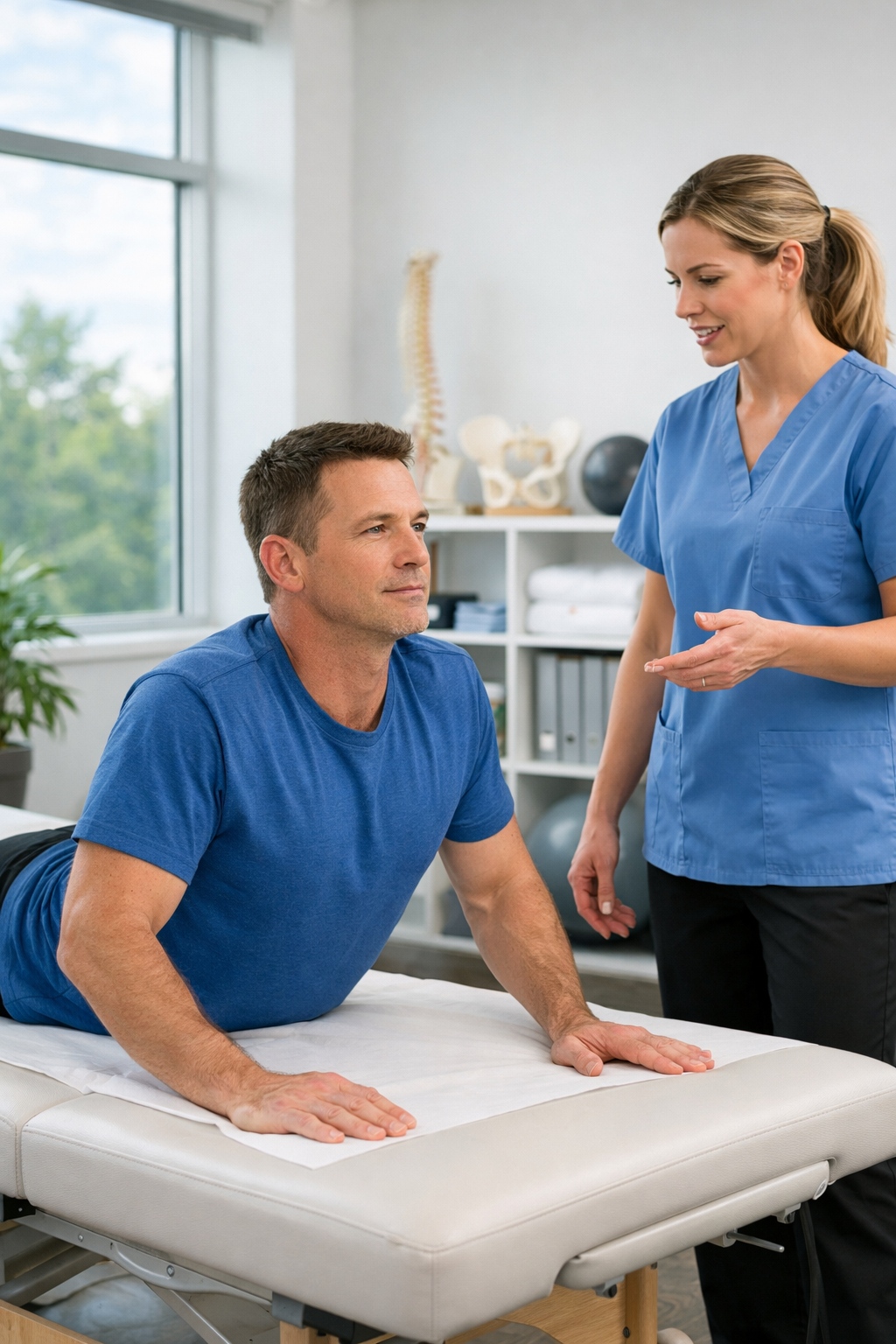
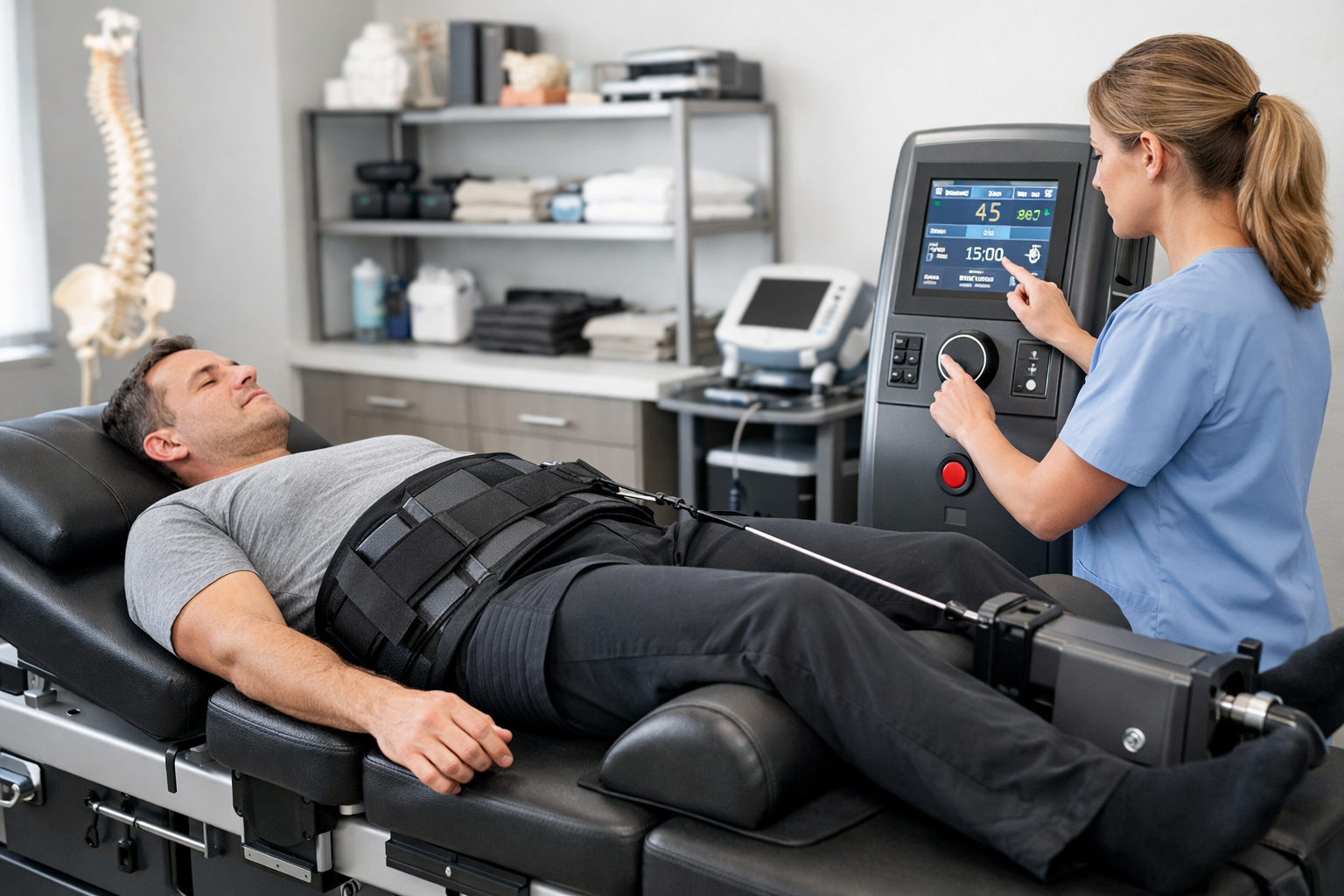
- Directional preference / McKenzie method — Your therapist systematically tests movement directions to find the one that centralizes your pain. For most posterior herniations, repeated extension movements encourage the nucleus pulposus to migrate away from the nerve root, often producing rapid improvement.
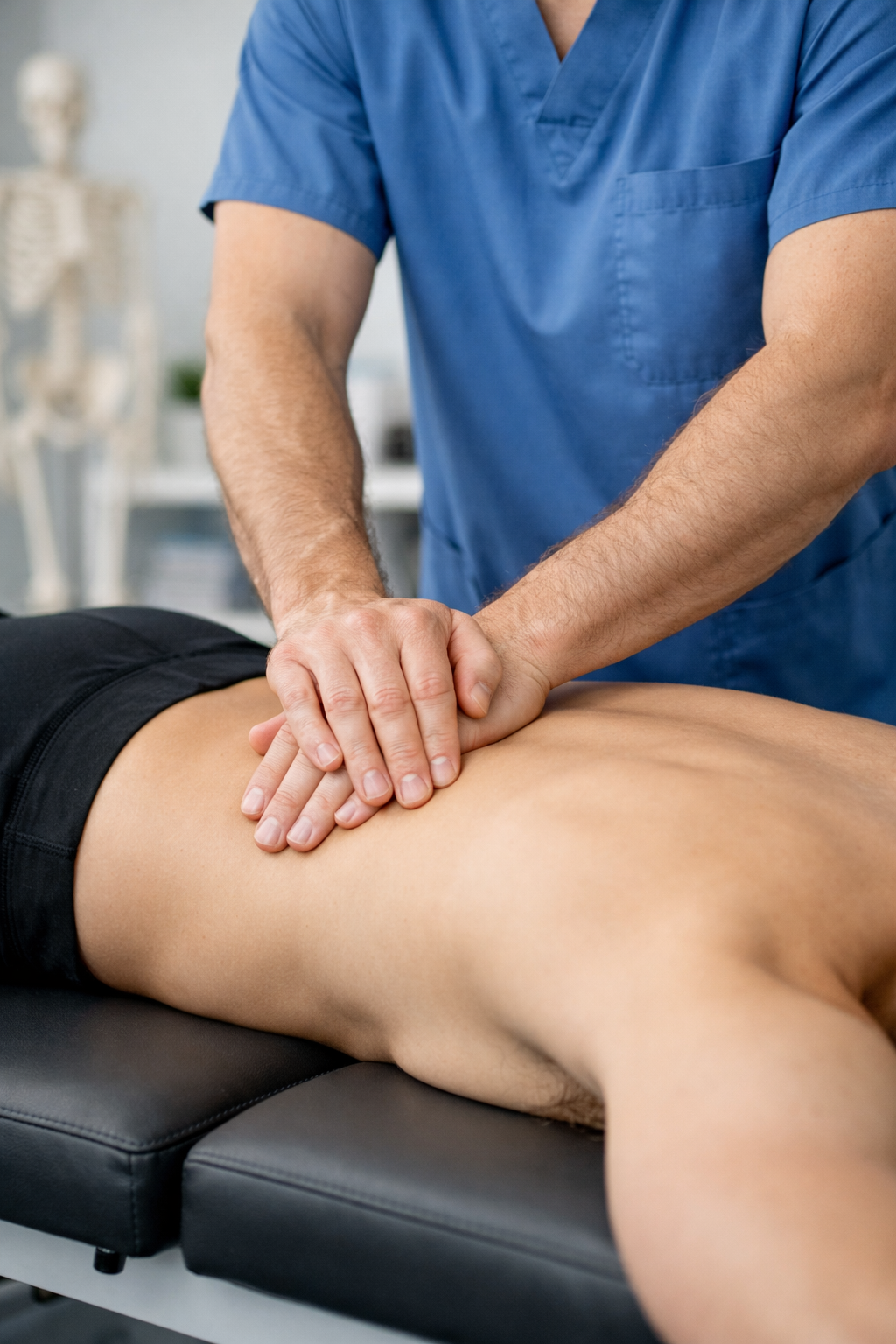
- Manual therapy and mobilization — Skilled hands-on techniques restore segmental motion, reduce paraspinal spasm, and promote healing blood flow to the injured disc.
- Neural mobilization — Gentle sciatic nerve glides reduce the mechanical sensitivity that causes radiculopathy symptoms during sitting, driving, and climbing stairs.
- Dry needling — Targeted insertion of thin needles into deep paraspinal and gluteal trigger points breaks the pain-spasm cycle that conventional stretching cannot reach.
- EPAT — Acoustic shockwave therapy may be introduced for chronic cases to stimulate tissue repair at the cellular level.
PHASE 2: CORE STABILIZATION AND PROGRESSIVE STRENGTHENING
With pain under control, the goal shifts to rebuilding the muscular corset that protects the lumbar spine.
- Deep stabilizer retraining — Isolation exercises for the transversus abdominis, lumbar multifidus, and pelvic floor restore the anticipatory bracing pattern that disc herniation disrupts.
- Posterior chain development — Bridges, hip hinges, and step-ups strengthen the glutes and hamstrings so they absorb forces that would otherwise be transferred to the discs.
- Anti-rotation and anti-flexion training — Pallof press variations, single-arm farmer carries, and plank progressions build the rotational stability needed for sports and daily tasks.
- Functional simulation — Your therapist replicates the specific demands of your life: shoveling snow on a Wayne hillside, hiking downhill at High Mountain, or lifting equipment at a warehouse.
PHASE 3: RETURN TO ACTIVITY AND LONG-TERM PREVENTION
Phase 3 bridges the gap from clinical improvement to real-world performance.
- Sport-specific programming — Skating mechanics for Ice Vault hockey players, deceleration and cutting drills for Wayne PAL soccer and lacrosse athletes, and rotational power work for Preakness Valley golfers.
- Hiking readiness — Graduated incline and decline training to prepare your spine for High Mountain’s trails, including pack loading and pole technique.
- Commuter ergonomics — Seat positioning, lumbar support, and transit-friendly micro-exercises to protect your discs during the daily NJ Transit ride.
- Long-term maintenance program — A home-based exercise plan you can sustain independently, designed around equipment you already own or can access at the Wayne Indoor Tennis Club or local gym.
SPINE-FRIENDLY LIVING IN WAYNE
Wayne’s parks and facilities make ongoing spinal health achievable:
- Walk or jog the trails at Laurelwood Arboretum — Gentle, shaded paths with minimal elevation change perfect for active recovery.
- Swim at Captain Kilroy Park — Summer swimming offers a zero-impact workout that strengthens the core while decompressing the spine.
- Play pickleball at Dave Waks Memorial Park — Lower-impact than tennis, with the lateral movement that maintains hip and trunk stability.
- Strength train consistently — Regular resistance exercise is the single best evidence-based strategy for preventing disc re-herniation. Your therapist will design a program that fits your schedule and fitness level.
WHY WAYNE RESIDENTS CHOOSE TRINITY REHAB
- True one-on-one sessions — No aides, no distractions, no compromises.
- No referral required — Start physical therapy the moment you decide to get help.
- Full treatment arsenal — Manual therapy, McKenzie method, neural mobilization, dry needling, and EPAT all available in one clinic.
- Passaic County expertise — We know Wayne’s terrain, schools, employers, and commuting patterns.
- Flexible hours — Early morning, evening, and midday appointments accommodate shift workers, commuters, and stay-at-home parents.
INSIDE OUR WAYNE CLINIC
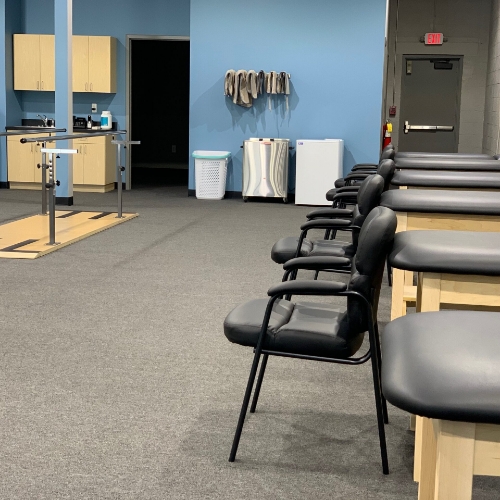
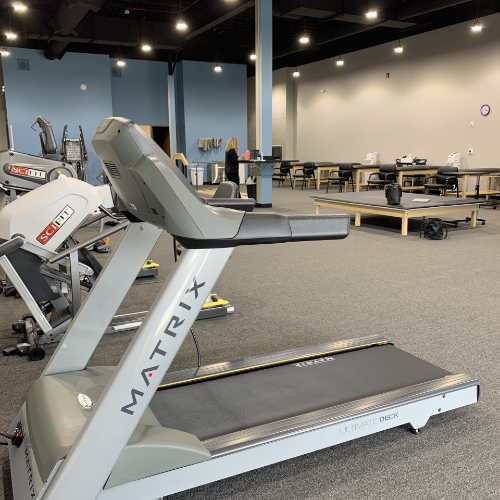
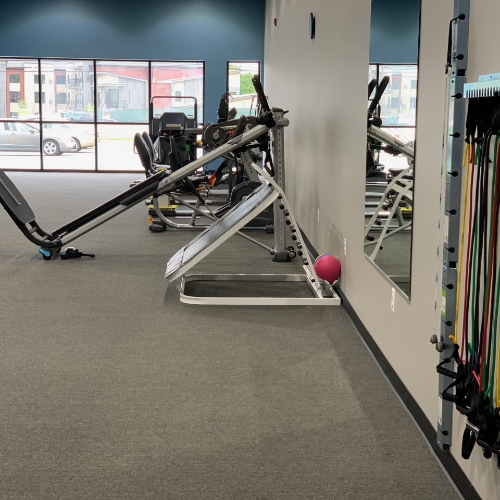
Our Wayne clinic is at 1172 Hamburg Tpke, Wayne, NJ 07470. View Wayne clinic hours, photos and contact details, or get directions to Trinity Rehab Wayne.
RELATED CONDITIONS & TREATMENTS
Lumbar disc herniation is just one of the many conditions we treat at Trinity Rehab Wayne. Explore our full range of conditions we treat or learn more about specific treatment approaches:
Wayne Disc Rehab With A Clear Back-To-Activity Plan
Lumbar disc symptoms can interrupt commuting, desk work, lifting, sleep, and exercise for patients across Wayne, Totowa, Little Falls, and Pompton Lakes. Rehab should connect the diagnosis to the actual positions and movements that flare your symptoms.
Your therapist may assess lumbar mobility, nerve-related symptoms, hip strength, gait, lifting mechanics, sitting tolerance, and red flags such as worsening weakness, numbness, or bowel/bladder changes that need urgent medical attention.
Patients with related symptoms may also need sciatica treatment in Wayne, back pain physical therapy, or spinal stenosis treatment.
FREQUENTLY ASKED QUESTIONS
How is a herniated disc different from a bulging disc?
Can I still hike High Mountain during treatment?
My son plays hockey at Ice Vault — should he see a PT after a back injury?
Do I need imaging before starting treatment?
How much does treatment cost without insurance?
DO NOT LET PAIN DEFINE YOUR WAYNE EXPERIENCE
Whether your world revolves around the Friday night lights at Wayne Hills, sunrise hikes on High Mountain, or the daily hustle of a New York City commute, a lumbar disc herniation should be a chapter — not the whole story. Trinity Rehab’s one-on-one care model means your treatment is as unique as the life you are working to get back to.
Schedule your appointment today and start moving forward.
SOURCES
- StatPearls — Disc Herniation: https://www.ncbi.nlm.nih.gov/books/NBK560878/
- Deutsches Ärzteblatt International — Conservative Treatment of Lumbar Disc Herniation: https://pmc.ncbi.nlm.nih.gov/articles/PMC11465477/
What Our Patients Say



Sign up for free health tips and tricks