

TENNIS ELBOW TREATMENT IN SPARTA, NJ | TRINITY REHAB
Sparta doesn’t feel like the rest of New Jersey. Tucked into the rolling hills of Sussex County, this is where the state trades suburbs for countryside — where morning fog lifts off Lake Mohawk to reveal wooded ridgelines, and the rhythm of life follows the seasons rather than the turnpike. Spring means dusting off the racquet at the Sparta Athletic Club. Summer is for long rounds at Lake Mohawk Golf Club or SkyView Golf Club, followed by evening walks along the Lake Mohawk boardwalk. Fall brings crisp Highland air and one last push on the fairways before winter sends everyone indoors for pickleball and gym sessions.
But all that activity — the constant grip-and-swing, the seasonal sport transitions, the weekend warrior mentality — takes a toll on the body. Picture this: you’ve spent the summer playing three rounds a week at Lake Mohawk Golf Club. September rolls in, and a neighbor invites you to try indoor pickleball at the Sparta Athletic Club. Two weeks later, you reach for a coffee mug and feel a sharp, burning pain radiating from your outer elbow down through your forearm. You drove past the Van Kirk Homestead on Route 517 this morning and could barely grip the steering wheel through the curve.
That pain has a name — tennis elbow — and at Trinity Rehab Sparta, we treat it every week. If elbow pain is interfering with the activities that make Sparta home, physical therapy can get you back to them.
What Is Tennis Elbow?
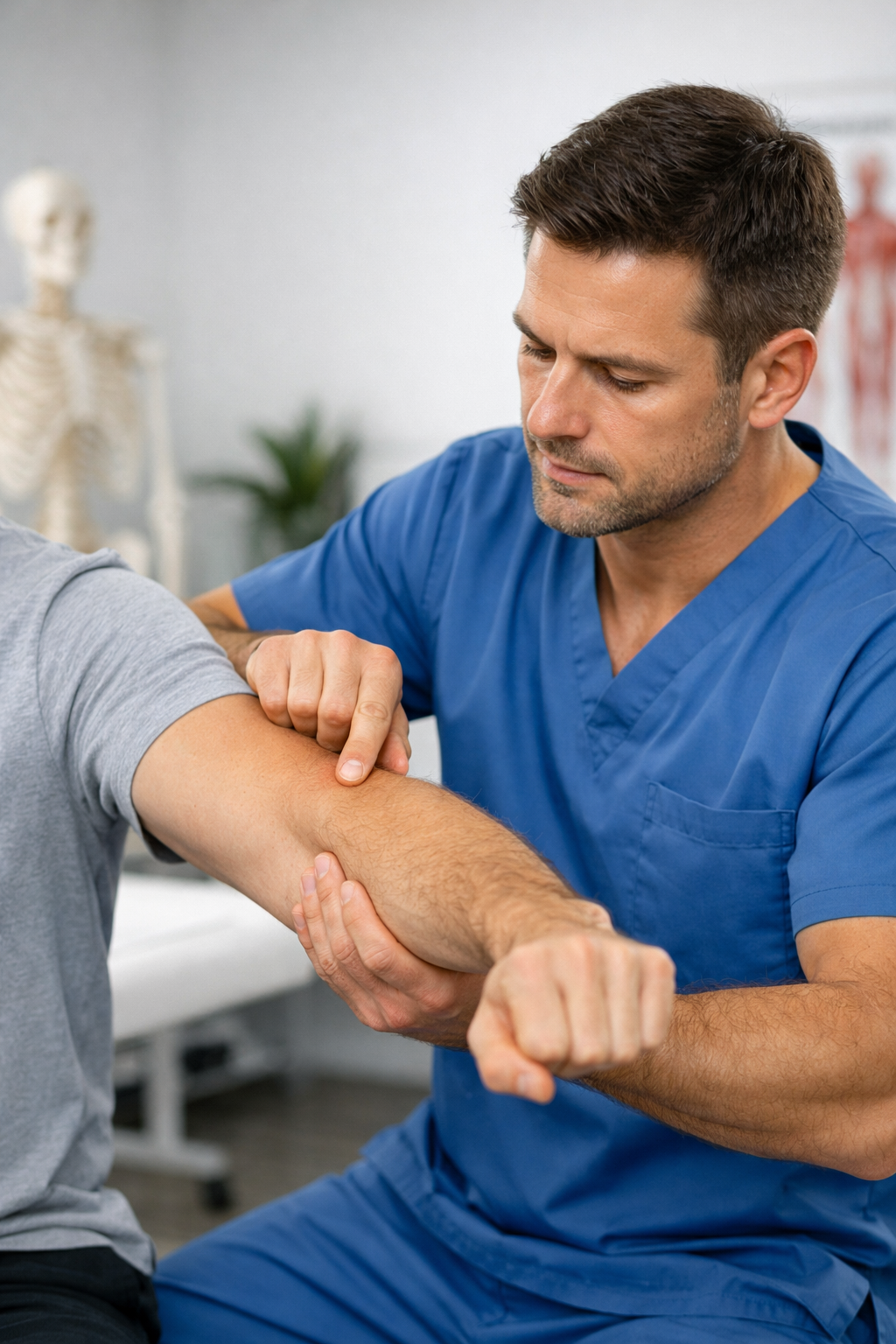
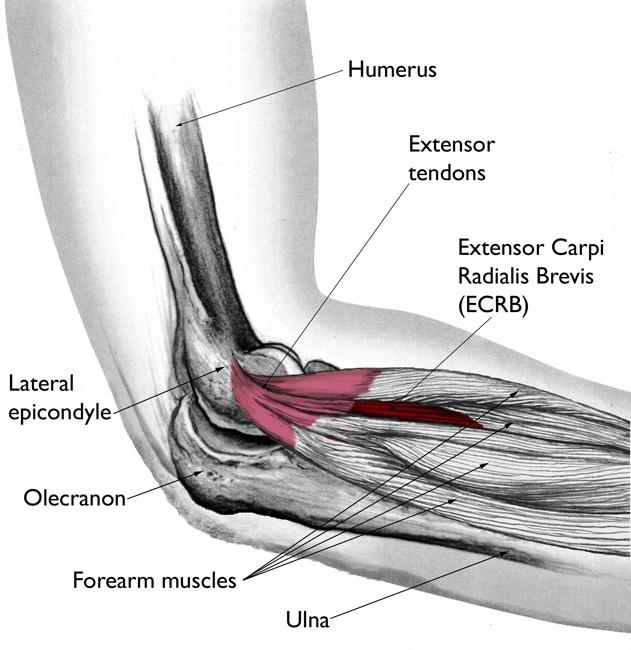
Tennis elbow — clinically known as lateral epicondylitis, lateral epicondylalgia, or lateral elbow tendinopathy — is a condition affecting the tendons on the outer side of the elbow. The condition develops when the extensor carpi radialis brevis (ECRB) tendon, which helps stabilize the wrist during gripping and lifting, becomes weakened or structurally degraded from overuse.
The underlying problem is typically a failure of the tendon to repair itself after repetitive stress. Every time you grip a golf club, swing a racquet, or twist a wrench, the ECRB and surrounding forearm muscles absorb force. When the volume of those repetitive movements exceeds what the tendon can tolerate, micro-damage accumulates faster than the body can heal it. The result is persistent lateral elbow pain, weakened grip strength, and difficulty performing simple tasks like lifting a bag of groceries.
In a community as active as Sparta, the risk factors are built into the calendar. Residents cycle through golf, tennis, pickleball, skiing, and hiking with the seasons. Each transition introduces a different loading pattern on the forearm tendons, and without adequate recovery, the ECRB never gets the break it needs. That seasonal stacking of repetitive motions is one of the most common paths to tennis elbow we see at our clinic.
Who's at Risk in Sparta?
Tennis elbow affects high school athletes, weekend golfers, office workers, and tradespeople alike. But certain patterns of life in Sparta make specific groups especially vulnerable.
The Year-Round Golfer
Mark is 52 and has lived in the Lake Mohawk community for fifteen years. He plays Lake Mohawk Golf Club from May through August, then SkyView Golf Club into October. This past fall, he added Tuesday night pickleball at the Sparta Athletic Club. By December, gripping anything — a snow shovel, his car keys — sent a jolt of pain from his elbow to his wrist.
Going from a golf grip to a pickleball paddle changes the angle of wrist extension and forearm pronation, loading the ECRB in a pattern it wasn’t conditioned for. His forearm muscles and tendons never had an off-season.
The Manufacturing Worker
Jessica is 38 and works at Borealis Compounds, one of Sparta’s key employers. Her job involves repetitive tasks — operating pneumatic tools, gripping heavy containers, and performing the same wrist-and-forearm motions hundreds of times per shift. She’s also a parent of two kids at Sparta Township schools, which means evenings are spent cooking, carrying, and cleaning. The repetitive strain from work, layered onto daily life, pushed her tendons past their tolerance. Workers at facilities like Borealis Compounds or Glass Flooring Systems face this kind of occupational strain regularly and often don’t realize physical therapy can help until the pain becomes severe.
The High School Athlete
Ryan is a junior on the Sparta High School Spartans boys tennis team. He played fall baseball, transitioned into winter conditioning, and started spring tennis practice in March. By mid-April, his serving arm ached during every match. The Spartans’ athletic programs — baseball, softball, golf, and tennis among them — all load the forearm and wrist extensors. Young athletes who play sports across seasons without structured recovery are increasingly showing up with lateral elbow symptoms.
Whether your repetitive movements come from a golf swing near Dykstra Park, a production line in Sparta’s industrial corridor, or spring practice on the high school courts, the treatment principles are the same.
How Physical Therapy Treats Tennis Elbow at Trinity Rehab Sparta
At Trinity Rehab Sparta, we treat tennis elbow using a phase-based approach designed to reduce pain, rebuild tendon tolerance, and return you to full activity — whether that’s competitive tennis, a manufacturing job, or carrying groceries in from White Deer Plaza.
Phase 1: Pain Relief and Load Management
The first priority is calming the irritated tendon. Complete rest often makes tennis elbow worse long term, so we focus on activity modifications: adjusting grip technique, reducing volume on specific movements, and using a counterforce strap just below the elbow to offload the ECRB during daily tasks.
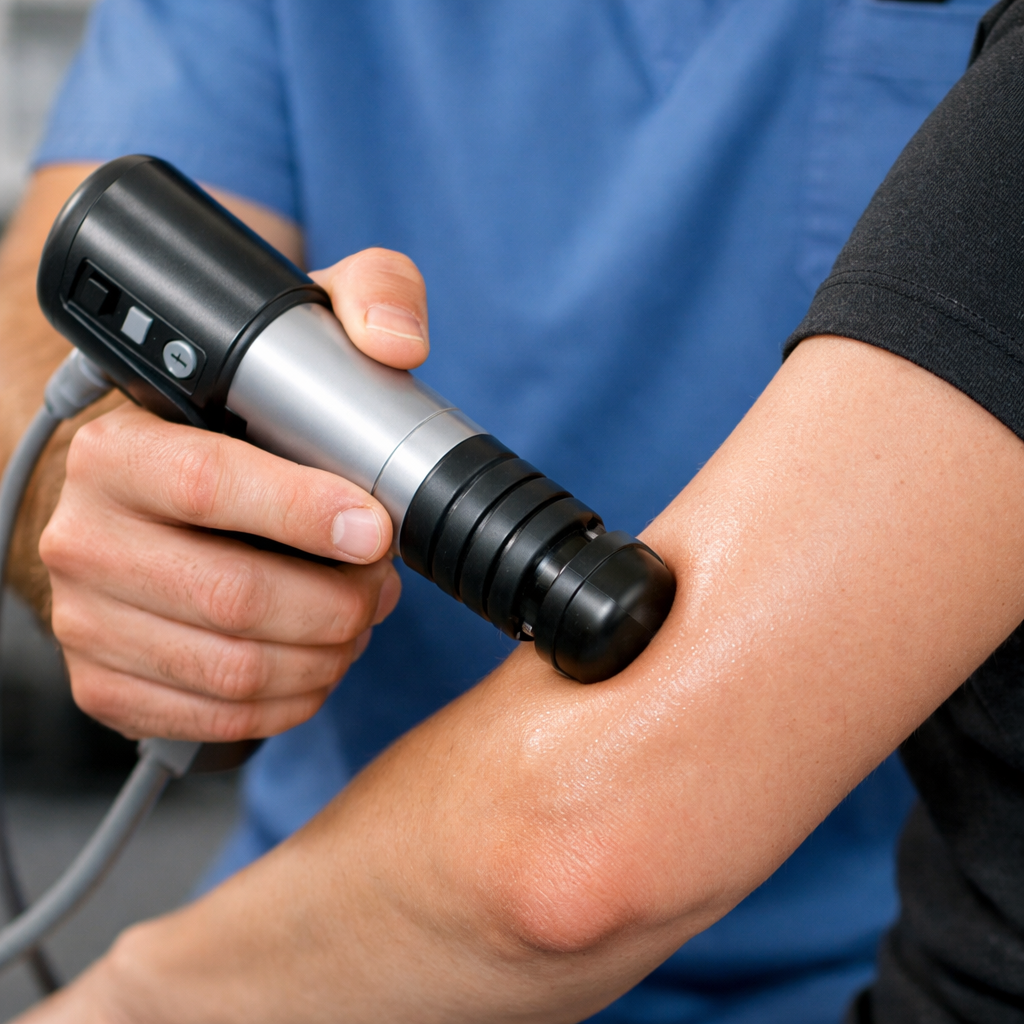
We incorporate manual therapy — soft tissue mobilization, joint mobilization of the elbow and wrist, and targeted work on surrounding structures contributing to your symptoms. Dry needling can reduce muscle tension and pain in the forearm extensors. We also offer EPAT shockwave therapy, which delivers acoustic pressure waves to the affected tendon to stimulate healing and reduce inflammation.

Phase 2: Rebuilding Tendon Strength
We begin a progressive loading program centered on eccentric exercise — the gold standard for tendon rehabilitation. A common starting exercise involves holding a light weight with your palm facing downward, slowly lowering the wrist from an extended position, and returning to the starting position with the opposite hand. You exercise slowly and deliberately, keeping your shoulders relaxed throughout.
We build on eccentrics with grip strengthening exercises (progressing from a tennis ball squeeze to resistance tools), wrist extension exercises, and forearm pronation/supination drills. Towel twists — wringing a rolled towel in opposite directions — build functional forearm strength at home with no specialized equipment needed.
Phase 3: Return to Activity
For golfers, we work on grip pressure and club-specific wrist mechanics. For racquet sport athletes at the Lake Mohawk Tennis Club or Sparta Athletic Club, we address serve mechanics and backhand loading. For manufacturing workers, we simulate job-specific gripping patterns and build endurance for sustained repetitive tasks.
The key concept is tendon tolerance — gradually increasing the load your tendon can handle. We also focus on tennis elbow management through seasonal transitions, teaching patients to adjust training volume when switching between sports so they don’t re-aggravate the condition. Managing load when going from golf to racquet sports to skiing is critical for Sparta’s multi-sport residents.
Why Choose Trinity Rehab Sparta?
One-on-one personalized care. You work directly with your physical therapist every session — no aides, no being left alone with a worksheet. Your treatment is adjusted in real time based on how your tendon is responding.
Advanced technology. EPAT shockwave therapy provides a non-invasive alternative for patients who want to avoid corticosteroid injections or surgery. Combined with dry needling and manual therapy, our approach achieves better outcomes and supports your long term goals for recovery.
Direct Access. New Jersey law allows you to see a physical therapist without a referral. If you woke up with elbow pain this morning, you can start treatment this week.
Local expertise. Our clinic serves residents across the Highland Lakes region — including Lake Mohawk, Byram, Newton, and surrounding communities. We understand the sports med needs of multi-sport families and the occupational demands of local industry. Whether you walk Station Park, hike Sparta Glen on weekends, or commute to the city during the week, we design treatment around how you actually live.
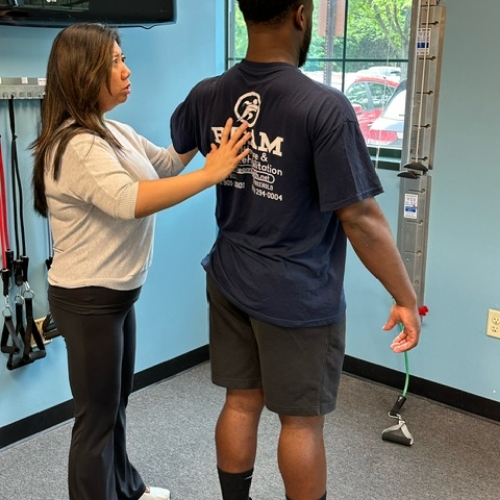
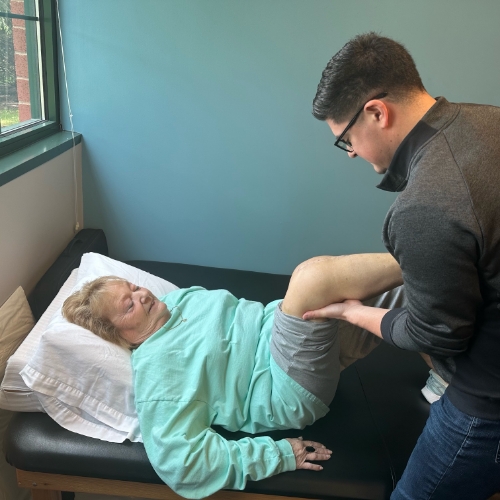
Inside Our Sparta Clinic
Related Conditions & Treatments
Tennis elbow is just one of the many conditions we treat at Trinity Rehab Sparta. Explore our full range of conditions we treat or learn more about specific treatment approaches:
- Tennis Elbow Treatment Overview — Our comprehensive guide to lateral epicondylitis recovery
- Elbow, Wrist & Hand Pain Relief — Other upper extremity conditions we specialize in
- Shoulder Pain Relief — Treatment for rotator cuff, frozen shoulder, and more
- Manual Therapy — Hands-on techniques to restore joint mobility and reduce pain
- Dry Needling — Trigger point therapy for deep muscle tension and pain relief


Related Elbow Care At This Location
Elbow pain can come from different tendon and loading patterns around the joint. A related same-location page is:
Frequently Asked Questions
Can switching between sports cause tennis elbow?
What is EPAT shockwave therapy and does it help tennis elbow?
Can I still play golf while treating tennis elbow?
Does Trinity Rehab Sparta serve the Lake Mohawk community?
How does cold weather affect tennis elbow?
From the golf course to the tennis court, don’t let elbow pain slow you down. Schedule your appointment at Trinity Rehab Sparta today. No referral needed — call us or visit our website to get started.