Knee Pain Treatment in Sparta, NJ: Personalized Physical Therapy for the Highlands Life
Sparta is built for people who like to move. The trails on Sparta Mountain, the Lake Mohawk waterfront, the winter slopes, and Sussex County’s rolling Highlands terrain attract residents who hike, ski, run, and bike through all four seasons. Sparta High School’s Spartans field 20-plus varsity sports in the Northwest Jersey Athletic Conference. And the youth programs through Sparta Little League, Sparta Soccer Club, and Sparta Athletic Campus bring wave after wave of young athletes onto the field every season.
All of that activity is something to protect — and the knee is often the first joint to speak up when it’s being pushed too hard or carrying the consequences of an old injury. At Trinity Rehab, we work with Sparta residents to identify the specific cause of their knee pain and build treatment plans that get them back on the trail, back on the field, and back to the active lifestyle this town is built around.
The Knee Risks That Come With Living in Sparta
Sparta’s geography and lifestyle create some specific patterns of knee stress that we see regularly.
Hiking and trail running in the Highlands is one of the most rewarding aspects of living in Sparta — and one of the most demanding on the knees. The uneven terrain on Sparta Mountain Wildlife Management Area, the elevation changes throughout the Highlands (Sparta sits at an average elevation of around 900 feet, with peaks reaching 1,300 feet), and the accumulated mileage over a hiking season are a reliable recipe for IT band syndrome, patellofemoral syndrome, and early-onset osteoarthritis. Descending steep trails concentrates force at the front of the knee — up to four times body weight per step — and that stress compounds over a long hike.
Sparta High School Spartans compete in a demanding program. The football team has collected multiple state titles; wrestling, basketball, lacrosse, and soccer are also highly competitive. The cutting movements in soccer and lacrosse, the pivoting demands of basketball, and the direct contact of football and wrestling put young athletes at elevated risk for ACL and meniscus injuries. Many of the knee injuries we see in high school athletes developed gradually — the result of training volume that outpaced tissue recovery — rather than from a single dramatic event.
Youth sports through Sparta Soccer Club and Sparta Little League engage young athletes from early childhood through high school. Overuse injuries in young athletes — particularly patellar tendonitis (“jumper’s knee”) and Osgood-Schlatter disease in adolescents — are common when training intensifies during club season or when athletes specialize year-round without recovery time.
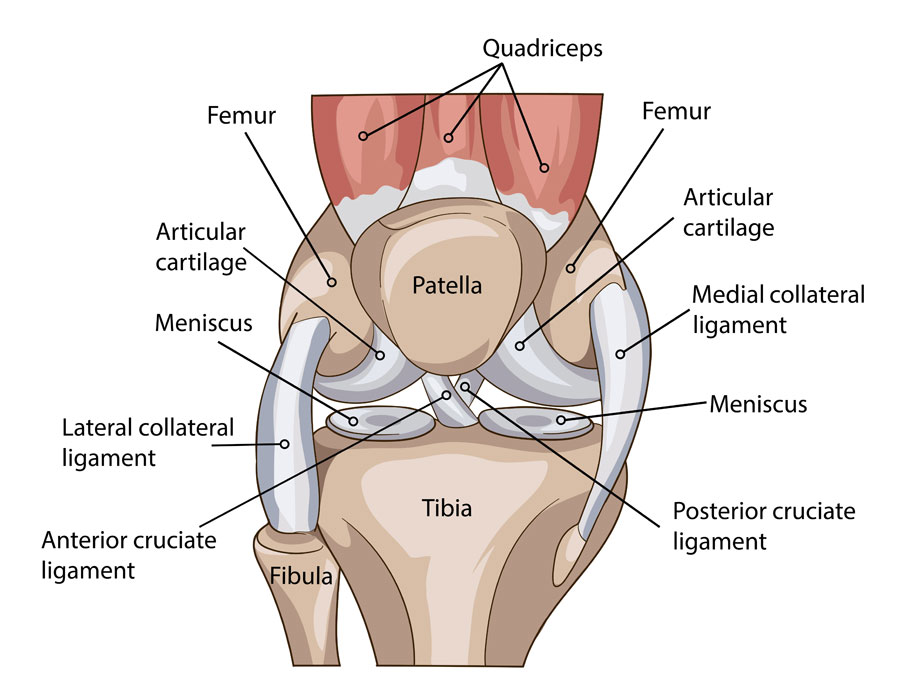
Tennis and pickleball players at Sparta Athletic Campus make lateral movements that load the medial and lateral knee structures with every step, putting the meniscus, IT band, and collateral ligaments under repetitive stress.
Winter sports — skiing and snowboarding at nearby Mountain Creek and other northern NJ destinations — are a seasonal but significant source of acute knee injuries, particularly MCL sprains, ACL tears, and meniscus injuries from falls, unexpected terrain changes, or binding-release situations.
What Knee Pain Feels Like — And When to Take It Seriously
Living in an active community like Sparta, it’s easy to rationalize knee discomfort as the price of an active life. “It’s always a little sore after a long hike.” “My knee clicks going down stairs but it doesn’t really hurt.” “It flares up in ski season and then calms down.”
These patterns deserve attention, not acceptance. Some specific signals worth paying attention to:
- Pain on the outer side of the knee after running or hiking — a classic IT band presentation
- Aching or swelling in the days following a long hike or ski day
- Knee stiffness in the morning that takes time to work out
- Pain at the front of the knee during or after running, stair climbing, or descending trails
- A feeling of instability or giving way on uneven terrain
- Pain that has been present for several months without meaningful improvement
A physical therapy evaluation clarifies exactly what’s happening in the joint and surrounding structures — and catches problems before they limit the activities that make life in Sparta worth living.
How Trinity Rehab Approaches Knee Pain Treatment
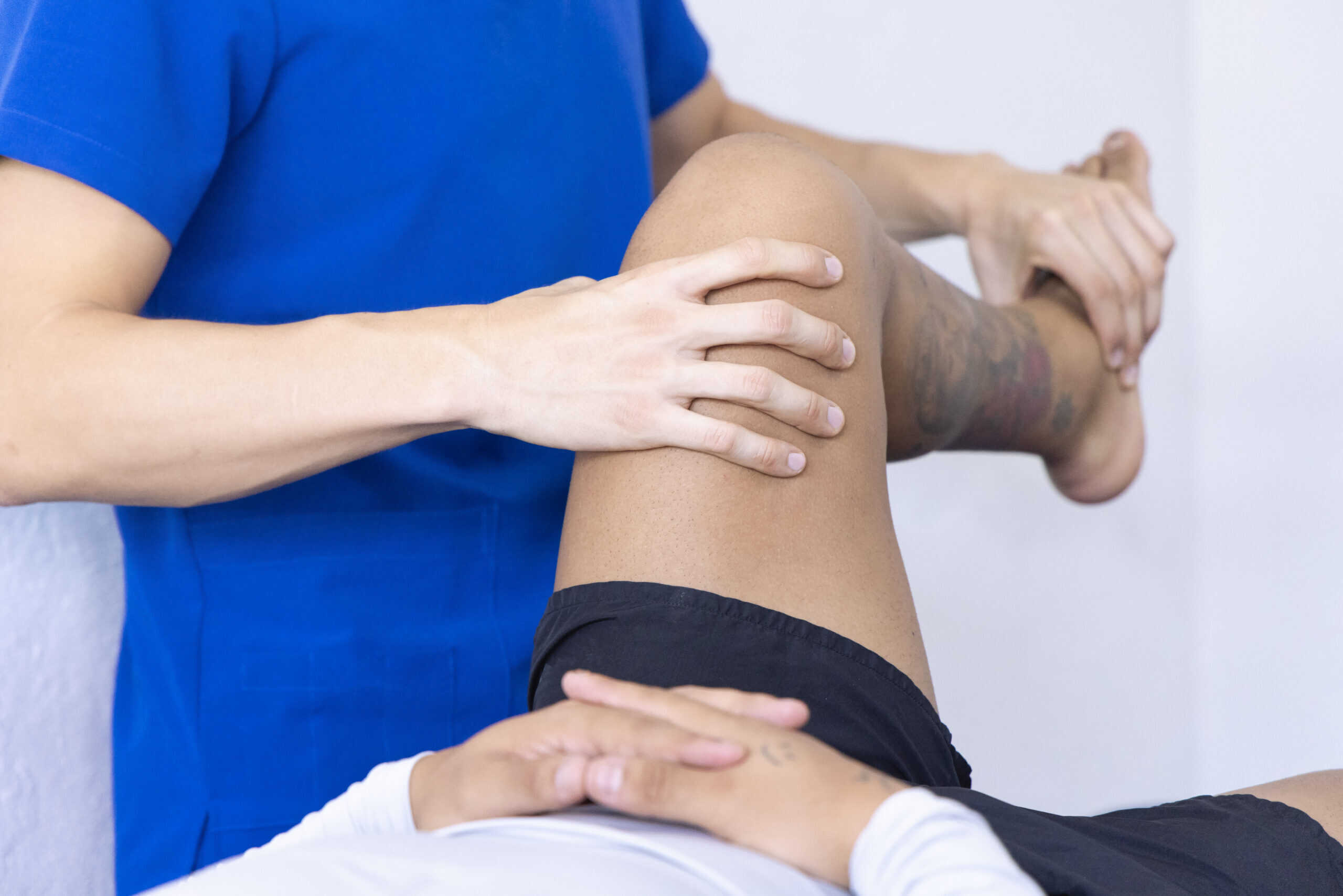
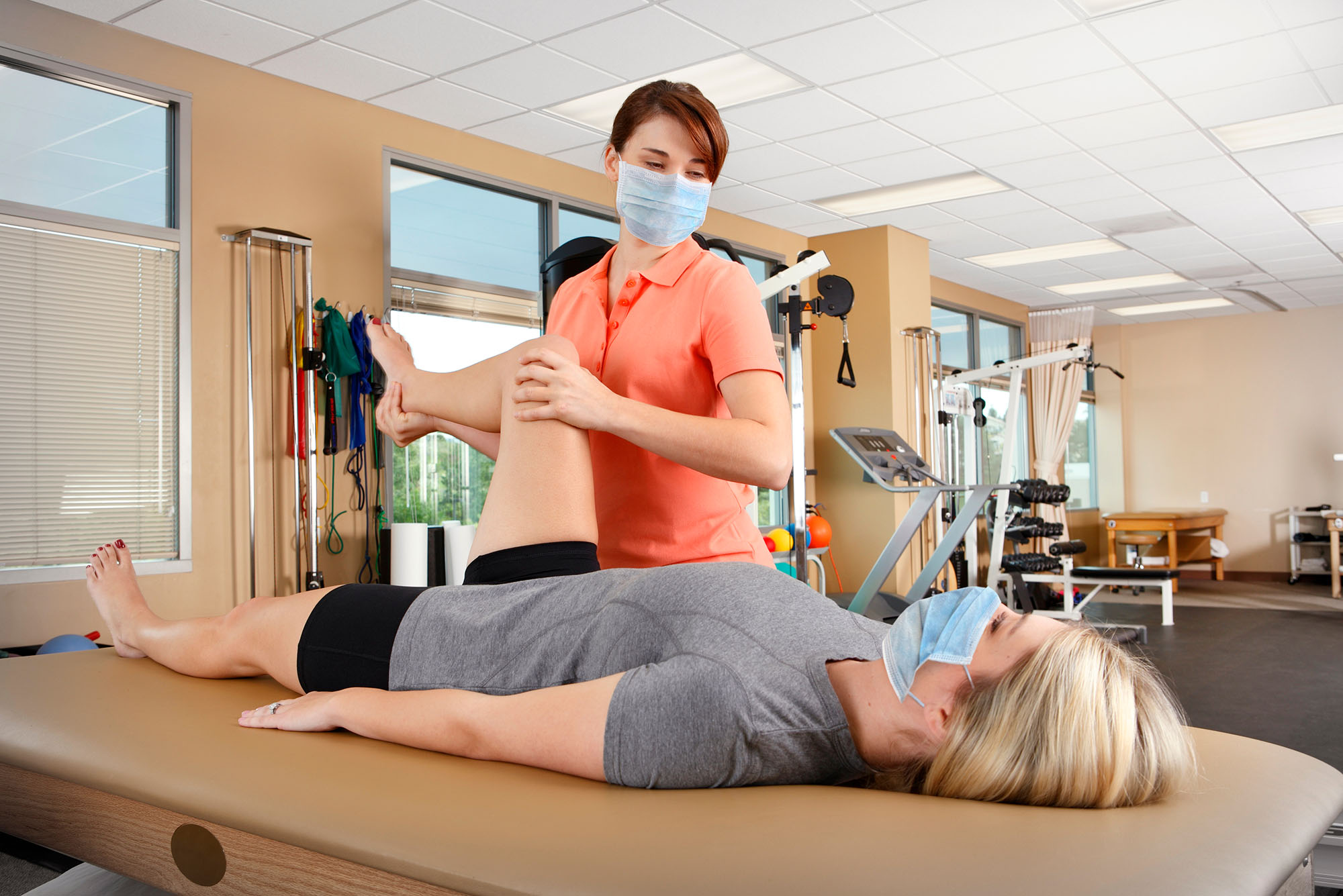
At Trinity Rehab, treatment is always one-on-one with a licensed physical therapist. That means every evaluation, every exercise, every manual therapy technique — performed directly by your therapist, not delegated to an aide. Your program is built around your specific anatomy, your injury history, and the activities you want to return to.
Manual Therapy and Pain Relief
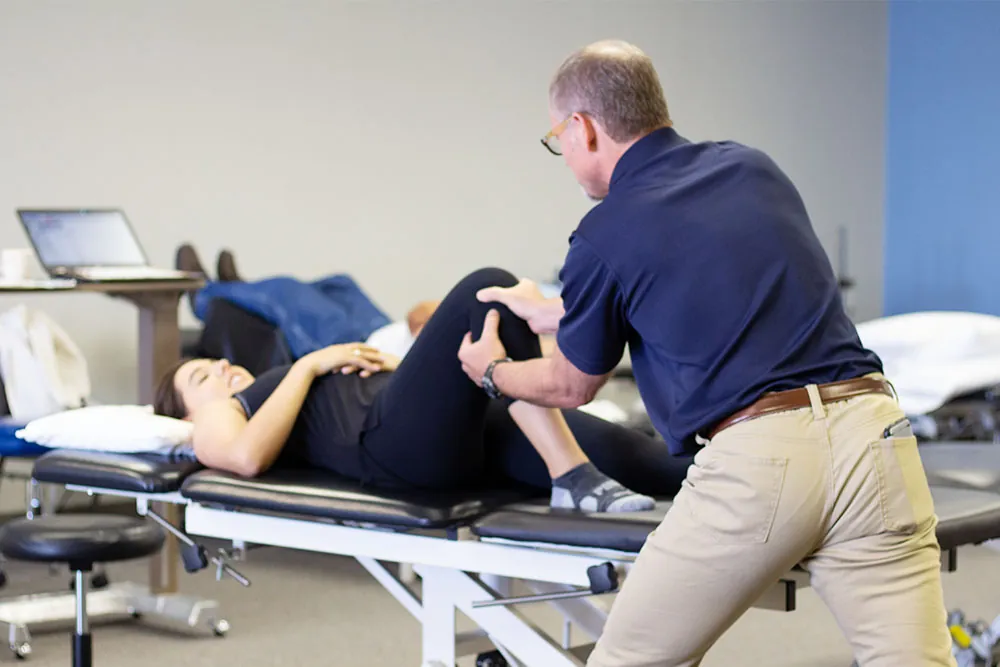
Manual therapy is the hands-on foundation of knee pain treatment. Joint mobilization restores normal mechanics that pain and muscle guarding have disrupted. Soft tissue mobilization and patellar mobilization address the tightness and tracking problems that drive patellofemoral pain. IT band work releases tension that has built up over miles of trail running. These techniques reduce pain quickly and prepare your tissue to respond to strengthening.
For patients dealing with chronic tendon pain — particularly patellar tendonitis from years of running or hiking — EPAT shockwave therapy accelerates the healing response and reduces persistent discomfort that hasn’t yielded to rest. Many Sparta athletes who’ve dealt with the same tendon issue through multiple seasons find meaningful relief with EPAT.
Targeted Strengthening for Hiking, Sport, and Trail Demands
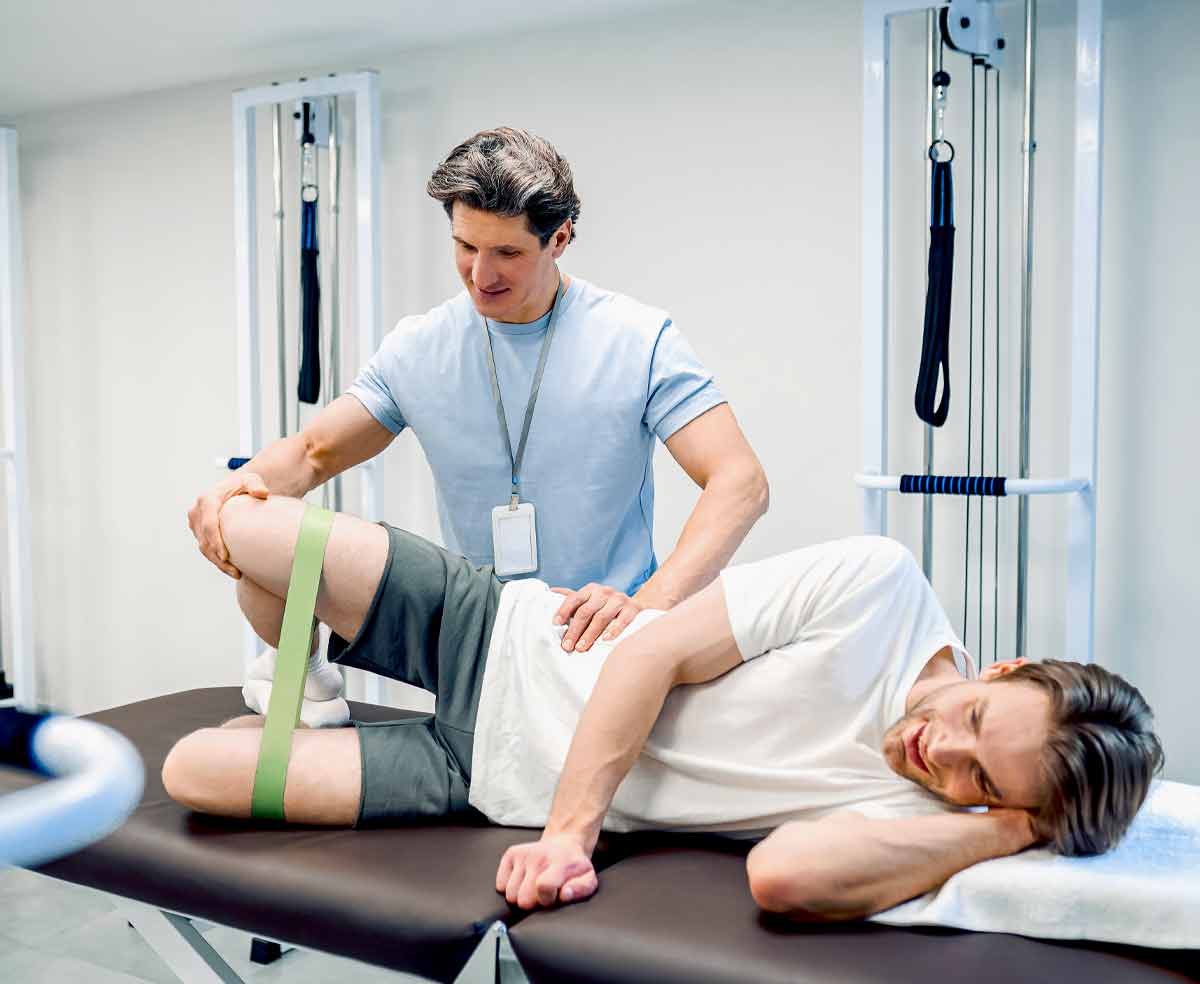
The muscle weakness that drives knee pain in hikers and trail athletes is often centered in the hips — the glutes, hip abductors, and external rotators that control the alignment of the knee on every step. When these muscles underperform, the knee absorbs forces it wasn’t designed to handle, and breakdown follows.
Your therapist designs a progressive strengthening program that addresses these deficits specifically — not generic exercises, but movements calibrated to the demands of your activities. For skiers recovering from knee injuries, functional training replicates the mechanics of carving turns and absorbing moguls. For hikers, it addresses the eccentric quad control that protects the knee on steep descents.
Dry needling is used when tight trigger points in the quadriceps, hamstrings, or calf complex are limiting muscle activation and restricting progress. Releasing these points often produces immediate improvements in range of motion and exercise quality.
Neuromuscular Training and Return to the Trail
Injury and prolonged pain disrupt the proprioceptive feedback loop — the instant communication between your joints and the muscles that protect them. On uneven Highlands terrain, that disruption matters enormously: a joint that doesn’t react quickly enough to an unexpected rock or root is vulnerable to re-injury.
Neuromuscular training — balance work, proprioception drills, and functional movement progressions — rebuilds this system specifically. We stage the progression to match your goals: returning to Sparta Mountain trails, getting back on the ski slope, or resuming competition with the Spartans.
Conditions We Commonly Treat in Sparta
The outdoor lifestyle and athletic culture of Sparta creates a predictable set of knee conditions:
- IT band syndrome — The most common overuse knee injury in trail runners and hikers on hilly terrain
- Patellofemoral pain syndrome (runner’s knee) — Front-of-knee pain driven by poor patellar tracking; affects runners, cyclists, hikers, and stair climbers
- ACL and MCL injuries — From ski falls, sport contact, or sudden direction changes
- Meniscus tears — Both traumatic and degenerative; many respond well to physical therapy without surgery
- Patellar tendonitis — Chronic jumper’s or runner’s tendon pain, particularly in high school and club athletes
- Knee osteoarthritis — Progressive cartilage wear that physical therapy can slow and manage effectively
- Post-surgical rehabilitation — Comprehensive recovery following ACL reconstruction or knee replacement
Related conditions we also treat: sports injuries and back pain.
Why Sparta Residents Choose Trinity Rehab
Sparta residents who seek care at Trinity Rehab find something they don’t always expect: a practice that takes their activity goals seriously. We’re not in the business of telling active people to simply do less. Our goal is to identify the cause, address it directly, and return you to the activities that define your life here — trails, slopes, sports fields, and all.
Direct access — no referral required. In New Jersey, you can begin physical therapy without a physician’s referral. Call Trinity Rehab or schedule your appointment online today.
Most insurance accepted. Our team verifies your coverage before your first visit so there are no billing surprises.
Advanced technology. EPAT shockwave therapy, dry needling, and the AlterG anti-gravity treadmill are available where clinically appropriate — tools that go beyond what most physical therapy practices offer.
Inside Our Sparta Clinic


Related Conditions & Treatments
Knee pain is just one of the many conditions we treat at Trinity Rehab. Explore our full range of conditions we treat or learn more about specific treatment approaches:
Sparta Knee Rehab For Stairs, Walking, And Daily Confidence
Knee pain can make stairs, walking, exercise, work, and getting in and out of a car more difficult. Sparta rehab should identify whether strength, mobility, balance, swelling, or movement mechanics are driving the issue.
Your therapist may assess knee motion, quad and hip strength, walking mechanics, balance, and activity tolerance. The plan can progress from symptom control to stronger, more confident movement.
Related care includes ACL rehab, meniscus tear rehab, and the Sparta physical therapy clinic page.
Frequently Asked Questions About Knee Pain in Sparta
Sparta Knee Rehab For Stairs, Walking, And Daily Confidence
Knee pain can make stairs, walking, exercise, work, and getting in and out of a car more difficult. Sparta rehab should identify whether strength, mobility, balance, swelling, or movement mechanics are driving the issue.
Your therapist may assess knee motion, quad and hip strength, walking mechanics, balance, and activity tolerance. The plan can progress from symptom control to stronger, more confident movement.
Related care includes ACL rehab, meniscus tear rehab, and the Sparta physical therapy clinic page.
Is my knee pain from hiking normal, or should I get it evaluated?
My teen was just diagnosed with Osgood-Schlatter disease from youth soccer. Can physical therapy help?
Can I get treated for a ski knee injury in the off-season or should I wait until next season?
Do I need a referral for physical therapy in New Jersey?
What if I've been told I have ?bone on bone? arthritis?
Take the First Step
If knee pain is getting between you and the hike, the ski run, or the season you’ve been planning, the first step is finding out exactly what’s causing it. At Trinity Rehab, that evaluation is where everything starts — a clear diagnosis, a realistic plan, and treatment that’s built around you.
Learn more: Trinity Rehab Knee Pain Hub
Related resources: Knee Pain Treatment Hub | Hip & Knee Pain Relief | Sciatica Treatment | EPAT Therapy | Sports Injuries
What Our Patients Say



Sign up for free health tips and tricks