

SCIATICA TREATMENT IN SOMERVILLE, NJ
Somerville has a way of drawing people out of their houses. A weekday morning might bring a brisk walk along the Raritan River near Duke Island Park, an evening stroll down Main Street past the boutiques and restaurants, or a weekend hike through Washington Valley Park with its reservoir views and wooded ridge trails. Somerville is compact, walkable, and alive in a way that many New Jersey towns are not — and that is precisely what makes sciatic nerve pain so disruptive when it arrives. The same hip-dominant, spine-loading movement that makes a 5-mile trail run satisfying can, when layered on top of disc irritation or a tight piriformis, produce the burning, radiating leg pain that is sciatica’s signature. At Trinity Rehab, we treat the Somerville community with the individualized, evidence-based care that gets people back on their trails, their softball fields at Torpey Field, and their daily walks along the Victorian-lined streets they chose this town for.
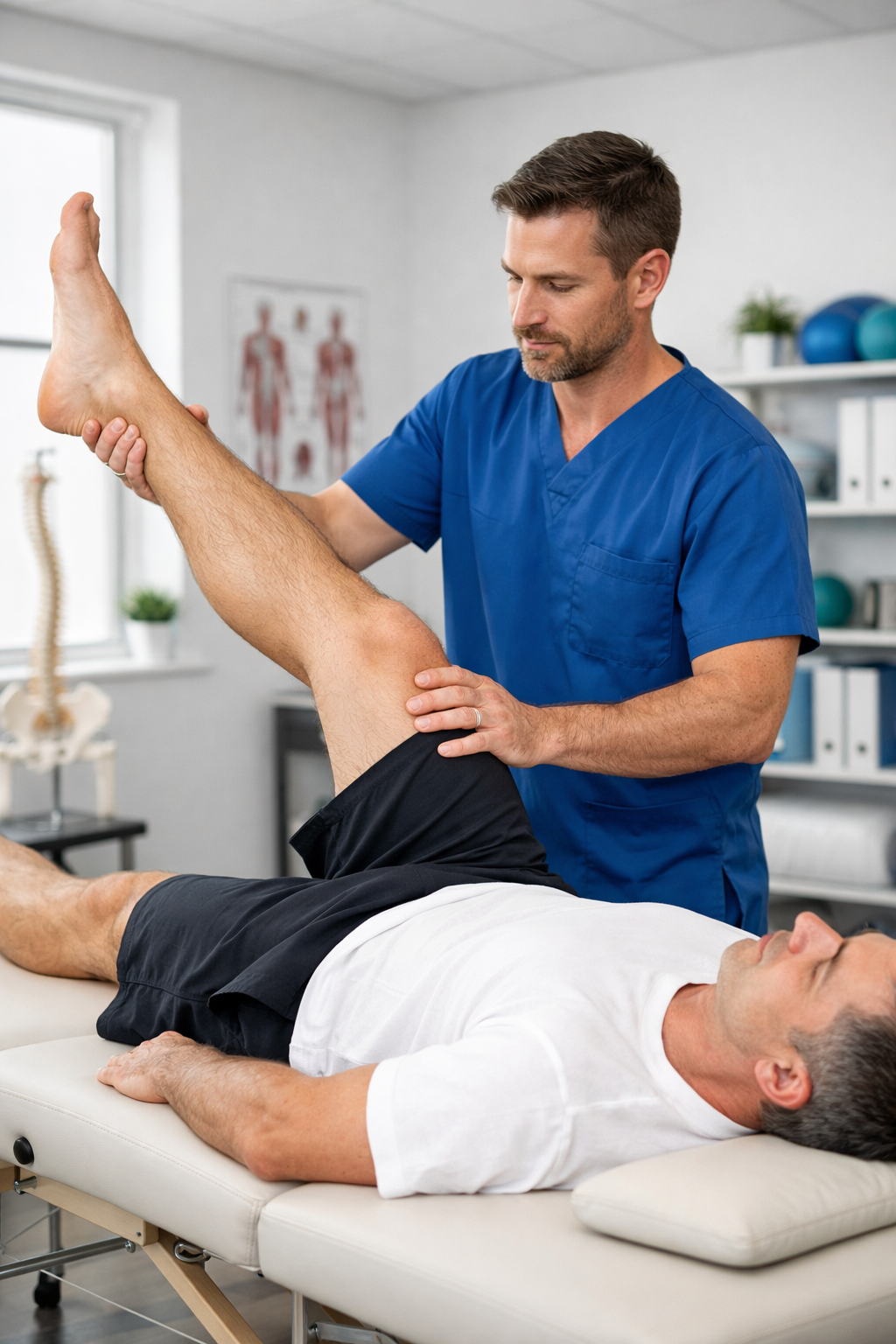
Understanding Your Sciatic Nerve Pain
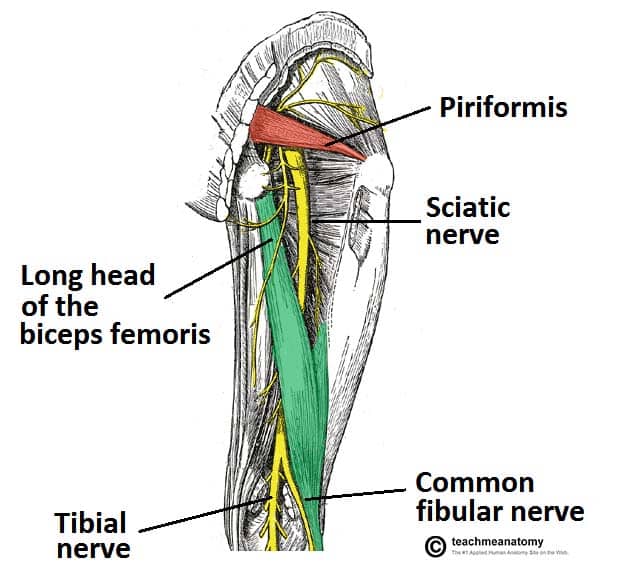
The sciatic nerve — the largest in the human body — exits the lumbar spine through a series of nerve roots (L4 to S3), runs through the deep gluteal region, and descends the back of the leg all the way to the foot. When one of those nerve roots is compressed or irritated, the pain, numbness, or tingling does not stay in the lower back. It travels — along the nerve’s entire length, producing symptoms that may be felt anywhere from the buttock to the ankle.
The clinical diagnosis is lumbar radiculopathy. The underlying cause might be a herniated or bulging disc pressing on a nerve root, a narrowed spinal canal (stenosis), a forward-slipped vertebra (spondylolisthesis), or the piriformis muscle compressing the sciatic nerve from outside the spine. Each cause produces a somewhat different symptom pattern and responds best to a slightly different treatment approach — which is why a qualified physical therapy evaluation is the essential first step, not a generic exercise routine.
According to Cleveland Clinic, around 40% of adults experience sciatica at some point in their lives. Most improve fully with conservative care like physical therapy. The key is identifying the correct cause and addressing it with precision.
What Puts Somerville Residents at Risk
Somerville’s demographics and culture create specific sciatica risk patterns worth understanding:
RWJ University Hospital Somerset employees. As Somerville’s largest employer — with 355 beds and a full clinical staff — RWJBarnabas Health’s Somerset campus draws nurses, surgical technicians, radiologists, and administrative staff who spend long shifts on their feet, often in constrained postures. Nurses who pivot and transfer patients repeatedly, techs who hold awkward positions during procedures, and desk staff who sit through long documentation blocks all face sciatica risk factors that differ from a typical office worker. The physical demands are cumulative: a body that does not recover properly between shifts gradually accumulates the disc and muscle changes that produce nerve compression.
Young professional commuters. Somerville’s growing population of 25-to-44-year-old professionals — many drawn by the walkable downtown and the NJ Transit access to NYC — commutes by train from the Somerville station on the Raritan Valley Line. That 26-minute average commute, stacked on top of a full workday of sitting, creates the prolonged hip flexion and lumbar compression that is the standard recipe for disc-related sciatica in younger adults.
Recreation athletes and trail users. Washington Valley Park, Duke Island Park along the Raritan River, and the county trail system attract a physically active Somerville population. Recreational softball players at Torpey Field subject their lumbar spines to the explosive rotational forces of batting and fielding. Trail runners accumulate hip flexor tightness and impact loading that can aggravate existing disc vulnerabilities. Even cycling — popular along the river greenways — involves prolonged lumbar flexion that tightens the posterior chain.
Fall festivals and seasonal exertion. Somerville’s calendar is packed with community events: Summer Stage outdoor concerts, fall harvest festivals, and a lively downtown scene. Seasonal activities like pumpkin picking, hayrides, corn maze adventures, and end-of-year yard preparation also bring the bending, lifting, and twisting that can trigger acute sciatica episodes. Winter snow shoveling in a densely populated borough where residents manage sidewalk-to-steps access themselves remains one of the most common precipitating events for acute lumbar disc herniations.
Victorian homeowners. Somerville’s architectural character means many residents own older Victorian homes — charming but demanding. Painting, climbing ladders, hauling renovation materials, and gardening in established yards with deep root systems all produce the lumbar loading patterns that lead to disc herniation and sciatica. Related reading: back pain treatment at Trinity Rehab.
Recognizing Sciatica
Because Somerville’s residents tend to be active and health-aware, sciatica often gets noticed early — but sometimes misidentified as a muscle pull or exercise soreness. Key distinguishing features include:
- Radiating pain that follows a line — from the lower back or buttock, down through the back or outer thigh, into the calf and sometimes the foot; not diffuse soreness but a specific, traceable path
- Altered sensation in the leg — numbness, tingling, or that “fell asleep” feeling, often in the outer calf, top of the foot, or sole
- Pain that worsens when sitting — Somerville’s walkable culture is actually helpful here; many patients notice symptoms worsen during the commute and ease during their evening walk
- Unilateral symptoms — one side of the body only; bilateral leg symptoms suggest a different presentation
- Weakness in the leg or foot — difficulty pulling the toes up (foot dorsiflexion), or noticing one leg tires faster than the other during a trail run
A Somerville nurse who stands and pivots through 10-hour shifts, then drives home in a compact car, might develop right-sided sciatic pain that peaks during the commute and keeps her awake at night. A recreational softball player might experience sudden left buttock and thigh pain after a hard cut to first base. Both are sciatica — different causes, different treatment details.
If symptoms include sudden, severe leg weakness, loss of bladder or bowel control, or perianal numbness, seek emergency medical evaluation immediately.
Trinity Rehab’s Approach to Sciatica: Milestone-Based Recovery
Rather than a fixed timeline, Trinity Rehab’s approach to sciatica follows what your body signals at each milestone. Here is how treatment typically progresses:
Milestone 1: Establish Pain Control and Restore Basic Movement
Treatment begins with reducing the nerve’s inflammatory state and restoring enough comfortable movement to work effectively. Tools include:
- Manual therapy — lumbar joint mobilization, sacroiliac joint assessment and treatment, and soft tissue work on the piriformis and gluteal region; hands-on care that changes tissue behavior faster than exercise alone
- Nerve gliding techniques — gentle, precise movements that mobilize the sciatic nerve through its pathway, reducing hypersensitivity and restoring normal nerve mechanics
- Therapeutic stretching and positioning — identifying the positions that temporarily relieve nerve tension and using them strategically as the foundation for movement rehabilitation
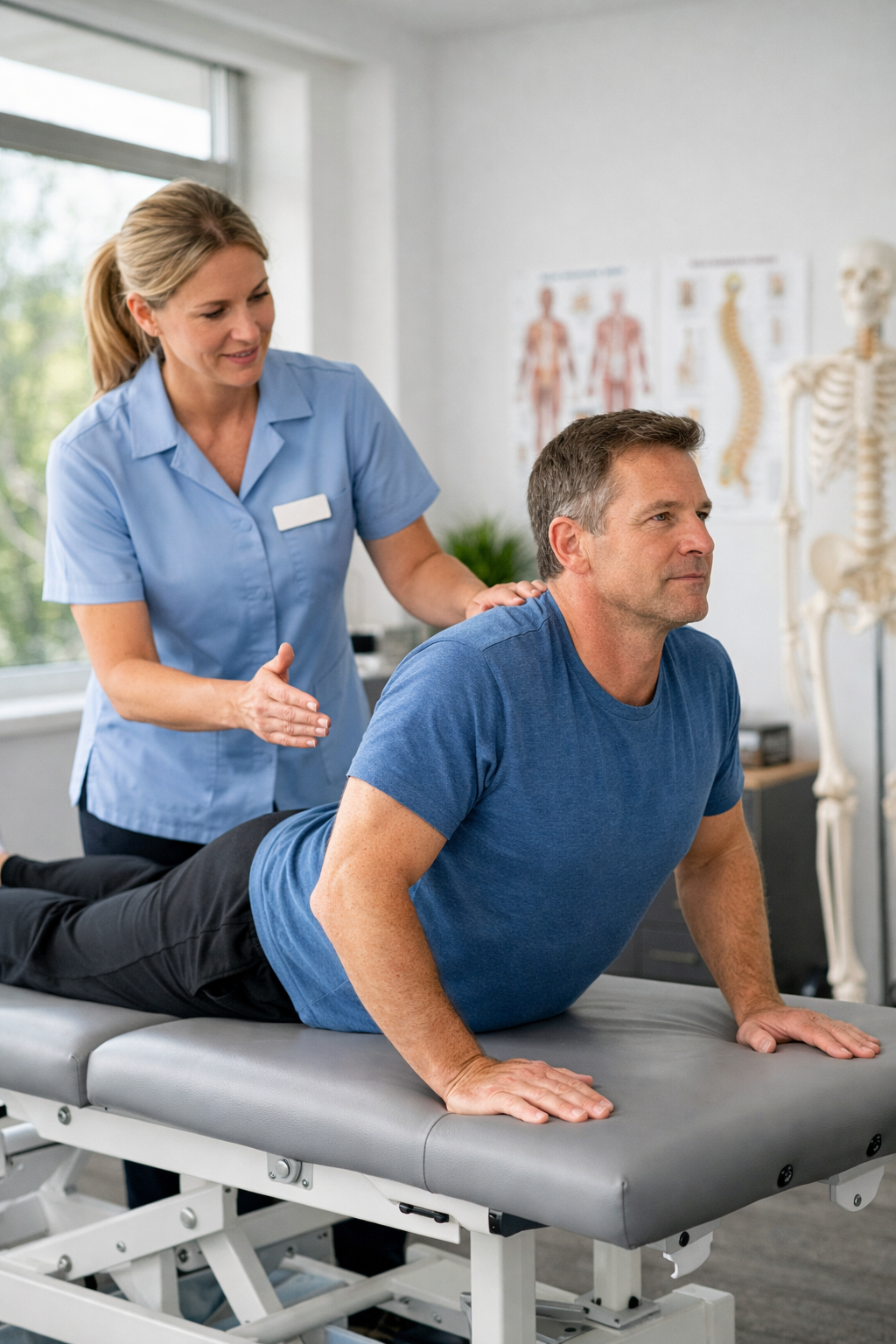
Milestone 2: Correct the Underlying Mechanical Problem
Once acute pain is controlled, the focus turns to the structural and movement deficits that allowed sciatica to develop. Depending on evaluation findings, this includes:
- Lumbar stabilization exercises — progressing from deep core activation (transversus abdominis, multifidus) to integrated stability through functional movement patterns; essential for Somerville’s trail runners and softball players whose sports demand dynamic spinal stability
- Hip and posterior chain strengthening — glute bridges, clamshells, lateral band walks, and Romanian deadlifts building the hip and hamstring strength that protects lumbar nerve roots during athletic activity
- McKenzie directional exercises — for disc-related sciatica, a systematic program of extension or flexion movements that centralizes radiating pain and accelerates disc healing
- Dry needling — targeted release of piriformis, deep gluteal, or paraspinal trigger points that are maintaining muscular compression on the sciatic nerve
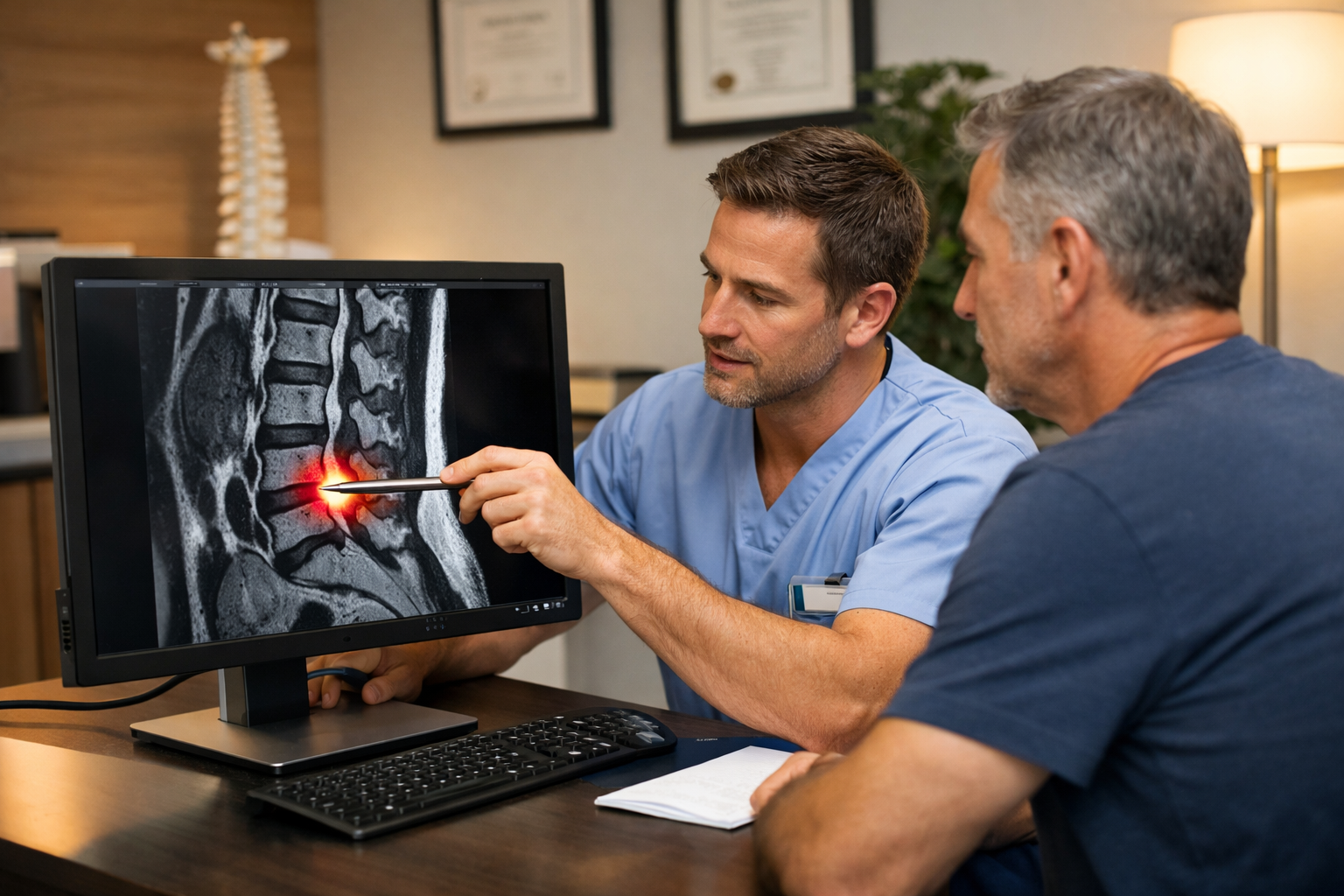
Milestone 3: Return to Full Activity Without Fear
The final stage is not just about being pain-free at rest — it is about trusting your body to perform under load. This is where sport-specific training, occupational conditioning, and injury prevention education converge:
- Activity-specific rehabilitation — recreating the demands of your Somerville life: the trail run, the softball swing, the nursing shift, the NJ Transit commute; ensuring your neuromuscular system is prepared for each
- Ergonomics and movement coaching — for RWJ hospital employees and commuters, practical strategies for managing prolonged standing, patient transfers, and seated postures
- Home exercise program — a focused, sustainable routine you can maintain indefinitely to prevent recurrence; 10 to 15 minutes per day built around the movements your body specifically needs
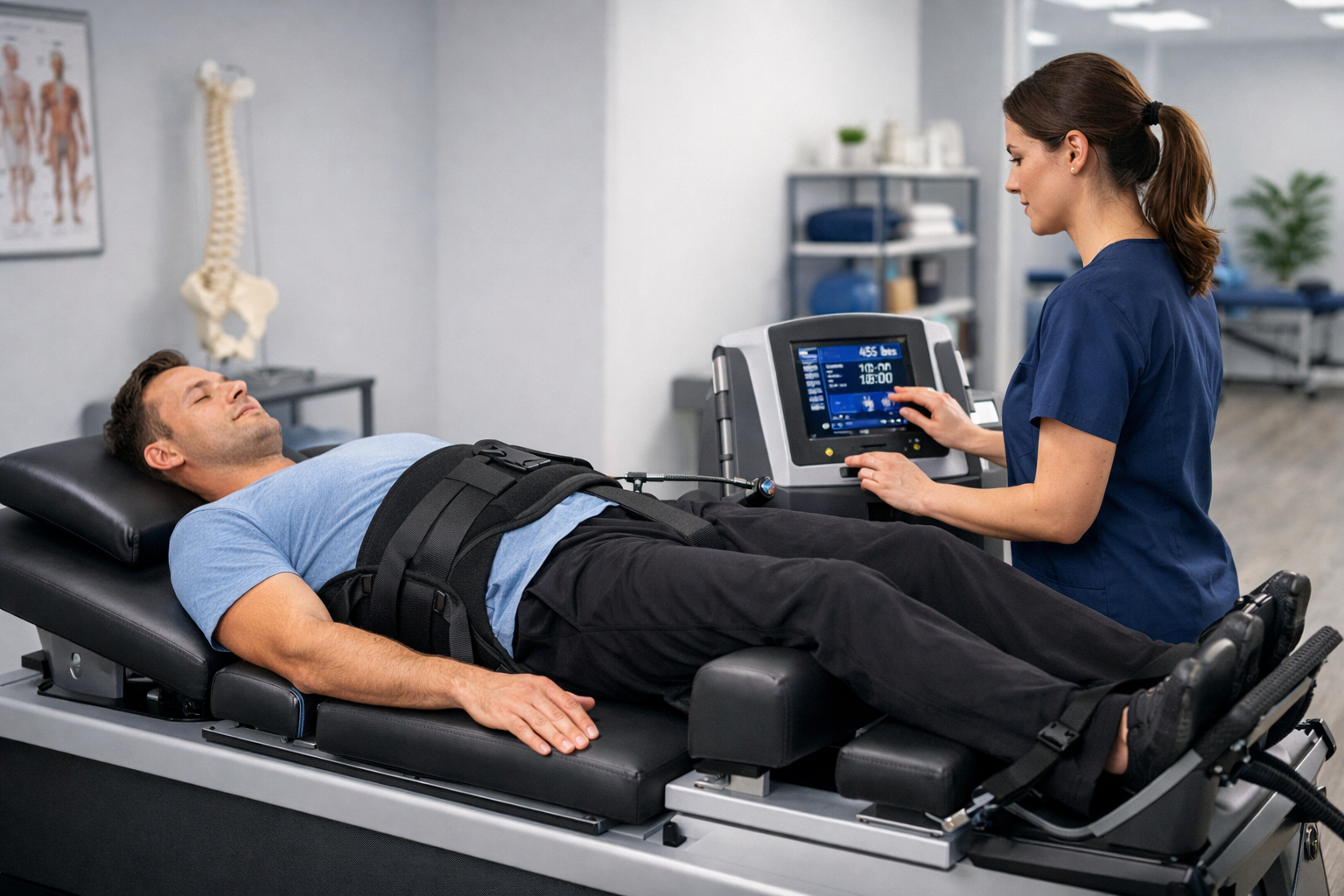
Why Trinity Rehab for Somerville
Trinity Rehab’s commitment to one-on-one care is not a marketing claim — it is a structural feature of how we operate. Every session involves a licensed physical therapist working directly with you. No assistants substituting for your PT, no group exercise periods, no being left unsupervised with a printout.
For Somerville residents managing sciatica alongside demanding careers and active lives, this level of individualized attention translates into faster progress, fewer setbacks, and a clearer understanding of what is happening in your body. Your therapist knows your case, tracks your progression visit by visit, and adjusts the plan when needed.
No referral required. New Jersey’s Direct Access Law allows you to begin physical therapy evaluation and treatment without a physician’s order. In Somerville, that means you can go from recognizing your sciatica symptoms to being in treatment within days — not weeks. The research consistently shows that early physical therapy intervention for sciatica reduces duration of symptoms and lowers the risk of chronicity.
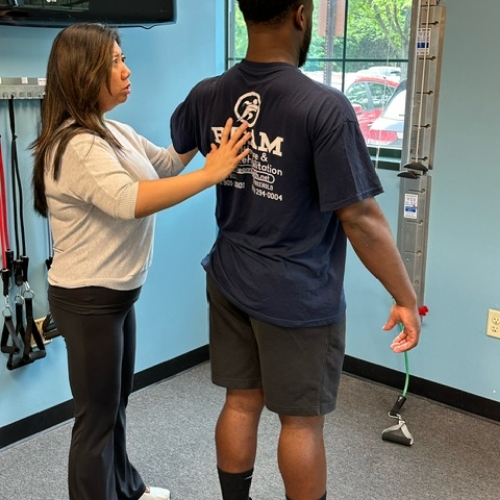
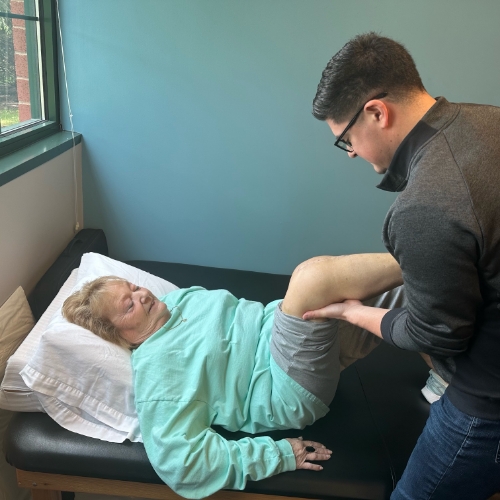
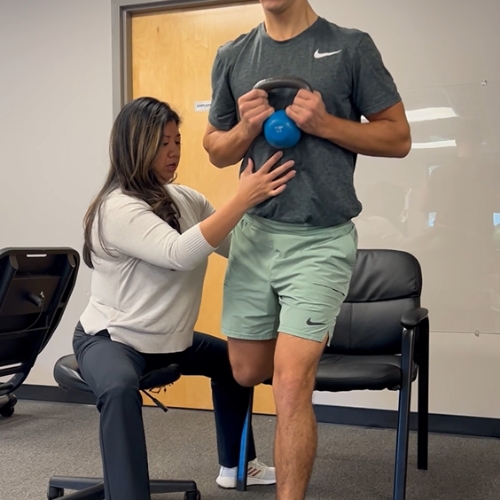
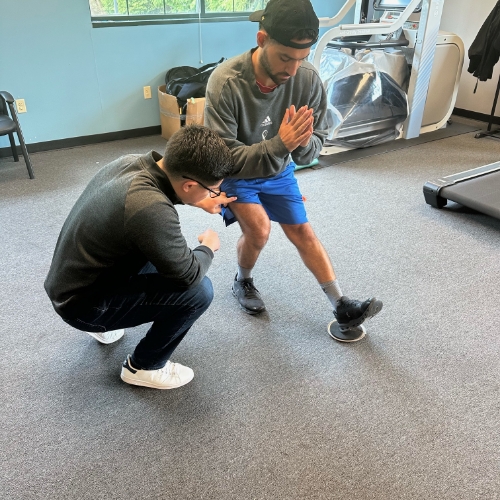
Inside Our Somerville Clinic
Related Conditions & Treatments
Sciatica is just one of the many conditions we treat at Trinity Rehab Somerville. Explore our full range of conditions we treat or learn more about specific treatment approaches:
- Sciatica Treatment Overview
- Back Pain Treatment
- Hip & Knee Pain Relief
- Manual Therapy
- Dry Needling
- EPAT / Shockwave Therapy
Somerville Sciatica Rehab For Leg Pain, Sitting Pain, And Walking Tolerance
Sciatica-like symptoms can make sitting, driving, bending, sleeping, and walking difficult. Somerville patients need a plan that separates nerve-related leg pain from back, hip, or muscle-driven symptoms.
Your therapist may assess symptom behavior, lumbar mobility, nerve tension, hip strength, walking tolerance, and positions that calm or worsen symptoms. Progressive weakness, numbness, or bowel/bladder changes should be medically reviewed urgently.
Related spine options include back pain physical therapy, lumbar disc herniation rehab, and the Somerville physical therapy clinic page.
Frequently Asked Questions
Somerville Sciatica Rehab For Leg Pain, Sitting Pain, And Walking Tolerance
Sciatica-like symptoms can make sitting, driving, bending, sleeping, and walking difficult. Somerville patients need a plan that separates nerve-related leg pain from back, hip, or muscle-driven symptoms.
Your therapist may assess symptom behavior, lumbar mobility, nerve tension, hip strength, walking tolerance, and positions that calm or worsen symptoms. Progressive weakness, numbness, or bowel/bladder changes should be medically reviewed urgently.
Related spine options include back pain physical therapy, lumbar disc herniation rehab, and the Somerville physical therapy clinic page.
Where can I receive sciatica treatment in Somerville, NJ?
Does Trinity Rehab accept RWJBarnabas or hospital-system insurance plans?
How is sciatica treated differently than regular back pain?
Can I continue my trail running while in treatment?
How many sessions will I need?
Somerville is a town worth being fully present in — the trails, the downtown, the community events, the morning walks along the Raritan. Sciatic nerve pain keeps you guarded, cautious, and smaller than you need to be. Trinity Rehab is here to change that.
- Request an appointment — no physician referral needed, convenient scheduling available
- Receive a precise evaluation — your physical therapist identifies the exact cause and the right treatment sequence
- Progress with expert guidance — every session, one-on-one, until you are fully back to the life you chose Somerville for
Sciatica is treatable. Start your recovery today.