

ACL TREATMENT PHYSICAL THERAPY IN SOMERVILLE, NJ
In the winter of 1778, George Washington set up headquarters at the Wallace House in Somerville to orchestrate one of the most strategic campaigns of the Revolutionary War. Nearly 250 years later, Somerville remains a place where smart strategy wins — whether you’re navigating the historic streets of the Downtown Main Street district, competing under the lights at Brooks Field, or mapping a comeback from a serious knee injury. For the athletes, workers, and active residents of this Raritan Valley county seat, recovering from an anterior cruciate ligament injury demands the same disciplined, phase-by-phase planning that Washington brought to his war council. That is exactly what ACL treatment physical therapy delivers at Trinity Rehab Somerville.
From Somerville High School Pioneers football players chasing sectional championships to nurses logging miles on the floors of Robert Wood Johnson University Hospital Somerset, ACL injuries do not discriminate. They strike on the turf, in the workplace, and on the wooded trails along Duke Island Park’s Raritan Power Canal. Wherever they happen, what matters most is what comes next — and Trinity Rehab is here to guide every phase of recovery.
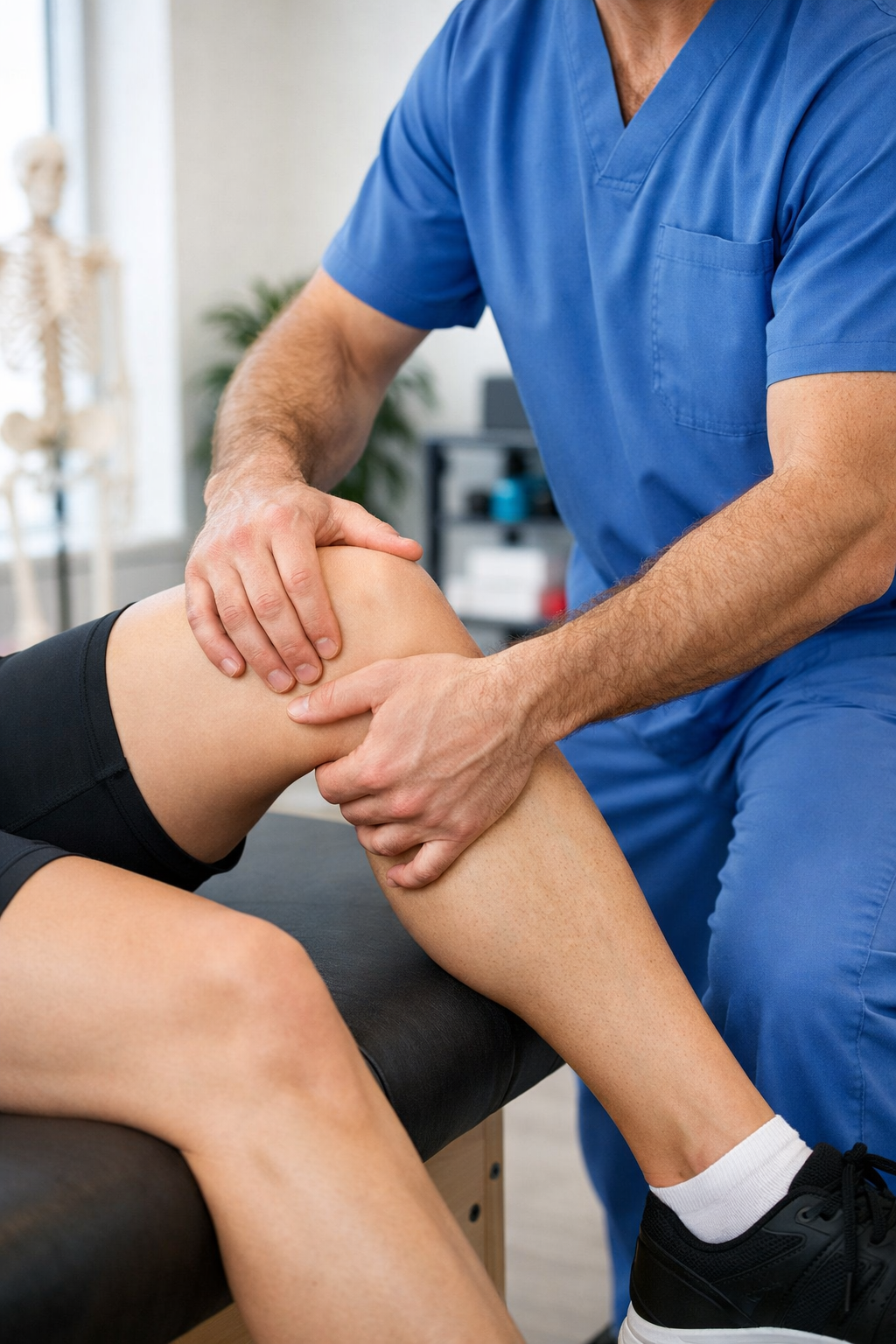
UNDERSTANDING ACL INJURIES
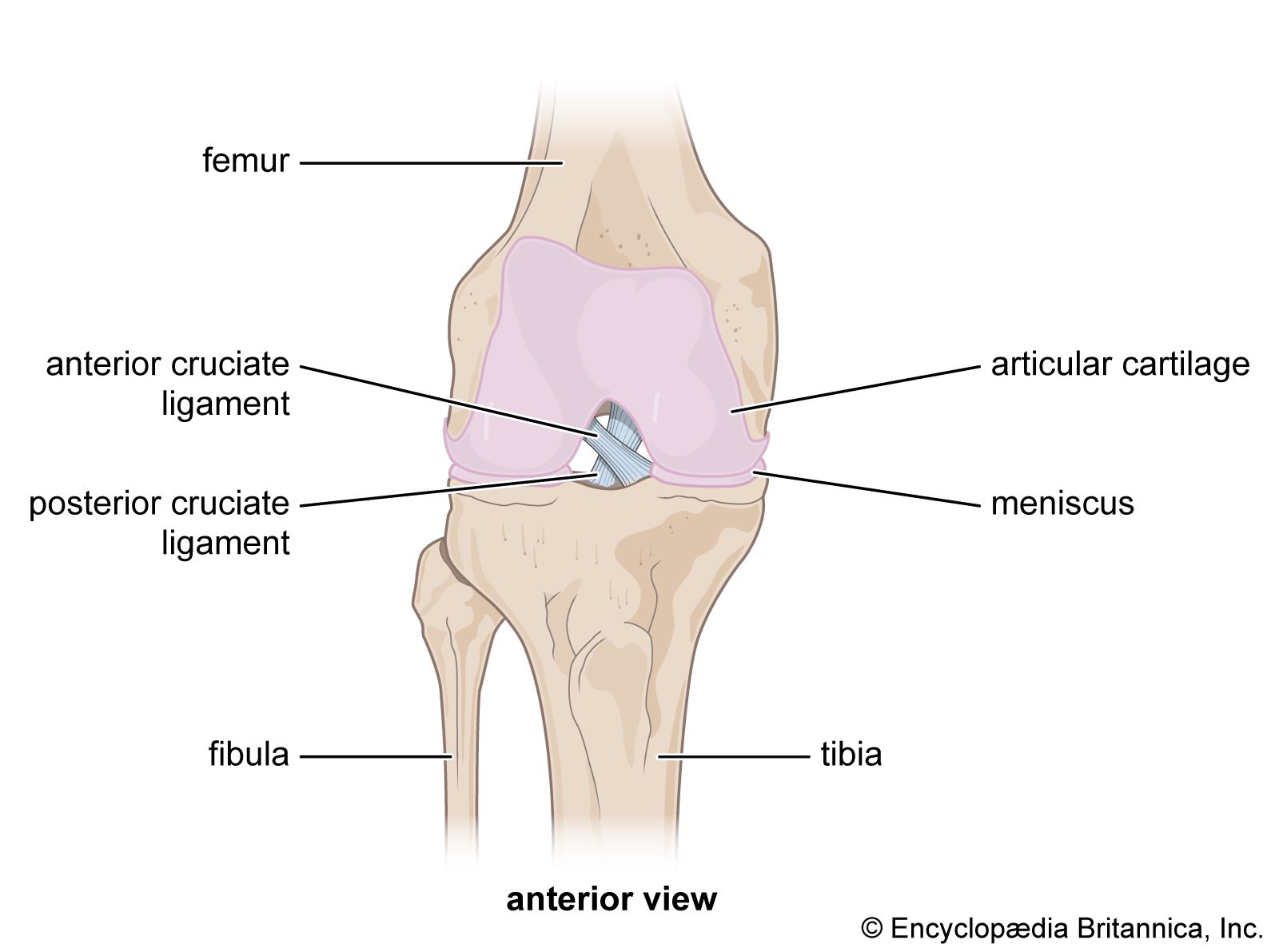
The anterior cruciate ligament is a critical band of tissue that runs diagonally through the center of the knee joint, connecting the thighbone to the shinbone. Its primary role is to prevent the tibia from sliding forward and to provide rotational knee stability during cutting, pivoting, and landing movements. When this ligament tears — partially or completely — the result is an ACL tear that can sideline you for months without proper intervention.
An ACL injury can occur through contact or non-contact mechanisms. A Pioneers football player driving toward the end zone during a sectional championship game at Brooks Field may take a hit to the outside of the knee and feel an immediate pop. Meanwhile, a recreational basketball player at the Somerville YMCA may land awkwardly after contesting a rebound in an adult league game, tearing the ligament without anyone touching them. Both scenarios are common, and both require expert physical therapy to recover fully.
WHY ACL RECOVERY MATTERS
The anterior cruciate ligament does not heal on its own. Without structured rehabilitation, an untreated ACL tear leads to chronic instability, accelerated cartilage wear, and a significantly higher risk of early-onset arthritis. For Somerville’s active population — from high school athletes to Somerset County government employees who stay active on weekends — ignoring the problem simply is not an option.
Proper rehabilitation restores knee function, rebuilds the muscle strength needed to protect the joint, and re-trains the neuromuscular patterns that keep you safe during dynamic movement. Whether your goal is returning to competitive sports or simply walking the paths at Old York Park without pain, a structured recovery plan is essential.
COMMON CAUSES OF ACL INJURIES IN SOMERVILLE
Somerville’s identity as both an athletic community and a working hub means ACL injuries arrive from a wide range of activities.
Sports injuries are the most visible cause. Somerville High School’s storied athletic programs — including a football team with eight sectional championships, a baseball squad that captured the Group III state title in 2018, and competitive boys soccer, lacrosse, wrestling, and track teams — put hundreds of student-athletes at risk each season. Cutting and pivoting sports like football, soccer, and lacrosse carry the highest ACL injury rates. Community leagues run by the Somerville Recreation Department and programs at the Somerville YMCA and nearby Warren Health & Racquet Club extend that risk to adult athletes of all ages. If you have sustained a sports injury, early evaluation is critical.
Workplace injuries are an underreported but significant source. An RWJ University Hospital Somerset nurse stepping awkwardly off a patient transport during a long shift can twist a knee in a split second. Workers in Somerville’s industrial and warehouse spaces face similar risks from repetitive loading, uneven surfaces, and sudden direction changes. These work injuries deserve the same level of expert rehabilitation as any athletic injury.
Recreational and trail injuries round out the picture. Duke Island Park’s trails along the Raritan Power Canal are popular with runners and hikers, but exposed roots and uneven terrain create hazards — a trail runner catching a foot on a tree root can suffer a sudden ACL tear. The paths at Colonial Park, Vander Veer Memorial Park, and Michael Lepp Park present similar risks for weekend warriors.
SIGNS AND SYMPTOMS
Recognizing an ACL injury early allows you to begin treatment before compensatory patterns cause additional damage. Common signs include:
- A loud pop or popping sensation at the moment of injury
- Rapid swelling within the first few hours
- Severe pain and inability to bear weight
- A feeling of instability or the knee “giving way” during movement
- Loss of full range of motion, particularly extension
If you experience any of these symptoms — whether on the field, at work, or on a Raritan Valley trail — seek evaluation promptly. Early diagnosis shapes every decision that follows.
HOW PHYSICAL THERAPY HELPS: FROM PREHAB THROUGH RETURN TO SPORT
A skilled physical therapist builds your recovery in carefully sequenced phases, each with specific milestones that must be met before progressing. At Trinity Rehab Somerville, this phase-based approach ensures that every patient — from a Pioneers linebacker to a weekend tennis player — receives a plan tailored to their injury, goals, and lifestyle.
Prehabilitation
For patients scheduled for ACL surgery or anterior cruciate ligament reconstruction, prehabilitation begins before the operating room. The goal is to reduce swelling, restore as much knee motion as possible, and build baseline quadriceps and hamstrings strength. Research consistently shows that patients who enter surgery with better range of motion and muscle activation recover faster afterward. Prehab may include gentle strengthening exercises, manual therapy to manage tissue restrictions, and education on what to expect post-operatively.
Phase 1: Protection and Early Motion (Weeks 0-2)
Immediately following ACL reconstruction or at the start of a non-surgical protocol, the focus is on protecting the healing tissue while preventing excessive stiffness. Your physical therapist will guide you through gentle range of motion exercises, quadriceps activation drills, and swelling management strategies. The objective is to achieve full knee extension and begin restoring flexion without stressing the graft or injured structures.
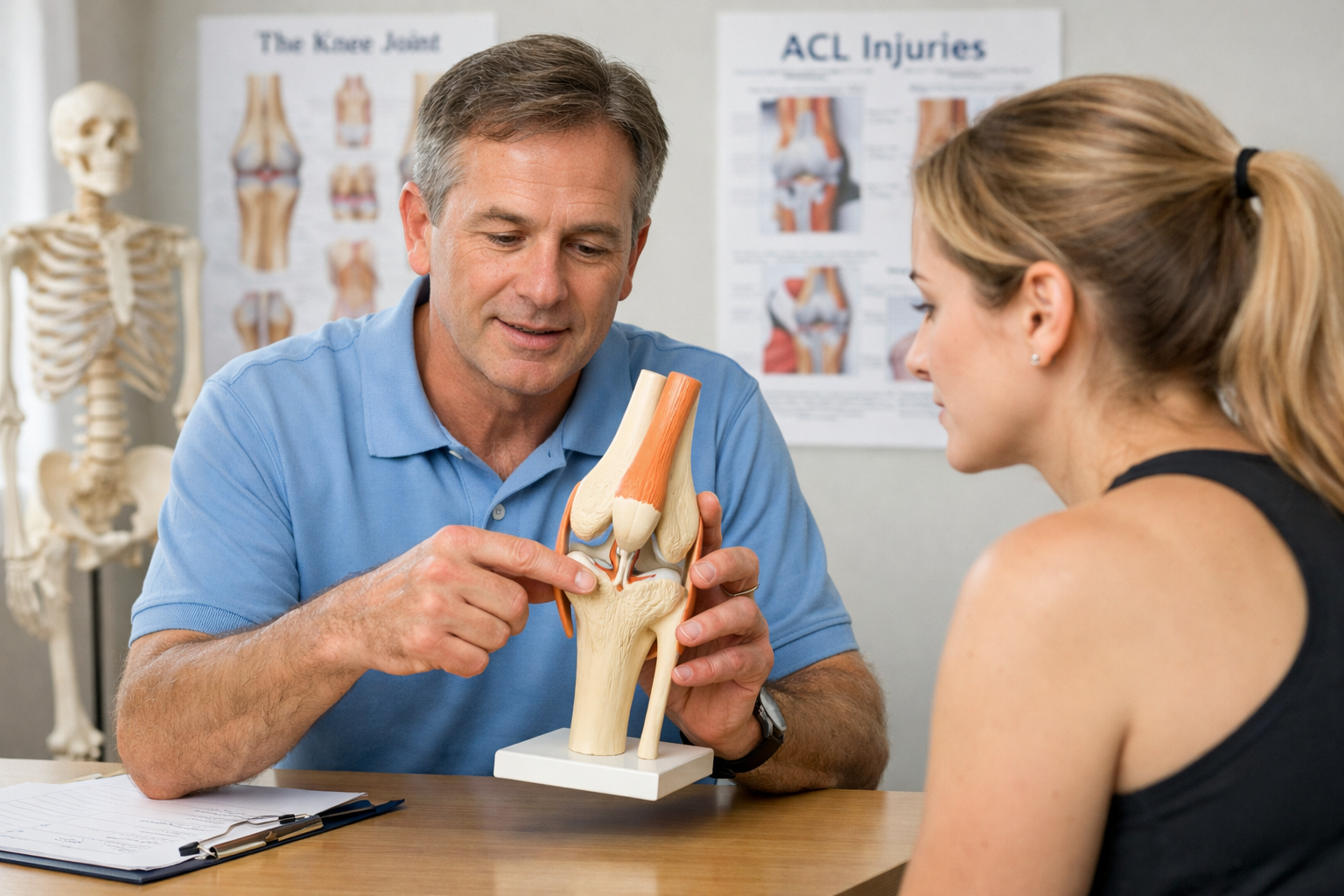
Phase 2: Controlled Strengthening (Weeks 2-6)
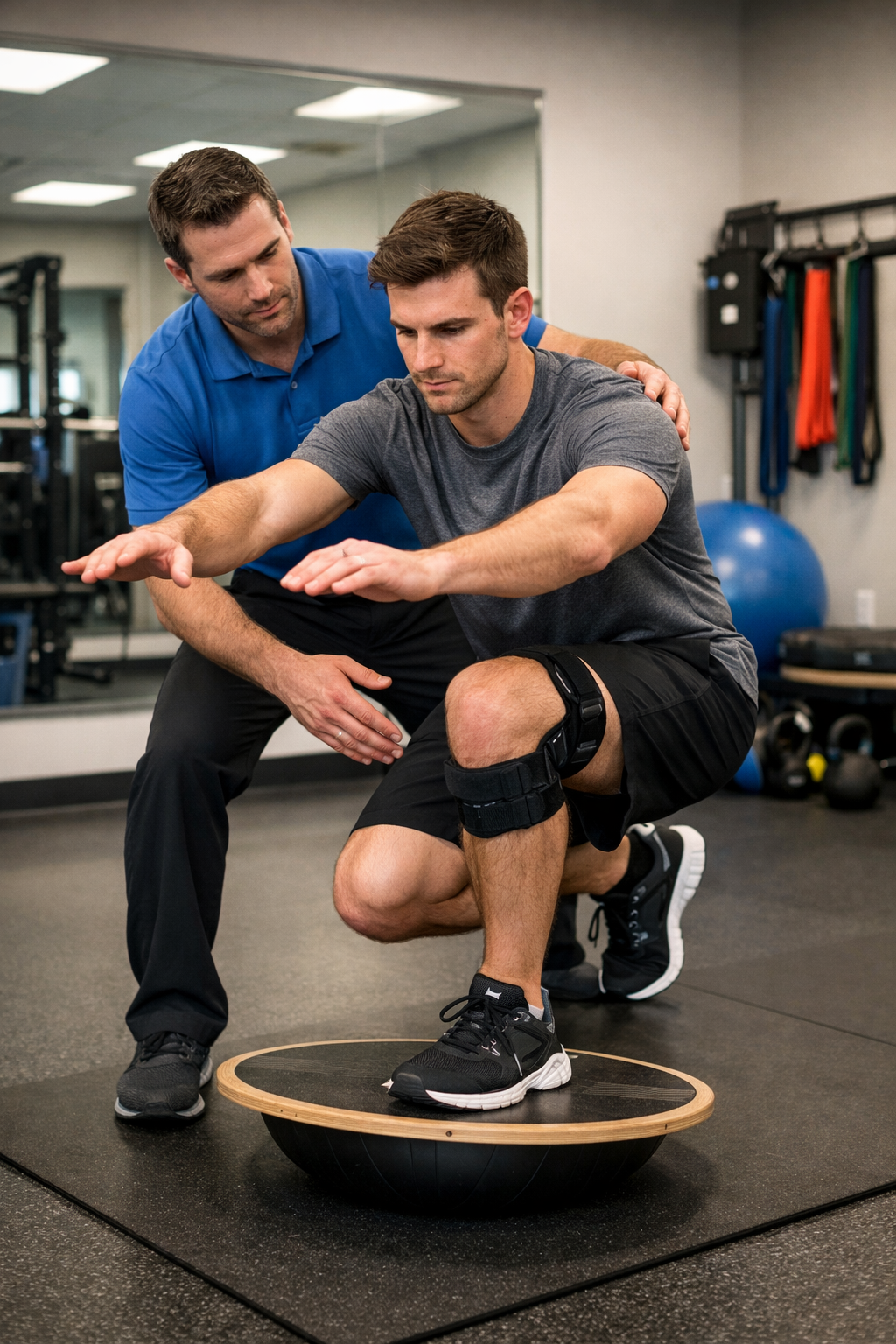
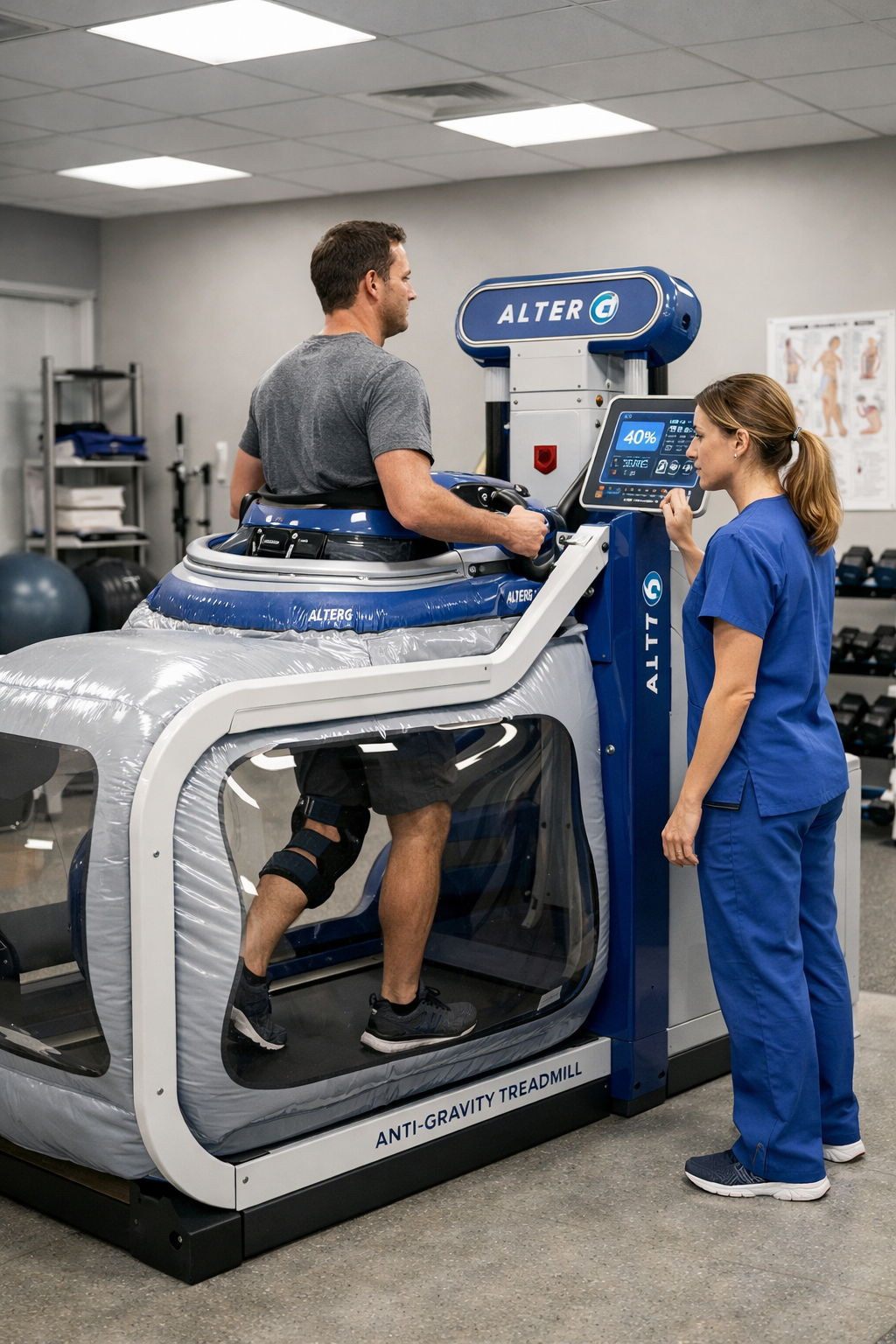
As healing progresses, controlled strengthening exercises are introduced. Hamstring curls, leg presses, and closed-chain movements rebuild muscle strength around the knee joint. Balance exercises on unstable surfaces begin to retrain proprioception — your body’s ability to sense joint position — which is critical for long-term knee stability. A Somerville YMCA basketball player recovering from a non-contact tear will spend significant time in this phase rebuilding the foundation that prevents re-injury.
Phase 3: Progressive Loading (Weeks 6-12)
This phase increases the demands on the healing knee. Resistance is progressively added to strengthening exercises, single-leg work challenges hamstring strength and balance, and low-impact cardiovascular training resumes. Patients begin sport-specific or activity-specific movement patterns under controlled conditions. For the RWJ Somerset nurse eager to return to 12-hour shifts, this phase includes prolonged standing tolerance and multi-directional stepping drills that simulate hospital floor demands.
Phase 4: Advanced Strengthening and Agility (Weeks 12-20)
Dynamic movement returns. Agility ladders, lateral shuffles, and early plyometric training prepare the knee for the unpredictable forces of sport and daily life. Proprioception drills become more complex, and your therapist assesses movement quality closely. The Duke Island Park trail runner begins sport-specific running progressions on varied surfaces, gradually building toward the demands of uneven terrain.
Phase 5: Return to Sport and Performance (Weeks 20-36+)
The final phase focuses on achieving full return to sport readiness. Objective testing — including hop tests, strength symmetry measurements, and movement quality screens — determines clearance. Plyometric training intensity increases, and sport-specific scenarios are replicated in the clinic. A Pioneers football player will work through cutting, pivoting, and contact-preparation drills before returning to team practice. Clearance is milestone-driven, not calendar-driven.
THE NON-SURGICAL PATHWAY
Not every ACL tear requires surgery. For patients with partial tears, lower activity demands, or specific medical considerations, a non-surgical rehabilitation pathway can restore functional knee stability through aggressive strengthening and neuromuscular training. This approach emphasizes building the hamstrings and quadriceps to compensate for ligament laxity, combined with extensive proprioception and balance work. Your Trinity Rehab physical therapist will help you determine whether a non-surgical approach aligns with your goals and anatomy, coordinating with your physician to make the best decision for your long-term hip and knee health.
ADVANCED TREATMENT TECHNIQUES
Trinity Rehab Somerville incorporates evidence-based advanced techniques that accelerate healing and optimize outcomes.
Blood flow restriction (BFR) training uses specialized tourniquets to partially restrict venous blood flow during low-load exercise, triggering muscle growth responses typically seen only with heavy lifting. This is especially valuable in early post-operative phases when the knee cannot tolerate high loads, allowing patients to build muscle strength without stressing the healing graft.
Neuromuscular electrical stimulation (NMES) delivers targeted electrical impulses to the quadriceps to combat the rapid muscle inhibition that follows ACL surgery. NMES is a cornerstone of early rehabilitation, helping patients regain voluntary muscle activation faster.
Dry needling addresses myofascial trigger points in the quadriceps, hamstrings, calf, and hip musculature that develop from compensatory movement patterns. By releasing these trigger points, dry needling restores normal muscle function and reduces pain.
EPAT/shockwave therapy uses acoustic pressure waves to stimulate blood flow and cellular repair in tendons and soft tissues surrounding the knee. For patients dealing with patellar tendon irritation following ACL reconstruction that used a patellar tendon graft, shockwave therapy can be a valuable adjunct to traditional rehabilitation.
INJURY PREVENTION
The best ACL injury is the one that never happens. Trinity Rehab Somerville offers injury prevention programming rooted in evidence-based neuromuscular training protocols. These programs are especially relevant for Somerville High School athletes in high-risk sports like football, soccer, and lacrosse, as well as adult recreational athletes in county leagues.
Prevention programs focus on:
- Landing mechanics and deceleration training
- Hamstring-to-quadriceps strength ratio optimization
- Single-leg balance and proprioception development
- Core stability and hip strengthening
- Sport-specific agility and plyometric training progressions
Coaches, parents, and athletes can coordinate with our clinic to implement these programs during preseason and throughout the competitive year.
WHY CHOOSE TRINITY REHAB SOMERVILLE
Somerville is not a generic suburb — it is the county seat of Somerset County, a historic borough with deep roots and a fiercely active community. Your ACL rehabilitation should reflect that identity. At Trinity Rehab, located at 89 US-206, Somerville, NJ 08876, our physical therapists understand the specific demands facing Somerville residents.
We treat the Pioneers athlete who needs to return to a sectional title run. We treat the RWJ Somerset nurse who cannot afford another missed shift. We treat the trail runner who wants to get back to Duke Island Park and the weekend basketball player who refuses to give up Tuesday night games at the YMCA. Every plan we build accounts for the individual — their anatomy, their goals, their timeline, and the specific activities that define their life in this community.
Our clinic offers one-on-one care with a licensed physical therapist at every visit, access to advanced modalities including blood flow restriction, neuromuscular electrical stimulation, dry needling, and EPAT, and a proven phase-based protocol for ACL rehabilitation. We coordinate directly with orthopedic surgeons throughout the Raritan Valley to ensure seamless post-operative care.
Explore our full menu of treatment options to learn more about how we serve the Somerville community.
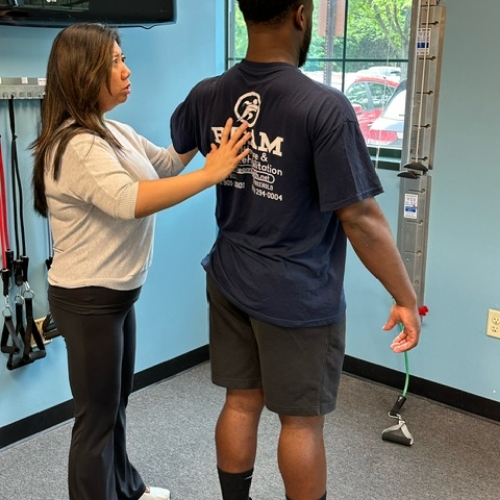
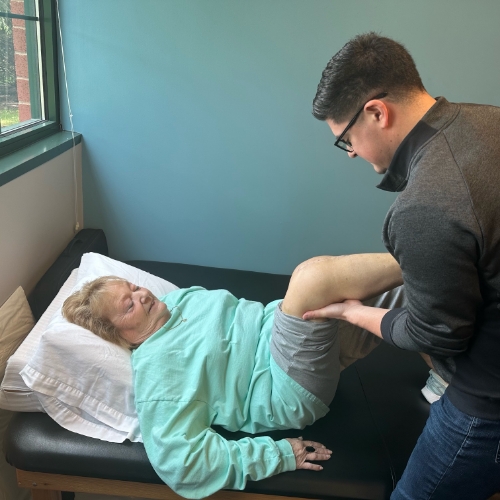
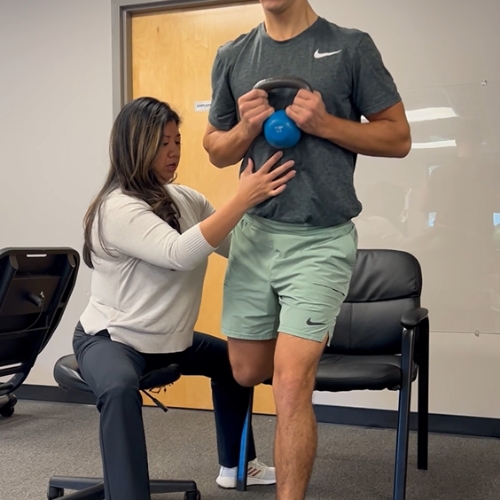
Inside Our Somerville Clinic
RELATED CONDITIONS & TREATMENTS
ACL injuries are just one of the many conditions we treat at Trinity Rehab Somerville. Explore our full range of conditions we treat or learn more about specific treatment approaches:
Somerville ACL Rehab For Strength, Stability, And Return To Activity
ACL rehab in Somerville should connect the healing stage to real movement goals: walking normally, using stairs, rebuilding quad strength, returning to running, and feeling ready for sport or exercise again.
Your therapist may assess swelling, range of motion, quad activation, hip strength, balance, gait, and return-to-sport readiness. The plan should match your surgical or non-surgical timeline and avoid skipping phases.
Related options include knee pain physical therapy, meniscus tear rehab, and the Somerville physical therapy clinic page.
FREQUENTLY ASKED QUESTIONS
Somerville ACL Rehab For Strength, Stability, And Return To Activity
ACL rehab in Somerville should connect the healing stage to real movement goals: walking normally, using stairs, rebuilding quad strength, returning to running, and feeling ready for sport or exercise again.
Your therapist may assess swelling, range of motion, quad activation, hip strength, balance, gait, and return-to-sport readiness. The plan should match your surgical or non-surgical timeline and avoid skipping phases.
Related options include knee pain physical therapy, meniscus tear rehab, and the Somerville physical therapy clinic page.
How long does ACL recovery take at Trinity Rehab Somerville?
Can I avoid ACL surgery and still recover with physical therapy?
Does Trinity Rehab Somerville treat high school athletes from Somerville High School?
What should I do immediately after an ACL injury on a Somerville trail or field?
What advanced techniques does Trinity Rehab use for ACL recovery?
Your ACL recovery starts with a single decision — choosing the right team. At Trinity Rehab Somerville, located at 89 US-206, Somerville, NJ 08876, our physical therapists are ready to build a recovery plan as strategic and disciplined as the community that surrounds us. Whether you tore your ACL under the Friday night lights at Brooks Field, on a shift at RWJ Somerset, or on a trail beside the Raritan Power Canal, we will meet you where you are and guide you back to where you want to be.
Schedule your appointment today and take the first step toward reclaiming your active life in Somerville.