
PLANTAR FASCIITIS TREATMENT IN SOMERSET, NJ
Colonial Park is Somerset’s crown jewel — 685 acres of trails, fitness parcourse stations, ponds, gardens, and sports fields. The D&R Canal State Park Trail connects walkers and runners to miles of scenic path. And Franklin High School’s Warriors keep athletic families active across every season.
Somerset is also a working community. RWJ Somerset, Sanofi US, and SHI International employ healthcare workers, pharmaceutical professionals, and office staff whose daily routines place sustained demands on their feet. When recreational activity and occupational loading meet inadequate footwear or restricted ankle mobility, plantar fasciitis often follows.
If you’ve been starting your mornings with a sharp, stabbing heel pain that turns the first steps of your Colonial Park run into an ordeal — or if your shift at RWJ Somerset ends with your heel aching through the parking lot — Trinity Rehab’s Somerset-area team is here to help.
WHAT IS PLANTAR FASCIITIS?
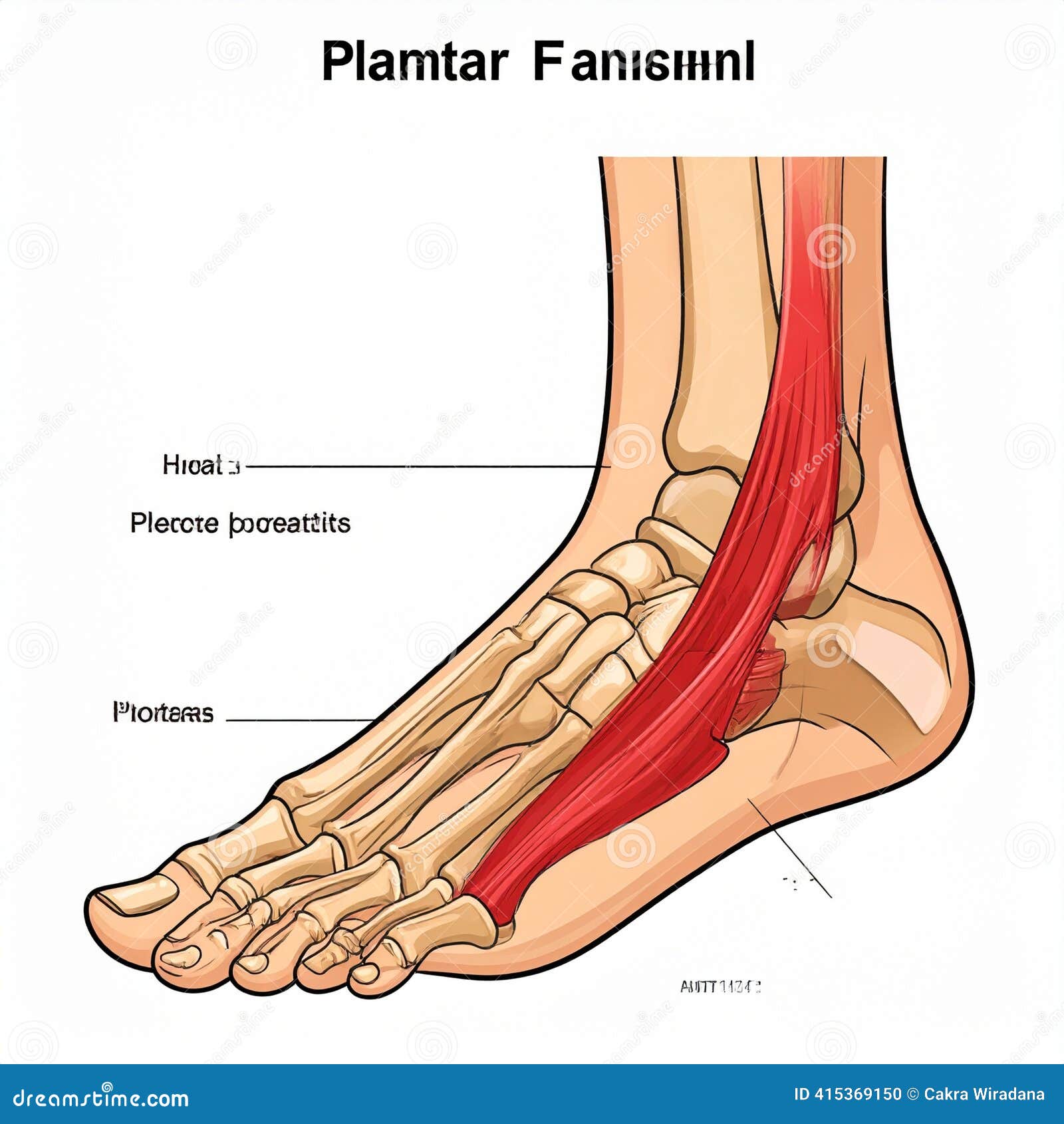
The plantar fascia connects the heel bone to the ball of the foot, supporting the arch and absorbing shock. Under normal conditions it handles daily loading without complaint. Under chronic overload — too much activity, inadequate support, tight calf muscles, or structural abnormalities — micro-tears accumulate and trigger the inflammatory cycle that produces heel pain.
The tissue contracts during periods of rest and sleep, making the first weight-bearing steps after waking or prolonged sitting intensely painful as it is abruptly stretched. This is plantar fasciitis’s calling card. Pain typically eases within several minutes as the fascia warms, then returns after each period of rest.
Without addressing the underlying biomechanical causes, this cycle tends to persist — and in some patients, progresses to a chronic degenerative state called plantar fasciopathy, in which the tissue thickens and loses elasticity. The American Academy of Orthopaedic Surgeons estimates 2 million Americans seek plantar fasciitis treatment annually.
RELATED CONDITIONS & TREATMENTS
Plantar fasciitis is just one of the many conditions we treat at Trinity Rehab Somerset. Explore our full range of conditions we treat or learn more about specific treatment approaches:
WHY SOMERSET RESIDENTS ARE VULNERABLE
Somerset’s specific blend of outdoor recreation, healthcare employment, suburban commuting, and family athletics creates predictable plantar fasciitis risk patterns:
Colonial Park and the fitness parcourse — Colonial Park’s fitness parcourse — a circuit of exercise stations spread across the park’s extensive grounds — attracts regular users who combine walking with structured exercise throughout the year. The park’s paved paths and open terrain offer beautiful conditions for exercise, but consistent hard-surface activity without adequate footwear or progressive conditioning leads to cumulative fascial stress. The Greatest Somerset County YMCA running clubs also use the park’s paths for group training, and motivated runners who increase mileage without adequate footwear replacement are frequent plantar fasciitis presentations.
The Delaware & Raritan Canal Trail — The D&R Canal State Park Trail provides flat, consistent terrain that makes it popular for long-distance running and cycling. Its packed-surface path offers less shock absorption than natural trail terrain, and runners who use it for high-mileage training — particularly during marathon preparation — are routinely exposed to the cumulative fascial loading that triggers injury.
Robert Wood Johnson University Hospital Somerset — RWJ Somerset is a major healthcare employer in the area, with nursing staff, therapists, technicians, and support personnel spending full shifts on hard hospital floors. Healthcare workers carry some of the highest occupational risks for plantar fasciitis of any professional group — the combination of prolonged standing, walking, and rarely having the opportunity to sit makes the fascia a continuously loaded structure with minimal recovery time.
Sanofi US and pharmaceutical industry work — Sanofi’s Somerset presence employs professionals in laboratory, clinical, and office settings. Lab-based workers who stand for extended periods on hard flooring surfaces, and office workers who transition from long seated periods to standing meetings, both face foot loading patterns that can contribute to plantar fasciitis over time.
Franklin High School Warriors athletics — Franklin High School competes in the Skyland Conference with nationally recognized girls basketball programs (multiple Group IV state championships and Tournament of Champions victories) and strong football and soccer programs. Multi-sport student athletes, particularly distance runners in track and cross-country and field sport athletes who train on varied surfaces, accumulate the repetitive heel stress that precedes plantar fasciitis. Basketball players, who make explosive jumps and direction changes on hard court surfaces, face concentrated heel loading with every game and practice.
Somerset County recreational tennis and golf — The Green Knoll Tennis Center and Colonial Park Tennis Center offer leagues, tournaments, and pickleball courts that keep Somerset’s adult athletes active through the warmer months. The county operates five golf courses — Spooky Brook, Green Knoll, and others — keeping golfers walking long distances on varied terrain. Both sports involve demands on the plantar fascia that, without proper conditioning and footwear, can tip into injury.
Long commute times — Somerset residents report average commute times approaching 34 minutes, with many driving to New York City-area workplaces. Long sedentary drives followed immediately by walking on hard transit or office floors create a cold-to-loaded stress pattern for the plantar fascia that repeats daily throughout the year.
WHAT YOU’LL NOTICE
A Somerset runner at Colonial Park might describe it like this: the first half-mile involves a stabbing heel pain that gradually eases — but three months in, they’re skipping morning runs entirely. At work, rising from the desk chair has its own version of the same first-step pain.
That pattern — morning pain, post-rest flares, easing with activity, returning after inactivity — is the clinical fingerprint of plantar fasciitis. Other key symptoms include:
- Stabbing or burning heel pain — Concentrated at the inner base of the heel, at the calcaneal attachment of the plantar fascia. Worst with first steps, gradually improving with movement.
- Arch tightness and fatigue — A pulled or shortened sensation along the arch, particularly after long runs or extended standing shifts.
- Point tenderness at the heel — Pressing on the inner-bottom of the heel reproduces the pain precisely and with immediate reliability.
- Post-exercise pain rather than during — Many runners notice that heel pain builds in the hours after a D&R Canal run rather than during it, reflecting the delayed inflammatory response.
- Gait compensation — Unconscious toe-walking, shortened stride, or lateral weight shift to protect the sore heel — creating secondary stress in the knee, hip, and lower back.
PHASE-BASED PHYSICAL THERAPY TREATMENT AT TRINITY REHAB
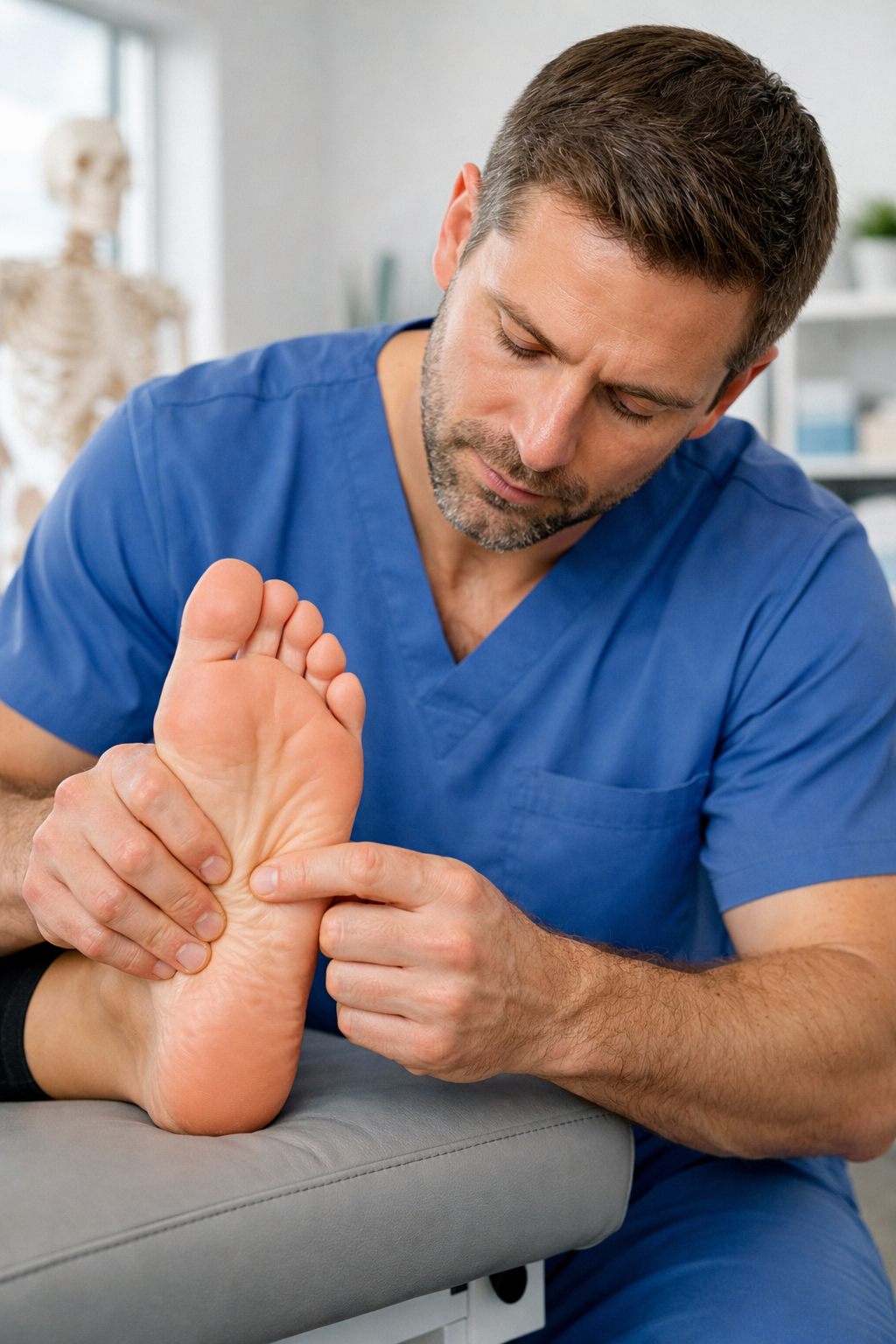
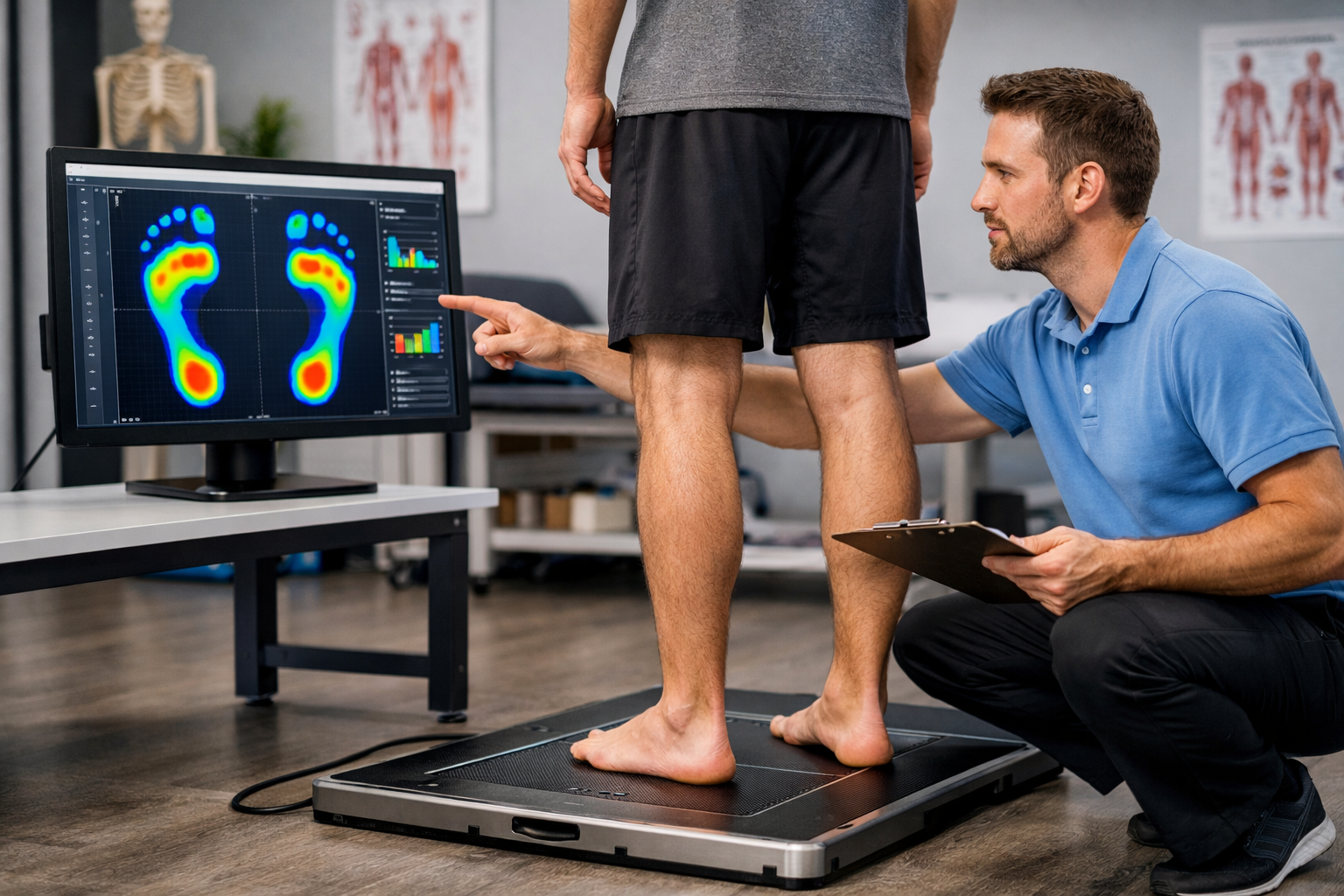
Every plantar fasciitis patient at Trinity Rehab begins with a comprehensive biomechanical evaluation — gait analysis, foot mechanics assessment, ankle range of motion screening, calf flexibility testing, and lower extremity strength evaluation. Treatment is structured in three progressive phases, each building on the last.
PHASE 1: REDUCE PAIN AND RESTORE MOBILITY
The first phase focuses on calming the acute inflammatory cycle and restoring the ankle mobility that reduces fascial loading.
Manual therapy — including joint mobilization of the ankle and subtalar joints, instrument-assisted soft tissue mobilization (IASTM), and myofascial release — addresses the stiffness and adhesions that perpetuate both pain and restricted movement. Hands-on ankle mobilization specifically targets the dorsiflexion deficit that is among the most consistent biomechanical findings in plantar fasciitis patients. A 2023 update to clinical practice guidelines in the Journal of Orthopaedic & Sports Physical Therapy endorses combined joint mobilization and stretching as superior to stretching alone.
Kinesiology taping and low-dye strapping techniques offload the fascia during weight-bearing activities between sessions, allowing tissue healing to begin without requiring complete rest from work or park activity.

PHASE 2: BUILD STRENGTH AND LOAD TOLERANCE
With acute pain managed, Phase 2 addresses the biomechanical deficits that caused the injury.
Systematic calf stretching — targeting both the gastrocnemius and soleus muscles — recovers the ankle dorsiflexion that tight calves restrict. The plantar fascia-specific toe-extension stretch, performed before morning weight-bearing, is one of the most strongly evidence-supported self-care interventions for this condition. Progressive eccentric heel drop exercises systematically build the fascial and tendon resilience needed for Colonial Park runs, Warriors sports, and full hospital shifts. Intrinsic foot muscle training through short-foot exercises, towel scrunches, and progressive balance work rebuilds the internal arch support structure that protects the fascia over the long term.
For Franklin High School athletes, sport-specific loading progressions and agility work are incorporated to prepare the foot for competitive demands. For RWJ Somerset healthcare workers, shift-specific endurance conditioning addresses the capacity to stand for extended periods without heel breakdown.
PHASE 3: RETURN TO FULL ACTIVITY AND PREVENTION
The final phase bridges from clinical recovery to full, unrestricted return to activity.
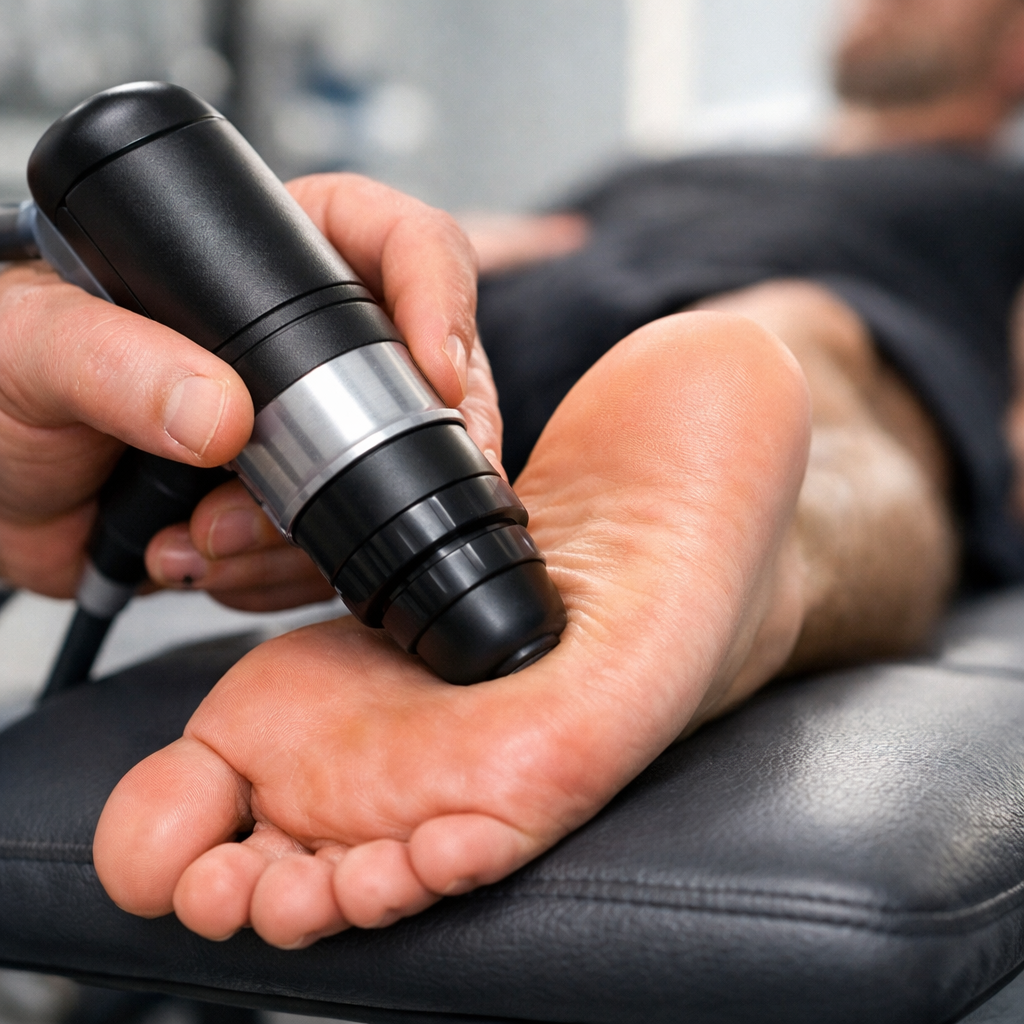
- EPAT shockwave therapy — For Somerset patients with plantar fasciitis that has persisted beyond three months, EPAT uses acoustic pressure waves to stimulate deep tissue repair in fascia that chronic inflammation has prevented from healing. The Mayo Clinic recognizes ESWT as an effective option for recalcitrant plantar fasciitis. Trinity Rehab provides this treatment without requiring a specialist referral.
- Dry needling — Fine filament needles target trigger points in the calf complex and foot intrinsics, releasing deep muscle tension that conventional stretching cannot fully resolve. Particularly valuable for distance runners and standing-intensive workers with chronic calf tightness.
- Return-to-activity programming — Whether returning to D&R Canal long runs, Warriors basketball practice, Green Knoll golf, or a full nursing shift, your therapist provides a structured, load-appropriate progression that protects the healing fascia while restoring full function.
- Orthotic and footwear guidance — Your therapist will evaluate your running shoes, work footwear, and everyday shoes for adequacy. Patients with structural foot issues benefit from custom or semi-custom orthotic correction as a permanent component of their prevention strategy.
PREVENTION TIPS FOR SOMERSET RESIDENTS
- Replace D&R Canal shoes by mileage — Running shoes need replacement every 300–500 miles. Track mileage, not appearance — midsoles degrade invisibly.
- Warm up before Colonial Park workouts — Two minutes of calf raises and ankle circles before the fitness parcourse circuit protects cold fascia from abrupt loading.
- Invest in work-grade footwear for RWJ shifts — Anti-fatigue insoles and supportive nursing shoes are essential injury-prevention equipment for Somerset’s hospital professionals on 10-hour shifts.
- Ease Warriors athletes into pre-season — A gradual conditioning ramp with proper footwear and daily stretching prevents the heel overuse injuries that derail Franklin athletes early in the season.
- Stretch before your commute — Sixty seconds of calf and plantar fascia stretching before leaving the house significantly reduces morning fascial stiffness for Somerset’s long-haul commuters.
WHY SOMERSET PATIENTS CHOOSE TRINITY REHAB
Trinity Rehab’s one-on-one care model means your licensed physical therapist is with you every session — no aides, no shortcuts. Your evaluation findings drive your plan, your progress drives the adaptations, and your goals — Colonial Park runs, a Warriors season, pain-free shifts at RWJ Somerset — are what every visit is accountable to.
We accept most major insurance plans, require no physician referral, and offer scheduling flexibility that works for healthcare workers, commuters, and busy families. Browse all conditions we treat or learn more specifically about foot and ankle pain relief.
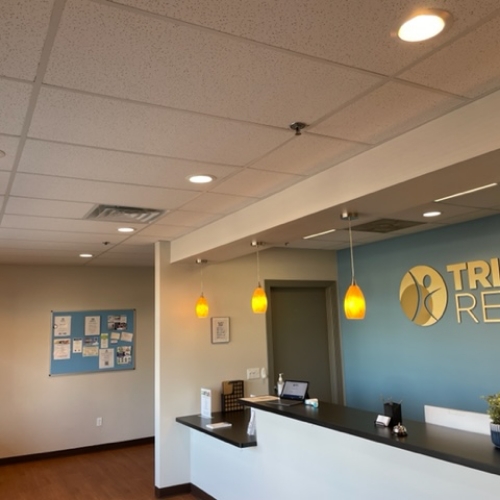
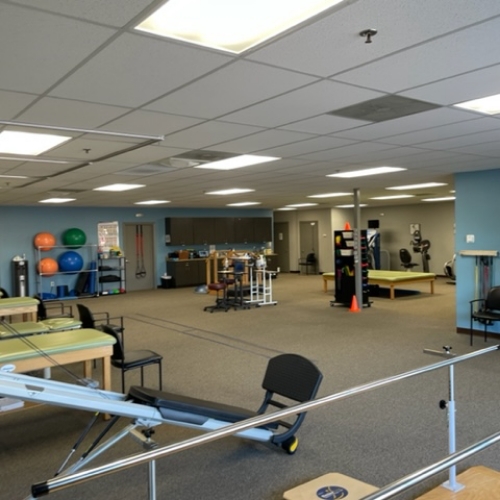
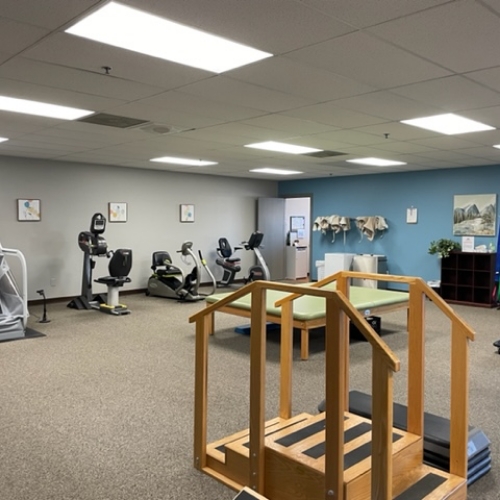
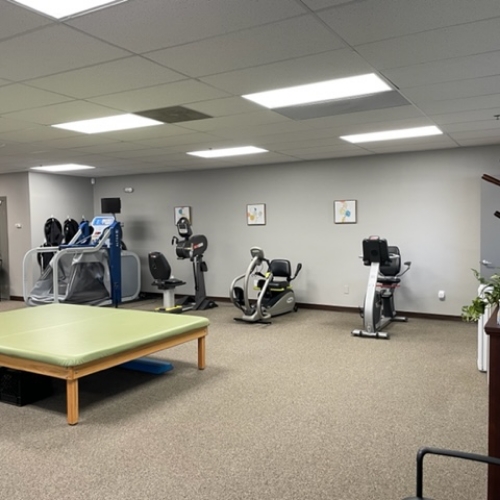
Inside Our Somerset Clinic
FREQUENTLY ASKED QUESTIONS
Where can I get plantar fasciitis treatment in Somerset, NJ?
I’ve had heel pain for over six months — is it too late for physical therapy?
Can I use the Colonial Park fitness parcourse while I’m being treated?
What’s the difference between plantar fasciitis and Achilles tendinopathy?
How does plantar fasciitis affect other joints?
TAKE BACK YOUR MORNINGS IN SOMERSET
The Colonial Park trails, the D&R Canal path, and the morning routine you’ve been missing — they’re all waiting. Trinity Rehab has the expertise to help you recover fully.
No physician referral needed. Most major insurance plans accepted.
Sources: Journal of Orthopaedic & Sports Physical Therapy — Clinical Practice Guidelines, Heel Pain/Plantar Fasciitis 2023 | Mayo Clinic — Plantar Fasciitis | American Academy of Orthopaedic Surgeons — Plantar Fasciitis and Bone Spurs | NIH/PMC — Management of Plantar Fasciitis in the Outpatient Setting