

TENNIS ELBOW TREATMENT IN SHREWSBURY, NJ | TRINITY REHAB
Shrewsbury is a borough that looks like it belongs on a postcard — colonial-era homes along Broad Street, the Allen House standing since 1710, Christ Church anchoring the village center the way it has since before the Revolution. It is quiet, refined, and just a few miles from the Jersey Shore. But beneath that picture of Monmouth County gentility is a community that rarely gives its hands a rest.
On any given Saturday, the courts at New Shrewsbury Racquet Club are booked with doubles matches and pickleball rounds. Down at Sickles Park, residents volley until dusk. Golfers tee off at Suneagles Golf Club before the morning fog lifts from the Shrewsbury River, and by afternoon, that same river fills with kayakers and paddleboarders heading toward Sea Bright. Even a leisurely Sunday means gripping a boat line, hauling beach gear to Long Branch, or trimming hedges on a property maintained for decades. In Shrewsbury, even leisure is grip-intensive.
So when a burning ache settles on the outside of the elbow — the kind that sharpens when you swing a racquet, turn a steering wheel, or lift a bag of groceries — it threatens the entire active, shore-adjacent lifestyle that makes this borough worth calling home. That pain has a clinical name, and Trinity Rehab Shrewsbury has the expertise to treat tennis elbow and get you back to the life you’ve built here.
What Is Tennis Elbow?
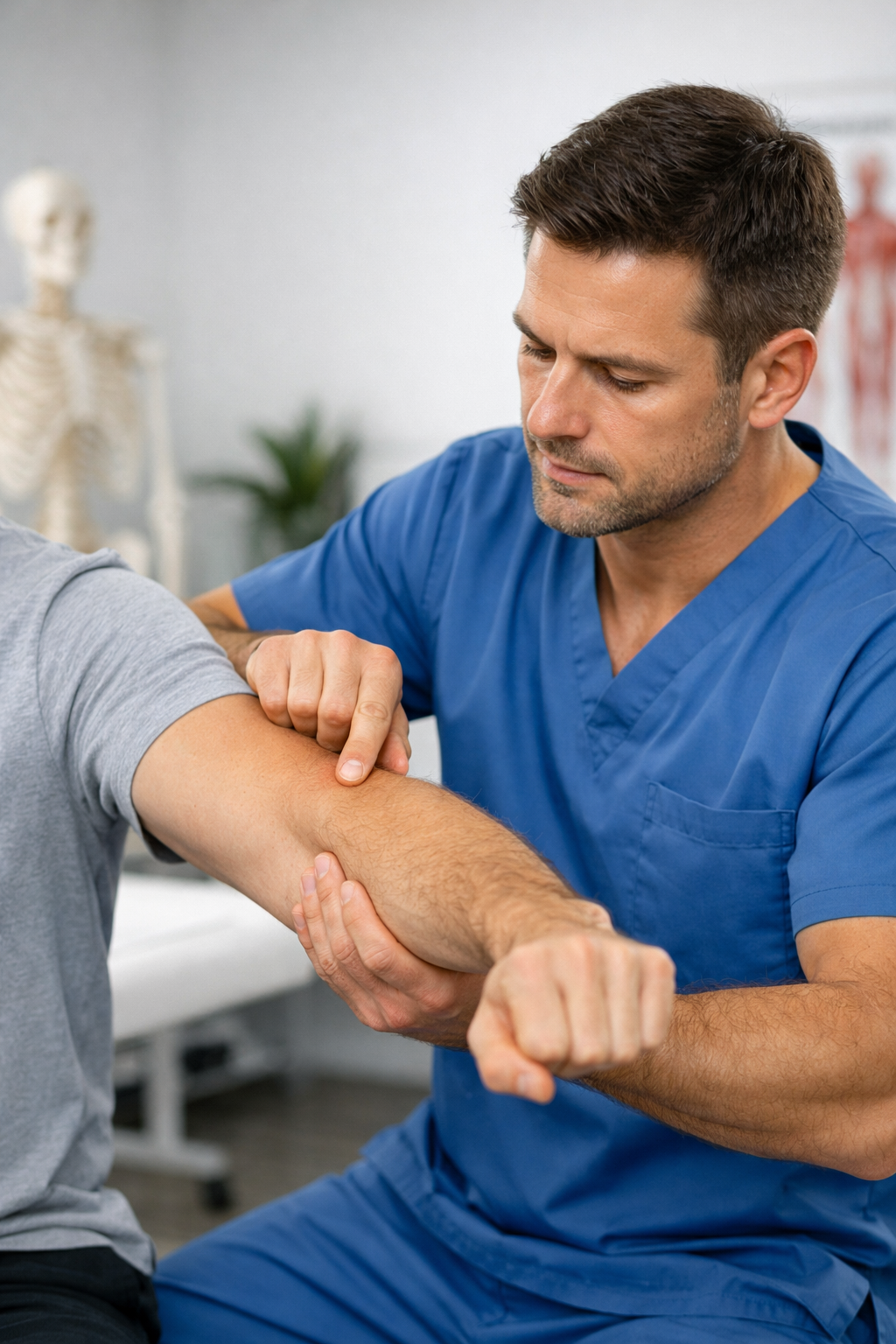
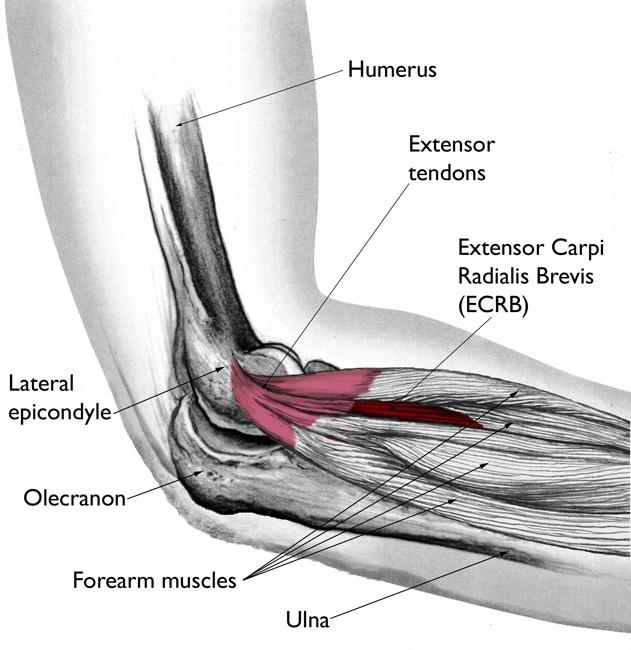
Tennis elbow — clinically known as lateral epicondylitis, lateral epicondylalgia, or lateral elbow tendinopathy — is a degenerative overuse condition affecting the tendons on the outside of the elbow. The tendon most commonly involved is the extensor carpi radialis brevis (ECRB), a muscle that stabilizes the wrist during gripping and extension. When subjected to repetitive stress beyond its capacity to recover, the ECRB develops microscopic tears and structural breakdown.
Despite its name, tennis elbow develops from any sustained pattern of repetitive movements that load the wrist extensors — repetitive motions at work, repetitive tasks around the home, or grip-heavy recreation. The pain typically begins as mild tenderness on the outside of the elbow and gradually intensifies. Grip strength diminishes. Simple actions — pouring a drink, carrying a briefcase — feel uncertain. Left untreated, lateral elbow tendinopathy can persist for months, steadily eroding the function your forearm and wrist depend on.
Who Gets Tennis Elbow in Shrewsbury?
With roughly 4,180 residents, a median age in the mid-forties, and an affluent, active population balancing demanding careers — often with a 31-minute commute — against a full recreational calendar, Shrewsbury creates a population particularly vulnerable to lateral epicondylitis.
The Racquet Club Doubles Player
Catherine is 52 and plays competitive USTA league doubles at New Shrewsbury Racquet Club three times a week, plus pickleball sessions at Sickles Park. Her forearm extensors rarely get a full day off. The pain started after a long tournament weekend — a dull ache she attributed to fatigue. Within six weeks, gripping her racquet during a backhand produced a sharp sensation from elbow to wrist. Her grip strength declined enough that she struggled to open jars between sets. Classic lateral elbow tendinopathy from cumulative racquet overuse, compounded by the rapid wrist snaps of pickleball.
The Wakefern Warehouse Worker
Miguel is 38 and works at Wakefern Food Corporation, one of the area’s largest employers. His shifts involve repetitive scanning, palletizing, and lifting cases weighing 10 to 50 pounds. He first noticed a burning sensation on the outside of his elbow during consecutive overtime shifts. Rest dulled the pain, but it returned immediately upon resuming work. Now the ache persists off-hours — gripping a steering wheel or holding a phone with his palm facing down sends a jolt through his forearm. His lateral epicondylitis stems from occupational repetitive motions that build silently over months.
The Red Bank Regional Bucs Tennis Player
Aiden is 17 and plays varsity tennis for the Red Bank Regional High School Bucs, supplementing with winter sessions at New Shrewsbury Racquet Club and fall golf. Midway through spring season, he developed elbow pain that worsened with serves and backhands — tenderness over the lateral epicondyle and pain with resisted wrist extension. Youth athletes like Aiden increasingly present with overuse injuries as year-round training becomes standard. Early physical therapy intervention leads to better outcomes and protects the developing arm.
Also at risk in Shrewsbury: Brandywine Living healthcare workers gripping assistive equipment through long shifts, YMCA of the Jersey Shore trainers handling equipment daily, and summer boaters and paddlers on the Shrewsbury River loading the same tendons already taxed by weekday demands.
How Physical Therapy Treats Tennis Elbow at Trinity Rehab Shrewsbury
Tennis elbow management at Trinity Rehab Shrewsbury follows a structured, phase-based approach built around progressive tendon loading — systematically increasing demands on the injured tissue so it adapts and develops the tendon tolerance needed for your activities.
Phase 1: Pain Reduction and Symptom Control
Your physical therapist will use manual therapy — soft tissue mobilization along the forearm extensors, joint mobilizations at the elbow and wrist — to restore movement and reduce inflammation. This is paired with education on activity modifications: adjusting grip patterns and workload to avoid re-aggravating the tendon. A counterforce strap worn just below the elbow may be recommended to redistribute force during gripping tasks.
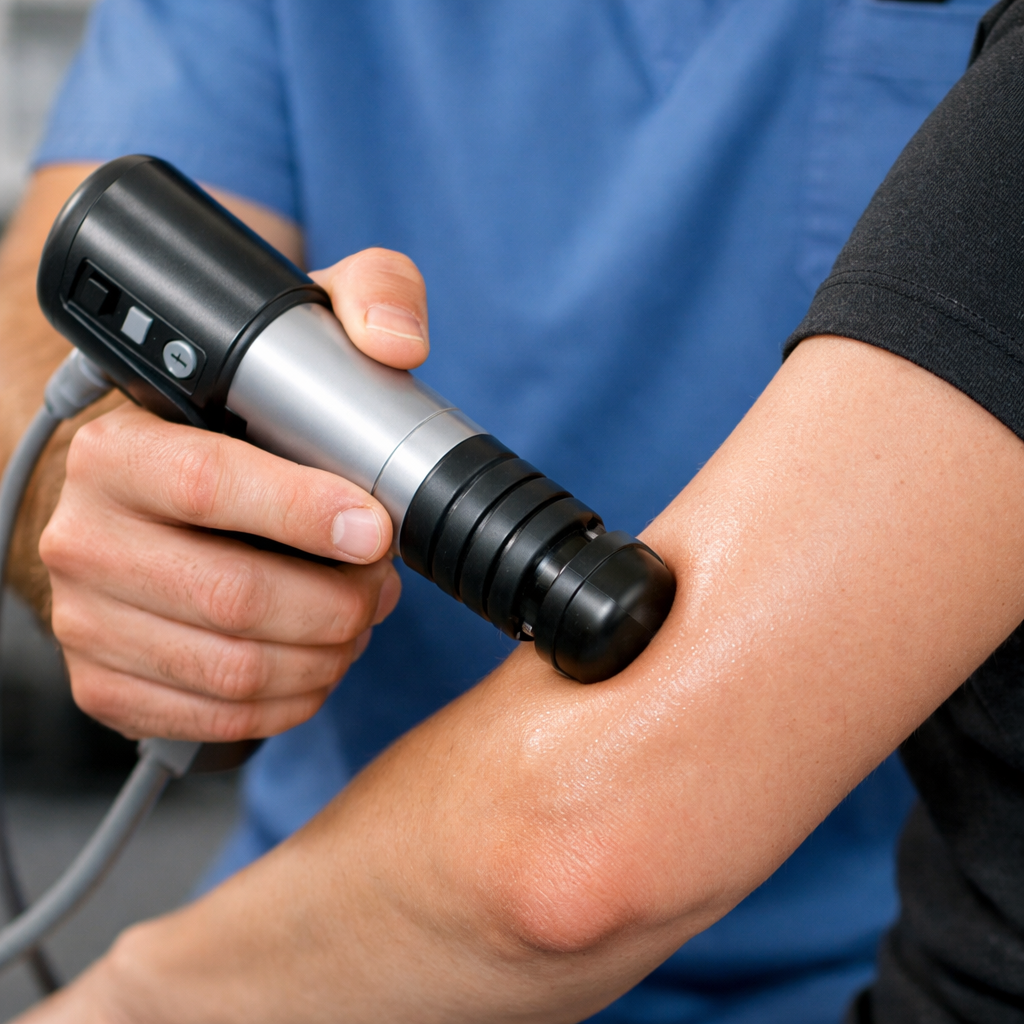
For stubborn pain, Trinity Rehab Shrewsbury offers EPAT shockwave therapy to stimulate blood flow and tissue repair, and dry needling targeting myofascial trigger points in the forearm muscles. These modalities are especially valuable for patients who have not responded to rest, bracing, or corticosteroid injections.

Phase 2: Progressive Loading and Strengthening
The focus shifts to rebuilding tendon tolerance and grip strength through targeted exercises. Eccentric exercise — where the muscle lengthens under controlled load — is a cornerstone of treatment at Trinity Rehab. Your program may include:
- Eccentric wrist extension exercises: From a palm facing down starting position with forearm supported, slowly lower a light weight. Exercise slowly to stimulate tendon remodeling.
- Towel twists: Wring a rolled towel in opposite directions, keeping shoulders relaxed.
- Forearm pronation and supination: Rotate the forearm — palm facing up, then palm facing down — to strengthen stabilizing muscles.
- Grip strengthening: Progressive exercises using a tennis ball or therapy putty, with starting position and resistance tailored to your capacity.
- Wrist extension stretches: Gentle stretch with the arm outward and elbow straight to maintain flexibility.
Minimal equipment is needed — most exercises require only a light dumbbell, a towel, and a flat surface.
Phase 3: Return to Activity
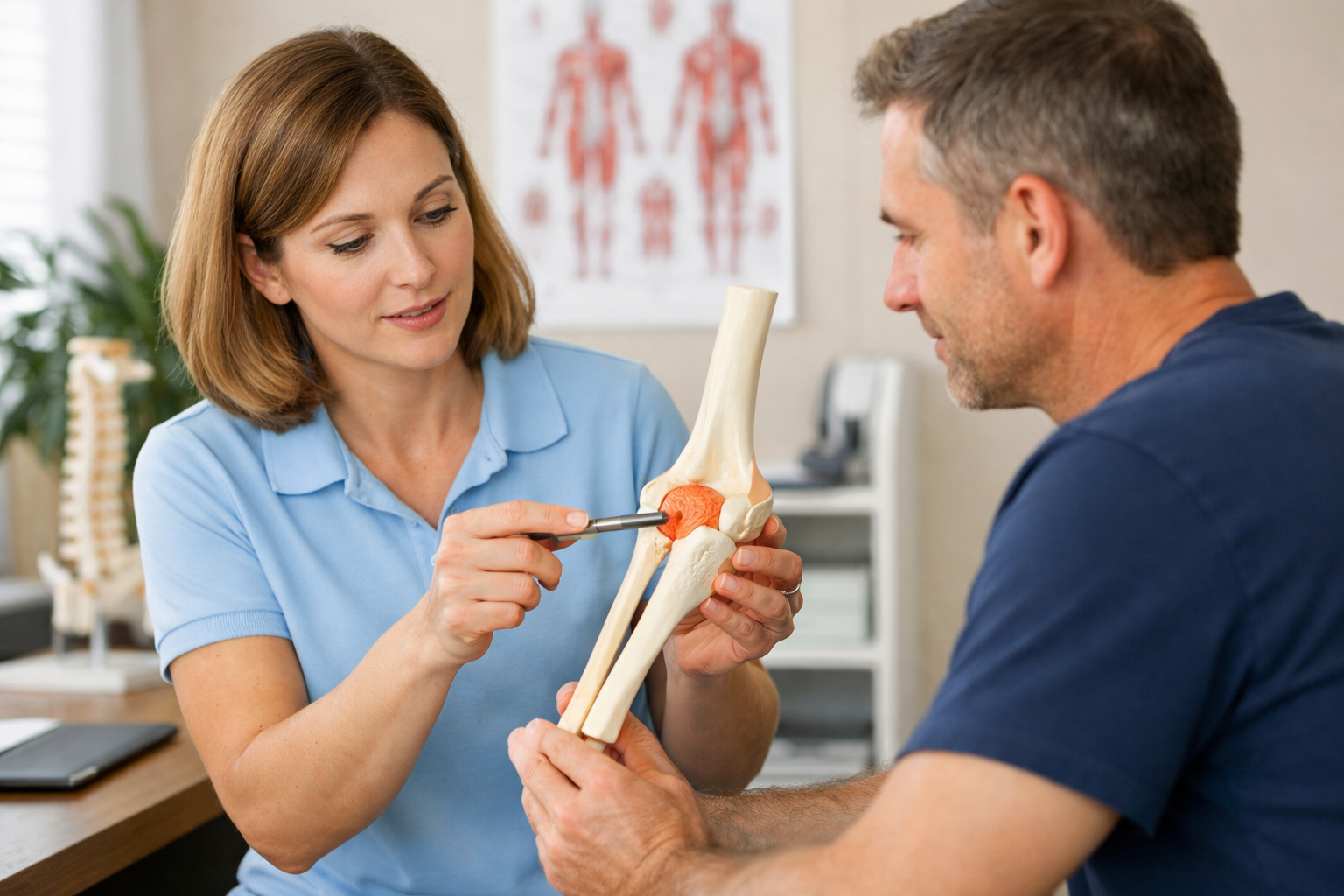
The final phase targets sport-specific and task-specific reconditioning tied to your long term goals. For Catherine, graduated return to doubles at New Shrewsbury Racquet Club. For Miguel, simulating warehouse lifting demands. For Aiden, a return-to-play protocol that protects his remaining seasons. Load management ensures the tendon tolerates progressively greater demands without regression.
Why Choose Trinity Rehab Shrewsbury?
One-on-one personalized care every visit. You work directly with your physical therapist for the entirety of every session — no handoffs to aides, no rotating providers.
Advanced treatment technology. EPAT shockwave therapy, dry needling, and skilled manual therapy — a toolkit many Monmouth County clinics do not offer, particularly valuable for chronic lateral epicondylitis.
Direct Access — no referral needed. New Jersey law allows you to see a physical therapist without a physician referral. Schedule at Trinity Rehab Shrewsbury the moment elbow pain interferes with your life. Earlier intervention produces better outcomes and reduces the likelihood of needing surgery.
Sports med expertise for shore-area athletes. Treatment accounts for the demands of racquet sports, golf at Suneagles, river paddling, and high school athletics — designed to restore performance, not just reduce pain.
Convenient location for Shrewsbury, Red Bank, Little Silver, Tinton Falls, and surrounding communities. Fitting appointments into a full schedule is straightforward whether you are coming from the train or heading home from work.
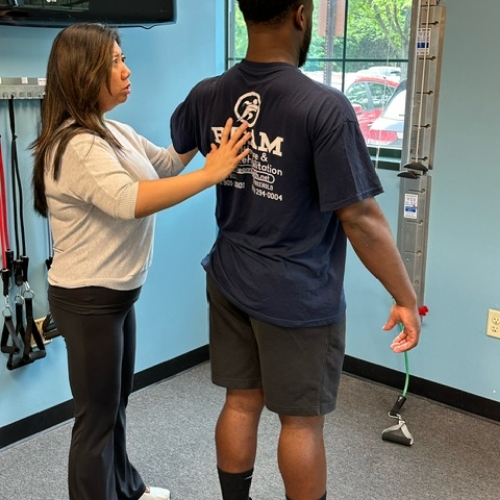
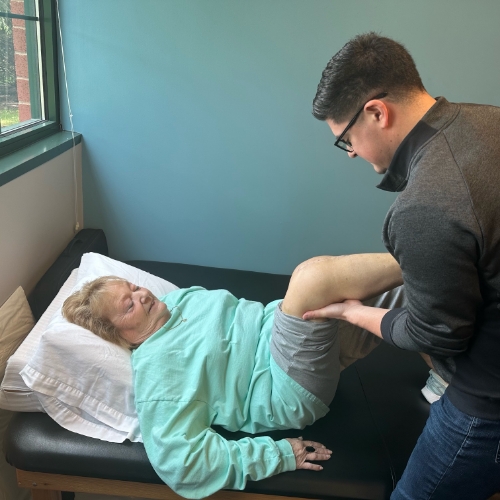
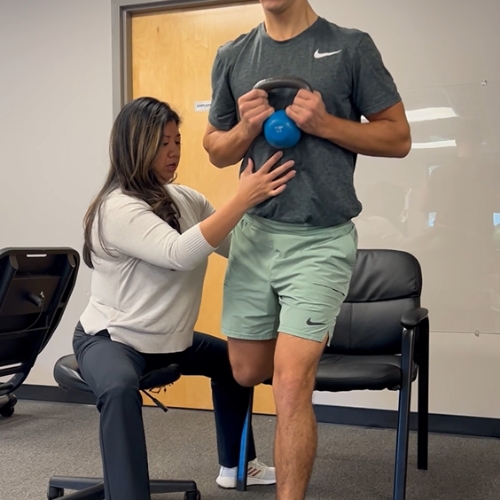
Inside Our Shrewsbury Clinic
Related Conditions & Treatments
Tennis elbow is just one of the many conditions we treat at Trinity Rehab Shrewsbury. Explore our full range of conditions we treat or learn more about specific treatment approaches:
- Tennis Elbow Treatment Overview — Our comprehensive guide to lateral epicondylitis recovery
- Elbow, Wrist & Hand Pain Relief — Other upper extremity conditions we specialize in
- Shoulder Pain Relief — Treatment for rotator cuff, frozen shoulder, and more
- Manual Therapy — Hands-on techniques to restore joint mobility and reduce pain
- Dry Needling — Trigger point therapy for deep muscle tension and pain relief
Related Elbow Care At This Location
Elbow pain can come from different tendon and loading patterns around the joint. A related same-location page is:
Frequently Asked Questions
Can physical therapy resolve tennis elbow without surgery?
How long does tennis elbow recovery take?
How does physical therapy compare to corticosteroid injections?
Can I still play at New Shrewsbury Racquet Club while getting treatment?
Is Trinity Rehab Shrewsbury convenient from Red Bank?
Do not let elbow pain keep you off the court, away from the river, or struggling through your workday. Whether it is competitive doubles at New Shrewsbury Racquet Club, a weekend round at Suneagles, or simply carrying groceries without wincing, your arms deserve to feel strong again.
Schedule your appointment at Trinity Rehab Shrewsbury today. No referral needed — just call or book online to get started.