
TENNIS ELBOW TREATMENT IN SEWELL, NJ | TRINITY REHAB
If you’ve spent any time in Sewell on a Saturday morning, you know the scene at James G. Atkinson Memorial Park. All eight lighted tennis courts are in rotation — couples trading sets, fathers rallying with teenagers, retirees finishing up doubles before the afternoon heat settles over Gloucester County. Kids chase each other on the adjacent fields. Over at Washington Lake Park, families fill the trails, catch summer concerts at the amphitheater, and play pickup games that stretch into the evening.
Sports aren’t a side note in Washington Township. They’re woven into how families here spend their time together.
But by Monday morning, that weekend energy meets the weekday grind. Sewell is a commuter town at heart — tens of thousands of residents make the 30-minute drive into Philadelphia every day. Others clock in at Jefferson Washington Township Hospital, put in shifts at the Aryzta LA Brea Bakery production line, or handle freight at Associates Warehousing. The repetitive motions that fill a workweek take their toll, and when you combine that with an active weekend on the courts and courses, your forearm and elbow start sending signals you shouldn’t ignore.
If you’ve been dealing with nagging elbow pain — that sharp catch when you grip a coffee mug, twist a doorknob, or reach for a backhand — you may be dealing with tennis elbow. At Trinity Rehab in Sewell, we treat it every week.
What Is Tennis Elbow?
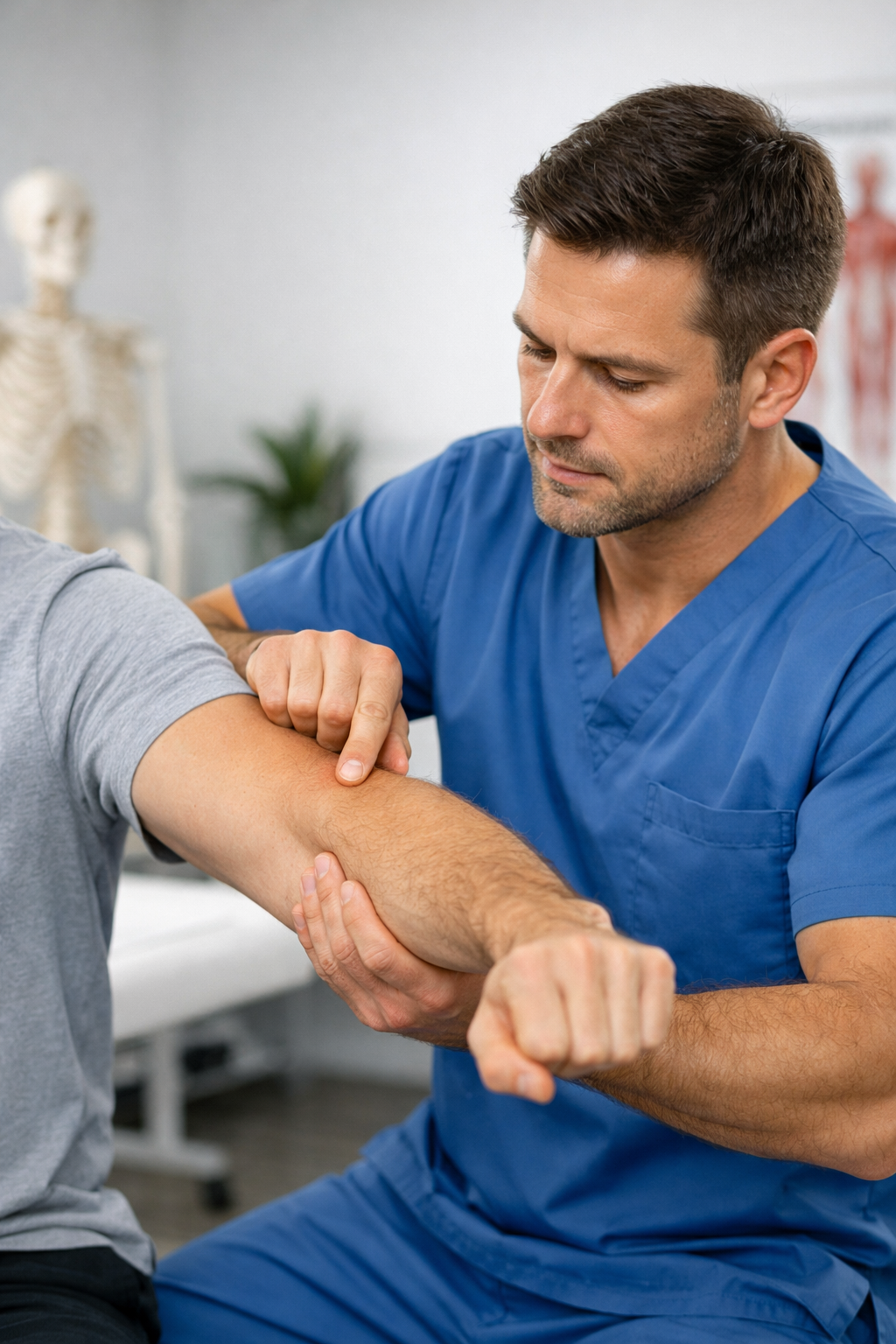
Tennis elbow, known clinically as lateral epicondylitis or lateral elbow tendinopathy, is one of the most common overuse injuries of the upper extremity. It affects the tendons that attach to the bony bump on the outside of your elbow — the lateral epicondyle — where your wrist and forearm extensor muscles anchor.
Despite its name, tennis elbow isn’t limited to tennis players. It develops from any repetitive movements that overload the forearm extensors: gripping, twisting, lifting, and reaching. Over time, the tendons break down faster than the body can repair them, producing persistent lateral elbow pain, weakened grip strength, and difficulty with everyday tasks.
Common symptoms include:
- Pain or burning along the outside of the elbow radiating into the forearm
- Weakened grip strength when lifting objects or shaking hands
- Increased pain with wrist extension against resistance
- Stiffness that worsens with repetitive tasks
- Difficulty gripping a tennis racquet, golf club, or even a gallon of milk
Left unaddressed, lateral epicondylitis tends to progress. The good news: physical therapy is the most effective conservative treatment for tennis elbow, and early intervention leads to better outcomes and a faster recovery.
Who's at Risk in Sewell?
Washington Township’s mix of active families, healthcare workers, and manufacturing employees means lateral elbow tendinopathy shows up across a wide range of patients at our Sewell clinic. Here are a few scenarios we see regularly:
The Jefferson Hospital Nurse. She’s been on staff at Jefferson Washington Township Hospital for eight years — patient transfers, charting, drawing blood, adjusting IV lines. The cumulative strain on her forearm muscles never gets a true rest day. She first noticed the elbow pain when lifting a supply box, and now even turning a door handle sends a jolt through her lateral elbow.
The Atkinson Park Tennis Regular. He picked up tennis again after his kids joined the Washington Township High School team. Now he plays three to four times per week on the lighted courts at Atkinson Park. His one-handed backhand has gotten better, but the outside of his right elbow has gotten worse. Gripping the racquet during serves now produces a sharp pain he can’t play through.
The Washington Township Minutemen Softball Player. She’s a junior carrying on the school’s proud championship tradition. Between daily practice, weekend tournaments, and offseason hitting sessions, her bat grip has been under constant load. The lateral elbow pain started during fall practice, and now it flares during every at-bat and long throw from the outfield.
These aren’t the only patients we see with tennis elbow symptoms. We also treat:
- Aryzta / LA Brea Bakery production workers whose shifts involve repetitive gripping, lifting, and twisting on the line
- Associates Warehousing staff handling packages and operating equipment for hours at a stretch
- Pitman Golf Course regulars whose swing mechanics place repeated stress on the forearm extensors
- PlayMore NJ adult league participants who play sports on weeknights without adequate recovery time
- Home improvement enthusiasts — in a community with 83% homeownership, there’s always a project underway
If any of these sound familiar, your elbow pain likely isn’t going to resolve on its own. A physical therapist can help you understand what’s driving it and build a plan to treat tennis elbow at its source.
How We Treat Tennis Elbow at Trinity Rehab Sewell
Treatment at our Sewell clinic is hands-on, progressive, and built around your specific demands — whether that’s returning to the Atkinson Park courts, getting through a shift at the hospital, or finishing out a high school season.
Manual Therapy
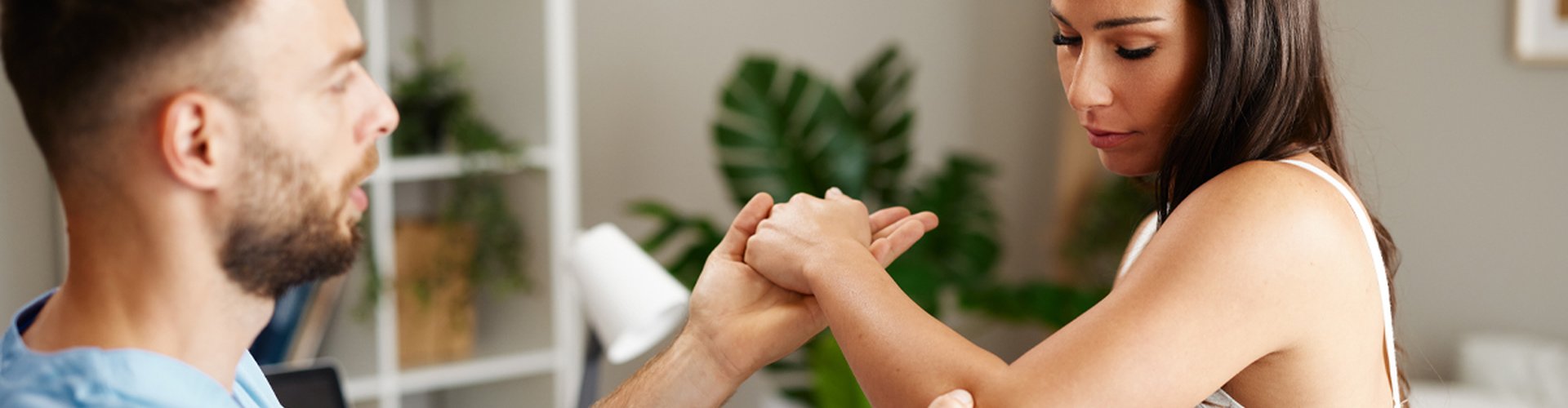
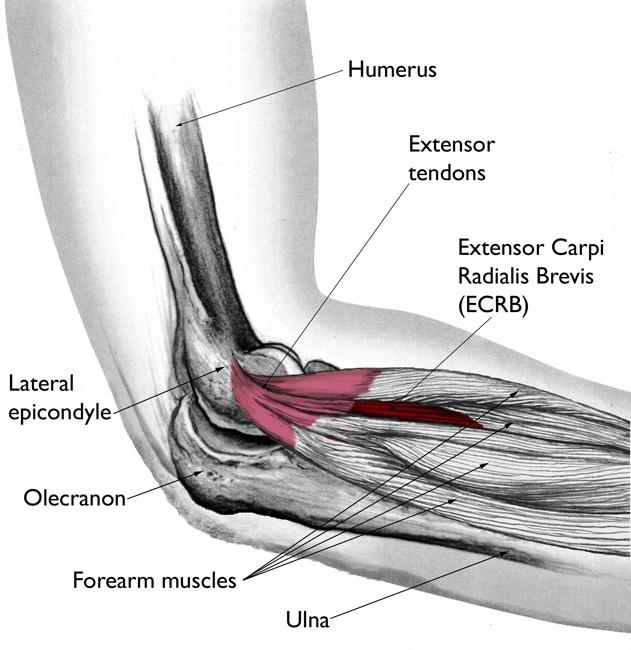
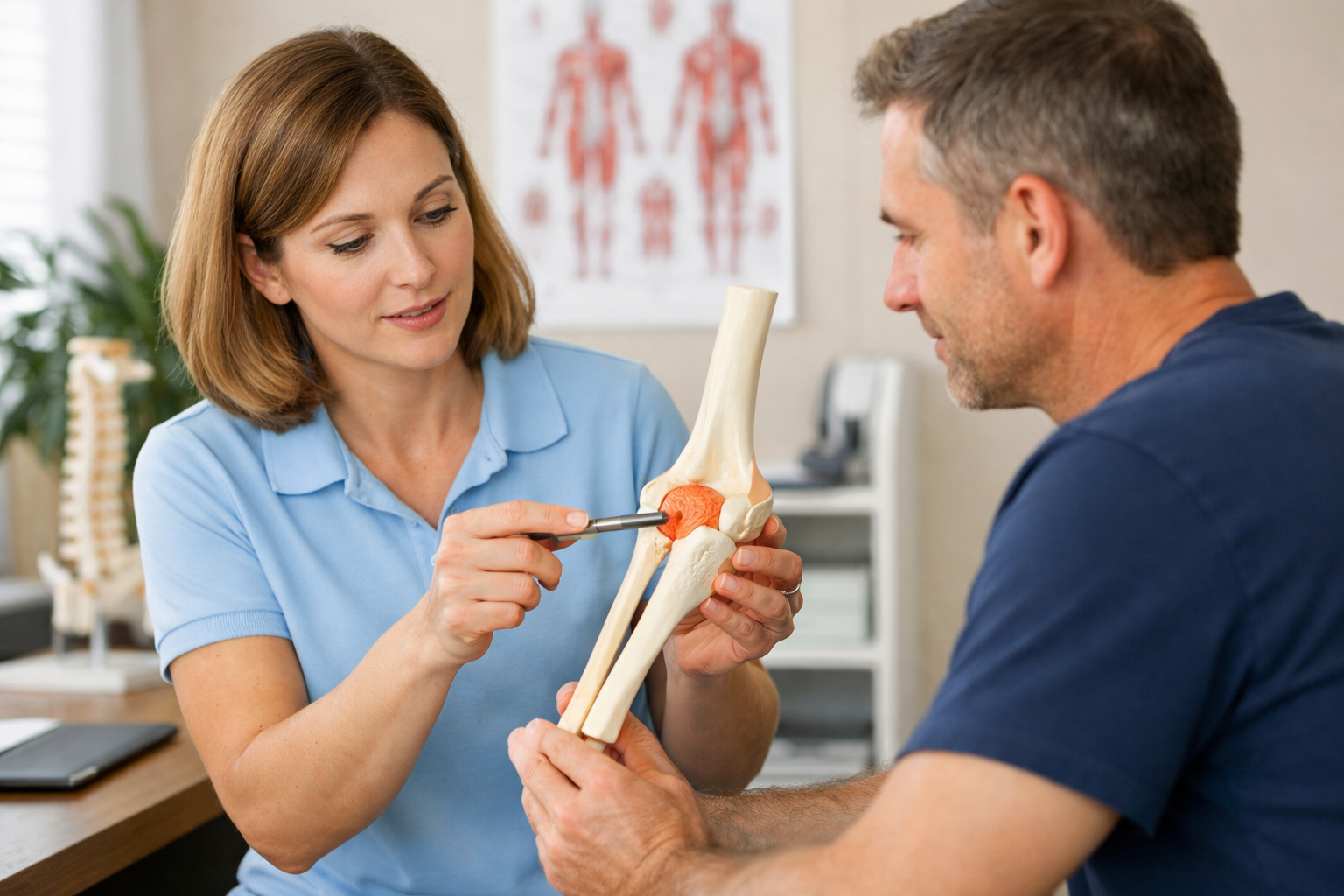
Your physical therapist will evaluate your elbow, wrist, forearm, and shoulder. Manual therapy techniques — soft tissue mobilization, joint mobilization, and targeted stretching — help reduce pain, restore movement, and improve blood flow to the affected tendons. Many patients feel meaningful pain relief within the first few sessions.
Eccentric Exercise and Progressive Loading
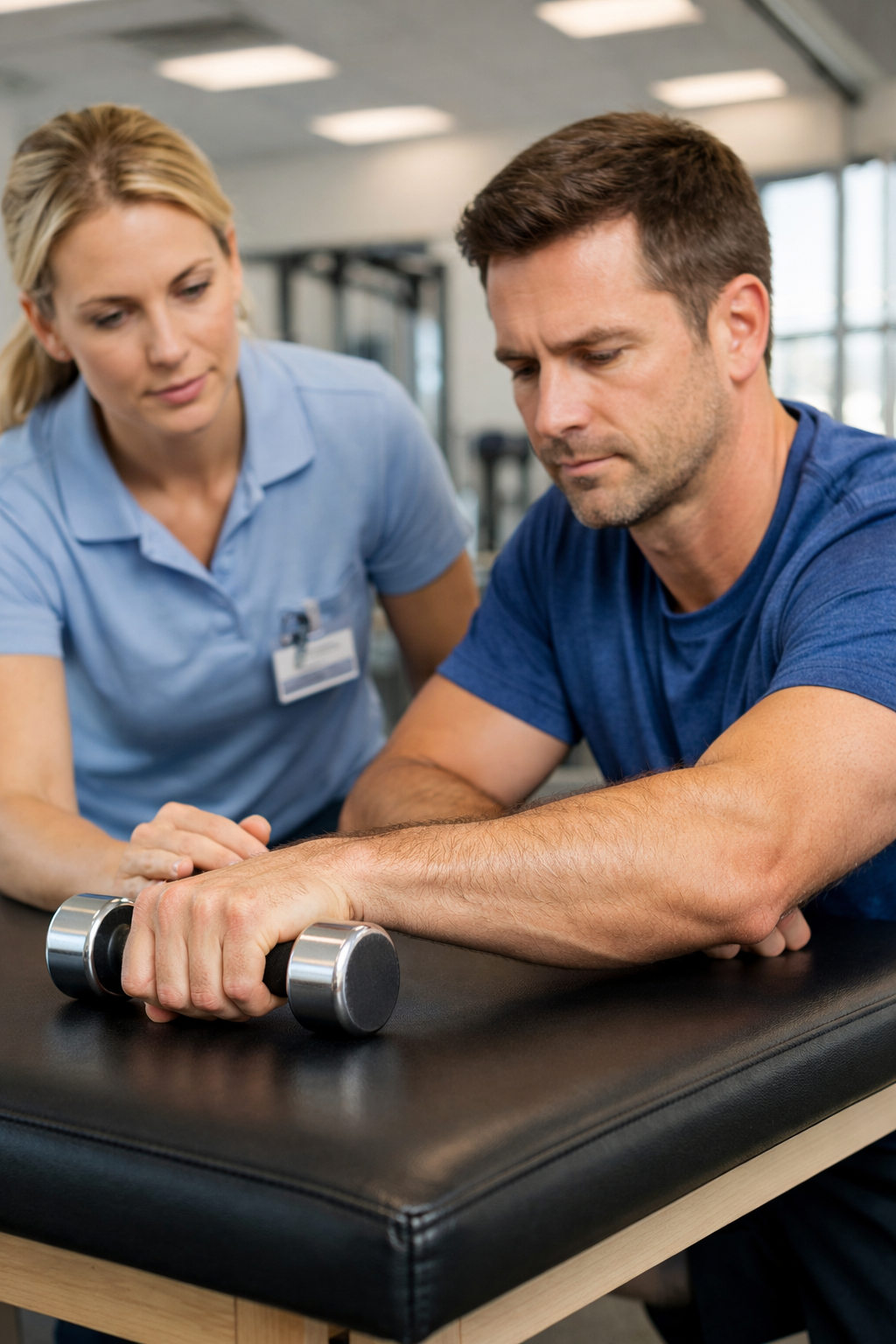
Eccentric exercise is the cornerstone of modern tennis elbow management. These exercises slowly lengthen the forearm extensor muscles under controlled load, stimulating tendon remodeling and building tendon tolerance. Your therapist will guide you through a program that may include:
- Wrist extension exercises — from a starting position with the forearm supported, use a light dumbbell or resistance band and slowly lower the wrist under control. Keep your shoulders relaxed and exercise slowly to protect the tendon.
- Grip strengthening — squeezing a tennis ball or therapy putty to rebuild grip strength without overloading the lateral epicondyle
- Towel twists — wringing a rolled towel in both directions to strengthen the forearm through pronation and supination (rotating the arm outward and inward), with palm facing down and then up
- Forearm pronation and supination drills — controlled rotation exercises that restore balanced forearm strength. No special equipment needed beyond a light weight.
The goal is to progressively increase the load your tendon can handle — building tendon tolerance so it keeps up with the demands of your sport, job, or daily life.
Advanced Treatment Options
For persistent or severe lateral epicondylitis, Trinity Rehab Sewell offers advanced interventions:
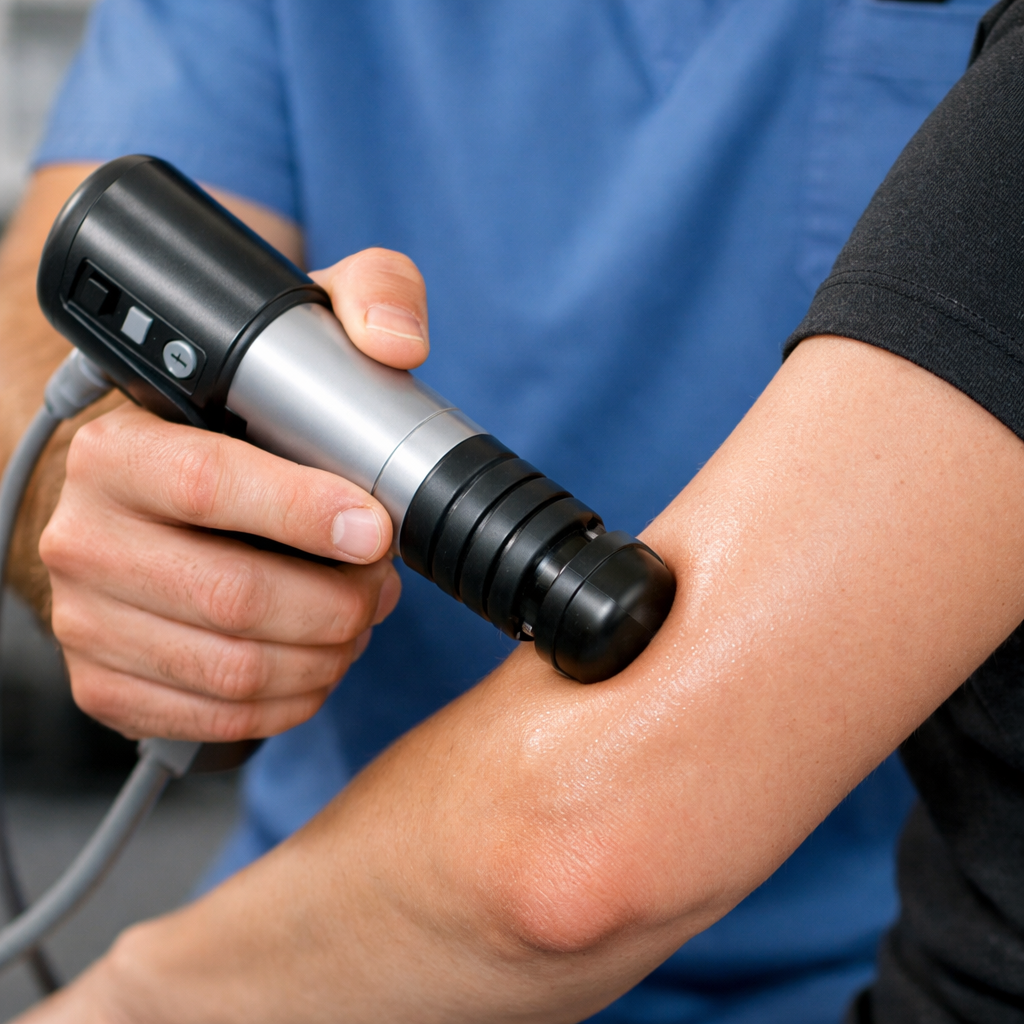
- EPAT (Extracorporeal Pulse Activation Technology) — shockwave therapy that accelerates tissue healing and reduces inflammation in chronic tendon conditions
- Dry needling — precise insertion of thin needles into trigger points in the forearm muscles to reduce pain, release tension, and restore normal function
These treatments complement — not replace — the exercise and manual therapy program that drives long-term recovery.
Activity Modifications and Load Management
Healing a tendon requires managing how much stress it absorbs daily. Your physical therapist will work with you on practical activity modifications:
- Counterforce strap — a brace worn just below the elbow that redistributes force away from the damaged tendon during gripping and lifting
- Workstation and technique adjustments — for hospital workers, warehouse employees, and Philly commuters alike
- Sport-specific guidance — racquet grip size, swing mechanics, and training volume adjustments for tennis, golf, and softball players
- Load management planning — balancing rest with progressive return to activity so the tendon heals without deconditioning
We’ll also discuss when corticosteroid injections or surgery may enter the conversation. In most cases, a well-designed physical therapy program eliminates the need for either — research supports rehab-first approaches for long-term goals.
Why Choose Trinity Rehab in Sewell?
Here’s what sets Trinity Rehab Sewell apart:
- One-on-one care, every visit. You work directly with your physical therapist for the full session. No rotating between aides, no cookie-cutter protocols. Your treatment plan reflects your goals and your life in Washington Township.
- Advanced technology. EPAT shockwave therapy and dry needling for stubborn cases of lateral elbow tendinopathy that haven’t responded to rest and stretching alone.
- Direct Access in New Jersey. Under NJ law, you can start physical therapy without a physician referral. Call Trinity Rehab Sewell today and begin treatment this week.
- Convenient for the entire area. Our Sewell location serves families across Washington Township, Turnersville, Pitman, and Glassboro. If you can get to Atkinson Park, you can get to us.
We understand the pace of life here — early commutes, after-school practices, weekends built around being active. Our goal is to get you back to all of it without pain holding you back.
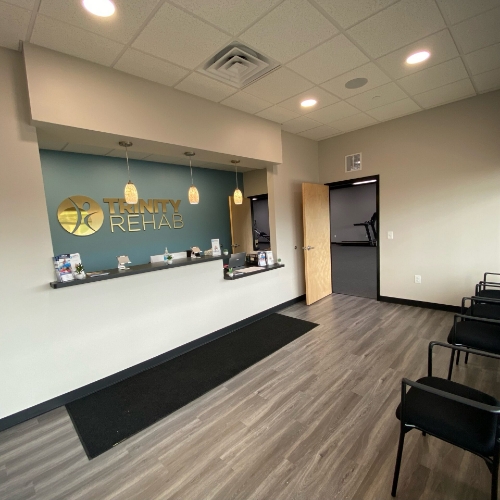
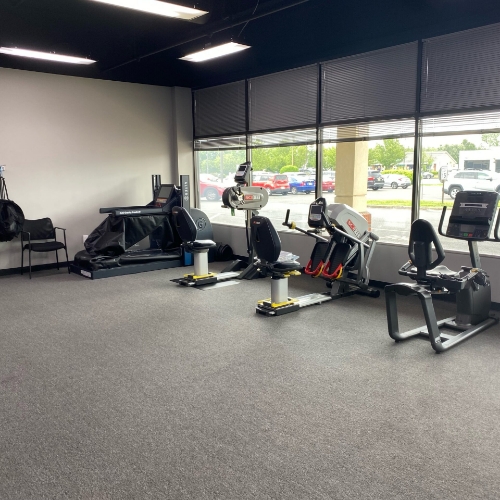
Inside Our Sewell Clinic
Related Conditions & Treatments
Tennis elbow is just one of the many conditions we treat at Trinity Rehab Sewell. Explore our full range of conditions we treat or learn more about specific treatment approaches:
- Tennis Elbow Treatment Overview — Our comprehensive guide to lateral epicondylitis recovery
- Elbow, Wrist & Hand Pain Relief — Other upper extremity conditions we specialize in
- Shoulder Pain Relief — Treatment for rotator cuff, frozen shoulder, and more
- Manual Therapy — Hands-on techniques to restore joint mobility and reduce pain
- Dry Needling — Trigger point therapy for deep muscle tension and pain relief
Related Elbow Care At This Location
Elbow pain can come from different tendon and loading patterns around the joint. A related same-location page is:
Frequently Asked Questions
How long does it take to recover from tennis elbow with physical therapy?
Can I keep playing tennis or golf while being treated for tennis elbow?
Is tennis elbow the same as golfer’s elbow?
I work at Jefferson Hospital — can I come in before or after my shift?
Do I need a referral to start treatment at Trinity Rehab Sewell?
Tennis elbow doesn’t improve by ignoring it — and in a community as active as Sewell, waiting only means missing out. Whether it’s your weekend matches at Atkinson Park, your Thursday night PlayMore league, or simply getting through a workday without wincing, Trinity Rehab Sewell can help.
Schedule your evaluation today. Call Trinity Rehab Sewell or visit our website to book your first appointment. With Direct Access in New Jersey, no referral is needed — just a commitment to feeling better.