
Osteoarthritis Treatment in Sewell, NJ — Personalized Physical Therapy for South Jersey Life
Sewell is a community that runs on relationships and routine. Washington Lake Park’s trails bring neighbors together for morning walks year-round. The golf courses at Pitman Golf Course and the Washington Township Golf Course draw regulars who have teed off together for decades. PlayMore NJ adult softball and basketball leagues keep the competitive spirit alive long past high school sports. Tall Pines State Preserve offers the rare quiet of deep woods just minutes from suburban neighborhoods. And Jefferson Washington Township Hospital anchors the community as both a healthcare institution and one of the area’s largest employers.
In Washington Township — the municipality that encompasses Sewell — approximately 17.6% of residents are over 65, and the median age sits at 41.6. With a population built around families, long-time homeowners, and commuters to Philadelphia, the joint wear of active South Jersey life accumulates in ways that make osteoarthritis a common reality across the community.
Osteoarthritis is the most common degenerative joint disease in the United States, affecting more than 32.5 million adults. It develops when the cartilage cushioning the joints breaks down progressively, producing the bone-on-bone friction that generates the pain, stiffness, and range of motion loss that can fundamentally change daily life. Physical therapy — one-on-one, expertly delivered, and genuinely personalized — is the most effective non-surgical treatment available.
Trinity Rehab serves the Sewell community with that quality of care.
Why Sewell Residents Develop Osteoarthritis
Sewell’s working community has a higher-than-average exposure to the occupational risk factors most closely associated with osteoarthritis.
Jefferson Washington Township Hospital’s 670 employees include nurses, surgical technicians, physical and occupational therapists, and countless support personnel who spend long shifts on their feet, performing patient transfers, standing during procedures, and moving through physical environments that stress their joints repeatedly over years. Healthcare workers consistently show elevated rates of knee and hip osteoarthritis compared to sedentary workers.
The Aryzta LA Brea Bakery operation in Washington Township employs workers in demanding food production roles — prolonged standing, repetitive lifting, physical labor in environments that are hard on joints. Johnson Matthey and other manufacturing and industrial operations in Gloucester County add to the workforce population with elevated occupational exposure.
Commuters to Philadelphia — who average a 30-minute drive each way — develop the familiar pattern of prolonged hip flexor compression, reduced gluteal activation, and lumbar joint stiffness that predisposes them to hip osteoarthritis and lumbar degenerative joint disease over time.
On the recreational side, Sewell’s golfers log repetitive lumbar rotational stress with every swing. Softball players in the PlayMore NJ leagues experience base-running, fielding, and throwing mechanics that load the hip, knee, and shoulder joints significantly. Long-time homeowners whose yards require decades of gardening, lawn care, and outdoor maintenance compound the cumulative loading from all the above.
Risk factors for osteoarthritis include:
- Prior joint injuries — ligament tears, meniscal damage, and fractures substantially increase arthritis risk at the affected joint
- Body weight — approximately four pounds of knee joint force per extra pound of body weight with each step
- Age and hormonal changes — post-menopausal women face accelerated cartilage deterioration
- Occupational loading — sustained standing, lifting, and physical labor
- Family history — genetics plays a significant role in both age of onset and severity
Recognizing Osteoarthritis: What to Watch For
Osteoarthritis symptoms develop gradually, and many Sewell residents spend months or years attributing them to general soreness, overexertion, or normal aging before recognizing the pattern for what it is.
- Morning stiffness — joints feel stiff and difficult to move after sleeping, typically easing within 20–30 minutes of gentle movement
- Activity-related pain — aching in the knee, hip, or lower back during or after walking, standing, climbing stairs, or recreational activities
- Crepitus — a grating or grinding sensation in the affected joint as roughened cartilage surfaces contact each other
- Swelling — intermittent fluid accumulation around the joint, often following more demanding activity
- Progressive range of motion loss — gradually becoming unable to fully bend or rotate the knee or hip
- Altered movement patterns — shorter stride, gait limp, or protective posturing as the body tries to offload a painful joint
Knee osteoarthritis and hip osteoarthritis are the most frequent presentations. Knee arthritis produces medial knee aching, difficulty descending stairs, and pain with prolonged standing that is common in Sewell’s hospital workers and physical laborers. Hip osteoarthritis causes groin, lateral hip, or anterior thigh pain that often worsens with the hip flexion positions of driving, sitting at work, or swinging a golf club.
How Trinity Rehab Treats Osteoarthritis in Sewell
Every treatment plan at Trinity Rehab begins with a thorough initial evaluation. Your physical therapist assesses the affected joint or joints, measures strength and flexibility, analyzes movement patterns, and discusses your specific functional goals — whether that’s returning to pain-free walking at Washington Lake Park, completing a full season in the PlayMore NJ softball league, or managing a full hospital shift without the knee pain that has been slowing you down.
From that foundation, a truly personalized plan is built. Here is what it typically includes.
Restoring Mobility Through Manual Therapy
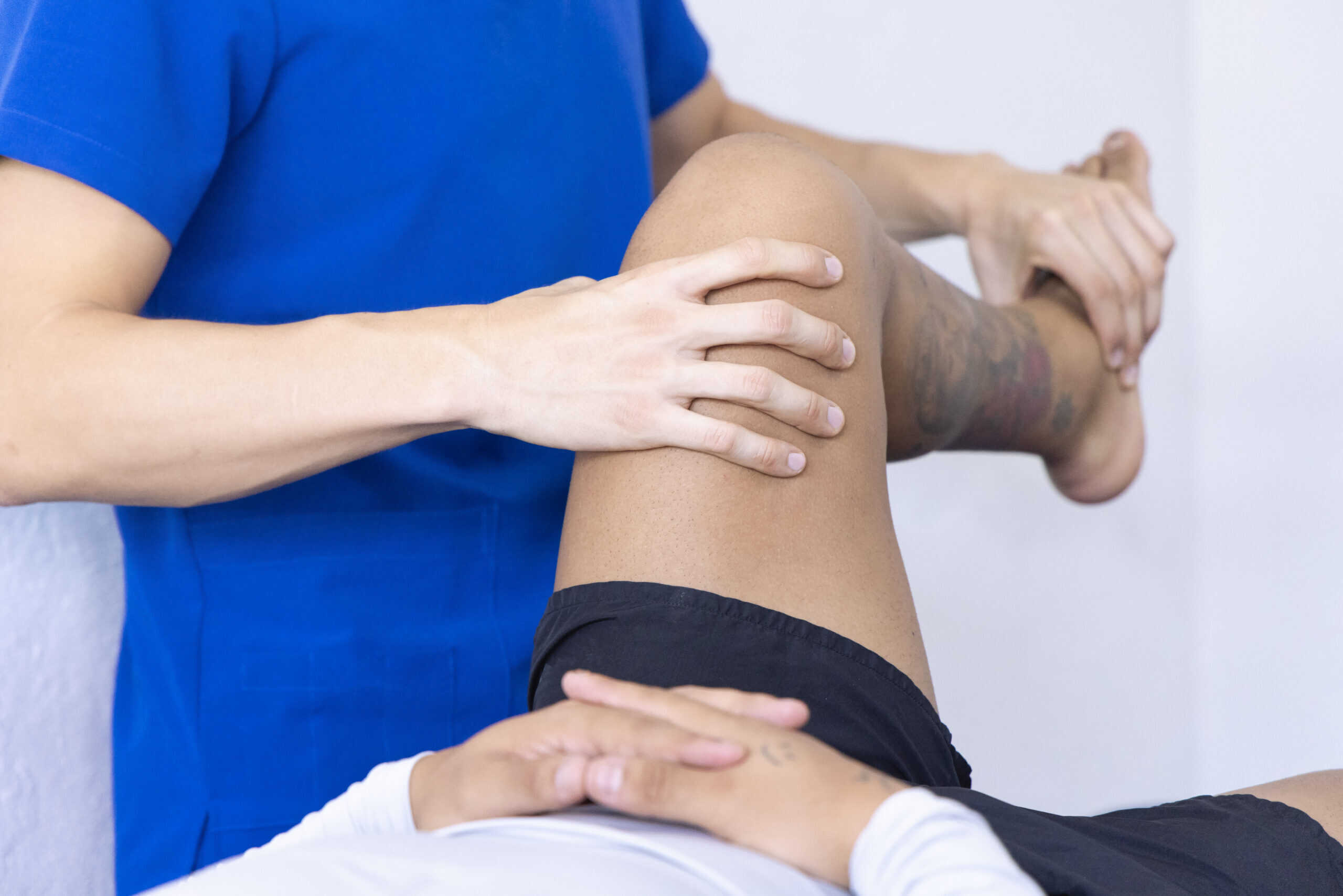
Manual therapy is a cornerstone of osteoarthritis care at Trinity Rehab — and for good reason. Joint mobilization directly addresses the capsular restriction that develops as cartilage deteriorates and the joint capsule thickens. Restoring joint play in the knee or hip through hands-on mobilization techniques produces range of motion improvements and pain reduction that no exercise alone can replicate.
For knee osteoarthritis patients — including the many Sewell workers whose jobs involve prolonged standing — patellar mobilization, tibial mobilization, and distal quadriceps soft tissue work combine to restore the knee mechanics that make pain-free walking and stair use possible. For hip osteoarthritis, posterior capsule mobilization and hip distraction techniques recover the hip flexion and rotation that progressively narrow as the disease advances.
Soft tissue mobilization addresses the muscular compensation patterns that compound arthritic pain. Every chronically painful joint creates muscular guarding — protective tightening that, over time, becomes an independent source of restriction and pain. Releasing these patterns through manual therapy is a critical step in full rehabilitation.
Transcutaneous electrical nerve stimulation (TENS) is used throughout the treatment process as a pain management strategy — modulating pain signaling, reducing the intensity of treatment-related discomfort, and extending the post-session comfort window that allows more productive therapeutic exercise.
Strengthening the Muscles That Protect Your Joints
Stronger muscles are the most effective, most sustainable protection available for any arthritic joint. Trinity Rehab’s strengthening program for osteoarthritis is grounded in the evidence on which muscles matter most for each joint.
For knee arthritis, quadriceps strengthening is the clinical priority. Decades of research establish that quadriceps weakness is both a consequence of knee osteoarthritis and an accelerant of its progression — weak quads transfer compressive force directly to the medial compartment with every step. Building quadriceps strength progressively, alongside hip abductor and hamstring development, redistributes that load and reduces medial knee pain. This is the single most evidence-supported intervention in knee osteoarthritis rehabilitation.
For hip osteoarthritis, the gluteal complex is the target. Gluteus medius weakness — extraordinarily common in patients with hip osteoarthritis — produces the pelvic drop and femoral adduction that concentrate joint force on the superior-lateral hip cartilage. Rebuilding gluteal strength and pelvic control measurably improves both pain levels and gait quality.
For lumbar osteoarthritis, deep core and multifidus strengthening, combined with thoracic mobility work, reduces the mechanical compressive load on the lumbar facet joints and intervertebral discs that have degenerated over years of physical work and commuting.
Aerobic exercise is integrated throughout: walking at Washington Lake Park, stationary cycling, or swimming for patients with significant weight-bearing pain. These formats build cardiovascular fitness, support body weight management, and maintain the synovial fluid circulation that cartilage depends on for nutrition.
EPAT: Accelerating Recovery Beyond What Exercise Alone Achieves
For patients with moderate to severe osteoarthritis pain, or those whose symptoms have not responded adequately to conventional physical therapy, Trinity Rehab offers EPAT (Extracorporeal Pulse Activation Treatment).
EPAT uses focused acoustic pressure waves delivered to the affected joint and surrounding tissue. These waves stimulate blood flow, reduce chronic inflammation at the cellular level, and activate the body’s natural repair mechanisms. FDA-cleared and non-invasive, EPAT requires no anesthesia and no recovery downtime — it is delivered as a component of the standard physical therapy session.
For Sewell patients who are trying to avoid joint replacement surgery, or for those who need to remain working during treatment and cannot afford significant downtime, EPAT is one of the most compelling tools available in modern outpatient physical therapy.
Dry Needling for Myofascial Pain Relief
Dry needling targets the myofascial trigger points that develop in muscles surrounding chronically painful joints. These are not merely tight muscles — they are neurologically sensitized, hypersensitive bands that generate referred pain, inhibit normal muscle activation, and make therapeutic strengthening harder to perform effectively.
A Sewell hospital worker who has been favoring a painful knee for 18 months while standing through 12-hour shifts will have developed complex muscular compensation patterns throughout the hip, opposite knee, and lumbar spine. Dry needling releases these patterns rapidly and precisely, reducing the total pain load and restoring the muscle quality needed for effective rehabilitation.
Long-Term Osteoarthritis Management: Staying Ahead
Effective arthritis treatment extends beyond the clinic. Trinity Rehab builds long-term self-management skills into every treatment plan:
- Home exercise program — the strengthening and flexibility work your therapist prescribes becomes a permanent maintenance routine after discharge
- Activity modification — specific guidance for your work (hospital shifts, manufacturing, physical labor), golf, softball, and home activities
- Weight management — the most impactful modifiable factor for knee and hip osteoarthritis outcomes
- Dietary supplements — your therapist discusses the evidence on glucosamine, chondroitin sulfate, and omega-3 fatty acids for joint health; medical decisions deferred to your physician
- Flare management — how to use ice, heat, activity pacing, and TENS to manage symptom spikes at home
- Footwear and ergonomics — appropriate shoes and body mechanics for your specific job and recreational demands
Why Sewell Residents Choose Trinity Rehab
Trinity Rehab brings something rare to South Jersey physical therapy: genuine one-on-one care from a licensed physical therapist, every session, from start to finish. No aides, no group formats, no divided attention. Your therapist knows your case, your progress, and your goals — and every session reflects that knowledge.
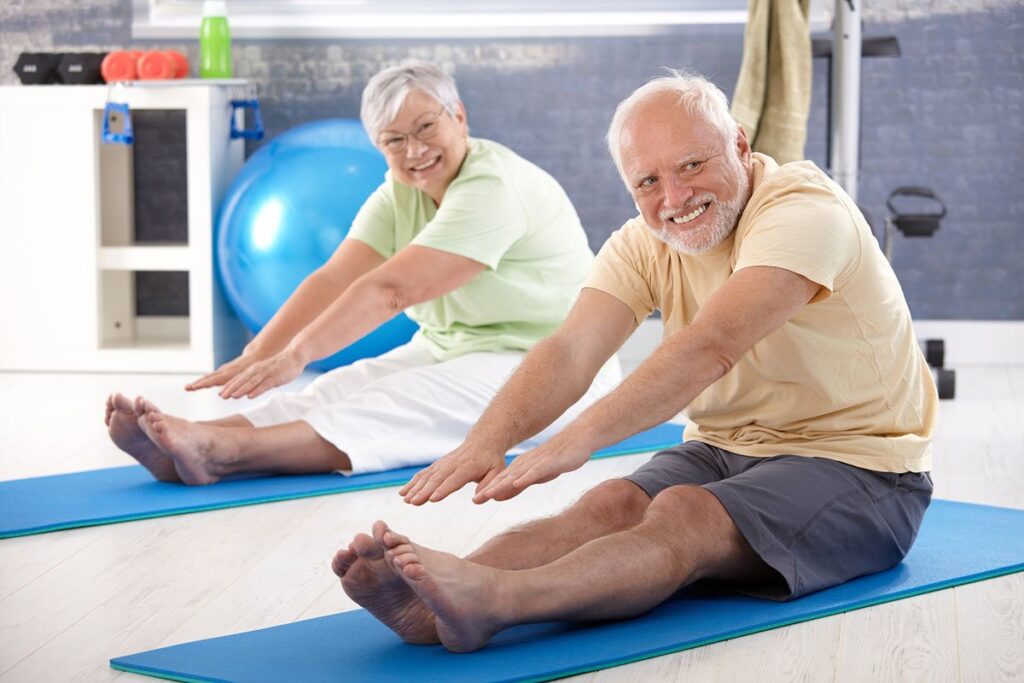
Our physical therapists are experienced in the full scope of arthritis treatment — knee arthritis, hip osteoarthritis, lumbar degenerative joint disease, and multi-joint presentations. We provide geriatric physical therapy for older Washington Township residents managing age-related joint disease, and we treat the associated conditions that accompany osteoarthritis including knee pain, hip and knee pain, and back pain.
Under New Jersey Direct Access law, Sewell residents can begin physical therapy at Trinity Rehab without a physician referral. Start treatment when you need it — no waiting for a specialist appointment.
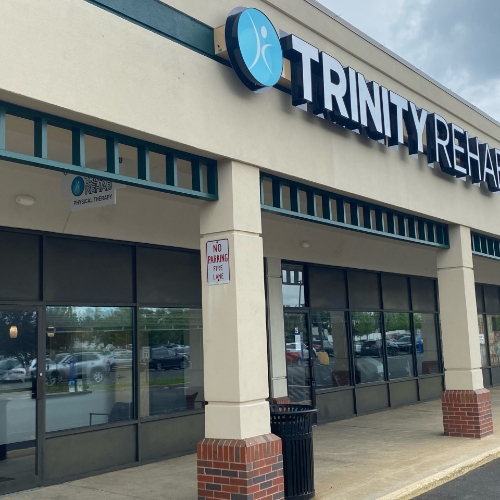
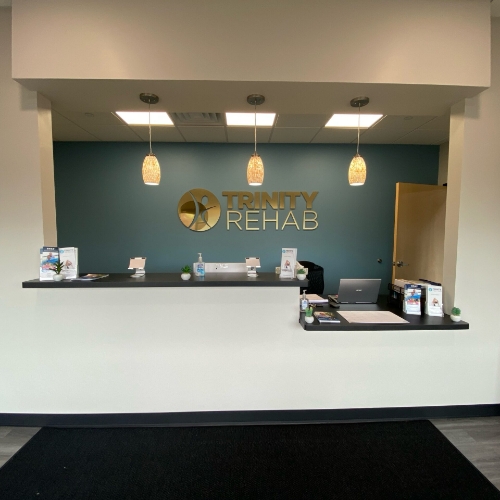
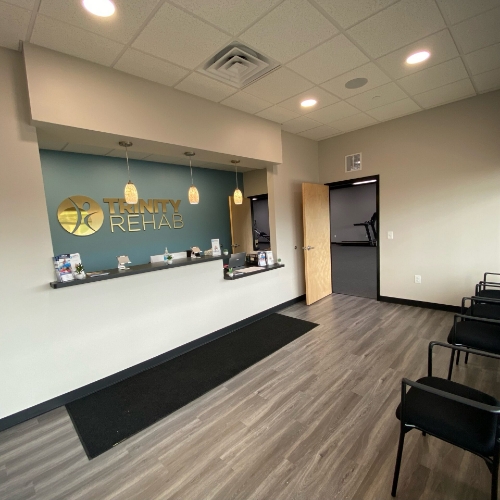
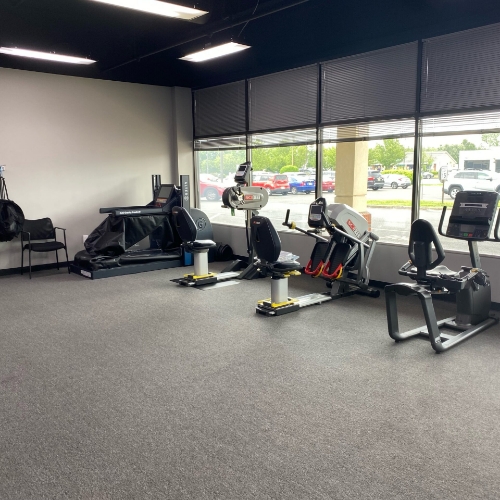
Inside Our Sewell Clinic
Related Conditions & Treatments
Osteoarthritis is just one of the many conditions we treat at Trinity Rehab Sewell. Explore our full range of conditions we treat or learn more about specific treatment approaches:
Frequently Asked Questions
Do I need a referral to see a physical therapist in Sewell, NJ?
I've been standing on concrete floors for years. How much of my knee pain is osteoarthritis?
Can physical therapy help me avoid knee replacement surgery?
How does exercise help if my cartilage is already damaged?
Can I golf at Pitman Golf Course while going through PT for hip osteoarthritis?
Back to Washington Lake and Everything Sewell Offers
The Washington Lake Park trails, the softball leagues, the golf courses, the community that has grown up around Washington Township’s parks and programs — these are the things worth fighting for when osteoarthritis starts to limit your life.
Trinity Rehab’s osteoarthritis team is ready to build a plan that protects your joints and keeps you in the game. South Jersey patients deserve South Jersey-grounded care — and that is exactly what we deliver.
Your Next Steps
The evidence is clear: earlier intervention produces better outcomes in osteoarthritis. Don’t wait until the pain is constant or the function is severely limited.
Schedule your appointment at Trinity Rehab Sewell today.
No referral required. One-on-one care with a licensed physical therapist who will build a plan built around your joints, your job, and your life in Sewell.
What Our Patients Say