
Osteoarthritis Treatment in Piscataway, NJ — Science-Backed Care for Joint Pain
Piscataway is a township defined by its dual identity: a hub of scientific and industrial activity anchored by Rutgers University and Evonik Corporation, and a community of parks and outdoor spaces that give residents meaningful opportunities to stay active. Johnson Park’s 473 acres along the Raritan River offer trails, sports fields, and natural scenery that draw walkers and cyclists year-round. The YMCA at Piscataway Community Center provides indoor tracks, pools, and gym access. Raritan Landing Golf Course and the Rutgers University Golf Course offer golfers a variety of options. And Stelton Sports has become a local center for pickleball, batting cage work, and adult league sports.
With a population of roughly 62,700 and a median age of just 33, Piscataway is younger than many communities Trinity Rehab serves. But that does not mean osteoarthritis is absent — far from it. The township’s concentration of manufacturing, warehousing, and logistics workers along the I-287 corridor exposes a significant share of the workforce to the cumulative joint loading that drives premature osteoarthritis. And the 13% of residents over 65 — plus the large Rutgers University community that spans young athletes through aging faculty — creates a diverse patient population where osteoarthritis appears across every age group.
Osteoarthritis is a progressive degenerative joint disease that responds exceptionally well to physical therapy. Trinity Rehab is in Piscataway to provide that care — evidence-based, personalized, and focused on getting you back to every part of this community you love.
Why Piscataway’s Workforce Faces Elevated Osteoarthritis Risk
Piscataway’s economic profile places many residents in the occupational risk categories for osteoarthritis that are among the most studied and best documented in the literature.
Workers at Evonik Corporation’s North American headquarters, at USA Warehousing, Americold, and the distribution operations that cluster along I-287 face long shifts that combine prolonged standing on concrete floors, repetitive lifting, and sustained physical labor. Research is unambiguous: workers in logistics, manufacturing, and warehousing develop knee osteoarthritis at significantly higher rates than office workers, and the risk scales directly with years of exposure. The compressive forces generated by repetitive lifting — multiplied by the lever-arm mechanics of bending and reaching — accelerate cartilage breakdown in both the knees and lumbar spine.
Healthcare workers at nearby RWJ University Hospital New Brunswick and Saint Peter’s University Hospital — both approximately three miles from Piscataway’s center — face their own occupational risk: prolonged standing during surgical cases and patient care, repetitive bending and patient transfers, and the sustained physical demands of clinical work over career-long timescales.
Rutgers University staff, faculty, and the broader professional community who commute via I-287 add a sedentary occupational risk layer — extended sitting that produces hip flexor tightness, reduced gluteal activation, and the lumbar joint stiffness that predisposes residents to both hip osteoarthritis and lumbar degenerative joint disease.
Additional risk factors across the Piscataway population:
- Prior joint injuries — ACL tears, meniscal injuries, and ankle fractures raise osteoarthritis risk substantially
- Age — even in a young-skewing community, the population over 45 faces increasing cartilage loss
- Body weight — each additional pound translates to approximately four pounds of force on the knee per step
- Genetics — family history is a consistent risk predictor
- High-impact recreational sports — soccer, flag football, softball, and basketball in NJ Play Sports adult leagues generate cumulative joint stress
Symptoms That Mean It’s Time to Act
Osteoarthritis progresses quietly at first. The symptoms that signal early disease are easy to rationalize away — until they can’t be anymore.
- Morning stiffness lasting 20–30 minutes after waking — the affected joint feels stiff and restricted, then loosens with movement
- Pain during and after activity — aching in the knee, hip, or lumbar spine during or after walking, standing, or exercise
- Grinding or clicking in the joint — crepitus from roughened cartilage surfaces
- Swelling around the joint after a demanding shift at work or recreational activity
- Loss of range of motion — gradual narrowing of how far you can bend a knee, rotate a hip, or flex and extend the lumbar spine
- Gait changes — shorter stride, antalgic lean, or avoidance of full weight-bearing on the affected side
Knee osteoarthritis is the most common form treated at Trinity Rehab. Knee arthritis typically produces medial knee aching, pain descending stairs, and difficulty kneeling — symptoms that interfere directly with the physical demands of warehouse work, youth sports coaching, and trail walking at Johnson Park. Hip osteoarthritis produces groin, lateral hip, or anterior thigh pain that worsens with walking and prolonged sitting — exactly the pattern many Piscataway commuters and workers experience.
The Trinity Rehab Treatment Model
Trinity Rehab’s approach to osteoarthritis treatment in Piscataway is built on three interconnected pillars: hands-on manual therapy, progressive therapeutic strengthening, and advanced technology. Each patient receives a customized plan developed from a thorough initial evaluation.
Hands-On Manual Therapy
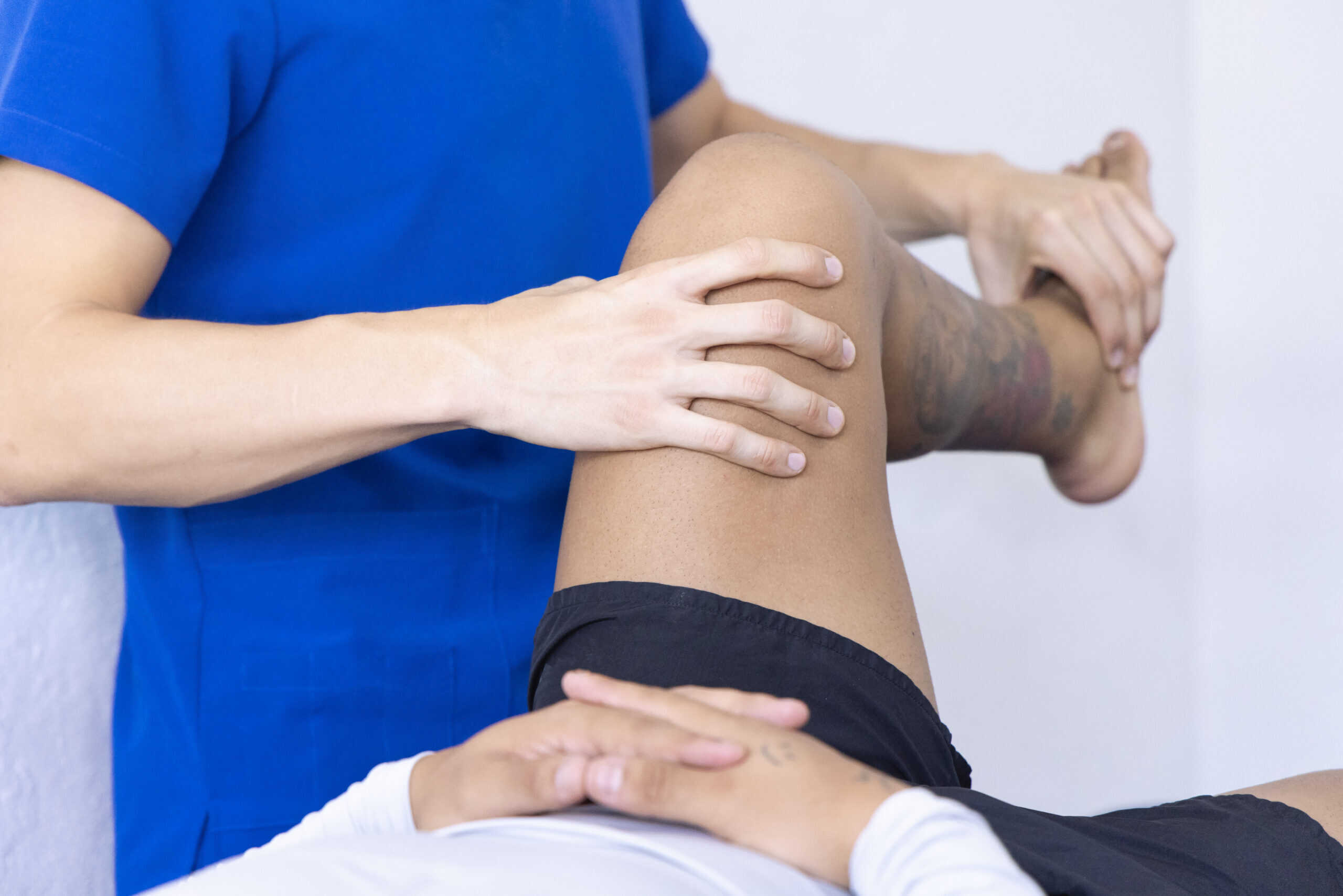
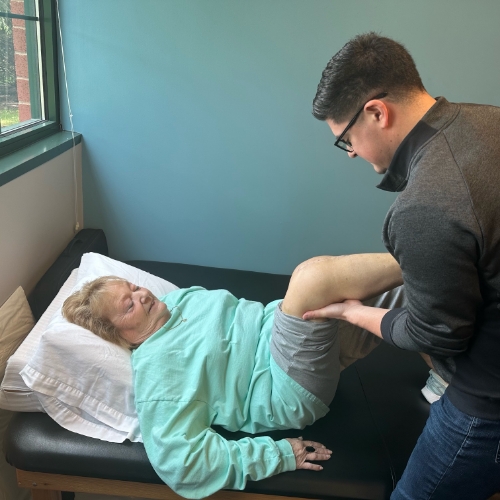
Manual therapy is frequently the most immediately impactful element of early osteoarthritis care. A licensed physical therapist uses skilled mobilization techniques to address the joint capsule restriction and soft tissue compensations that develop as osteoarthritis progresses.
For knee osteoarthritis, tibial mobilization and patellar mobilization restore the joint play that narrows as the cartilage wears. For hip osteoarthritis, posterior and anterior hip capsule mobilization recovers the hip flexion and internal rotation that diminish progressively — restoring the range of motion that makes pain-free walking and stair-climbing possible. For lumbar osteoarthritis — common in Piscataway’s warehouse workers and commuters — spinal joint mobilization and thoracic mobilization provide meaningful relief from the segmental restriction and nerve root irritation that characterize facet-driven back pain.
Soft tissue manual therapy addresses the muscular compensation patterns that compound arthritic pain. Chronic hip pain triggers piriformis and gluteal tightening. Chronic knee pain triggers IT band and quadriceps restriction. These patterns perpetuate pain independently and must be addressed alongside the joint pathology itself.
Progressive Strengthening
Muscles are the primary protective system for any arthritic joint. When strong, they absorb a large share of every impact before it reaches the cartilage. When weak — as they inevitably become when pain drives activity avoidance — joint surfaces bear the full brunt of every movement.
Trinity Rehab’s strengthening program for osteoarthritis is progressive and individualized. For knee osteoarthritis, quadriceps strengthening is the most evidence-supported intervention: weak quads are among the strongest predictors of medial compartment breakdown, and building quad strength is the most reliable way to reduce medial knee pain and slow progression. Your exercise program also builds hamstrings, hip abductors, and calves in a coordinated pattern that changes the entire lower extremity mechanics.
For hip osteoarthritis, gluteal strengthening — particularly gluteus medius — is fundamental. Gluteal weakness allows the pelvis to drop with each step, concentrating force on the femoral head and accelerating cartilage loss. Rebuilding gluteal strength changes gait mechanics measurably, often reducing both hip and knee pain simultaneously.
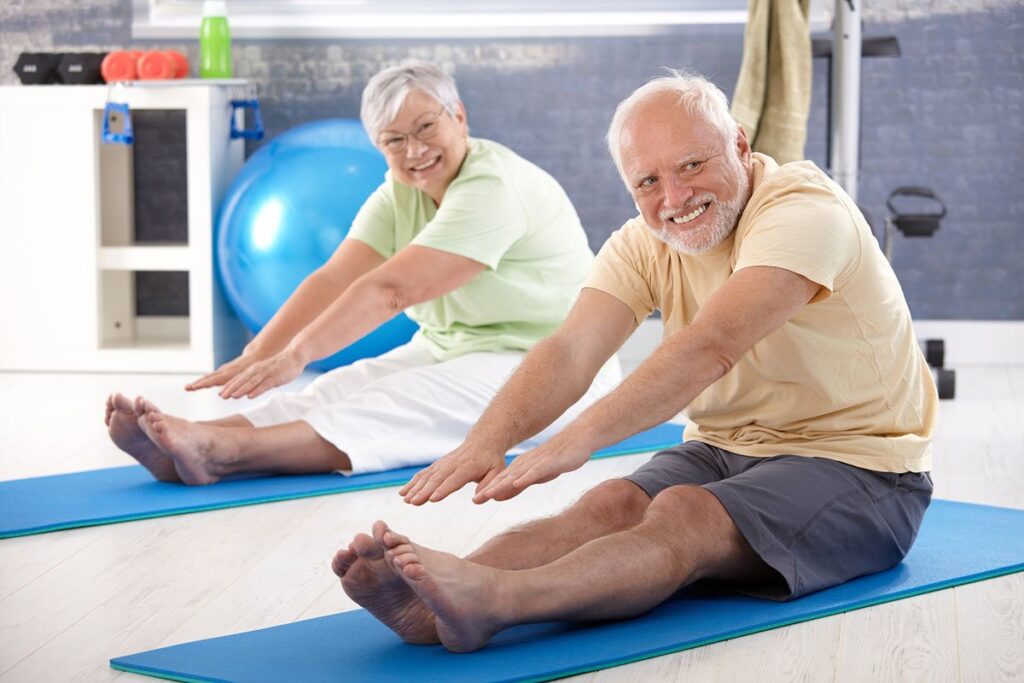
Aerobic exercise is built into the plan from the beginning. Stationary cycling, walking at Johnson Park, swimming at the YMCA, or pickleball participation at appropriate intensity — all low-impact aerobic exercise formats that support cardiovascular health, body weight management, and synovial fluid production that keeps joints lubricated.
EPAT and Dry Needling
For patients with persistent or severe osteoarthritis pain, Trinity Rehab offers the most advanced non-surgical treatment technologies in outpatient physical therapy.
EPAT (Extracorporeal Pulse Activation Treatment) uses acoustic pressure waves delivered to the affected joint and surrounding tissue to stimulate blood flow, reduce chronic inflammation, and promote cellular repair. FDA-cleared and clinically validated, EPAT produces meaningful pain reduction and functional improvement in patients who have not achieved adequate results with exercise therapy alone. For Piscataway warehouse workers who want to stay on the job and avoid the recovery period of joint replacement surgery, EPAT is a compelling option.
Dry needling targets the myofascial trigger points that develop in muscles chronically defending against joint pain. For patients with years of compensatory loading patterns — the warehouse worker who has been offloading a painful knee for two years, or the commuter whose hip stiffness has changed their gait — these trigger points have become a significant independent source of pain. Releasing them through dry needling rapidly reduces pain load and restores the muscle extensibility needed for effective therapeutic exercise.
Transcutaneous electrical nerve stimulation (TENS) is used strategically during sessions to modulate pain signals and allow fuller participation in treatment — particularly important for patients with significant acute pain during the early phases of care.
Pain Management and Activity Education
Pain management is not a passive activity at Trinity Rehab. Your physical therapist builds a complete activity modification plan that allows you to maintain your job demands, your Raritan Greenway walks, your golf game, and your family activities while protecting your joints from accelerated damage. Joint protection education, ergonomic guidance for the specific demands of your workplace, and strategies for managing flares at home are integrated throughout the treatment program.
Dietary supplements — glucosamine, chondroitin sulfate, and omega-3 fatty acids — are discussed in the context of joint health. Medical decisions about supplementation are referred to your physician; educational guidance about the evidence base is part of the Trinity Rehab experience.
Why Piscataway Patients Choose Trinity Rehab
In a township with the intellectual culture of Piscataway — home to one of the nation’s great research universities — patients recognize the difference between generic physical therapy and evidence-based care delivered by a skilled clinician who invests in their outcome.
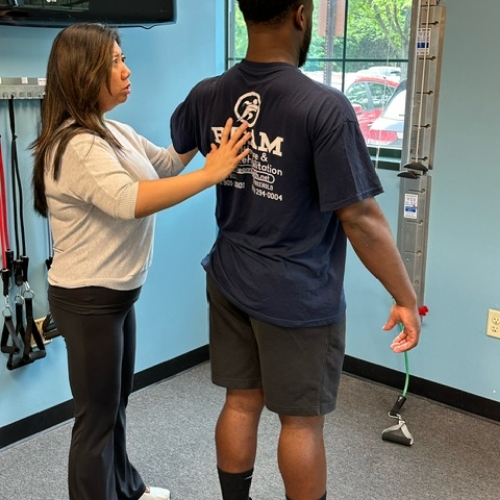
Trinity Rehab’s one-on-one model means every session is delivered by a licensed physical therapist. No aides, no technicians, no split attention. Your therapist knows your history, your strength curves, your progress, and your goals — and uses that knowledge to make your treatment more precise and effective.
Our team has deep experience with arthritis treatment, including knee arthritis, hip osteoarthritis, and lumbar degenerative joint disease. We provide geriatric physical therapy for older adults managing multi-joint osteoarthritis, and we treat the full range of associated conditions including knee pain, hip and knee pain, and back pain.
New Jersey Direct Access law allows Piscataway residents to begin physical therapy at Trinity Rehab without a physician referral. No waiting, no referral bottleneck — start care when you need it.
Inside Our Piscataway Clinic

Related Conditions & Treatments
Osteoarthritis is just one of the many conditions we treat at Trinity Rehab Piscataway. Explore our full range of conditions we treat or learn more about specific treatment approaches:
Frequently Asked Questions
I work in a warehouse and my knees are getting worse. Can PT help?
Do I need a referral to see a PT in Piscataway, NJ?
Can osteoarthritis cause pain that isn't directly over the joint?
Will my osteoarthritis get worse during physical therapy?
How do I stay active at the YMCA and in NJ Play Sports leagues while managing osteoarthritis?
Back to Everything Piscataway Has to Offer
Johnson Park, the Raritan Greenway, Stelton Sports, the golf courses — Piscataway has more ways to stay active than most of its neighbors. Osteoarthritis does not have to take those options away.
The osteoarthritis specialists at Trinity Rehab have the tools, the expertise, and the patient-centered model to help you manage your joint disease effectively and stay engaged in the community you chose. Come in and find out what a genuinely personalized physical therapy program can do.
Your Next Steps
Every week of unmanaged osteoarthritis is joint function you are giving up unnecessarily. Act now and keep more of what matters.
Schedule your appointment at Trinity Rehab Piscataway today.
No referral required. One-on-one care with a licensed physical therapist, from the first appointment through discharge and beyond.
What Our Patients Say