LUMBAR DISC HERNIATION TREATMENT IN PISCATAWAY, NJ
Piscataway has always been a place where things get built. This is the township that hosted the nation’s first Fourth of July celebration in 1778, launched corporate campuses for Colgate-Palmolive and Siemens, and serves as the home of Rutgers football at SHI Stadium. It is also “NFL High School” territory — Piscataway High School has sent more players to the professional ranks than almost any other school in the state. With that history of hard work and hard play comes a reality that roughly 61,000 Piscataway residents know well: the lumbar spine takes a beating. When a herniated disc sidelines you from the warehouse floor, the football field, or the walking paths along the Raritan River at Johnson Park, Trinity Rehab provides the expert, one-on-one physical therapy you need to recover completely.
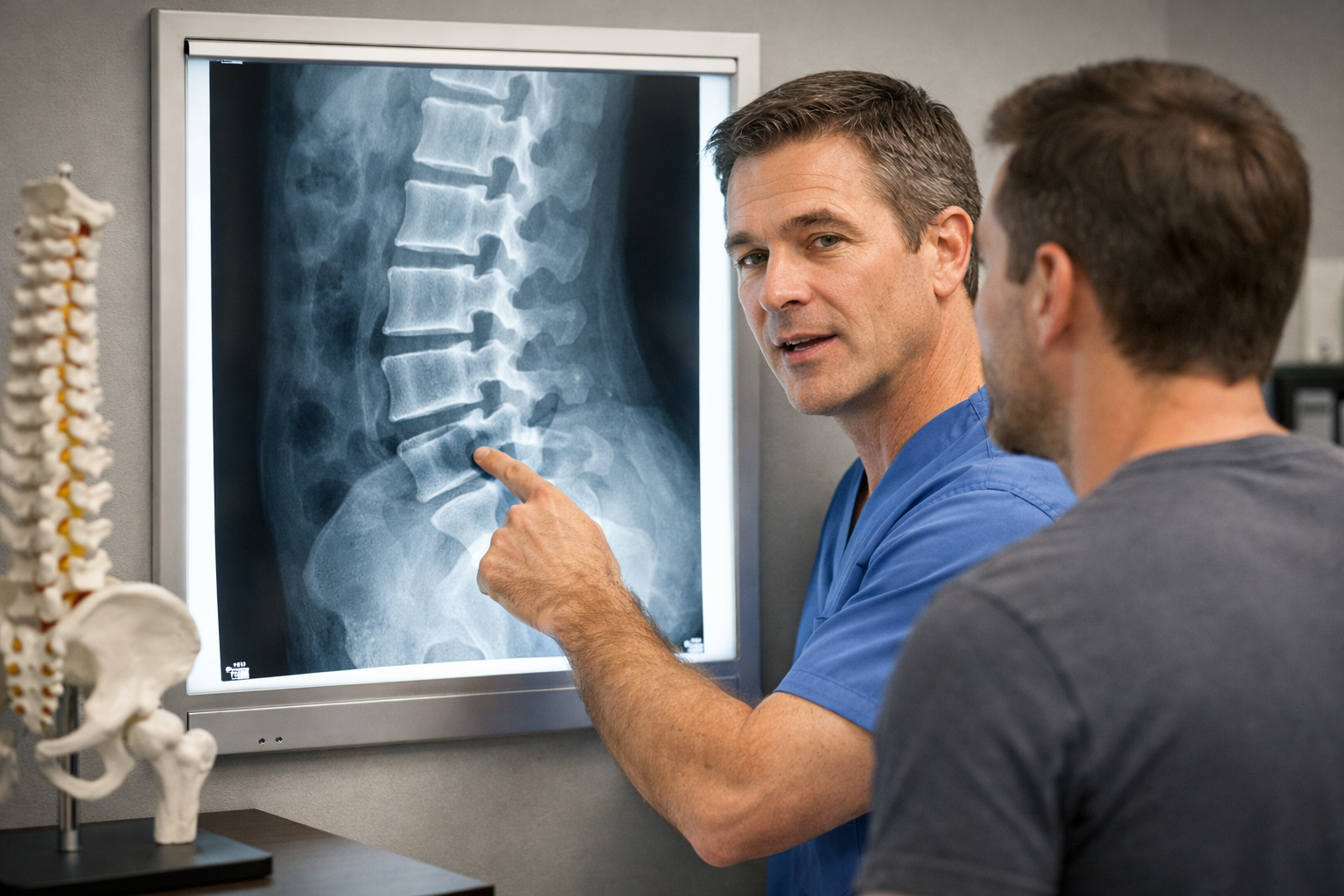
WHAT IS LUMBAR DISC HERNIATION?
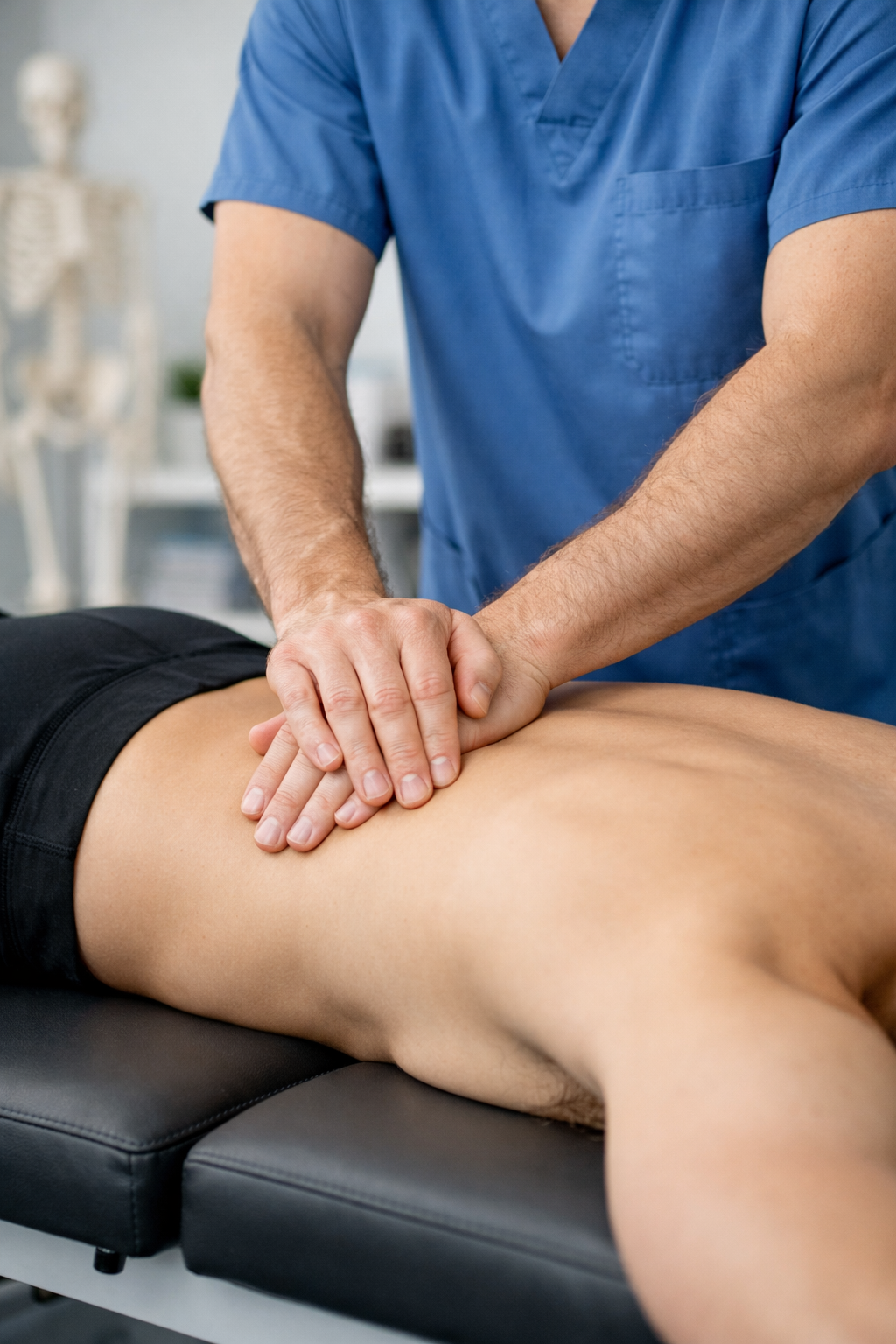
The lumbar spine’s five vertebrae are separated by intervertebral discs — each composed of a strong outer ring (the annulus fibrosus) and a gel-like core (the nucleus pulposus). A herniation occurs when the nucleus pulposus pushes through a tear in the annulus and compresses a nearby nerve root. The L4-L5 and L5-S1 disc levels are most frequently affected, producing sciatica — pain, numbness, or weakness that radiates from the low back through the buttock and down one leg.
A comprehensive review in StatPearls confirms that 80-90 percent of disc herniations resolve with conservative treatment, making physical therapy the first-line approach for most patients (StatPearls, 2024). At Trinity Rehab, we use a multi-technique approach customized to the specific demands of your life in Piscataway.
WHY PISCATAWAY RESIDENTS ARE VULNERABLE
WAREHOUSE AND CORPORATE LABOR
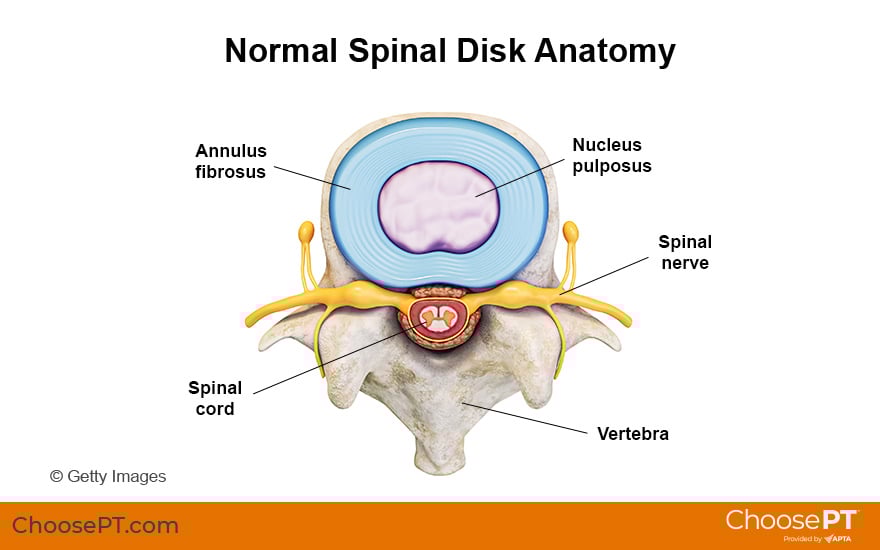
The Rockefeller Group logistics campus, pharmaceutical companies, and data centers that line Piscataway’s commercial corridors employ thousands of workers in roles that range from manual material handling to prolonged desk sitting. Warehouse workers perform repetitive bending, lifting, and twisting that directly stress the lumbar discs, while corporate and lab employees sit for hours in postures that increase intradiscal pressure. Both patterns contribute to annulus fibrosus breakdown over time.
FOOTBALL AND CONTACT SPORTS
Piscataway’s football tradition is legendary. The Chiefs have produced NFL players and consistently compete at the highest level of New Jersey high school football. Football subjects the lumbar spine to enormous axial, rotational, and shear forces — during blocking, tackling, and even the explosive stance-to-sprint transitions that linemen perform dozens of times per game. Wrestling, basketball, and track — all strong programs at Piscataway High — impose their own spinal demands. Deutsches Ärzteblatt International identifies contact and high-impact sports as significant risk factors for disc herniation in young and adult athletes (Deutsches Ärzteblatt, 2024).
COMMUTING AND DRIVING
Piscataway residents average a 27.5-minute commute, and many travel much farther — to New York, Edison, New Brunswick, or across central New Jersey. Even a moderate daily drive subjects the lumbar discs to sustained compression and road vibration, both of which accelerate disc degeneration.
GOLF, YARD WORK, AND OUTDOOR RECREATION
Johnson Park’s 478 acres along the Raritan River, the Rutgers Ecological Preserve, and East Jersey Old Town Village provide beautiful spaces for walking, jogging, and exploration. Raritan Landing Golf Course and YMCA programs keep adults active. But golf swings generate compressive forces exceeding eight times body weight on the lumbar spine, yard work involves hours of forward bending, and even walking on uneven parkland trails demands stabilization that a weakened disc may not be able to support.
RECOGNIZING THE SYMPTOMS
Disc herniation produces a distinctive symptom pattern:
- Radiculopathy: Sharp or burning pain that radiates from the lower back through the buttock and down the leg, often following a specific nerve path
- Numbness or tingling in the thigh, calf, foot, or toes
- Muscle weakness — difficulty standing on tiptoe, lifting the foot during walking, or climbing stairs
- Increased pain with sitting, forward bending, or straining (coughing, sneezing)
- Back pain that may be overshadowed by leg symptoms in more severe cases
If you experience progressive weakness or loss of bladder or bowel control, seek emergency medical attention immediately, as these may indicate a rare but serious condition called cauda equina syndrome.
TRINITY REHAB’S TREATMENT APPROACH
MANUAL THERAPY AND JOINT MOBILIZATION
Manual therapy is the foundation of our disc herniation treatment. Your therapist uses hands-on techniques to:
- Mobilize stiff lumbar segments: Grade-specific oscillatory movements restore normal joint mechanics at the affected level and adjacent segments, reducing compensatory strain.
- Release protective muscle spasm: Soft tissue mobilization and myofascial release target the paraspinal muscles, quadratus lumborum, and hip external rotators that lock down in response to disc injury.
- Improve pelvic alignment: Sacroiliac joint mobilization addresses the asymmetries that often develop when pain causes you to shift weight away from the affected side.
For Piscataway warehouse workers who arrive at the clinic with backs rigid from a physical shift, and for desk workers whose spines have stiffened after hours of sitting, manual therapy provides immediate improvement in mobility and pain that enables the active treatment to follow.
MCKENZIE METHOD AND DIRECTIONAL PREFERENCE
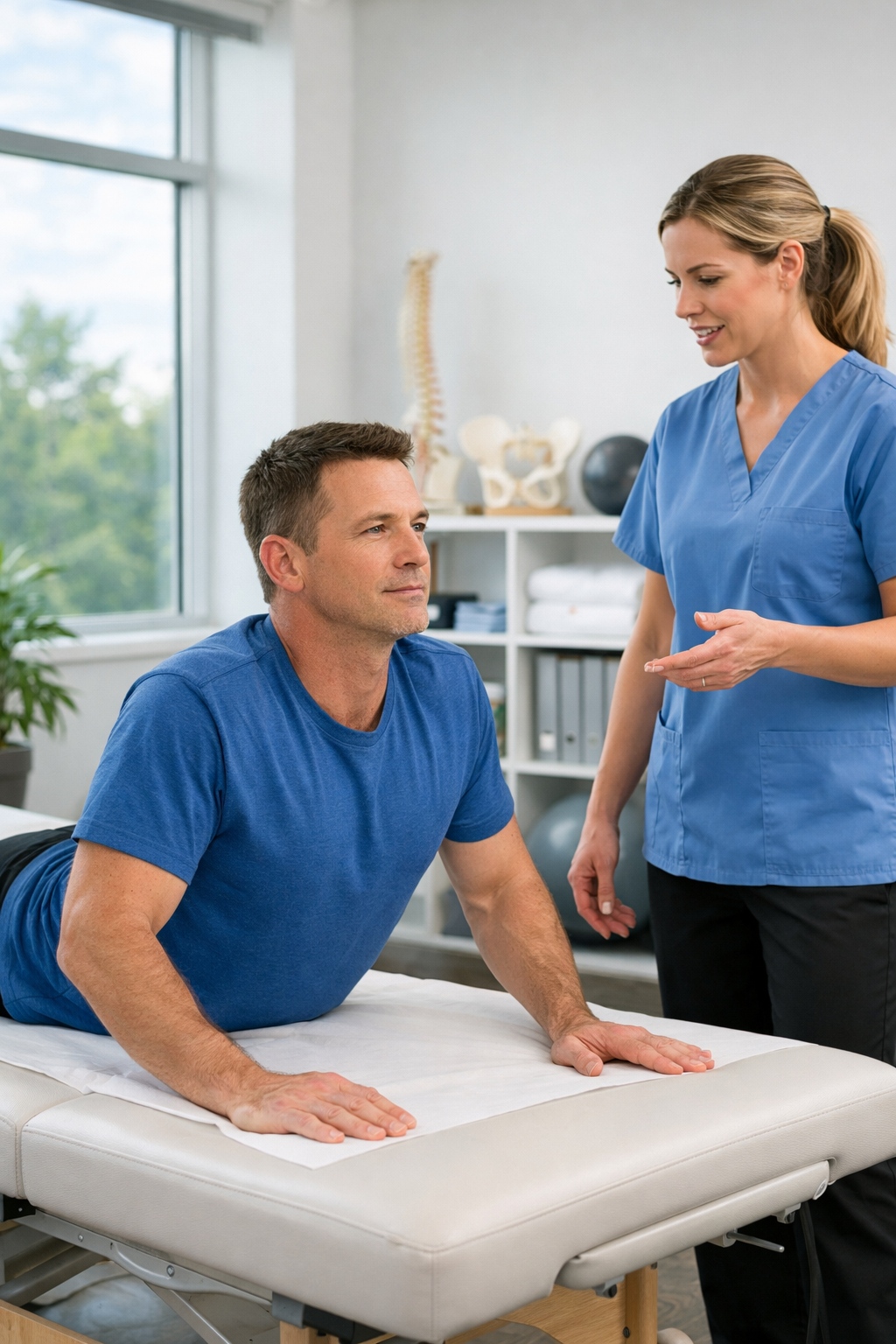
Your therapist performs a detailed mechanical assessment to determine your directional preference — the specific movement direction that centralizes your symptoms (moves pain from the leg back toward the spine). Most lumbar disc herniations centralize with repeated extension movements, though each patient is assessed individually.
The McKenzie method is unique because it empowers you to manage your symptoms independently. Your prescribed directional exercises can be performed at your desk, on the warehouse floor during breaks, or at home — providing pain relief and promoting disc healing throughout the day, not just during therapy sessions.
CORE STABILIZATION AND FUNCTIONAL STRENGTHENING
A herniated disc is both a symptom and a cause of core dysfunction. Our stabilization program addresses both:
- Transversus abdominis and multifidus retraining: These deep stabilizers provide segmental spinal control. After disc injury, they atrophy within days. We rebuild them through precise, progressive exercises.
- Glute and hip strengthening: The glutes are the powerhouse muscles that protect the lumbar spine during lifting, running, and sport. Bridges, lateral band walks, hip hinges, and single-leg exercises restore this critical link.
- Functional task training: For warehouse workers, we simulate the bending, lifting, and carrying tasks you perform daily, building the endurance and mechanics to do them safely. For athletes, we replicate the cutting, jumping, and rotational demands of your sport.
- Power and plyometric progression: For football players and other athletes returning to high-impact sports, we progressively introduce explosive movements that test spinal stability under realistic conditions.
NEURAL MOBILIZATION
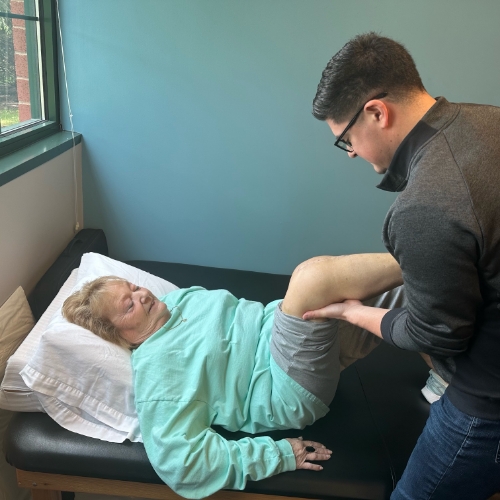
Nerve root compression causes inflammation and adhesions that can persist even after the mechanical compression improves. Neural mobilization uses carefully sequenced positions and movements to:
- Glide the sciatic nerve through its tissue interfaces, breaking down adhesions
- Reduce neural sensitivity and calm the irritated nerve root
- Restore full, pain-free nerve mobility throughout the lower extremity
This technique is especially valuable for Piscataway patients with persistent sciatica that has lingered for weeks, as it addresses the neural component that exercise alone may not fully resolve.
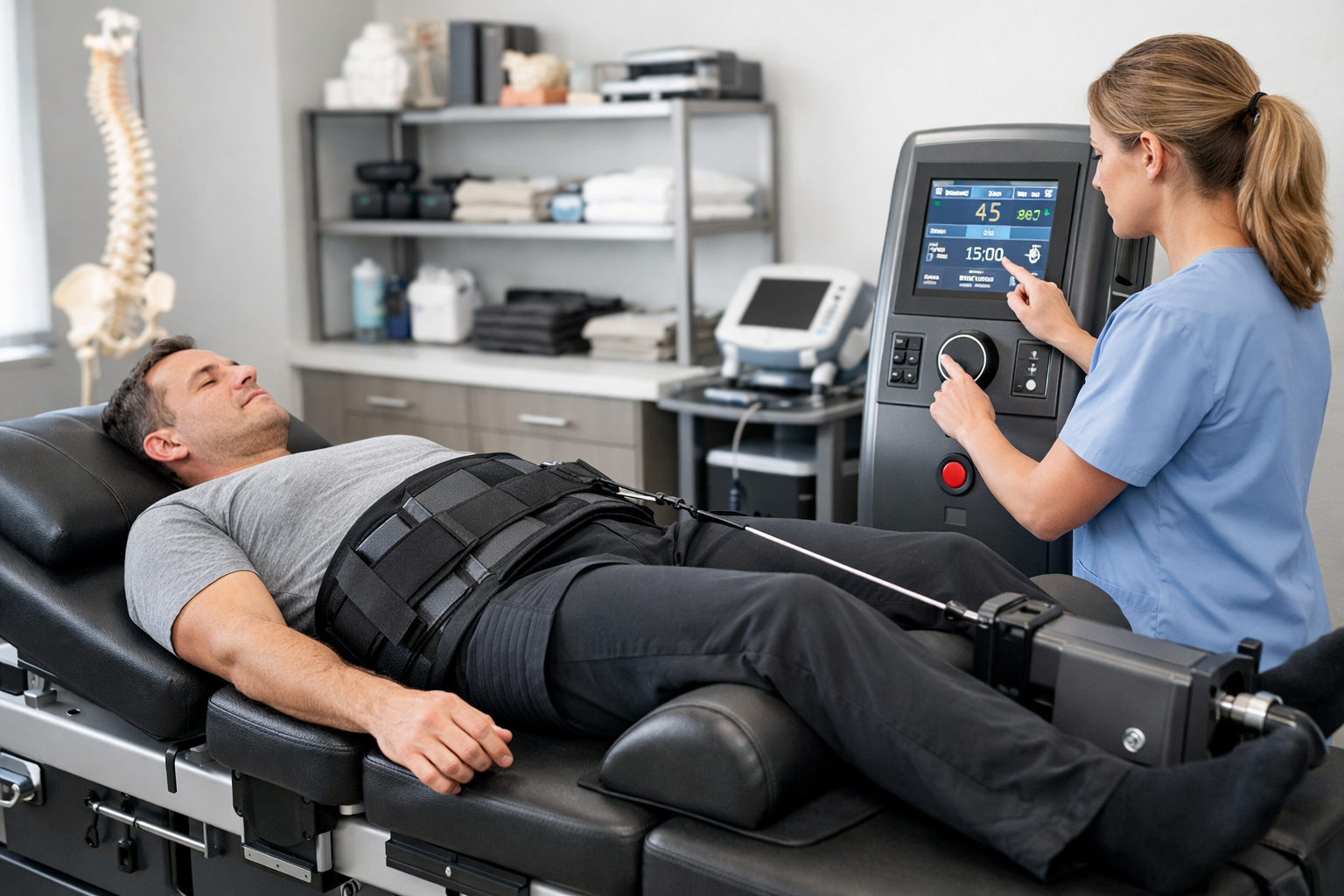
ADVANCED MODALITIES: DRY NEEDLING AND EPAT
- Dry needling: Sterile filament needles target trigger points in the deep lumbar multifidus, erector spinae, piriformis, and gluteus medius. The resulting local twitch response resets muscle tone, reduces pain, and improves the muscle’s ability to contract properly during stabilization exercises.
- EPAT: Acoustic pressure waves delivered to the affected area stimulate tissue healing, improve blood flow, and reduce the chronic inflammatory environment around the disc and nerve root. We integrate EPAT into your treatment plan when inflammation is a persistent limiting factor.
PROTECTING YOUR SPINE IN PISCATAWAY
- Lift with strategy, not just strength: Whether you are on the warehouse floor or in your garage, hinge at the hips, brace your core, and keep the load close. Never twist under load.
- Break up your commute: Stop and walk for two minutes every 30 minutes on longer drives. Use a lumbar support and adjust your seat position so your knees are slightly lower than your hips.
- Warm up before practice: Piscataway’s student athletes should spend at least five minutes on dynamic movement prep — glute bridges, hip openers, trunk rotations — before every practice and game.
- Walk Johnson Park: The 478-acre park along the Raritan River offers flat, accessible paths ideal for spine-friendly exercise. Aim for 30 minutes most days.
- Stick with your program: Your home exercise routine is the most important tool you have for preventing recurrence. Fifteen minutes a day keeps the surgeon away.
WHY PISCATAWAY RESIDENTS CHOOSE TRINITY REHAB
In a diverse, hardworking community like Piscataway, you need a clinic that meets you where you are. Trinity Rehab’s one-on-one care model ensures that every patient — whether you are a teenager recovering from a football hit, a pharmaceutical worker dealing with repetitive strain, or a retiree who tweaked your back in the garden — receives fully individualized treatment from a licensed physical therapist at every visit. We do not hand you off to an aide, we do not use one-size-fits-all protocols, and we do not stop until you are back to full function.
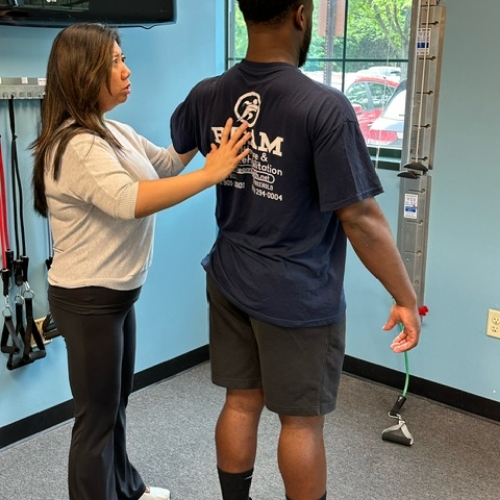
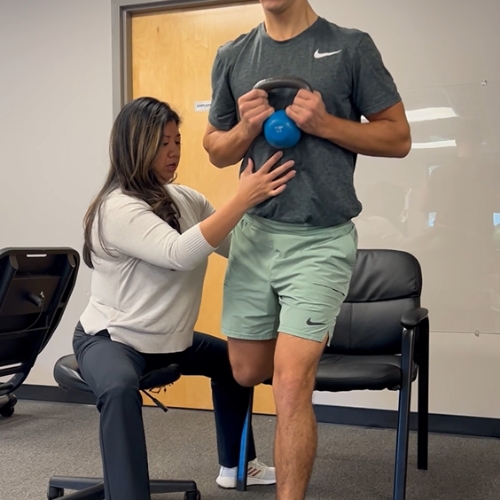
INSIDE OUR PISCATAWAY CLINIC
RELATED CONDITIONS & TREATMENTS
Lumbar disc herniation is just one of the many conditions we treat at Trinity Rehab Piscataway. Explore our full range of conditions we treat or learn more about specific treatment approaches:
Piscataway Disc Rehab For Back Pain, Leg Symptoms, And Daily Movement
Lumbar disc symptoms can interrupt sitting, driving, lifting, sleep, work, and exercise. Piscataway rehab should connect the diagnosis to the positions and movements that actually trigger your symptoms.
Your therapist may assess lumbar mobility, nerve-related symptoms, hip strength, gait, lifting mechanics, sitting tolerance, and warning signs that require medical care before therapy continues.
Patients with related symptoms may also need sciatica treatment, back pain physical therapy, or the Piscataway physical therapy clinic page.
FREQUENTLY ASKED QUESTIONS
Piscataway Disc Rehab For Back Pain, Leg Symptoms, And Daily Movement
Lumbar disc symptoms can interrupt sitting, driving, lifting, sleep, work, and exercise. Piscataway rehab should connect the diagnosis to the positions and movements that actually trigger your symptoms.
Your therapist may assess lumbar mobility, nerve-related symptoms, hip strength, gait, lifting mechanics, sitting tolerance, and warning signs that require medical care before therapy continues.
Patients with related symptoms may also need sciatica treatment, back pain physical therapy, or the Piscataway physical therapy clinic page.
I hurt my back at work — can Trinity Rehab treat workers’ compensation cases?
How do I know if my back pain is a herniated disc or something else?
My son plays football at Piscataway High — what can he do to protect his back?
Can I exercise at the YMCA during treatment?
How long until I can play golf again?
GET BACK IN THE GAME
Whether your disc herniation came from the football field, the warehouse, or the fairway, Trinity Rehab has the expertise to get you back to full function. Our Piscataway clinic provides the one-on-one, evidence-based physical therapy that works. Schedule your appointment today and start your recovery.
SOURCES
- StatPearls — Lumbar Disc Herniation: https://www.ncbi.nlm.nih.gov/books/NBK560878/
- Deutsches Ärzteblatt International — Lumbar Disc Herniation: https://pmc.ncbi.nlm.nih.gov/articles/PMC11465477/
What Our Patients Say



Sign up for free health tips and tricks