

SCIATICA TREATMENT IN NEWTOWN, PA: EXPERT PHYSICAL THERAPY IN HISTORIC BUCKS COUNTY
Newtown Borough sits at the heart of one of the most scenic corners of the Philadelphia metro area. Tyler State Park’s 1,711 acres of woodland, creek trails, and equestrian paths lie just minutes away. The historic district — 293 contributing buildings along streets that predate the Revolution — makes for some of the best walking in Bucks County. The Newtown Trail runs 3.7 miles through the borough. And for residents of this area, an outdoor, active lifestyle is not a weekend add-on; it is the reason people choose to live here.
Which makes sciatic nerve pain particularly disruptive. The 3.7-mile trail walk that used to be part of a morning routine becomes impossible when a burning pain shoots from your lower back down your left leg every 10 minutes. Sitting through the commute to Philadelphia — 30 minutes by car, or longer in traffic — turns into an exercise in managing discomfort rather than mentally preparing for the day. Even cycling through Tyler State Park, one of the best multi-use trail networks in Bucks County, is off-limits when your sciatic nerve is flaring.
At Trinity Rehab Newtown, we specialize in treating sciatica with evidence-based, one-on-one physical therapy. We address the root cause of your nerve compression and build a recovery plan around your specific Newtown lifestyle.
Understanding Sciatica
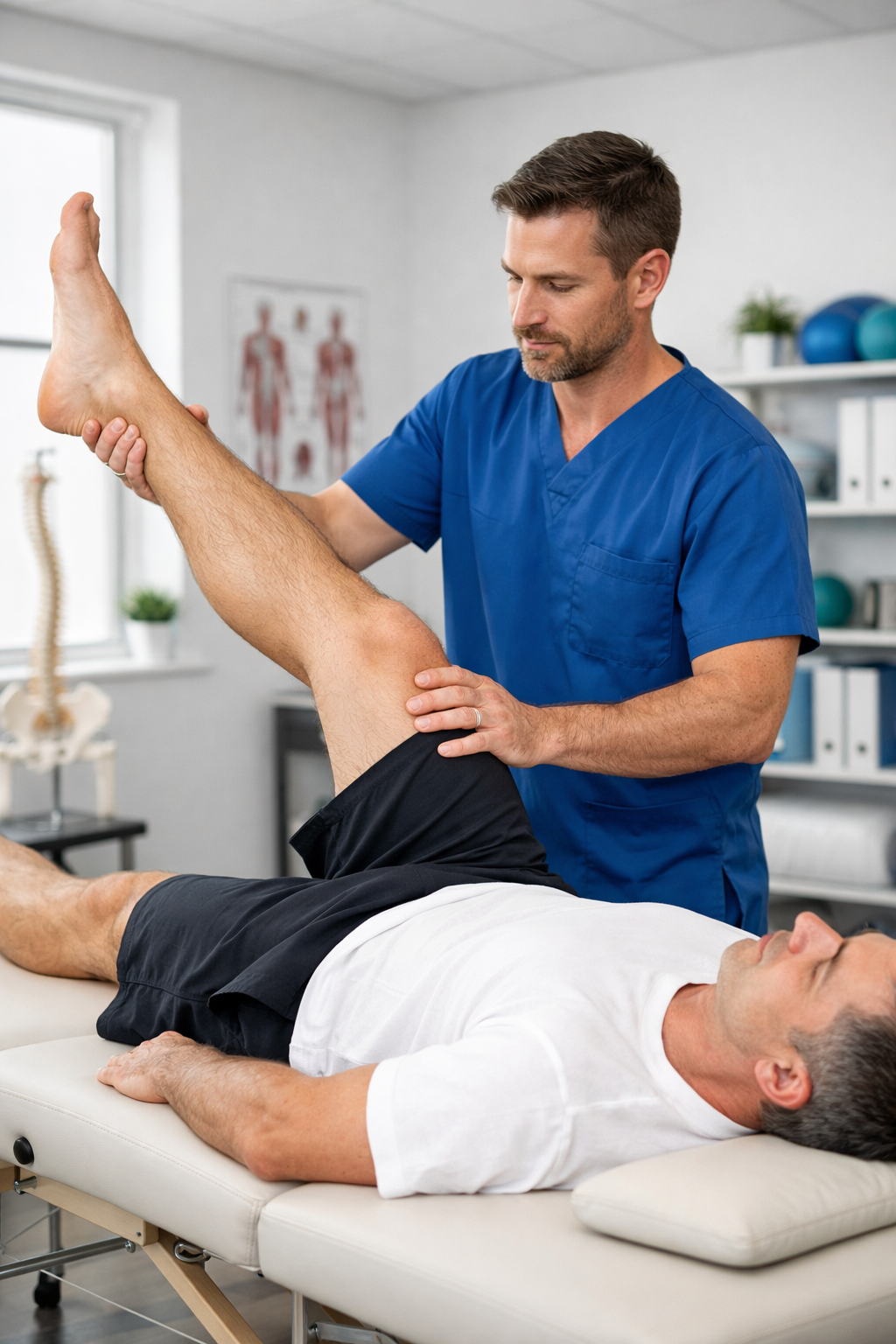
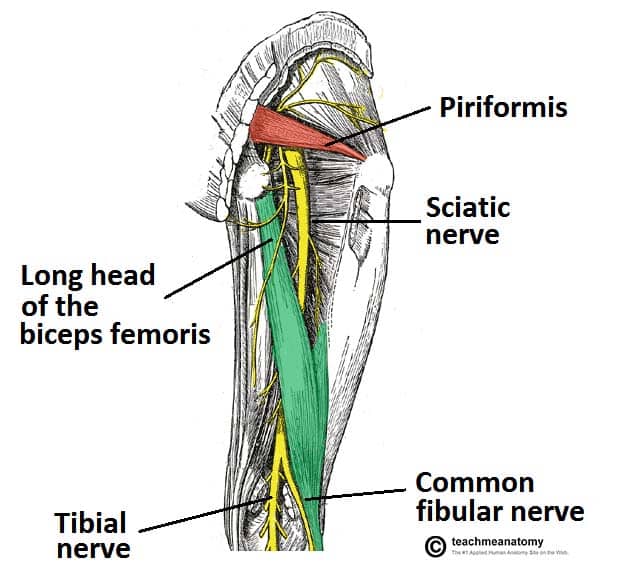
The sciatic nerve is the longest peripheral nerve in the human body. It forms from the L4, L5, and S1 nerve roots in the lower lumbar spine, passes through the deep buttock muscles, travels down the back of the thigh, continues through the calf, and extends into the foot. When one of those originating nerve roots is compressed or irritated — a condition clinically called lumbar radiculopathy — the resulting signals travel the full length of that pathway.
That explains the characteristic sciatica experience: pain, burning, tingling, or weakness that is not confined to the back but radiates predictably down one leg, following the nerve’s anatomical route.
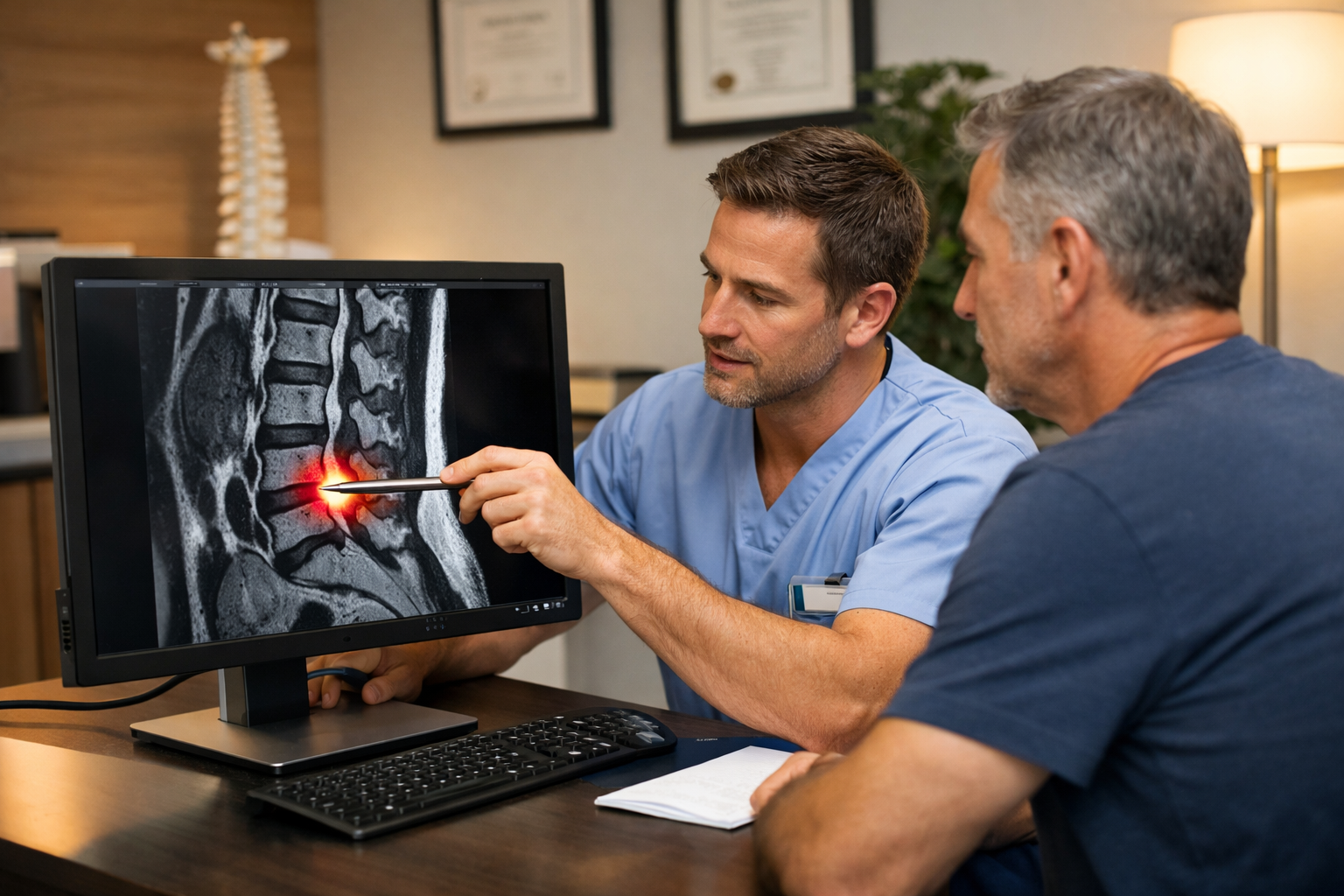
The source of nerve root compression varies. A herniated disc pressing directly against a nerve root accounts for the majority of cases. Spinal stenosis — narrowing of the spinal canal, more common in adults over 60 — produces a similar symptom pattern. Piriformis syndrome, in which the piriformis muscle in the deep buttock tightens or spasms around the sciatic nerve, can cause symptoms that closely mimic disc-related sciatica. Degenerative disc disease, spondylolisthesis, and pregnancy-related postural changes round out the common causes.
Identifying which of these is driving your symptoms is what allows us to design a treatment plan that genuinely resolves the problem.
Why Newtown and Bucks County Residents Develop Sciatica
The lifestyle and occupational profile of Newtown and the surrounding Bucks County area creates several specific sciatica risk patterns.
Philadelphia-area commuters: Newtown’s position in the greater Philadelphia metro means many residents commute south or west daily — whether to Center City, to the tech and pharmaceutical campuses of the Route 202 corridor, or to the Trenton area just across the state line. Extended driving in a car seat with the lumbar spine in a flexed posture increases intradiscal pressure and, over time, contributes to the disc degeneration that leads to nerve root compression. Commuters who drive 30 to 60 minutes each way are accumulating this stress five days per week.
Council Rock School District employees: Council Rock High School North, along with the broader district, is among the area’s major employers. Teachers who alternate between standing while instructing and sitting while grading or doing administrative work experience varied lumbar loads throughout the day. The cumulative postural demands, combined with the physical realities of working on a campus, make school staff a population that regularly presents with disc-related sciatica.
EPAM Systems and technology sector workers: EPAM Systems and related technology employers in the Newtown area employ knowledge workers in desk-based roles. The extended sitting postures common in software development and consulting roles elevate disc pressure and weaken the deep core stabilizers that protect the lumbar spine from those loads.
Tyler State Park and outdoor recreation users: The trail system at Tyler State Park — which includes hiking, cycling, equestrian paths, and disc golf — draws regular users from across Bucks County. Trail cycling in particular demands repetitive hip flexion under load, engaging the piriformis and hip flexor muscles in ways that can progressively tighten them, contributing to piriformis syndrome and sciatic nerve irritation. Hikers who regularly log long outings on uneven terrain accumulate the kind of lumbar and hip fatigue that, when combined with underlying disc changes, can trigger sciatica.
Seasonal outdoor activities: Bucks County’s calendar is rich with fall outdoor activity — hayrides, pumpkin patches, corn mazes, and apple picking are all regional traditions. These activities involve more physical demand than they appear: extended walking on uneven ground, carrying produce, and hours in postures that stress the lumbar spine. Winter brings snow shoveling — a consistent annual trigger for acute lumbar disc injury in Pennsylvania — and the physical demands of the holiday preparation season.
Recognizing Sciatica Symptoms
The distinguishing feature of sciatica is pain that radiates — it travels. Other characteristic symptoms include:
- A burning, sharp, or electric sensation running from the lower back or buttock down one leg, following a consistent path through the thigh, calf, and sometimes into the foot
- Numbness or “pins and needles” in the leg or foot on one side, sometimes described as a persistent deadness in part of the foot
- Weakness in the affected leg — difficulty dorsiflexing the foot (foot drop), reduced push-off strength when walking or climbing stairs, or one leg tiring sooner during a Tyler State Park hike
- Pain that clearly worsens with sitting or driving and eases partially with standing or gentle walking
- Morning stiffness and pain upon first rising, before the spine has warmed up
- Symptoms that are consistently one-sided — sciatica almost always affects only one leg, which reflects the laterality of the nerve root compression
How Trinity Rehab Treats Sciatica in Newtown
Your treatment at Trinity Rehab Newtown is built around a thorough initial evaluation — assessing your movement, your postural patterns, the specific level and mechanism of your nerve compression, and your functional goals. Treatment then progresses through three interconnected phases.
Phase 1: Reducing Pain and Calming the Nerve
In the early treatment phase, the priority is reducing nerve irritation enough that you can move more freely and engage productively in active rehabilitation.
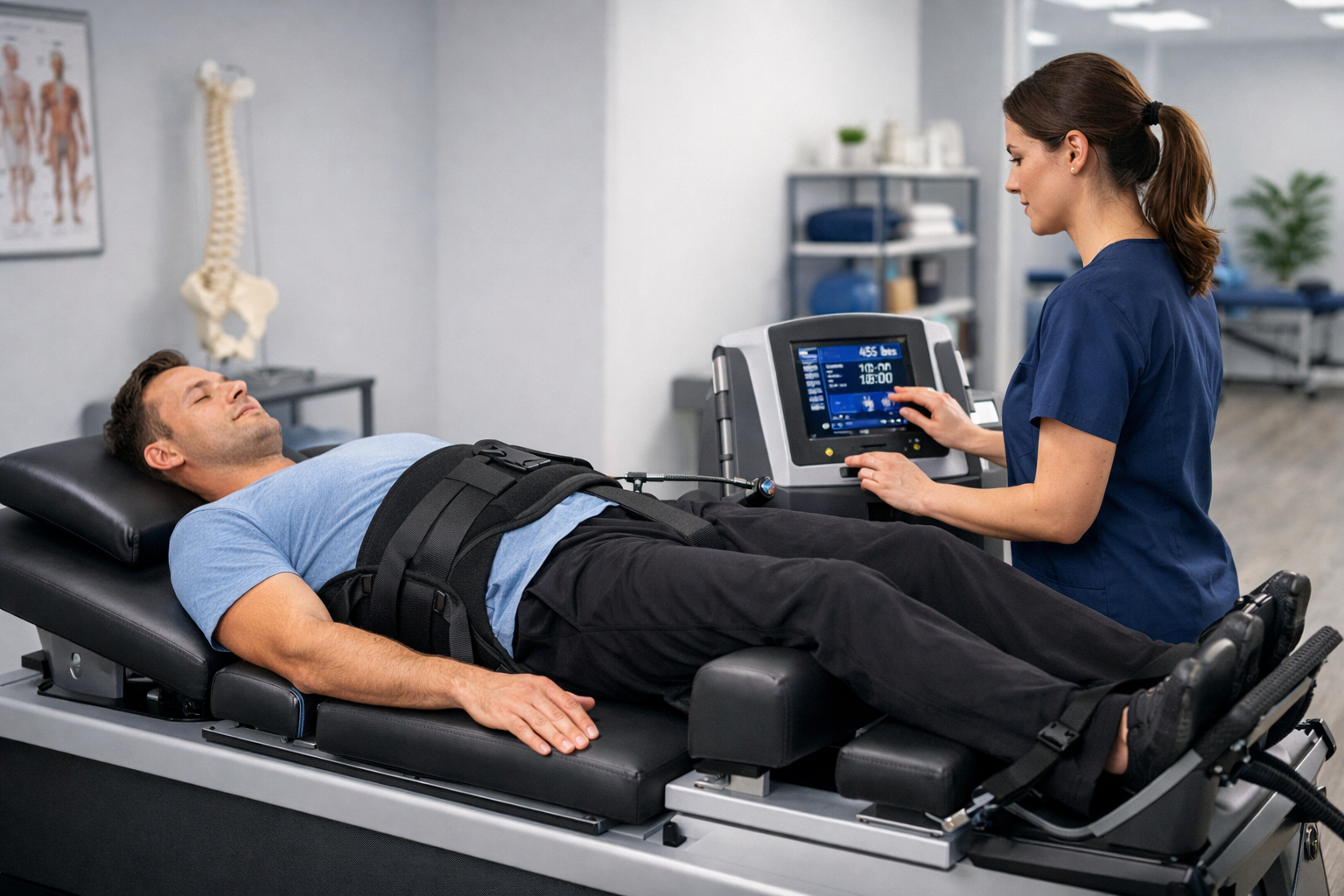
Manual therapy is the primary intervention at this stage. Your physical therapist will use joint mobilization techniques specific to the lumbar spine — and the sacroiliac joint where relevant — to decompress irritated nerve roots and restore movement in restricted lumbar segments. Soft tissue work in the piriformis and gluteal region directly addresses muscular nerve compression for patients with piriformis syndrome presentations.
Neural mobilization (nerve gliding) introduces guided limb movements that encourage the sciatic nerve to move more freely through its surrounding soft tissue channels. An irritated sciatic nerve becomes adherent and hypersensitive; neural mobilization progressively restores its ability to glide with movement, directly reducing the radiating leg pain that many patients describe as the most debilitating symptom.
Therapeutic positioning and directional exercises — selected based on your specific diagnosis — help centralize pain and reduce nerve root involvement during this early phase.
Phase 2: Rebuilding Strength and Structural Stability
The most important question in sciatica rehabilitation is: what made this person’s lumbar spine vulnerable in the first place? Answering that question, and addressing it systematically, is what prevents sciatica from becoming a recurring condition.
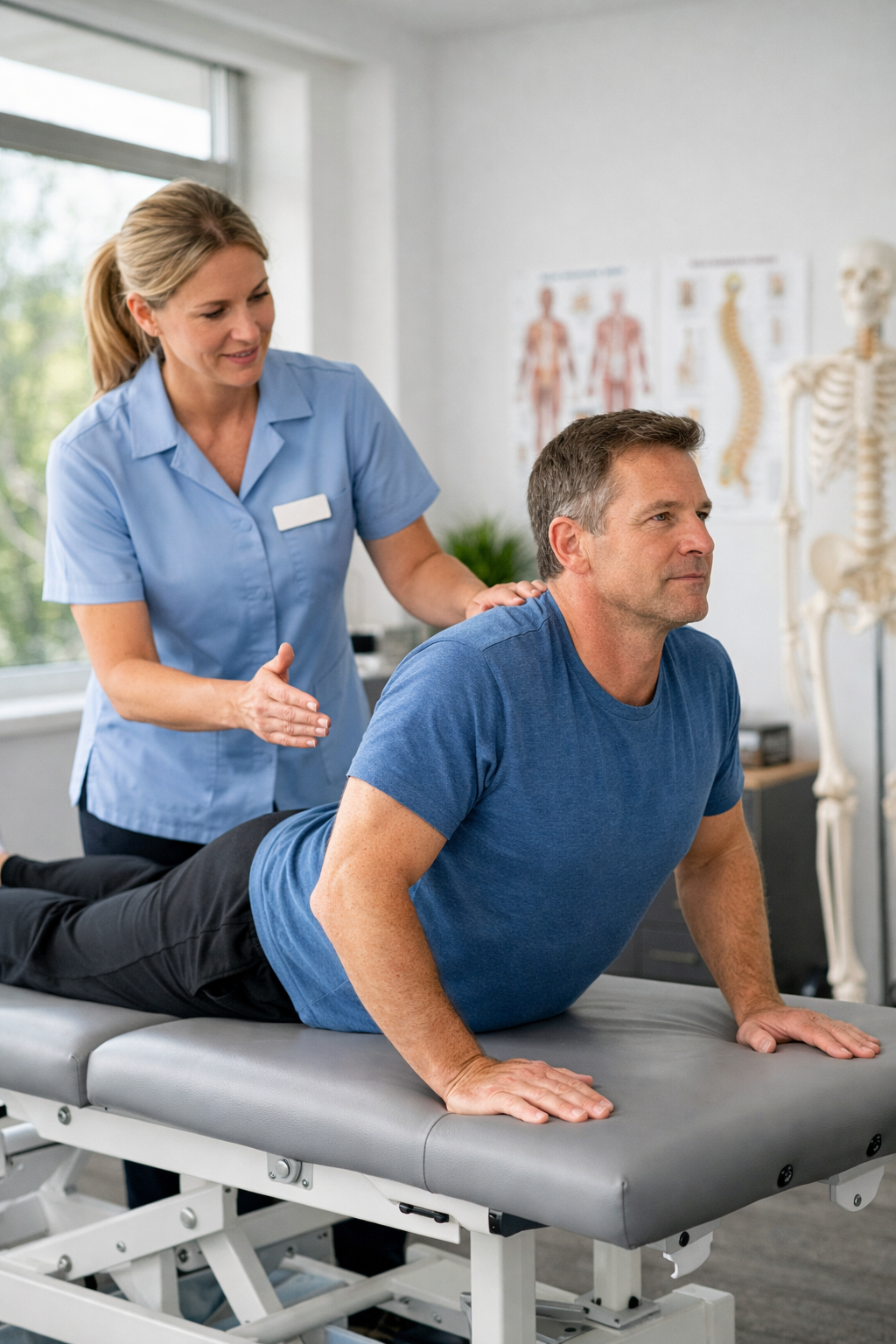
Core stabilization exercises rebuild the transversus abdominis and multifidus — the deep spinal muscles whose weakness allows the lumbar vertebrae to absorb excessive loads. Hip and glute strengthening reduces the mechanical stress transferred to the lumbar spine during walking, cycling, and driving. McKenzie method exercises address disc-related presentations through directional movement progressions validated by extensive clinical research.
For Newtown cyclists and trail runners dealing with hip flexor tightness and piriformis involvement, dry needling can provide targeted release of the deep muscular tension that manual therapy and stretching alone cannot fully resolve. This technique is particularly useful for patients with piriformis syndrome and for those with chronic paraspinal muscle guarding that is limiting their ability to engage in active strengthening.
Postural training and body mechanics education are woven throughout Phase 2, ensuring that the posture habits you carry into your car, your desk, and your commute are working for your spine rather than against it.
Phase 3: Full Return to Newtown Activity
The final phase focuses on putting your recovery into action. For Newtown patients, this typically means returning to Tyler State Park trails, cycling the Neshaminy Creek path without pain, resuming the morning Newtown Trail walk, or making it through a full workday commute without bracing for the drive home.
Functional training in this phase mirrors your actual daily and recreational activities — progressive loading and movement patterns that prove your spine can handle real-life demands, not just clinic-controlled exercises. You leave with a comprehensive home exercise program and the education to manage any early warning signs of a future flare before they escalate.
Why Newtown Patients Choose Trinity Rehab
- One-on-one care with a licensed physical therapist at every session — in Pennsylvania, just as in New Jersey, you get personal PT attention throughout your treatment
- No physician referral required: Pennsylvania law allows direct access to physical therapy evaluation and treatment. You can call today and get started without waiting for a doctor’s authorization.
- Personalized evaluation: We assess your specific anatomy, commute patterns, recreational activities, and goals before designing any treatment
- Evidence-based protocols grounded in current clinical research on lumbar radiculopathy, neural mobilization, and stabilization training
- Convenient hours for Newtown commuters and families
Explore related information at our back pain relief page.
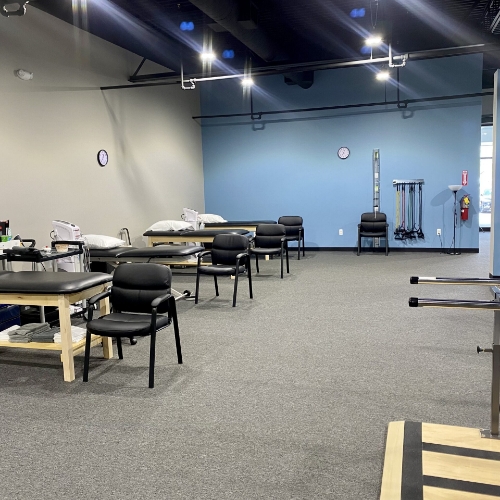
Inside Our Newtown Clinic
Related Conditions & Treatments
Sciatica is just one of the many conditions we treat at Trinity Rehab Newtown. Explore our full range of conditions we treat or learn more about specific treatment approaches:
- Sciatica Treatment Overview
- Back Pain Treatment
- Hip & Knee Pain Relief
- Manual Therapy
- Dry Needling
- EPAT / Shockwave Therapy
Newtown Sciatica Rehab For Leg Pain, Sitting Pain, And Walking Tolerance
Sciatica-like symptoms can make sitting, driving, bending, sleeping, and walking difficult. Newtown patients need a plan that separates nerve-related leg pain from back, hip, or muscle-driven symptoms.
Your therapist may assess symptom behavior, lumbar mobility, nerve tension, hip strength, walking tolerance, and positions that calm or worsen symptoms. Progressive weakness, numbness, or bowel/bladder changes should be medically reviewed urgently.
Related spine options include back pain physical therapy, lumbar disc herniation rehab, and the Newtown physical therapy clinic page.
Frequently Asked Questions
Newtown Sciatica Rehab For Leg Pain, Sitting Pain, And Walking Tolerance
Sciatica-like symptoms can make sitting, driving, bending, sleeping, and walking difficult. Newtown patients need a plan that separates nerve-related leg pain from back, hip, or muscle-driven symptoms.
Your therapist may assess symptom behavior, lumbar mobility, nerve tension, hip strength, walking tolerance, and positions that calm or worsen symptoms. Progressive weakness, numbness, or bowel/bladder changes should be medically reviewed urgently.
Related spine options include back pain physical therapy, lumbar disc herniation rehab, and the Newtown physical therapy clinic page.
Where can I get sciatica treatment in Newtown, PA?
Does Trinity Rehab Newtown accept my insurance?
Do I need an MRI before starting physical therapy for sciatica?
I love cycling at Tyler State Park. When can I get back to it?
How long does sciatica treatment take?
Sciatica is a highly treatable condition — when treatment addresses the actual source of nerve compression and builds the strength to prevent recurrence. At Trinity Rehab Newtown, you’ll receive the personalized, expert care that gets you back to the Bucks County lifestyle you chose.
- Request your appointment — No referral needed. Choose a time that fits your life.
- Receive a complete evaluation — Your licensed physical therapist will identify the root cause of your sciatica and build a plan around your specific goals.
- Recover fully with expert guidance — One-on-one care at every session, evidence-based techniques, and a home program to protect your spine long-term.
Ready to get back to Tyler State Park, the Newtown Trail, and the active Bucks County life you love? Book your appointment at Trinity Rehab Newtown today.