
ROTATOR CUFF INJURY TREATMENT IN NEWTOWN, PA
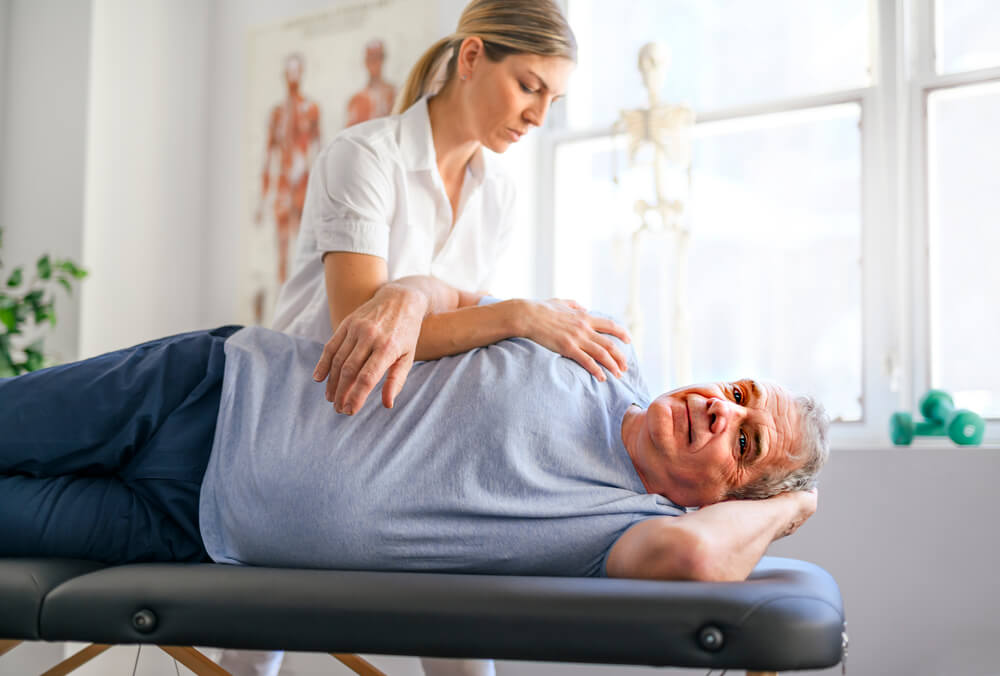
Living Active in Bucks County Means Demanding More From Your Shoulders
On any given morning in Newtown, hundreds of residents are already putting their shoulders to work — paddling kayaks along Neshaminy Creek in Tyler State Park, firing backhands at the Bucks County Tennis Association courts near Council Rock, or logging laps at the Newtown Athletic Club pool before heading to a desk at EPAM Systems or SAP. This 1,711-acre stretch of rolling Bucks County terrain, crisscrossed by the Newtown Trail and dotted with baseball diamonds at Veterans Memorial Park, practically invites you to stay active. But when a sharp catch in your shoulder turns a leisurely hike through Tyler State Park’s wooded trails into an exercise in pain management, that active suburban lifestyle can grind to a halt.
Rotator cuff injuries are among the most common shoulder conditions we treat at Trinity Rehab, and they affect Newtown residents across every age group and activity level — from Council Rock High School North swimmers training for sectionals to retired professionals who simply want to tend their gardens along Sycamore Street without wincing. The good news is that physical therapy is the first-line treatment for most rotator cuff injuries, and a structured, phase-based rehabilitation program can restore your strength, eliminate your pain, and return you to everything you love about living in this corner of Bucks County.
Understanding Your Rotator Cuff: What It Is and Why Injuries Matter
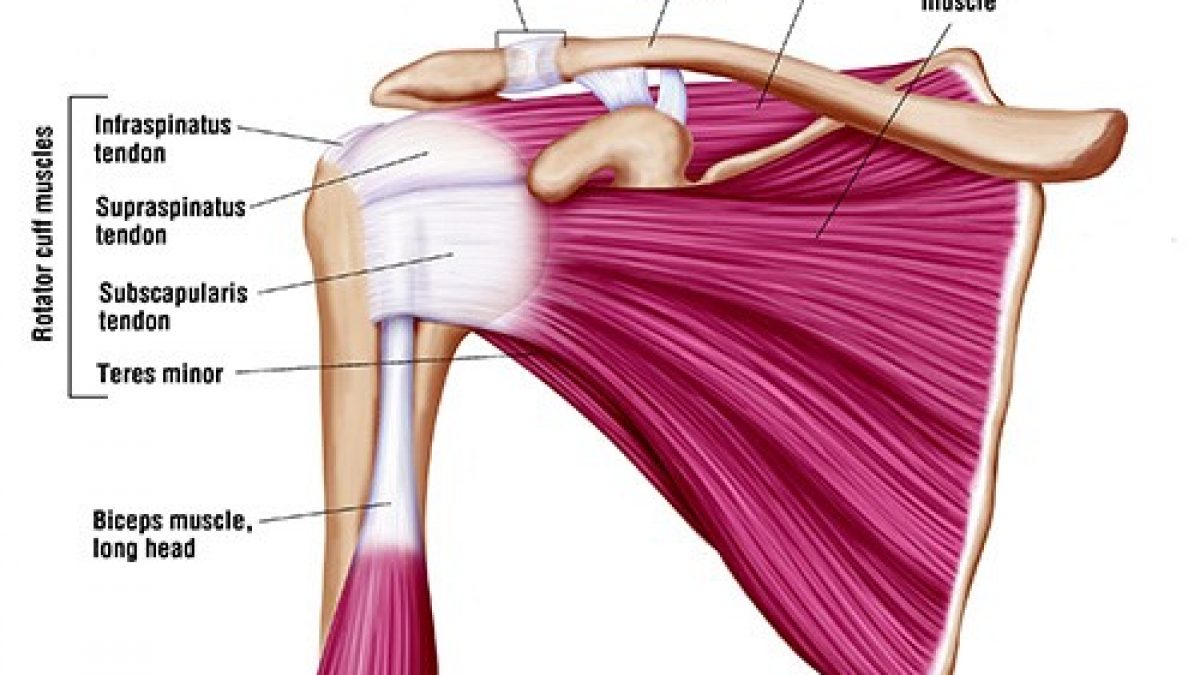
Your rotator cuff is a group of four muscles and their associated tendons — the supraspinatus, infraspinatus, teres minor, and subscapularis — that wrap around the head of your upper arm bone and anchor it within the glenohumeral joint, or shoulder socket. Together, these muscles do far more than simply move your arm. They provide the dynamic stability that lets you reach overhead to grab a dish from a cabinet, throw a baseball at Veterans Memorial Park, or pull yourself up a steep section of trail at Tyler State Park.
Rotator cuff injuries exist on a spectrum. On one end is rotator cuff tendinopathy, where repetitive stress causes the tendon fibers — most often the supraspinatus tendon — to break down and become painful. Further along the spectrum are partial-thickness tears, where some fibers are disrupted but the tendon remains intact, and full-thickness tears, where the tendon separates completely. Without proper treatment, even a mild tendinopathy can progress, leading to chronic shoulder pain, loss of range of motion, and compensatory movement patterns that can create problems in your neck, upper back, and elbow.
That progression is exactly why early, evidence-based treatment matters. Research consistently shows that physical therapy produces outcomes comparable to surgery for many rotator cuff injuries — without the downtime, risk, or cost of an operation.
Common Causes of Rotator Cuff Injuries in Newtown
Rotator cuff injuries rarely have a single cause. They usually develop from a combination of factors that are deeply familiar to people living and working in Newtown’s suburban landscape.
Desk-Based Work and Tech Industry Posture
Newtown’s economy brings thousands of professionals to desks each day. Whether you work in software engineering at EPAM Systems, enterprise solutions at SAP, or travel management at Apple Leisure Group, hours of sustained keyboard and mouse use push your shoulders forward, shorten your chest muscles, and weaken the posterior rotator cuff. Over months and years, this rounded-shoulder posture narrows the subacromial space — the gap your supraspinatus tendon passes through — and sets the stage for impingement and tendinopathy. These repetitive strain patterns are a leading driver of work-related injuries in office environments.
Swimming, Tennis, and Athletic Club Activities
The Newtown Athletic Club’s indoor and outdoor pools draw competitive and recreational swimmers alike, while the Bucks County Tennis Association keeps the courts at Council Rock busy through the season. Both sports demand repetitive overhead motion that loads the rotator cuff intensely. Swimmers develop shoulder fatigue during freestyle and butterfly sets, and tennis players stress the infraspinatus and teres minor with every serve and overhead volley. Without proper conditioning and recovery, these repetitive loads create microtrauma that accumulates into tendinopathy or tearing.
Trail Activities and Outdoor Recreation
Tyler State Park’s network of trails — running, hiking, mountain biking, and even horseback riding — draws Newtown residents year-round. A stumble on a root along the Neshaminy Creek bank, an awkward catch during a fall on a wet trail, or the repetitive arm-swing mechanics of long-distance running can all injure the rotator cuff. The 3.7-mile Newtown Trail, popular with walkers and joggers, adds mileage that compounds shoulder fatigue for runners whose form begins to break down.
Youth and High School Athletics
Council Rock High School North fields varsity teams in baseball, swimming and diving, tennis, and volleyball — all sports that place significant demands on the shoulder. Young athletes are particularly vulnerable because their musculoskeletal systems are still developing, and year-round specialization in a single overhead sport can outpace the rotator cuff’s ability to adapt. Sports injuries involving the rotator cuff are something we see frequently in Newtown’s student-athlete population.
Age-Related Changes
With a median age of approximately 46 and roughly one in four residents over 65, Newtown’s demographics reflect a population where age-related tendon degeneration is a real factor. Blood supply to the supraspinatus tendon naturally decreases with age, making the tissue less resilient and more susceptible to tears — even from everyday activities like lifting groceries or reaching for a seatbelt.
Recognizing the Symptoms
Rotator cuff injuries often develop gradually, and it is tempting to push through early warning signs. Watch for these symptoms:
- Pain on the outside of the shoulder or upper arm, especially when reaching overhead or behind your back
- Night pain that disrupts sleep, particularly when lying on the affected side
- Weakness when lifting objects away from your body, raising your arm, or rotating it outward
- A catching or clicking sensation during shoulder movement
- Stiffness and reduced range of motion, making it difficult to fasten a bra, tuck in a shirt, or reach a high shelf
- Difficulty with daily tasks — shampooing your hair, carrying bags from the Newtown Farmers Market, or casting a line into Neshaminy Creek
- rotator cuff treatment overview
If these symptoms sound familiar, the first step is to see your physician. Pennsylvania requires a physician referral before you can begin physical therapy, so scheduling an evaluation with your primary care doctor or an orthopedic specialist — such as those at nearby St. Mary Medical Center — is essential to getting started.
Our Phase-Based Treatment Approach
At Trinity Rehab in Newtown, we use a structured, three-phase rehabilitation program tailored to your specific injury, goals, and lifestyle. Every session is one-on-one with your physical therapist — no rotating between aides, no generic exercise sheets.
Phase 1: Calming Pain and Restoring Movement
The first priority is reducing your pain and carefully restoring range of motion to the glenohumeral joint. In this phase, your therapist will use:
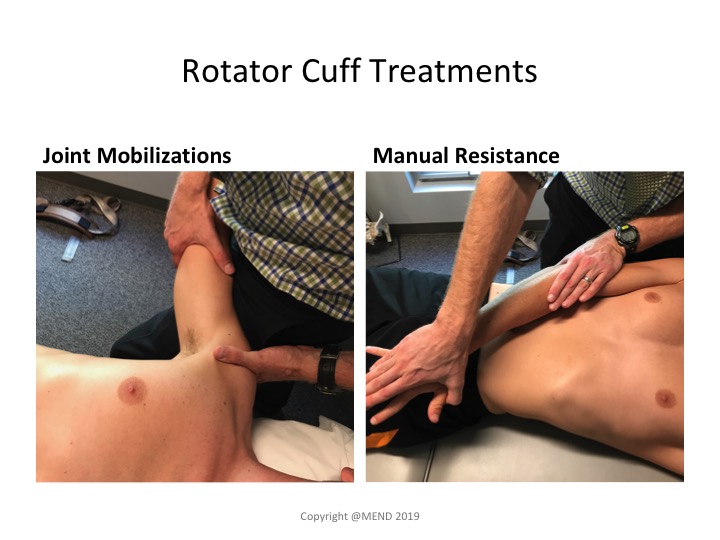
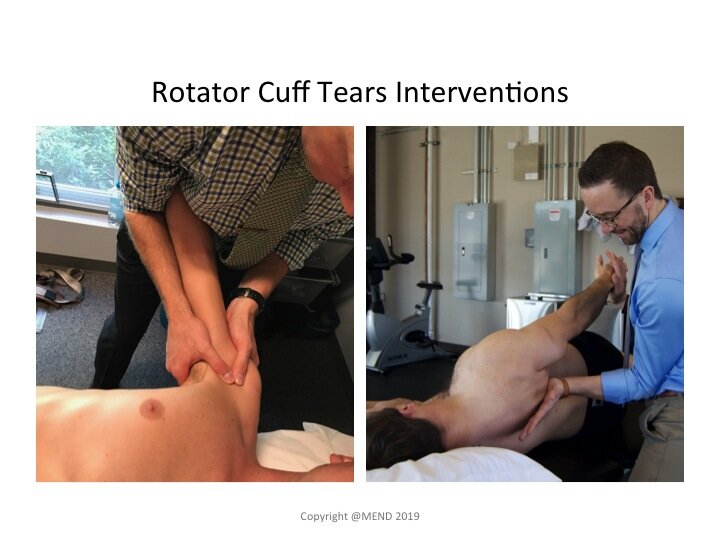
- Manual therapy — hands-on joint mobilizations and soft-tissue techniques to reduce stiffness, improve blood flow, and decrease guarding in the surrounding musculature
- Dry needling — thin, filament-type needles inserted into myofascial trigger points in the upper trapezius, infraspinatus, and periscapular muscles to release tension and reduce referred pain patterns
- Gentle range-of-motion exercises — pendulum swings, assisted elevation, and external rotation stretches designed to restore movement without stressing healing tissue
- Pain education — helping you understand what activities to modify and how to protect your shoulder during daily tasks and sleep
For patients with chronic tendinopathy that has not responded to initial care, we may incorporate EPAT/shockwave therapy, which uses acoustic pressure waves to stimulate blood flow and promote tendon healing at the cellular level.
Phase 1 typically spans the first two to three weeks and sets the foundation for everything that follows.
Phase 2: Strengthening and Coordination
Once your pain is controlled and your range of motion is improving, we shift focus to rebuilding the strength and neuromuscular coordination your shoulder needs to function under load. Key elements include:
- Eccentric loading exercises — controlled lengthening of the rotator cuff tendons under resistance, which research has shown to stimulate tendon remodeling and increase tensile strength more effectively than concentric-only training
- Scapular stabilization drills — exercises targeting the serratus anterior, lower trapezius, and rhomboids to ensure your shoulder blade moves in proper rhythm with your arm (scapulohumeral rhythm), reducing impingement risk
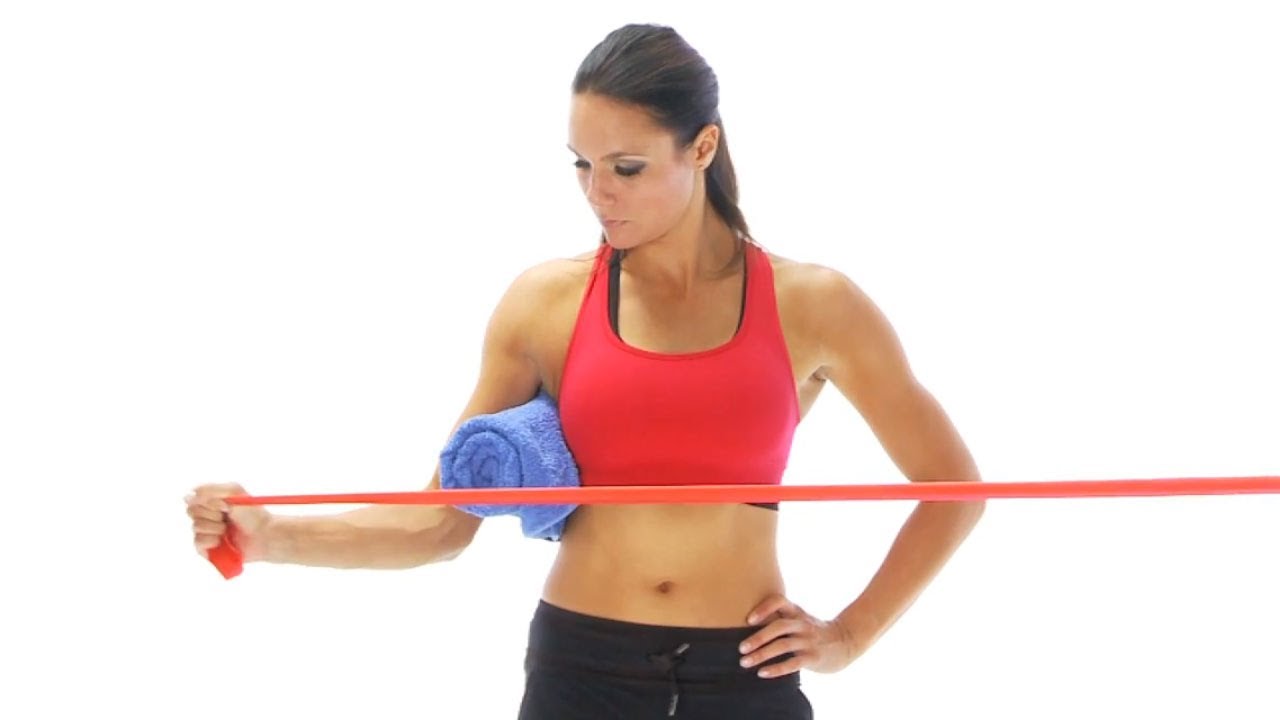
- Rotator cuff isolation — targeted strengthening of the supraspinatus, infraspinatus, teres minor, and subscapularis using resistance bands and light dumbbells at progressively challenging angles
- Postural correction — especially important for Newtown’s desk-based workers, this includes thoracic spine mobility exercises and ergonomic guidance to prevent the rounded-shoulder posture that compresses the subacromial space
- Core and kinetic chain integration — because shoulder function depends on stability from the ground up, we incorporate trunk and hip strengthening to build a solid foundation
Phase 2 generally lasts three to five weeks, with exercises progressing in resistance, speed, and complexity as your tissue tolerance improves.
Phase 3: Return to Activity
The final phase bridges the gap between clinical strength and real-world performance. Your therapist designs sport-specific and activity-specific drills that mirror exactly what you need your shoulder to do:
- For swimmers and tennis players at the Newtown Athletic Club — graduated overhead loading, serve mechanics analysis, stroke-specific resistance training, and fatigue-management strategies for long matches or swim sets
- For Council Rock High School North athletes — throwing progressions for baseball, spike and serve drills for volleyball, and sport-specific plyometric training to prepare for the demands of competition
- For trail users at Tyler State Park — upper-body endurance work, fall-recovery drills, and carrying-load tolerance for hikers who use trekking poles or carry packs
- For desk workers at EPAM, SAP, and Apple Leisure Group — sustained-posture endurance training, workstation optimization, and movement-break routines to prevent re-injury during long hours at the computer
Most patients complete their full rehabilitation program in six to twelve weeks, attending sessions two to three times per week. By the end of Phase 3, you should have full, pain-free range of motion, strength that meets or exceeds pre-injury levels, and the confidence to return to your activities without restriction.
Preventing Rotator Cuff Injuries: Tips for Newtown Residents
Whether you have recovered from a rotator cuff injury or want to avoid one, these strategies are especially relevant to life in Newtown:
- Break up desk time — If you work at EPAM, SAP, or any office environment, set a timer to stand, stretch your chest, and perform shoulder blade squeezes every 45 minutes.
- Warm up before overhead sports — Before swimming laps at the Newtown Athletic Club or stepping onto the tennis court, spend five to ten minutes on band-resisted external rotation and scapular activation exercises.
- Strengthen year-round — Council Rock student-athletes should maintain rotator cuff and scapular strengthening exercises during the off-season, not just during their competitive season.
- Use trekking poles wisely — On Tyler State Park’s uneven terrain, properly adjusted poles reduce shoulder strain. Keep your elbows at roughly 90 degrees and avoid death-gripping the handles.
- Address pain early — A dull ache after a tennis match or a twinge while reaching overhead is your body’s warning signal. Early intervention with physical therapy is far more effective — and far less disruptive — than treating a condition that has been developing for months.
Why Newtown Residents Choose Trinity Rehab
Choosing a physical therapy provider is a personal decision, and we believe our approach resonates with the values Newtown residents hold:
- One-on-one care, every visit — You work directly with your licensed physical therapist for the entire session. No hand-offs, no group circuits.
- Evidence-based treatment — Our protocols are grounded in current research on rotator cuff rehabilitation, including eccentric loading progressions, scapular stabilization programs, and advanced modalities like dry needling and EPAT.
- Local understanding — We know the activities, workplaces, and athletic programs that shape our patients’ lives in Bucks County. That context allows us to design rehabilitation programs that are genuinely relevant to your goals.
- Convenient access — Our Newtown location is easily accessible for residents throughout the township and surrounding communities, minimizing travel time so you can stay consistent with your appointments.
- Referral coordination — Because Pennsylvania requires a physician referral for physical therapy, we work closely with local physicians and orthopedic specialists, including those at St. Mary Medical Center, to ensure a smooth transition into care.
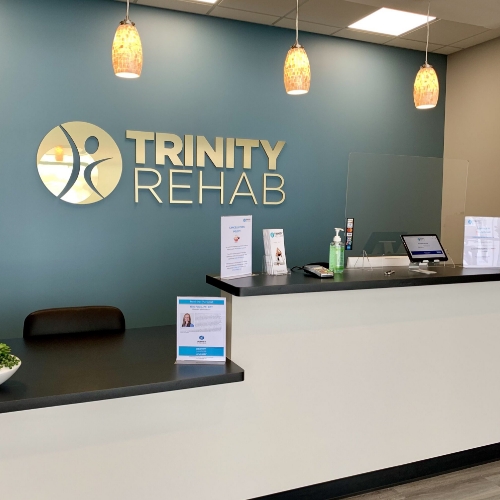
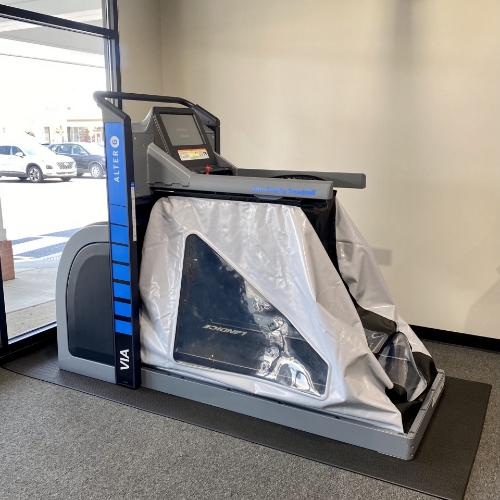
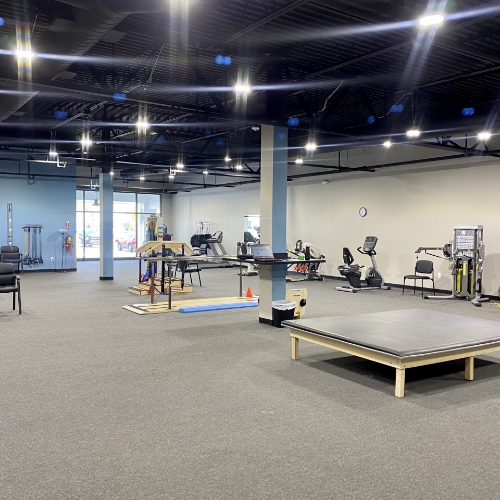
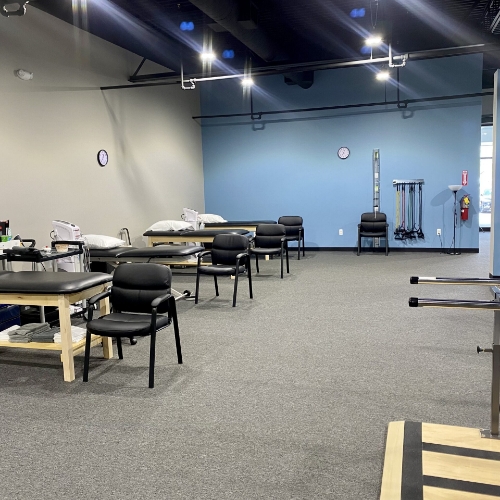
Inside Our Newtown Clinic
Frequently Asked Questions
Where can I get rotator cuff treatment in Newtown, PA?
Do I need surgery for a rotator cuff tear?
How long does rotator cuff rehabilitation take?
Will I be able to swim and play tennis again after a rotator cuff injury?
What should I do if my shoulder hurts but I am not sure it is a rotator cuff injury?
Take the First Step Toward Recovery
A rotator cuff injury does not have to sideline you from the activities that make living in Newtown so rewarding — the trails at Tyler State Park, the courts and pools at the Athletic Club, the weekend baseball games at Veterans Memorial Park, or simply the ability to work comfortably at your desk all day. With the right treatment plan and a therapist who understands your goals, full recovery is well within reach.
Because Pennsylvania requires a physician referral for physical therapy, start by contacting your doctor. Once you have your referral in hand, schedule your appointment at Trinity Rehab in Newtown and let us help you get back to the life you love in Bucks County.
Start Your Recovery in Newtown Today
Don’t let shoulder pain hold you back. Schedule your evaluation at Trinity Rehab in Newtown and take the first step toward a stronger, pain-free shoulder.
Related Conditions & Treatments
Rotator cuff injuries are just one of the many conditions we treat at Trinity Rehab Newtown. Explore our full range of conditions we treat or learn more about specific treatment approaches:
What Our Patients Say



Sign up for free health tips and tricks