

TENNIS ELBOW TREATMENT IN MIDDLETOWN, NJ | TRINITY REHAB
Drive through Middletown Township on a warm Thursday evening and you’ll see it — Tindall Park’s twelve tennis courts fully booked, the eight pickleball courts echoing with paddle strikes, players waiting to rotate in. Walk past the trails, loop around the dog park, and you’ll find the same scene across the township’s 42 square miles: families in constant motion. Over at Normandy Park, another four tennis and pickleball courts stay busy past sundown. Between these two facilities, Middletown hosts one of Monmouth County’s largest racquet sports communities — and the elbow injuries to prove it.
This is a township of roughly 67,000 people who don’t sit still. Nearly a quarter of the population is under 18 and the median age hovers around 44. That translates to parents who commute an average of 37 minutes to Manhattan or Jersey City, race home to coach a youth softball game or drive their kid to tennis practice at Middletown High School North or South, then squeeze in their own Middletown Tennis Association league match before dark. The arm that grips a commuter rail handle at 6:45 a.m. is the same arm swinging a racquet at 7:30 p.m. — and eventually, that arm starts to protest.
If you’ve been feeling a nagging ache on the outside of your elbow that flares when you grip a racquet, twist a doorknob, or lift a coffee mug, you’re likely dealing with tennis elbow. Trinity Rehab Middletown treats this condition every week, working with patients whose lives demand constant use of the very muscles and tendons that are breaking down. Between Deep Cut Gardens, Poricy Park’s nature trails, Sandy Hook’s beaches, kayaking along Ideal Beach and the Raritan Bay shoreline, and weekend rounds at Beacon Hill Country Club, this community stays active — and all that activity funnels through the same forearm and wrist.
What Is Tennis Elbow?
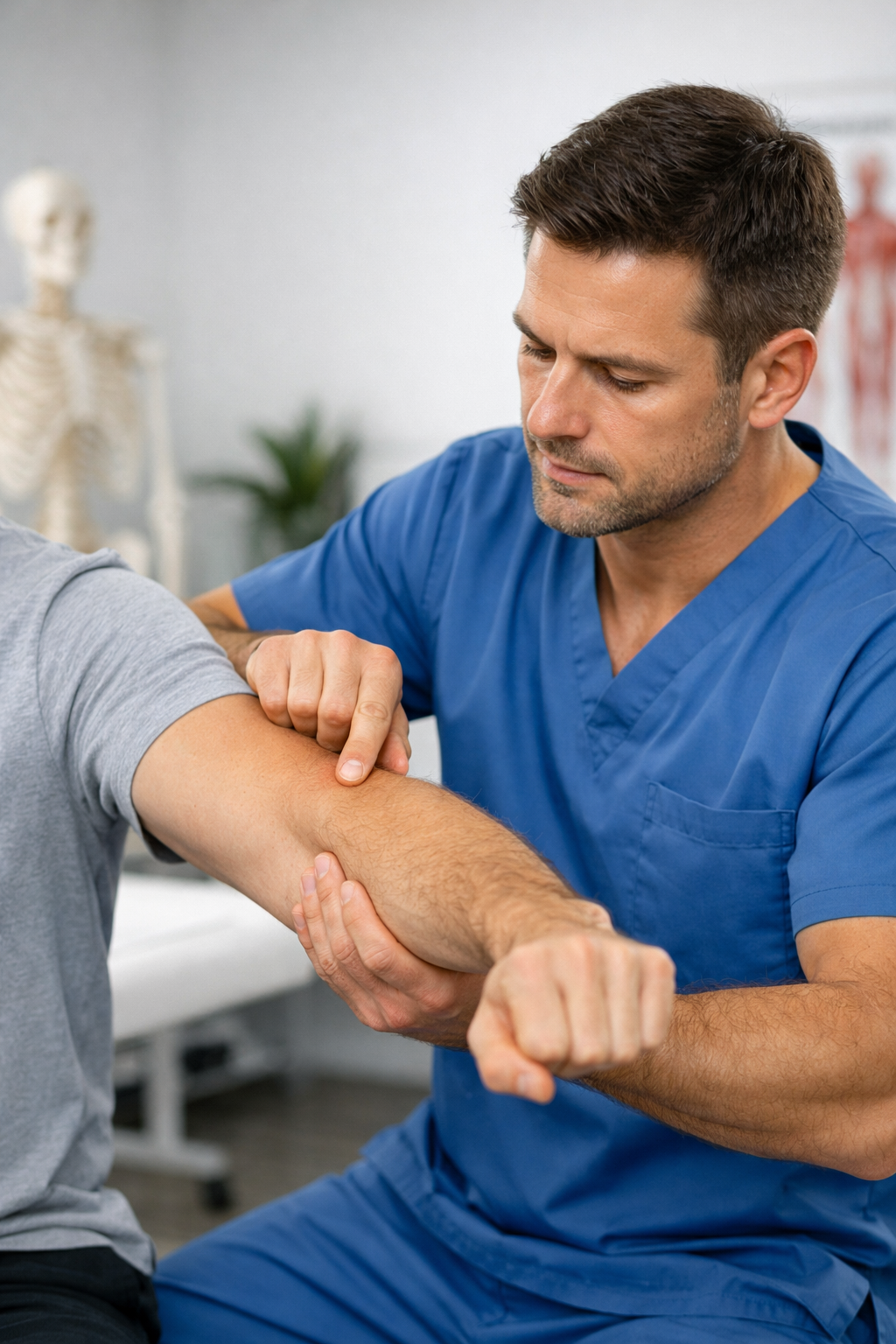
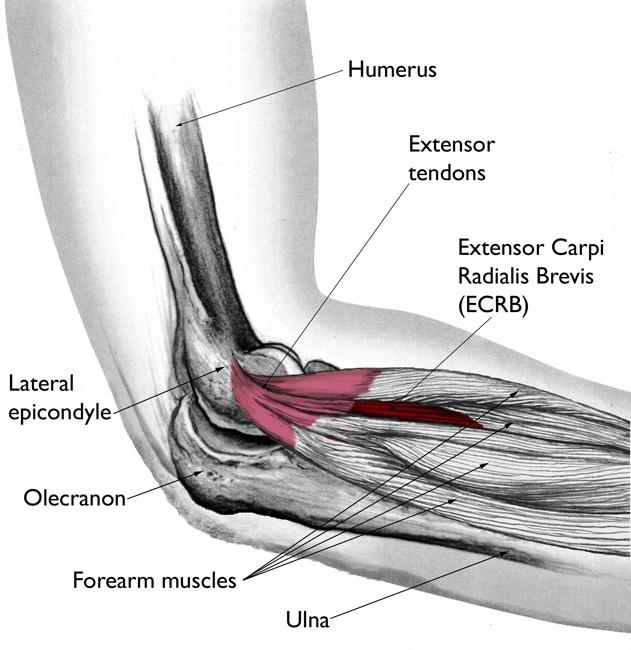
Tennis elbow — clinically known as lateral epicondylitis, lateral epicondylalgia, or lateral elbow tendinopathy — affects the tendons that attach to the bony prominence on the outside of your elbow. The primary structure involved is the extensor carpi radialis brevis (ECRB), a forearm muscle that stabilizes the wrist during gripping and extension. When this tendon is subjected to repetitive stress, it develops microscopic tears and degenerative changes rather than true inflammation — which is why the more accurate modern term is tendinopathy rather than tendinitis.
The condition results from repetitive movements that overload the forearm extensor muscles. These repetitive motions don’t have to be dramatic — they accumulate over weeks of gripping, lifting, twisting, and extending the wrist against resistance. Repetitive tasks at work, repeated backhand strokes on the court, or constant mouse-clicking at a desk can trigger the same degenerative process. Tennis elbow doesn’t discriminate — it hits the Tindall Park tennis regulars, the Amazon warehouse employees scanning packages through ten-hour shifts, and the parents who carry toddlers on one hip while managing everything else.
Who's at Risk in Middletown?
Middletown’s blend of commuter culture, youth sports intensity, and physically demanding local employment creates distinct populations vulnerable to tennis elbow.
The Tindall Park League Player
Mark is 46 and plays in the Middletown Tennis Association’s weekly leagues at Tindall Park. He also picked up pickleball with the Monmouth Pickleball Club last summer. Between Tuesday night doubles, Thursday pickleball, and weekend sessions with his daughter who plays for the Middletown High School South Eagles (Shore Conference), his forearm extensors never fully recover. His elbow pain started as a dull ache after long rallies. He ignored it and kept playing. Within two months, gripping his racquet during a backhand sent a sharp jolt from elbow to wrist. His grip strength dropped — even picking up a tennis ball off the court hurt. Classic racquet overuse compounded by age-related changes in tendon tolerance.
The Warehouse Worker
Jennifer is 34 and works at the Amazon fulfillment center, one of the area’s major employers alongside UPS, Walmart, and Saker ShopRites. Her shifts involve repetitive scanning, lifting packages weighing 5 to 40 pounds, and constant box-handling that demands sustained grip. She first noticed symptoms as a burning sensation on the outside of her elbow four months into the holiday surge season. Her schedule — plus caring for two children enrolled in Middletown Township Public Schools — left no room for rest. The pain now radiates into her forearm when she lifts anything palm-down. Occupational repetitive movements create the same tendon breakdown as sport, often with less opportunity for recovery.
The Parent-Coach-Commuter
David is 41, commutes to Manhattan daily, coaches his son’s Central Jersey Softball Association team on weekday evenings, and recently joined the Monmouth Pickleball Club’s beginner league at Tindall Park. His lateral elbow pain didn’t start on a court — it started with daily life. Gripping a steering wheel, carrying a laptop bag, throwing batting practice, hauling equipment to Poricy Park fields, and picking up a pickleball paddle three times a week pushed his forearm tendons past their threshold. With 86% of Middletown households being owner-occupied, weekend home maintenance adds yet another layer of load. David can’t point to one cause because there isn’t one — it’s the compounding of dozens of daily demands on a tendon that never gets adequate recovery.
How Physical Therapy Treats Tennis Elbow at Trinity Rehab Middletown
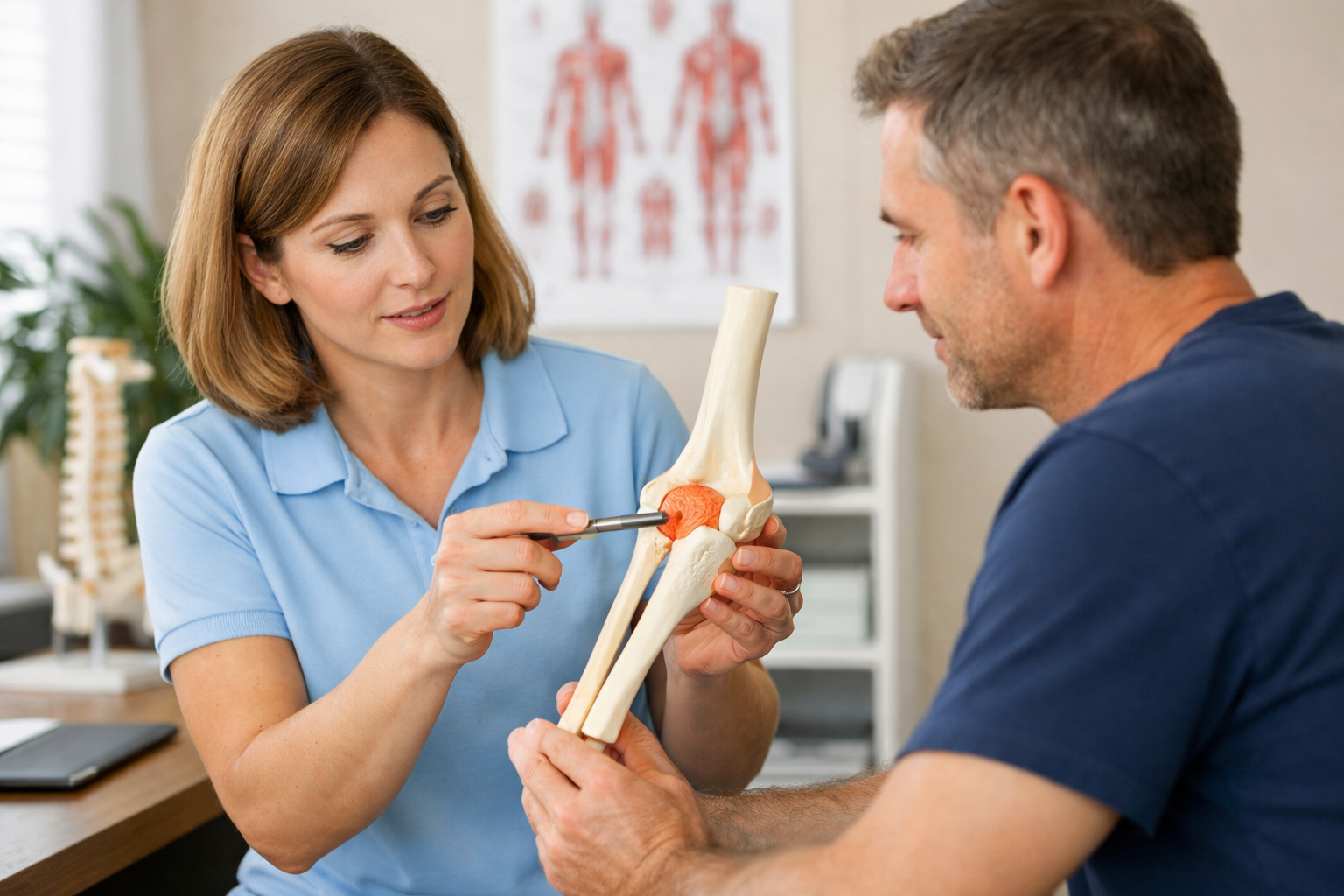
Physical therapy is the gold-standard treatment for tennis elbow. At Trinity Rehab Middletown, treatment follows a phase-based approach tailored to each patient — whether the demands are racquet sports, warehouse work, parenting, or all three.
Phase 1: Pain Reduction and Load Management
The first priority is to reduce pain through manual therapy — soft tissue mobilization of the forearm extensors, lateral elbow joint mobilizations, and myofascial release to stretch and release the muscles of the wrist and forearm. Your physical therapist may also use dry needling to address trigger points in the ECRB and surrounding forearm muscles for significant pain relief.
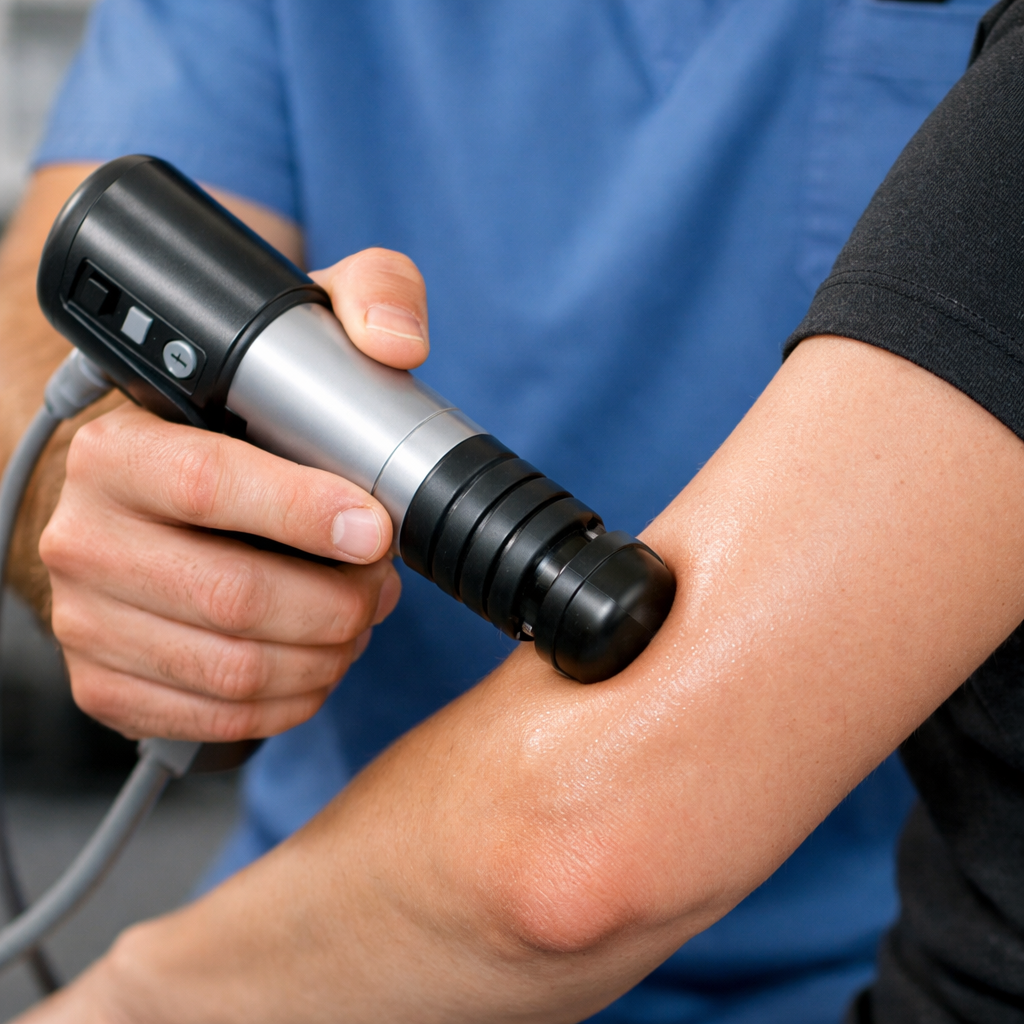
EPAT shockwave therapy delivers acoustic pressure waves to the damaged tendon to stimulate the body’s natural healing response. For patients with chronic lateral elbow tendinopathy that has resisted other interventions, shockwave therapy can be a turning point.
Equally important are activity modifications — identifying which daily movements overload the tendon and developing strategies to reduce that load. A counterforce strap worn just below the elbow may help offload the ECRB during unavoidable gripping tasks.

Phase 2: Progressive Loading and Strengthening
Eccentric exercise is the cornerstone — slowly lowering a weight with the wrist moving from extension to flexion to stimulate tendon remodeling and improve tendon tolerance. Your therapist will ensure you exercise slowly with proper form: shoulders relaxed, palm facing downward, controlled descent from the starting position.
A typical program includes wrist extension exercises with graduated resistance, grip strengthening using therapy putty or rubber balls, forearm pronation and supination drills, and towel twists to build functional endurance with minimal equipment needed. The key principle is gradually increasing load so the tendon adapts and strengthens rather than breaking down again.
Phase 3: Return to Activity
The final phase bridges clinic-based recovery and full return to activity — a graduated return-to-play protocol for the tennis player, simulated work-specific lifting for the warehouse worker, and confirming the parent-coach can handle a full day of commuting, coaching, and play sports without flaring.
Home exercise programming is critical throughout all phases. Tennis elbow management requires consistent daily work — your therapist will design a program that fits your schedule with minimal equipment. The goal is to build better outcomes for the long term by addressing the strength deficits and movement patterns that caused the problem. Patients who commit see significantly lower recurrence rates compared to those who rely on passive treatments alone.
Why Choose Trinity Rehab Middletown?
One-on-one personalized care every visit. You work directly with your physical therapist for the entirety of every session — no hand-offs to aides, no rotating providers. Your therapist knows your history and adjusts treatment based on how your elbow responds.
Advanced technology. EPAT shockwave therapy, dry needling, and skilled manual therapy give your physical therapist a comprehensive toolkit to treat tennis elbow and reduce inflammation at every stage of recovery.
Direct Access — no referral needed. New Jersey law means you can start physical therapy without waiting for a doctor’s referral. For time-pressed Middletown families, that saves days or weeks.
Convenient location for Middletown’s neighborhoods, Lincroft, Red Bank, Highlands, and surrounding communities. Whether you’re heading home from the train station or coming from Tindall Park, fitting appointments into a packed schedule is straightforward.
Built for Middletown’s lifestyle. The therapists here understand the demands of juggling NYC commutes, youth sports coaching, and active family life. That understanding shapes every treatment plan — because resolving elbow pain means nothing if it doesn’t account for the life you’re going back to.
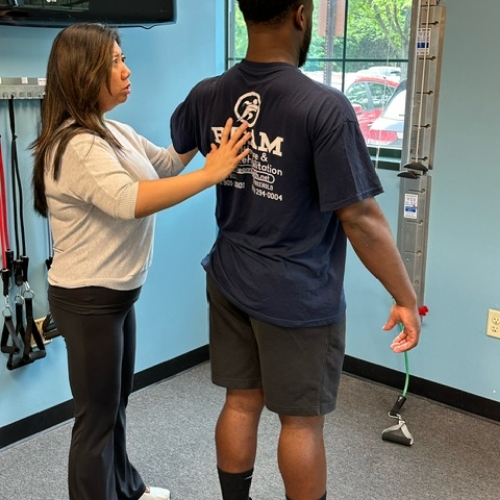
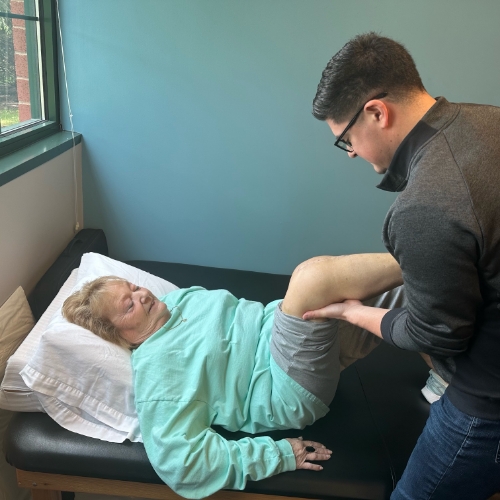
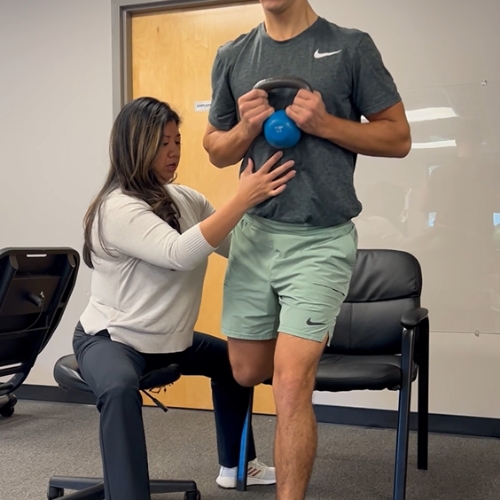
Inside Our Middletown Clinic
Related Conditions & Treatments
Tennis elbow is just one of the many conditions we treat at Trinity Rehab Middletown. Explore our full range of conditions we treat or learn more about specific treatment approaches:
- Tennis Elbow Treatment Overview — Our comprehensive guide to lateral epicondylitis recovery
- Elbow, Wrist & Hand Pain Relief — Other upper extremity conditions we specialize in
- Shoulder Pain Relief — Treatment for rotator cuff, frozen shoulder, and more
- Manual Therapy — Hands-on techniques to restore joint mobility and reduce pain
- Dry Needling — Trigger point therapy for deep muscle tension and pain relief
Related Elbow Care At This Location
Elbow pain can come from different tendon and loading patterns around the joint. A related same-location page is:
Frequently Asked Questions
Is tennis elbow the same as lateral epicondylitis?
Can carrying children cause tennis elbow?
Where can I play tennis in Middletown after rehab?
How does physical therapy compare to corticosteroid injections for tennis elbow?
Can I use Direct Access to start tennis elbow treatment in Middletown right away?
From Tindall Park to the workplace and everywhere in between — get your elbow treated right. Whether you’re a league tennis player knee-deep in competitive season, a warehouse worker, or a busy parent whose every reach causes a jolt of pain, Trinity Rehab Middletown has the expertise to get you back to full strength.
Schedule your appointment at Trinity Rehab Middletown today. No referral needed — just call or book online to get started.