
ROTATOR CUFF INJURY TREATMENT IN MIDDLETOWN, NJ
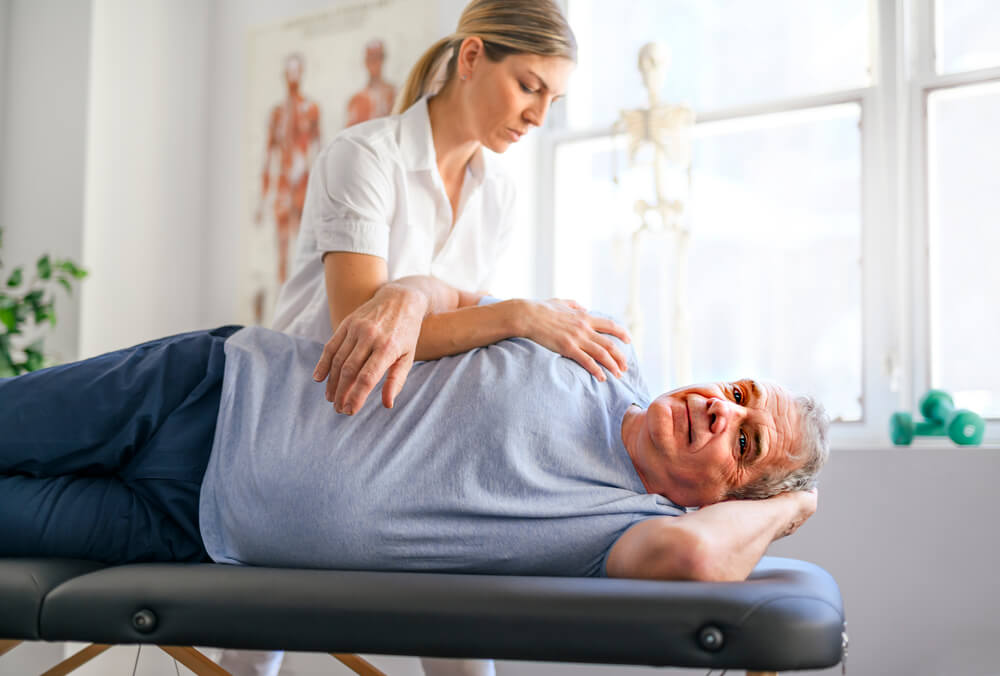
Your Shoulder Keeps You Moving Through Everything Middletown Has to Offer
Whether you spend your weekends kayaking along the Navesink River, hiking the wooded trails at Huber Woods Park, or cheering from the bleachers as Middletown South’s Eagles chase another state baseball championship, your shoulders are working harder than you probably realize. Life in this sprawling bayshore township — with its 41 square miles of suburban neighborhoods, coastal marshes, and waterfront parks — demands a lot from your body. So when a nagging ache turns into sharp pain every time you reach overhead or roll onto your side at night, it can sideline you from the activities that define daily life here.
Rotator cuff injuries are among the most common shoulder problems we treat at Trinity Rehab, affecting Middletown residents of every age. From high school athletes throwing fastballs at Middletown North to healthcare workers lifting patients at Riverview Medical Center, and from weekend anglers casting off the pier at Bayshore Waterfront Park to commuters gripping overhead straps on the train to Manhattan, the demands on your shoulder are constant. The good news is that most rotator cuff injuries respond exceptionally well to skilled physical therapy — and you do not need to live with the pain.
What Is a Rotator Cuff Injury, and Why Does Treatment Matter?
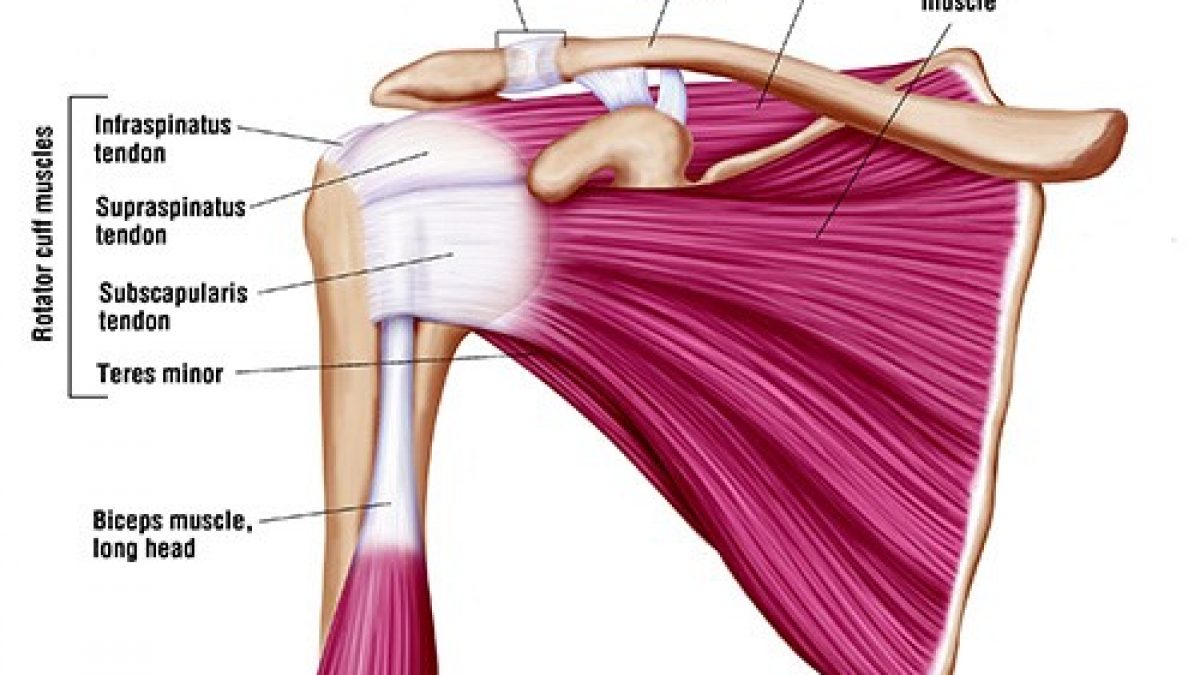
Your rotator cuff is a group of four muscles and their tendons — the supraspinatus, infraspinatus, teres minor, and subscapularis — that wrap around the head of your upper arm bone and hold it securely within the shallow socket of your glenohumeral joint. These muscles act as dynamic stabilizers, letting you lift, rotate, and reach while keeping the ball of your arm centered in its socket.
When one or more of these structures becomes irritated, partially torn, or fully torn, you are dealing with a rotator cuff injury. The spectrum ranges from rotator cuff tendinopathy — where the tendon becomes inflamed or degenerated — to acute partial or complete tears. Without treatment, compensatory movement patterns develop, range of motion shrinks, and what started as a minor annoyance becomes a chronic limitation affecting your work, sleep, and quality of life.
Research consistently shows that structured physical therapy can resolve the majority of rotator cuff injuries without surgery, and for those who do need surgical repair, pre-surgical rehab leads to better outcomes.
Common Causes of Rotator Cuff Injuries in Middletown
Middletown’s blend of athletics, outdoor recreation, and professional life creates specific shoulder demands we see in our patients every week.
Youth and High School Athletics
The Shore Conference is fiercely competitive. Baseball and softball players at Middletown High School North (Lions) and Middletown High School South (Eagles, with multiple Group IV state baseball titles) put enormous repetitive stress on their shoulders through overhead throwing. Volleyball players generate powerful spikes that load the supraspinatus and infraspinatus with each swing. Tennis players competing through the Middletown Tennis Association and at the Jersey Shore Junior Tennis Academy subject their serving shoulder to repeated high-velocity motions. Over a season, these demands can outpace the tendon’s ability to recover, leading to tendinopathy or partial tears.
Water Sports and Outdoor Recreation
Living along the Raritan Bay and Navesink River means water is part of the culture. Kayaking, paddleboarding, and swimming involve sustained rotational forces through the shoulder. Casting a fishing rod from Bayshore Waterfront Park or Ideal Beach might seem low-impact, but the repetitive motion stresses rotator cuff tendons over time. Even hikers at Huber Woods can aggravate a vulnerable shoulder when using trekking poles along the bluffs above the Navesink.
Workplace Demands
Middletown Township Public Schools, the township’s largest employer, relies on teachers, custodial staff, and maintenance workers who frequently reach overhead and carry supplies. Nurses and technicians at Riverview Medical Center routinely lift and reposition patients — a known risk factor for rotator cuff strain. If you have sustained a shoulder injury at work, our team has extensive experience treating work injuries and can coordinate with your employer and insurance.
Age-Related Degeneration
Middletown’s median age sits in the early-to-mid 40s — precisely when age-related changes in the rotator cuff accelerate. Tendons lose elasticity, bone spurs can narrow the space where tendons glide, and decades of overhead activity accumulate. Gardening at Deep Cut Gardens, maintaining your home, or poor posture worsened by long commutes can become the final stressor that tips a weakened tendon into a symptomatic injury.
Symptoms of a Rotator Cuff Injury
You may be dealing with a rotator cuff problem if you notice:
- A deep, aching pain in the front or side of your shoulder that worsens at night, especially when lying on the affected side
- Difficulty reaching behind your back to tuck in a shirt, clasp a bra, or reach your back pocket
- Weakness or pain when lifting overhead, such as placing items on a high shelf
- A catching, clicking, or grinding sensation during shoulder movement
- Progressive loss of range of motion, making it harder to raise your arm fully
- Pain radiating down the outside of your upper arm, sometimes misidentified as a biceps issue
- rotator cuff treatment overview
If any of these sound familiar, do not wait. New Jersey’s direct access law means you can start physical therapy for shoulder pain without a physician referral, so there is no reason to delay.
How Physical Therapy Treats Rotator Cuff Injuries: A Three-Phase Approach
At Trinity Rehab, we use a progressive, evidence-based framework that meets you where you are and advances at a pace your body can handle. Every plan is built around your specific injury and goals — whether that is pitching in a Middletown Recreation adult softball league, swimming laps at Life Time, or simply sleeping without shoulder pain.
Phase 1: Reduce Pain and Restore Baseline Mobility
The first priority is to calm the irritated tissue and begin restoring passive range of motion to the glenohumeral joint.
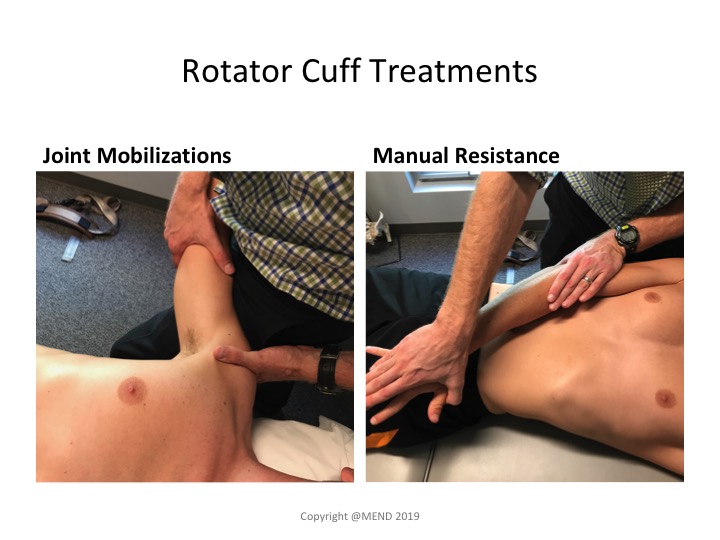
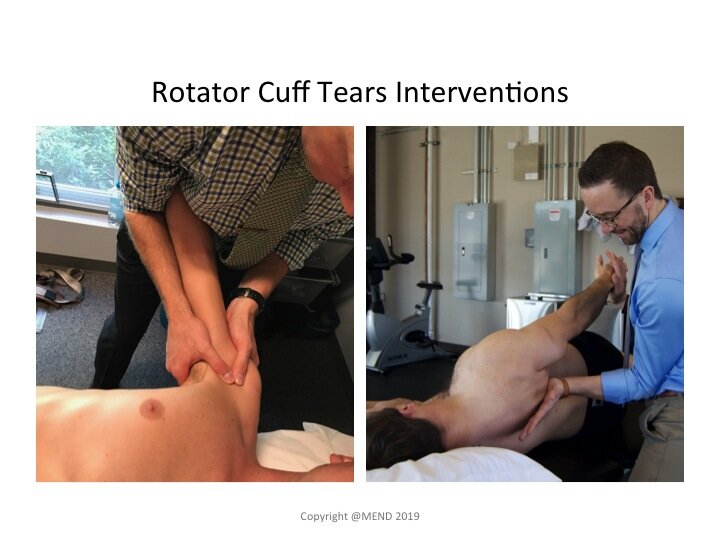
- Manual therapy — Skilled hands-on joint mobilizations and soft tissue work to reduce muscle guarding, improve blood flow, and restore glide within the shoulder joint.
- Passive and active-assisted range of motion exercises — Your therapist guides your shoulder through controlled arcs of movement to prevent capsular tightening while respecting your tissue’s healing capacity.
- Pain modulation — Ice, heat, electrical stimulation, or positioning guidance to manage symptoms between sessions.
- Postural education — Many Middletown residents spend hours commuting or at desks, rounding the shoulders forward and compressing the subacromial space. We teach you to correct these patterns.
- Early scapular stabilization — Gentle exercises to restore proper shoulder blade positioning, building the foundation the rotator cuff operates from.
Phase 2: Rebuild Strength and Neuromuscular Control
Once pain decreases and passive mobility improves, we rebuild the strength and control your shoulder needs under real-world loads.
- Isometric strengthening — Static contractions that build tendon resilience without requiring painful joint movement, bridging the gap between pain management and dynamic training.
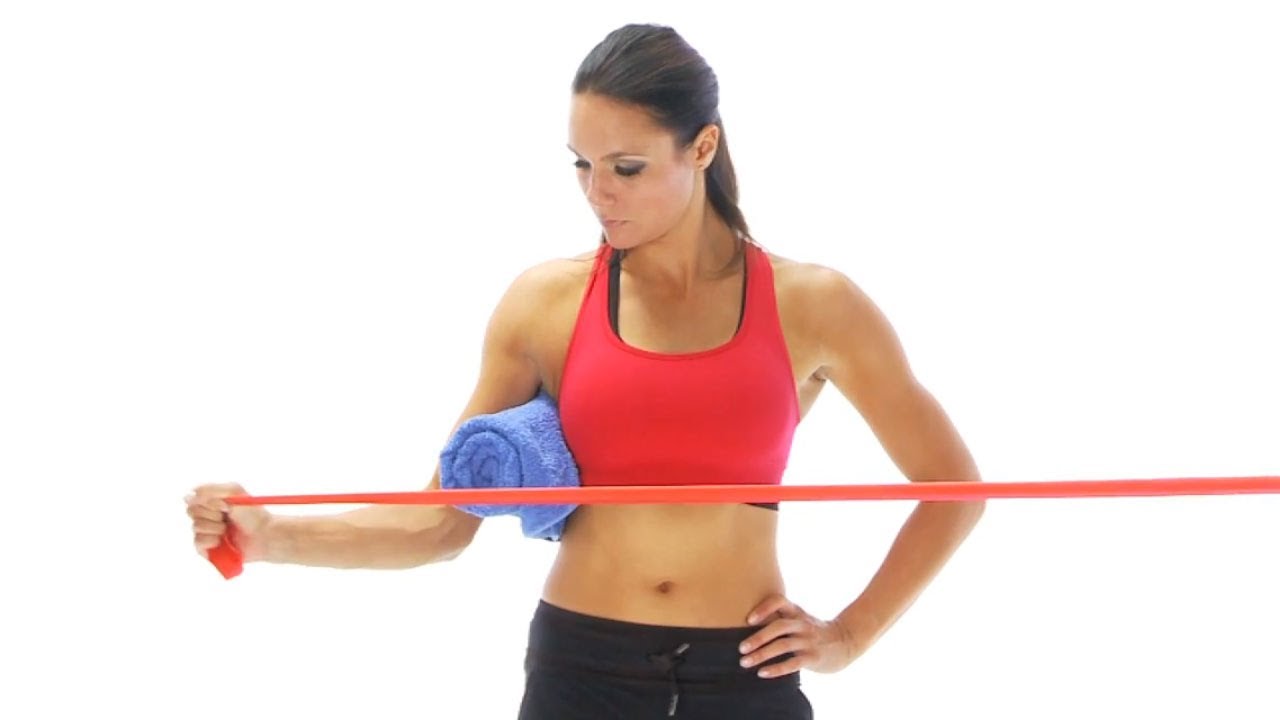
- Resistance band and dumbbell progressions — Targeted exercises for the supraspinatus, infraspinatus, and other rotator cuff muscles, progressed as your tolerance improves.
- Eccentric loading protocols — Slow, controlled lowering exercises that are among the most evidence-supported interventions for rotator cuff tendinopathy. Eccentric loading stimulates tendon remodeling at the cellular level.
- Proprioceptive training — Exercises that retrain your brain’s ability to sense and control shoulder position, especially important for athletes returning to reactive movements.
- Posterior capsule stretching — The back of the shoulder capsule often tightens after injury, limiting internal rotation. Targeted stretching restores this mobility and reduces impingement risk.
Phase 3: Return to Activity and Long-Term Resilience
The final phase bridges clinical improvement and real-life performance, highly individualized to your goals.
- Task-specific rehabilitation — If you need to return to overhead lifting at work or stocking shelves at Food Circus, we replicate and train those exact patterns in a controlled setting.
- Sport-specific training — For the baseball player at Middletown South, we build a throwing progression. For the tennis player, we address serve mechanics. For the kayaker, we simulate paddle strokes with progressive resistance. Our experience with sports injuries means we understand the specific demands your shoulder will face.
- Dry needling — Thin filament needles inserted into trigger points within the rotator cuff and surrounding muscles to release tension, improve blood flow, and accelerate recovery.
- EPAT shockwave therapy — Acoustic pressure waves delivered into the damaged tendon to stimulate cellular repair and break down calcifications. A powerful option for chronic rotator cuff tendinopathy that has not fully responded to traditional therapy.
- Home exercise program — A tailored set of exercises and stretches to maintain your gains and continue building strength after formal treatment ends.
Preventing Rotator Cuff Injuries: Tips for Middletown Residents
Whether you are trying to avoid a first injury or prevent a recurrence, these habits make a meaningful difference:
- Strengthen your rotator cuff and scapular muscles 2-3 times per week. Simple resistance band exercises for external and internal rotation take less than 15 minutes and dramatically reduce injury risk.
- Stretch regularly. Focus on the posterior capsule and pectoral muscles. If you commute to NYC daily, stretch your chest and shoulders when you get home to counteract hours of rounded posture.
- Use proper mechanics. When paddling on the Navesink, engage your core rather than pulling exclusively with your shoulder. When throwing, use your legs and trunk to generate power.
- Warm up before activity. A five-minute dynamic warm-up with arm circles and band pull-aparts prepares your rotator cuff — whether you are heading to pickleball at the Middletown Recreation courts or an early round at Hominy Hill Golf Course.
- Listen to your body. Shoulder pain that persists for more than a few days or wakes you at night deserves professional evaluation, not a wait-and-see approach.
Why Middletown Residents Choose Trinity Rehab
When you walk into Trinity Rehab, you are not handed off to an aide or rotated between therapists. You work one-on-one with a licensed physical therapist who knows your name, understands your injury, and is invested in your recovery from the first visit to the last.
We combine proven manual therapy techniques with advanced options like dry needling and EPAT shockwave therapy — tools that many area clinics do not offer.
With New Jersey’s direct access law, you can schedule an appointment without a physician referral. Our therapists have deep experience treating Middletown’s active community — from Shore Conference athletes to bayshore weekend warriors to retirees who want to keep gardening and golfing without limitation.
Inside Our Middletown Clinic
Frequently Asked Questions
Where can I get rotator cuff treatment in Middletown, NJ?
How long does it take to recover from a rotator cuff injury with physical therapy?
Can I avoid surgery for a rotator cuff tear?
What should I avoid doing with a rotator cuff injury?
Does insurance cover physical therapy for rotator cuff injuries in New Jersey?
Take the First Step Toward a Pain-Free Shoulder
You do not have to give up the things you love because of shoulder pain. Whether your goal is to get back to paddling on the Navesink, throwing batting practice for your kid’s Little League team, tending the gardens at home, or simply reaching the top shelf without wincing, Trinity Rehab is here to help.
Schedule your appointment today and let our team build a treatment plan tailored to your life in Middletown. We will walk with you through every phase of recovery.
Start Your Recovery in Middletown Today
Don’t let shoulder pain hold you back. Schedule your evaluation at Trinity Rehab in Middletown and take the first step toward a stronger, pain-free shoulder.
Local Rotator Cuff Care in Middletown, NJ
For patients in Middletown and nearby communities such as Red Bank, Hazlet, Holmdel, Atlantic Highlands, rotator cuff rehab has to fit real routines: Monmouth County shore-area errands, golf, yard work, and weekend activity. Your therapist will connect shoulder symptoms to the daily demands that matter most, including lifting, carrying, reaching behind the back, and returning to recreation without flare-ups.
Your first visit at Trinity Rehab Middletown includes a review of your symptoms, shoulder and neck mobility, rotator cuff strength, scapular control, posture, lifting mechanics, and the activities you need to return to. The clinic is located at Union Square Plaza, 470 NJ-35, Red Bank, NJ, 07701.
Call (732) 219-5700 for the Middletown clinic, or use the clinic page for current hours and appointment details.
For directions, parking context, and the best route to the clinic, use Google Maps for Trinity Rehab Middletown.
Rotator cuff injuries can overlap with shoulder pain, shoulder impingement, neck pain, and upper back mobility limitations. Your plan may include manual therapy, progressive rotator cuff loading, scapular strengthening, posture work, dry needling when appropriate, and careful return-to-work or return-to-sport progression.
Related Conditions & Treatments
Rotator cuff injuries are just one of the many conditions we treat at Trinity Rehab Middletown. Explore our full range of conditions we treat or learn more about specific treatment approaches:
What Our Patients Say



Sign up for free health tips and tricks