
TENNIS ELBOW TREATMENT IN METUCHEN, NJ | TRINITY REHAB
Metuchen packs a lot of life into 2.8 square miles. Professionals step off the NJ Transit platform after a 40-minute ride from Penn Station, walk past the Forum Theater and the weekend farmers market, and head to Oakland Park’s tennis courts or the Sportsplex for an evening league game — all without getting in a car. It is the kind of walkable, tight-knit borough where you know the people on the next court and a round at Metuchen Golf & Country Club ends with talk about your kid’s Bulldogs season.
But that active lifestyle has a catch. The same hand that grips a laptop bag through the morning commute, pounds a keyboard for eight hours, and then swings a racket three nights a week is asking a lot of the tendons on the outside of the elbow. If a nagging ache has started following you from the train platform to the tennis court, you are not alone. Tennis elbow is one of the most common overuse injuries we treat at Trinity Rehab Metuchen — and physical therapy is the most effective path to lasting recovery.
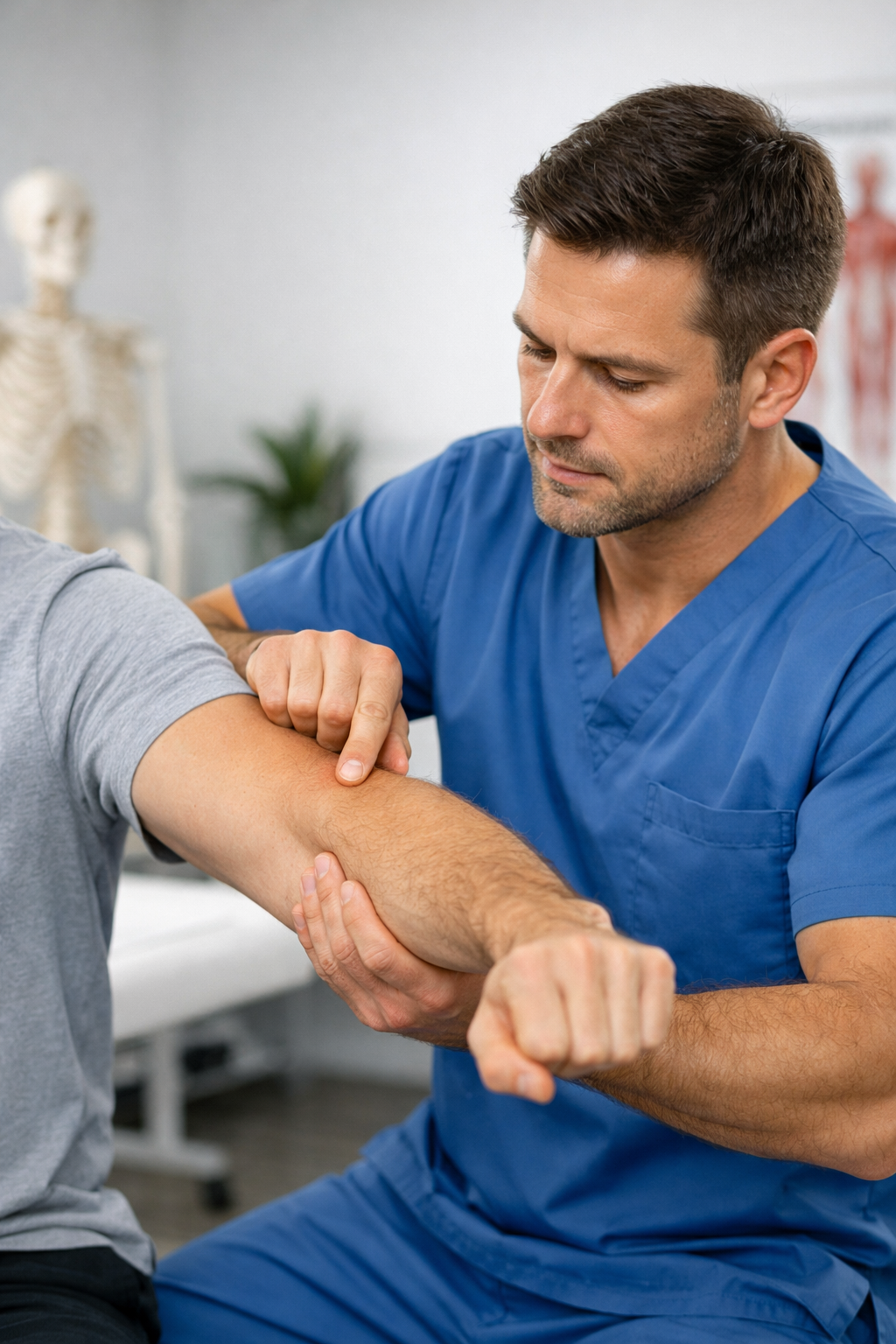
What Is Tennis Elbow?
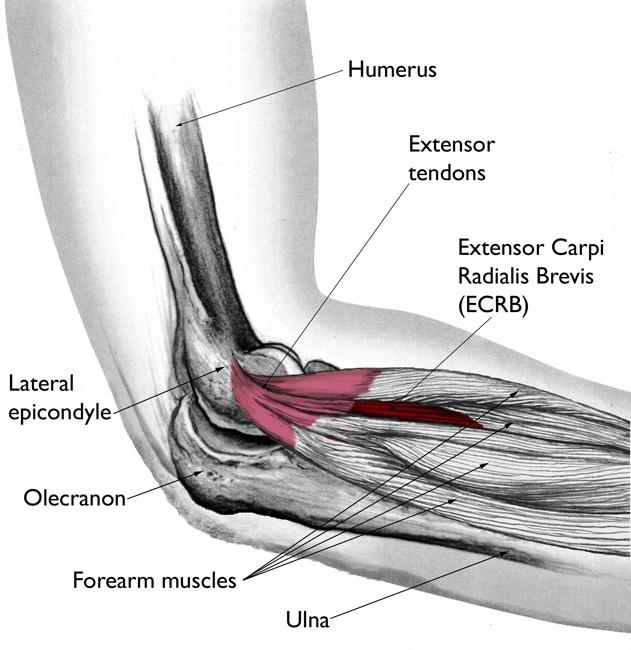
Tennis elbow — clinically known as lateral epicondylitis, lateral epicondylalgia, or lateral elbow tendinopathy — affects the tendons that attach to the lateral epicondyle, the bony prominence on the outside of the elbow. The primary structure involved is the extensor carpi radialis brevis (ECRB), which stabilizes the wrist during gripping and extension.
Despite the name, tennis elbow develops whenever the forearm muscles are subjected to repetitive movements that exceed the tendon’s capacity to recover. Repetitive motions like clicking a mouse, gripping tools, or performing repetitive tasks at a workstation trigger the same cycle of tendon irritation and pain as a thousand backhands. In a borough as small and active as Metuchen, lateral elbow pain can sideline you from the recreation leagues, clubs, and community activities that define daily life. The good news: with the right treatment approach, tennis elbow management does not require surgery or prolonged rest.
Who Is at Risk in Metuchen?
Metuchen’s roughly 15,000 residents skew toward a median age of 39 to 44 — the window where tendon resilience declines while professional and recreational demands stay high. High education levels mean a large share of the workforce sits in desk roles involving hours of keyboard use. Add in the borough’s recreation tennis classes, pickleball at Oakland and Roosevelt Parks, USA Sport Group camps, and Sportsplex adult leagues, and you have a population loading their forearm tendons from both sides: occupational strain during the week and sport-specific strain on evenings and weekends.
The Commuter-Athlete
Mark, 43, catches the 7:14 NJ Transit every morning. His right hand grips a messenger bag to the station, navigates spreadsheets by mouse all day, and then plays in a USA Sport Group tennis clinic at Oakland Park three evenings a week. A dull ache on the outside of his elbow after a Saturday doubles match soon crept into his work life — mousing hurt, shaking hands hurt, and his forehand lost confidence. His forearm muscles and the ECRB tendon never got a true recovery window.
The Bulldogs Athlete
Sofia, 16, plays varsity tennis for the Metuchen High School Bulldogs and supplements her school season with hitting sessions at Roosevelt Park. Midway through the spring schedule, her coach noticed her shaking out her racket arm between points. A developing case of elbow tendinopathy signaled her training load had outpaced her tendon’s ability to adapt after the winter break — putting her county tournament at risk.
The Healthcare Professional
Diana, 38, works as a medical assistant at Atlantic Health’s facility at 45 Pearl Street. Drawing blood, manipulating syringes, operating manual blood-pressure cuffs, and typing patient notes demand sustained grip and repeated forearm pronation and supination all shift. For healthcare workers near JFK University Medical Center and DaVita’s dialysis services, that combination of clinical work and computer documentation creates exactly the repetitive strain pattern that leads to lateral epicondylitis.
How Physical Therapy Treats Tennis Elbow at Trinity Rehab Metuchen
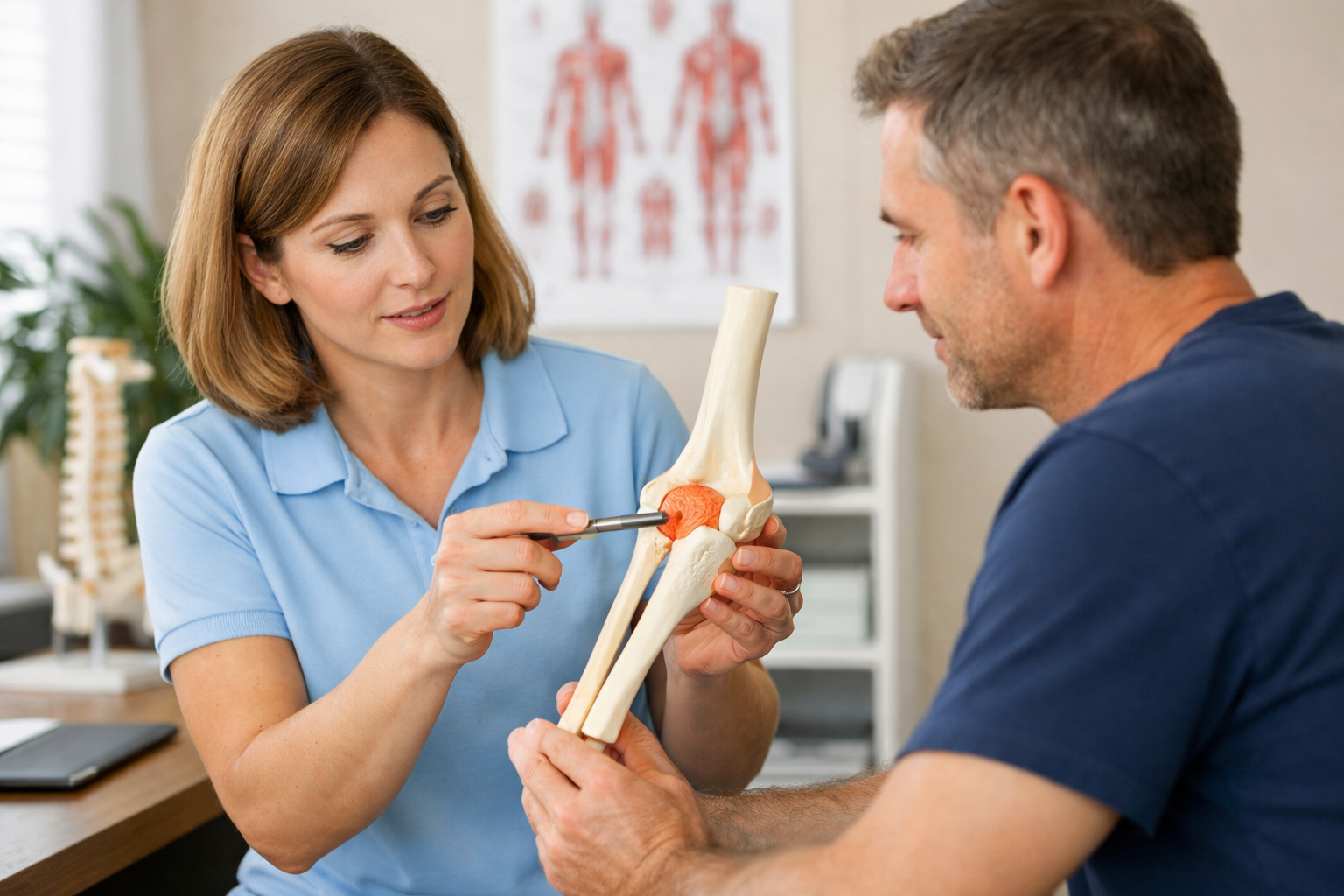
We approach treatment through a structured, phase-based plan that moves you from pain relief to full return to activity. Every plan is individualized — a 16-year-old varsity athlete and a 43-year-old commuter have different demands, and the treatment reflects that.
Phase 1: Reduce Pain and Protect the Tendon
- Manual therapy — hands-on techniques targeting the forearm extensors, wrist mobilization, and soft tissue work around the lateral elbow to reduce muscle tension and reduce inflammation.
- Dry needling — fine filament needles inserted into trigger points in the forearm muscles to release tension and promote healing. Many patients report noticeable symptoms improvement within one to two sessions.
- Activity modifications — adjusting your mouse setup, commuter bag grip, or racket technique to lower daily tendon load.
- Counterforce strap — a forearm brace that redistributes load away from the damaged tendon for immediate pain relief during gripping tasks.
Phase 2: Rebuild Tendon Tolerance
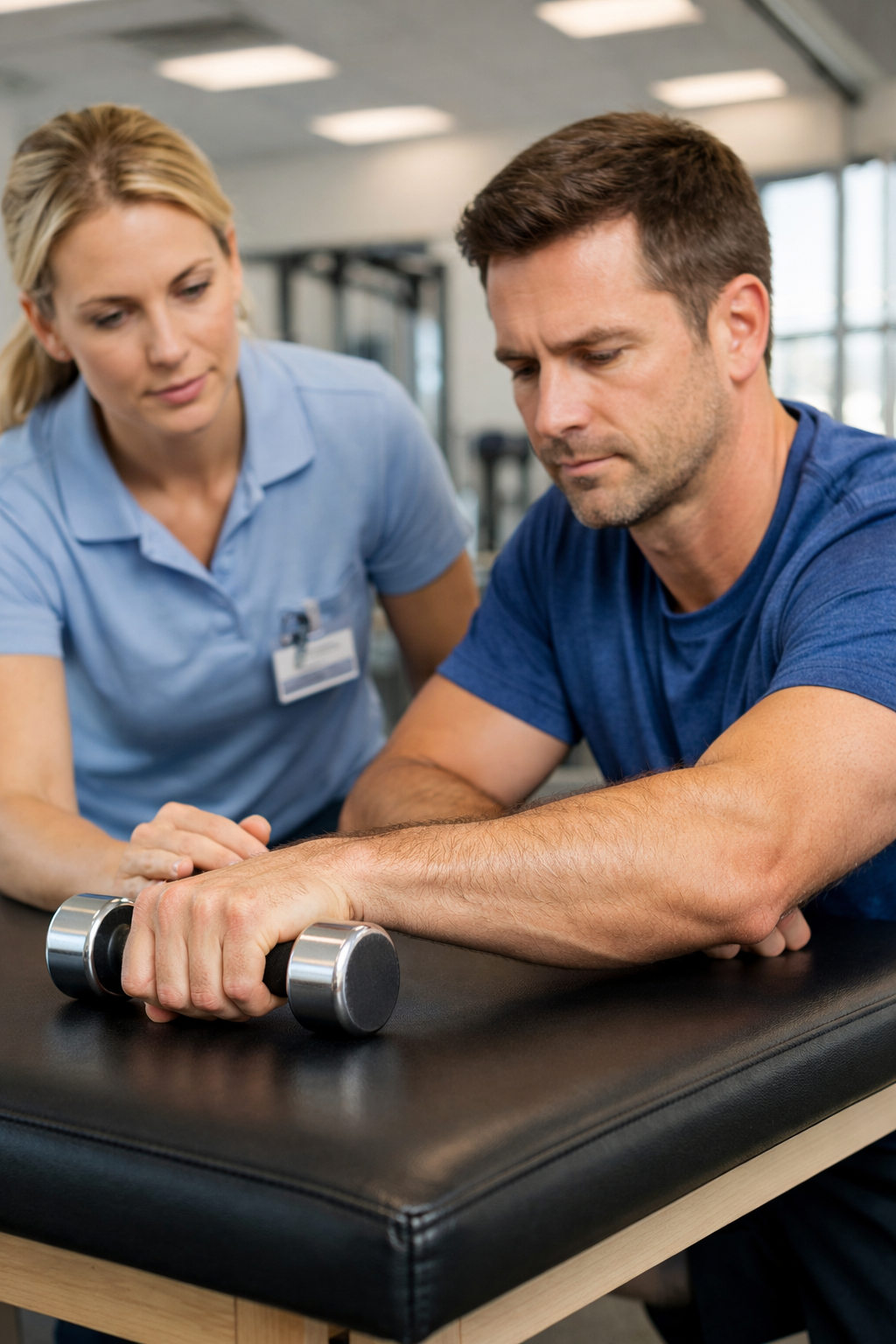
Tendons respond to carefully dosed mechanical stress. The key is progressive loading.
- Eccentric exercise — the cornerstone of tendon rehab. Eccentric wrist extension exercises involve slowly lowering a weight with the palm facing downward from a starting position of wrist extension, stimulating tendon remodeling and improving long-term tendon tolerance. Exercise slowly and increase resistance as the tendon adapts.
- Grip strengthening — therapy putty, dynamometers, and towel twists to rebuild grip strength without overloading the lateral elbow.
- Forearm pronation and supination drills — rotating the forearm with the arm outward and shoulders relaxed to restore rotational strength.
- Wrist extension and flexion exercises — performed from a supported position with gradual increases in range and resistance.
Unlike corticosteroid injections, which may offer short-term relief but weaken tendon structure over time, progressive strengthening through physical therapy produces better outcomes that last.
Phase 3: Return to Sport and Activity
The final phase bridges the clinic and real life. For Mark, that means progressively reintroducing match play at Oakland Park. For Sofia, a structured return-to-serve progression timed for the Bulldogs’ postseason. For Diana, confirming her forearm can handle a full shift at Atlantic Health.
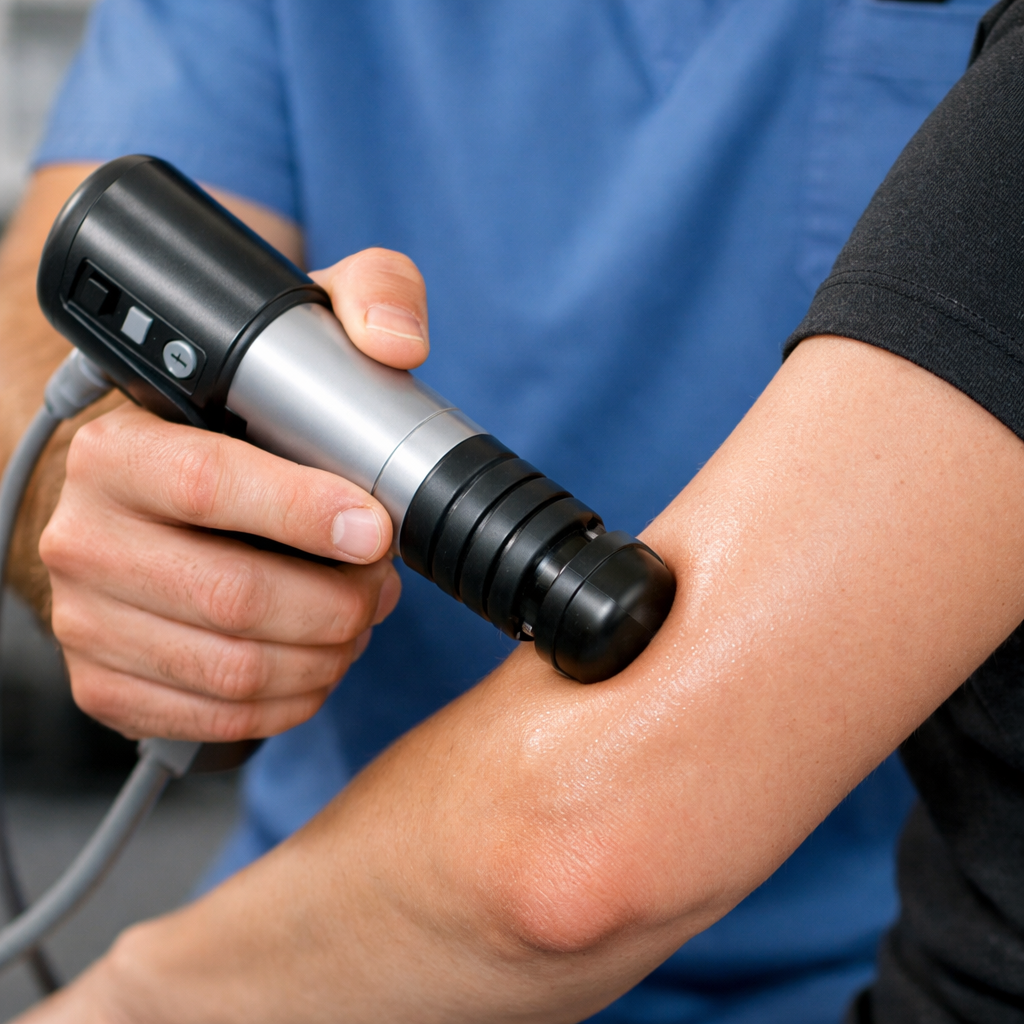
This phase may incorporate EPAT shockwave therapy — a non-invasive technology delivering acoustic pressure waves to the tendon to stimulate cellular repair. EPAT is especially valuable for tendons slow to respond to exercise alone. Throughout all phases, we set clear long-term goals tied to the activities that matter to you — not just “reduce pain” but “play a full set without elbow pain.”
Why Choose Trinity Rehab Metuchen?
One-on-one personalized care. You work directly with a licensed physical therapist every session — no hand-offs, no shared attention. Your therapist knows your history, your recovery goals, and exactly where you stand, whether you want to play sports at the Sportsplex or simply carry groceries from the farmers market without pain.
Advanced technology. EPAT shockwave therapy, dry needling, and skilled manual therapy are standard parts of our treatment protocols — not add-ons. Combined with progressive strengthening and movement programming, they give you a comprehensive approach to treat tennis elbow.
Direct Access — no referral needed. New Jersey law lets you see a physical therapist without a physician referral. If your elbow started hurting after a match at Centennial Park or a long week of typing, schedule directly and begin treatment right away.
Walking distance from downtown. Trinity Rehab Metuchen sits near the NJ Transit station and Main Street corridor. Consistency is one of the biggest predictors of successful rehab, and it is easier to stay consistent when your clinic is a short walk from where you already are — no equipment needed beyond your own two feet to get here.
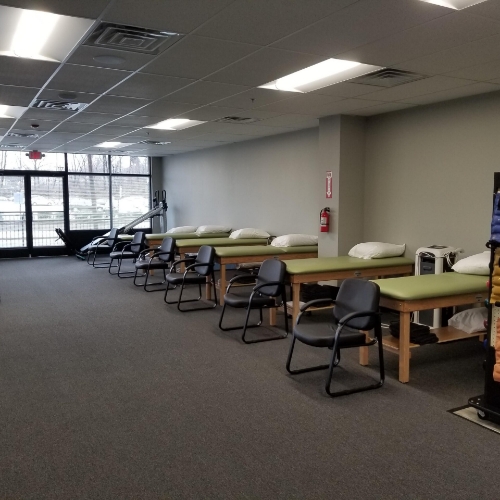
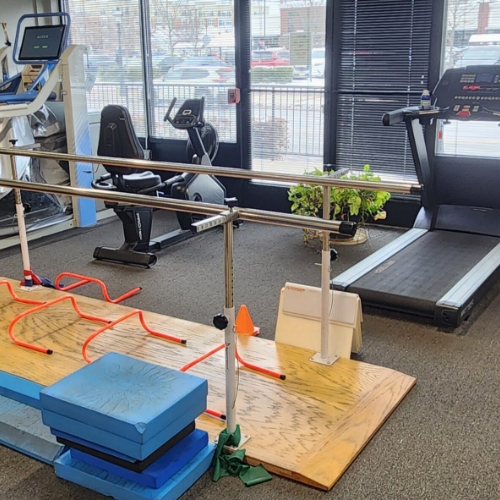
Inside Our Metuchen Clinic
Related Conditions & Treatments
Tennis elbow is just one of the many conditions we treat at Trinity Rehab Metuchen. Explore our full range of conditions we treat or learn more about specific treatment approaches:
- Tennis Elbow Treatment Overview — Our comprehensive guide to lateral epicondylitis recovery
- Elbow, Wrist & Hand Pain Relief — Other upper extremity conditions we specialize in
- Shoulder Pain Relief — Treatment for rotator cuff, frozen shoulder, and more
- Manual Therapy — Hands-on techniques to restore joint mobility and reduce pain
- Dry Needling — Trigger point therapy for deep muscle tension and pain relief
Related Elbow Care At This Location
Elbow pain can come from different tendon and loading patterns around the joint. A related same-location page is:
Frequently Asked Questions
How do I know if my elbow pain is tennis elbow?
Can typing and computer work cause tennis elbow?
Does Trinity Rehab Metuchen accept my insurance?
Can I walk to Trinity Rehab Metuchen from the train station?
How many sessions of physical therapy will I need for tennis elbow?
Elbow pain shouldn’t keep you on the sidelines. Whether it is affecting your backhand at Oakland Park, your productivity at the office, or your ability to stretch and enjoy everything this borough offers, Trinity Rehab Metuchen is here to help. Schedule your appointment at Trinity Rehab Metuchen today and start your path back to the active life that makes the Brainy Borough home.