
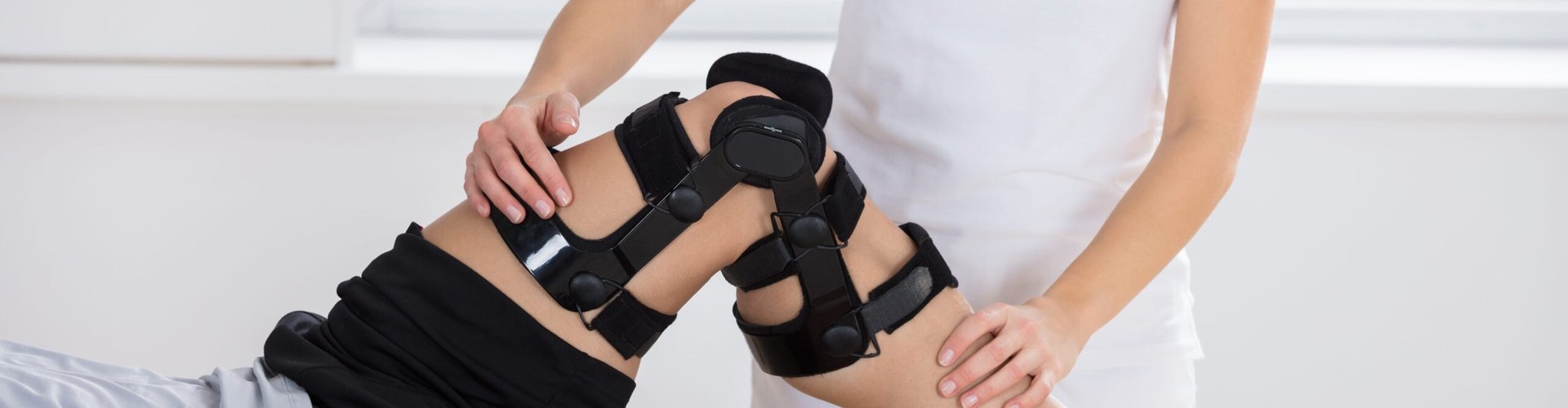
ACL TREATMENT PHYSICAL THERAPY IN METUCHEN, NJ
Metuchen didn’t earn the nickname “Brainy Boro” by accident. This is a community that demands substance over shortcuts — whether supporting the award-winning Main Street district (Great American Main Street Award, 2023) or deciding how to recover from an anterior cruciate ligament injury. That rigor matters when an ACL tear upends your life. A Bulldogs track and field hurdler who lands wrong and hears the pop. A cyclist who crashes on the Middlesex Greenway. A Sportsplex indoor soccer player who pivots into disaster during a league game. A commuter who slips on the Metuchen Train Station platform during a January freeze. In a dense, 40-minutes-to-Penn-Station borough where time is precious, getting recovery right the first time is non-negotiable.
At Trinity Rehab in Metuchen, we deliver ACL treatment physical therapy built on the evidence-based precision this community expects — structured, measurable, and designed to return you to the life you lead.
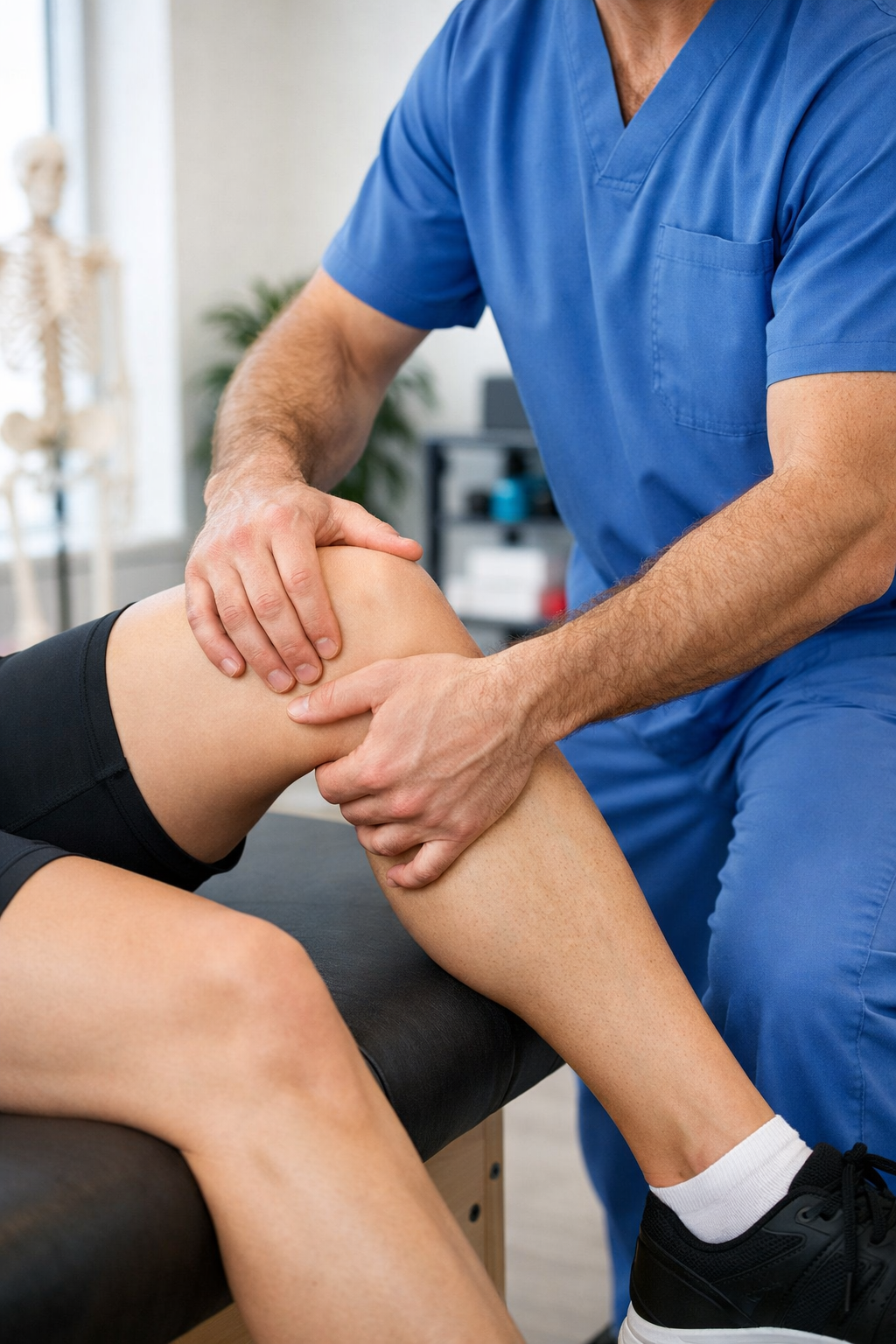
UNDERSTANDING ACL INJURIES
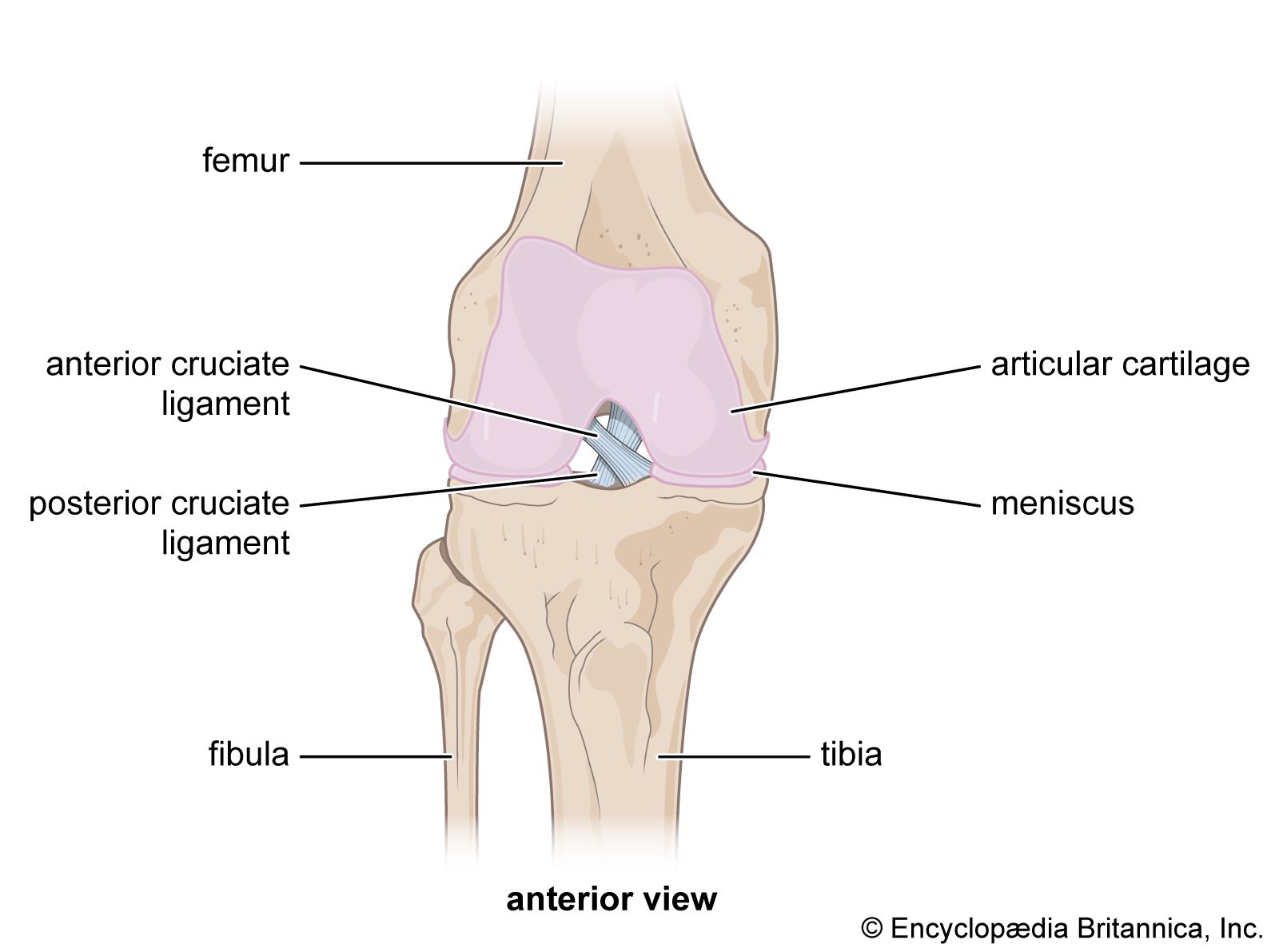
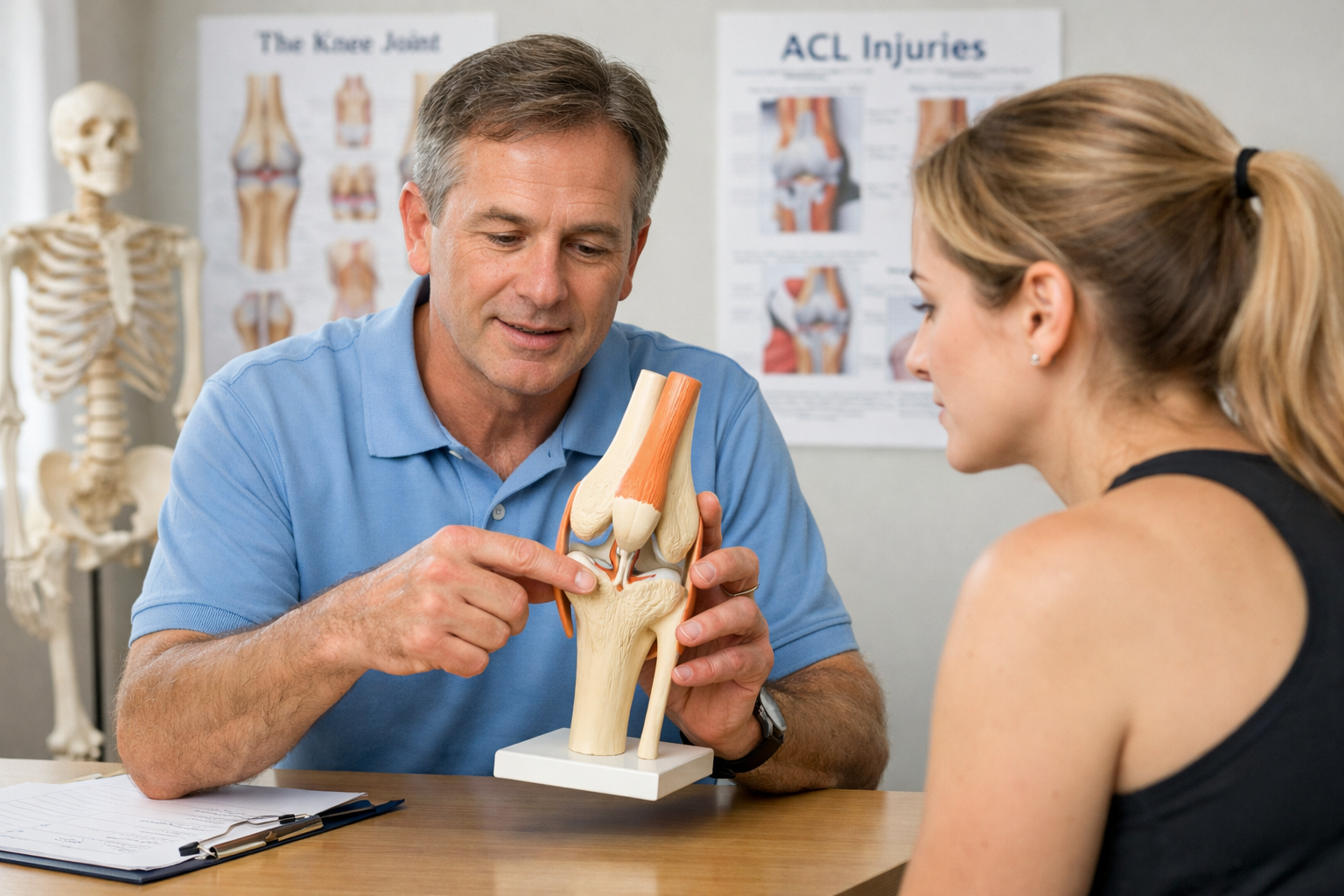
The anterior cruciate ligament is one of four primary ligaments inside the knee joint, running diagonally from the thighbone to the shinbone. It prevents the tibia from sliding forward and stabilizes the knee during rotation, pivoting, and rapid deceleration — the exact mechanics involved in sprinting hurdles at the Metuchen High School track, cutting during indoor soccer at the Sportsplex, or catching yourself during a slip on an icy sidewalk along Main Street.
An ACL tear happens when rotational or deceleration forces overwhelm the ligament. Most ACL injuries are non-contact — the athlete plants, twists, and the ligament fails. Injuries range from Grade I sprains (stretched but intact, knee stability preserved), to Grade II partial tears (loosened, functional instability present), to Grade III complete tears where the knee joint loses substantial stability and active individuals often require anterior cruciate ligament reconstruction.
WHY ACL RECOVERY MATTERS
The anterior cruciate ligament lacks the blood supply needed for spontaneous healing — an ACL injury will not resolve on its own. Without structured rehabilitation, consequences compound:
- Early-onset arthritis: Up to 50% of individuals with ACL injuries develop knee arthritis within 10 to 15 years, regardless of surgical status.
- Chronic instability: The knee buckles during routine activities — stepping off the train at Metuchen Station, walking through Woodwild Park, carrying bags from Whole Foods.
- Compensatory injuries: A compromised knee forces the opposite leg, hip, and lower back to absorb unnatural loads, creating secondary pain patterns that become chronic.
- Re-injury: Athletes who return to sport without full rehabilitation face re-tear rates exceeding 30%.
Structured physical therapy is the most critical factor in ACL recovery outcomes — whether you pursue ACL surgery or a conservative approach.
COMMON CAUSES OF ACL INJURIES IN METUCHEN
Metuchen packs a surprising amount of activity into 2.8 square miles — and the traits that make it vibrant also create conditions where ACL injuries happen.
High School and Club Athletics
The Metuchen High School Bulldogs compete at a high level, with track and field as a particular point of pride — multiple state championships built on hurdles, long jumps, and sprint events that demand explosive force production and rapid deceleration, two of the highest-risk mechanics for ACL tears. A junior hurdler who clips a barrier at full speed, lands with a locked knee, and hears the pop needs a physical therapist who understands not just the injury, but the sport-specific demands of clearing hurdles again nine months later.
Cross country runners, Metuchen Soccer Club players, and football athletes all face ACL risk. The Sportsplex at Metuchen adds year-round indoor basketball and soccer on hard court surfaces where traction is high and the margin for error during a quick pivot is razor-thin.
Outdoor Recreation and Trail Activity
Centennial Park’s 13 acres — including trails around Beacon Hill — offer green space but also uneven surfaces and elevation changes that stress the knee joint. The Middlesex Greenway, a 3.5-mile converted rail trail popular with cyclists and joggers, is another common injury site. A cyclist who catches a rut, loses control, and twists a knee on impact can sustain a significant anterior cruciate ligament injury without any contact at all. Woodwild Park, Oakland Park, and Myrtle-Charles Park round out a community where outdoor activity is woven into daily life.
Workplace and Commuter Injuries
Metuchen’s economy runs on small businesses, the YMCA corporate offices, proximity to Edison’s corporate corridor, and employers like Whole Foods and UPS — plus a daily commute to NYC. A warehouse worker twisting a knee loading packages, a retail employee slipping on a wet floor, or a commuter losing footing on the train station platform during an icy morning can all sustain ACL tears. Work injury rehabilitation at Trinity Rehab Metuchen follows the same rigorous protocols while coordinating with workers’ compensation.
SIGNS AND SYMPTOMS OF AN ACL INJURY
ACL tears typically announce themselves immediately:
- An audible “pop” at the moment of injury
- Rapid swelling within one to four hours
- Instability — the knee buckles or feels unable to support weight
- Loss of range of motion — difficulty fully straightening or bending the knee
- Pain along the joint line, initially sharp then settling into a deep ache
If these symptoms follow a play at the Sportsplex, a misstep on the Greenway, or a fall on a winter sidewalk, seek evaluation immediately. Early assessment by a physical therapist allows rehabilitation to begin before significant quadriceps atrophy sets in.
HOW PHYSICAL THERAPY HELPS: A PHASE-BASED APPROACH
ACL treatment physical therapy at Trinity Rehab Metuchen follows a criterion-based model. Patients advance by meeting objective benchmarks — not by watching the calendar.
Prehabilitation: Preparing for Surgery
For patients scheduled for anterior cruciate ligament reconstruction, prehabilitation is where smart recovery begins — the phase most clinics skip and the one that makes the biggest difference. Goals include restoring full knee motion (particularly terminal extension), reducing swelling, rebuilding quadriceps activation and hamstring strength through isometric holds and hamstring curls, and establishing baseline proprioception.
Patients who enter surgery with better range of motion and stronger muscles achieve consistently superior outcomes. A Bulldogs track athlete facing ACL surgery after a hurdles injury and a Greenway cyclist preparing for reconstruction both benefit from four to six weeks of dedicated prehabilitation at our Metuchen clinic.
Phase 1: Protection and Early Motion (Weeks 0-2 Post-Op)
The immediate priority is protecting the graft while preventing stiffness and quadriceps shutdown.
- Range of motion restoration: Gentle exercises to maintain knee motion without stressing the graft
- Quadriceps activation: Isometric contractions, straight leg raises, and neuromuscular electrical stimulation (NMES) to combat post-surgical inhibition
- Swelling management: Ice, compression, elevation, and manual therapy techniques
- Gait training: Progressing from crutches toward normalized walking
Phase 2: Building the Foundation (Weeks 2-6)
As inflammation subsides, treatment shifts to rebuilding the knee’s functional base.
- Progressive strengthening exercises: Mini squats, leg presses, and step-ups to safely load the quadriceps and hamstrings
- Hamstring curls and dedicated hamstring strength work to protect the graft
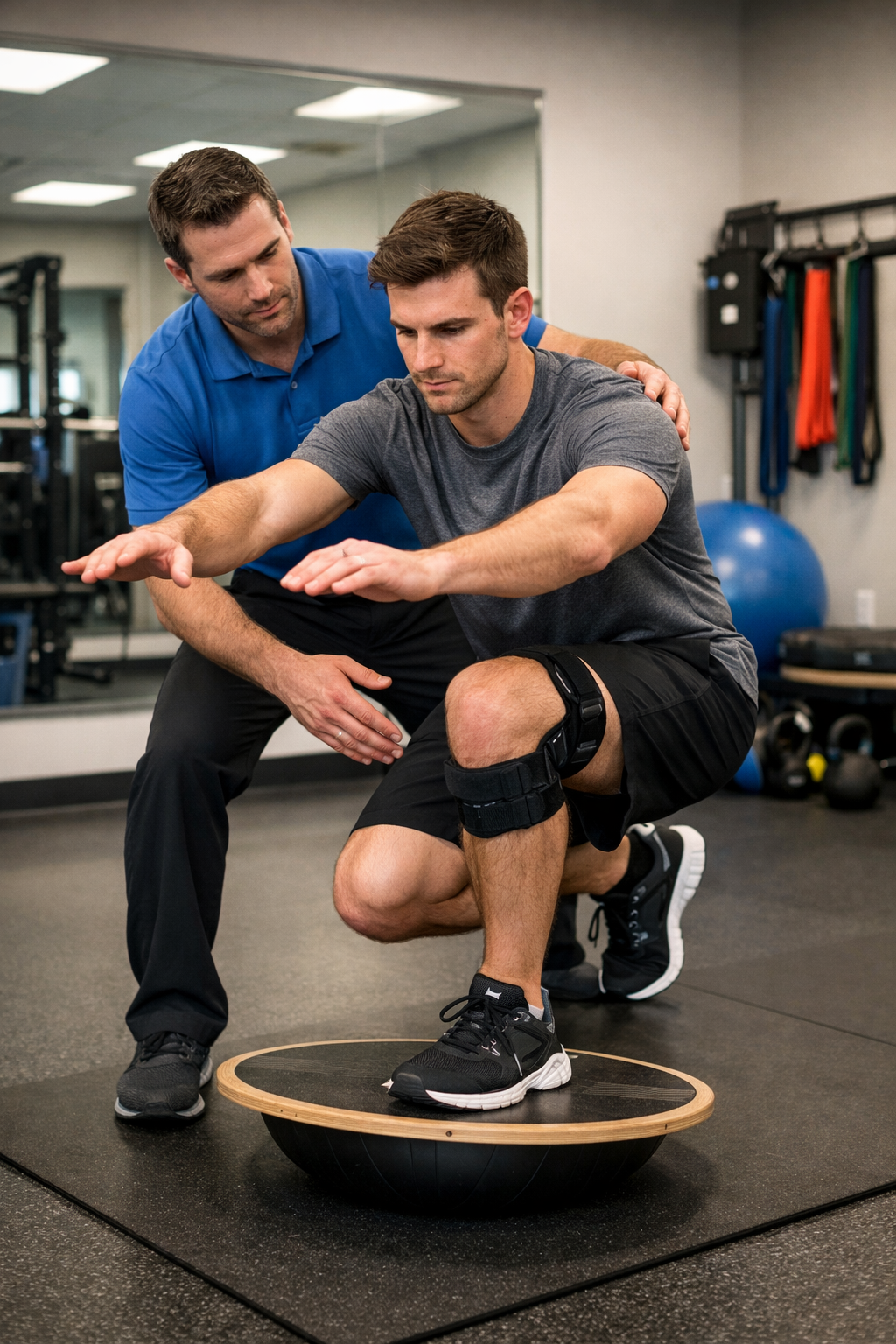
- Balance exercises: Single-leg stance progressions to retrain proprioception
- Manual therapy: Joint mobilizations and soft tissue work for patellar mobility and scar tissue
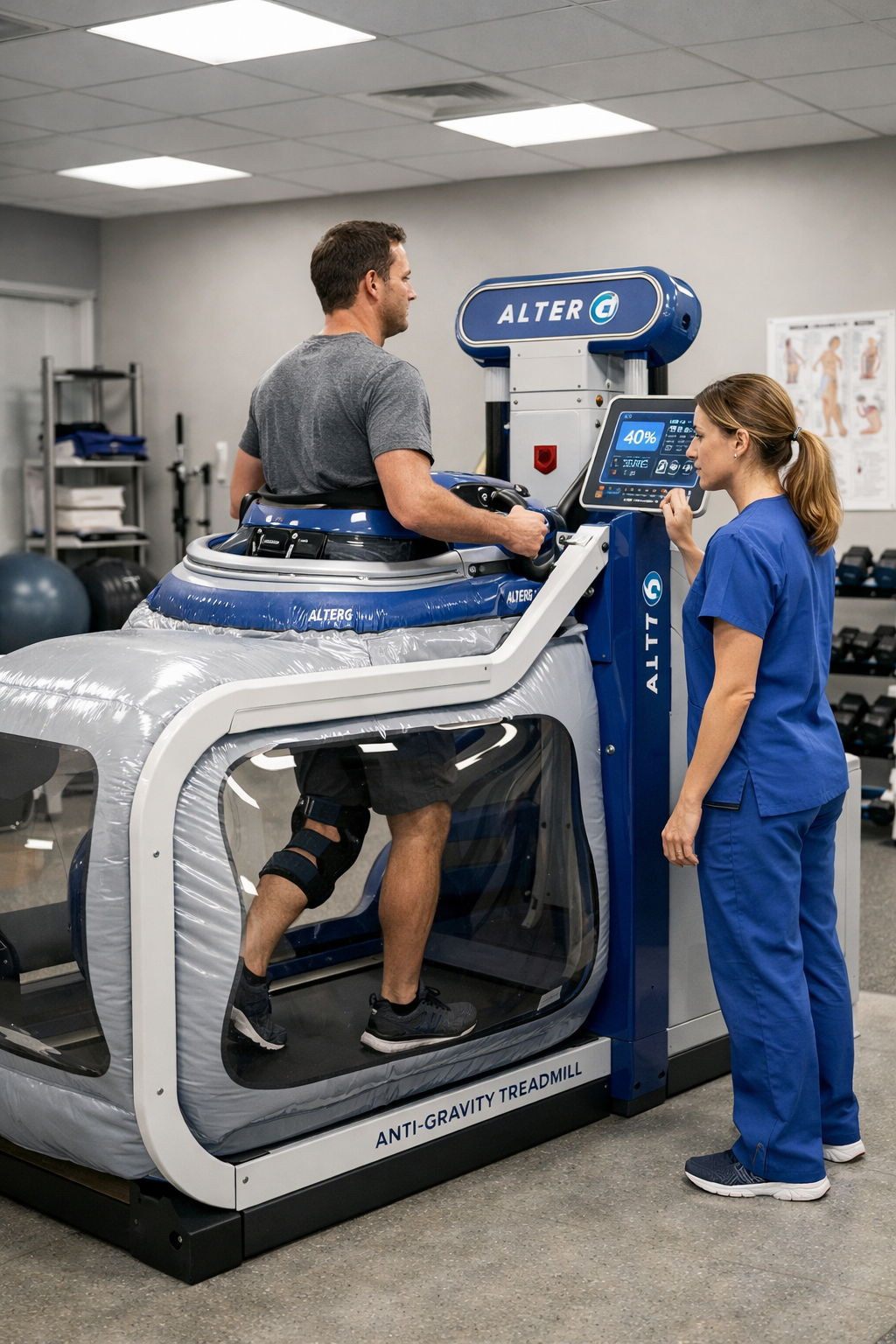
- Low-impact conditioning: Stationary cycling and pool-based exercise
For the Sportsplex soccer player who pivoted wrong during a league game, this is where the knee begins to feel trustworthy again.
Phase 3: Strength and Neuromuscular Control (Weeks 6-12)
This is where meaningful muscle strength returns. Your physical therapist increases resistance and complexity: heavy strengthening (squats, deadlifts, lunges, single-leg press), neuromuscular training (perturbation exercises, dynamic balance challenges, agility ladder work), cardiovascular progression toward light jogging, and continued range of motion work to achieve full, symmetrical knee motion.
Phase 4: Running and Sport-Specific Preparation (Weeks 12-20)
Running clearance requires at least 80% quadriceps strength symmetry, full knee motion, no effusion, and a normalized gait pattern.
- Return-to-run program: A structured walk-jog progression, not a sudden return to full speed
- Sport-specific drills: For a Bulldogs hurdler, this means approach runs and progressive plyometric training mimicking the demands of clearing barriers. For a Metuchen Soccer Club midfielder, cutting, pivoting, and ball handling under controlled conditions.
- Plyometric training: Box jumps, depth jumps, and bounding to retrain explosive force production
- Advanced proprioception drills that mimic the unpredictability of real competition
Phase 5: Return to Sport and Performance (Weeks 20-36+)
The final phase bridges rehabilitation and unrestricted activity. Return to sport testing — hop tests, strength measurements, and movement quality screens — must meet established thresholds (typically 90% limb symmetry) before clearance. From there, patients progress through practice integration, competitive play, and long-term injury prevention programming. Psychological readiness matters as much as physical metrics; we address apprehension through progressive, controlled exposure to sport-specific demands.
THE NON-SURGICAL PATHWAY
Not every ACL tear requires ACL surgery or ACL reconstruction. For patients with lower activity demands, partial tears, or specific medical considerations, non-surgical rehabilitation can restore knee function and knee stability effectively — using the same progressive strengthening exercises, balance exercises, and proprioception training without graft healing constraints. A Metuchen commuter with a partial ACL tear who needs to manage the train station platform and sit comfortably on the ride to Penn Station may achieve excellent outcomes through rehabilitation alone.
ADVANCED TREATMENT TECHNIQUES
Trinity Rehab Metuchen offers specialized methods that accelerate ACL recovery beyond traditional physical therapy alone.
Blood Flow Restriction Training (BFR)
Blood flow restriction training uses a specialized tourniquet to partially restrict venous blood flow during low-load exercise, triggering muscle strength gains comparable to heavy lifting at just 20-30% of maximum resistance. For post-ACL patients who cannot yet tolerate heavy loads, BFR allows meaningful quadriceps and hamstring hypertrophy well ahead of traditional timelines.
Neuromuscular Electrical Stimulation (NMES)
Quadriceps inhibition after ACL surgery is a neurological problem — the brain “forgets” how to fully activate the quad. Neuromuscular electrical stimulation delivers targeted electrical impulses that force contraction and re-establish disrupted neural pathways. We integrate NMES into strengthening exercises throughout the early rehabilitation phases.
Dry Needling
Dry needling is available at our Metuchen location and targets myofascial trigger points in the quadriceps, hamstrings, IT band, and calf. By releasing these trigger points, dry needling reduces pain, improves muscle activation, and restores range of motion that soft tissue restrictions were limiting. For patients who develop compensatory tightness during months of modified movement, dry needling can unlock progress that stretching alone cannot.
EPAT / Shockwave Therapy
EPAT (Extracorporeal Pulse Activation Technology), also known as shockwave therapy, delivers acoustic pressure waves to stimulate cellular repair. For ACL patients, EPAT effectively addresses patellar tendinopathy, scar tissue adhesions, and persistent inflammation that stalls mid-stage recovery.
INJURY PREVENTION: PROTECTING YOUR ACL BEFORE IT TEARS
From the Bulldogs’ track dynasty to the Metuchen Soccer Club, Sportsplex leagues, and Metuchen YMCA programs, this borough’s youth sports culture demands serious injury prevention. Evidence-based programs reduce tear rates by 50-70% and include:
- Neuromuscular warm-ups: Programs like FIFA 11+ that teach athletes to land, cut, and decelerate with proper knee alignment
- Hamstring and hip strengthening: Correcting the quad-dominant patterns that leave the anterior cruciate ligament vulnerable
- Landing mechanics training: Teaching athletes to absorb force with soft knees, aligned hips, and controlled deceleration — critical for Bulldogs hurdlers and jumpers
- Plyometric training progressions: Building tendon stiffness and reactive strength that protect the knee during explosive movements
- Balance and proprioception drills: Single-leg stability work that trains the knee’s reflexive protective mechanisms
Whether you coach Metuchen Soccer Club youth, play in a Sportsplex league, or run the Greenway, these elements meaningfully reduce your ACL risk.
WHY CHOOSE TRINITY REHAB IN METUCHEN
- ACL-specialized physical therapists who manage cases from prehabilitation through return to sport
- Criterion-based progression using strength testing, hop testing, and movement analysis — the data-driven approach Metuchen’s “Brainy Boro” residents expect
- Advanced modalities under one roof: blood flow restriction, neuromuscular electrical stimulation, manual therapy, dry needling (available at this location), and EPAT/shockwave therapy
- One-on-one treatment sessions with a licensed physical therapist at every visit
- Flexible scheduling for commuters — early morning, evening, and weekend appointments
- Seamless surgical coordination with local and regional orthopedic surgeons
- Comprehensive care across sports injuries, work injuries, hip and knee pain, and all conditions we treat
Our clinic is located at 656 Middlesex Ave, Metuchen, NJ 08840 — easily accessible from downtown Main Street, Route 27, and surrounding Middlesex County.
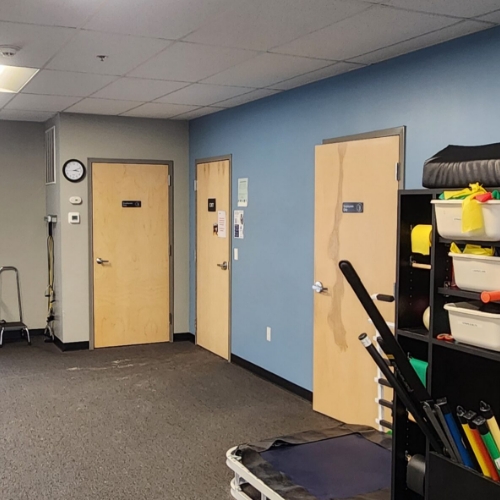
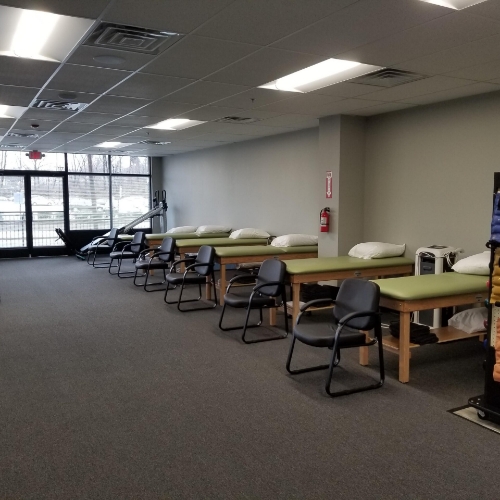
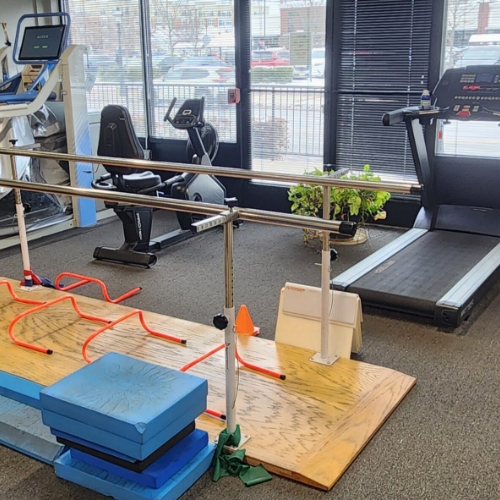
Inside Our Metuchen Clinic
RELATED CONDITIONS & TREATMENTS
ACL injuries are just one of the many conditions we treat at Trinity Rehab Metuchen. Explore our full range of conditions we treat or learn more about specific treatment approaches:
FREQUENTLY ASKED QUESTIONS
How long does ACL rehabilitation typically take?
Can a Metuchen High School athlete return to track and field after an ACL tear?
Is dry needling available at the Metuchen location for ACL rehab patients?
Does Trinity Rehab Metuchen treat ACL injuries from workplace accidents?
What should I do immediately after a suspected ACL injury?
Whether you are a Bulldogs athlete chasing a state title, a Greenway cyclist getting back on two wheels, a Sportsplex soccer player refusing to sit out, or a commuter who needs a knee that works reliably every morning — structured rehabilitation is the path forward.
Trinity Rehab Metuchen is ready to guide you through every phase of ACL recovery.
- Clinic Address: 656 Middlesex Ave, Metuchen, NJ 08840
- Schedule Your Evaluation: Book an appointment online or call our Metuchen clinic directly.
Learn more about the conditions we treat, our approach to ACL treatment, or solutions for hip and knee pain.
What Our Patients Say