

TENNIS ELBOW TREATMENT IN MANALAPAN, NJ | TRINITY REHAB
Drive past the Manalapan Recreation Center on a Saturday morning and count the cars. By 9 AM, the lot is full. Somewhere across those 93-plus acres, a doubles match is underway on one of six tennis courts, a pickleball rally echoes on the four dedicated pickleball courts, a coach is hitting grounders at the baseball diamond, and disc golf bags lean against the benches near the first tee. A toddler shrieks at the splash pad. This is Manalapan on any given weekend — roughly 40,762 people who take their recreation seriously.
That energy spills into everything else. Families maintain half-acre lots with garden beds. They walk trails at Monmouth Battlefield State Park, where Continental soldiers held the line against the British in 1778. They volunteer at Happy Day Farm and drive out to Knob Hill Golf Club for a quick nine holes. Manalapan is built around movement — suburban in character, semi-rural in feel, spread across 30-plus square miles with the Jersey Shore fifteen minutes away and Manhattan an hour north.
All of that activity adds up in the forearm. At Trinity Rehab Manalapan, we see a pattern weekly: someone walks in Monday, gripping the doorknob gingerly, describing a weekend like this — coach youth baseball Saturday morning, play a pickleball league match Saturday afternoon, mow and trim the yard Sunday, then wake up unable to grip the steering wheel for the commute. The outside of the elbow is on fire. They Google the symptoms and land on two words: tennis elbow.

What Is Tennis Elbow?
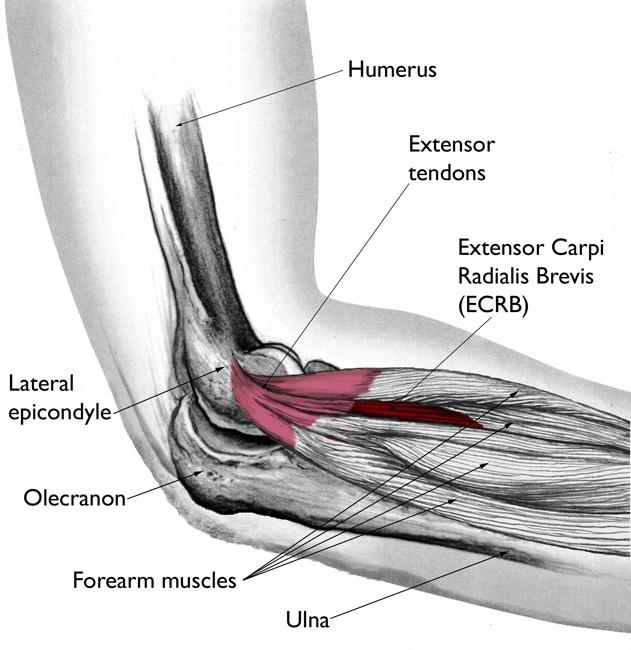
Tennis elbow — known clinically as lateral epicondylitis, lateral epicondylalgia, or lateral elbow tendinopathy — affects the tendons that attach to the bony bump on the outside of your elbow. The primary structure involved is the extensor carpi radialis brevis (ECRB), a muscle-tendon unit that stabilizes the wrist during gripping. Every time you swing a racket, throw a ball, or lift a box with your palm facing down, the ECRB is working.
When that tendon is loaded beyond its capacity through repetitive movements — the same grip, the same wrist extension, the same forearm rotation thousands of times — collagen fibers break down faster than the body repairs them. The result is persistent elbow pain that worsens with gripping, lifting, and twisting.
Tennis elbow does not always come from tennis. In Manalapan, it is just as likely from the combination of yard work on a large lot, weekend sports at the rec center, and repetitive work tasks during the week. Any activity that demands repeated wrist extension, forearm pronation and supination, or sustained grip will stress the lateral elbow tendons.
Who Is at Risk in Manalapan?
Manalapan’s median age of 42 to 44 falls squarely in the peak incidence range for lateral epicondylitis. The township is family-oriented, with 63 percent of residents commuting by car. The combination of weekday work with an active weekend lifestyle — tennis and pickleball leagues at the rec center, Multi Sports Kingdom adult soccer, US Sports Institute programs — creates the overuse pattern that drives tendon breakdown.
Here are three patients we see regularly. Their names are fictional, but their stories are not.
Sarah: The Rec Center Regular
Sarah, 46, joined the Recreation Center’s tennis league last spring and added a Saturday pickleball league by summer. After four months of near-daily court play, she noticed a dull ache on the outside of her elbow. By October, she could not open a jar without sharp pain radiating down her forearm and her grip strength had dropped. A physical therapist at Trinity Rehab Manalapan diagnosed lateral elbow tendinopathy — accumulated grip stress from both sports, with different racket sizes loading the same tendon, had exceeded her ECRB’s recovery capacity.
David: The Warehouse Worker
David, 38, works at Merola Tile’s distribution facility pulling, sorting, and stacking boxes of tile — some weighing 50 pounds — eight hours a day. The repetitive motions of gripping box edges, lifting palm-down, and rotating his forearm to position product on pallets place enormous demand on his wrist extensors. When elbow pain started waking him at night and he could no longer grip his daughter’s hand without wincing, he came in. His diagnosis: lateral epicondylitis from occupational repetitive strain, common among workers at Unis Logistics and distribution employers across Manalapan.
Marcus: The Manalapan Braves Pitcher
Marcus is 17 and plays varsity baseball for Manalapan High School. The Braves carry serious pedigree — Group IV state championships in 2011 and 2012, year-round training culture. By January, with offseason throwing programs and showcases stacking up, he felt nagging pain on the outside of his throwing elbow. Evaluation at Trinity Rehab Manalapan revealed lateral elbow pain from the extensor mechanism, aggravated by the wrist snap on his slider. Adolescent tendons are still developing, and repetitive tasks like throwing breaking balls hundreds of times weekly can overwhelm the tissue.
How Physical Therapy Treats Tennis Elbow at Trinity Rehab Manalapan
Our physical therapists use a phase-based approach to treat tennis elbow — designed to reduce pain, rebuild tendon tolerance, and return you to the activities that define life in this community.
Phase 1: Pain Reduction and Load Management
The first priority is pain relief through targeted activity modifications — not complete rest. For a rec center player like Sarah, that might mean temporarily dropping one league and switching to a lighter racket with a larger grip. For David, it could involve ergonomic changes at the warehouse.
Your physical therapist may use manual therapy — soft tissue mobilization of the forearm extensors, joint mobilization of the elbow and wrist — to reduce inflammation and improve mobility. Dry needling can release taut bands in forearm muscles that contribute to lateral elbow pain.
We also educate every patient on counterforce strap use. A counterforce strap worn just below the elbow redistributes force away from the damaged tendon, helping reduce symptoms during aggravating activities while the tendon heals.

Phase 2: Tendon Loading and Strengthening
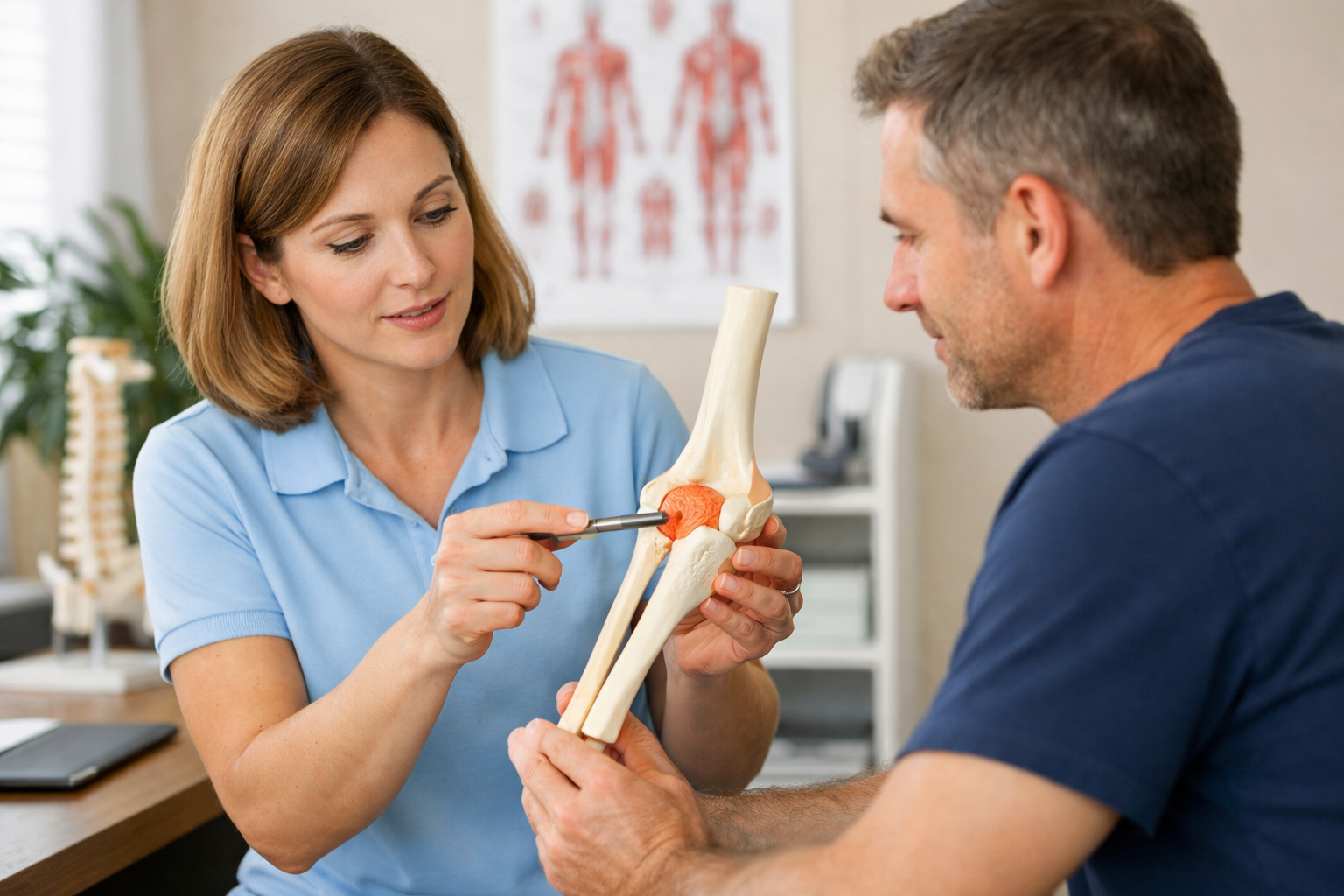
The cornerstone of recovery is eccentric exercise — controlled lengthening of the muscle-tendon unit under load. From a starting position with your forearm on a table, wrist off the edge, palm facing down, you slowly lower a light weight over three to five seconds. Exercise slowly and with control — building tendon tolerance is gradual.
Additional exercises include grip strengthening with a tennis ball, forearm pronation and supination with a weighted bar, and towel twists to load wrist extensors and flexors simultaneously. Keep your shoulders relaxed throughout. No special equipment needed beyond a light dumbbell and a towel — you can continue your program at home.
Phase 3: Return to Activity
The final phase bridges clinical improvement and real-world function. For Sarah, a graduated return to both courts. For David, simulated work tasks under load. For Marcus, a throwing program that reintroduces breaking pitches only after full tendon tolerance is confirmed.
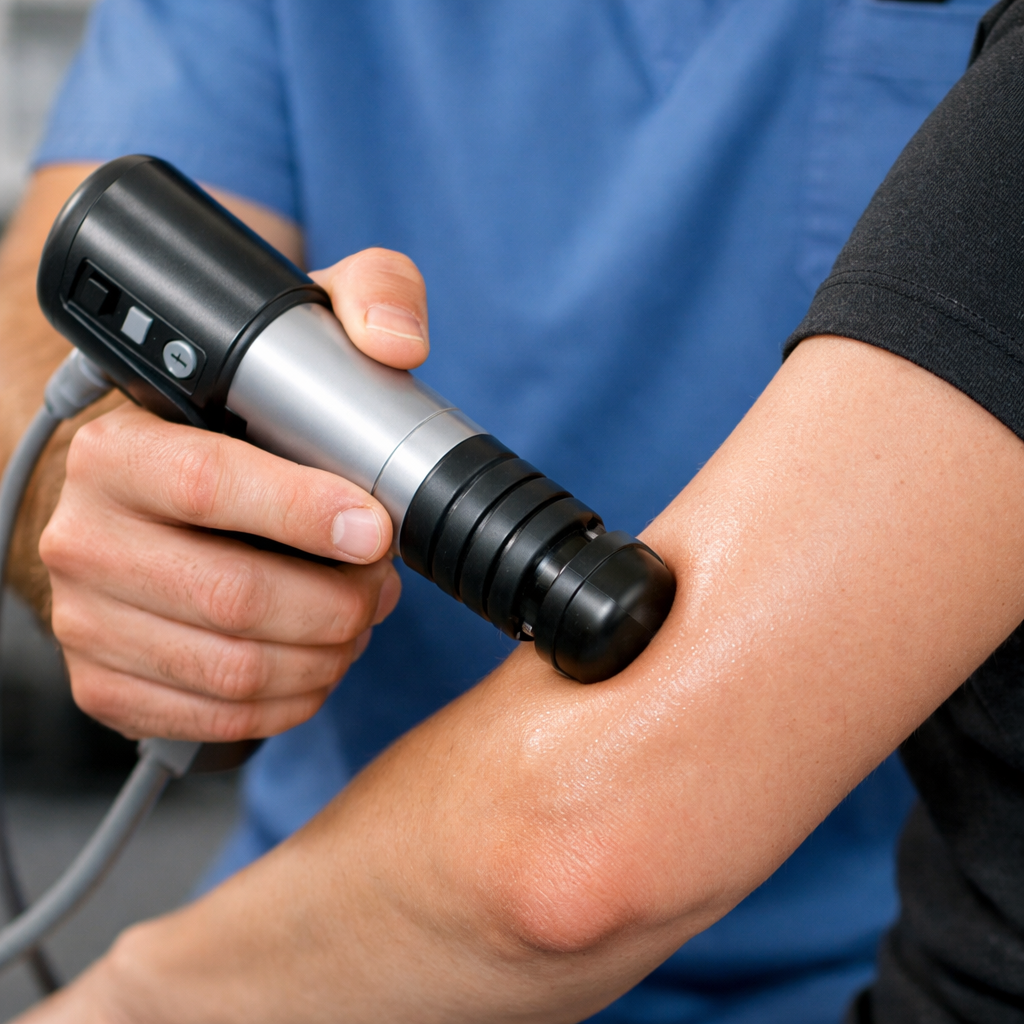
We also offer EPAT (Extracorporeal Pulse Activation Technology) shockwave therapy for persistent tennis elbow. EPAT delivers acoustic pressure waves to stimulate tendon healing — a non-invasive alternative to corticosteroid injections, which may weaken tendons over time, and to surgery, which most patients will never need. Combined with progressive exercise, EPAT supports long-term goals for tendon health and is a key part of our tennis elbow management approach.
Why Choose Trinity Rehab Manalapan?
One-on-one care every visit. You work with the same physical therapist every session — no hand-offs, no rotating providers. This consistency produces better outcomes because your therapist tracks progress in real time and adjusts treatment based on how you respond.
Advanced technology. Our clinic offers EPAT shockwave therapy, dry needling, and skilled manual therapy — a sports med combination for treating tennis elbow from acute inflammation through chronic tendon degeneration.
Direct Access. New Jersey law lets you see a physical therapist without a referral. Schedule your first appointment the same day your elbow starts limiting your life. Early intervention leads to faster recovery and reduces the likelihood of needing corticosteroid injections or surgery.
Convenient location. Trinity Rehab Manalapan serves Manalapan, Englishtown, Freehold, and Marlboro residents. We are a natural fit for this recreation-driven community where people play sports year-round.
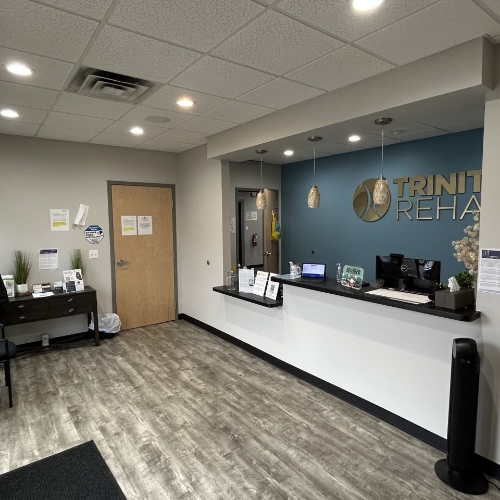
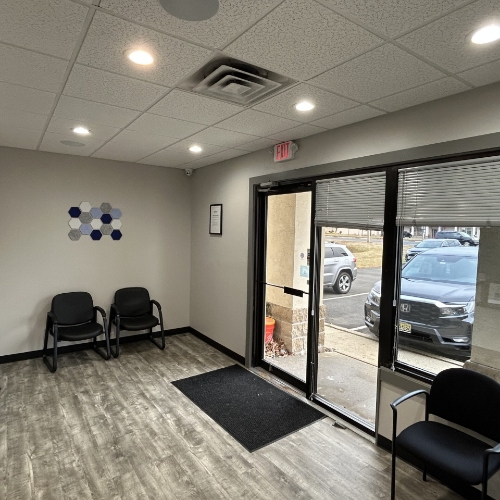
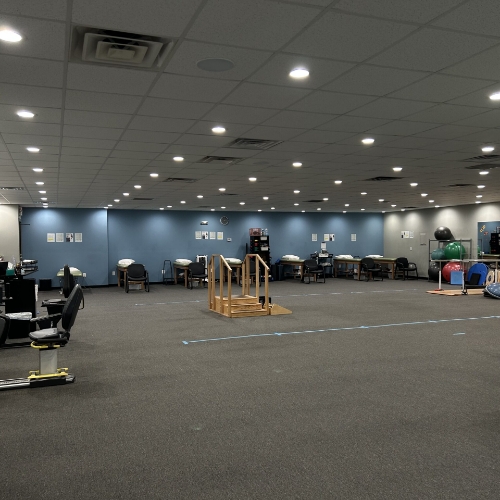
Inside Our Manalapan Clinic
Related Conditions & Treatments
Tennis elbow is just one of the many conditions we treat at Trinity Rehab Manalapan. Explore our full range of conditions we treat or learn more about specific treatment approaches:
- Tennis Elbow Treatment Overview — Our comprehensive guide to lateral epicondylitis recovery
- Elbow, Wrist & Hand Pain Relief — Other upper extremity conditions we specialize in
- Shoulder Pain Relief — Treatment for rotator cuff, frozen shoulder, and more
- Manual Therapy — Hands-on techniques to restore joint mobility and reduce pain
- Dry Needling — Trigger point therapy for deep muscle tension and pain relief
Related Elbow Care At This Location
Elbow pain can come from different tendon and loading patterns around the joint. A related same-location page is:
Frequently Asked Questions
Can disc golf cause tennis elbow?
My teenager plays baseball — can they get tennis elbow?
How does EPAT compare to surgery for tennis elbow?
Does Trinity Rehab Manalapan treat other elbow conditions?
What exercises can I do at home for tennis elbow?
Manalapan does not sit still. Whether your elbow pain started on the tennis court, the pickleball court, the warehouse floor, or the pitcher’s mound, Trinity Rehab Manalapan has the expertise, technology, and one-on-one approach to help you recover fully.
The rec center’s calling — get back to playing. Schedule your appointment at Trinity Rehab Manalapan today.