
PLANTAR FASCIITIS TREATMENT IN MANALAPAN, NJ
Manalapan is a town that moves. Youth soccer and baseball players pack the 162-acre Manalapan Recreation Center on weekends. Runners log miles on fitness trails through Thompson Grove Park. Golfers work their way around Knob Hill and Battleground Country Club. And thousands of residents commute 43 minutes each way to work — often in roles involving prolonged standing in healthcare, logistics, or warehousing along Rt. 33. With that kind of daily foot load, it’s no surprise that plantar fasciitis is one of the most common conditions we treat at Trinity Rehab.
If the bottom of your heel announces itself the moment you step out of bed in the morning — or aches after your afternoon run through the township’s trails — you don’t have to accept it as normal. Plantar fasciitis is highly treatable, and the earlier you address it, the faster your return to full activity.
WHAT IS PLANTAR FASCIITIS AND WHY DOES IT DEVELOP?
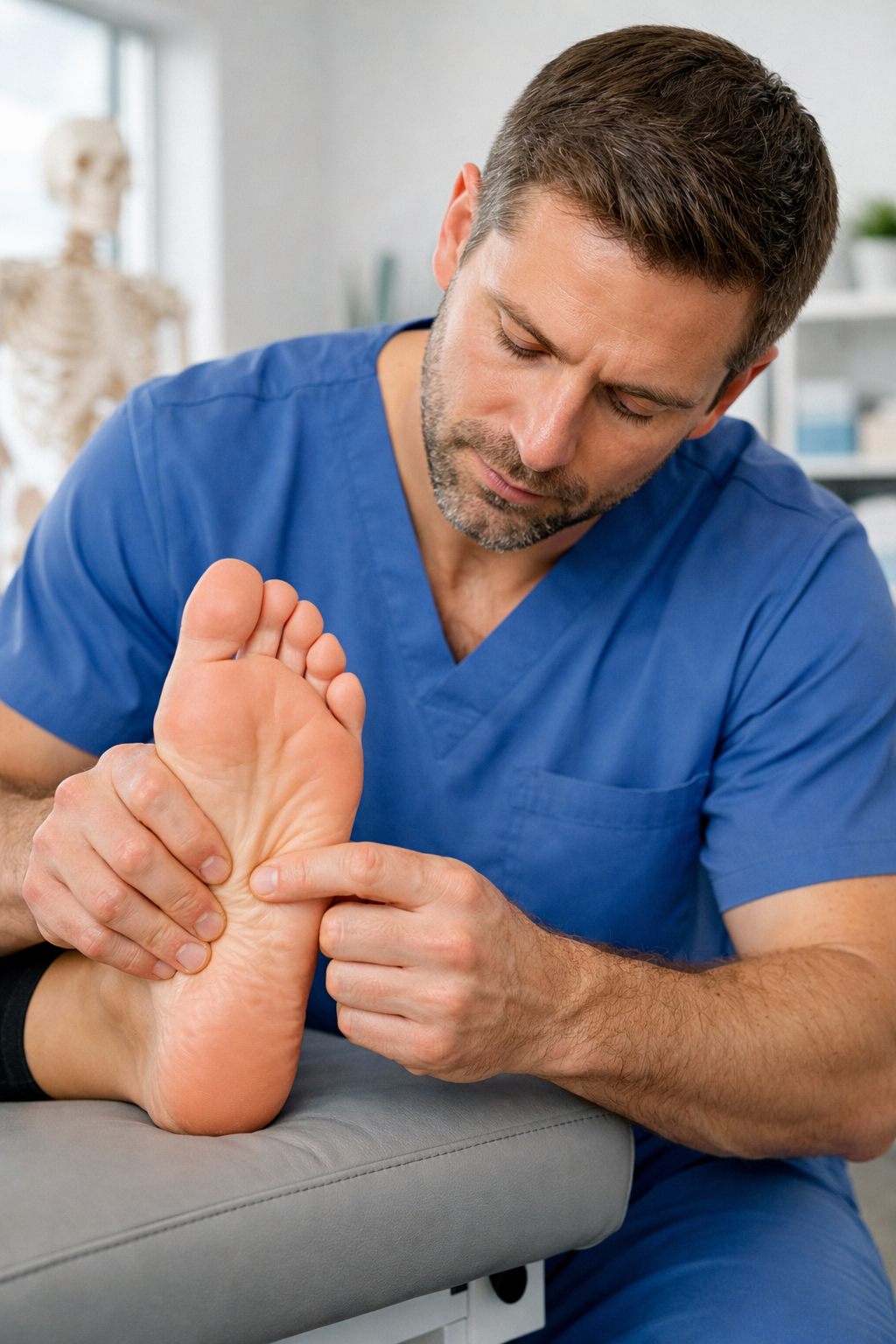
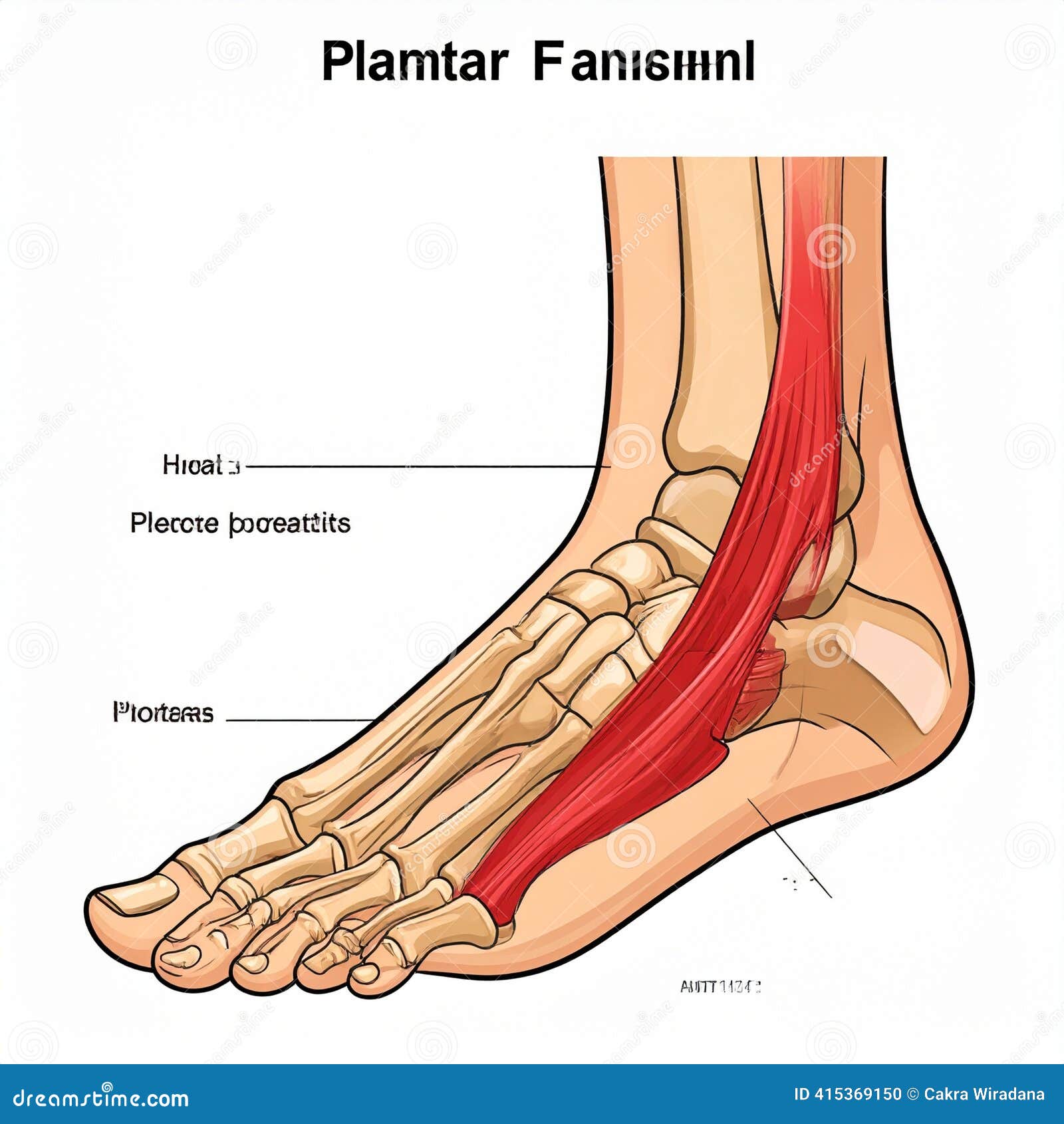
Running along the bottom of your foot is the plantar fascia — a tough, fibrous band connecting your heel bone to the ball of your foot. Every step you take relies on this tissue to absorb shock and maintain your arch. Under normal conditions, the fascia handles this load efficiently. Under abnormal conditions — too much repetitive stress, inadequate footwear, tight calf muscles, or structural foot issues — it begins to accumulate micro-tears faster than the body can repair them.
The result is a painful inflammatory cycle. The tissue stiffens overnight as you sleep, then stretches abruptly under your body weight with your first steps. Over weeks and months without treatment, what started as mild morning soreness can evolve into a persistent, activity-limiting condition. Researchers sometimes call the chronic form plantar fasciopathy, reflecting the degenerative rather than purely inflammatory nature of long-standing cases.
Plantar fasciitis affects an estimated 2 million Americans per year and is the leading cause of heel pain in adults, according to the American Academy of Orthopaedic Surgeons. It tends to peak between ages 40 and 60 — squarely within Manalapan’s median-age demographic — though high-impact athletes of any age are vulnerable.
RELATED CONDITIONS & TREATMENTS
Plantar fasciitis is just one of the many conditions we treat at Trinity Rehab Manalapan. Explore our full range of conditions we treat or learn more about specific treatment approaches:
WHY MANALAPAN’S LIFESTYLE CREATES HEEL PAIN RISK
Manalapan’s active, family-centric community creates specific patterns of foot stress worth understanding:
- Manalapan High School athletics — The Braves compete in the Shore Conference and have earned wrestling sectional championships, back-to-back Group IV baseball state titles, and multiple football sectional crowns. Year-round, multi-sport athletes who train without adequate recovery — particularly wrestlers, baseball catchers, and cross-country runners — accumulate repetitive heel and arch stress that can tip into injury.
- Recreation center sports and fitness trails — The Manalapan Recreation Center’s fitness trails and sports fields draw serious recreational athletes year-round. Runners who increase their trail mileage quickly in spring, or who train on hard surfaces in worn-out shoes, frequently present with plantar fasciitis by mid-season.
- Monmouth Battlefield State Park — The park’s walking trails, popular for family hikes and morning jogs, offer uneven terrain that challenges foot stability. Hikers who spend hours traversing the battlefield’s varied ground without appropriate footwear often find their heels complaining within days.
- Long-haul commuting — With average commute times of 43 minutes, Manalapan residents log significant car time — then often go from a vehicle seat to a standing workstation with no transition period for the foot’s tissues to adapt. This cold-to-loaded pattern repeatedly triggers the fascial stress response.
- Logistics and warehouse work along Rt. 33 — Employers like Unis Logistics and other industrial businesses along the Route 33 corridor put workers on concrete floors for hours at a time. Without proper occupational footwear, cumulative daily loading through the heel is a reliable pathway to plantar fasciitis.
- Golf — Knob Hill Golf Club and Battleground Country Club keep Manalapan golfers active from spring through fall. A full round means four or more hours of walking, often in golf shoes with insufficient arch support, on turf and cart paths that offer little shock absorption.
HOW THE PAIN TYPICALLY PRESENTS
Most Manalapan patients describe a recognizable pattern before they ever come through our door:
- A sharp, stabbing pain under the heel with the very first steps after waking up or after sitting for extended periods. Many describe it as stepping on a sharp rock or a nail — intense for the first several steps, then gradually easing as the tissue warms up.
- Heel tenderness concentrated at the inner base of the heel, which corresponds exactly to where the plantar fascia attaches to the calcaneus.
- Discomfort that worsens after workouts or long walking sessions rather than during them, as the inflammatory response builds in the hours following activity.
- A pulling tightness along the arch, particularly noticeable in the morning.
- Limping or altered walking mechanics as the body tries to protect the sore heel — which can trigger secondary pain in the ankle, knee, or lower back.
These symptoms rarely resolve on their own without addressing the underlying cause. Two weeks of persistent heel pain is a clear signal to pursue a professional evaluation.
PHYSICAL THERAPY TREATMENT: A TOPIC-BASED APPROACH
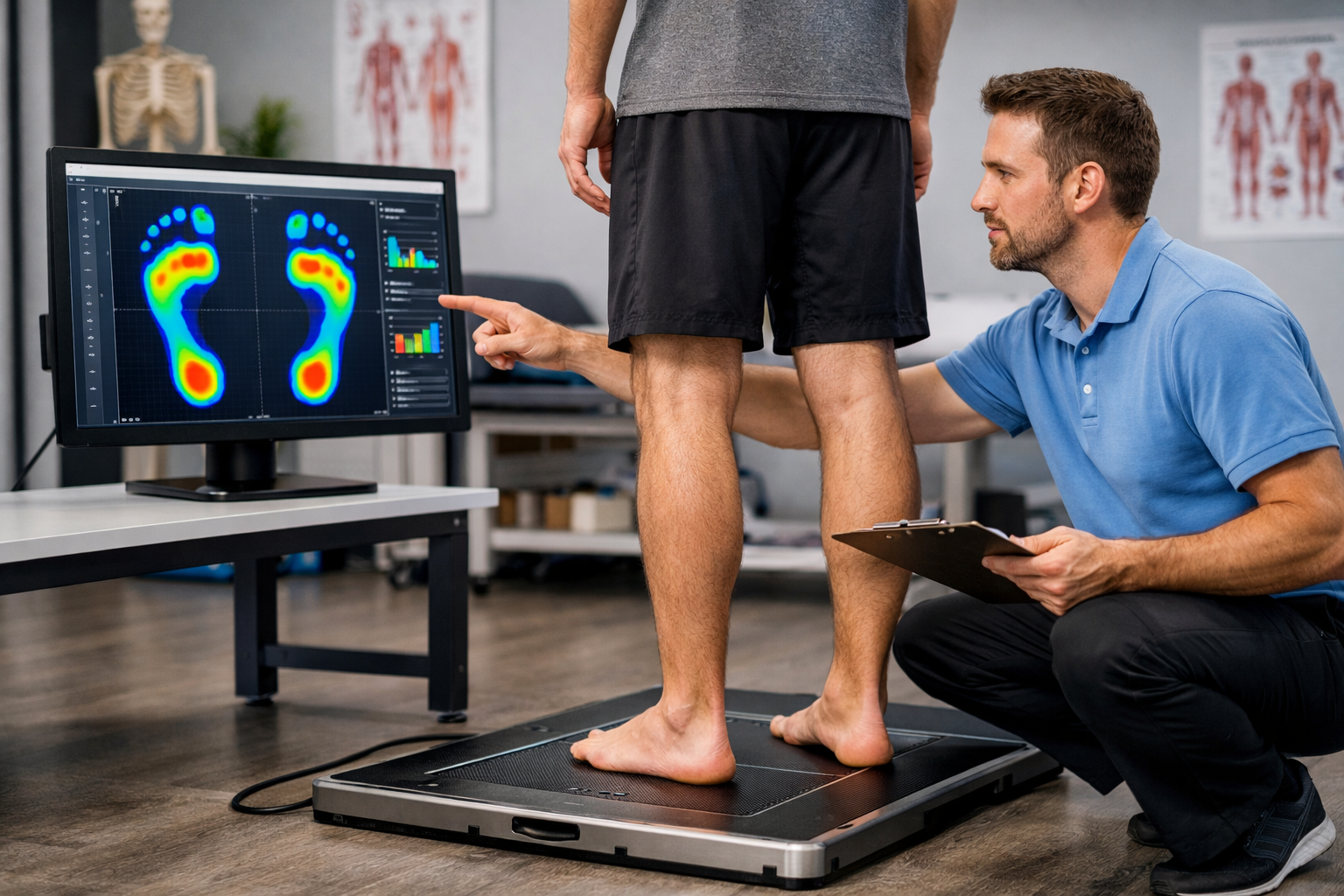
Trinity Rehab’s Manalapan physical therapists don’t apply a one-size protocol. After a thorough biomechanical evaluation — assessing your gait, foot mechanics, ankle mobility, and calf flexibility — your therapist builds a treatment plan targeting the specific factors driving your pain.
MANUAL THERAPY
Manual therapy is often the fastest path to meaningful pain relief. Your therapist uses hands-on joint mobilization of the ankle and subtalar joints to restore range of motion and reduce stiffness. Myofascial release addresses trigger points in the calf, Achilles tendon, and foot intrinsic muscles that pull on the fascia with every step. A 2023 clinical practice guideline revision published in the Journal of Orthopaedic & Sports Physical Therapy specifically endorses joint mobilization combined with stretching as a superior intervention for plantar fasciitis.

TARGETED STRETCHING
The single most evidence-supported home intervention for plantar fasciitis is the plantar fascia-specific stretch — dorsiflexing the toes before standing up, held for 30 seconds and repeated three times, performed before the first steps of the morning. Your therapist will ensure you’re performing it correctly and will add a progressive gastrocnemius and soleus stretching program to address the calf tightness that drives so much heel pain. For Manalapan’s wrestlers and baseball players, sport-specific flexibility work is integrated into the program from the start.
ECCENTRIC LOADING AND STRENGTHENING
Building load tolerance in the plantar fascia is what prevents recurrence. Eccentric heel drop exercises — slowly lowering from a step under controlled load — are particularly effective for this purpose. Paired with intrinsic foot muscle strengthening (towel scrunches, short-foot exercises, single-leg balance work), this phase restores the internal support system that keeps your arch healthy over the long term.
EPAT SHOCKWAVE THERAPY
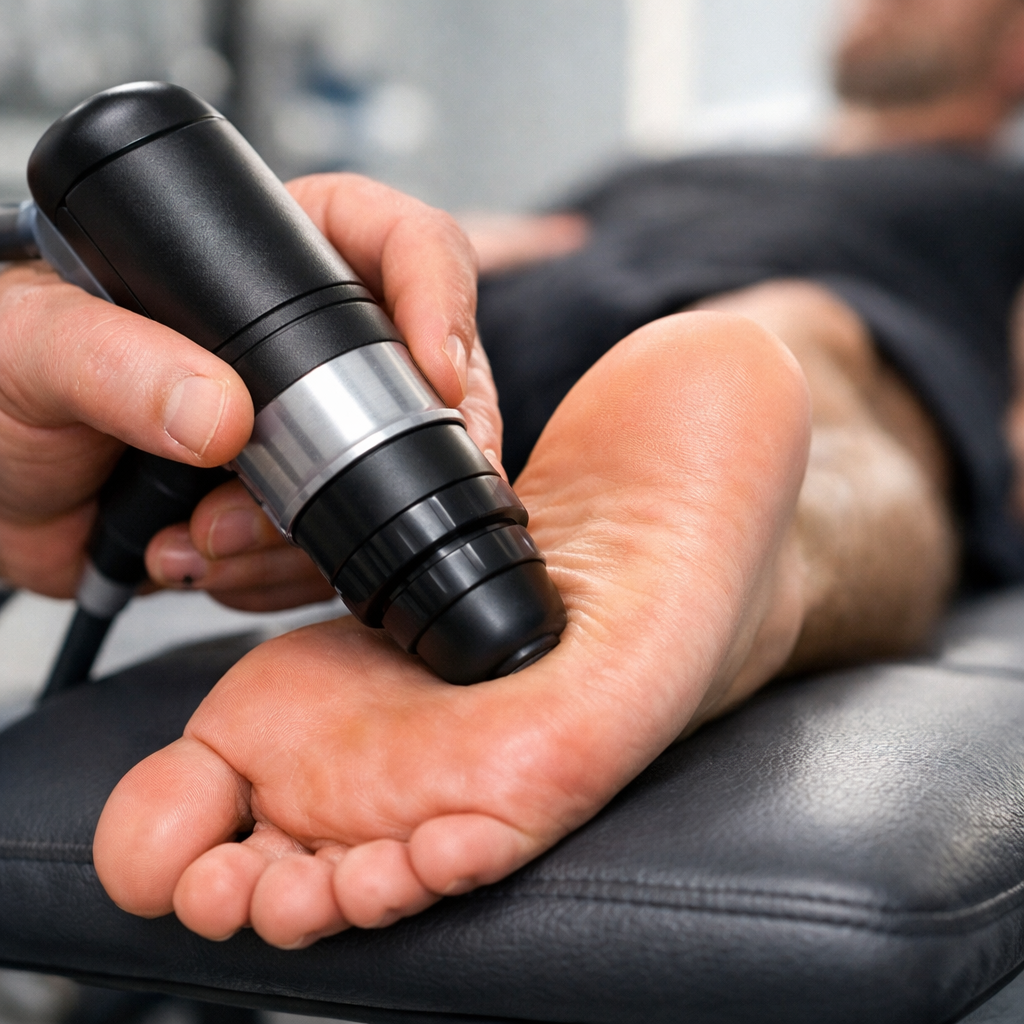
For patients dealing with chronic plantar fasciitis that has persisted despite stretching and conservative care, EPAT (Extracorporeal Pulse Activation Technology) is a powerful tool. Acoustic pressure waves penetrate deep into the damaged fascial tissue, stimulating blood flow and triggering the cellular repair processes that chronic inflammation suppresses. The Mayo Clinic identifies shockwave therapy as an effective option for recalcitrant plantar fasciitis. Trinity Rehab’s Manalapan clinic is equipped to provide this treatment without a separate specialist referral.
DRY NEEDLING
Dry needling targets the myofascial trigger points in the calf complex — gastrocnemius, soleus, and tibialis posterior — that create sustained tension through the Achilles and plantar fascia. Fine filament needles inserted into these trigger points provoke a local twitch response that releases the contracted tissue, immediately reducing the mechanical load on the heel. This is particularly effective for Manalapan athletes with longstanding muscle tightness from year-round training.
FOOTWEAR AND ORTHOTICS
Your therapist will review your current footwear and identify whether mechanical correction is needed. Patients with flat feet, high arches, or significant overpronation — common contributing factors in both athletes and desk-to-standing commuters — often achieve excellent outcomes with the right combination of custom orthotics and targeted exercise.
PREVENTION: STAYING PAIN-FREE IN MANALAPAN
Once you’ve recovered, these strategies keep plantar fasciitis from coming back:
- Stretch every morning before your first step — The 90 seconds you invest in a calf and plantar fascia stretch each morning before standing will pay dividends all season.
- Respect the trails at Monmouth Battlefield — Those uneven surfaces are harder on the foot than they look. Wear trail shoes with proper support and avoid sudden mileage increases.
- Invest in quality footwear for your workstation — If you’re standing on concrete at a logistics facility or warehouse, supportive occupational shoes with a cushioned insole are non-negotiable equipment. Replace them on a schedule, not just when they look worn.
- Build athletic conditioning gradually — For Manalapan High School Braves athletes returning from the offseason, a structured progression from base conditioning to sport-specific intensity prevents the overload injuries that derail spring seasons.
- Listen to early warning signs — Mild morning heel tenderness that eases within a few minutes is your fascia telling you it’s under stress. Address it with stretching, footwear review, and ice before it becomes a six-month problem.
WHY MANALAPAN PATIENTS CHOOSE TRINITY REHAB
Trinity Rehab believes that effective physical therapy means every session with your own licensed therapist — not a rotation of aides. In Manalapan, that means the person who evaluated you on day one is the same person guiding your recovery on week eight. Your progress is tracked, your plan is adapted, and your goals — whether that’s returning to Manalapan Recreation Center soccer or getting through a full day at work without limping — stay at the center of every visit.
We accept most major insurance, require no physician referral to get started, and offer flexible scheduling for busy Manalapan families and commuters. View all conditions we treat or learn more about foot and ankle pain relief.
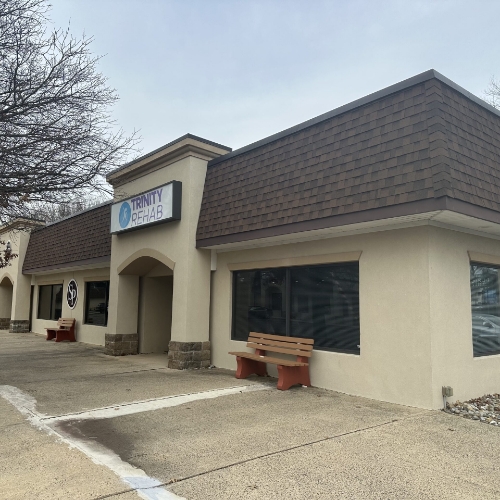
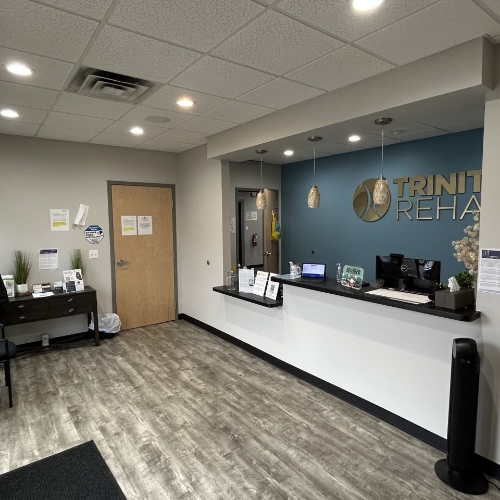
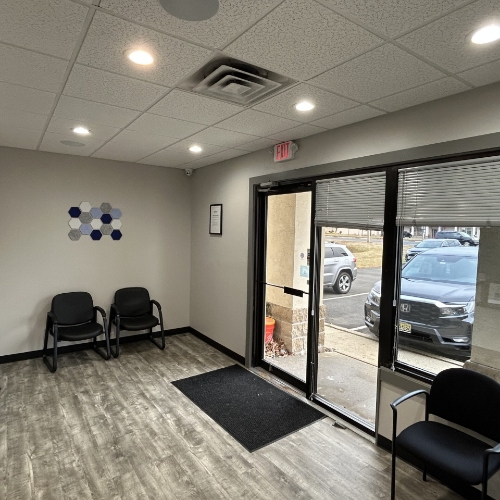
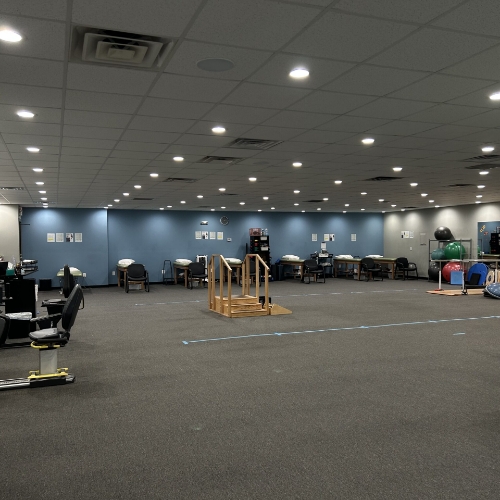
Inside Our Manalapan Clinic
FREQUENTLY ASKED QUESTIONS
Where can I get plantar fasciitis treatment in Manalapan, NJ?
Will I need to stop all exercise during treatment?
How is plantar fasciitis different from a heel spur?
Is EPAT shockwave therapy painful?
Does plantar fasciitis affect only the heel?
YOUR RECOVERY STARTS HERE
Manalapan is a community that doesn’t slow down — and your heel pain shouldn’t be what changes that. Trinity Rehab’s Manalapan team is ready to build a personalized plan that gets you back to the activities you love, safely and completely.
No physician referral required. Most major insurance plans accepted.
Sources: Journal of Orthopaedic & Sports Physical Therapy — Heel Pain/Plantar Fasciitis Clinical Practice Guidelines 2023 | Mayo Clinic — Plantar Fasciitis | American Academy of Orthopaedic Surgeons — Plantar Fasciitis and Bone Spurs | NIH/PMC — Management of Plantar Fasciitis
What Our Patients Say