
LUMBAR DISC HERNIATION TREATMENT IN MANALAPAN, NJ
Picture this: you are walking the trails at Monmouth Battlefield State Park on a crisp Saturday morning, retracing the ground where Continental soldiers once fought, when a familiar ache in your low back suddenly sharpens into an electric jolt that runs down the back of your thigh. You stop, brace yourself against a split-rail fence, and realize that the “minor tweak” you felt last week at the gym has become something much more serious. If this scenario sounds familiar, you are not alone. Lumbar disc herniation is one of the most common spinal conditions we treat at Trinity Rehab, and for Manalapan’s roughly 40,900 residents — many of whom juggle demanding commutes, physical jobs, and active families — it is a diagnosis we see every week.
UNDERSTANDING LUMBAR DISC HERNIATION
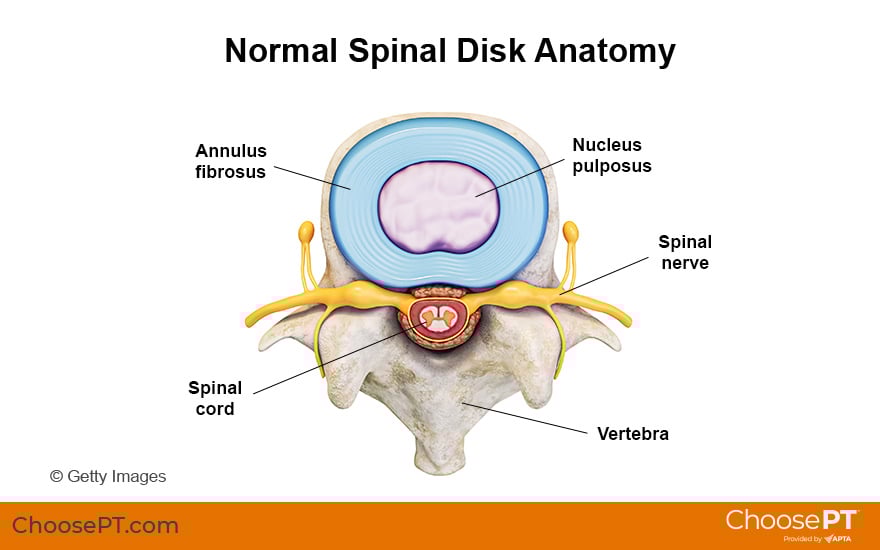
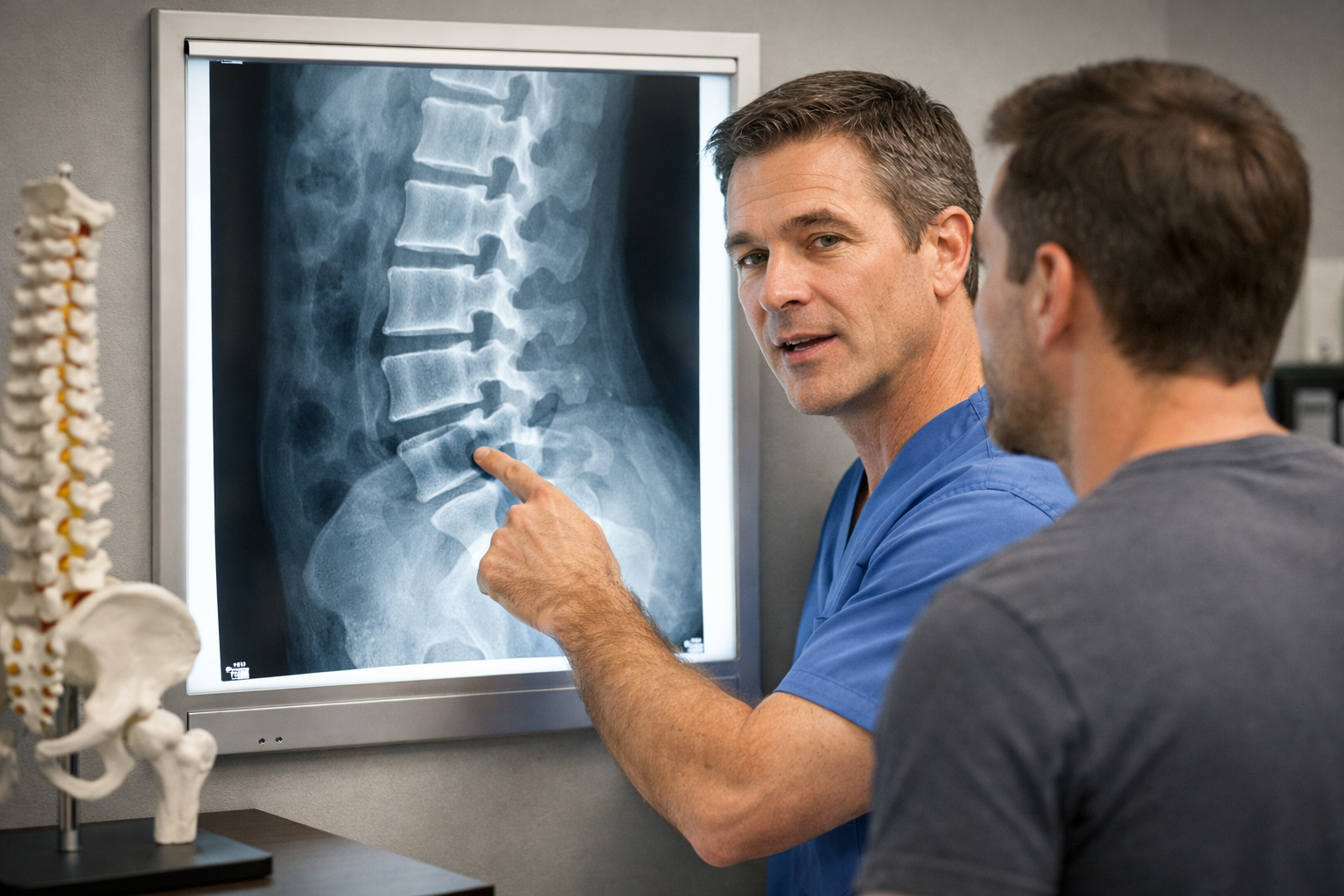
Between each pair of vertebrae in your lumbar spine sits an intervertebral disc composed of a tough outer shell (the annulus fibrosus) and a softer gel-like core (the nucleus pulposus). A herniated disc develops when the nucleus pushes through a weakened or torn area of the annulus, often pressing against a spinal nerve root. The L4-L5 and L5-S1 levels are most frequently involved, which is why a disc herniation in the low back so commonly causes sciatica — pain that radiates from the lumbar spine down through the buttock and into one leg.
A 2024 review published in StatPearls notes that lumbar disc herniations have a lifetime prevalence of up to 5 percent and are most common between ages 30 and 50 (StatPearls, 2024). That age range overlaps almost perfectly with Manalapan’s demographic profile — a median age of 42-44, with a large proportion of working adults raising families and commuting to jobs across central New Jersey and into New York City.
HOW MANALAPAN’S LIFESTYLE CONTRIBUTES TO DISC PROBLEMS
COMMUTING PRESSURE
With many Manalapan residents making the 45-to-60-minute trek into Manhattan or to corporate offices along the Route 9 corridor, prolonged sitting is an unavoidable part of daily life. Sitting increases intradiscal pressure by roughly 40 percent compared to standing, and the vibration from driving compounds the effect. Over months and years, this sustained mechanical stress degrades the annulus fibrosus and sets the stage for herniation.
FOOTBALL, WRESTLING, AND ROTATIONAL SPORTS
Manalapan High School’s Braves compete fiercely in football, wrestling, baseball, and soccer — all sports that generate high rotational and compressive forces through the lumbar spine. Wrestlers absorb direct axial loading during takedowns; football linemen sustain repeated lumbar hyperextension; golfers at Battleground Country Club and Knob Hill Golf Club rotate forcefully through the same plane hundreds of times per round. Research in Deutsches Ärzteblatt International confirms these repetitive and high-impact activities as significant risk factors for disc injury (Deutsches Ärzteblatt, 2024).
WAREHOUSE AND LOGISTICS WORK
The Exit 8 Logistics Center and surrounding distribution facilities employ thousands of central New Jersey workers in jobs that demand constant bending, lifting, and twisting. Even with proper training, the cumulative load on the lumbar discs from an eight-hour warehouse shift is enormous — and a single awkward lift can push a weakened disc past its breaking point.
YARD WORK ON LARGE SUBURBAN PROPERTIES
Manalapan’s rolling suburban lots require year-round maintenance — mowing, raking, mulching, shoveling snow. These activities involve sustained forward flexion, the exact posture that maximizes posterior disc pressure. Combined with fatigue, it is a recipe for an acute back pain episode or herniation event.
SYMPTOMS YOU SHOULD NOT IGNORE
A lumbar disc herniation can produce a range of symptoms depending on the size and location of the herniation and which nerve root is affected:
- Radiculopathy: Shooting or burning pain from the low back into the buttock, thigh, calf, or foot, following a specific nerve distribution
- Numbness or pins-and-needles sensations in the leg or foot
- Muscle weakness affecting your ability to push off, climb stairs, or balance on one leg
- Increased pain with sitting, bending, lifting, or straining (coughing, sneezing)
- Stiffness and reduced range of motion in the lumbar spine
If you are experiencing these symptoms, schedule an evaluation at Trinity Rehab so we can determine the source and design a targeted treatment plan.
HOW TRINITY REHAB TREATS LUMBAR DISC HERNIATION
Our approach to disc herniation treatment is rooted in the latest evidence and delivered through one-on-one sessions with the same licensed physical therapist at every visit. We do not use aides, and we do not rush. Here is how we address your herniation from every angle:
MANUAL THERAPY AND JOINT MOBILIZATION
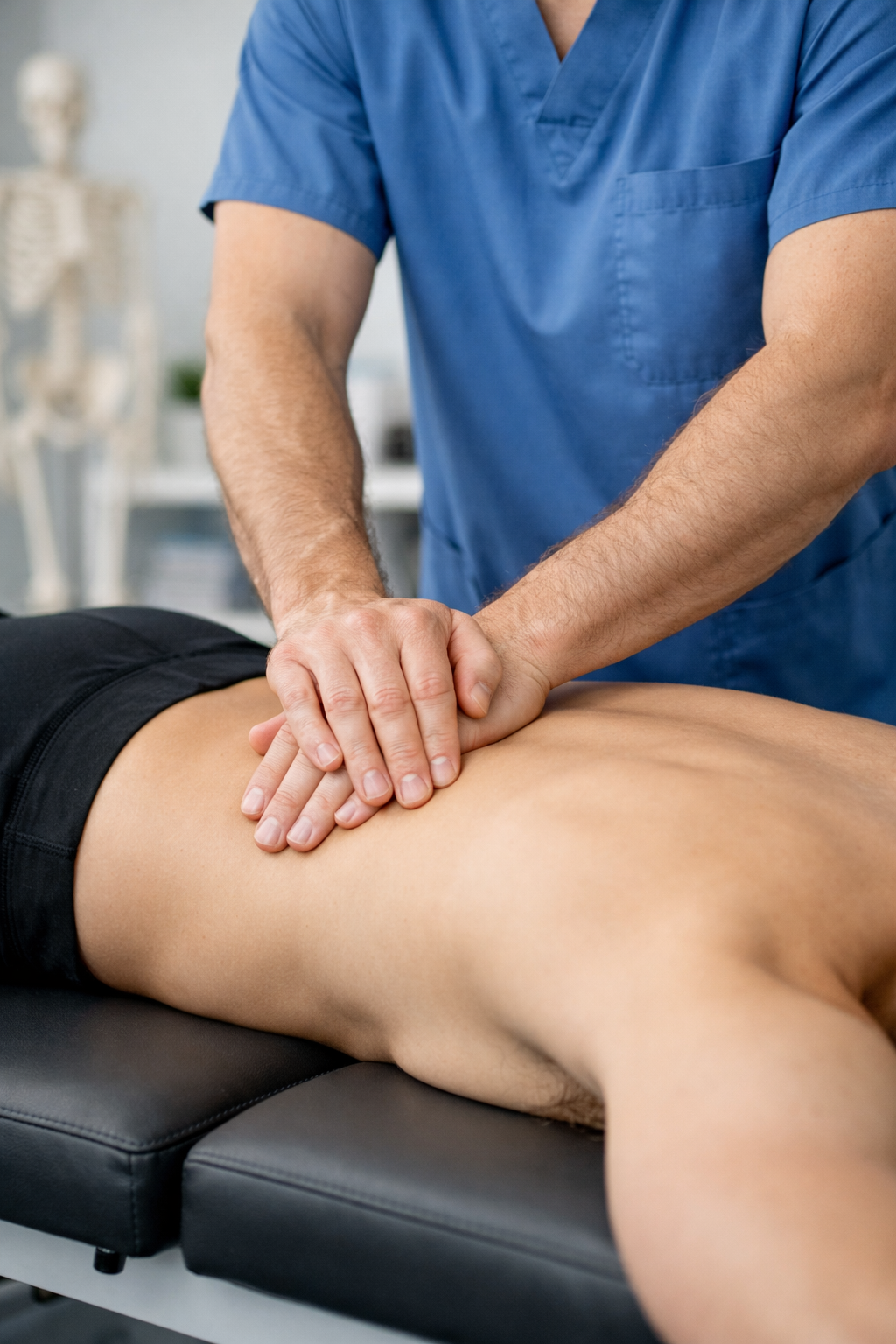
Manual therapy is often the starting point of treatment. Your therapist uses hands-on techniques — including joint mobilizations, soft tissue massage, and muscle energy techniques — to reduce protective muscle spasm, restore segmental mobility in the lumbar spine, and create space for the irritated nerve root. For Manalapan patients who arrive with backs locked up from a long commute or a tough day at the warehouse, manual therapy provides immediate, tangible relief that builds trust in the recovery process.
We apply grade-specific mobilizations to the affected lumbar segments, carefully calibrating force and direction to encourage healthy disc mechanics without aggravating the herniation. Many patients report that they can sit and stand more comfortably after just one or two manual therapy sessions.
MCKENZIE METHOD AND DIRECTIONAL PREFERENCE
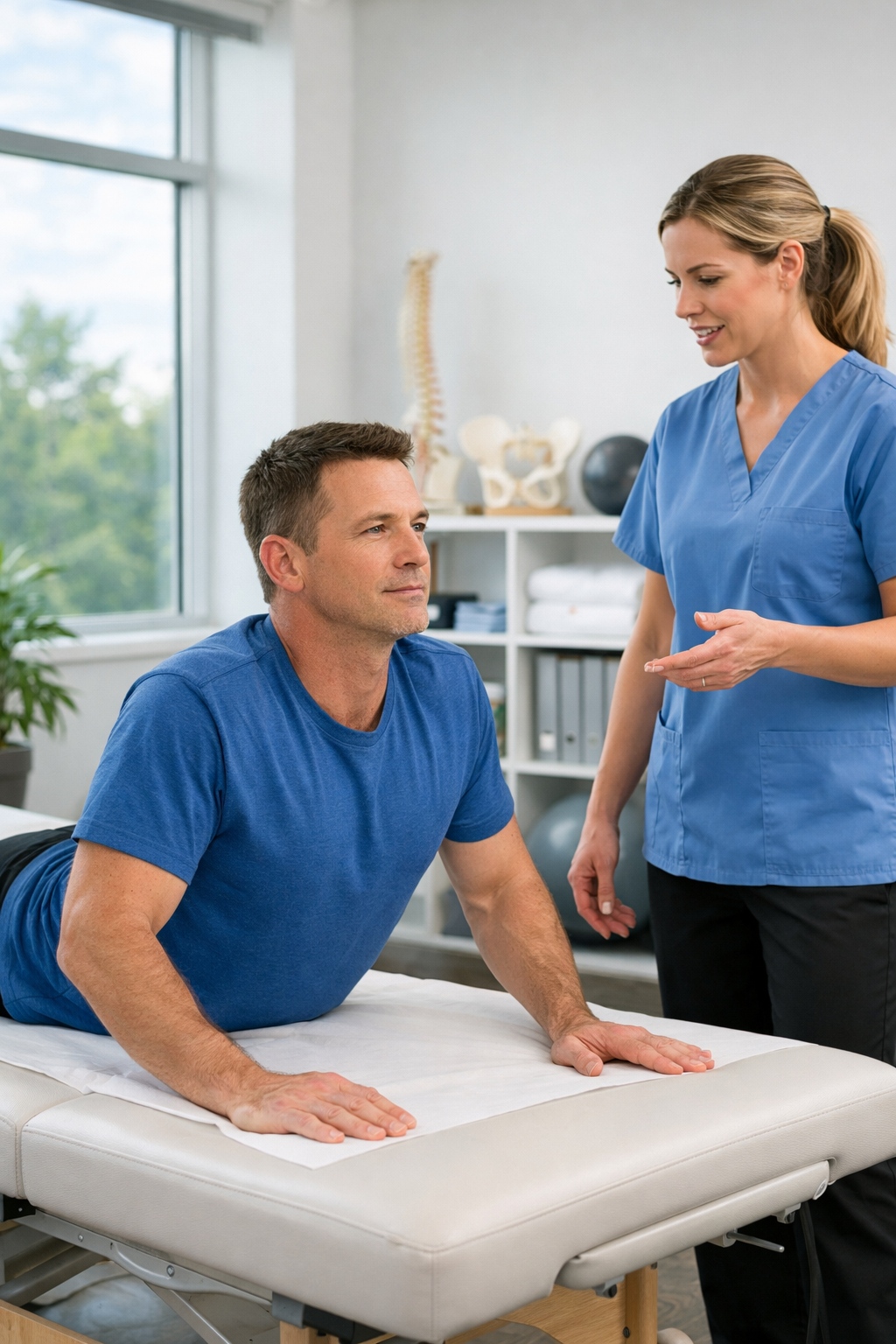
The McKenzie method (also called Mechanical Diagnosis and Therapy) is one of the most well-researched approaches to treating herniated discs. During your initial assessment, your therapist identifies your directional preference — the specific movement direction that centralizes your symptoms, pulling pain away from the leg and back toward the midline of the spine. For most lumbar disc herniations, this direction is extension (arching backward), though every patient is evaluated individually.
Once your directional preference is established, you perform repeated end-range movements in that direction throughout the day. This systematic approach encourages the displaced nucleus pulposus to migrate away from the nerve root. The beauty of the McKenzie method is that it gives you a powerful self-treatment tool you can use at home, at work, and even in the parking lot at Thompson Grove Park before a weekend walk.
CORE STABILIZATION AND FUNCTIONAL STRENGTHENING
A herniated disc does not occur in isolation — it reflects a broader pattern of muscular imbalance and motor control dysfunction. Our core stabilization program targets the deep stabilizing muscles that protect the lumbar spine:
- Transversus abdominis activation: We teach you to engage this deep abdominal corset independently of the superficial muscles, then integrate it into progressively challenging positions and movements.
- Multifidus retraining: The multifidus muscles provide segmental stability to each lumbar vertebra. After a disc injury, they often atrophy rapidly. We use specific exercises to rebuild their endurance and timing.
- Glute and hip strengthening: Weak glutes force the lumbar spine to absorb forces during walking, climbing, and sports. Bridging, lateral band work, and single-leg exercises restore this critical link in the kinetic chain.
- Functional integration: As your stability improves, we replicate the demands of your life — bending to lift a child, rotating to hit a golf ball at Knob Hill, carrying groceries up the front steps — so your core activation becomes automatic.
NEURAL MOBILIZATION
When a herniated disc compresses or irritates a nerve root, the nerve itself can become sensitized and develop adhesions where it passes through soft tissue. Neural mobilization (also called nerve gliding or nerve flossing) uses specific positions and gentle oscillatory movements to restore normal nerve mobility without increasing compression at the herniation site. This technique is particularly valuable for Manalapan patients dealing with persistent sciatica that has not fully resolved with directional preference exercises alone.
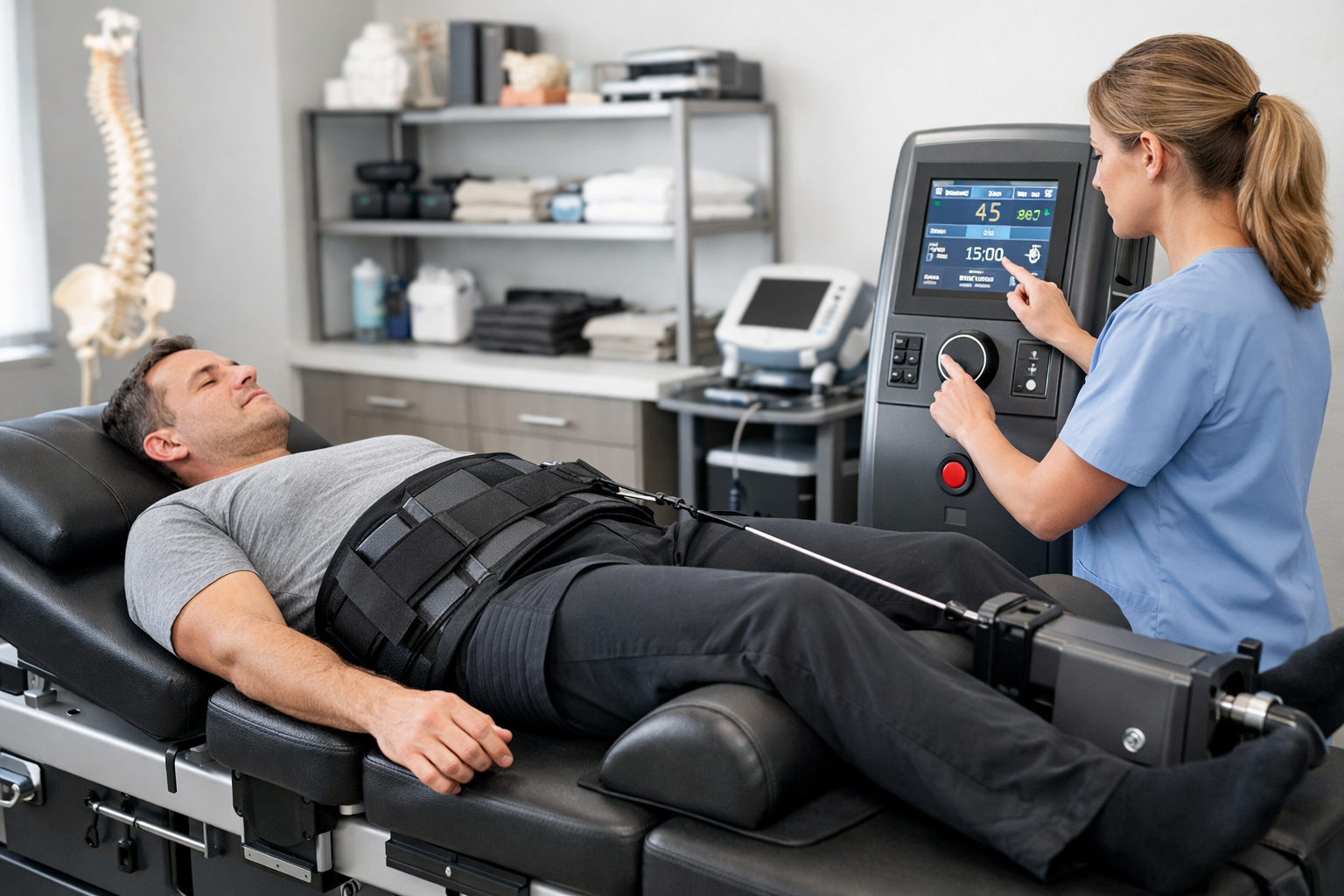
ADVANCED MODALITIES: DRY NEEDLING AND EPAT
For patients who need additional intervention, Trinity Rehab offers two advanced modalities:
- Dry needling: Thin, sterile needles are inserted into myofascial trigger points in the paraspinal muscles, piriformis, or gluteals to release deep spasm and restore normal muscle function. This is especially effective for patients whose muscle guarding is limiting their ability to participate fully in exercise-based treatment.
- EPAT (Extracorporeal Pulse Activation Technology): This shockwave therapy promotes blood flow, accelerates tissue repair, and reduces chronic inflammation around the disc and surrounding structures. We use EPAT as a complement to manual therapy and exercise, not as a standalone treatment.
PREVENTING FUTURE EPISODES
Recovering from a disc herniation is only half the battle — preventing the next one is equally important. Here are strategies tailored to life in Manalapan:
- Rethink your commute setup: Adjust your car seat to maintain a slight lumbar lordosis, use a supportive cushion, and build micro-breaks into your drive when possible.
- Warm up before sports: Whether you are heading to Multi Sports Kingdom for an indoor league game or teeing off at Battleground Country Club, invest five to ten minutes in dynamic movement prep that activates your glutes and core.
- Pace your yard work: Alternate tasks every 15 minutes, use long-handled tools to reduce bending, and never twist and lift simultaneously.
- Walk regularly: The trails at Thompson Grove Park and Manalapan Recreation Center are ideal for low-impact exercise that keeps your discs healthy. Aim for 30 minutes most days.
- Maintain your home exercise program: The core stabilization routine your therapist designs for you is your best insurance policy against recurrence. Consistency matters more than intensity.
WHY MANALAPAN RESIDENTS CHOOSE TRINITY REHAB
Manalapan families have high standards — for their schools, their neighborhoods, and their healthcare. At Trinity Rehab, we meet those standards with a one-on-one care model that prioritizes your time, your goals, and your outcome. You will never be shuffled between providers or left to exercise unsupervised. Your therapist knows your name, your history, and exactly where you are in your recovery. That continuity of care translates directly into better results and faster return to the activities that make Manalapan a great place to live.
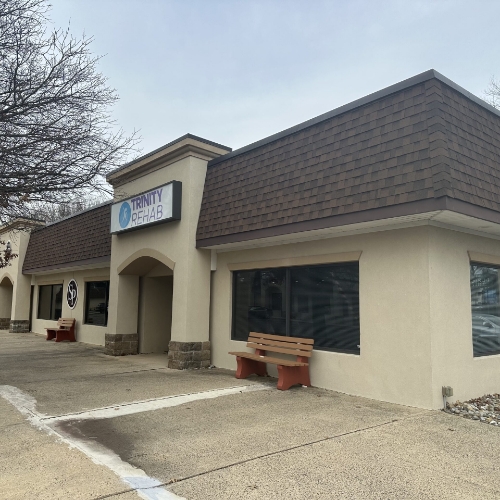
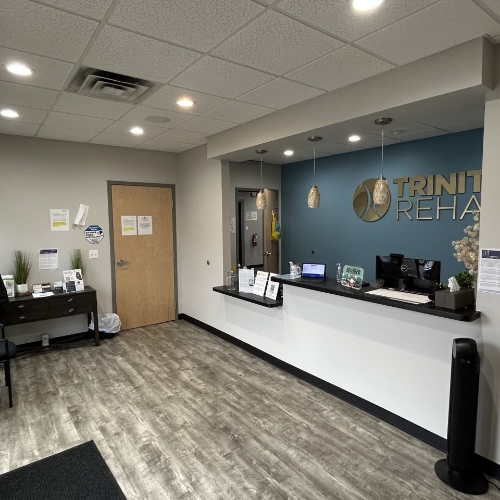
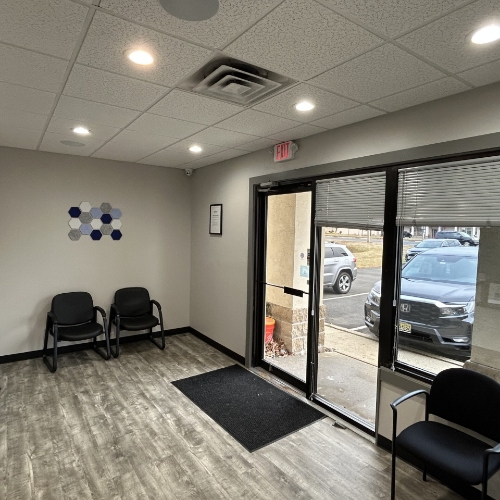
INSIDE OUR MANALAPAN CLINIC
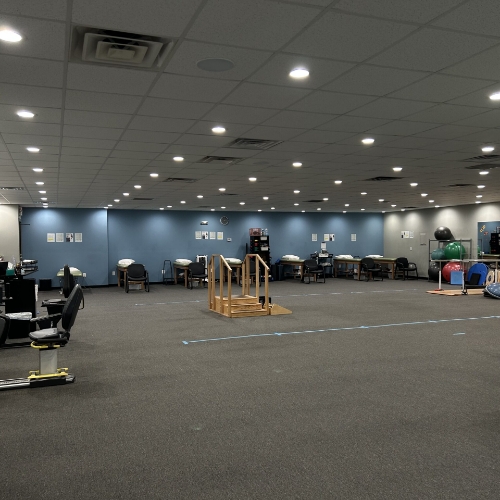
RELATED CONDITIONS & TREATMENTS
Lumbar disc herniation is just one of the many conditions we treat at Trinity Rehab Manalapan. Explore our full range of conditions we treat or learn more about specific treatment approaches:
Manalapan Disc Rehab For Back Pain, Leg Symptoms, And Daily Movement
Lumbar disc symptoms can interrupt sitting, driving, lifting, sleep, work, and exercise. Manalapan rehab should connect the diagnosis to the positions and movements that actually trigger your symptoms.
Your therapist may assess lumbar mobility, nerve-related symptoms, hip strength, gait, lifting mechanics, sitting tolerance, and warning signs that require medical care before therapy continues.
Patients with related symptoms may also need sciatica treatment, back pain physical therapy, or the Manalapan physical therapy clinic page.
FREQUENTLY ASKED QUESTIONS
Manalapan Disc Rehab For Back Pain, Leg Symptoms, And Daily Movement
Lumbar disc symptoms can interrupt sitting, driving, lifting, sleep, work, and exercise. Manalapan rehab should connect the diagnosis to the positions and movements that actually trigger your symptoms.
Your therapist may assess lumbar mobility, nerve-related symptoms, hip strength, gait, lifting mechanics, sitting tolerance, and warning signs that require medical care before therapy continues.
Patients with related symptoms may also need sciatica treatment, back pain physical therapy, or the Manalapan physical therapy clinic page.
How quickly will I feel better?
Can I keep playing sports during treatment?
What if I have been dealing with this for months?
Is the commute aggravating my disc?
START YOUR RECOVERY TODAY
Lumbar disc herniation does not have to keep you from coaching your kid’s soccer team, exploring Monmouth Battlefield, or simply getting through your workday without pain. Trinity Rehab’s Manalapan clinic provides the expert, individualized physical therapy you need to recover fully and stay healthy long-term. Schedule your appointment today and take the first step back to the life you deserve.
SOURCES
- StatPearls — Lumbar Disc Herniation: https://www.ncbi.nlm.nih.gov/books/NBK560878/
- Deutsches Ärzteblatt International — Lumbar Disc Herniation: https://pmc.ncbi.nlm.nih.gov/articles/PMC11465477/
What Our Patients Say



Sign up for free health tips and tricks