
ROTATOR CUFF INJURY TREATMENT IN HOWELL, NJ: YOUR PATH TO LASTING SHOULDER RECOVERY
Maybe it started as a dull ache after finishing the five-mile perimeter loop around Manasquan Reservoir. Or perhaps you felt something pull mid-swing at Eagle Oaks Golf & Country Club and tried to play through it. It could have been an overhead reach stacking shelves at one of the Route 9 retailers, or a throw from the outfield during a Howell High School baseball practice. Whatever the moment was, you now know something is wrong with your shoulder — and ignoring it is no longer an option.
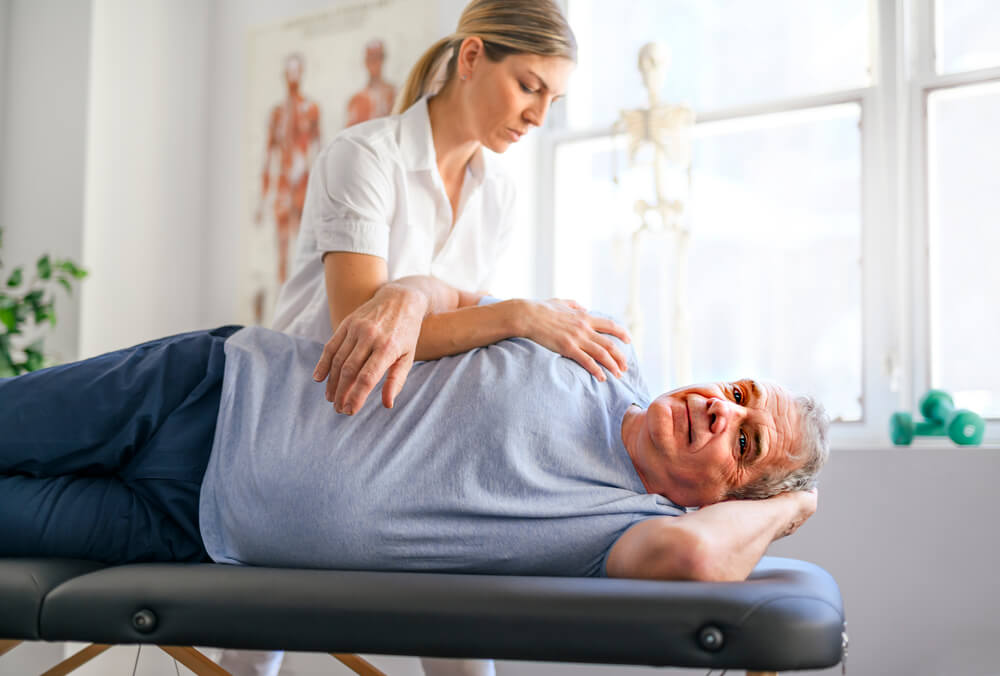
If shoulder pain is limiting the way you live, work, and stay active in Howell, you are not alone. Rotator cuff injuries are among the most common shoulder conditions we treat at Trinity Rehab. The good news is that [physical therapy](https://trinity-rehab.com/physical-therapy-treatments/physical-therapy/) is the proven first-line treatment for most rotator cuff injuries, and our team right here in Howell is ready to help you recover — without surgery in many cases.
Understanding Your Rotator Cuff: What It Is and Why It Matters
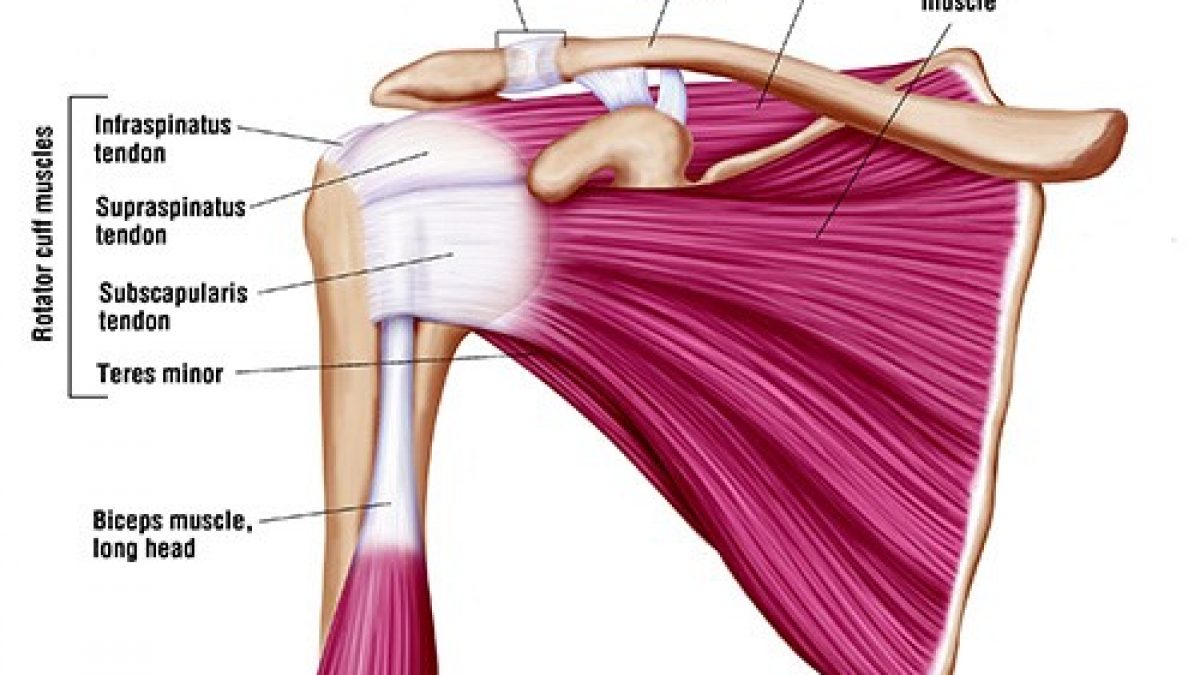
Your rotator cuff is a group of four muscles and their tendons that stabilize and move your glenohumeral joint — the ball-and-socket joint of your shoulder. These four muscles are the supraspinatus, infraspinatus, teres minor, and subscapularis. The supraspinatus, which initiates arm lifting, is the most frequently injured. The infraspinatus and teres minor control outward rotation — the motion you use when pulling your arm back to throw or following through on a tennis serve. The subscapularis handles inward rotation, like reaching behind your back.
Together, these muscles keep the head of your upper arm bone centered in the shoulder socket during every movement. When one or more becomes damaged — through a partial tear, full-thickness tear, or chronic rotator cuff tendinopathy — your shoulder loses stability, strength, and the ability to perform daily tasks.
Early treatment matters. Left untreated, rotator cuff injuries worsen over time, leading to progressive loss of range of motion, muscle atrophy, and compensatory patterns that can create problems in your neck and upper back.
How Rotator Cuff Injuries Happen in Howell
Howell Township is the largest municipality in Monmouth County, stretching across 61 square miles of suburban neighborhoods, wooded trails, and active commercial corridors. The way residents live and work here creates specific risk factors for rotator cuff problems.
Recreational Athletes and Weekend Warriors
Howell is a community that loves staying active outdoors. Hikers and joggers tackle the trails around Manasquan Reservoir and through sections of Allaire State Park year-round. Golfers frequent Howell Park Golf Course and Eagle Oaks, where the repetitive rotational demands of a swing place sustained stress on the supraspinatus and infraspinatus tendons. Tennis and pickleball players at Candlewood Swim & Racquet Club experience similar overhead strain during serves and smashes. Swimmers at Howell Pointe Swim Club put in lap after lap of strokes demanding constant rotator cuff engagement. Repetitive overhead motion is a leading cause of rotator cuff tendinopathy — especially when intensity ramps up faster than tendons can adapt.
High School and Youth Athletes
Howell High School’s athletic programs are a source of deep community pride. The Rebels have a storied tradition — from their Group IV state championship in baseball in 2022 to historically dominant wrestling and soccer programs — and Shore Conference competition demands year-round training. Young athletes in baseball, volleyball, swimming, and tennis are particularly vulnerable to rotator cuff sports injuries because their shoulders endure high overhead repetition while still developing. Youth basketball leagues throughout the township add to those demands. When a young athlete complains of a deep shoulder ache after practice, it deserves prompt attention — not a “just rest it” approach.
Workplace and Commuter Demands
Retail and warehouse staff along the Route 9 corridor — at Walmart, Target, and Lowe’s at Lanes Mill Marketplace — spend shifts lifting, stocking, and reaching overhead. Employees of Howell Township Public Schools deal with tasks like hanging classroom displays and moving equipment. These repetitive work injuries accumulate quietly in rotator cuff tendons until pain becomes impossible to ignore.
Thousands of Howell residents also commute daily to New York City. Hours gripping a steering wheel or hunching over a laptop contribute to the rounded-shoulder posture that narrows the subacromial space — a major contributing factor to impingement and tendinopathy.
Age-Related Changes
With a median age near 40 and 89% homeownership, Howell’s population sits right at the threshold where rotator cuff degeneration accelerates. Blood supply to these tendons decreases after age 40, making tissue more vulnerable to micro-tearing and bone spur formation. The same golf swing that caused no issues at 30 can become a source of chronic pain by 45.
Recognizing the Signs: Symptoms of a Rotator Cuff Injury
Seek professional evaluation if you experience:
- Deep, aching pain that worsens at night, especially when lying on the affected side
- Difficulty reaching behind your back — fastening clothing, reaching into a back pocket
- Overhead weakness — lifting objects above shoulder height, serving in tennis
- Catching, clicking, or grinding during shoulder movement
- Progressive loss of range of motion that makes daily tasks harder
- Radiating pain from the shoulder down the outside of the upper arm
- rotator cuff recovery guide
Under New Jersey’s direct access law, you can begin physical therapy without a physician referral — so you can start treatment sooner and feel better faster.
How Physical Therapy Treats Rotator Cuff Injuries: A Phase-Based Approach
At Trinity Rehab in Howell, we use a structured, evidence-based, phase-based approach. Every session is one-on-one with your therapist, so your program is tailored to your injury, your goals, and the demands of your daily life.
Phase 1: Pain Reduction and Protected Mobility
The first phase calms your pain and restores basic, pain-free movement. When you are dealing with acute shoulder pain, your body guards the joint by tightening surrounding muscles. While protective, this quickly leads to stiffness if it persists. Your therapist will use:
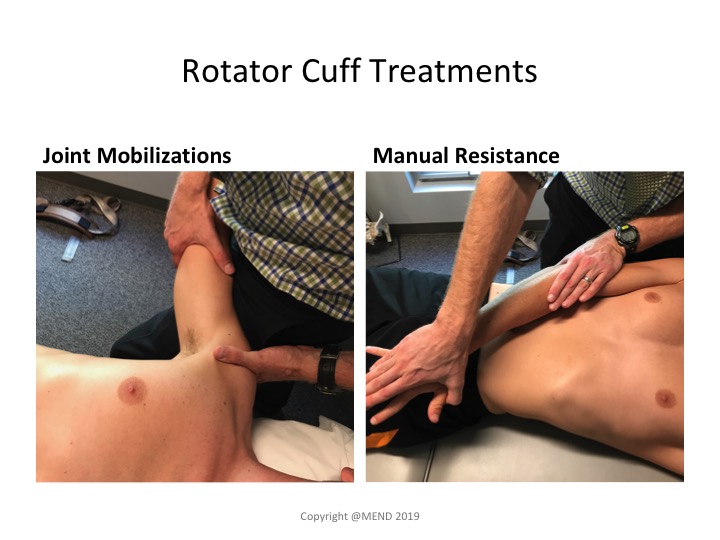
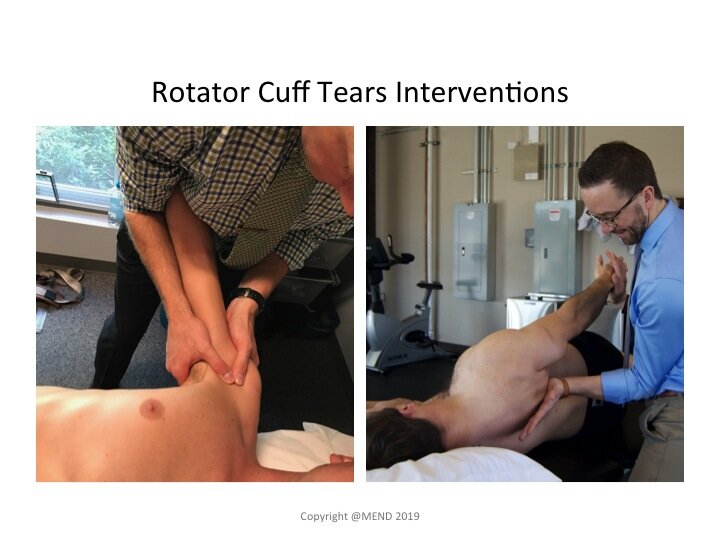
- Manual therapy — Hands-on joint and soft tissue mobilization to reduce guarding and restore glenohumeral joint mechanics
- Passive and active-assisted range of motion exercises — Guided movements that maintain mobility without stressing injured tendons
- Pain modulation techniques — Ice, therapeutic modalities, and positioning strategies to manage inflammation
- Postural education — Correcting the forward-head, rounded-shoulder posture common among commuters and desk workers to open the subacromial space
- Scapular stabilization foundations — Early activation of the muscles controlling your shoulder blade, the platform from which your rotator cuff operates
Most patients notice meaningful pain relief within two to three weeks.
Phase 2: Progressive Strengthening and Neuromuscular Control
Once pain decreases and baseline mobility returns, Phase 2 rebuilds strength and coordination:
- Isometric strengthening — Contracting rotator cuff muscles without joint movement to build tendon tolerance safely
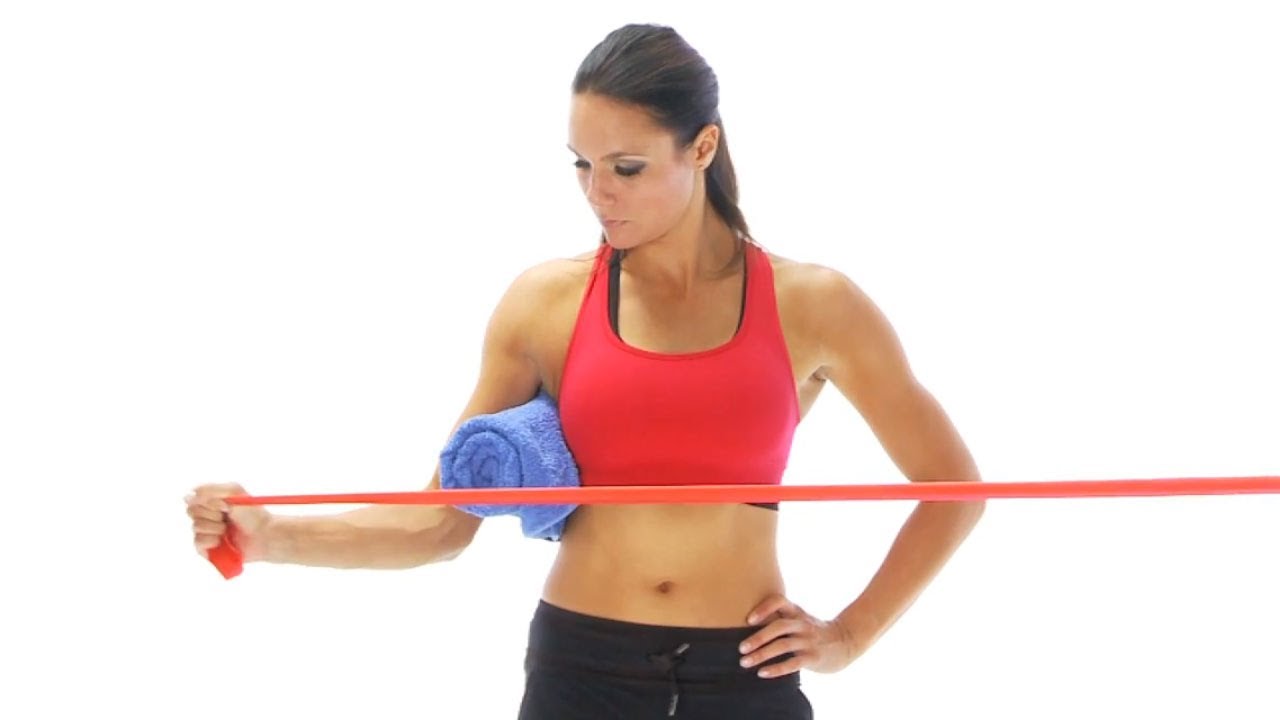
- Resistance band exercises — Progressive external and internal rotation exercises challenging the infraspinatus, teres minor, and subscapularis
- Eccentric loading protocols — Exercises where the muscle lengthens under load, one of the most effective strategies for rotator cuff tendinopathy. These stimulate tendon remodeling and build resilient tissue
- Proprioceptive training — Retraining your shoulder’s sense of position in space, which is often impaired after injury
- Posterior capsule stretching — Addressing tightness in the back of the shoulder that alters joint mechanics
- Advanced scapular stabilization — Progressing to more demanding loads to ensure your scapula moves in sync with your arm
Phase 3: Functional Recovery and Return to Activity
Phase 3 connects rehabilitation directly to the life you want to get back to — returning to the golf course at Howell Park, competitive tennis at Candlewood, the Rebels roster, or simply lifting your grandchild overhead without pain.
- Task-specific and sport-specific training — Simulating the exact movements of your daily activities, work, and recreation, including throwing programs, swing mechanics, and serve progressions
- Dry needling — Thin filament needles release trigger points and myofascial restrictions in the rotator cuff and surrounding muscles, effective for persistent tightness that manual therapy alone has not fully resolved
- EPAT/Shockwave therapy — Acoustic pressure waves promote blood flow and cellular repair in chronic tendinopathy that has plateaued with conventional treatment
- Home exercise program — A carefully designed program empowering you to maintain gains and prevent recurrence after formal treatment ends
Preventing Rotator Cuff Injuries: Tips for Howell Residents
Whether you are recovering or want to avoid an injury altogether, these strategies protect your shoulders long-term:
- Strengthen your rotator cuff two to three times per week with targeted exercises. Resistance bands make this easy at home.
- Stretch your posterior shoulder regularly with cross-body and sleeper stretches to maintain capsule flexibility.
- Prioritize posture — whether commuting to the city, working a desk, or standing behind a register on Route 9, keep your shoulders back and chest open.
- Use proper body mechanics — keep loads close to your body and minimize repetitive overhead reaching. Use step stools when possible.
- Warm up before activity — before your round at Eagle Oaks, your swim at Howell Pointe, or a weekend project, spend five to ten minutes on arm circles, band pull-aparts, and rotator cuff activation.
- Respect pain as a signal — addressing minor discomfort early is far easier than rehabilitating a full tear.
Why Howell Residents Choose Trinity Rehab
- One-on-one care every visit — You work directly with your physical therapist for the entire session. No aides, no being left alone to exercise.
- Evidence-based protocols — Our rotator cuff rehabilitation uses the latest research, from eccentric loading to scapular stabilization methods proven to restore function.
- Advanced treatments — Manual therapy, dry needling, and EPAT/shockwave therapy — tools many clinics do not offer.
- Direct access — New Jersey law lets you start without a doctor’s referral. Less waiting, faster recovery.
- Insurance coordination — We handle the administrative details so you can focus on getting better.
- Community understanding — Whether your goal is finishing the reservoir loop pain-free, playing 18 holes at Howell Park, keeping up with your kids at Deerwood Park, or performing your job without limitations, we build treatment around the life you actually live.
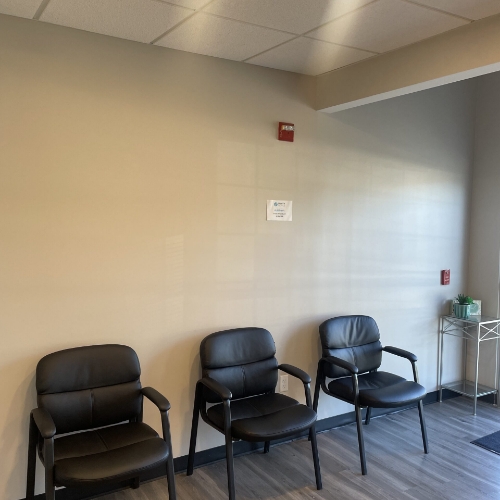
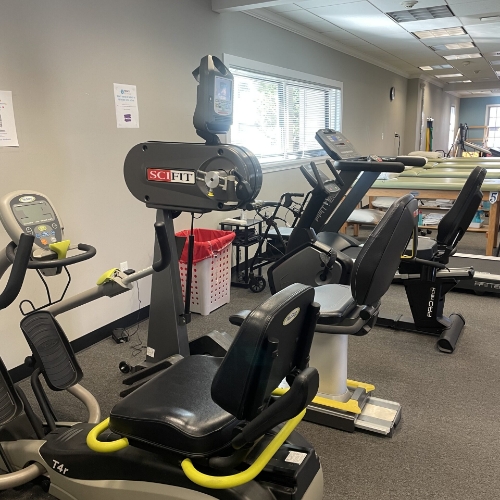
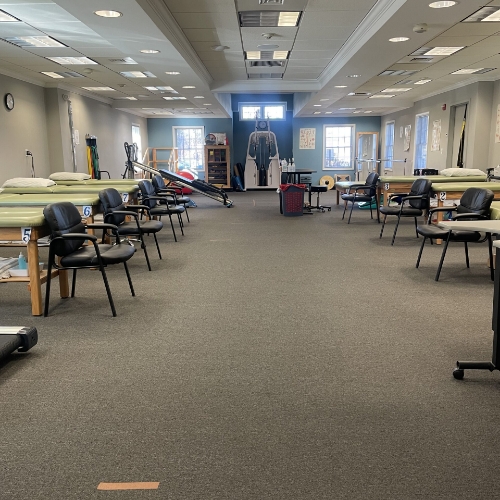
Inside Our Howell Clinic
Frequently Asked Questions
Where can I get rotator cuff treatment in Howell, NJ?
Do I need surgery for a rotator cuff tear?
How long does rotator cuff rehabilitation take?
Can I still exercise while recovering from a rotator cuff injury?
What makes Trinity Rehab different from other clinics?
Take the First Step Toward a Pain-Free Shoulder
Living with rotator cuff pain in Howell does not have to mean giving up the activities that matter to you. Whether it is hiking the reservoir trail, playing a round at Eagle Oaks, cheering on the Rebels without wincing, or sleeping through the night without shoulder pain — recovery is within reach.
At Trinity Rehab, our phase-based approach is designed to meet you where you are and take you where you want to go — safely, effectively, and with expert guidance every step of the way.
Schedule your appointment today and let us build a recovery plan around your goals. No referral needed to get started.
Start Your Recovery in Howell Today
Don’t let shoulder pain hold you back. Schedule your evaluation at Trinity Rehab in Howell and take the first step toward a stronger, pain-free shoulder.
Related Conditions & Treatments
Rotator cuff injuries are just one of the many conditions we treat at Trinity Rehab Howell. Explore our full range of conditions we treat or learn more about specific treatment approaches:
What Our Patients Say



Sign up for free health tips and tricks