
TENNIS ELBOW TREATMENT IN FLEMINGTON, NJ | TRINITY REHAB
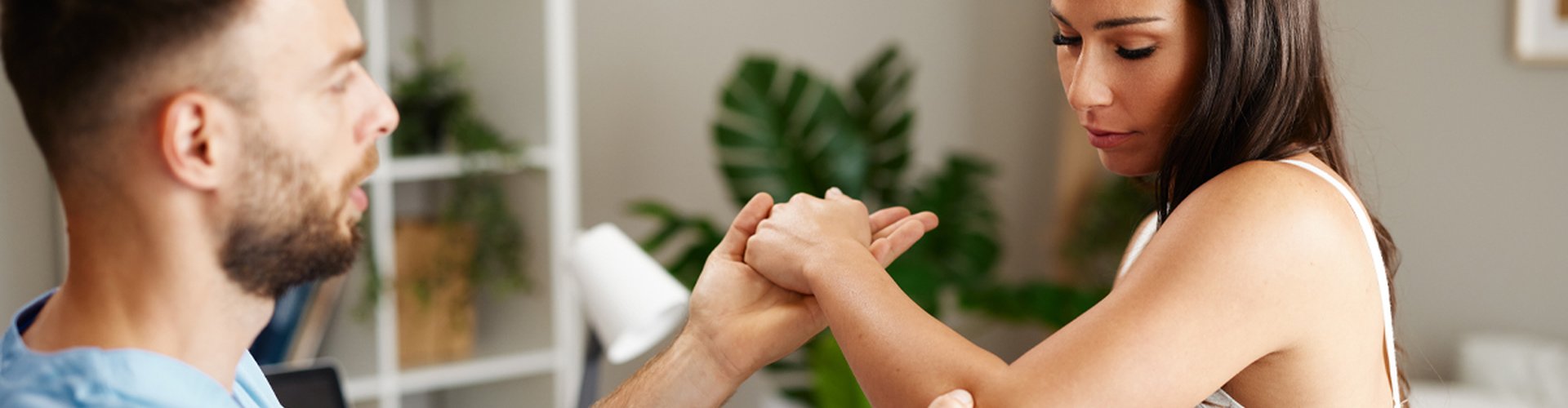
Flemington has a way of making you feel like you have stepped into a quieter version of New Jersey — one where the Hunterdon County Courthouse still anchors the downtown skyline, the Stangl Factory hums with weekend concerts, and the rolling farmland of the Amwell Valley stretches out in every direction. But beneath that small-town calm, this borough of roughly 4,900 is remarkably active. With a median age around 34, Flemington skews younger and busier than many of its Hunterdon County neighbors. Morning drills at the Flemington Tennis Club, afternoon rounds at Heron Glen Golf Course, evening pickleball at Summer Road Park, weekend kayaking — residents here grip racquets, paddles, clubs, and oars with the same hands they use to commute, work, and raise families.
That grip-intensive lifestyle is exactly why tennis elbow is one of the most frequent overuse complaints we see at Trinity Rehab Flemington. Picture a Saturday in late spring: you finish a doubles set at Flemington Tennis Club, drive over to Heron Glen for nine holes, then spend Sunday morning kayaking. By Monday, your outer elbow aches every time you turn a doorknob or lift your coffee mug. That burning pain along the lateral elbow has a clinical name — lateral epicondylitis — and it does not go away on its own.
If elbow pain is interfering with the way you live in and around Flemington, this guide explains what is happening, who in this community faces the highest risk, and how targeted physical therapy at Trinity Rehab can bring lasting relief.
What Is Tennis Elbow?
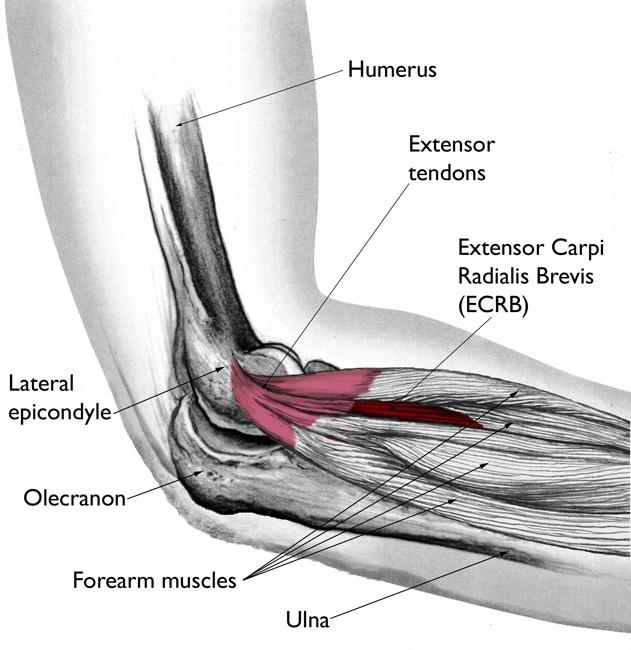
Tennis elbow — known clinically as lateral epicondylitis or lateral elbow tendinopathy — is a degenerative overuse condition affecting the tendons that attach to the lateral epicondyle, the bony prominence on the outside of the elbow. The primary tendon involved is the extensor carpi radialis brevis (ECRB), which stabilizes the wrist during gripping, lifting, and twisting motions. When subjected to repetitive movements over weeks or months, micro-damage accumulates faster than the body can repair it. The result is persistent lateral elbow pain, weakened grip strength, and difficulty with everyday tasks.
Despite the name, most people who develop tennis elbow never played a competitive match. The condition is driven by any sustained, repetitive wrist and forearm activity — which means Flemington’s combination of racquet sports, golf, outdoor recreation, healthcare work, and manufacturing creates a broad set of risk factors for a town its size.
Common Symptoms
- Pain or burning on the outer side of the elbow, often radiating into the forearm and wrist
- Weakened grip strength when holding tools, racquets, paddles, or heavy objects
- Stiffness or discomfort when extending the wrist or straightening the arm
- Increased pain with repetitive movements such as typing, gripping, or turning
- Tenderness along the lateral elbow and forearm muscles
Symptoms often develop gradually. Many Flemington residents chalk up the discomfort to general soreness and delay treatment until pain becomes chronic. Early intervention with physical therapy leads to faster recovery and better outcomes. Under New Jersey’s Direct Access law, you do not need a referral — call Trinity Rehab Flemington and begin treatment the same week.
Who Gets Tennis Elbow in Flemington?
Flemington’s young, active population and diverse employment base create overlapping risk factors that make lateral epicondylitis surprisingly common here. Below are the profiles we see most often.
The Hospital Worker
Hunterdon Healthcare is the largest employer in the area, with roughly 2,000 workers across its hospital campus and satellite facilities. Nurses, aides, and technicians perform physically demanding repetitive tasks all shift long — repositioning patients by gripping bed rails, squeezing IV clamps, operating equipment, and typing charting notes. A nurse working three consecutive twelve-hour shifts loads the same forearm extensor muscles that a tennis player taxes on the court, except there is no off-season. Those repetitive motions push the ECRB tendon past its tolerance threshold, and lateral elbow pain sets in. Many healthcare workers assume the discomfort is just part of the job. It does not have to be.
The Dual-Sport Racquet and Golf Player
Flemington sits at the intersection of serious racquet sport culture and accessible public golf. A Flemington Tennis Club member who also tees off at Heron Glen Golf Course is loading the forearm and wrist extensors through two very different movement patterns — the rapid wrist extension of a backhand and the sustained grip pressure of a golf swing. Add in pickleball at the Flemington Pickleball Club and Summer Road Park, and residents cycle through three grip-intensive sports in a single week. Each sport stresses the tendon differently, and without adequate recovery, the cumulative load overwhelms the tissue. This multi-sport overuse is one of the most common paths to tennis elbow we treat at our clinic.
The High School Athlete
Hunterdon Central Regional High School fields 33 varsity sports, and several of them — baseball, tennis, golf, softball — place heavy demands on the forearm and lateral elbow. A Red Devils baseball pitcher throwing five or six innings twice a week subjects the elbow to repeated high-velocity extension. Transition that same athlete into spring tennis or fall golf, and the tendon never gets the recovery window it needs. Young athletes often push through pain, assuming it will resolve on its own. Without proper treatment and load management, what starts as mild soreness can develop into a condition that sidelines them for months.
Manufacturing and Warehouse Workers
Flemington’s economy includes significant manufacturing and logistics employment. Workers at Johanna Foods and Reagent Chemical perform hours of repetitive grip-intensive tasks — operating machinery, handling containers, and executing the same wrist-and-forearm motions hundreds of times per shift. Warehouse workers at the Flemington Junction Business Center load and sort packages under time pressure. These are occupational injuries that require treatment accounting for the reality that the worker returns to the same physical demands.
Weekend Outdoor Enthusiasts
Flemington’s countryside setting invites year-round outdoor activity. Weekend kayakers gripping paddles for hours, hikers on Hunterdon Plateau trails, visitors at Schaefer Farms, and baseball families at Diamond Nation all engage in sustained gripping and repetitive forearm use. Layered on top of a desk job or manual labor during the week, these activities become the tipping point for tennis elbow.
How Trinity Rehab Flemington Treats Tennis Elbow
Effective tennis elbow management requires more than rest and a brace. At Trinity Rehab, our physical therapists build individualized treatment plans to reduce pain, restore function, and rebuild tendon tolerance so the condition does not return when you get back to your normal life.
Comprehensive Evaluation
Your first visit includes a thorough assessment of elbow pain, grip strength, forearm flexibility, wrist mechanics, and shoulder and knee movement patterns that may contribute to compensatory strain. We identify the activities driving your symptoms — whether that is a clinical shift at Hunterdon Healthcare, weekly sessions at Flemington Tennis Club, or assembly work at Johanna Foods — and design treatment around those demands.
Manual Therapy
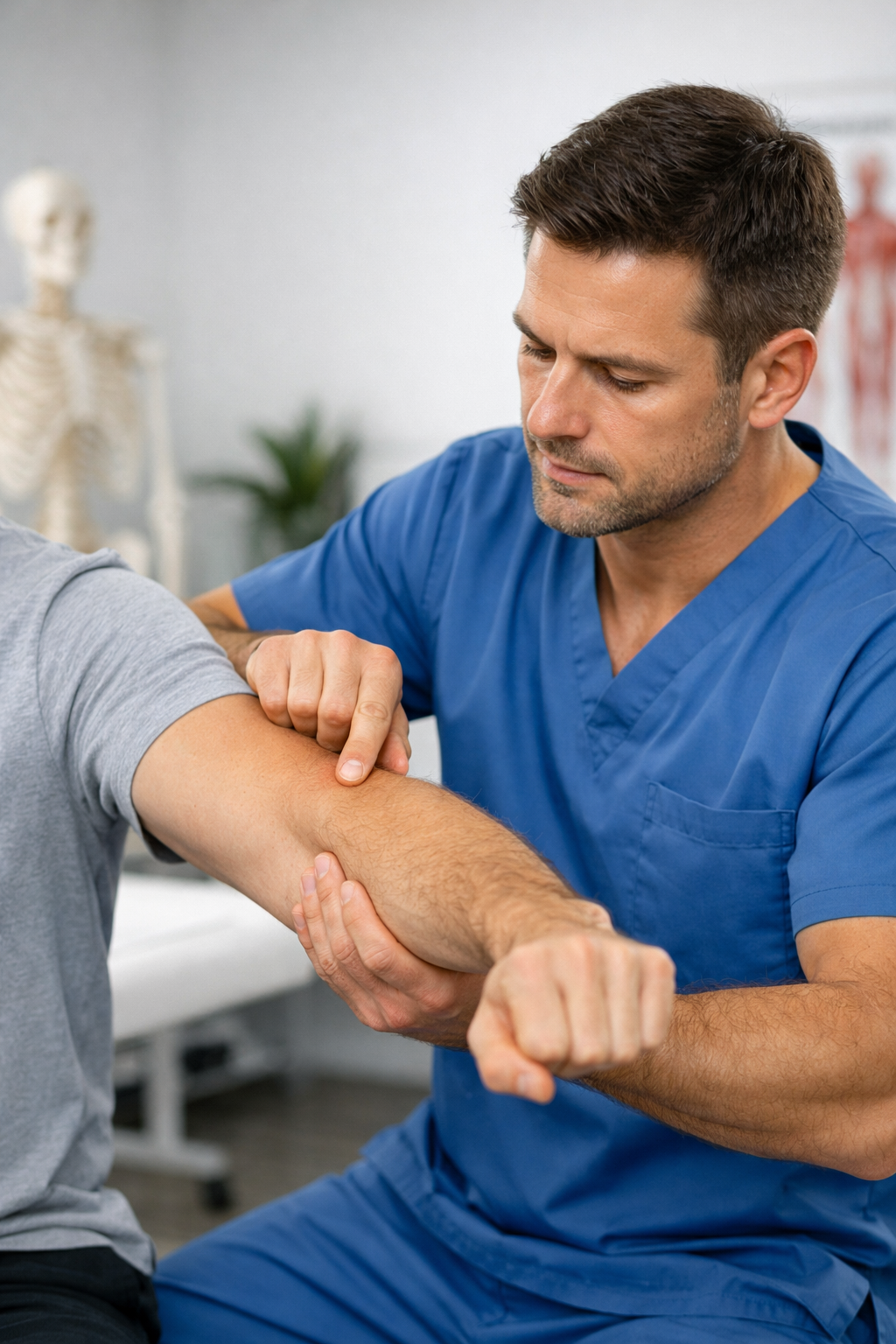
Hands-on manual therapy techniques — soft tissue mobilization, myofascial release, and joint mobilization of the elbow and wrist — help reduce pain, improve blood flow, and restore normal movement. Manual therapy is a cornerstone of early-phase treatment when sensitivity is highest.
Eccentric Exercise Programming
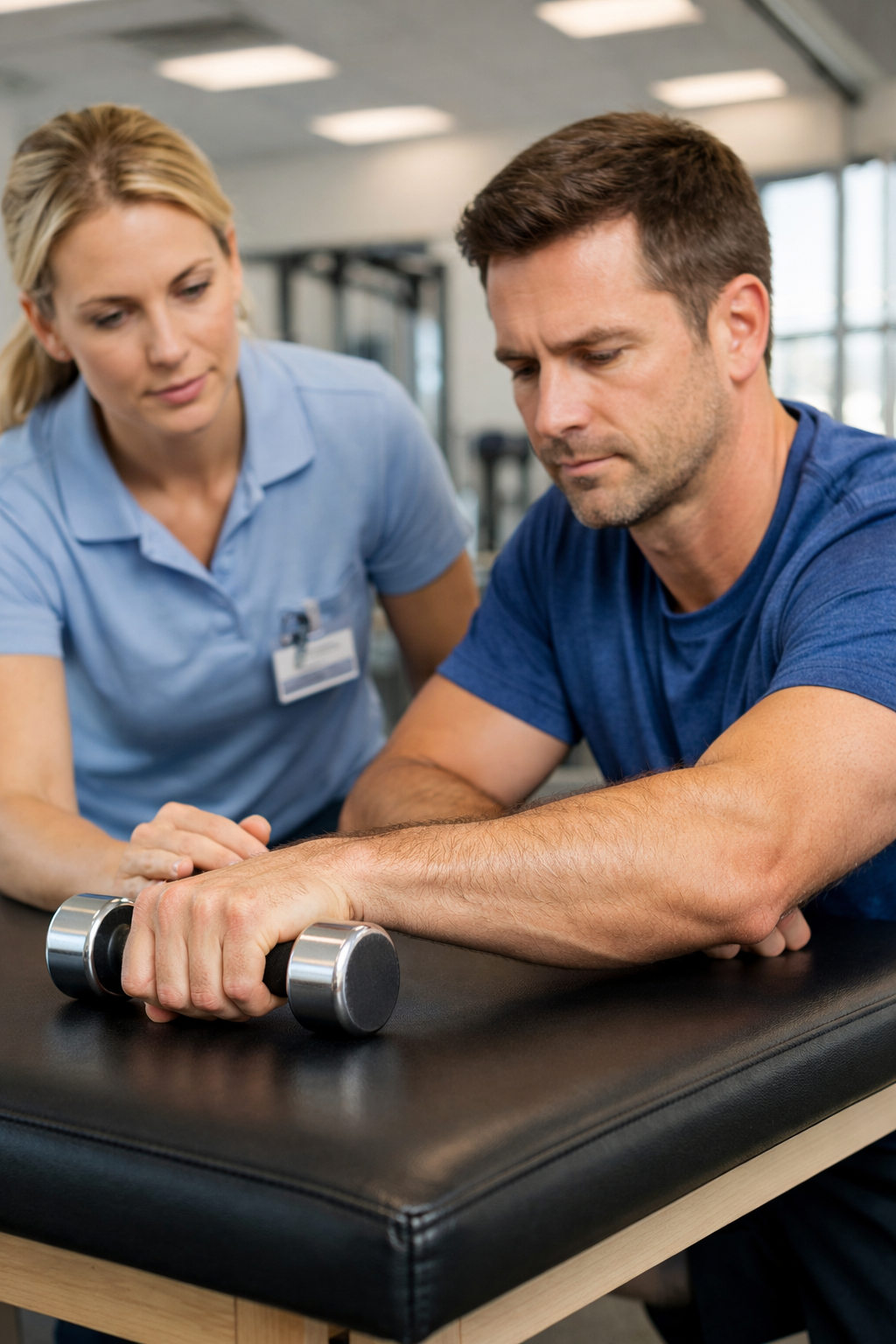
Research consistently shows that eccentric exercise — slowly lowering a weight rather than lifting it — is one of the most effective strategies to treat tennis elbow. A common starting exercise involves holding a light weight with your palm facing downward, slowly lowering the wrist from an extended position, and returning to the starting position with the opposite hand. You exercise slowly and deliberately, keeping your shoulders relaxed. Your physical therapist will calibrate resistance and progression to match your healing timeline, gradually building tendon tolerance.
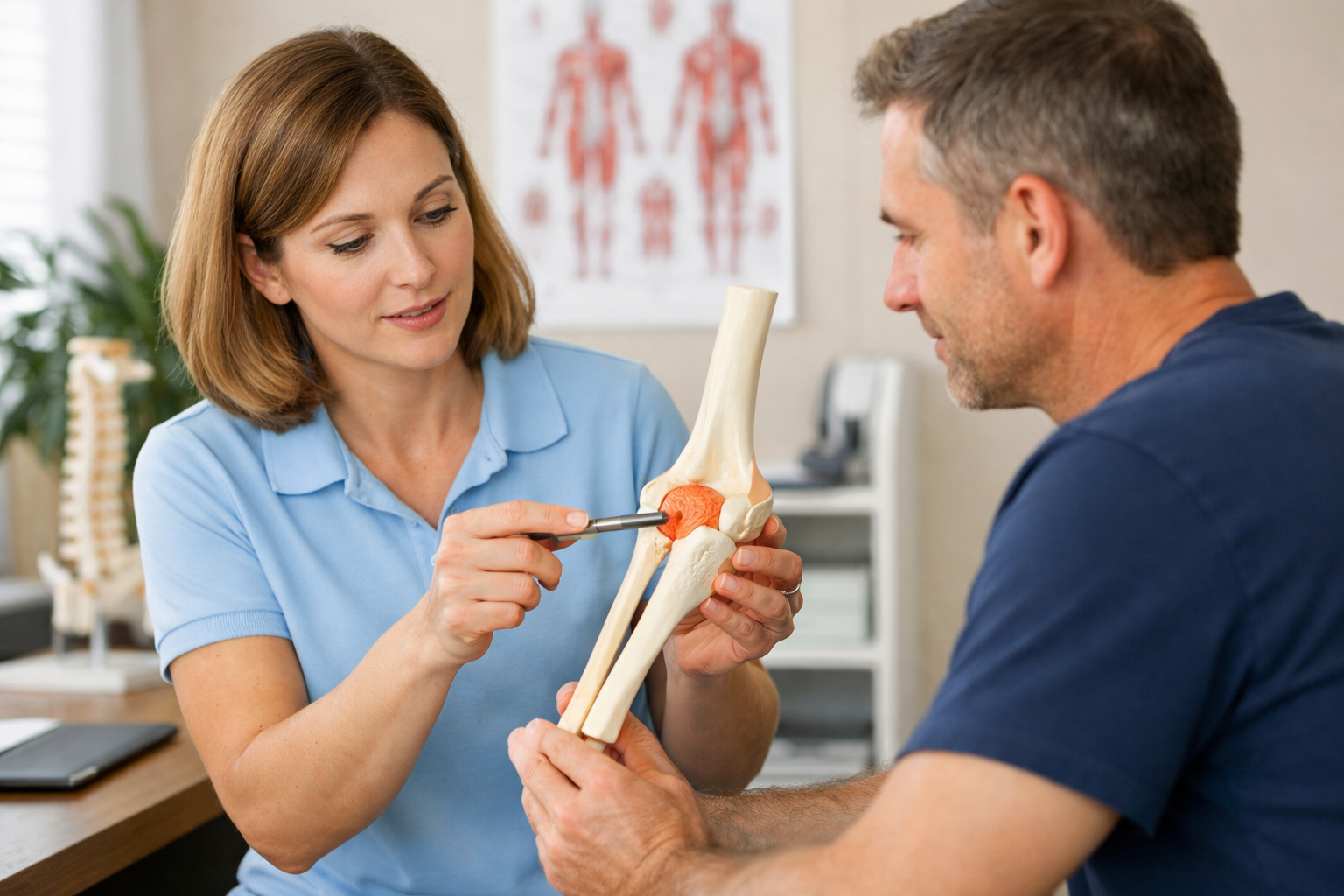
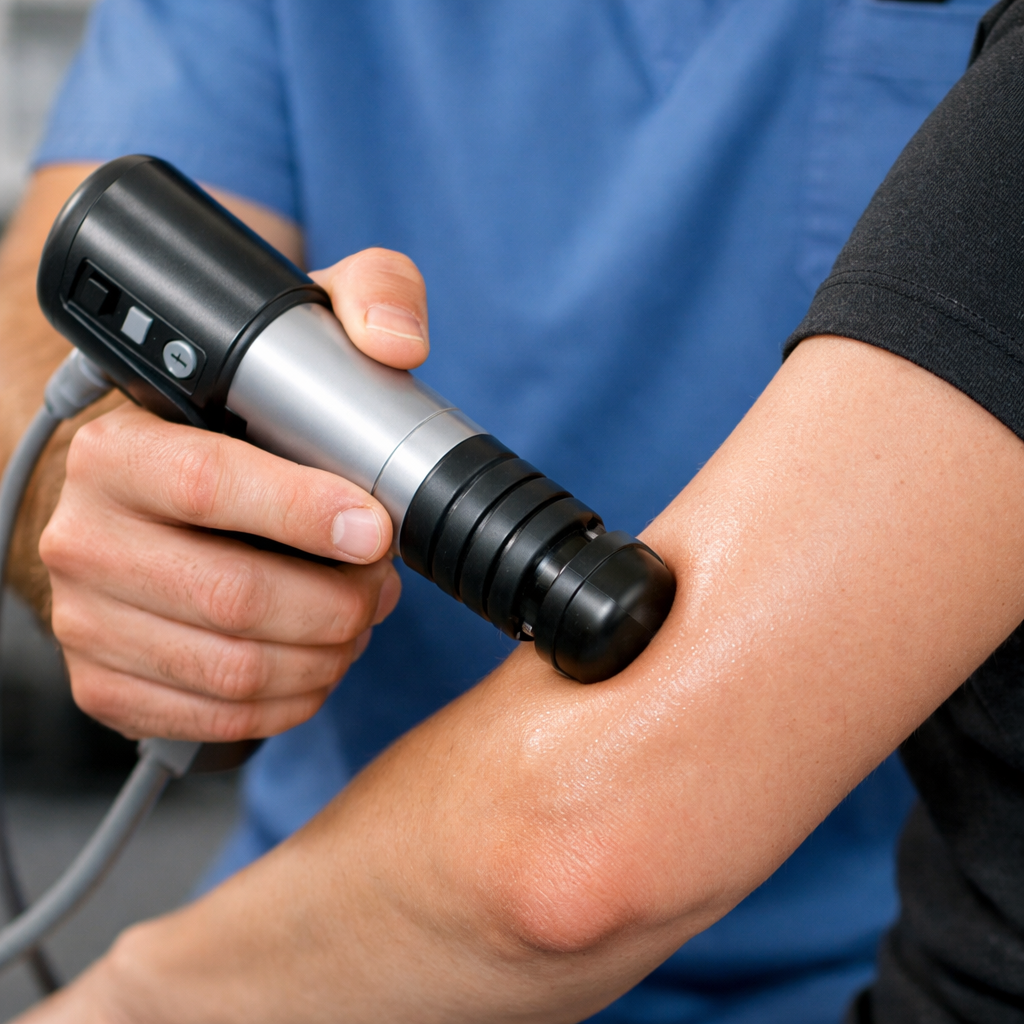
EPAT (Extracorporeal Pulse Activation Technology)
For stubborn or chronic lateral epicondylitis, Trinity Rehab offers EPAT — a shockwave therapy that delivers acoustic pressure waves to the affected tendon. EPAT accelerates tissue healing and can significantly reduce pain in cases that have not responded to exercises alone. It is a non-invasive, in-office treatment that helps patients avoid corticosteroid injections or surgery.
Dry Needling
Trigger points in the forearm extensor muscles often contribute to persistent elbow pain. Dry needling uses thin, sterile needles to release these trigger points, reduce muscle tension, and improve blood flow. Many patients experience meaningful pain relief within one or two sessions, allowing them to engage more fully in their strengthening and stretch routines.
Activity Modifications and Load Management
Recovery does not happen only in the clinic. We work with you to modify the movements that aggravate your symptoms — adjusting workstation ergonomics, recommending a different racquet grip size for Flemington Tennis Club matches, restructuring your golf warm-up at Heron Glen, or building recovery days between kayaking and pickleball. A counterforce strap worn just below the elbow can offload the tendon during daily tasks and reduce inflammation while you rebuild capacity.
Progressive Strengthening and Return to Activity
As pain decreases and tendon tolerance improves, we advance your program with targeted strengthening. Grip strengthening exercises progress from a tennis ball squeeze to resistance tools. Wrist extension exercises, forearm pronation/supination drills, and towel twists — wringing a rolled towel in opposite directions — build functional forearm strength at home with no specialized equipment needed. For a Hunterdon Healthcare nurse, we simulate the gripping patterns of clinical work. For a Red Devils pitcher, we rebuild arm outward loading mechanics. For a golfer, we address club-specific wrist demands. The goal is a confident, pain-free return to full activity aligned with your long term goals.
Why Choose Trinity Rehab Flemington?
One-on-one care, every visit. You work directly with a licensed physical therapist for the full session — no hand-offs to aides or technicians. That consistency allows your therapist to track progress closely and adjust your program in real time for better outcomes.
Advanced treatment under one roof. EPAT shockwave therapy, dry needling, manual therapy, and evidence-based exercise programming are all available at our Flemington location. You get sports med-level care without driving to a city hospital.
Direct Access — no referral needed. Under New Jersey law, you can start physical therapy without a doctor’s prescription. If your elbow hurts today, call today and begin recovery this week.
Convenient for the region. Our clinic serves residents across Flemington, Raritan, Clinton, Readington, and the surrounding Hunterdon County communities. Whether you live in the borough or on the surrounding farmland, Trinity Rehab is your local partner for getting back to the active life this area demands.
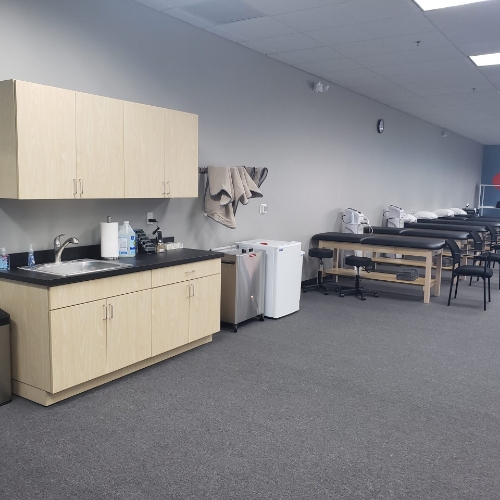
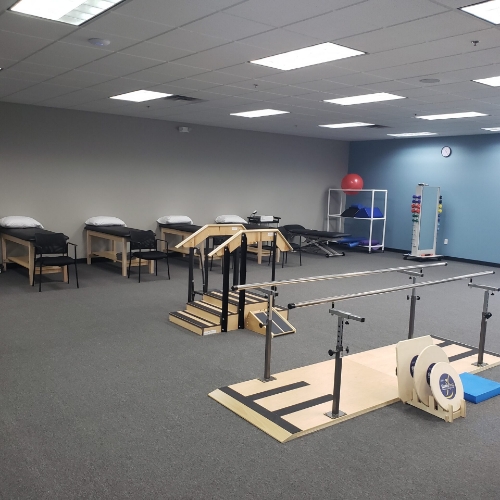
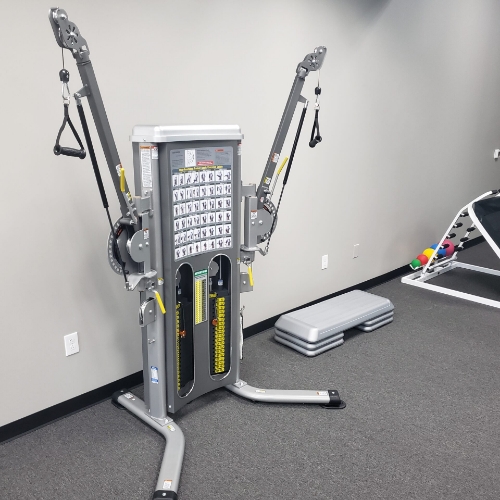
Inside Our Flemington Clinic
Related Conditions & Treatments
Tennis elbow is just one of the many conditions we treat at Trinity Rehab Flemington. Explore our full range of conditions we treat or learn more about specific treatment approaches:
- Tennis Elbow Treatment Overview — Our comprehensive guide to lateral epicondylitis recovery
- Elbow, Wrist & Hand Pain Relief — Other upper extremity conditions we specialize in
- Shoulder Pain Relief — Treatment for rotator cuff, frozen shoulder, and more
- Manual Therapy — Hands-on techniques to restore joint mobility and reduce pain
- Dry Needling — Trigger point therapy for deep muscle tension and pain relief
Related Elbow Care At This Location
Elbow pain can come from different tendon and loading patterns around the joint. A related same-location page is:
Frequently Asked Questions
How long does tennis elbow take to heal with physical therapy?
Can I keep playing tennis or pickleball while treating tennis elbow?
Is tennis elbow the same as golfer’s elbow?
Can manufacturing or warehouse work cause tennis elbow?
Do I need a referral to see a physical therapist at Trinity Rehab Flemington?
Start Your Recovery at Trinity Rehab Flemington
Tennis elbow does not have to keep you from the life you have built in this corner of Hunterdon County — your shift at Hunterdon Healthcare, your Thursday doubles match, a Saturday round at Heron Glen, or a Sunday paddle on the water. At Trinity Rehab Flemington, our physical therapists treat lateral epicondylitis with a hands-on, evidence-based approach that targets the root cause of your pain and gets you back to full function.
No referral needed. Call Trinity Rehab Flemington today to schedule your evaluation and take the first step toward lasting pain relief.
Ready to take the first step? Schedule your appointment today. No referral needed.