

SCIATICA TREATMENT IN FLEMINGTON, NJ: BACK TO THE TRAILS, THE VINEYARDS, AND HISTORIC MAIN STREET
Flemington sits at the heart of Hunterdon County — New Jersey’s most rural and historically rich corner of the state. Life here revolves around a particular rhythm: weekend hikes through Cushetunk Mountain Nature Preserve or along the Columbia Trail, evenings at the Deer Path YMCA, fall afternoons at Schaefer Farms or a local vineyard, and the steady pace of a small-town county seat with a remarkably proud history. The Hunterdon County Courthouse, site of the 1935 Lindbergh kidnapping trial, anchors a Main Street district where 65% of structures are on the National Register of Historic Places.
It is a life that rewards staying active — and sciatica threatens that directly. When the burning, radiating pain of sciatic nerve compression travels from your lower back through the buttock and into your leg, even a walk on the Columbia Trail becomes difficult. Getting into and out of a car to drive to work becomes a procedure. The fall harvest festivals that Hunterdon County does better than anyone suddenly feel out of reach.
Trinity Rehab is here to change that. Our physical therapists provide expert, one-on-one sciatica treatment designed for Flemington residents — built around the active, outdoors-forward lifestyle that makes Hunterdon County worth living in.
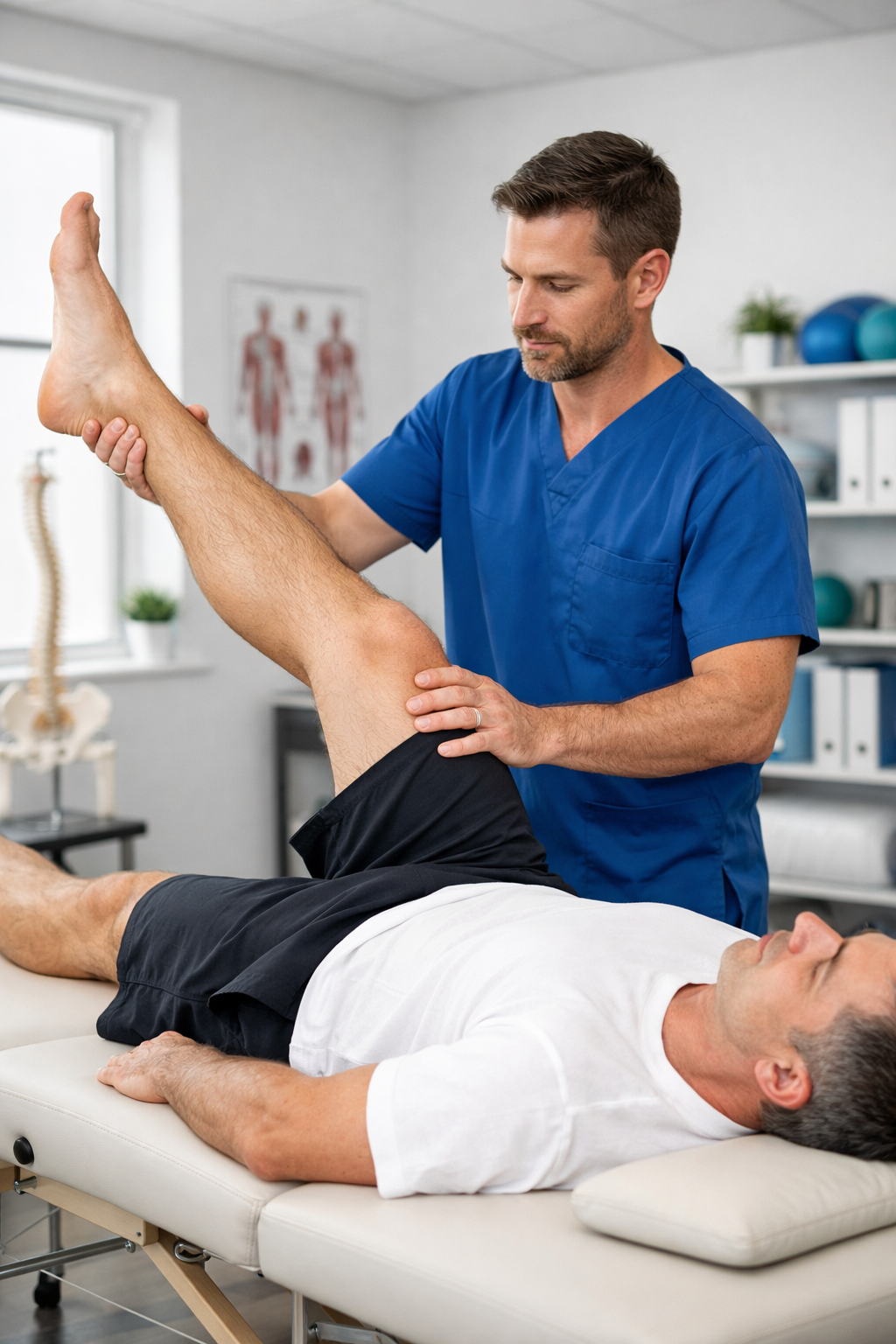
Understanding Sciatica
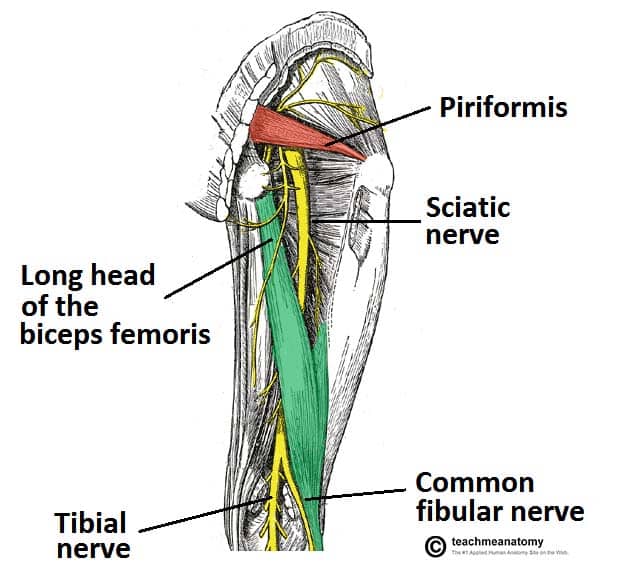
Sciatica is the common name for lumbar radiculopathy — the syndrome that occurs when nerve roots in the lower lumbar spine that form the sciatic nerve become compressed or irritated. The sciatic nerve is the longest in the body, and when its origins are under pressure, the pain signal travels its full length: from the lumbar spine, through the deep gluteal muscles, and down the back of the thigh, calf, and sometimes into the foot.
The underlying causes vary, but the most important ones to understand are:
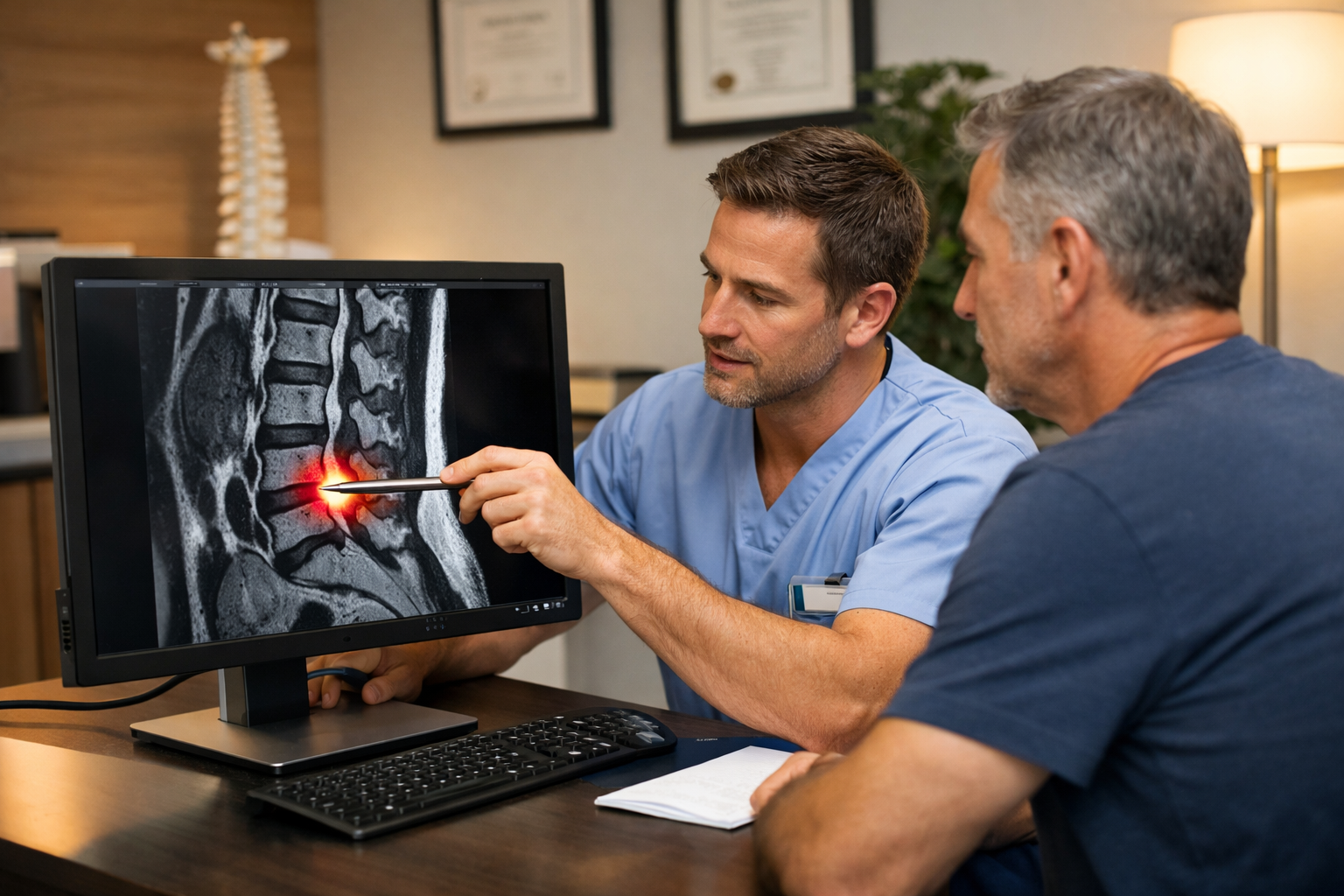
- Herniated or bulging lumbar disc: Accounts for roughly 90% of sciatica cases. The soft center of a disc pushes through its outer wall and directly contacts the nerve root.
- Lumbar spinal stenosis: Age-related narrowing of the spinal canal compresses nerve roots — this type of sciatica often worsens with standing or walking downhill and improves with sitting.
- Piriformis syndrome: The piriformis muscle, deep in the buttock, compresses the sciatic nerve where it passes through or beneath it. This can mimic disc-related sciatica closely.
- Spondylolisthesis: Forward vertebral slippage that creates instability and nerve root irritation — sometimes related to stress fractures sustained during athletic youth.
- Degenerative disc disease: Gradual disc thinning and loss of hydration over time narrows the space through which nerve roots exit the spine.
What makes physical therapy so effective for sciatica is its ability to address the mechanical root of the problem — not just manage the sensation. At Trinity Rehab, every treatment plan starts with a thorough evaluation that identifies exactly what is compressing your nerve before any intervention begins.
More on related conditions: back pain treatment at Trinity Rehab.
What Triggers Sciatica in Flemington Residents
Flemington and Hunterdon County’s character — a mix of small-town professional life, agricultural surroundings, and active outdoor recreation — creates specific risk factors for lumbar nerve compression:
Hunterdon Medical Center and healthcare workers. Hunterdon Medical Center is Flemington’s largest employer and one of Hunterdon County’s most important institutions. Hospital and clinical staff — nurses, technicians, physical aides, and allied health professionals — engage in the repetitive patient handling, sustained standing on hard floors, and awkward-posture transfers that are among the most well-documented occupational risk factors for lumbar disc injury. A nursing career measured in years carries cumulative lumbar loading that frequently presents as sciatica.
Johanna Foods and light manufacturing workers. Johanna Foods’ manufacturing operations and the Flemington Business Park’s flex and warehouse tenants bring a workforce that performs repetitive physical tasks — production line work, material handling, and sustained standing or reaching — that build cumulative lumbar stress over time.
Commuters to Raritan, Trenton, and beyond. Flemington residents who commute to work via Routes 202 and 31, or who catch NJ Transit service from Raritan for the ride toward New York, spend meaningful daily time in seated, often suboptimal postures. For office-based professionals, the commute bookends a workday of extended sitting — adding up to the kind of daily disc compression that gradually predisposes lumbar structures to herniation.
Trail hikers and outdoor enthusiasts. The Columbia Trail, Cushetunk Mountain Nature Preserve, and Cold Brook Preserve offer outstanding hiking in all seasons. Trail hiking on rolling Hunterdon terrain — uphill climbs and descents on uneven ground — loads the lumbar spine dynamically in ways that can expose pre-existing disc vulnerabilities. Sudden steps on root-covered ground or an awkward trail scramble are common acute triggers.
Hunterdon Central Red Devils athletics. Hunterdon Central is a competitive regional high school with strong programs in lacrosse (multiple state championships), football, wrestling, volleyball, and soccer. Student athletes who push through lower back discomfort during seasons — particularly in contact sports and those with high rotational demands — can accumulate unresolved disc stress that emerges as sciatica in their 20s and 30s. Adult recreational athletes carry this history into their sports at the Deer Path YMCA, Flemington Ice Arena, and local golf courses.
Farm and vineyard work. Hunterdon County’s agricultural character means many Flemington-area residents participate in or work on farms, vineyards, and orchards — often seasonally. Grape harvesting, hay baling, equipment operation, and general farm labor involve the full range of lumbar loading activities: sustained flexion, heavy asymmetric lifts, vibration from machinery, and repeated bending.
Fall and winter seasonal activities. Fall in Flemington means apple picking, corn mazes at Schaefer Farms, and hayrides — wonderful activities that involve more bending, lifting, and uneven-surface walking than people typically anticipate. Winter brings ice skating at Flemington Ice Arena (with its associated slip-and-fall risks) and the inevitable snow shoveling that comes with rural Hunterdon County winters.
Recognizing Sciatica Symptoms
Sciatica is unmistakable in its radiating quality — but its severity and exact pattern vary by which nerve root is affected and what is causing the compression. Common descriptions from Flemington patients include:
- A burning, electric, or deep aching pain that originates in the lower back or deep buttock and radiates down the back of one leg — sometimes stopping at the knee, sometimes reaching the calf or foot
- Numbness or tingling in the thigh, outer calf, or the bottom or top of the foot — often following a consistent strip or band pattern with each flare
- Leg weakness that is asymmetric — difficulty completing single-leg movements, or noticing one foot drags slightly when tired
- Pain that builds during driving or prolonged sitting and creates significant difficulty when transitioning from seated to standing
- Discomfort that flares with coughing, sneezing, or straining — signs of increased spinal canal pressure
- For stenosis-related cases: symptoms that worsen when walking downhill or standing for extended periods (like standing at a vineyard event) and improve when sitting or flexing forward
A Flemington healthcare worker described developing sciatica gradually over several years of nursing, experiencing it first as occasional buttock aching after long shifts and ultimately as constant radiating pain into the left leg that made sleep difficult. This slow accumulation pattern — occupational in origin and progressive in nature — is ideally suited for physical therapy focused on lumbar decompression and long-term strengthening.
Sciatica Treatment at Trinity Rehab Flemington: A Three-Phase Approach
Our physical therapists in the Flemington area guide each patient through three purposeful phases of recovery, ensuring treatment is appropriate for your current state rather than rushing into exercises that could aggravate an inflamed nerve:
Phase 1: Pain Reduction and Nerve Calming
The early focus is on reducing acute nerve irritation and getting you comfortable enough to engage fully in your rehabilitation:
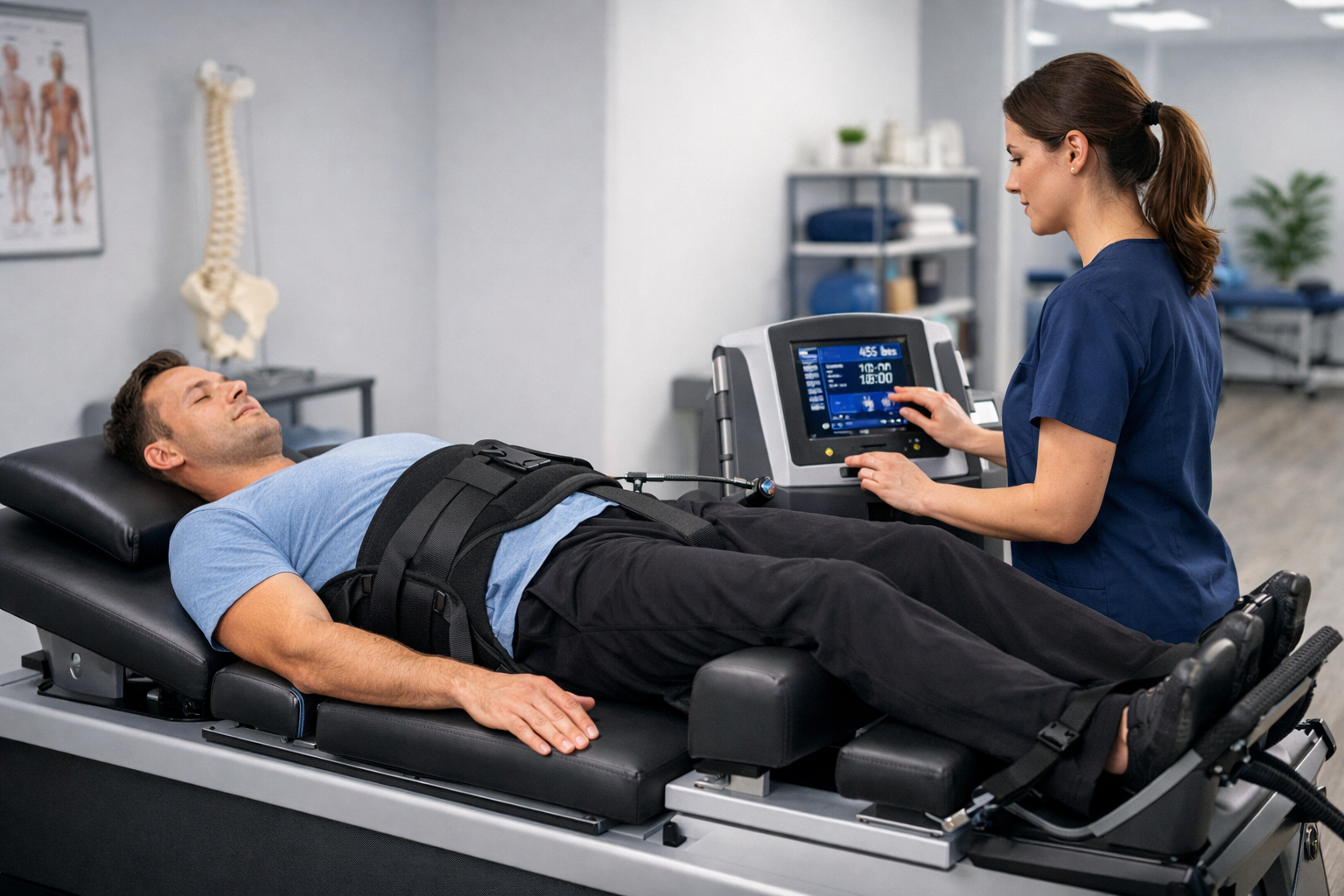
- Manual therapy: Your physical therapist applies skilled, hands-on joint mobilization techniques to the lumbar spine and sacroiliac joints. The goals are restoring segmental mobility, reducing the mechanical pressure driving nerve root compression, and releasing soft tissue restrictions in the piriformis, gluteal musculature, and hip external rotators. This is precise, targeted work — not general massage.
- Neural mobilization (nerve gliding): The sciatic nerve must glide smoothly with every step and movement. After compression and inflammation, this gliding capacity diminishes, and the nerve becomes hypersensitive. Neural mobilization exercises progressively restore this freedom of movement, reducing radiating leg symptoms faster than most patients expect.
- Targeted stretching: Specific stretches — piriformis releases, hip flexor mobilization, lumbar rotation — selected based on your clinical presentation to relieve muscular compression without aggravating the nerve.
- Therapeutic comfort measures: Heat, cold, or electrical stimulation as appropriate to manage acute pain, reduce muscle guarding, and improve your capacity for active exercise.
Dry needling may be added for patients with persistent trigger point activity in the piriformis or gluteal muscles — particularly relevant for Flemington’s population of manual workers and long-term athletes where chronic muscular holding patterns are common.
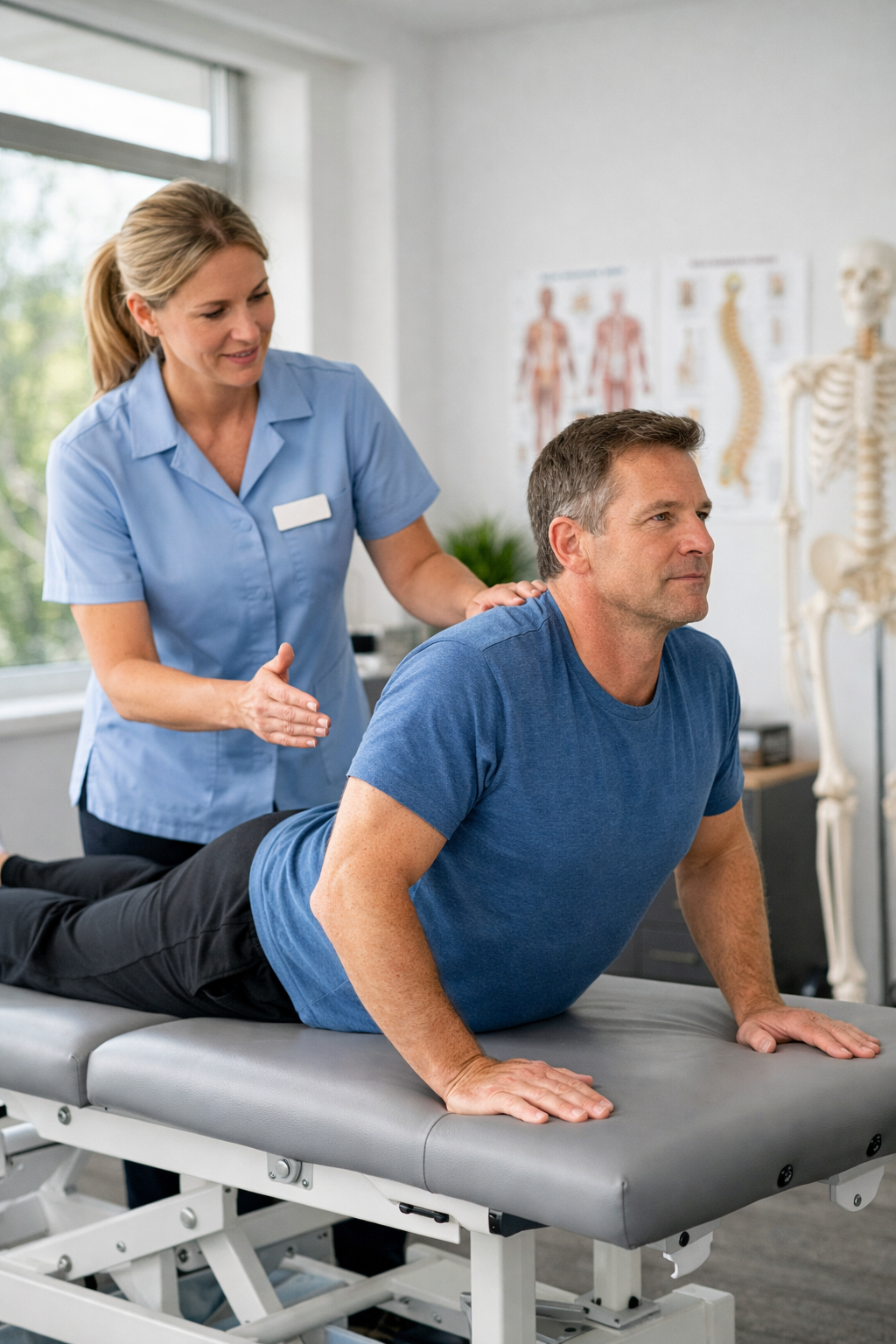
Phase 2: Strengthening and Spinal Stabilization
Once acute symptoms are under control, your therapist builds the muscular support that prevents recurrence:
- Deep core stabilization: Targeted progressive training of the transversus abdominis and multifidus — the muscles that form a natural spinal brace. For Flemington’s mix of healthcare workers, farmers, and athletes, this deep stabilization capacity is the difference between a one-time episode and a recurring cycle.
- Hip and glute strengthening: Progressive loading of the glutes and hip abductors through bridges, clamshells, single-leg exercises, and functional movement patterns. Strong hips offload the lumbar spine — a critical adaptation for anyone who works physically or demands a lot from their body.
- McKenzie directional exercises: Evidence-based directional movements that centralize disc-related pain and restore full lumbar range of motion. For disc herniation cases — the most common sciatica presentation — McKenzie work is a cornerstone of effective treatment.
- Posture and mechanics education: For healthcare workers — patient handling and body mechanics instruction. For commuters — driving posture and workstation setup. For trail hikers — advice on ascent and descent mechanics, pack loading, and footwear.
Phase 3: Return to Hunterdon County Life
The final phase prepares your body for what matters to you specifically:
- Trail-specific movement preparation: Hiking mechanics for the Columbia Trail and Cushetunk Mountain — balance, descent technique, uneven surface navigation — to let you return to outdoor exploration without fear of aggravation
- Sport and activity conditioning: For Hunterdon Central alumni athletes, YMCA sports participants, and golfers at Heron Glen or Copper Hill — rotational strength, hip power, and the endurance to perform well without reverting to painful compensation patterns
- Occupational readiness: For hospital workers and agricultural and manufacturing employees — fatigue-resistant posture, patient handling mechanics, and lifting strategy training
- A comprehensive home exercise program that you can maintain independently through every Hunterdon County season — harvest time through snowfall
Why Choose Trinity Rehab in Flemington
Flemington residents deserve physical therapy that matches the quality of care this community expects. At Trinity Rehab:
- Your licensed physical therapist is present and engaged every session. No aides, no handoffs, no unsupervised exercise time in a crowded gym.
- No referral required. New Jersey’s Direct Access Law means you can schedule your evaluation and begin treatment without waiting for a physician’s order. Earlier intervention produces better outcomes.
- Most insurance plans accepted, including those used by Hunterdon Medical Center employees and other Flemington-area workers. Contact our office to verify your specific benefits.
- Flexible scheduling, including early morning and evening appointments to accommodate healthcare shift workers, commuters, and farm and business owners.
- Familiarity with Hunterdon County’s lifestyle. Our therapists understand the physical demands of trail hiking, farm work, competitive athletics, and the manual labor that characterizes life in this corner of New Jersey — and they design treatment plans accordingly.
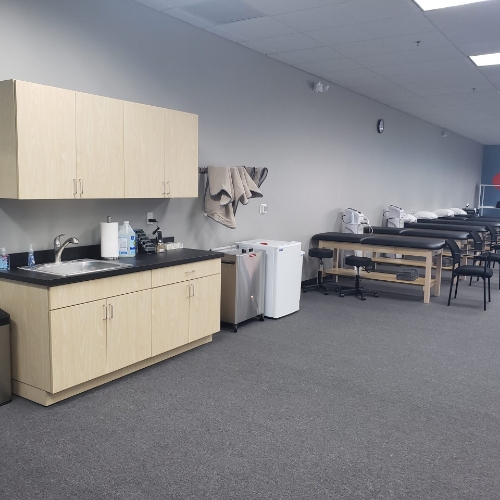
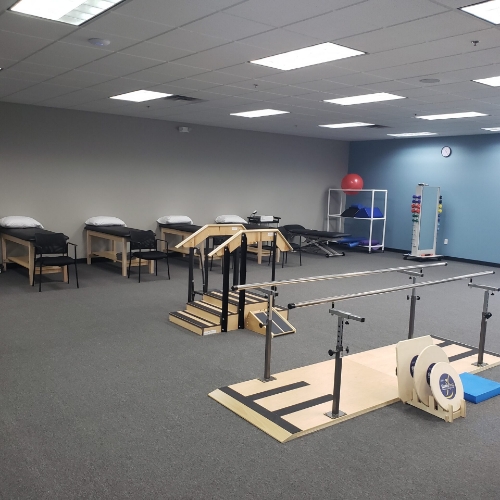
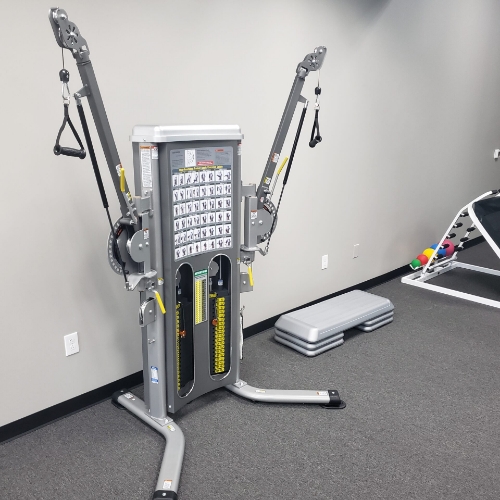
Inside Our Flemington Clinic
Related Conditions & Treatments
Sciatica is just one of the many conditions we treat at Trinity Rehab Flemington. Explore our full range of conditions we treat or learn more about specific treatment approaches:
- Sciatica Treatment Overview
- Back Pain Treatment
- Hip & Knee Pain Relief
- Manual Therapy
- Dry Needling
- EPAT / Shockwave Therapy
Flemington Sciatica Rehab For Leg Pain, Sitting Pain, And Walking Tolerance
Sciatica-like symptoms can make sitting, driving, bending, sleeping, and walking difficult. Flemington patients need a plan that separates nerve-related leg pain from back, hip, or muscle-driven symptoms.
Your therapist may assess symptom behavior, lumbar mobility, nerve tension, hip strength, walking tolerance, and positions that calm or worsen symptoms. Progressive weakness, numbness, or bowel/bladder changes should be medically reviewed urgently.
Related spine options include back pain physical therapy, lumbar disc herniation rehab, and the Flemington physical therapy clinic page.
Frequently Asked Questions
Flemington Sciatica Rehab For Leg Pain, Sitting Pain, And Walking Tolerance
Sciatica-like symptoms can make sitting, driving, bending, sleeping, and walking difficult. Flemington patients need a plan that separates nerve-related leg pain from back, hip, or muscle-driven symptoms.
Your therapist may assess symptom behavior, lumbar mobility, nerve tension, hip strength, walking tolerance, and positions that calm or worsen symptoms. Progressive weakness, numbness, or bowel/bladder changes should be medically reviewed urgently.
Related spine options include back pain physical therapy, lumbar disc herniation rehab, and the Flemington physical therapy clinic page.
Where can I get sciatica treatment in Flemington, NJ?
Does Trinity Rehab Flemington accept my insurance?
I hike regularly on the Columbia Trail. Can I continue during sciatica treatment?
Can sciatica cause permanent nerve damage?
Is there a connection between farm work and sciatica?
The Columbia Trail, the Cushetunk Mountain ridgeline, and Flemington’s celebrated fall farm season all await. So does your recovery.
Request your appointment at Trinity Rehab in Flemington — no referral required. Your licensed physical therapist will evaluate your sciatica, identify its source, and build a plan tailored to getting you back to the active Hunterdon County life you love.