

Meniscus Tear Treatment in East Windsor, NJ — Trinity Rehab
East Windsor sits in Mercer County as a community in transition — home to commuters heading toward New York and Philadelphia, families enjoying suburban life in proximity to Twin Rivers, and professionals balancing demanding careers with personal fitness goals. Whether you’re a regular at Etra Park for recreational sports, a fitness-conscious professional maintaining health between long work commutes, or someone who believes staying active is essential to managing stress and staying sharp, a meniscus tear can feel like it undermines your entire lifestyle.
The injury might occur during a weekend recreational league game, while walking or running in the early morning before work, or during one of those spontaneous moments when your knee catches in a way that sends a unmistakable signal through your joint. The pop you felt, followed by swelling and sharp pain, represents a genuine disruption to your routine. But here’s the encouraging reality: meniscus tears are highly treatable with physical therapy. Most people return to their activities completely, often within 8-12 weeks, without ever needing surgery. Your life doesn’t stop here — it pauses temporarily while your knee heals, then resumes stronger than before. Symptoms of a meniscus tear can vary from person to person, but commonly include swelling, pain, and limited range of motion. Recognizing these signs early can greatly enhance the effectiveness of your treatment plan. Remember, a swift response to these symptoms often leads to a quicker recovery and a smooth return to your regular activities. Understanding the symptoms of meniscus tear injuries can help you recognize when it’s time to seek medical advice. Common indicators include persistent pain, swelling, and difficulty fully extending your knee, which may interfere with everyday tasks. By being aware of these signs and taking early action, you can significantly improve your recovery time and return to your favorite activities. Recognizing the symptoms of a meniscus tear early can significantly aid in your recovery. Common indicators include a popping sound during injury, followed by knee swelling and difficulty bending the joint. By addressing these symptoms promptly and seeking appropriate treatment, you can ensure a smoother path back to your favorite activities. Knee pain associated with meniscus injury can vary in intensity and may lead to discomfort during everyday activities. It’s important to listen to your body and seek evaluation if the pain persists, as early intervention can enhance recovery outcomes. Engaging in prescribed rehabilitation exercises can not only alleviate pain but also improve overall joint stability.
Understanding Your Meniscus and What It Does
Your knee contains two menisci — crescent-shaped cartilage structures that serve three vital functions. They absorb shock (which is why you can jump without your bones colliding), distribute load evenly across the joint (which prevents cartilage wear and tear), and provide stability (which prevents your knee from shifting unexpectedly). Together, these two small structures handle enormous forces during activity.
When a meniscus tears, your knee immediately loses part of this protection. The joint becomes less stable, less cushioned, and more vulnerable to additional damage. Without treatment, this can progress to chronic knee pain and increased risk of osteoarthritis. The positive news: physical therapy stops this progression in its tracks. Research from the New England Journal of Medicine shows that conservative treatment produces outcomes comparable to surgery for most meniscus tears, particularly in adults over 40.
Why East Windsor Residents Experience Meniscus Tears
East Windsor’s lifestyle creates specific injury patterns:
- Commuter fitness — Professionals balancing career demands with fitness maintenance sometimes sustain injuries during early morning runs or evening workouts, particularly when fatigue or distraction leads to awkward movements
- Recreational sports leagues — Twin Rivers and Etra Park host recreational sports that create opportunities for both acute injuries (sudden twisting) and overuse injuries (repetitive stress)
- Weekend activity intensity — Professionals who sit most of the week and then attempt intense activity on weekends are particularly vulnerable to acute meniscus tears
- Age-related degenerative changes — East Windsor’s diverse age population includes older adults where degenerative meniscus tears develop from progressive cartilage weakening. Routine activities can suddenly cause tears in compromised tissue
- Work-life balance pursuit — The effort to stay active despite professional demands sometimes results in activity that exceeds current fitness levels, creating injury risk
- Uneven terrain negotiation — Walking or recreational running at Etra Park with variable terrain can precipitate sudden knee twisting injuries
Recognizing a Meniscus Tear
The injury usually announces itself clearly:
- A pop, snap, or tearing sensation at the moment of injury
- Swelling that develops rapidly (within 30 minutes to 2 hours) or gradually (over 24 hours)
- Sharp, well-localized pain on the inner or outer edge of your knee
- Difficulty fully straightening or bending your knee
- A catching, clicking, grinding, or locking sensation during movement, especially with rotation
- Instability — a sensation your knee might give way or buckle
- Pain that worsens with stairs, squatting, or activity involving knee rotation
- Pain that’s activity-specific (maybe running causes pain but walking doesn’t, or cutting is painful but forward movement is fine)
For East Windsor professionals, the frustration often centers on timing: your body is sending a clear signal that you need to pause your usual routine. The relief comes when you realize that with proper treatment, your pause is temporary.
Trinity Rehab East Windsor’s Treatment Approach
Your meniscus tear recovery follows evidence-based protocols adapted to your specific goals — whether that’s returning to recreational league play, resuming your commute fitness routine, or simply managing work and life without pain.
Phase 1: Early Management and Symptom Control (Weeks 1-3)
The initial focus is protecting healing tissue and controlling inflammation:
- RICE protocol — Rest (modified, not complete immobilization), Ice (frequent intervals), Compression (knee sleeve or wrap), Elevation (above heart level)
- Non-narcotic pain management — Over-the-counter medications support comfort
- Manual therapy — Gentle joint mobilization and soft tissue massage reduce stiffness, improve circulation, and support healing
- Modality support — Electrical stimulation and therapeutic ultrasound decrease inflammation
- Protected movement — Careful, supervised exercises maintain knee mobility without stressing the meniscus
- Gait retraining — Correcting walking patterns to prevent compensatory strain on your other leg
Phase 2: Strength Building and Movement Control (Weeks 4-8)
This is where real recovery happens:
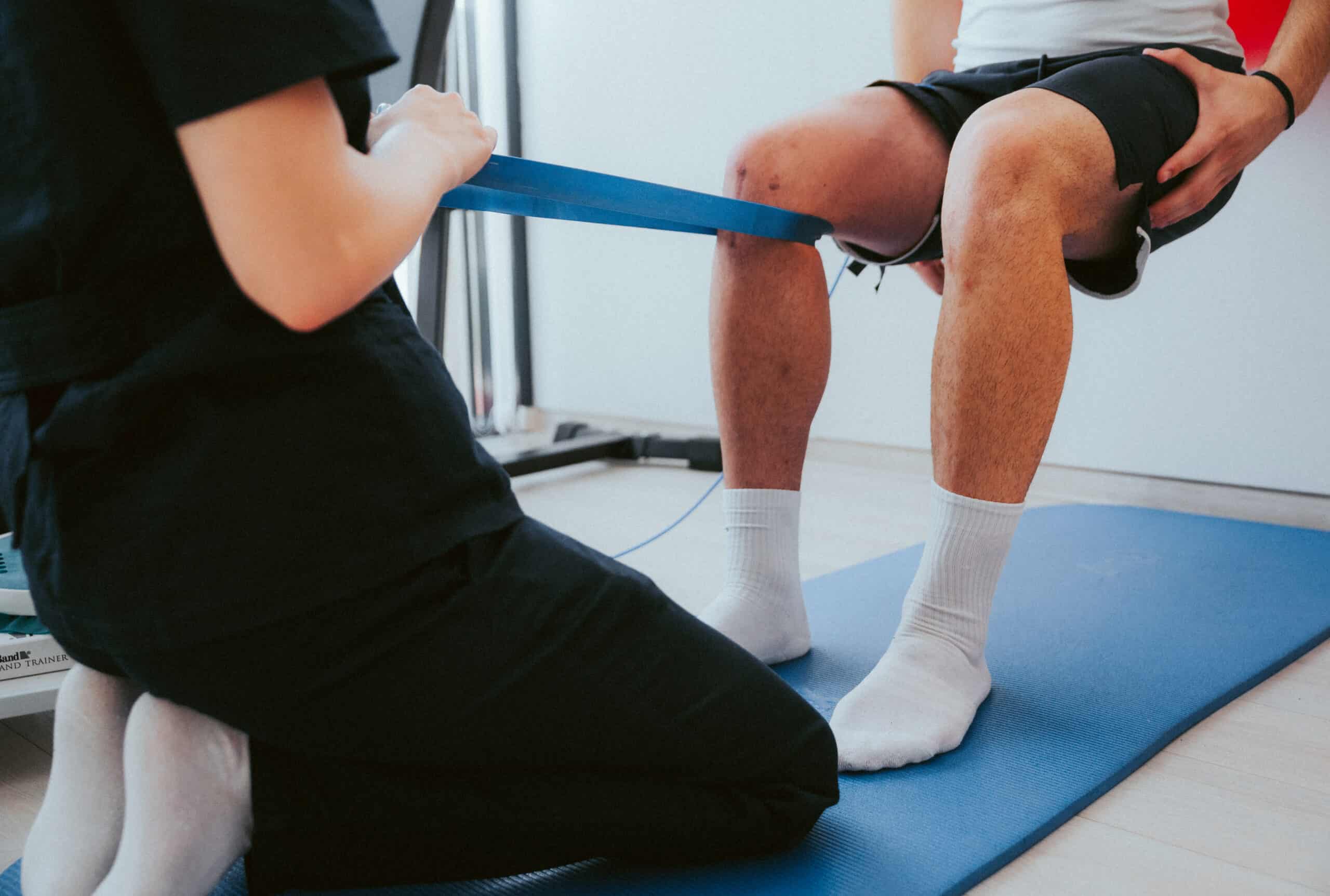
- Quadriceps strengthening progression — Systematic advancement from simple isometric contractions (quad sets) through dynamic exercises with increasing resistance. Strong quads are your primary shock absorbers
- Hamstring and hip strengthening — Balanced lower extremity strength ensures proper load distribution
- Core stability work — Your abdominal and back muscles contribute significantly to knee stability
- Proprioceptive training — Balance exercises on unstable surfaces retrain your knee’s position sense and automatic stabilization reflexes
- Dry needling — Targeted trigger point therapy releases compensatory muscle tension
- Functional movement patterns — Advancing from simple exercises to complex movements (lunges, step-ups, controlled squatting)
Phase 3: Return to Activity (Weeks 9-12+)
The final phase systematically reintroduces your specific activities:
- Activity-specific training — If recreational league play is your goal, you’ll progress through sport-specific movements. If fitness maintenance is your priority, you’ll progress through cardiovascular and strength activities. Progression is systematic and data-driven
- Progressive intensity — Gradually increasing demands so tissues adapt without re-injury risk
- Movement quality maintenance — Ensuring proper form even as intensity increases
- Confidence building — Psychological readiness for return to activity is part of this phase
- EPAT/Shockwave therapy — When appropriate, this regenerative treatment uses acoustic pressure waves to accelerate tissue healing
Tear Classification and Treatment
Understanding your specific tear pattern helps optimize treatment:
- Radial tears — Most common. Cut across the meniscus fibers, usually from sudden twisting. Small tears in the outer (red) zone, which has blood supply, respond excellently to physical therapy
- Horizontal tears — Run along the meniscus length. Often associated with degenerative changes. These respond well to conservative treatment
- Bucket-handle tears — A large vertical tear where part of the meniscus displaces. More likely to cause mechanical symptoms and potentially require arthroscopy. Physical therapy is still essential for recovery
- Flap tears — A meniscus section folding over. Usually manageable with physical therapy
- Complex tears — Multiple tear patterns. Require longer rehabilitation but generally respond to nonsurgical treatment
Long-Term Knee Protection and Prevention
Maintaining meniscus health long-term prevents re-injury:
- Consistent strength maintenance — Year-round quadriceps and hamstring strength protects your meniscus. This is especially important if your lifestyle involves regular recreational activities
- Movement quality awareness — Poor landing mechanics and asymmetrical movement patterns increase re-injury risk. Conscious attention to technique prevents problems
- Gradual intensity progression — Whether increasing running mileage, recreational league intensity, or fitness class difficulty, progression should be 10% per week maximum
- Recovery as essential — Adequate rest between intense activities allows tissue adaptation. Fatigue creates movement compensations and injury risk
- Dynamic warm-up — Preparation before activity primes tissues and neuromuscular system
- Appropriate footwear — Shoes matched to your activity type reduce abnormal knee loading
- Pain as communication — Persistent knee discomfort after activity is your body requesting modification, not something to push through
- Weight maintenance — Each pound of excess weight translates to four pounds of force across the knee during walking. Maintaining healthy weight significantly reduces stress
Why East Windsor Professionals Choose Trinity Rehab East Windsor
Our clinic aligns with your lifestyle:
- Licensed physical therapists only — Every session is one-on-one with a licensed clinician. No aides, no group sessions
- No referral requirement — Begin treatment immediately in New Jersey without physician approval
- Early morning and evening appointments — Scheduling around commute and work is straightforward
- Evidence-based treatment — Our protocols reflect current research on meniscus tear recovery
- Insurance coordination — We verify coverage before your first visit
- Efficient, results-focused care — Understanding you’re balancing multiple responsibilities, we focus on efficient recovery without wasting your time
- Convenient location — Serving East Windsor and surrounding Mercer County communities
Resume Your Active Life
At Trinity Rehab East Windsor, we understand what staying active means for working professionals. Your meniscus tear is temporary. With proper rehabilitation, you’ll return to your fitness routine, your recreational activities, and your professional life — stronger and more resilient.
FAQs for East Windsor’s Active Professionals
How long before I can resume my commute fitness routine?
Do I need an MRI before starting therapy?
Can I continue professional work while recovering?
What if pain persists after 8 weeks of therapy?
What's the risk of chronic problems after a meniscus tear?
Can I prevent meniscus re-injury?
If I need surgery, do I still need physical therapy?
How does age affect recovery?
Schedule Your Evaluation
Start your recovery:
- Book your appointment at Trinity Rehab East Windsor
- Comprehensive assessment — Detailed knee and movement evaluation
- Personalized timeline — Your specific recovery plan
No referral required. Schedule now.
Sources
- Katz, J. N., et al. (2013). Surgery versus physical therapy for a meniscal tear and osteoarthritis. New England Journal of Medicine, 368(18), 1675-1684.
- Sihvonen, R., et al. (2018). Arthroscopic partial meniscectomy for a degenerative meniscus tear: A 5-year follow-up of the FIDELITY randomized trial. British Journal of Sports Medicine, 52(21).
- American Academy of Orthopaedic Surgeons. (2024). Meniscus tears. OrthoInfo.