
ROTATOR CUFF INJURY TREATMENT IN EAST BRUNSWICK, NJ
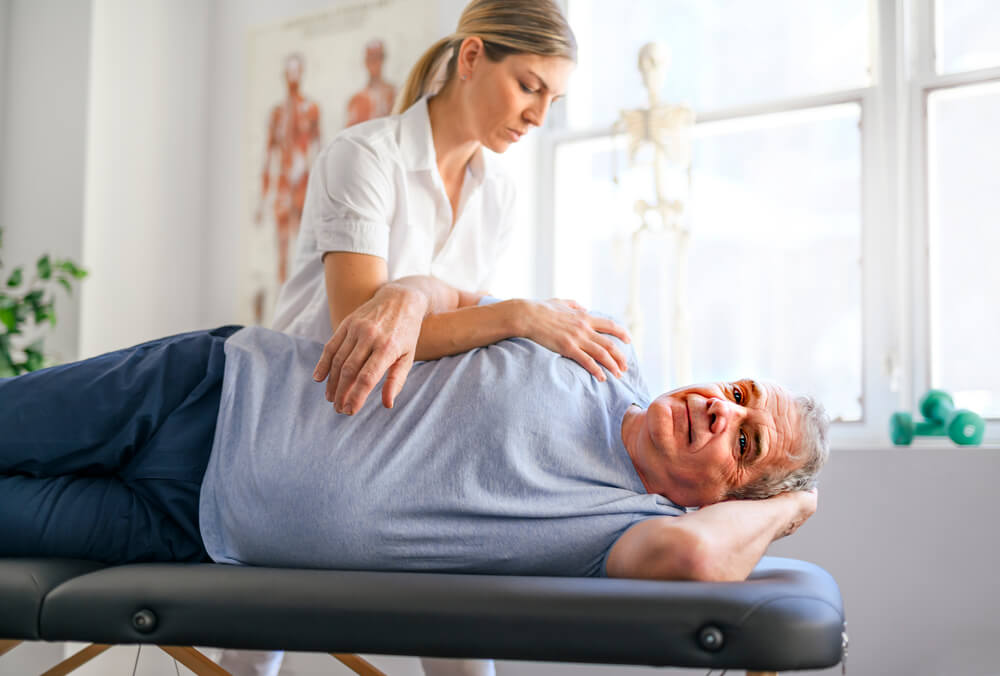
A Tennis Town That Knows Shoulder Pain
East Brunswick has earned its reputation as one of Central New Jersey’s strongest tennis communities. The Bears have captured multiple state championships — boys titles in 1992, 2004, 2021, and 2022, and girls championships in 2006, 2008, and 2019. Add five boys volleyball state titles between 1999 and 2007, and you have a town where overhead athletes are practically a local institution. From the lighted courts at Bicentennial Park to indoor play at East Brunswick Racquet Club, this community loves to compete.
But all that serving, smashing, and spiking comes at a cost. The rotator cuff — four muscles and tendons that stabilize your glenohumeral joint and power every overhead motion — absorbs tremendous forces with each stroke. And it’s not just athletes at risk. If you’re among the 40.5% of East Brunswick households raising children, years of lifting and carrying take a toll. If you work at a desk in Tower Center or in a lab at SciSafe, repetitive postures quietly degrade your shoulders too.
At Trinity Rehab, we specialize in getting your shoulder right so you can get back on the court and back to your life.
What Is a Rotator Cuff Injury?
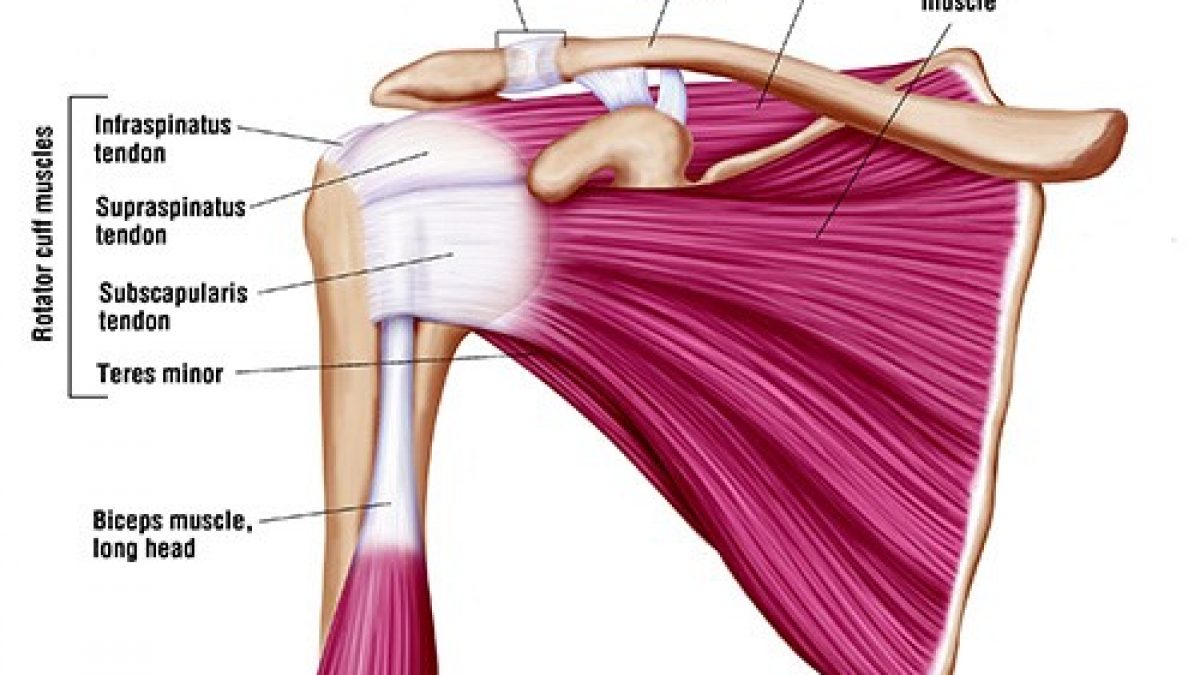
Your rotator cuff consists of four muscles — the supraspinatus, infraspinatus, teres minor, and subscapularis — that keep the ball of your arm centered in its socket during every movement. Injuries exist on a spectrum:
- Tendinopathy: Chronic tendon irritation and degenerative changes. Rotator cuff tendinopathy is the most common form we treat, especially in patients over 40 — relevant in East Brunswick, where the median age is 42.5.
- Partial tears: Some tendon fibers are torn, but the tendon remains attached.
- Full-thickness tears: The tendon is completely torn, from acute trauma or long-standing degeneration.
- Impingement: The supraspinatus tendon becomes pinched between shoulder bones during overhead movements.
- learn more about rotator cuff recovery
Each type requires a different strategy, which is why accurate evaluation comes first. Schedule your shoulder assessment.
What Puts East Brunswick Residents at Risk
The Overhead Athlete's Shoulder
Every tennis serve generates enormous rotational force through the glenohumeral joint. Volleyball spikes demand rapid arm acceleration and deceleration. Over a season at Bicentennial Park or East Brunswick Racquet Club, cumulative stress on the supraspinatus and infraspinatus tendons can exceed their capacity to recover. Young Bears players pushing through pain risk turning manageable tendinopathy into a tear. If your teen competes and complains of shoulder pain, early evaluation matters. Learn about our sports injury rehabilitation.
The Weekend Golfer and Pickleball Player
Tamarack Golf Course’s two 18-hole layouts draw golfers from across Middlesex County. The repetitive rotation of a golf swing stresses the lead shoulder’s rotator cuff over time. Pickleball, exploding in popularity at Bicentennial Park’s courts, introduces overhead demands with every slam.
The Working Professional
Prolonged seated postures at Wipro’s Tower Center headquarters or SciSafe’s facilities create forward-rounded shoulders that narrow the space for rotator cuff tendons, contributing to impingement and tendinopathy over months and years. Repetitive lab tasks can also strain the shoulder — if your pain is job-related, our work injury rehabilitation can help.
The Active Parent
Lifting a thirty-pound toddler from a car seat. Pushing a swing at Heavenly Farms. The daily demands of parenting put constant, unpredictable loads on the rotator cuff. It’s the awkward, off-balance reach that often triggers the injury.
Recognizing the Signs
Your rotator cuff may be injured if you experience:
- Deep shoulder ache that intensifies with reaching or lifting
- Sharp pain when serving, spiking, or swinging a golf club
- Difficulty sleeping on your affected side
- Weakness raising your arm or holding objects away from your body
- A painful arc between 60 and 120 degrees of elevation
- Progressive loss of range of motion, especially with rotation
- Catching, clicking, or grinding during movement
These symptoms deserve attention. The earlier you begin treatment, the faster your recovery. Request your evaluation.
How We Treat Rotator Cuff Injuries at Trinity Rehab
Hands-On Techniques That Reduce Pain and Restore Movement
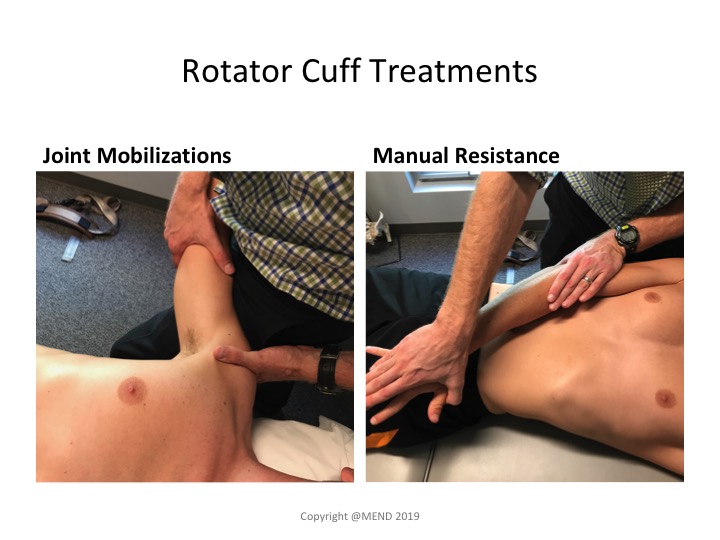
Manual therapy is the cornerstone of early treatment:
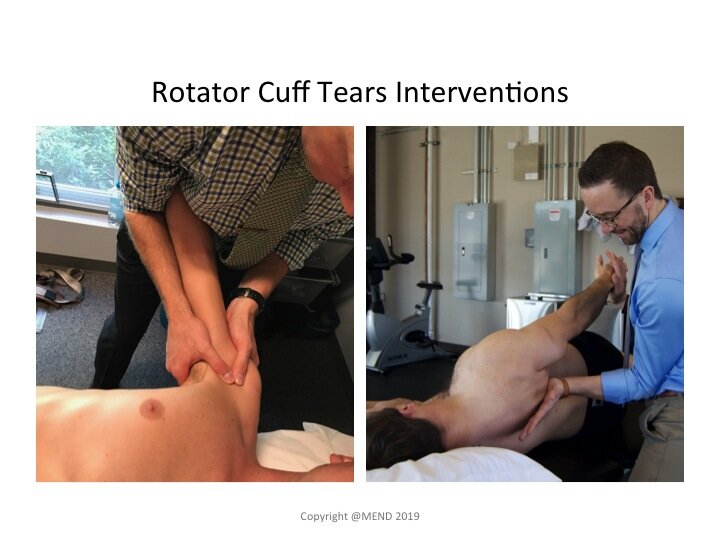
- Glenohumeral joint mobilizations — gentle oscillations to restore normal gliding mechanics and reduce stiffness
- Soft tissue mobilization — targeted work on the infraspinatus, supraspinatus, upper trapezius, and pectorals to reduce muscle guarding and improve blood flow
- Thoracic spine mobilizations — addressing mid-back stiffness that directly limits shoulder blade movement and forces the rotator cuff to compensate
Patients often feel noticeable improvement after the first few sessions.
Strengthening Your Rotator Cuff
Strength is the foundation of lasting recovery. We follow a progressive protocol:
Early: Isometric exercises — activating rotator cuff muscles without moving the joint. Safe, pain-free, and effective for establishing baseline engagement.
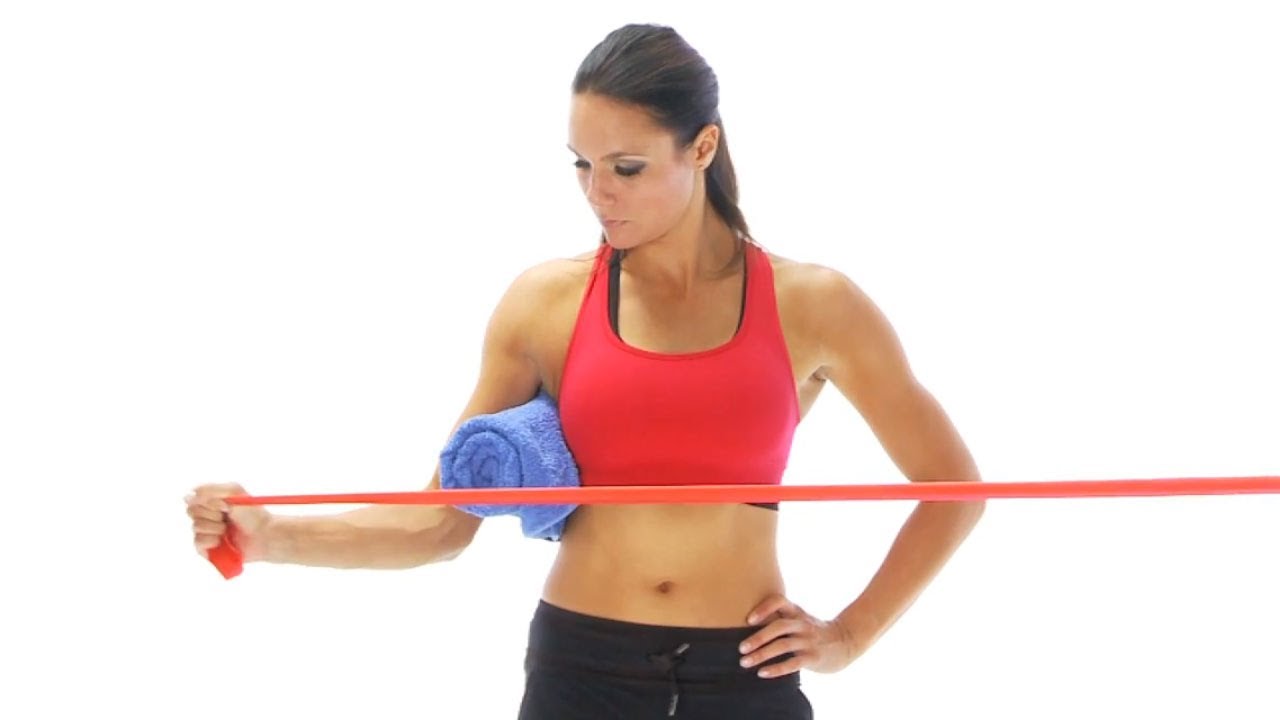
Intermediate: Resistance bands and light weights through controlled arcs. Scapular stabilization features prominently — training the serratus anterior, lower trapezius, and rhomboids so your shoulder blade provides a stable platform for rotator cuff function.
Advanced: Eccentric loading — the controlled lowering phase of movement. Research consistently shows eccentric exercises stimulate tendon remodeling and are among the most effective interventions for rotator cuff tendinopathy. Slowly lowering a weight places therapeutic load on the supraspinatus tendon that promotes structural healing.
Advanced Pain Relief
- Dry needling: Thin needles inserted into myofascial trigger points in the infraspinatus, supraspinatus, and upper trapezius produce a twitch response that releases tension and increases blood flow. For East Brunswick patients with chronic shoulder tightness, dry needling is often a turning point.
- EPAT shockwave therapy: Acoustic pressure waves stimulate cellular repair, increase collagen production, and dissolve calcific deposits in damaged tendons. For tendinopathy that has plateaued, EPAT can restart the healing process.
These technologies integrate into your overall physical therapy program.
Getting Back to Your Game
For East Brunswick athletes, pain relief isn’t the finish line. Our return-to-sport programming includes:
- Serve and spike progressions for tennis and volleyball players
- Throwing programs for baseball players with structured return-to-throw protocols
- Swing analysis guidance for golfers to reduce rotator cuff stress
- Functional capacity testing against established benchmarks for safe return
- Injury prevention programming — a maintenance routine to keep your rotator cuff resilient after discharge
Prevention Tips for East Brunswick
For overhead athletes: Incorporate rotator cuff warm-ups before every session. Monitor training volume — sudden spikes trigger tendinopathy. Strengthen posterior shoulder muscles year-round.
For desk workers: Stand and move every 30 minutes. Perform shoulder blade squeezes and doorway stretches. Position your monitor at eye level.
For parents: Lift children close to your body. Avoid overhead reaching while holding weight. Keep your core strong — it provides a stable base for shoulder function.
For everyone: Don’t push through shoulder pain. A brief evaluation now prevents a major injury later.
Why Choose Trinity Rehab in East Brunswick
- Shoulder specialists who understand athletes. Our team has extensive experience returning tennis, volleyball, and baseball players to competition in a town that demands it.
- One-on-one treatment directly with your physical therapist every session — no hand-offs to aides.
- Full treatment spectrum — manual therapy, dry needling, EPAT, and progressive exercise under one roof.
- Proven results with shoulder pain across Middlesex County.
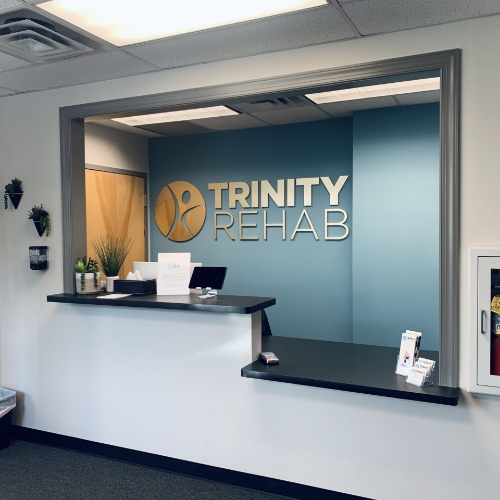
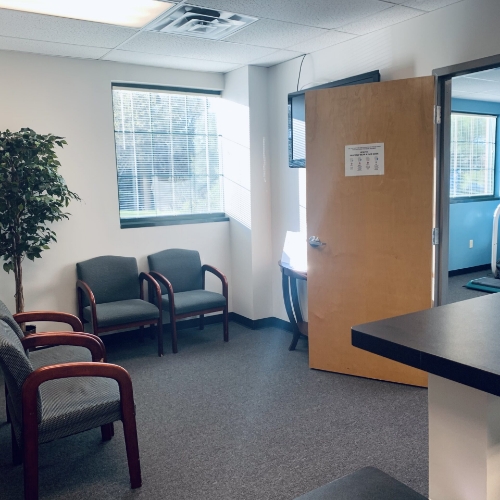
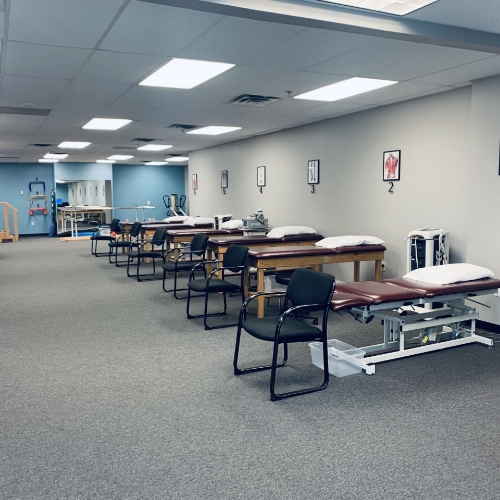
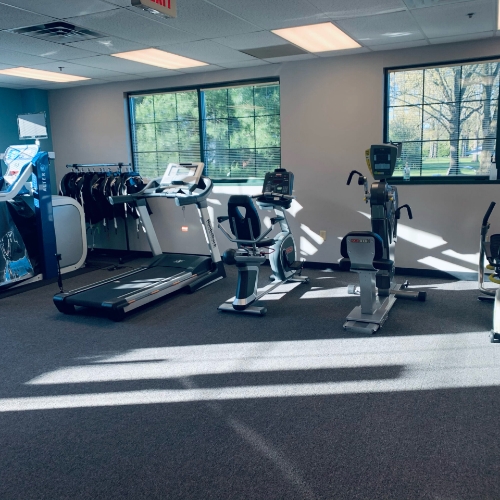
Inside Our East Brunswick Clinic
Frequently Asked Questions
Can I still play tennis or volleyball during physical therapy?
What's the difference between tendinopathy and a tear?
How is dry needling different from acupuncture?
My pain started gradually. Should I still get it checked?
How soon will I feel improvement?
Take the First Step
Whether your shoulder pain started on the court at Bicentennial Park, at your desk in Tower Center, or while carrying your child through Heavenly Farms, recovery starts with getting evaluated by a specialist.
Schedule your appointment at Trinity Rehab today and start your journey back to a pain-free shoulder. East Brunswick is too active a community to sit on the sidelines — and so are you.
Start Your Recovery in East Brunswick Today
Don’t let shoulder pain hold you back. Schedule your evaluation at Trinity Rehab in East Brunswick and take the first step toward a stronger, pain-free shoulder.
Related Conditions & Treatments
Rotator cuff injuries are just one of the many conditions we treat at Trinity Rehab East Brunswick. Explore our full range of conditions we treat or learn more about specific treatment approaches:
What Our Patients Say



Sign up for free health tips and tricks