
PLANTAR FASCIITIS TREATMENT IN DOYLESTOWN, PA
Doylestown has over 30 miles of trails threading through Central Park, along the Neshaminy Greenway, and through the borough’s leafy street grid. The Bucks County Roadrunners log their weekly mileage here. CB West Bucks athletes train for regional championships on those same surfaces. And every morning, hundreds of residents lace up shoes and head out for the kind of routine that makes Doylestown one of the region’s most walkable and active communities.
But if plantar fasciitis has taken hold in your heel, none of those trails feel routine anymore. The morning starts with that familiar stab — heel hitting floor, pain radiating through the arch — and you spend the first ten minutes of every day negotiating with your own foot. You modify your commute to Doylestown Hospital, cut short your Neshaminy Greenway run, skip the Destination Doylestown walk that used to be your weekend reset.
Physical therapy resolves this. Trinity Rehab’s team uses a targeted, evidence-based approach to identify exactly what’s loading your plantar fascia and address it at the source — not just manage symptoms, but eliminate the underlying drivers of your pain.
UNDERSTANDING PLANTAR FASCIITIS
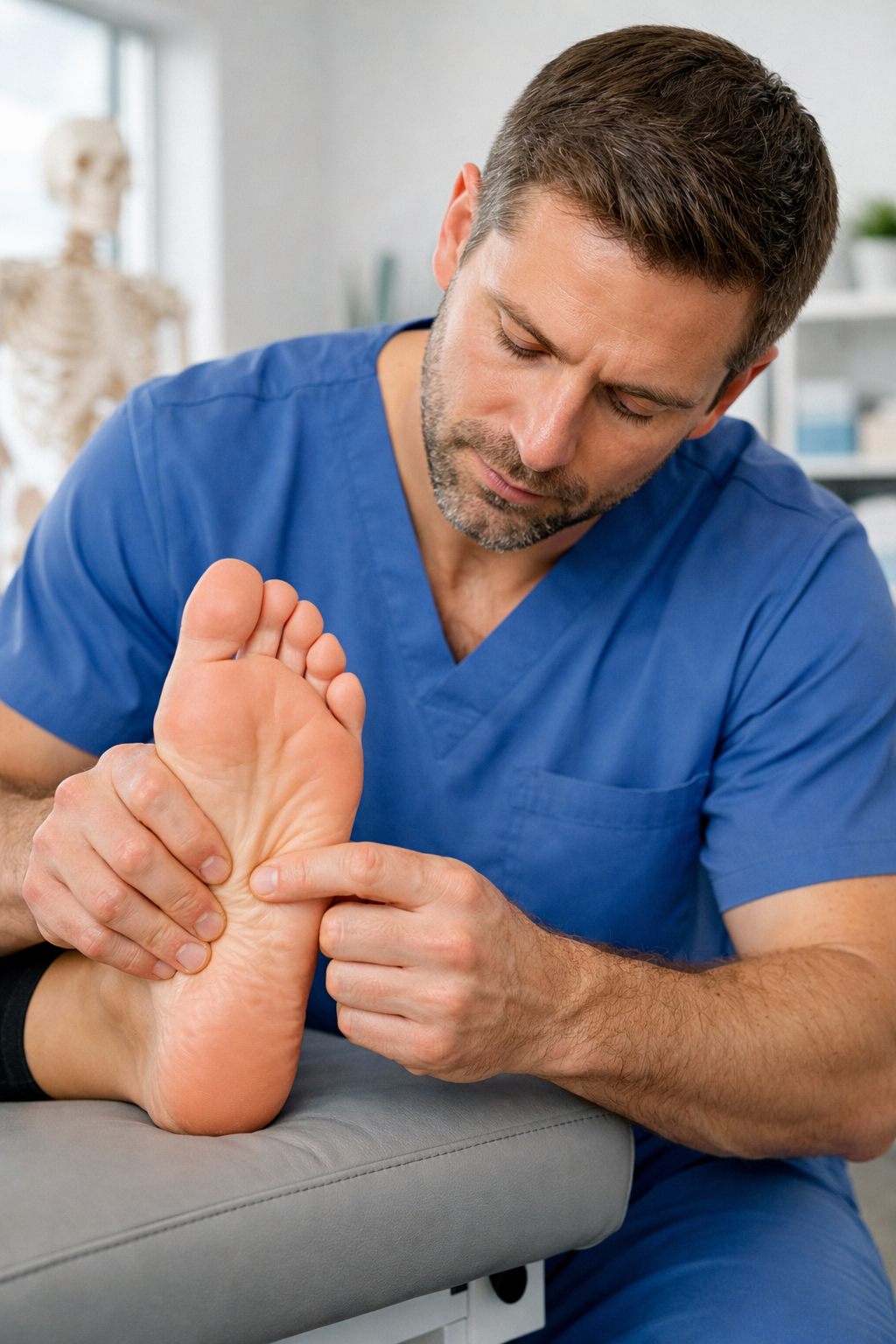
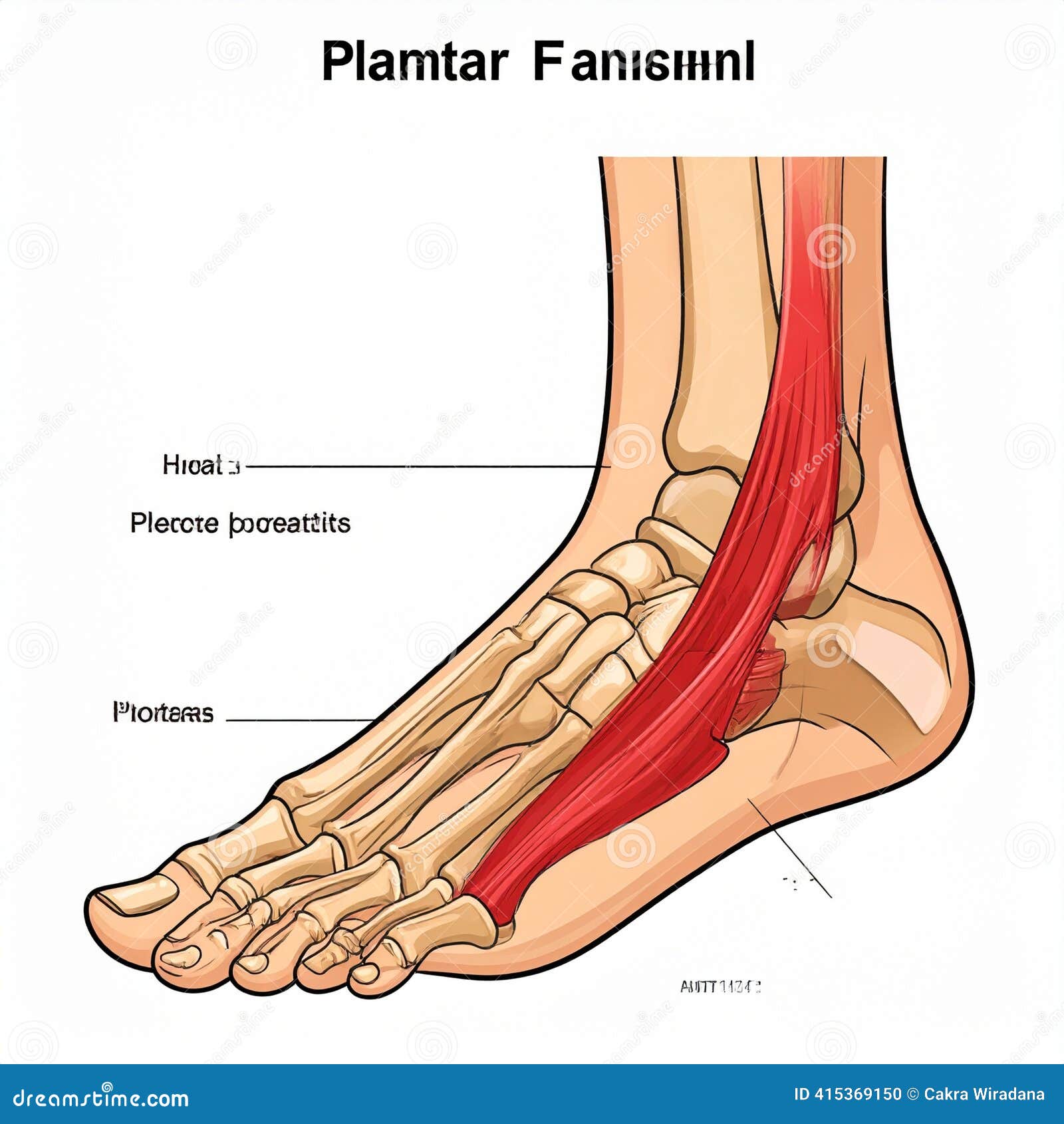
The plantar fascia is a thick, fibrous band of connective tissue that runs along the bottom of your foot from the heel bone (calcaneus) to the base of the toes. It functions as the primary passive support for your arch and plays a central role in the mechanics of walking and running — absorbing shock, storing elastic energy, and enabling the efficient push-off that propels you forward through the windlass mechanism.
When the tissue is repeatedly loaded beyond its capacity to recover, micro-tears accumulate at the calcaneal attachment, provoking the inflammatory response that defines plantar fasciitis. If loading continues without treatment, the body’s repair cycle can’t keep pace — the tissue thickens, loses flexibility, and enters a state of chronic degeneration that clinicians sometimes describe as plantar fasciopathy.
According to research compiled by the American Academy of Orthopaedic Surgeons, roughly 2 million patients receive plantar fasciitis treatment each year in the United States. It is the most common cause of heel pain in adults and disproportionately affects people in their 40s and 50s — though it occurs at any age, particularly in active individuals. The prognosis with physical therapy is excellent when treatment begins before the condition becomes fully chronic.
RELATED CONDITIONS & TREATMENTS
Plantar fasciitis is just one of the many conditions we treat at Trinity Rehab Doylestown. Explore our full range of conditions we treat or learn more about specific treatment approaches:
WHY DOYLESTOWN RESIDENTS DEVELOP PLANTAR FASCIITIS
Doylestown’s active lifestyle, healthcare workforce, and youth sport culture create several well-defined pathways to plantar fasciitis.
Trail runners and walkers are among the most commonly affected residents. The 30-plus miles of trails connecting Central Park, the 202 Parkway trail, and the Neshaminy Greenway attract significant daily use. Bucks County Roadrunners training runs cover these surfaces regularly, and their volume and terrain variety — from soft packed dirt to compacted gravel to paved sections — create the repetitive fascial loading that provokes plantar fasciitis. Training errors like rapid mileage increases heading into spring race season account for many presentations we see.
Healthcare workers at Doylestown Hospital and Doylestown Health facilities spend extended clinical shifts on hard institutional floors. Nurses, physical and occupational therapists, pharmacy staff, and emergency department personnel routinely stand and walk for 8 to 12 hours at a time — a well-documented occupational risk factor for plantar fasciitis. The cumulative fascial loading of a healthcare career can bring on symptoms even without a specific injury event.
CB West Bucks student-athletes competing in soccer, lacrosse, football, baseball, and track accumulate the lower-limb overuse patterns that characterize high school athletics. The Bucks’ strong football and soccer programs involve high-volume conditioning that is demanding on the feet. Athletes who train year-round in multiple sports — or who return aggressively to activity after an off-season — are particularly susceptible.
Tennis players at Doylestown Tennis Club and pickleball players at Chapman Park and Burpee Park make explosive lateral movements, quick stops, and repeated pushoffs that place sharp, repetitive demands on the plantar fascia. Hard court surfaces amplify every impact force with no give or shock absorption.
Retail and service workers at Giant Food and throughout downtown Doylestown’s shops and restaurants face the same prolonged standing risk as healthcare workers, often in footwear chosen for appearance rather than biomechanical support.
Golf walkers at Doylestown Country Club log four to five miles per round on rolling terrain — a sustained, repetitive loading pattern that the fascia must absorb over hours. Golfers who play multiple rounds per week are at elevated risk, particularly in footwear that doesn’t adequately support the arch.
RECOGNIZING THE SYMPTOMS
Plantar fasciitis has a signature symptom pattern that helps differentiate it from other causes of heel and foot pain:
First-step morning pain is the defining feature — intense, stabbing heel discomfort that occurs the moment full weight is applied after the overnight rest period. The fascia shortens and stiffens while you sleep; that first footfall creates an abrupt stretch at the calcaneal attachment that many patients describe as the single worst moment of their day. The pain typically eases over the first 10 to 20 minutes of activity as the tissue warms.
Post-rest pain mirrors the morning pattern throughout the day. Sitting through a Doylestown Hospital meeting, driving to pick up children from school, or watching a CB West game for two hours — any extended rest period can reproduce the stiffening cycle. The first steps after sitting are reliably the most uncomfortable.
Other symptoms include:
- Tenderness directly under the heel, at the medial calcaneal tubercle
- Arch tightness that persists through the morning even after the sharp heel pain resolves
- Pain that intensifies 30 to 60 minutes after completing a run or long walk — rather than during it
- Gradual changes in gait: stride shortening, slight limping, weight-shifting to the ball or outside of the foot
- Mild swelling around the heel in some cases
A Doylestown Borough resident who ran the 202 Parkway trail three times a week described the classic pattern: “I’d feel fine for the first mile, finish the run feeling okay, then by that evening my heel was throbbing. The next morning stepping onto the bathroom tile was brutal. I started keeping slippers by the bed just to soften the first step.” That sequence — fine during activity, sore after, miserable in the morning — is textbook plantar fasciitis.
PHYSICAL THERAPY TREATMENT
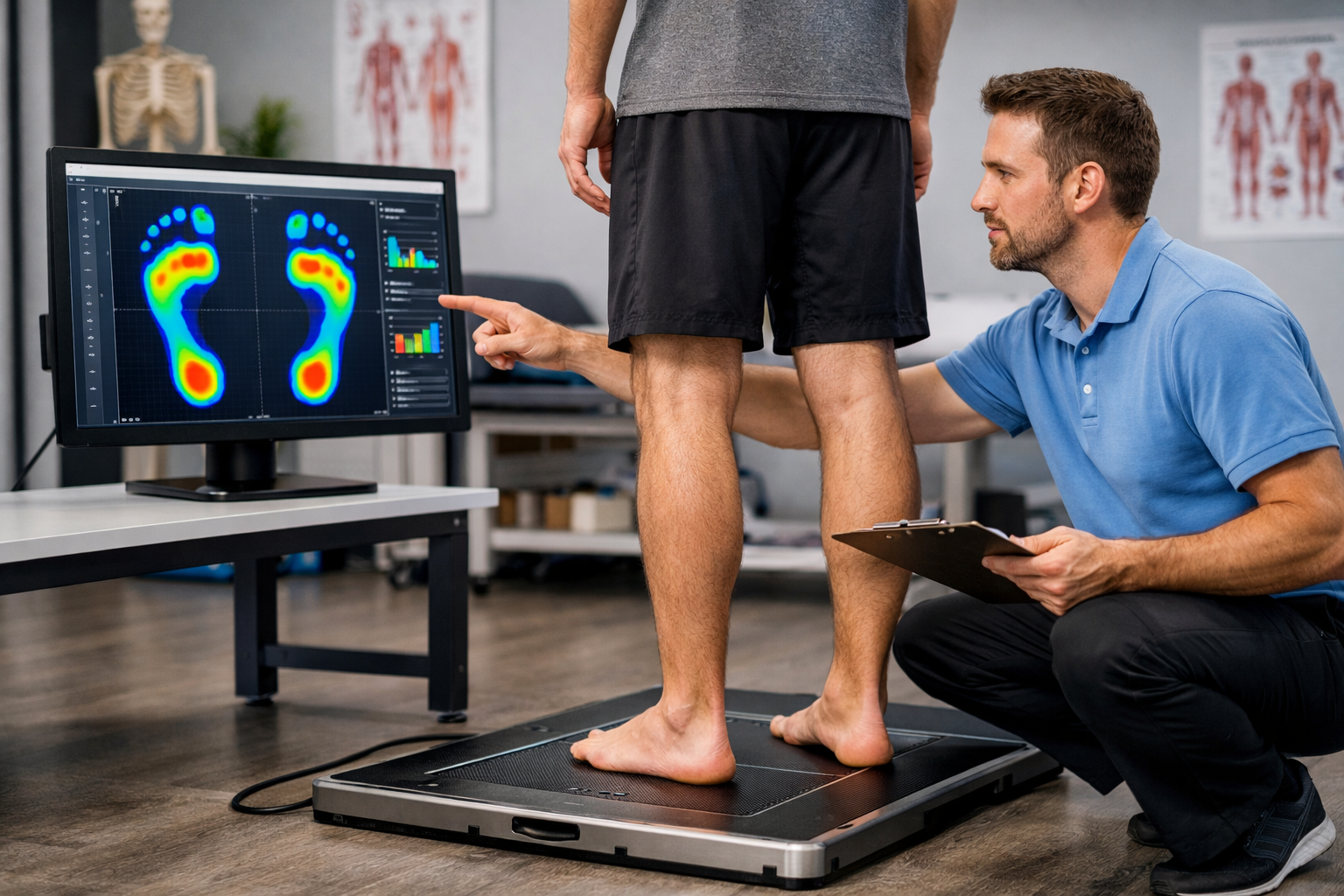
Trinity Rehab conducts a comprehensive initial evaluation covering your foot mechanics, ankle range of motion, calf flexibility, gait pattern, and the specific activities and occupational demands loading your plantar fascia. Your treatment plan is built from this assessment — specific to your presentation, not copied from a generic protocol.
MANUAL THERAPY
Manual therapy forms the foundation of early treatment. Tight calf muscles — a near-universal finding in plantar fasciitis patients — restrict ankle dorsiflexion, forcing the plantar fascia to compensate on every step. Ankle and subtalar joint mobilization directly restores this lost range of motion. Clinical research in the Journal of Orthopaedic & Sports Physical Therapy confirms that combining joint mobilization with stretching produces significantly better outcomes than stretching in isolation.
Instrument-assisted soft tissue mobilization (IASTM) addresses the scar tissue and adhesions that accumulate in chronically stressed fascial tissue. Specialized stainless tools create controlled mechanical stimulation that promotes collagen remodeling and tissue repair. Myofascial release targeting trigger points throughout the calf chain and intrinsic foot muscles reduces the background tension that maintains fascial irritation even at rest.
TARGETED STRETCHING
Your home program centers on two high-evidence interventions:
The plantar fascia-specific stretch — pulling the toes into dorsiflexion before the first step of the morning and holding for 30 seconds — pre-loads the windlass mechanism and prepares the tissue for weight-bearing. Performed consistently, this single technique significantly reduces morning pain severity.
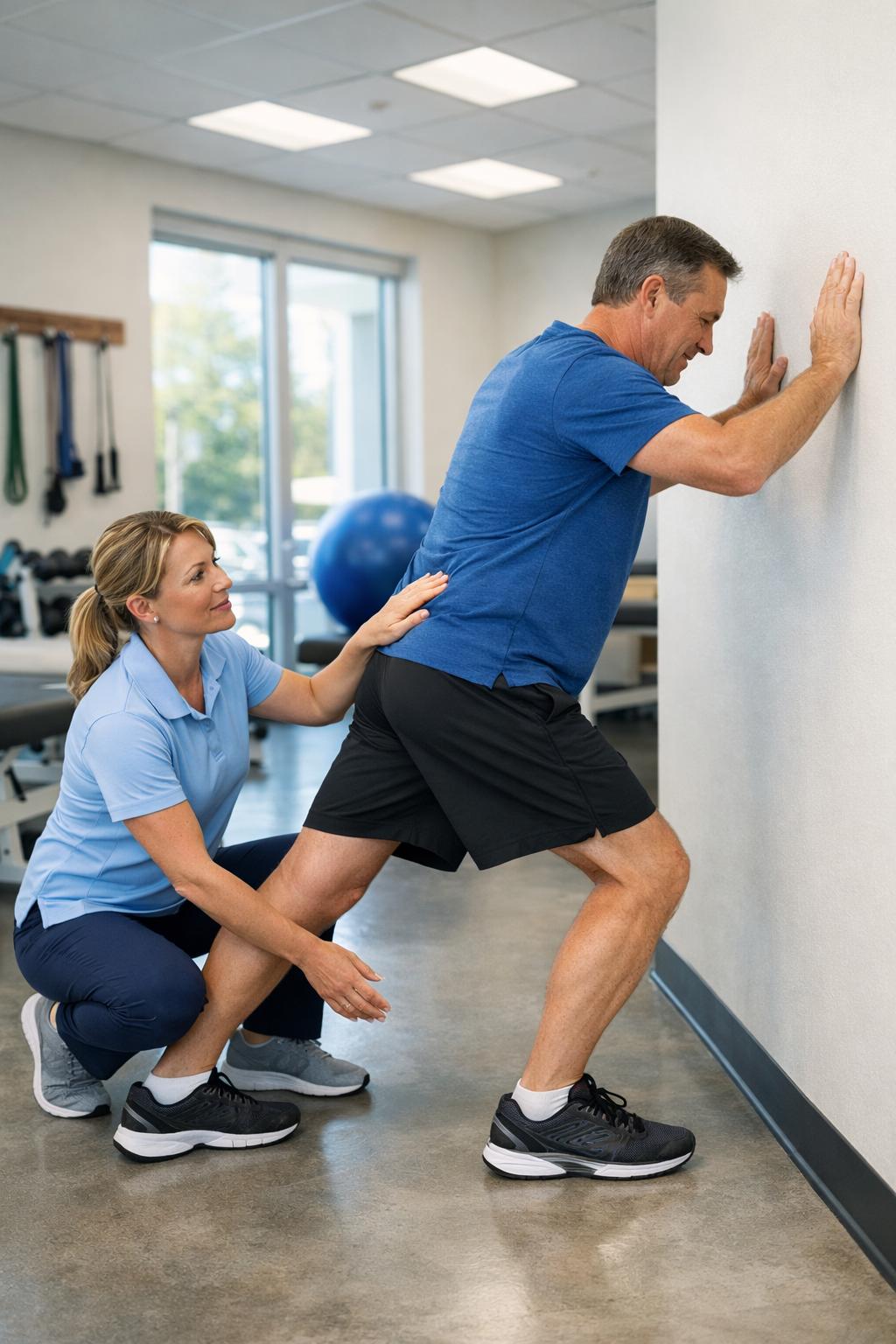
Calf stretching addressing both the gastrocnemius and soleus (separately, using wall stretches and step drops for each) restores the ankle dorsiflexion that protects the fascia throughout the day. Your therapist will assess which muscle is most restricted and customize the stretching protocol accordingly.
EPAT SHOCKWAVE THERAPY
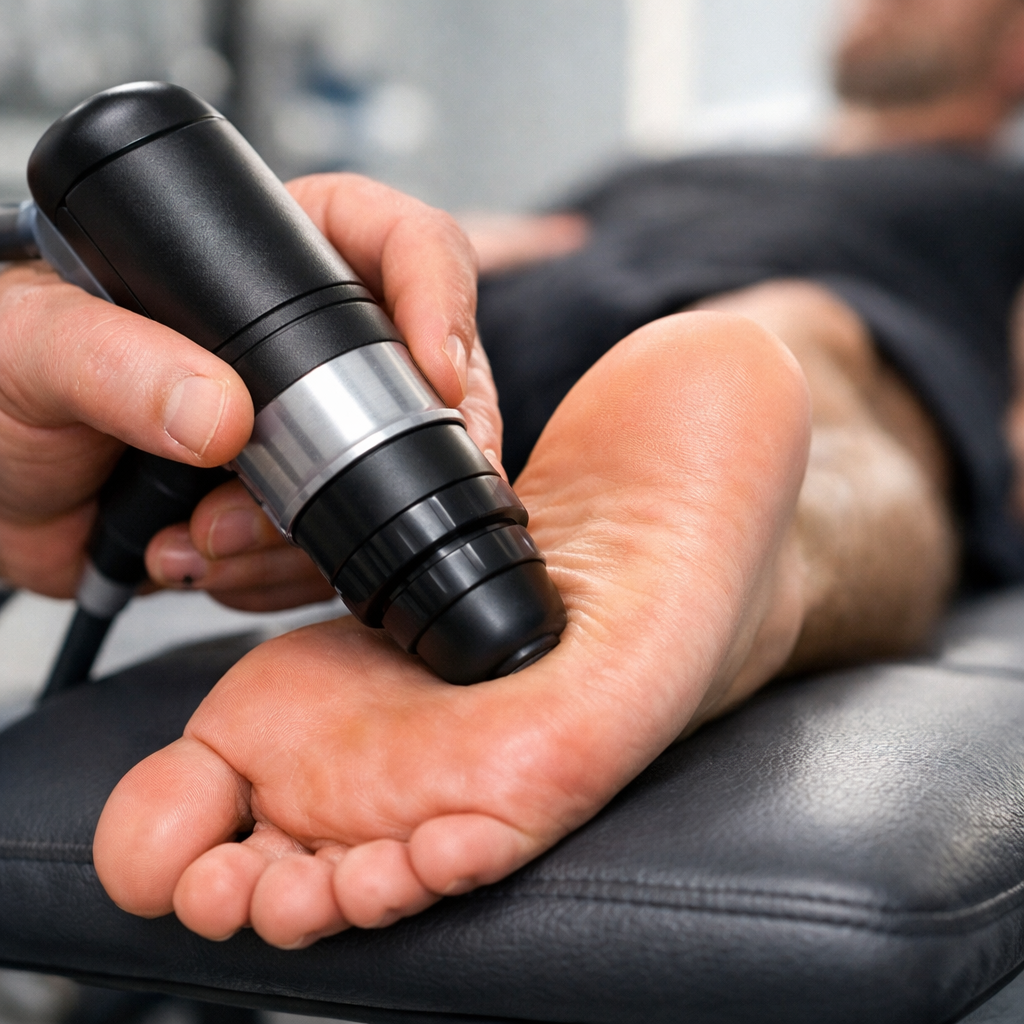
For Doylestown patients with chronic plantar fasciitis — symptoms persisting six months or more despite appropriate conservative care — Trinity Rehab offers EPAT shockwave therapy. This non-invasive treatment delivers high-energy acoustic pressure waves into the damaged tissue, stimulating blood flow and activating the cellular regeneration processes that chronic inflammation suppresses. The Mayo Clinic recognizes EPAT as an evidence-supported option for treatment-resistant cases.
EPAT is performed in-clinic by your physical therapist in a short series of sessions. It is well-tolerated by most patients and is often combined with the stretching and manual therapy program for maximum effect.
ECCENTRIC LOADING AND STRENGTHENING
Eccentric calf raises — the controlled lowering of the heel off a step — are the most evidence-supported exercise intervention for plantar fasciitis. They build tensile strength in the calf-Achilles-fascial unit, systematically increasing the tissue’s capacity to handle the loads your daily life requires. Intrinsic foot strengthening through towel scrunches and short-foot exercises develops the small muscles that support the arch from the inside. Dry needling is available for patients whose recovery is complicated by significant calf trigger points — a common finding in Doylestown’s running community.
RETURN TO ACTIVITY
The final phase builds the bridge from clinical recovery to unrestricted activity. For Bucks County Roadrunners members, this means a structured return-to-running program calibrated to your pre-injury mileage and the trail surfaces you use. For Doylestown Hospital staff, it includes progressive standing tolerance and footwear guidance specific to clinical environments. For CB West athletes, it’s a sport-specific return protocol aligned to the demands of your competitive season.
Orthotic assessment and footwear guidance are standard components of this phase — your therapist will evaluate your current footwear and make specific recommendations based on your foot mechanics and activity demands.
PREVENTION IN THE DOYLESTOWN CONTEXT
- Follow the 10% mileage rule. The Bucks County Roadrunners’ spring season sees many plantar fasciitis cases triggered by post-winter mileage increases. Limit weekly volume increases to 10% and don’t skip recovery weeks.
- Wear walking shoes — not sandals — on Doylestown’s trails. The Chapman Park pump track, Central Park paths, and Neshaminy Greenway sections are accessible enough to tempt casual wear, but flat sandals offer no fascial protection on long walks.
- Invest in clinical footwear. Doylestown Hospital staff should treat work footwear as professional equipment — quality nursing or clinical shoes with arch support and cushioned midsoles are worth the investment given the hours spent on institutional floors.
- Stretch between rounds at Doylestown Country Club. A five-minute calf and plantar fascia stretch between the front and back nine significantly reduces the cumulative tightening that builds up over 18 holes.
- Replace athletic shoes based on use, not appearance. Running shoes lose meaningful midsole cushioning between 300 and 500 miles — track your training mileage and replace proactively.
WHY DOYLESTOWN PATIENTS CHOOSE TRINITY REHAB
Trinity Rehab’s one-on-one treatment model means your licensed physical therapist is with you at every session — not supervising from across the room while aides direct your exercises. This hands-on continuity is particularly valuable in plantar fasciitis treatment, where the distinction between productive loading and aggravation depends on clinical judgment applied in real time.
We accept most major insurance plans and require no physician referral. Our treatment protocols are grounded in the current evidence base from the American Physical Therapy Association. Beyond the foot, we address the full chain of compensatory effects that plantar fasciitis creates — including lower back pain and sciatica that emerge when gait mechanics are altered for months. Our broader expertise covers the full range of foot and ankle conditions that affect active adults in Bucks County.
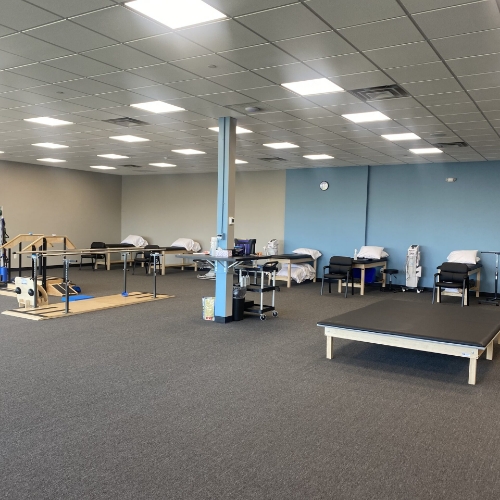
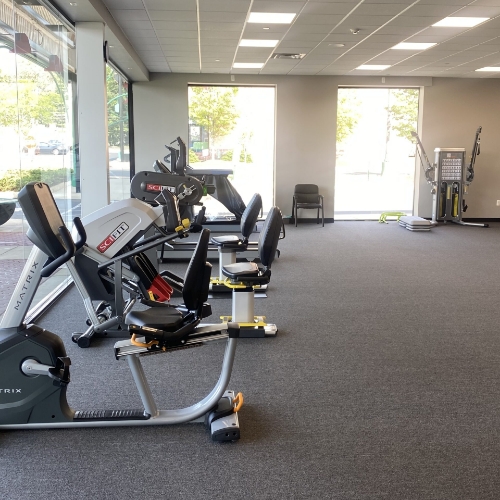
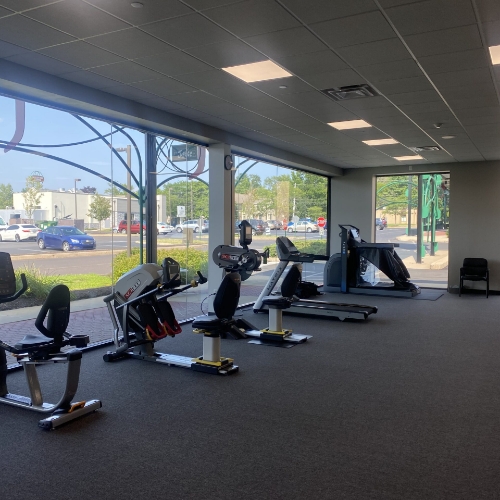
Inside Our Doylestown Clinic
FREQUENTLY ASKED QUESTIONS
Where can I get plantar fasciitis treatment in Doylestown, PA?
How soon will I notice improvement?
Is it safe to keep running during treatment?
What causes plantar fasciitis to become chronic?
Do I need to see a doctor before starting physical therapy in Pennsylvania?
RECLAIM YOUR DOYLESTOWN TRAILS
The Neshaminy Greenway, the Destination Doylestown routes, the 30-plus miles of trails through Central Park — none of this should be off-limits because of heel pain. Plantar fasciitis is a real and often disruptive condition, but it is also one that physical therapy resolves with a high degree of success when treatment is properly applied.
Request your appointment today and let Trinity Rehab help you get back to the Doylestown you know.
Sources: JOSPT Clinical Practice Guidelines for Heel Pain/Plantar Fasciitis, 2023 | Mayo Clinic — Plantar Fasciitis | APTA Clinical Practice Guidelines | American Academy of Orthopaedic Surgeons
What Our Patients Say