
LUMBAR DISC HERNIATION TREATMENT IN DOYLESTOWN, PA
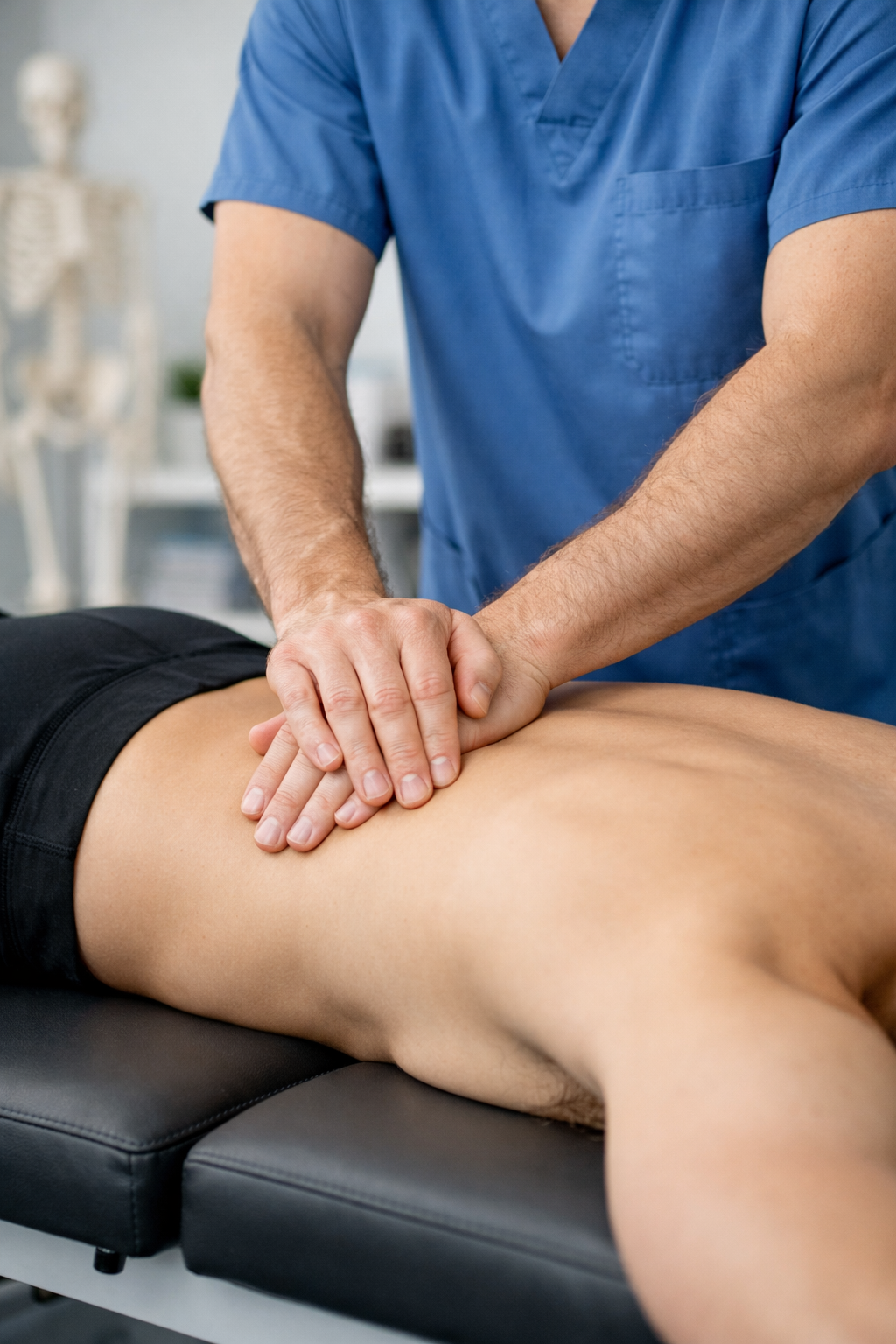
You spent Sunday morning wandering the grounds of Fonthill Castle with your grandchildren, admiring Mercer’s handmade tiles, and by the time you reached the car your lower back was pulsing with a familiar ache that had been building for weeks. By Monday, the ache had become a streak of electric pain from your hip to your ankle, and bending to load the dishwasher felt impossible. In a borough where the median age trends toward 50 and the lifestyle blends cultural outings with trail walks along the Neshaminy Creek, lumbar disc herniation is a condition that touches people at every stage of life. At Trinity Rehab, we provide one-on-one physical therapy designed to resolve your pain and return you to the active Doylestown life you enjoy.
WHAT IS A LUMBAR DISC HERNIATION?
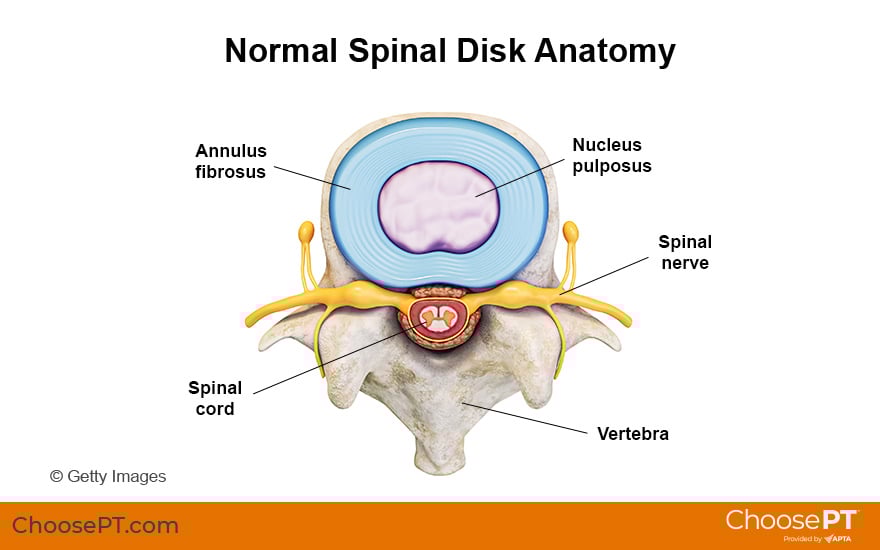
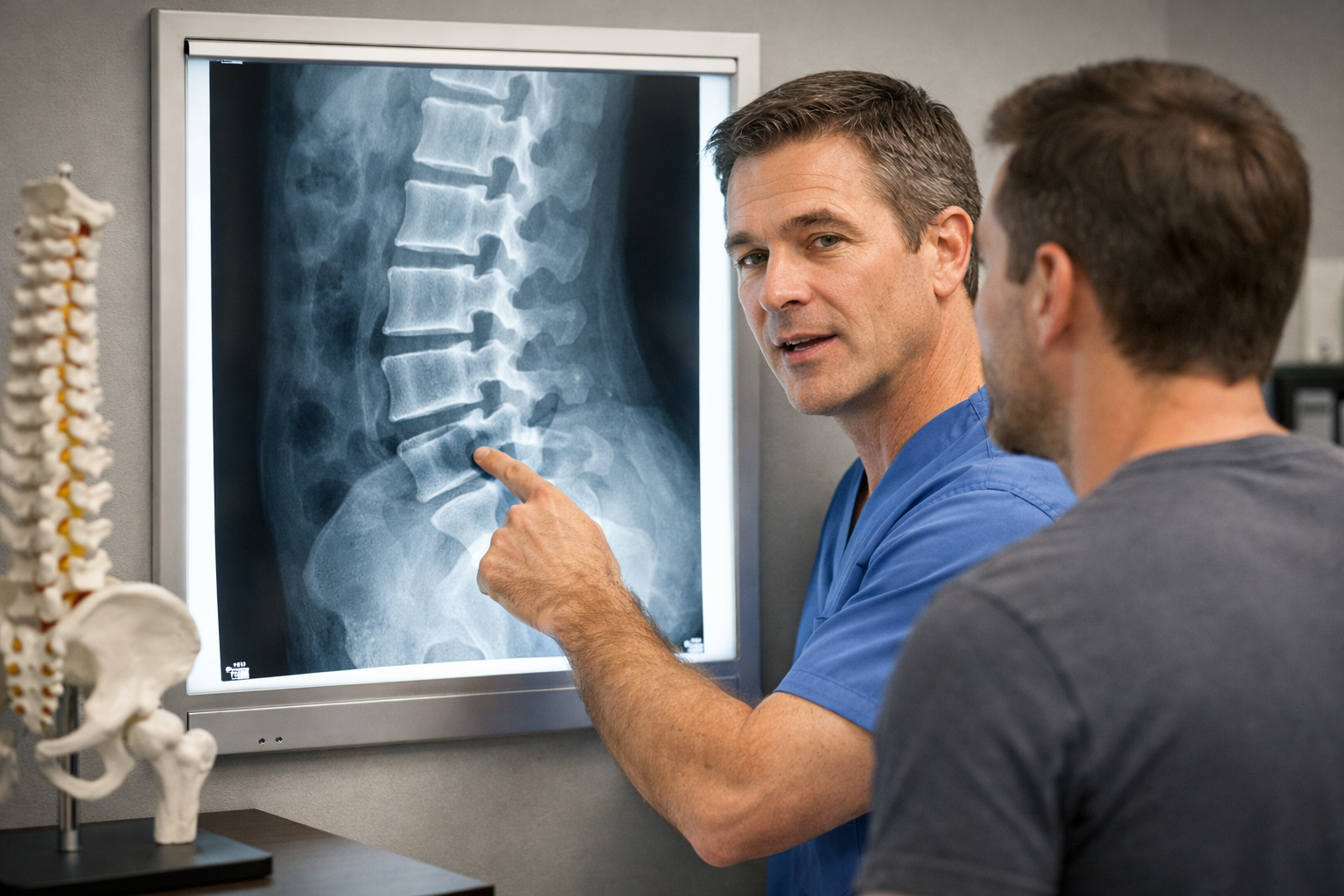
Your lumbar spine is engineered for both mobility and load-bearing. Between each vertebra lies a disc with a tough outer shell — the annulus fibrosus — and a gel-like interior known as the nucleus pulposus. A herniated disc occurs when the nucleus breaches the annulus and presses on a nearby nerve root. The L4-L5 and L5-S1 levels are involved most frequently because they bear the heaviest mechanical loads.
When the compressed nerve happens to be the sciatic nerve, the result is sciatica — pain, numbness, or weakness radiating from the low back through the buttock and down the leg. The condition is also called radiculopathy when a specific nerve root is affected.
Research published in StatPearls confirms that the majority of disc herniations improve with structured conservative treatment (source). A 2024 analysis in Deutsches Ärzteblatt International supports physical therapy and rehabilitation as the preferred initial management strategy (source).
WHY DOYLESTOWN RESIDENTS ARE SUSCEPTIBLE
AN ACTIVE AGING POPULATION
With a median age between 49 and 51 — and roughly 27 percent of Bucks County residents in or approaching retirement — Doylestown has a significant population of adults whose discs have accumulated decades of wear. Age-related dehydration of the nucleus pulposus and micro-tears in the annulus fibrosus mean that even moderate activities can trigger a herniation in a spine that is already vulnerable.
HOSPITAL AND HEALTHCARE EMPLOYMENT
Doylestown Hospital (Penn Medicine) is the borough’s largest employer. Healthcare workers — nurses, aides, technicians — perform patient transfers, prolonged standing, and awkward lifting that generate peak spinal loads. The combination of physical demand and long shifts makes healthcare employees particularly susceptible to disc injury.
WAREHOUSING AND DISTRIBUTION
Amazon, UPS, and other distribution operators maintain facilities in the greater Bucks County area. Workers who perform repetitive bending, twisting, and heavy lifting face an elevated risk of lumbar disc herniation, especially when fatigue compromises body mechanics late in a shift.
COMMUTING TO PHILADELPHIA
Doylestown residents who commute the 25 to 30 minutes south to Philadelphia spend hours each week in a seated, spine-loaded posture. Prolonged driving increases intradiscal pressure and contributes to cumulative disc degeneration.
RECREATIONAL AND ATHLETIC DEMANDS
CB West athletes compete in football, lacrosse, soccer, basketball, and wrestling — all high-risk sports for the lumbar spine. Adults frequent the Doylestown Tennis Club, Doylestown Country Club golf course, and the miles of trails winding through Peace Valley Park and along the Neshaminy Creek. Rotational sports, trail hiking, and vigorous gardening on Bucks County’s rolling hills all create the flexion-rotation forces that challenge the annulus fibrosus.
RECOGNIZING THE SYMPTOMS
Disc herniation in the lumbar spine may present as:
- Deep, aching back pain that worsens with sitting or bending
- Sciatica — a sharp or burning sensation traveling from the buttock down the leg
- Numbness or tingling in the calf, foot, or toes
- Leg weakness that causes stumbling, difficulty climbing stairs, or foot drop
- Pain that eases with walking or lying down and intensifies with prolonged sitting or forward flexion
If you recognize these symptoms, you do not need to wait for a referral. Pennsylvania law allows direct access to physical therapy, so you can schedule an appointment at Trinity Rehab and begin treatment right away.
TRINITY REHAB’S THREE-PHASE TREATMENT PROGRAM
At Trinity Rehab, every session is one-on-one with a licensed physical therapist. No aides, no multi-patient scheduling. This model allows us to tailor every minute of your appointment to your specific condition, goals, and progress.
PHASE 1: PAIN REDUCTION AND NERVE CALMING
The first priority is to reduce inflammation, calm the irritated nerve root, and bring your pain to a functional level.
- McKenzie method / directional preference — Through a systematic mechanical assessment, your therapist identifies the specific movement direction that centralizes your symptoms — shifting pain from the leg toward the lumbar midline. Repeated movements in that preferred direction can physically encourage the displaced nucleus pulposus away from the nerve root. Many Doylestown patients experience a significant reduction in leg pain within the first two to four visits.
- Manual therapy — Hands-on joint mobilizations, muscle energy techniques, and soft tissue work restore segmental motion in the lumbar spine and reduce the protective muscle spasm that often locks the area down.
- Neural mobilization — When the sciatic nerve becomes mechanically tethered by inflammation, gentle nerve-gliding techniques restore its ability to move through the surrounding tissues, reducing radiculopathy symptoms.
- Dry needling — Thin needles target deep trigger points in the paraspinal and gluteal muscles, breaking the pain-spasm cycle and improving local blood flow.

PHASE 2: CORE STABILIZATION AND PROGRESSIVE STRENGTHENING
Once acute pain subsides, rebuilding the muscular support system that protects the lumbar spine becomes the focus.
- Deep core retraining — Isolated activation of the transversus abdominis, lumbar multifidus, and pelvic floor restores the anticipatory bracing pattern that a herniation disrupts.
- Progressive loading — Your therapist gradually increases resistance through exercises like bridges, hip hinges, step-ups, and loaded carries, preparing your spine for real-world demands.
- Functional movement practice — Squatting, bending, lifting, and rotating with proper body mechanics — simulating tasks like gardening, carrying grandchildren, or loading hospital equipment.
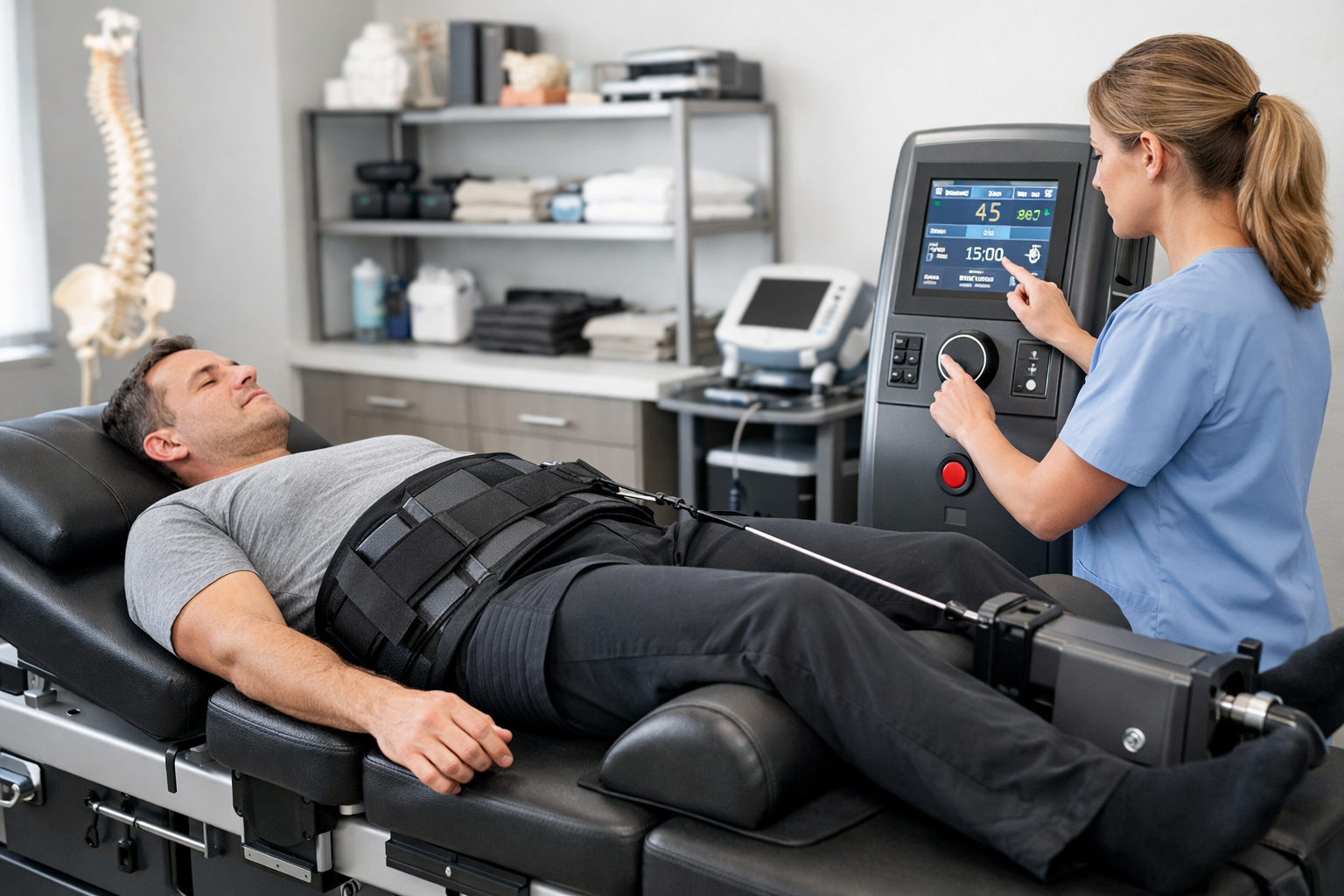
- EPAT (shockwave therapy) — For persistent soft tissue inflammation, EPAT delivers targeted acoustic energy to accelerate healing at the cellular level.
PHASE 3: RETURN TO ACTIVITY AND LONG-TERM PREVENTION
The final phase bridges clinical gains and your real life in Doylestown.
- Trail readiness — Graduated hiking programs for Peace Valley Park and Tyler State Park, including terrain-specific footwear advice and trekking pole technique.
- Sport-specific training — Rotational power drills for golf and tennis, deceleration control for soccer and lacrosse, and endurance circuits for CB West athletes returning to competition.
- Workplace ergonomics — Guidance for healthcare workers on patient transfer mechanics, and commuter-specific strategies for the drive to Philadelphia.
- Home exercise program — A sustainable routine you can perform in your living room, at the new Community Recreation Center, or outdoors in Burpee Park, requiring 15 to 20 minutes a day.
- Education and self-management — Understanding warning signs, activity modification strategies, and when to seek follow-up care.
STAYING ACTIVE AND SPINE-HEALTHY IN DOYLESTOWN
Doylestown’s parks and cultural attractions make ongoing exercise enjoyable:
- Walk the trails at Peace Valley Park — 1,500 acres of lakeside and wooded paths provide ideal low-impact cardiovascular exercise.
- Cycle or jog along the Neshaminy Creek — Flat creek-side paths are gentle on the spine while building aerobic fitness.
- Swim at the Community Recreation Center — Aquatic exercise decompresses the lumbar spine and strengthens the core simultaneously.
- Explore on foot — A walk from the Mercer Museum to the Michener Art Museum to Kids Castle covers enough ground to count as a therapeutic exercise session while enjoying one of Bucks County’s most charming boroughs.
WHY DOYLESTOWN RESIDENTS CHOOSE TRINITY REHAB
- Dedicated one-on-one care — Your therapist works exclusively with you for the entire session.
- No referral required — Pennsylvania’s direct-access law means you can begin physical therapy immediately.
- Evidence-based treatment — McKenzie method, manual therapy, neural mobilization, dry needling, and EPAT all under one roof.
- Bucks County local knowledge — We understand the employers, trails, sports, and lifestyle patterns that shape our patients’ lives.
- Flexible scheduling — Early morning and evening appointments for commuters, healthcare shift workers, and busy families.
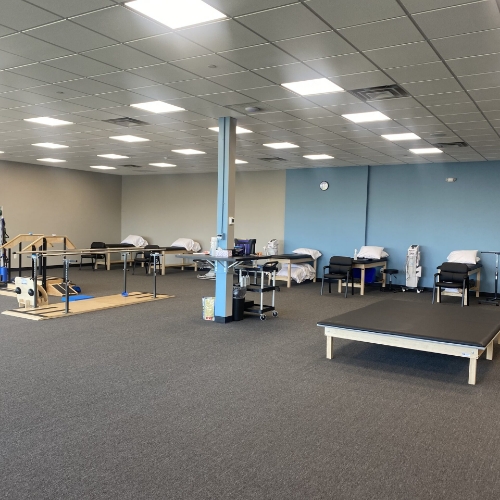
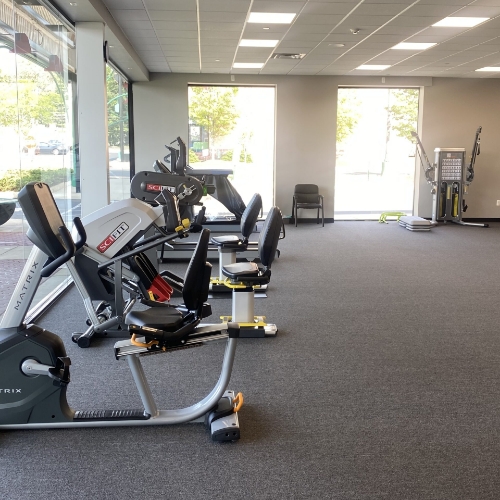
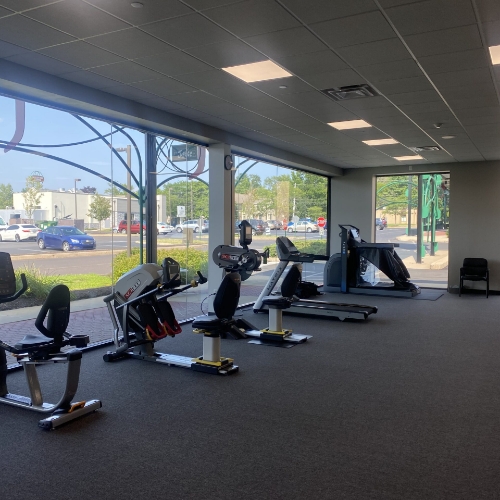
INSIDE OUR DOYLESTOWN CLINIC
RELATED CONDITIONS & TREATMENTS
Lumbar disc herniation is just one of the many conditions we treat at Trinity Rehab Doylestown. Explore our full range of conditions we treat or learn more about specific treatment approaches:
Doylestown Disc Rehab For Back Pain, Leg Symptoms, And Daily Movement
Lumbar disc symptoms can interrupt sitting, driving, lifting, sleep, work, and exercise. Doylestown rehab should connect the diagnosis to the positions and movements that actually trigger your symptoms.
Your therapist may assess lumbar mobility, nerve-related symptoms, hip strength, gait, lifting mechanics, sitting tolerance, and warning signs that require medical care before therapy continues.
Patients with related symptoms may also need sciatica treatment, back pain physical therapy, or the Doylestown physical therapy clinic page.
FREQUENTLY ASKED QUESTIONS
Doylestown Disc Rehab For Back Pain, Leg Symptoms, And Daily Movement
Lumbar disc symptoms can interrupt sitting, driving, lifting, sleep, work, and exercise. Doylestown rehab should connect the diagnosis to the positions and movements that actually trigger your symptoms.
Your therapist may assess lumbar mobility, nerve-related symptoms, hip strength, gait, lifting mechanics, sitting tolerance, and warning signs that require medical care before therapy continues.
Patients with related symptoms may also need sciatica treatment, back pain physical therapy, or the Doylestown physical therapy clinic page.
I’m in my 60s — is physical therapy still effective for a herniated disc at my age?
Do I need a referral from my doctor to see Trinity Rehab?
Can I keep hiking at Peace Valley Park while in treatment?
How does disc herniation differ from spinal stenosis?
What should I wear to my first appointment?
TAKE YOUR FIRST STEP TOWARD RECOVERY
From the historic charm of Fonthill Castle to the rolling trails of Peace Valley Park, Doylestown is a community that rewards an active life. A lumbar disc herniation is a detour, not a dead end. Trinity Rehab’s one-on-one treatment model ensures that your recovery plan is built around your body, your goals, and the Bucks County lifestyle you want to return to.
Schedule your appointment today and begin your journey back to pain-free living.
SOURCES
- StatPearls — Disc Herniation: https://www.ncbi.nlm.nih.gov/books/NBK560878/
- Deutsches Ärzteblatt International — Conservative Treatment of Lumbar Disc Herniation: https://pmc.ncbi.nlm.nih.gov/articles/PMC11465477/
What Our Patients Say



Sign up for free health tips and tricks