

ACL TREATMENT PHYSICAL THERAPY IN DOYLESTOWN, PA
Henry Mercer built Fonthill Castle and the Mercer Museum by hand — tile by tile, artifact by artifact — driven by a conviction that craftsmanship and resilience define what endures. That same philosophy lives in Doylestown today, from the walkable historic downtown to the families who fill Neshaminy Creek Greenway Trail on Saturday mornings. It also describes precisely what ACL recovery demands: patience, skilled hands, and an unwavering commitment to doing the work right. Whether you’re a Central Bucks West athlete chasing a state title, a weekend warrior biking the 25-mile Doylestown Bike-Hike Network, or a Doylestown Athletic Association volleyball player who landed wrong after a spike, an anterior cruciate ligament injury can stop your life mid-stride. At Trinity Rehab Doylestown, we bring the same meticulous, phase-by-phase approach to acl treatment physical therapy that Mercer brought to his craft — and we do it right here in the heart of Bucks County.
UNDERSTANDING ACL INJURIES
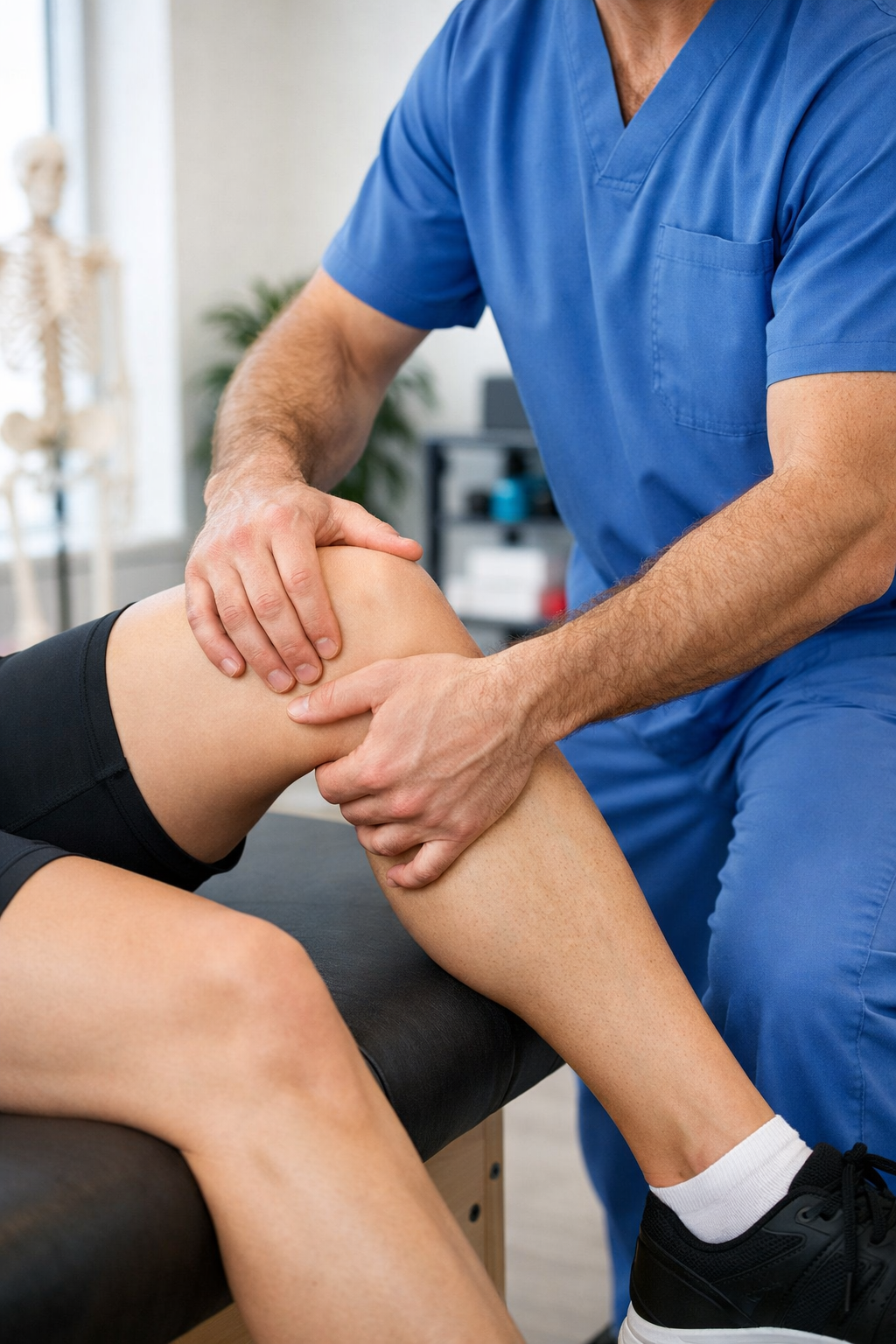
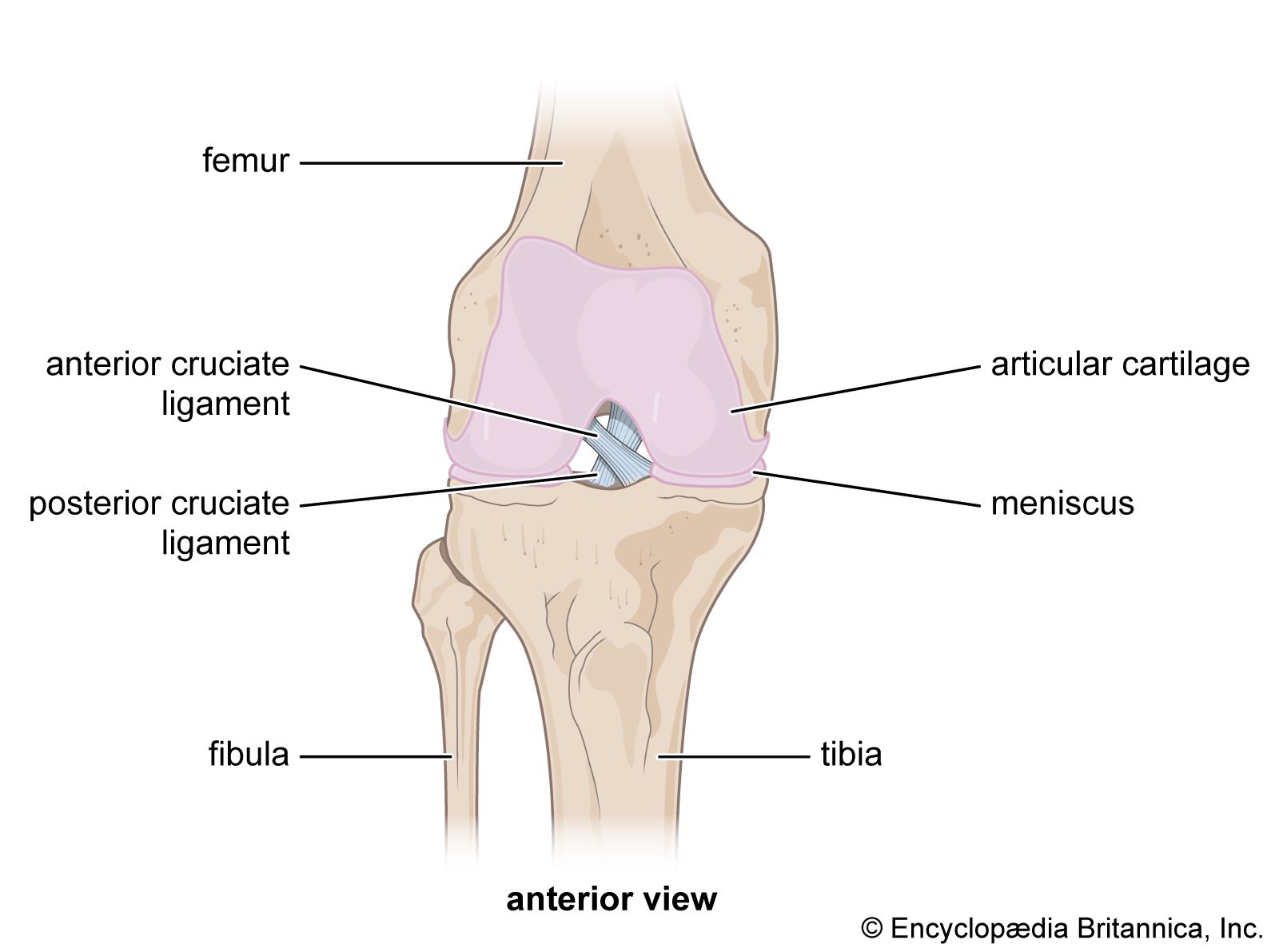
The anterior cruciate ligament is a tough band of tissue that crosses through the center of your knee joint, connecting the thighbone to the shinbone. Its primary role is preventing the tibia from sliding forward and providing rotational knee stability during cutting, pivoting, and landing. When this ligament tears — partially or completely — the result is an anterior cruciate ligament injury that undermines your knee function and can leave the joint feeling unreliable with every step.
An acl tear can range from a mild sprain to a full rupture. In Doylestown’s active community, we see these injuries across every age group: high schoolers competing in Central Bucks’ strong football, lacrosse, and soccer programs, adults playing in recreational leagues at the Central Bucks Family YMCA, and runners logging miles along the 202 Parkway Trail before heading to work at Doylestown Hospital or Delaware Valley University.
WHY ACL RECOVERY MATTERS
Ignoring or rushing an acl injury has consequences that extend far beyond the playing field. Without proper rehabilitation, the knee joint loses its natural stability. Compensatory movement patterns develop. The risk of early-onset arthritis climbs dramatically. For a Central Bucks West lacrosse midfielder who dreams of playing in college, or a Doylestown Hospital nurse who needs to be on her feet for twelve-hour shifts, a poorly managed ACL means chronic hip and knee pain and diminished quality of life for years to come.
Structured acl treatment physical therapy — whether before surgery, after anterior cruciate ligament reconstruction, or along a non-surgical pathway — restores range of motion, rebuilds muscle strength, and retrains the neuromuscular patterns that protect the knee through every activity Doylestown’s residents love.
COMMON CAUSES OF ACL INJURIES IN DOYLESTOWN
Doylestown’s culture is built around movement. That’s what makes it a wonderful place to live — and it’s also why ACL injuries are so common here.
- Field and court sports at Central Bucks West: Football, soccer, basketball, lacrosse, field hockey, and wrestling all demand explosive cutting and pivoting. A Bucks lacrosse attackman dodging a defender during a spring playoff game can plant, twist, and feel the pop that changes an entire season.
- Trail and outdoor recreation: The Neshaminy Creek Greenway Trail, 202 Parkway Trail, and Chapman Park pump track draw cyclists, runners, and hikers year-round. A mountain biker catching a tire in a rut and twisting awkwardly on dismount along the Greenway is a scenario our clinicians treat regularly.
- Adult recreational leagues: The Doylestown Athletic Association runs baseball, softball, basketball, field hockey, and volleyball programs. The Community Recreation Center courts see adult volleyball players who land from a spike with their knee buckling inward — a classic non-contact ACL mechanism.
- Workplace and everyday activity: Employees at Giant Food Stores, the Central Bucks School District, and area businesses sustain work injuries from slips, falls, and awkward landings that damage the ACL without any sport involved.
SIGNS AND SYMPTOMS
Most people with an acl tear describe a distinct “pop” at the moment of injury, followed by rapid swelling within hours. Key signs include:
- A feeling that the knee “gave out” or buckled during activity
- Significant swelling and tenderness around the knee joint
- Loss of full knee motion, especially difficulty straightening the leg
- Pain along the joint line or deep inside the knee
- Difficulty bearing weight or an instinct to guard the leg
If you experience these symptoms — whether on the fields behind Central Bucks West, along the Bike-Hike Network trails, or on the pickleball courts at Burpee Park — prompt evaluation by a physical therapist helps establish a clear treatment timeline.
HOW PHYSICAL THERAPY HELPS: FROM PREHABILITATION THROUGH RETURN TO SPORT
The gold standard for ACL recovery is a phased, criteria-driven rehabilitation program. At Trinity Rehab Doylestown, every plan is individualized, but the framework follows an evidence-based progression that applies whether you’re heading into acl surgery or pursuing conservative care.
Prehabilitation (Pre-Surgery Phase)
Prehabilitation — or “prehab” — begins the moment an ACL injury is diagnosed and acl reconstruction is planned. The goal is to enter surgery with the best possible knee function. We focus on reducing swelling, restoring full range of motion, and building quadriceps and hamstrings activation. Research consistently shows that patients who complete prehab recover faster and achieve better outcomes after anterior cruciate ligament reconstruction. Consider the Doylestown Hospital physical therapist who tore her own ACL jogging the 202 Parkway Trail before a morning shift — she understood firsthand why walking into the operating room with a strong, mobile knee matters.
Phase 1: Protection and Early Mobility (Weeks 0-2)
Immediately after acl surgery, the priority is protecting the graft, managing pain and swelling, and restoring knee motion. Our physical therapists use manual therapy techniques — including patellar mobilizations and gentle soft-tissue work — to improve tissue mobility. Early quadriceps activation through isometric contractions and straight-leg raises begins rebuilding the foundation.
Phase 2: Controlled Strengthening (Weeks 2-6)
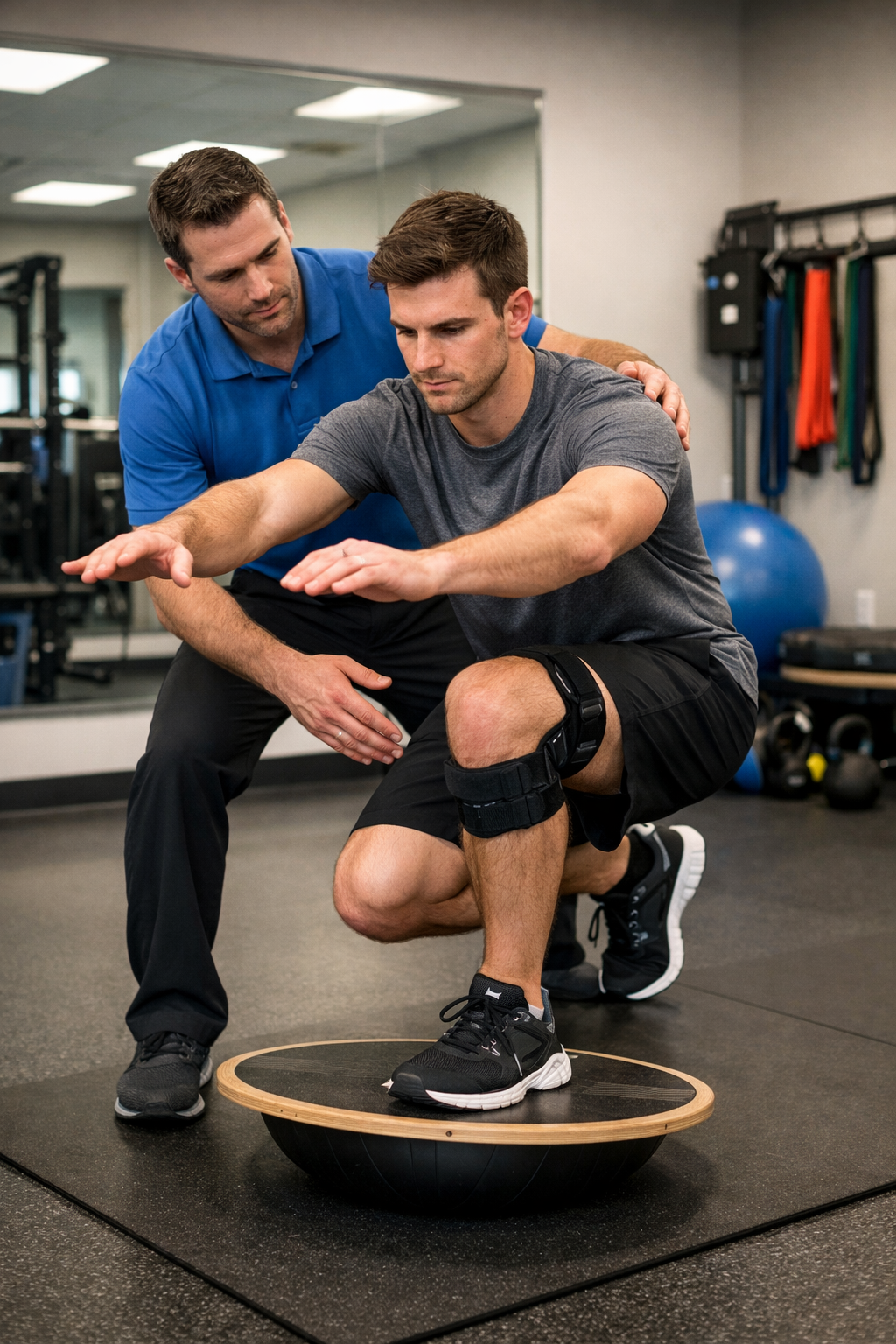
As healing progresses, we introduce progressive strengthening exercises targeting the quadriceps, hamstrings, glutes, and hip stabilizers. Hamstring curls, leg presses, and closed-chain movements restore muscle strength without stressing the graft. Stationary cycling and pool-based exercises may be incorporated. Balance exercises on unstable surfaces begin retraining proprioception — the body’s internal sense of joint position.
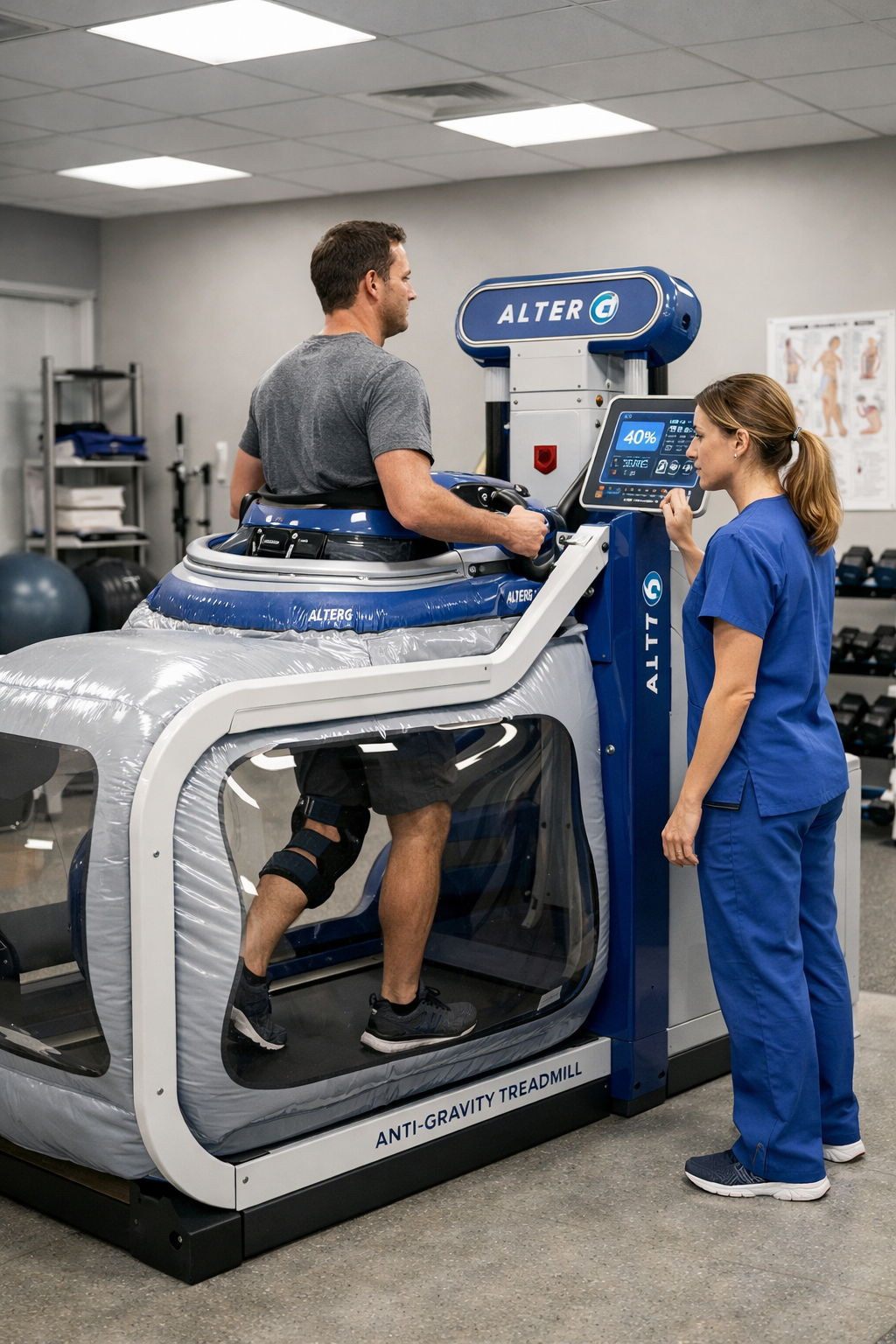
Phase 3: Advanced Strengthening and Neuromuscular Control (Weeks 6-12)
This phase bridges the gap between basic strength and functional movement. Single-leg exercises, lateral movements, and sport-specific patterns challenge knee stability in increasingly demanding scenarios. Neuromuscular electrical stimulation (NMES) can augment quadriceps recruitment when voluntary activation lags — a common issue after ACL reconstruction. We also introduce agility ladders and controlled direction changes that mirror the demands of Doylestown’s sports — the same lateral cuts a Central Bucks soccer player needs, the same defensive slides a basketball player relies on.
Phase 4: Sport-Specific Training (Months 3-6)
Plyometric training begins here — box jumps, single-leg hops, and depth jumps that teach the knee to absorb and produce force at speed. For the Central Bucks West lacrosse player who tore his ACL dodging a defender during playoffs, this phase means reintroducing the exact cutting and cradling patterns he’ll face on the field. We measure hamstring strength relative to quadriceps strength, test single-leg hop symmetry, and use objective benchmarks to guide progression.
Phase 5: Return to Sport and Beyond (Months 6-9+)
Return to sport is earned, not assumed. A battery of functional tests — including hop tests, strength ratios, and movement-quality screens — must meet established thresholds before we clear an athlete for full competition. This phase also integrates injury prevention strategies that reduce the risk of re-tear, which is particularly important for younger athletes whose developing bodies face heightened vulnerability.
THE NON-SURGICAL PATHWAY
Not every acl injury requires acl surgery. For patients with partial tears, lower activity demands, or specific medical considerations, a structured non-surgical rehabilitation program can restore excellent knee function. The principles remain the same — progressive strengthening, proprioception training, and neuromuscular control — though the timeline and milestones differ. Our Doylestown clinicians evaluate each patient individually, considering age, activity goals, injury severity, and overall physical therapy conditions to recommend the best path forward.
ADVANCED TECHNIQUES AT TRINITY REHAB DOYLESTOWN
We invest in the tools and continuing education that allow us to offer treatments beyond conventional physical therapy.
- Blood flow restriction (BFR) training: By partially restricting venous blood flow during low-load exercise, BFR stimulates significant muscle strength gains without the heavy loads that could compromise a healing graft. This is especially valuable in early post-operative phases when the knee cannot tolerate high resistance.
- Neuromuscular electrical stimulation (NMES): Targeted electrical impulses activate the quadriceps during exercise, combating the muscle inhibition that commonly follows acl reconstruction. NMES accelerates the return of voluntary quadriceps control.
- Dry needling: Fine-filament needles address myofascial trigger points in the quadriceps, hamstrings, and calf muscles, reducing pain and improving tissue extensibility during rehabilitation.
- EPAT / Shockwave therapy: Extracorporeal pulse activation technology (shockwave therapy) delivers acoustic waves to promote tissue healing, reduce chronic tendon pain, and address scar-tissue restrictions that can limit knee motion during recovery.
- Manual therapy: Hands-on joint mobilizations, soft-tissue mobilization, and instrument-assisted techniques restore joint mechanics and tissue mobility throughout every rehabilitation phase.
INJURY PREVENTION
The best ACL injury is the one that never happens. At Trinity Rehab Doylestown, we offer injury prevention programs grounded in neuromuscular training, landing mechanics education, and targeted strengthening exercises. For the athletes of Central Bucks — whether they’re competing in football, soccer, lacrosse, field hockey, or track and field — a prevention-focused warm-up that includes balance exercises, plyometric training, and hamstring strength work can reduce ACL injury risk by up to 50 percent. We work with individual athletes, teams, and families across the Doylestown Athletic Association and Central Bucks Athletic Association to make prevention a community priority.
WHY CHOOSE TRINITY REHAB DOYLESTOWN
Trinity Rehab’s Doylestown clinic sits at 430 N Main Street, Doylestown, PA 18901 — in the center of the borough’s walkable downtown, minutes from Fonthill Castle, the Bucks County Courthouse, and the James A. Michener Art Museum. We chose this location because Doylestown deserves a physical therapy clinic as invested in this community as its residents are.
Our team understands the specific demands of life here. We know the fields at Central Bucks West, the trails along Neshaminy Creek, the courts at the Community Recreation Center, and the hills that make the Bike-Hike Network both beautiful and punishing on recovering knees. That local knowledge shapes every treatment plan.
What sets us apart:
- One-on-one care with a licensed physical therapist at every visit
- Evidence-based, criteria-driven ACL protocols that prioritize long-term outcomes
- Advanced modalities including blood flow restriction, dry needling, EPAT, and neuromuscular electrical stimulation
- Direct access — no referral needed to schedule your first appointment
- Flexible scheduling designed for working families, students, and professionals across Doylestown borough and township
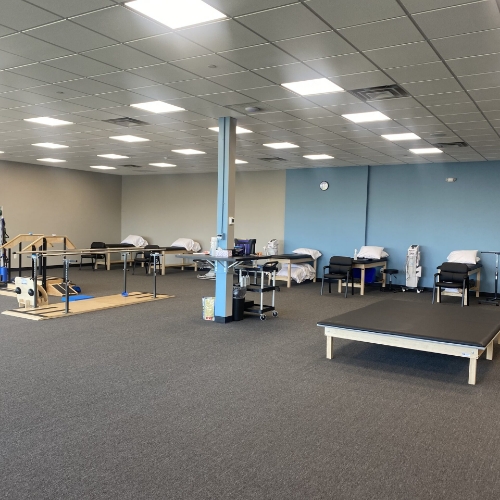
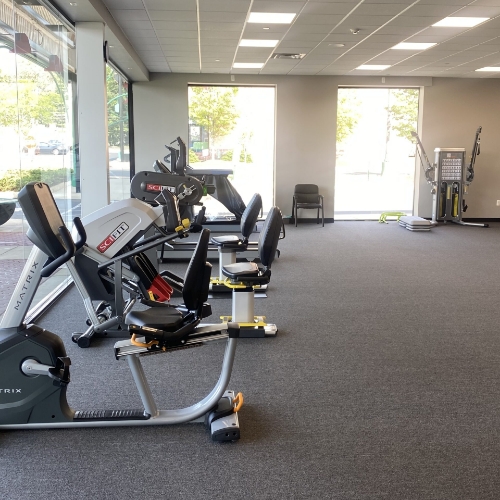
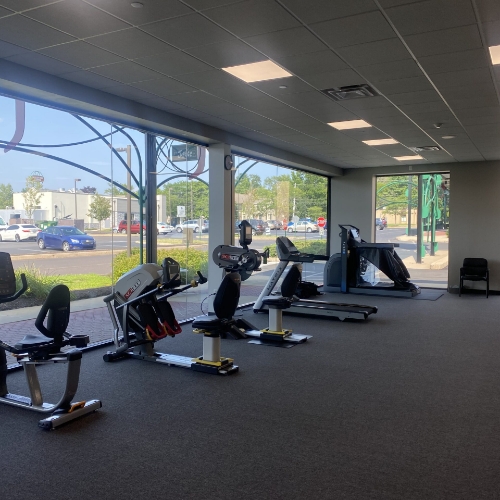
Inside Our Doylestown Clinic
RELATED CONDITIONS & TREATMENTS
ACL injuries are just one of the many conditions we treat at Trinity Rehab Doylestown. Explore our full range of conditions we treat or learn more about specific treatment approaches:
Doylestown ACL Rehab For Strength, Stability, And Return To Activity
ACL rehab in Doylestown should connect the healing stage to real movement goals: walking normally, using stairs, rebuilding quad strength, returning to running, and feeling ready for sport or exercise again.
Your therapist may assess swelling, range of motion, quad activation, hip strength, balance, gait, and return-to-sport readiness. The plan should match your surgical or non-surgical timeline and avoid skipping phases.
Related options include knee pain physical therapy, meniscus tear rehab, and the Doylestown physical therapy clinic page.
FREQUENTLY ASKED QUESTIONS
Doylestown ACL Rehab For Strength, Stability, And Return To Activity
ACL rehab in Doylestown should connect the healing stage to real movement goals: walking normally, using stairs, rebuilding quad strength, returning to running, and feeling ready for sport or exercise again.
Your therapist may assess swelling, range of motion, quad activation, hip strength, balance, gait, and return-to-sport readiness. The plan should match your surgical or non-surgical timeline and avoid skipping phases.
Related options include knee pain physical therapy, meniscus tear rehab, and the Doylestown physical therapy clinic page.
How long does ACL rehabilitation take at Trinity Rehab Doylestown?
Can I recover from an ACL tear without surgery?
What should I do immediately after tearing my ACL on a Doylestown trail or field?
Does Trinity Rehab Doylestown treat work-related ACL injuries?
What advanced treatments does Trinity Rehab offer for ACL recovery?
An ACL injury doesn’t have to define your next chapter. Whether you’re a high school athlete counting the days until tryouts, a healthcare worker at Penn Medicine who needs to get back on your feet, or a weekend cyclist ready to ride the Greenway again, Trinity Rehab Doylestown is here to guide every phase of your recovery.
Schedule your appointment today at our clinic at 430 N Main Street, Doylestown, PA 18901. Walk in, call, or book online — and take the first step toward getting back to everything that makes life in Doylestown worth living.