
PLANTAR FASCIITIS TREATMENT IN CLIFTON, NJ | TRINITY REHAB
CLIFTON KEEPS MOVING — UNTIL HEEL PAIN STOPS YOU
Clifton is one of New Jersey’s largest and most active cities, a dense, walkable community where residents log serious miles every day. The Clifton RoadRunners hold group runs along park routes and local roads, drawing members from every corner of Passaic County. Weasel Brook Park’s 19-acre grounds offer walking paths and a fitness circuit that fill up before and after the workday. On the weekends, families pack the sidelines of Clifton High School soccer and football games, the Mustangs competing in the Big North Conference with one of the most storied athletics programs in the state.
Then there are the workers: L3Harris Technologies employs roughly 1,600 people in manufacturing and engineering. Retail workers circulate through the Costco and Home Depot corridors on Route 3 and Route 46. Warehouse and industrial employees in the commercial parks along those same corridors are on their feet for eight, ten, twelve hours at a stretch — often on concrete. St. Mary’s General in nearby Passaic and St. Joseph’s in Paterson draw nurses and support staff from Clifton’s neighborhoods.
For all these residents, heel pain is not a minor inconvenience. It is a threat to livelihood and lifestyle. Plantar fasciitis — the sharp, stabbing sensation under the heel that ambushes you the moment you stand up in the morning — is the most common foot condition in adults, and it deserves serious treatment, not just rest and a bottle of ibuprofen.
Trinity Rehab in Clifton provides the expert, one-on-one physical therapy that actually resolves plantar fasciitis at its source.
WHAT IS PLANTAR FASCIITIS — AND WHY DOES IT HURT SO MUCH?
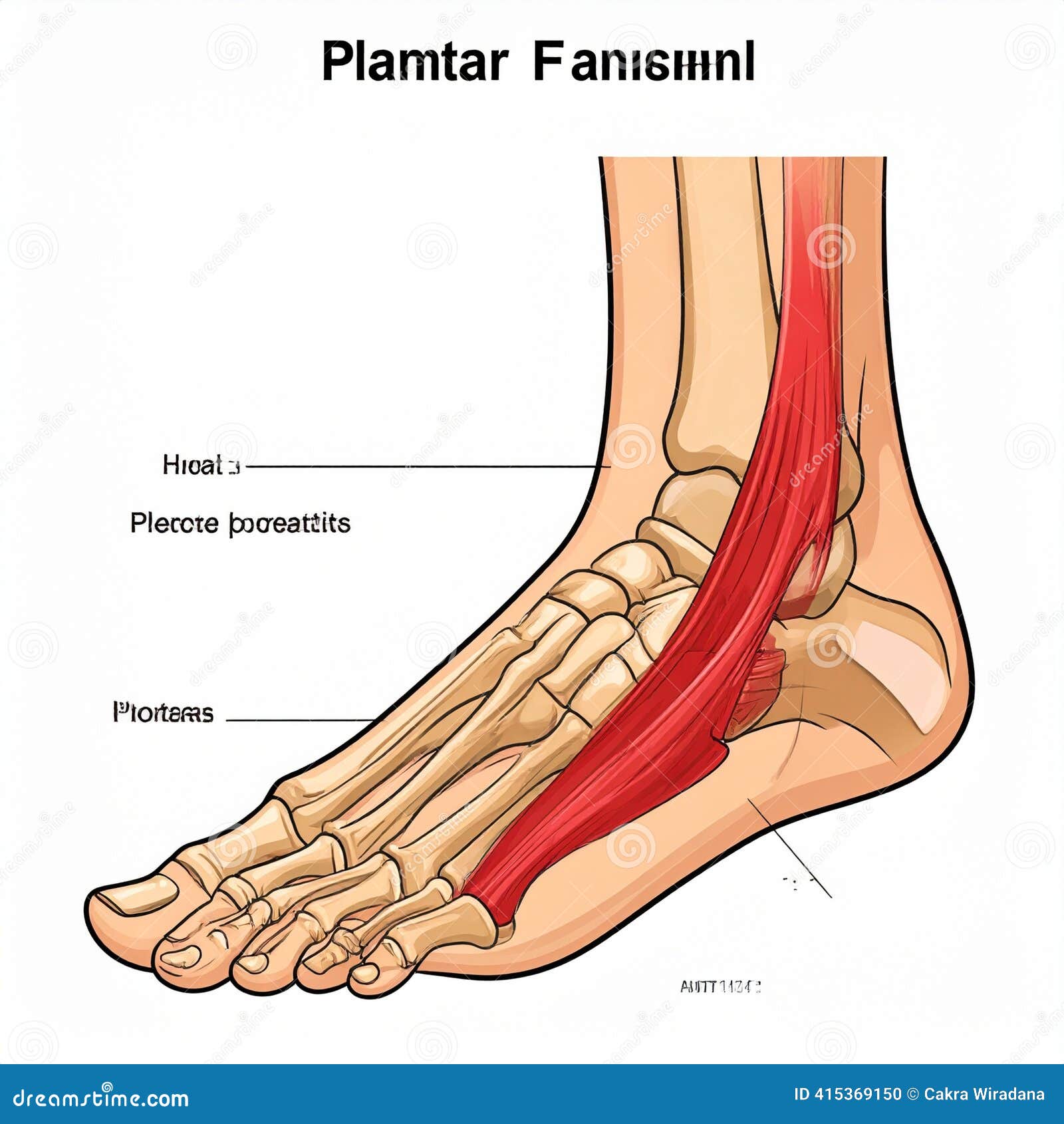
The plantar fascia is a dense, fibrous band running along the sole of your foot from the calcaneus (heel bone) to the base of your toes. It is the primary structural support for the arch and a critical shock absorber, loading and releasing with every step through a mechanism called the windlass effect.
When the cumulative forces placed on the fascia exceed its ability to recover — from running, prolonged standing, biomechanical abnormalities, or a sudden spike in activity — micro-tears develop near the heel attachment. The body’s inflammatory response kicks in to try to repair those tears, and that inflammation is what you feel as the characteristic burning, stabbing pain.
Here is why morning pain is so intense: while you sleep, the plantar fascia naturally contracts to its shortest resting length. The moment you stand and place your full bodyweight on it, it is suddenly and forcefully elongated — re-stressing those micro-tear sites in an instant. That is why the first steps from bed or a chair are the worst, and why movement often brings temporary relief as the tissue warms and loosens.
In cases that have been ignored or inadequately treated for months, the inflammatory process can give way to degenerative changes — a state clinicians call plantar fasciopathy — where the tissue actually breaks down structurally. This stage is more resistant to rest-and-stretch remedies and typically requires more advanced intervention.
RELATED CONDITIONS & TREATMENTS
Plantar fasciitis is just one of the many conditions we treat at Trinity Rehab Clifton. Explore our full range of conditions we treat or learn more about specific treatment approaches:
RISK FACTORS IN CLIFTON’S LIFESTYLE AND WORKFORCE
Plantar fasciitis does not develop randomly. Specific patterns of activity, occupation, and biomechanics create concentrated risk — and Clifton’s particular demographic mix generates several of them.
Running Culture: The Clifton RoadRunners is a USATF-registered club that draws regular participants to group runs through the city and surrounding parks. Running on the hard surfaces of Clifton’s roads and park paths — including the fitness circuit at Weasel Brook Park — places sustained impact load on the plantar fascia, particularly for runners whose calf muscles are tight, whose shoes are worn past their useful mileage, or who are ramping up training for a road race.
Manufacturing and Industrial Occupations: L3Harris Technologies, one of Clifton’s largest employers, keeps a significant workforce on production floors for long periods. Hard concrete and tile surfaces — standard in manufacturing environments — provide virtually no energy return under the foot, dramatically increasing cumulative fascial loading compared to softer surfaces. Industrial park workers along Routes 3 and 46 face identical conditions.
Retail and Warehouse Work: Home Depot, Costco, and the various big-box and warehouse operations clustered along Clifton’s commercial corridors put thousands of employees on their feet for extended shifts. These jobs involve not only standing but continuous walking on hard tile and concrete, with limited opportunity to sit and decompress the fascia.
High School and Youth Athletics: Clifton High School’s Mustangs field over 50 sports programs in the Big North Conference, with particularly strong soccer, wrestling, football, and softball programs. The combination of running, jumping, cutting, and landing on hard gym and artificial turf surfaces creates concentrated heel stress for student athletes. Youth league participants across the city’s recreation programs add to this population.
Biomechanical Factors: Flat-soled shoes, flip-flops, and non-supportive work footwear are common contributors across Clifton’s diverse population, and overpronation (inward rolling of the foot) is among the most modifiable biomechanical risk factors for plantar fasciitis.
RECOGNIZING THE SYMPTOMS IN YOUR DAILY LIFE
A Clifton RoadRunners member training for a 10K might notice that the heel pain that starts a few minutes after her run gets worse and worse each morning — until she is dreading the moment the alarm goes off. A manufacturing technician at L3Harris might feel fine during his shift but winces every time he gets up from the breakroom chair after lunch. A Clifton High School varsity soccer player might notice her heel aches after every match but dismisses it as soreness — until it becomes too sharp to ignore.
Plantar fasciitis presents with a consistent set of signs:
- Morning heel pain — intense, sharp pain with the first steps after sleep, easing after 10–20 minutes of movement
- Post-rest pain — returning after sitting, driving, or standing still for more than a few minutes
- Pinpoint heel tenderness — pressing the inner-bottom of the heel reproduces your exact symptom
- Arch tightness — a pulling or burning sensation along the sole, particularly in the morning
- Pain after activity — symptoms intensify in the hours after a run, game, or long shift rather than during it
- Altered walking pattern — compensatory toe-walking, limping, or outer-foot weight-shifting
When walking mechanics change to avoid heel pain, the forces redistribute to the ankles, knees, hips, and lumbar spine. This chain reaction can trigger lower back pain or sciatica that is as debilitating as the original heel problem. Early intervention interrupts the cascade before it spreads.
HOW TRINITY REHAB CLIFTON TREATS PLANTAR FASCIITIS
Every patient who walks into Trinity Rehab Clifton with heel pain receives a thorough biomechanical assessment — not a generic plantar fasciitis protocol handed to everyone with the same complaint. Your licensed physical therapist evaluates your foot mechanics, ankle mobility, calf flexibility, gait pattern, and footwear before designing a treatment plan specific to your needs and goals.
You can explore our foot and ankle pain treatment page and our full list of conditions we treat to understand the breadth of care we provide.
PHASE 1: CALMING THE PAIN
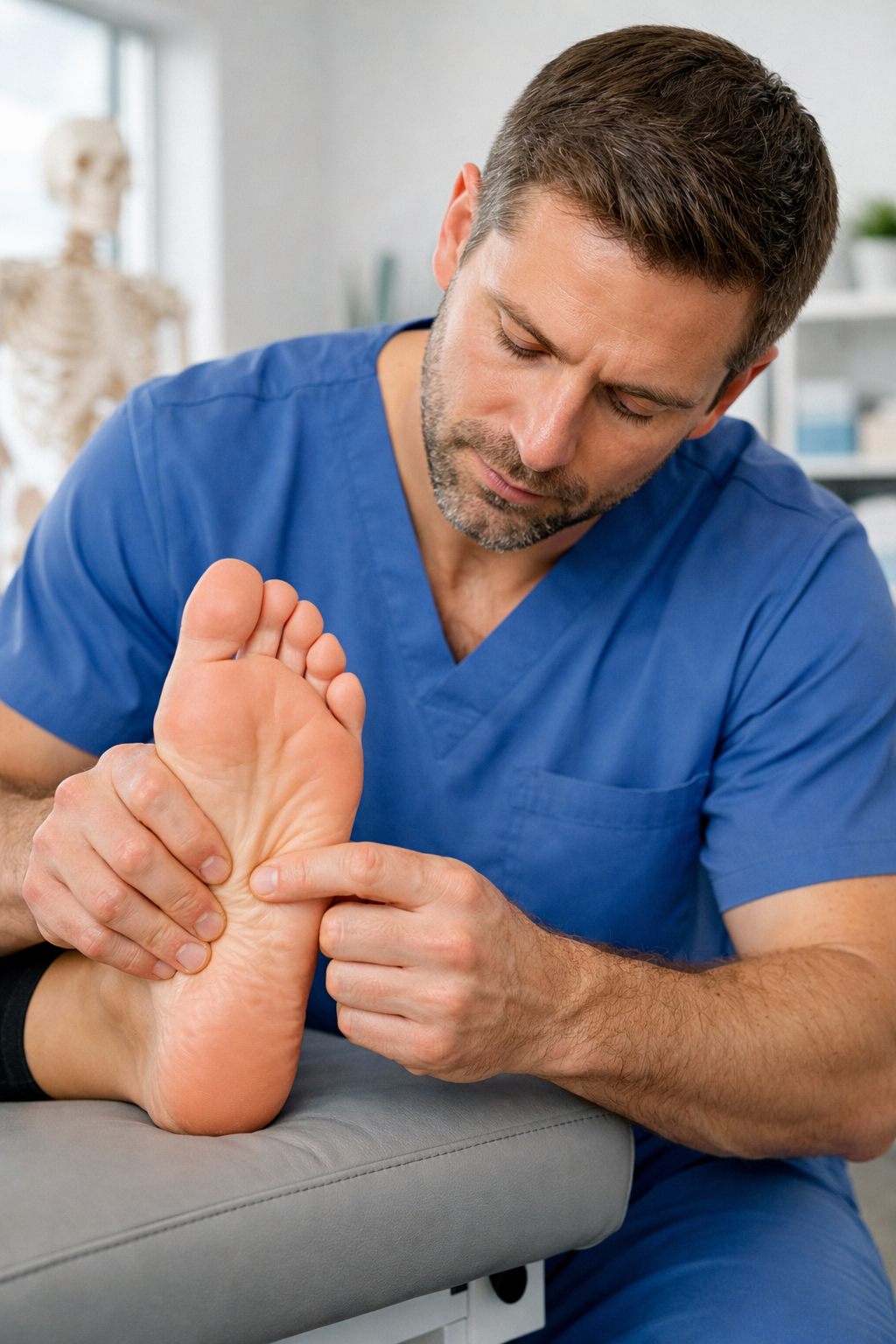
The first priority is breaking the inflammatory cycle and reducing pain enough for you to move normally. Your therapist will use hands-on manual therapy — including subtalar and ankle joint mobilization, instrument-assisted soft tissue mobilization (IASTM) along the plantar fascia and calf, and myofascial release of trigger points in the foot intrinsics and gastrocnemius complex.
Research published in the Journal of Orthopaedic & Sports Physical Therapy shows that subtalar mobilization combined with stretching delivers significantly greater pain reduction than stretching or conventional care alone. Therapeutic ultrasound may be used to increase deep tissue circulation and accelerate early-stage healing.
Kinesiology taping provides between-session fascial offloading — allowing you to continue working and moving while the tissue begins to repair.
PHASE 2: RESTORING MOBILITY AND STRENGTH
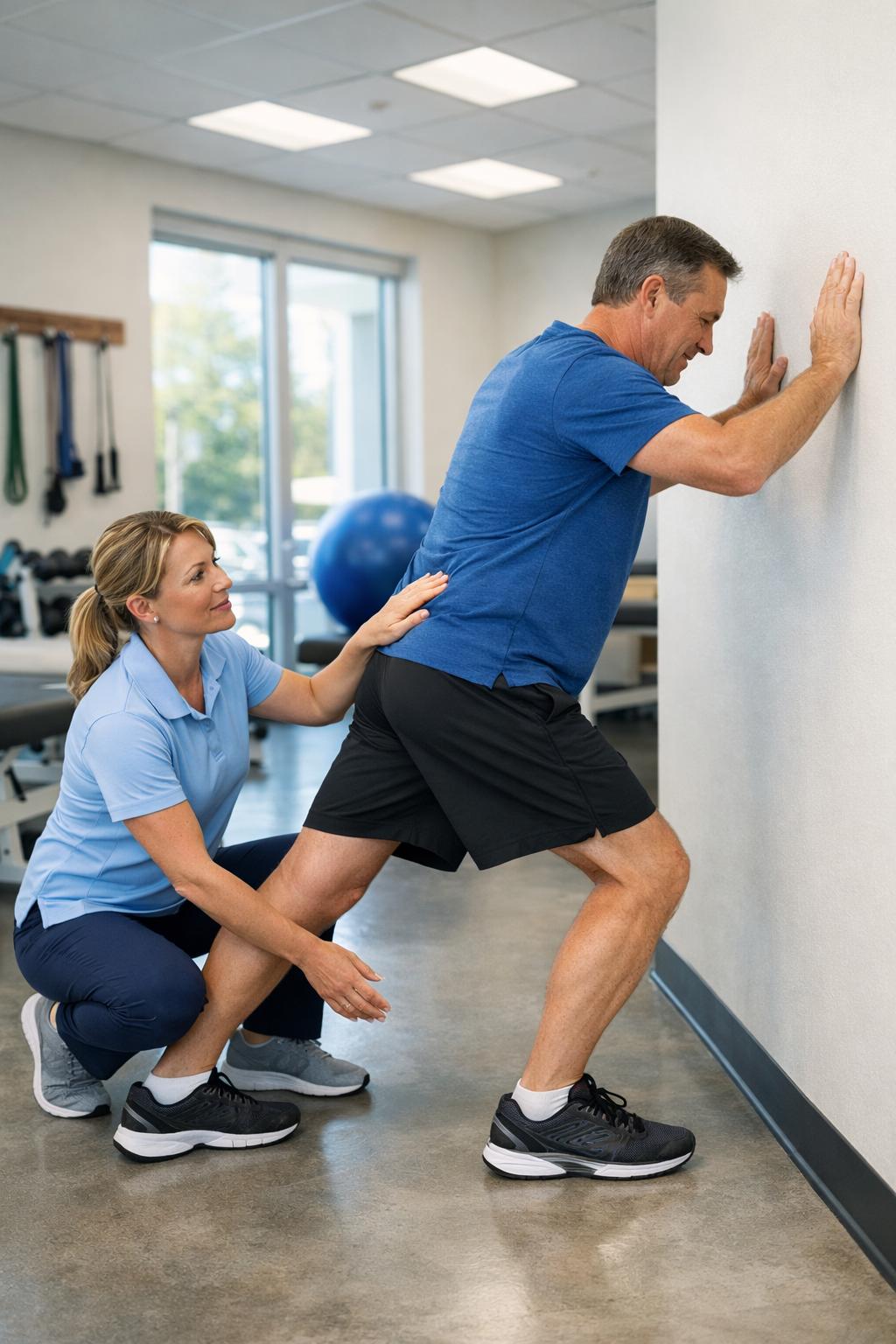
Once acute pain is managed, the program addresses the root mechanical causes. This phase includes:
- Plantar fascia-specific stretching — seated toe-extension stretches performed before the first morning steps, repeated throughout the day for maximum impact
- Calf and Achilles flexibility work — gastrocnemius and soleus stretches restore the ankle dorsiflexion range consistently limited in plantar fasciitis patients; restricted ankles directly increase heel loading with every step
- Intrinsic foot strengthening — towel scrunches, short-foot exercises, and progressive single-leg balance work rebuild the arch-supporting muscles that reduce passive fascial demand
- Eccentric heel loading — slow, controlled heel-drop exercises off a step edge progressively rebuild tensile strength in the fascia and Achilles tendon complex
For Clifton RoadRunners members and other active runners, this phase includes a structured return-to-running progression with specific mileage and surface guidance.
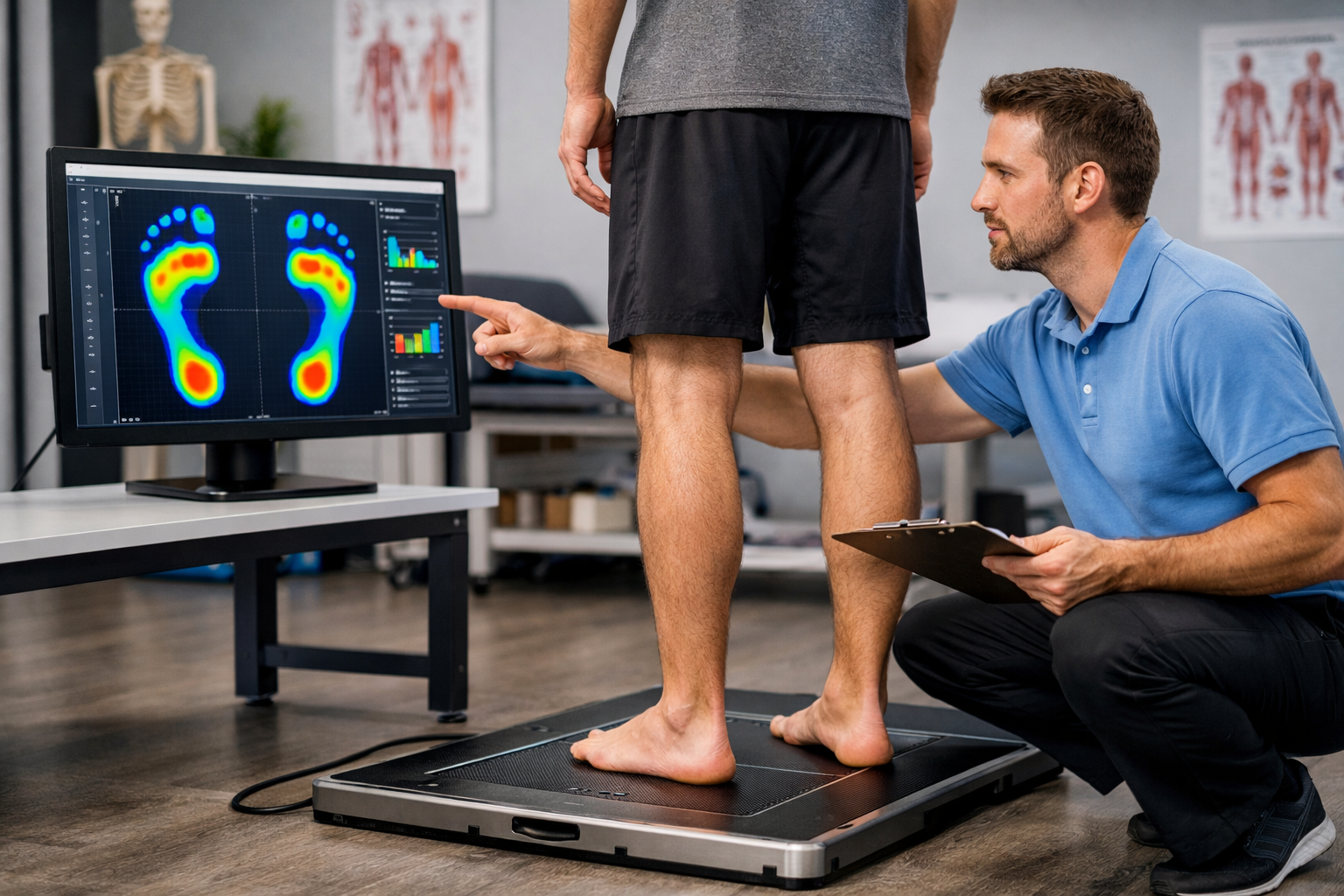
PHASE 3: ADVANCED TECHNOLOGY AND RETURN TO FULL FUNCTION
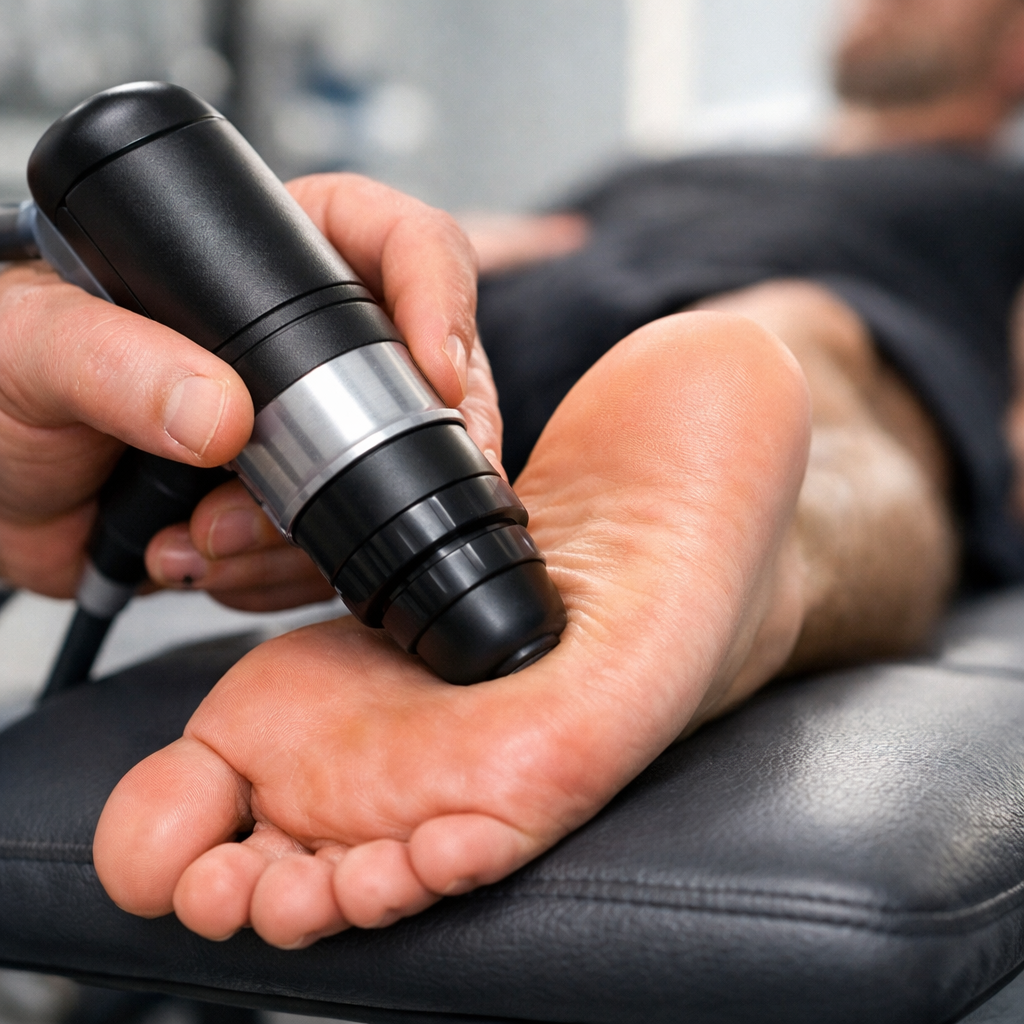
For persistent or chronic plantar fasciitis, Trinity Rehab offers EPAT (Extracorporeal Pulse Activation Technology) shockwave therapy. EPAT delivers acoustic pressure waves into the damaged tissue, stimulating cellular healing mechanisms and blood flow in areas that have become chronically degenerated. The Mayo Clinic endorses extracorporeal shockwave therapy as an effective treatment option for chronic plantar fasciitis.
Dry needling uses thin filament needles to target deep myofascial trigger points in the calf muscles and foot intrinsics — releasing neuromuscular tension that conventional stretching cannot reach.
Your therapist will also conduct a footwear assessment and, where appropriate, recommend custom orthotics to correct overpronation, support flat arches, or redistribute pressure in the foot. Night splints prevent the overnight fascial shortening that causes first-step morning pain.
PREVENTION: STAYING ON YOUR FEET WITHOUT PAYING FOR IT
Preventing recurrence means addressing the patterns that allowed the condition to develop:
- Replace road shoes on a schedule. Running shoe midsoles degrade after 300–500 miles of use. If you run Clifton’s roads or Weasel Brook’s paths regularly, tracking your mileage and replacing shoes accordingly is the easiest single prevention measure.
- Invest in quality work footwear. L3Harris production floor workers, retail employees at Costco and Home Depot, and Clifton hospital staff should treat supportive occupational footwear as protective equipment — not a personal expense.
- Add calf stretches to your pre-run routine. The Clifton RoadRunners group-run warmup is a perfect opportunity to build in plantar fascia and calf stretches before hitting the pavement.
- Follow the 10% rule. Increase weekly training volume by no more than 10% at a time. Most running-related plantar fasciitis traces back to a training spike — a race prep push, a sudden return from injury, or a new fitness resolution in January.
- Cross-train through high-mileage weeks. Cycling, rowing, and swimming maintain cardiovascular fitness while dramatically reducing cumulative fascial load.
WHY CLIFTON PATIENTS CHOOSE TRINITY REHAB
At Trinity Rehab Clifton, your care is never delegated. Every session involves direct, one-on-one time with a licensed physical therapist who knows your history, monitors your progress, and adjusts your plan in real time. That is the standard at every Trinity Rehab location — and it is what consistently produces faster, more complete recoveries compared to high-volume clinics where patients cycle through aides.
Our treatment protocols reflect the American Physical Therapy Association’s clinical practice guidelines and our advanced modalities — EPAT, dry needling, IASTM — place us at the cutting edge of conservative plantar fasciitis care. We accept most major insurance plans and offer scheduling options that work for shift workers, commuters, and student athletes.
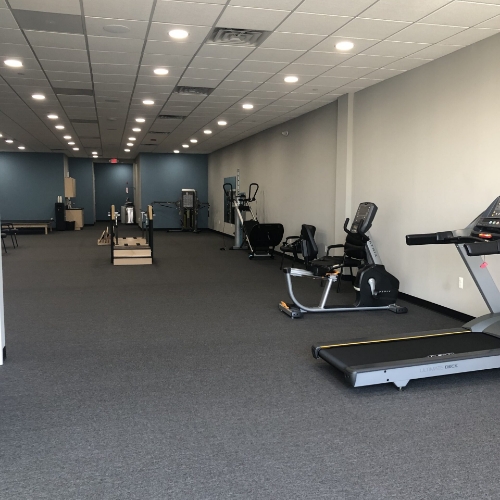
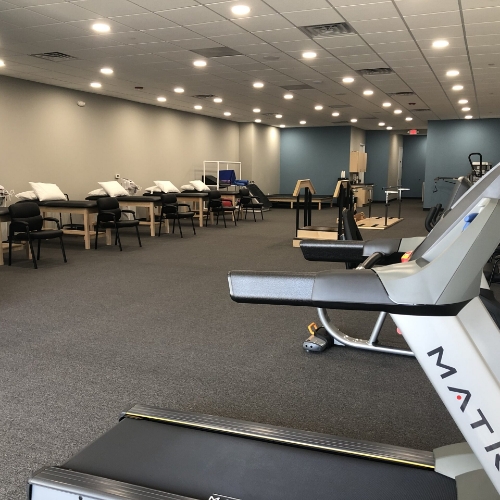
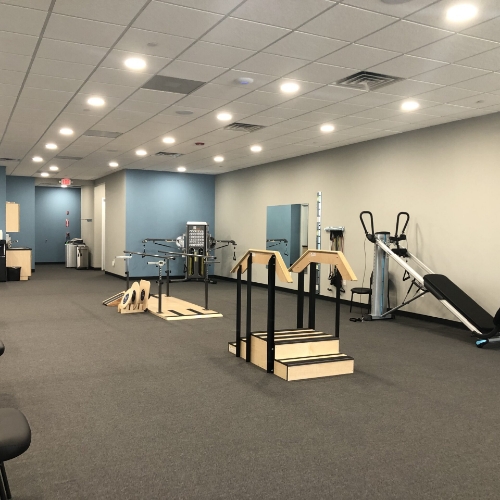
Inside Our Clifton Clinic
FREQUENTLY ASKED QUESTIONS
Where can I get plantar fasciitis treatment in Clifton, NJ?
I run with the Clifton RoadRunners. Will I have to stop running completely?
How is Trinity Rehab different from just doing stretches I found online?
Do I need a referral to start treatment?
How long will treatment take?
CLIFTON’S HEEL PAIN SPECIALISTS ARE READY FOR YOU
You have a city to keep up with, a job to do, a sport to play, a run to complete. Plantar fasciitis should not determine your schedule. Trinity Rehab Clifton is ready to help you recover — completely and permanently.
No referral required. Most insurance accepted.
Sources: Journal of Orthopaedic & Sports Physical Therapy — Heel Pain Clinical Practice Guidelines, 2023 | Mayo Clinic — Plantar Fasciitis | APTA — Clinical Practice Guidelines for Heel Pain | NIH/PMC — Management of Plantar Fasciitis