
Osteoarthritis Physical Therapy in Clark, NJ — Personalized Care for Joint Pain
Clark, New Jersey may be one of Union County’s smaller townships, but it packs in a full suburban life — from the pickleball courts at Esposito Park to the disc golf paths through Oak Ridge Park, the well-kept family homes with their gardens and yards, and the long drives to work that so many Crusaders alumni and Clark commuters know well. When osteoarthritis settles into your knees, hips, or hands, those ordinary parts of life can start to feel like obstacles.
Osteoarthritis is the most common joint disease in the world, affecting more than 32.5 million adults in the United States. In Clark, where roughly 23% of residents are over 65 and the majority of working-age adults spend 30 or more minutes commuting to work each day, the joint stress of an active suburban life adds up. The good news: physical therapy at Trinity Rehab in Clark offers a proven, non-surgical path to meaningful pain relief and restored mobility — and you can start without a doctor’s referral under New Jersey Direct Access laws.
Understanding Osteoarthritis: Why Joints Break Down
Osteoarthritis is a degenerative joint disease — a condition in which the cartilage that cushions your joints gradually breaks down. Cartilage is the smooth, gel-like tissue that lines the ends of your bones, absorbing shock and allowing surfaces to glide effortlessly. When cartilage deteriorates, bones grind against each other, producing the pain, stiffness, swelling, and reduced range of motion that characterize arthritis.
This is not simply “wear and tear” in the passive sense. Osteoarthritis develops when the biological balance between cartilage breakdown and repair shifts — often accelerated by injury, excess joint load, muscle weakness, or genetic factors. Once cartilage is lost, it does not regenerate. But the pain, dysfunction, and progression of the disease can absolutely be treated and managed through targeted physical therapy.
There are currently no proven disease-modifying agents for osteoarthritis. This makes non-surgical management — especially physical therapy, strengthening, and weight management — the most powerful tools available.
Risk Factors Relevant to Clark, NJ
Not everyone develops osteoarthritis at the same rate. Several factors common in Clark accelerate joint breakdown:
Occupational demands: Clark hosts Atlantic Health System’s Clark-North Pavilion, Clark Nursing & Rehabilitation, and major warehousing and distribution employers including Wakefern Food Corp along Walnut Avenue. Healthcare workers and distribution employees spend long hours on hard floors, carrying loads and performing repetitive bending motions — among the most damaging patterns for the knees and hips. Many people who work these jobs carry joint pain for years before seeking treatment.
Commuting posture: With 77% of Clark residents driving to work and average commute times of 30 minutes, many spend significant daily time in seated positions that stiffen the hip flexors, compress the lumbar spine, and weaken the gluteal muscles — all risk factors for hip and knee osteoarthritis progression.
Active recreation: Oak Ridge Park’s trails and Hyatt Hills Golf Course are popular with Clark residents. Walking 18 holes of golf, hiking on uneven terrain, and playing pickleball at Esposito Park all create repetitive joint stress. Over decades, this accumulation contributes meaningfully to cartilage wear — particularly in people with prior knee or hip injuries.
Age and family history: Clark’s higher-than-average rate of residents over 65 (23%) means a significant portion of the community is already in the age range where knee osteoarthritis and hip osteoarthritis become common. A family history of arthritis further increases personal risk.
Prior joint injuries: A torn meniscus, prior fracture involving a joint surface, or any significant ligament injury raises the lifetime risk of post-traumatic osteoarthritis in that joint — sometimes dramatically.
What Osteoarthritis Feels Like Day to Day
Osteoarthritis affects the knees, hips, hands, shoulders, and spine. Patients in Clark often describe a gradual shift in their daily experience:
- Morning stiffness in the knees or hips that improves after 20–30 minutes of movement
- Deep, aching pain in the affected joint during prolonged standing, walking, or yard work
- A grinding or crackling sensation (crepitus) when bending or rotating the joint
- Swelling and warmth around the knee after a round of golf or an afternoon of gardening
- Difficulty with stairs, rising from a low chair, or getting in and out of a car
- Reduced range of motion — the hip that no longer lets you sit cross-legged, or the knee that does not fully straighten
- Joint instability — a feeling of the knee giving way unexpectedly during weight-bearing activities
- Referred ache down the thigh or into the calf from hip osteoarthritis
If these symptoms have been present for several weeks, early intervention with physical therapy consistently produces better outcomes than waiting.
How Trinity Rehab Treats Osteoarthritis in Clark
Manual Therapy: Restoring Joint Flexibility Hands-On
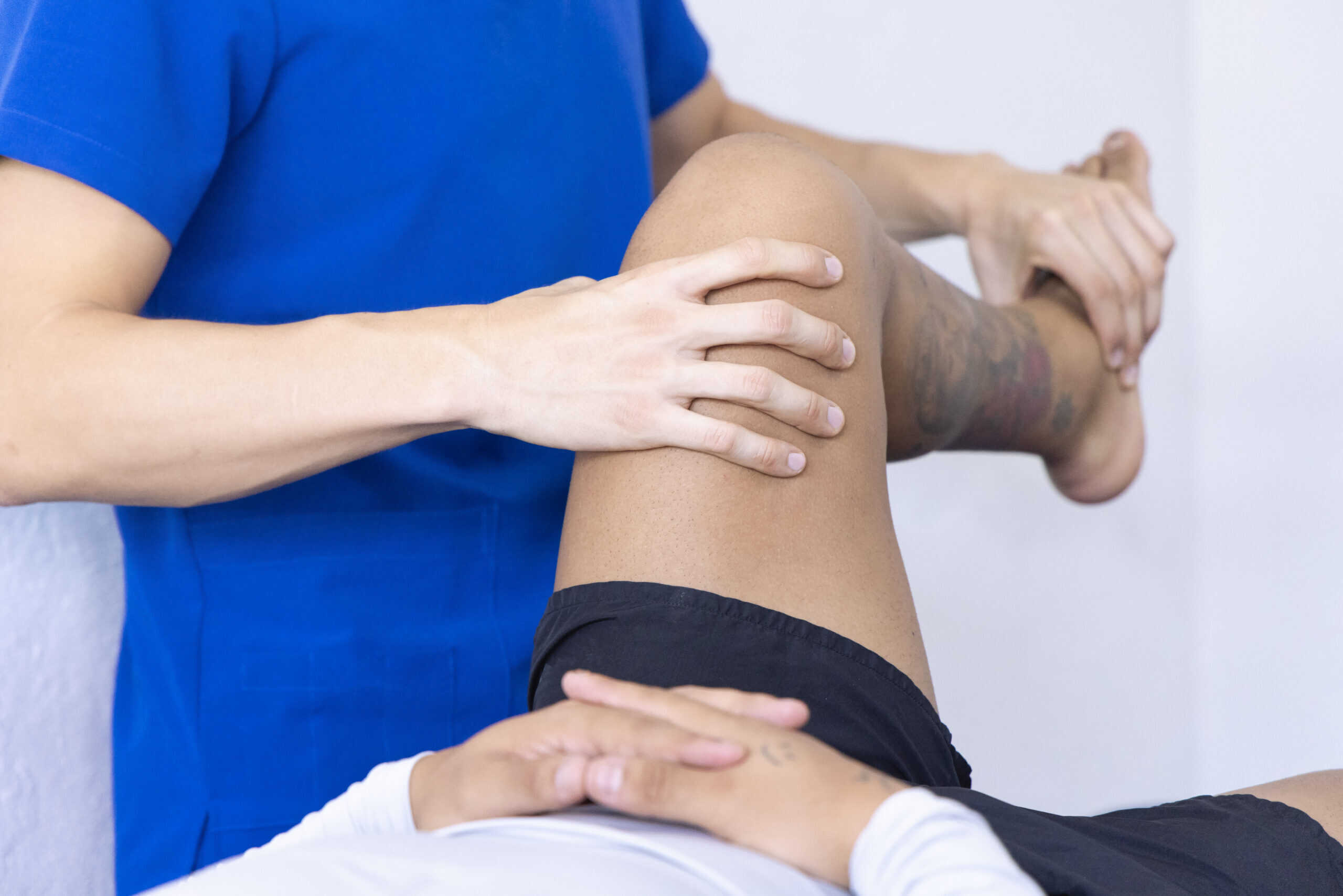
At Trinity Rehab Clark, manual therapy is a cornerstone of every osteoarthritis treatment plan. Your physical therapist applies skilled hands-on techniques directly to the arthritic joint and surrounding soft tissues:
Joint mobilization uses gentle, sustained movements to reduce joint stiffness, restore range of motion, and break the cycle of pain and guarding that arthritis creates. Clinical research confirms that manual joint mobilization significantly reduces osteoarthritis pain and improves functional movement — often noticeably within the first few sessions.
Soft tissue mobilization targets the muscles, tendons, and fascia that tighten protectively around arthritic joints. Releasing this myofascial tension reduces joint compression on the affected joint and allows muscles to function more effectively as shock absorbers.
Neuromuscular re-education corrects the altered movement patterns that develop when chronic joint pain changes how you walk, reach, or turn. Left uncorrected, these compensatory habits transfer destructive loads to adjacent joints and the lumbar spine.
Progressive Strengthening: Your Joints’ Best Defense
Muscle strength is the most modifiable factor in osteoarthritis outcomes. Strong muscles absorb mechanical stress before it reaches cartilage; weak muscles allow that stress to pass directly through to the joint surface.
For knee osteoarthritis — the most prevalent form in active adults — the quadriceps muscle is the primary protector. Research shows that patients with measurably weaker quadriceps have greater pain, faster cartilage loss, and higher rates of surgical intervention. Your therapist builds a progressive quadriceps and hamstring strengthening program alongside hip abductor work, targeting the full kinetic chain. PNF hamstring stretching specifically reduces knee pain and improves joint flexibility.
For hip osteoarthritis, gluteal and core strengthening reduces the forces transmitted to the hip joint during every step, while improving pelvic stability and reducing secondary lower back pain.
For hand and wrist osteoarthritis — common in people who have done years of grip-intensive work or hobbies — targeted grip strengthening and fine motor exercises maintain independence in daily tasks and reduce disability.
Your individualized exercise program is designed around your specific goals — whether that is getting back on the fairways at Hyatt Hills, keeping up with yard work, or playing pickleball with less pain. A home exercise program maintained 3–4 times per week sustains the gains made in clinic.
Advanced Technology: EPAT, Dry Needling, and More
Trinity Rehab offers treatment technology that most standard outpatient clinics do not provide:
EPAT Shockwave Therapy — Extracorporeal Pulse Activation Technology directs acoustic pressure waves to damaged soft tissues surrounding arthritic joints, stimulating collagen production and tissue regeneration. Studies demonstrate 60–80% pain relief for tendinopathies and soft tissue problems commonly associated with osteoarthritis, including patellar tendinopathy and Achilles tendinopathy.
Dry Needling — Chronic osteoarthritis pain triggers the formation of myofascial trigger points in surrounding muscles — tight, hypersensitive knots that cause referred pain and restrict movement. Dry needling targets these points directly, providing relief that stretching and manual therapy alone may not achieve.
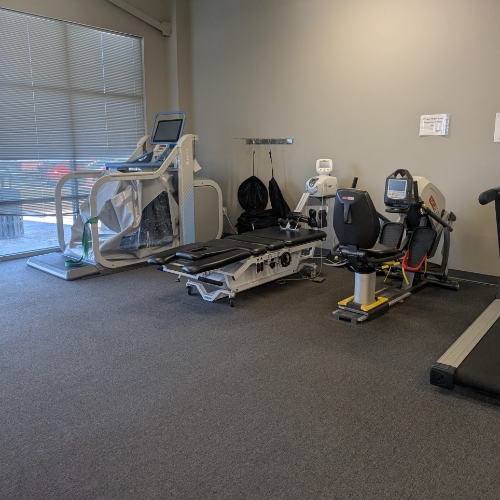
AlterG Anti-Gravity Treadmill — Reduces body weight by up to 80%, allowing patients with severe knee, hip, or ankle osteoarthritis to exercise and walk comfortably. Clinical data shows 20–30% pain reduction and improved aerobic exercise capacity for arthritis patients who use anti-gravity treadmill training.
Transcutaneous electrical nerve stimulation (TENS) — A non-invasive pain management technique that modulates pain signals through the nervous system, useful during the early phases of treatment.
Activity Modification and Pain Management
Part of effective osteoarthritis treatment is learning how to stay active without inflaming already compromised joints. Your Trinity Rehab physical therapist coaches you on:
- Pacing activities throughout the day and incorporating planned rest periods
- Joint protection mechanics during lifting, bending, and repetitive motions at work
- Safe footwear for walking, golf, and yard work
- Using heat and cold strategically to manage pain flare-ups
- When topical NSAIDs or dietary supplements might be worth discussing with your physician (note: clinical evidence for glucosamine and chondroitin remains limited)
- How to incorporate low-impact aerobic exercise — walking, cycling, or pool exercise — into your routine without overloading arthritic joints
Weight management is also addressed as part of every osteoarthritis treatment plan where appropriate. Even a modest reduction in body weight produces measurable reductions in knee pain — and helps reduce pain during daily activities significantly; a 10% decrease in body weight can cut knee osteoarthritis pain by up to 50%.
From Early Arthritis to Post-Surgical Recovery
Trinity Rehab treats patients across the full spectrum of osteoarthritis:
- Early-stage osteoarthritis with morning stiffness and activity-related joint pain — conservative physical therapy is most effective here
- Moderate osteoarthritis with significant pain, range of motion loss, and functional limitations — our combination of manual therapy, strengthening, and advanced technology produces meaningful improvement
- Severe osteoarthritis where joint replacement surgery may eventually be necessary — pre-operative physical therapy improves post-surgical outcomes; post-operative rehabilitation is a Trinity Rehab specialty
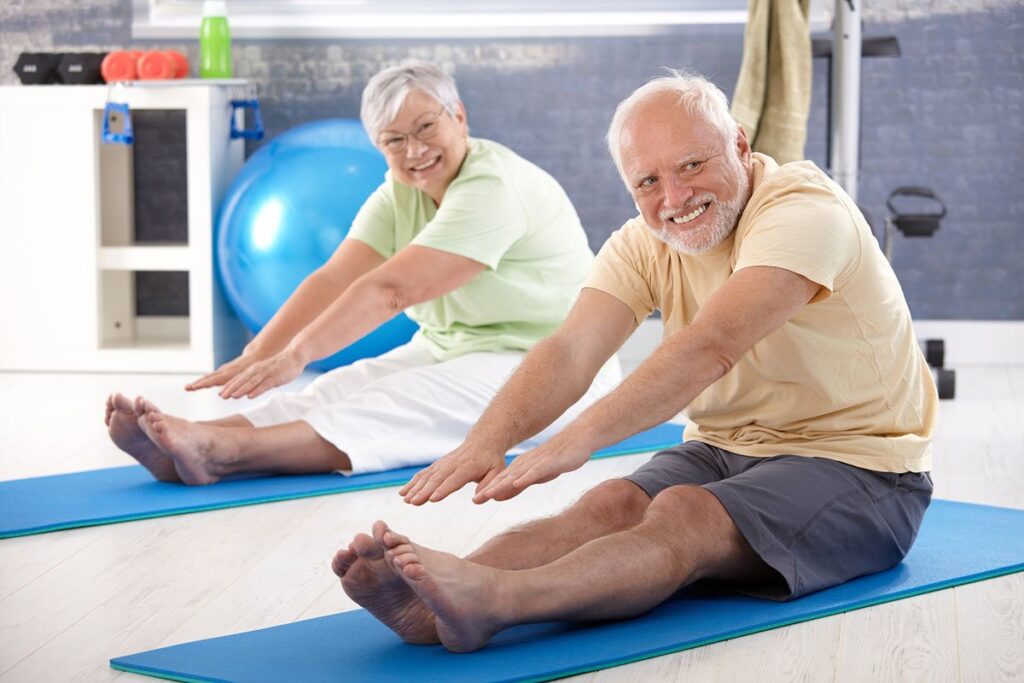
- Geriatric physical therapy for older adults managing multiple health conditions alongside osteoarthritis — our approach integrates fall prevention, balance training, and safe functional exercise
Joint replacement surgery is appropriate for severe osteoarthritis where other treatments have been exhausted. It is not a first-line option, and most patients who commit to physical therapy can significantly delay or avoid surgery entirely.
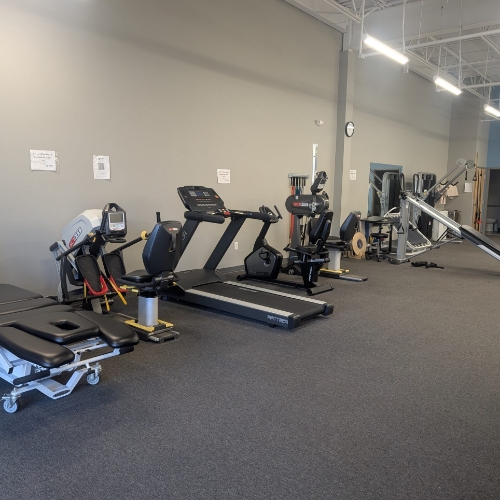
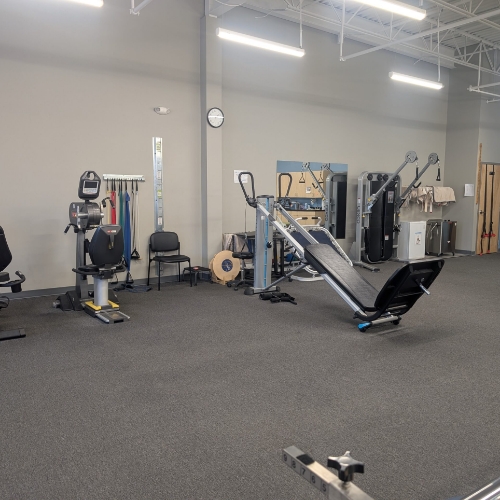
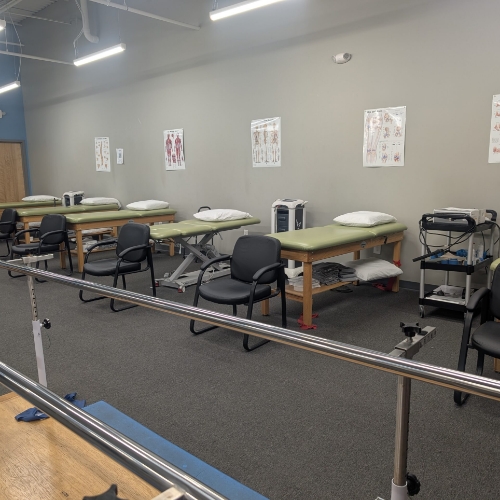
Inside Our Clark Clinic
Related Conditions & Treatments
Osteoarthritis is just one of the many conditions we treat at Trinity Rehab Clark. Explore our full range of conditions we treat or learn more about specific treatment approaches:
Frequently Asked Questions
Do I need a referral to see a physical therapist for osteoarthritis in Clark?
Can physical therapy help knee arthritis before I decide about surgery?
How many sessions will I need?
Is it safe to exercise with osteoarthritis?
Can I be treated for knee osteoarthritis and hip osteoarthritis at the same time?
Getting Back to What Clark Life Looks Like
The disc golf course at Oak Ridge Park, the walk to your car every morning, the pickleball game you have been putting off, the round of golf at Hyatt Hills — these are the textures of your daily life. Osteoarthritis does not have to remove them.
Physical therapy at Trinity Rehab gives you the tools to reduce joint pain, restore your range of motion, and build the strength that protects your joints for the long term. Our physical therapists have helped patients across Union County and throughout New Jersey reclaim their movement from arthritis, back pain, and knee pain.
Book your appointment at Trinity Rehab Clark, NJ →
Same-week appointments available. No referral needed.
Sources: Centers for Disease Control and Prevention. Osteoarthritis. American College of Rheumatology osteoarthritis management guidelines. Fransen M, et al. Exercise for osteoarthritis of the knee. Cochrane Database of Systematic Reviews. 2015.
What Our Patients Say