
Spinal Stenosis Treatment in Clifton, NJ
Clifton pulses with energy — a diverse, hardworking community where people juggle jobs, family, and the daily demands of a busy city. You walk Main Avenue, you’re at Main Memorial Park with family, you’re cheering on the Mustangs at local games. Movement has always been part of who you are. But lately, something has changed. Walking down Main Avenue now triggers pain. A simple trip to the grocery store becomes an exercise in managing discomfort. Your legs feel heavy and weak. Pain radiates from your lower back, growing worse with each step until you have no choice but to sit and wait for relief. If walking, standing, or everyday activities have become increasingly difficult due to pain and heaviness in your lower back and legs, you may have spinal stenosis — a progressive narrowing of the spinal canal that compresses the nerves running through it. This condition affects an estimated 11 percent of the general population and is the most common reason for spinal surgery in adults over 65. The encouraging news: surgery is far from your only option. At Trinity Rehab in Clifton, NJ, our physical therapists help you restore the strength and mobility that stenosis threatens — without surgical intervention.
What Is Spinal Stenosis?
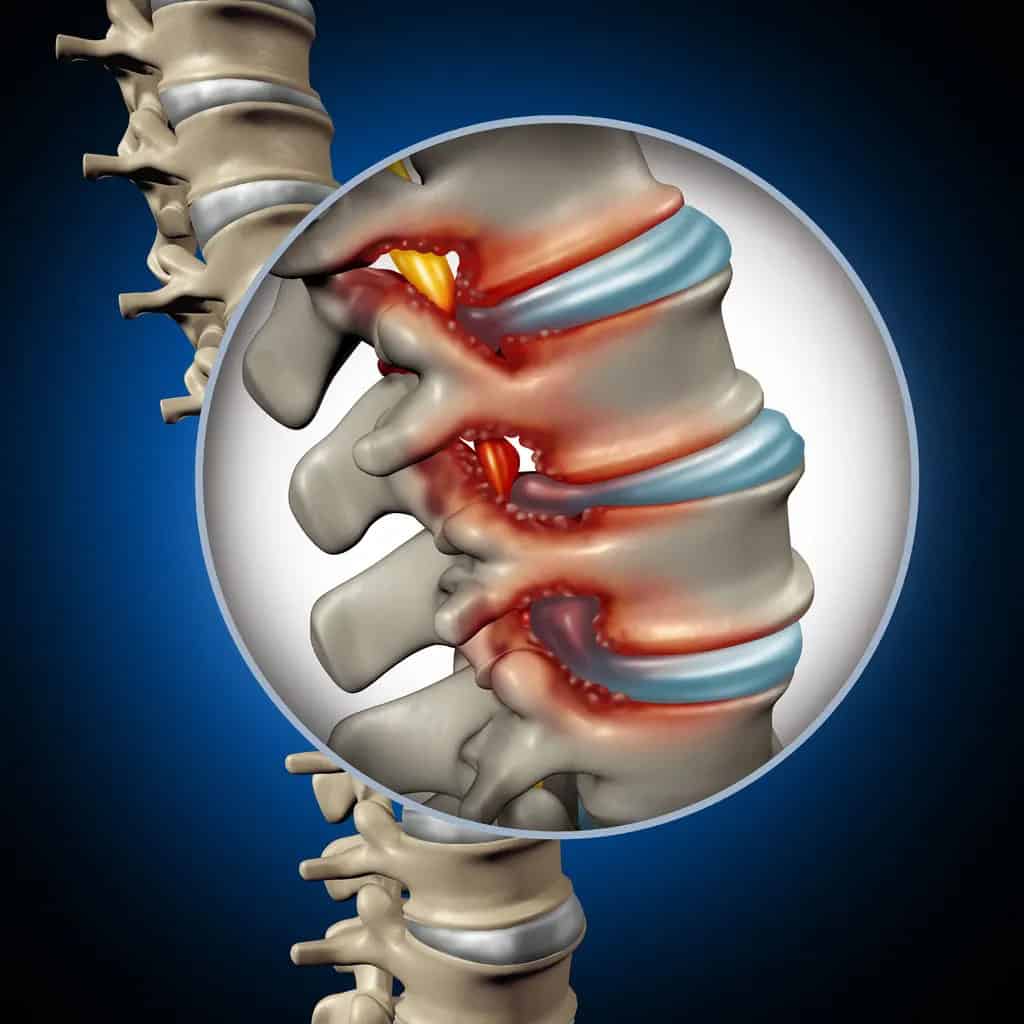
Spinal stenosis occurs when the spinal canal — the hollow channel housing your spinal cord and nerve roots — gradually narrows due to age-related changes in your spine’s structure. Over decades, intervertebral discs lose hydration and height, facet joints thicken with arthritis, and the ligamentum flavum (a stabilizing ligament) can buckle inward. While each of these changes alone might seem minor, together they progressively reduce the available space for your spinal cord and nerve roots. Two primary types affect patients: Lumbar spinal stenosis (lower back) accounts for about 75 percent of cases. The characteristic symptom is neurogenic claudication — pain, numbness, or weakness in the legs and buttocks that worsens with walking and standing but improves when sitting or bending forward. Cervical spinal stenosis (neck) can produce hand weakness, balance problems, and in severe cases, changes in bladder or bowel function requiring immediate medical attention.
Common Causes and Risk Factors in Clifton
Clifton’s industrial heritage and diverse working population means many residents face occupational spine risk:
- Industrial and occupational stress — if you’ve spent years in construction, manufacturing, service work, or other labor-intensive jobs common to the area, your spine has absorbed repetitive stress and heavy loading.
- Age-related degeneration — the primary cause. Cumulative wear on spinal structures over decades accounts for the vast majority of stenosis cases, which is why the condition peaks in adults over 50.
- Previous spinal injury or surgery — trauma from accidents or prior spinal procedures can trigger stenosis development.
- Herniated or bulging discs — when intervertebral discs push outward into the spinal canal, they compress nearby nerve roots and contribute to stenosis.
- Bone spurs (osteophytes) — osteoarthritis and chronic spinal stress stimulate extra bone growth that can extend into the spinal canal.
- Thickened ligaments — the ligamentum flavum can stiffen and buckle inward, particularly in lumbar stenosis cases.
- Genetic predisposition — some people are born with a naturally narrower spinal canal, meaning even minor degenerative changes produce symptoms earlier.
Symptoms to Watch For
Stenosis symptoms develop gradually, and many Clifton residents initially dismiss them as work-related wear or normal aging. Early recognition makes a significant difference in treatment outcomes:
- Neurogenic claudication — aching, heaviness, or cramping in your legs and buttocks that forces you to stop walking, sit, or bend forward for relief. This is the hallmark symptom of lumbar stenosis.
- Radiating pain — pain traveling from your lower back into one or both legs, sometimes extending to your feet and following a specific nerve distribution.
- Numbness or tingling — decreased sensation in your legs, feet, or (in cervical stenosis) hands and arms.
- Weakness — difficulty climbing stairs, lifting the front of your foot (foot drop), or a sensation that your legs may unexpectedly give way.
- Balance problems — particularly with cervical stenosis, increasing unsteadiness or coordination difficulty.
- The "shopping cart sign" — you notice relief when pushing a shopping cart or leaning on a walker because forward flexion opens the spinal canal.
- Difficulty with prolonged standing — standing at work, in line, cooking, or at social events becomes increasingly painful and forces you to sit frequently.
How Trinity Rehab Clifton Treats Spinal Stenosis
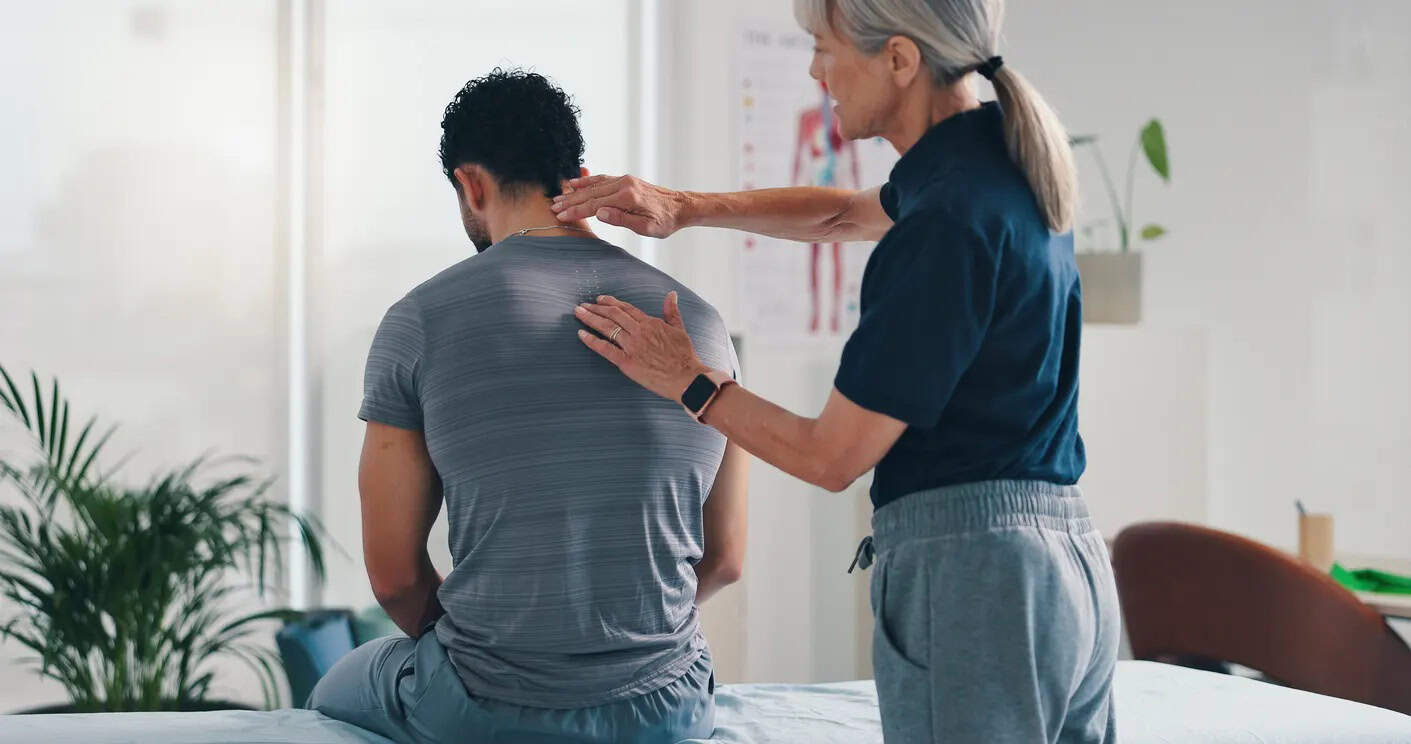
At Trinity Rehab in Clifton, our licensed physical therapists use a proven three-phase, evidence-based approach customized to your specific presentation and goals. You work with the same dedicated therapist throughout your entire treatment, building a relationship based on your individual needs.
Phase 1: Evaluation and Pain Management
Your first visit includes a comprehensive assessment of your spinal mobility, nerve function, strength, balance, and walking patterns. We identify which movements and positions make your symptoms better or worse — information that directly shapes your personalized treatment plan. Initial treatment focuses on reducing pain and inflammation through:
- Manual therapy — skilled hands-on spinal mobilization and soft tissue release to reduce nerve compression and restore segmental mobility.
- Flexion-based positioning — because stenosis symptoms improve with forward bending, we use specific exercises (such as Williams flexion exercises) to open the spinal canal and reduce nerve compression.
- Dry needling — targeted insertion of thin filament needles into myofascial trigger points in your back, glutes, and hip muscles to release muscle guarding and reduce referred pain patterns.
- Modalities as needed — heat, electrical stimulation, or ultrasound to manage acute pain while active treatment builds your foundation.
Phase 2: Core Stabilization and Progressive Strengthening
As pain decreases, we focus on building the muscular support system your spine needs. Research consistently shows that strengthening the deep stabilizing muscles — the multifidus, transversus abdominis, and pelvic floor — significantly improves stenosis outcomes:
- Core stabilization exercises — progressive training of deep spinal stabilizers, beginning with isolated activation and advancing to functional integration in daily activities.
- Hip and gluteal strengthening — these muscles control pelvic alignment and reduce compensatory stress on your lumbar spine. Weakness in these muscles is very common in stenosis patients.
- Aquatic therapy — water-based exercise reduces spinal loading by up to 50 percent, allowing you to exercise with significantly less pain during the transition to land-based work.
- Flexibility training — targeted stretching of hip flexors, hamstrings, and piriformis to address the muscular tightness patterns that commonly accompany stenosis.
Phase 3: Functional Restoration and Return to Life
The ultimate goal is returning you to the activities and roles that matter most:
- Walking endurance training — systematic, progressive increases in walking distance and duration, monitored for symptom response. Many patients who initially managed only one or two blocks progress to walking a mile or more.
- Balance and fall prevention — balance training using varying surfaces and reactive strategies, critical for maintaining safety and independence.
- Activity-specific training — whether your goal is returning to work duties, recreational activities, or keeping up with family, we design exercises that replicate those specific demands.
- EPAT (shockwave therapy) — for patients with concurrent tendinopathy or chronic soft tissue involvement, this technology accelerates tissue healing and reduces persistent pain.
Preventing Spinal Stenosis from Progressing
While some spinal degeneration is inevitable with age, strong evidence shows these habits slow progression and reduce symptom severity:
- Stay active — regular movement, particularly walking, swimming, and cycling, maintains spinal flexibility and muscular support. The worst outcome is prolonged inactivity.
- Maintain a healthy weight — every excess pound adds approximately four pounds of compressive force to your lumbar spine.
- Practice good posture — avoid prolonged extension (standing with exaggerated arch) and maintain neutral spine during daily activities and work tasks.
- Strengthen your core consistently — a structured home exercise program, maintained after formal PT concludes, is one of the strongest predictors of long-term success.
- Modify high-risk activities — learning proper body mechanics for lifting, bending, and carrying reduces the repetitive stress that accelerates degeneration, especially important in labor-intensive work.
- Don’t delay treatment — the earlier you address stenosis symptoms with physical therapy, the better your outcomes and prognosis.
Why Clifton Residents Choose Trinity Rehab
Individualized, one-on-one care. Every session is with your dedicated physical therapist — not passed between aides or assistants. Your therapist knows your history, understands your work demands and personal goals, and adjusts your program based on your response. Evidence-based treatment protocols. Our clinical team stays current with the latest spinal stenosis research, including landmark SPORT trial findings and current clinical practice guidelines. Your treatment reflects what the evidence shows works best. Local and accessible. Located right in Clifton, our clinic eliminates long drives or complex commutes. Most patients are seen within 24-48 hours of calling. We accept Medicare and most major insurance plans. Specialized spine expertise. Our therapists treat spinal stenosis, back pain, sciatica, lumbar disc herniation, and degenerative disc disease every single day. We understand the nuances that separate effective treatment from generic exercise programs.
Getting Back to Your Life
Spinal stenosis doesn’t have to control your future. The tightness in your legs, the shortened walks, the activities you’ve quietly given up — these are symptoms of a treatable condition, not an inevitable consequence of aging or hard work. At Trinity Rehab in Clifton, we’ve helped thousands of patients across Passaic County and beyond regain the strength, mobility, and confidence that stenosis threatened. Our one-on-one approach means your treatment is never generic — it’s built around your body, your work, and your goals.
Your Next Steps
Getting started is simple: 1. Call or request an appointment at Trinity Rehab in Clifton, NJ. 2. Complete your evaluation — most patients are seen within 24-48 hours. 3. Begin your personalized treatment plan — designed by your dedicated physical therapist to address your specific stenosis symptoms and goals. You don’t need to keep adjusting your life around spinal stenosis. Let us help you move forward — confidently, comfortably, and without surgical intervention. Contact Trinity Rehab in Clifton today to schedule your evaluation and reclaim your strength and mobility.
Local Spinal Stenosis Care in Clifton, NJ
For patients in Clifton and nearby communities such as Montclair, Nutley, Passaic, Bloomfield, spinal stenosis care has to fit real routines: busy Passaic County schedules, work shifts, commutes, and stair-heavy routines. Your therapist will connect your symptoms to the daily demands that matter most, including walking tolerance after driving, balance on sidewalks, and leg symptoms that ease with position changes.
Your first visit at Trinity Rehab Clifton includes a review of your symptoms, walking tolerance, posture, balance, hip and core strength, and the positions that ease or worsen leg symptoms. The clinic is located at The Promenade Shoppes at Clifton, 852 NJ-3 Suite 246, Clifton, NJ, 07012.
Call (973) 330-9046 for the Clifton clinic, or use the clinic page for current hours and appointment details.
For directions, parking context, and the best route to the clinic, use Google Maps for Trinity Rehab Clifton.
Spinal stenosis often overlaps with back pain, sciatica, degenerative disc disease, and lumbar disc herniation. Your plan may include mobility work, flexion-biased exercise when appropriate, balance training, core and hip strengthening, walking progression, and education on safer ways to pace activity.
What is the best treatment for spinal stenosis?
Can physical therapy make spinal stenosis worse?
How long does physical therapy take?
What exercises should I avoid?
Is walking good for spinal stenosis?
Can I return to my job?
Does Medicare cover physical therapy for stenosis?
Clifton Spine Rehab For Standing, Walking, And Balance Confidence
Spinal stenosis symptoms often show up as standing or walking limits, leg heaviness, balance concerns, or a need to sit frequently. Clifton rehab should be built around the specific activities you need to tolerate.
Your evaluation may include posture, hip mobility, leg strength, balance, walking tolerance, and symptom response to bending or standing. The plan should progress carefully and flag symptoms that need medical review.
Related spine options include sciatica treatment, back pain physical therapy, and the Clifton physical therapy clinic page.
Related Spine Care At This Location
Spinal stenosis symptoms may overlap with other spine and disc-related problems. Your therapist may also review: