

Golfer’s Elbow Treatment in Warren, NJ | Trinity Rehab
Warren: Where Executives and Golf Merge—When Elbow Pain Threatens Your Lifestyle
Warren sits in the heart of Somerset County, an affluent community of roughly 16,000 residents nestled in the Watchung Mountains. The terrain defines the character: beautiful, upscale, and filled with successful professionals who have built lives around golf, fitness, and professional achievement. With Warrenbrook Golf Club nearby and numerous executive offices and corporate headquarters located along the I-78 corridor, Warren residents tend to be accomplished, ambitious, and active.
Golfer’s elbow (medial epicondylitis) arrives quietly and often unexpectedly. Whether you’re a regular at Warrenbrook, a Chubb Insurance executive or other corporate professional working in Warren’s thriving business corridor, or someone with the means and motivation to stay active, that burning pain on the inside of your elbow can disrupt the carefully balanced life you’ve built.
For Warren residents, Trinity Rehab offers expert care designed for professionals who expect excellence from their healthcare.

Understanding Golfer’s Elbow: The Anatomy of Medial Epicondylitis
Golfer’s elbow is a condition affecting the flexor-pronator muscle group—a collection of muscles and tendons that attach to the medial epicondyle on the inside of your elbow. These structures are responsible for gripping, flexing your wrist, and rotating your forearm. When you use these actions repeatedly without adequate recovery, microscopic tears develop in the tendons.
Medial epicondylitis develops gradually, not from a single injury but from cumulative stress. Here’s how it typically progresses:
Weeks 1-3: Mild discomfort after certain activities—perhaps after a round at Warrenbrook, a day of intense work, or after pushing hard at the gym. Easy to dismiss. You continue normally.
Weeks 4-8: Discomfort becomes more regular. It might hurt in the morning, worsen throughout the day, or appear predictably after specific activities. You start noticing that golf is creating pain, or that your work is becoming uncomfortable.
Weeks 9+: Pain becomes persistent and functional. Your grip is noticeably weaker. Activities you’ve always enjoyed are now limited. You’re starting to modify your life around the pain.
Months 3+: If untreated, golfer’s elbow becomes truly chronic. Pain might be constant. You’ve significantly curtailed your activities to avoid pain.
What you’ll experience:
- Sharp, aching pain on the inside of the elbow
- Weakness in grip strength and forearm control
- Pain worsening with gripping, twisting, or rotational movements
- Stiffness in the elbow and forearm
- Numbness or tingling radiating into the wrist and hand
- Pain that interferes with your sleep or your ability to perform your professional duties
The medical reality: Rest alone rarely resolves golfer’s elbow. Once inflammation is established, active rehabilitation is necessary.
Who Develops Golfer’s Elbow in Warren: Executive Culture and Professional Demands
Warren’s character—affluent, professional, golf-oriented—creates specific populations at elevated risk for medial epicondylitis:
Warrenbrook Golfers and Club Members With Warrenbrook Golf Club as a centerpiece of Warren social and recreational life, many residents play regularly—multiple times weekly or year-round. The repetitive swing motion, grip pressure, and force transfer through the forearm makes any regular golfer vulnerable to golfer’s elbow. For Warren residents, golf isn’t casual recreation; it’s a significant part of social and business life.
Corporate Executives and Professional Services Warren is home to numerous corporate headquarters and professional services firms along the I-78 corridor. These executives and professionals spend their days handling complex work, managing people, attending meetings, and working at computers. The combination of high-stress professional demands, keyboard work, mouse usage, and sustained grip tension creates perfect conditions for medial epicondylitis.
Chubb Insurance and Corporate Workers Chubb Insurance and other major corporate offices employ many Warren residents. Office work at this level involves computer time, detailed tasks, and the mental stress that creates physical tension—all contributing to forearm strain.
Professional Service Providers Warren has many professionals—lawyers, consultants, financial advisors, healthcare professionals—whose work involves both computer work and client interaction. The dual demands create multiple risk factors for golfer’s elbow.
Fitness-Focused Population Warren residents tend to be health-conscious and fitness-oriented. Regular gym attendance, fitness classes, and recreational sports create additional cumulative demand on the flexor tendons—especially combined with professional and golf activities.
Age and Career Stage Many Warren residents are in their 40s, 50s, and 60s—established professionals in the prime earning and activity years. This age range faces higher risk for tendinopathy as tissue quality changes with age while activity demands remain high.
Cumulative Lifestyle Demands Perhaps uniquely, Warren residents often balance multiple demands: demanding corporate careers, regular golf at Warrenbrook, fitness routines, and active home and family life. This cumulative demand throughout the week creates perfect conditions for overuse injury.
Commuting Pattern While many Warren residents work locally along the I-78 corridor, some commute to larger employment centers. The daily commute adds hours of steering wheel gripping—low-level but consistent forearm strain.
The profile of a Warren resident at risk: someone accomplished and successful, who balances a demanding career with golf and fitness, who expects their body to keep up with their ambitions—and who might not initially recognize how cumulative stress manifests as injury.
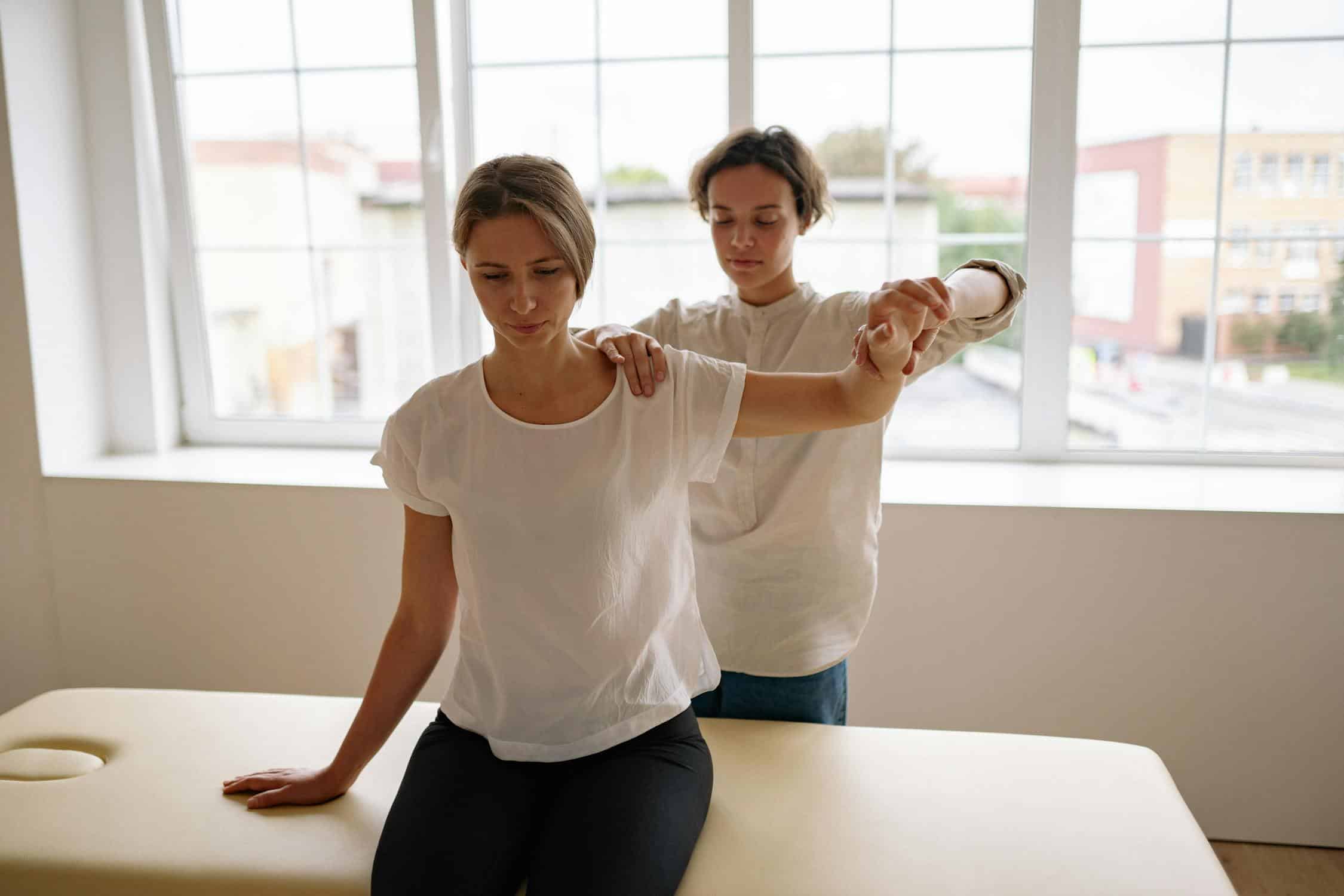
How Trinity Rehab Warren Treats Golfer’s Elbow
At Trinity Rehab, we understand that Warren residents expect sophisticated, personalized healthcare. We treat golfer’s elbow with a comprehensive approach designed to restore complete function and get you back to your life.
Thorough Initial Assessment Your first appointment is detailed and comprehensive. We’ll examine your elbow, test strength and range of motion, understand your pain patterns, and conduct an in-depth interview about your professional demands, your golf goals, your fitness routine, and your lifestyle. This assessment shapes your entire treatment strategy.
Three-Phase Treatment Plan
Phase 1: Inflammation Control and Pain Relief Early treatment focuses on reducing inflammation and pain so you can function without fear of aggravation. We use:
- Manual therapy to address muscle tension and restore mobility
- Dry needling to release trigger points and stimulate healing
- Activity modification strategies so you can continue working and golfing while healing
- Patient education on protecting your elbow during professional and personal activities
*Phase 2: Progressive Strength and Resilience** Once acute pain is controlled, we rebuild the strength of the damaged tendons. This is where most patients see their most dramatic progress:
- Progressive grip strengthening exercises
- Eccentric exercises (particularly effective for tendon healing)
- Wrist and forearm mobility work
- Functional exercises that prepare you for returning to golf, fitness, and professional demands
Phase 3: Return to Full Activity By this phase, your elbow is strong and ready. We’ll progress you back to Warrenbrook golf, full professional capacity, your fitness routine, or whatever matters most—with proper technique and prevention strategies.
Advanced Treatment Options For cases not responding adequately to conventional care, Trinity Rehab offers EPAT (Extracorporeal Pulse Activation Technology). This non-invasive treatment uses acoustic waves to stimulate healing in stubborn tendons—valuable for chronic cases or for patients wanting to avoid surgery.
One-on-One, Executive-Level Care You work directly with your therapist in personalized sessions. Your therapist understands your professional demands and your athletic goals, adjusts your plan based on your specific progress, and ensures you’re getting results.
What to Expect During Your Treatment
Here’s the realistic timeline for recovering from golfer’s elbow:
Weeks 1-2: Foundation Setting You’ll attend 2-3 sessions per week. Pain management begins immediately. You’ll learn activity modifications and understand what makes your pain worse. You might feel frustrated by initial limitations, but this critical phase prevents your injury from becoming chronic.
Weeks 3-6: Early Strengthening Wins Pain decreases noticeably. Light strengthening exercises begin. Grip strength improves. Activities that caused sharp pain become tolerable. You’re building confidence.
Weeks 7-12: Progressive Challenge Exercises increase in intensity. Activities expand. You feel noticeably stronger and more capable. Many Warren professionals feel “almost back to normal” during this phase, but we’re building durability.
Weeks 13+: Full Return This phase is customized to your goals. If Warrenbrook golf is your priority, you’ll return to regular play. If professional peak performance matters most, we’ll ensure you can handle your career demands at full intensity. If fitness is your focus, we’ll restore athletic capability.
Overall Timeline: Most cases resolve in 8-14 weeks of consistent physical therapy, depending on how long you’ve had the injury and how closely you follow your home exercise program.
Prevention Tips for Warren Professionals
Once recovered, preventing golfer’s elbow recurrence is essential. Here’s how to protect yourself:
For the Golfer
- Get a swing analysis at Warrenbrook to ensure your technique isn’t creating excessive strain
- Warm up properly before play—at least 10 minutes of movement and stretching
- Strengthen your grip and forearm during off-season
- Let your technique create power, not arm strength alone
- Consider equipment modifications (lighter clubs, modified grip) if prone to elbow issues
For the Corporate Professional
- Optimize your workstation: monitor at eye level, keyboard at elbow height, mouse close to your body
- Take movement breaks every 60 minutes—stand, stretch, walk
- Be aware of grip tension; your keyboard and mouse don’t need excessive pressure
- Consider ergonomic equipment if your job demands extensive computer work
- Address stress management; work stress contributes to muscle tension
For the Active Executive
- Include forearm and wrist strengthening in your fitness routine
- Perform eccentric exercises regularly—these are particularly effective for preventing tendon injury
- Warm up properly before all activities, including golf and fitness
- Progressive loading is essential; gradual intensity increases are safer than sudden jumps
- Don’t neglect flexibility work; tight muscles increase injury risk
General Prevention Strategies
- Stay aware of how you’re gripping things (steering wheel, pens, golf clubs, weights)
- Stretch your forearm flexors daily, especially after activities that stress the tendons
- Maintain overall fitness and strength; healthy muscles recover faster
- Address minor pain early through activity modification rather than pushing through
- Prioritize sleep; tissue repair happens during recovery

Related Conditions & Treatments
Golfer’s elbow often accompanies or overlaps with other conditions. Trinity Rehab treats a wide range of musculoskeletal conditions:
Related Elbow Care At This Location
Elbow pain patterns can overlap depending on grip, lifting, racquet sports, work tasks, and tendon load. A related same-location page is:
Frequently Asked Questions About Golfer’s Elbow in Warren
Will I have to give up golf at Warrenbrook while recovering?
I have a demanding corporate role. Can I continue working?
I've had this pain for six months. Can physical therapy still help?
What makes Trinity Rehab different from just modifying my activities and hoping for recovery?
Can I continue my fitness routine while being treated?
Get Back to Your Warren Life
Your golfer’s elbow doesn’t have to limit your professional success, your golf game at Warrenbrook, or your fitness pursuits. Trinity Rehab is here to help you recover completely and get back to the life you’ve built.
Ready to start your recovery?
Contact Trinity Rehab’s Warren location to schedule your evaluation. Our team will assess your condition, explain what’s happening in your elbow, and create a personalized treatment plan designed for your professional demands and personal goals.
You don’t have to live with this pain. Get back to your best. Book Your Appointment Today
Visit Trinity Rehab in Warren
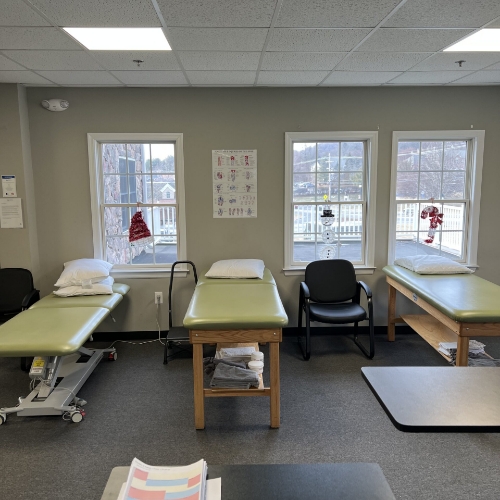
Our Warren clinic is conveniently located at 9 Mt Bethel Rd, Warren, NJ 07059. Call us at (908) 350-6050 to schedule your golfer’s elbow evaluation today.