

Golfer’s Elbow Treatment in Doylestown, PA | Trinity Rehab
Historic Bucks County Living: When Heritage Meets Physical Demands
Doylestown is Bucks County’s crown jewel—a charming historic borough steeped in colonial heritage and contemporary vitality. Walk down State Street and you’ll pass the Michener Art Museum, Fonthill Castle’s fascinating architecture, and boutique shops that attract visitors from across the region. Central Bucks High School (home of the Patriots) represents the excellent public schools that draw families to the area.
Doylestown Country Club and the surrounding Bucks County golf courses attract dedicated golfers who treat their game with the same attention to detail they apply to their careers and lives. The borough is home to young professionals, established families, and retirees who’ve relocated from busier areas seeking Doylestown’s blend of small-town charm and suburban amenities.
But beneath the picturesque surface, Doylestown residents live ambitious lives. They commute to Philadelphia and New York for work, manage thriving businesses, pursue professional goals, and pursue active recreation. And that intensity takes a toll. When repetitive stress accumulates in the tendons of your inner elbow—a condition called medial epicondylitis, or golfer’s elbow—it forces you to confront the physical cost of your active lifestyle.
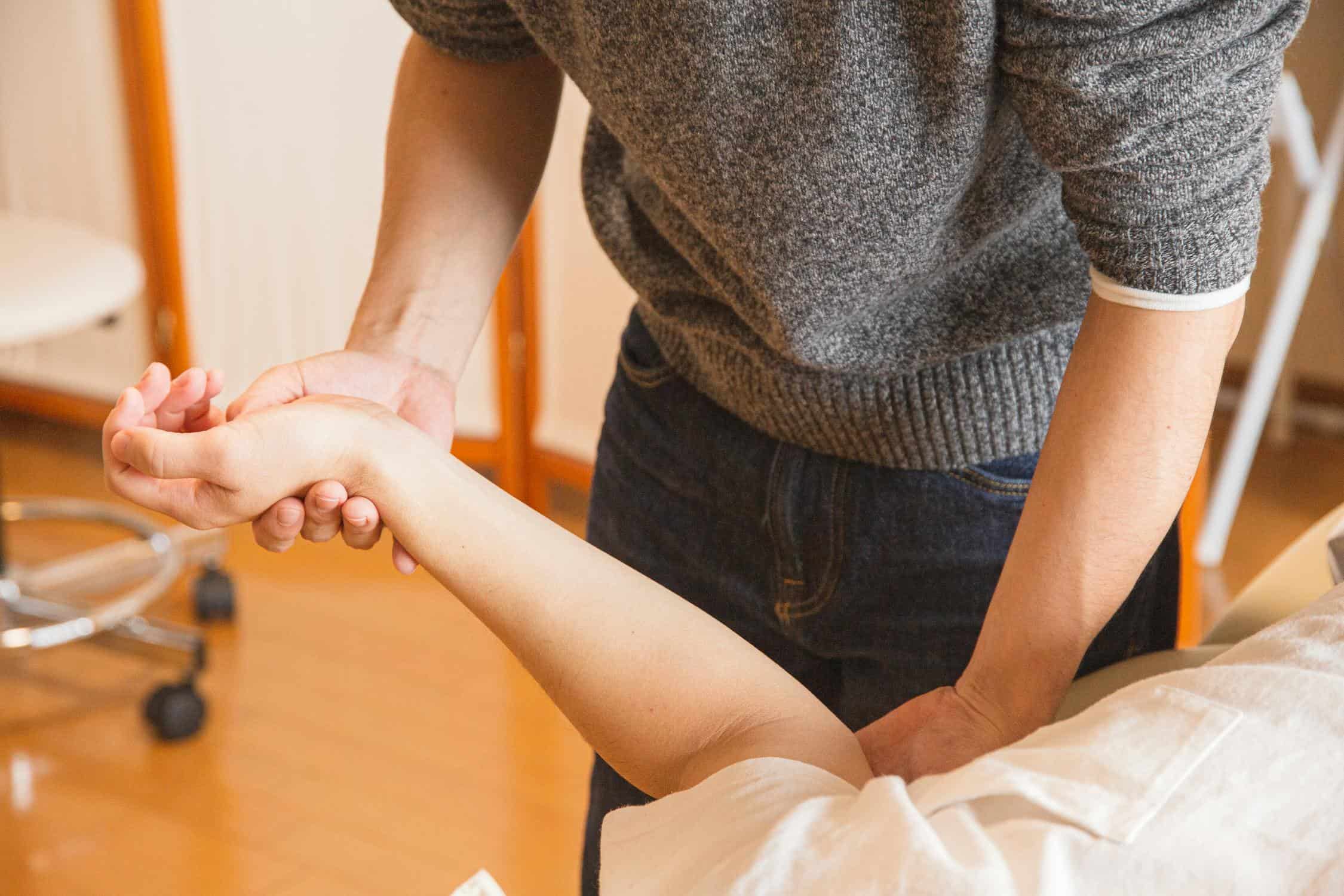
Understanding Golfer’s Elbow: When Repetition Becomes Injury
Golfer’s elbow is an overuse injury affecting the flexor-pronator muscles on the inside of your elbow. These muscles attach to the medial epicondyle, a bony prominence on the inner elbow joint. Whether you’re swinging a golf club at Doylestown Country Club, typing at your desk during a 12-hour workday, or renovating your historic home, these muscles and their tendons handle the load.
The injury develops insidiously. Repetitive stress causes microscopic tears in the tendon fibers. Your body initiates healing, but if stress continues without adequate rest, inflammation builds. Over weeks or months, what began as minor discomfort becomes persistent pain that interferes with your golf game, your work, and your life.
The symptoms of medial epicondylitis include:
- Pain on the inner side of your elbow, worsening with gripping, bending your wrist, or rotating your forearm
- Weakness in your grip, making tools or golf clubs feel heavy and difficult to control
- Stiffness in your forearm, especially noticeable in the morning or after periods of inactivity
- Tenderness when you press on the inner bump of your elbow
- Radiating discomfort that may extend down your forearm toward your pinky
- Numbness or tingling in your ring and pinky fingers (if nerve involvement develops)
For Doylestown golfers, the first sign often appears during a round at the country club: your swing feels off, your grip feels weak. For professionals, it might be difficulty holding a pen or gripping a mouse after hours of work. For homeowners, it emerges during or after a weekend project renovating their historic property.
Who’s at Risk in Doylestown: Ambitious Professionals, Dedicated Golfers, and Active Homeowners
Doylestown’s demographic profile creates distinct risk factors for golfer’s elbow. The borough attracts ambitious professionals who commute to demanding jobs in Philadelphia and beyond. These professionals spend hours at computers, in meetings, and managing projects that demand intense focus and repetitive keyboard use. The long commute, combined with demanding work, leaves little time for proper recovery.
Many Doylestown residents are entrepreneurs and small business owners. They’re not just working jobs; they’re building enterprises. That often means 10–12 hour days, constant email and communication, and rarely taking genuine breaks. The cumulative stress on their forearms and elbows builds gradually.
Doylestown Country Club and the surrounding courses attract serious recreational golfers who play multiple times weekly. Many are competitive, working to lower their handicaps. That commitment translates to both rounds and practice sessions—thousands of repetitions of the golf swing weekly. The pursuit of technique improvement means practice ranges and lessons in addition to competitive rounds.
The borough also has a large active-adult population. People in their 50s, 60s, and beyond have retired here or chosen it as a home base. They’re more active than previous generations: playing golf, engaging in home improvement, traveling, volunteering. Their enthusiasm is admirable, but aging tendons recover more slowly from microtrauma, making them vulnerable to overuse injuries.
Home renovation and improvement are significant factors in Doylestown. Many residents have purchased historic or older homes with character and potential. Those homes constantly demand attention: maintenance, renovation, restoration. Projects that span months or years involve repetitive gripping, lifting, and tool use. DIY culture means residents are doing the work themselves rather than hiring contractors.
Doylestown’s cultural activities—the art museum, galleries, performances—attract people who sit for long periods in poor ergonomic positions, increasing static forearm tension. Even seemingly sedentary activities contribute to tendon stress through sustained postural tension.
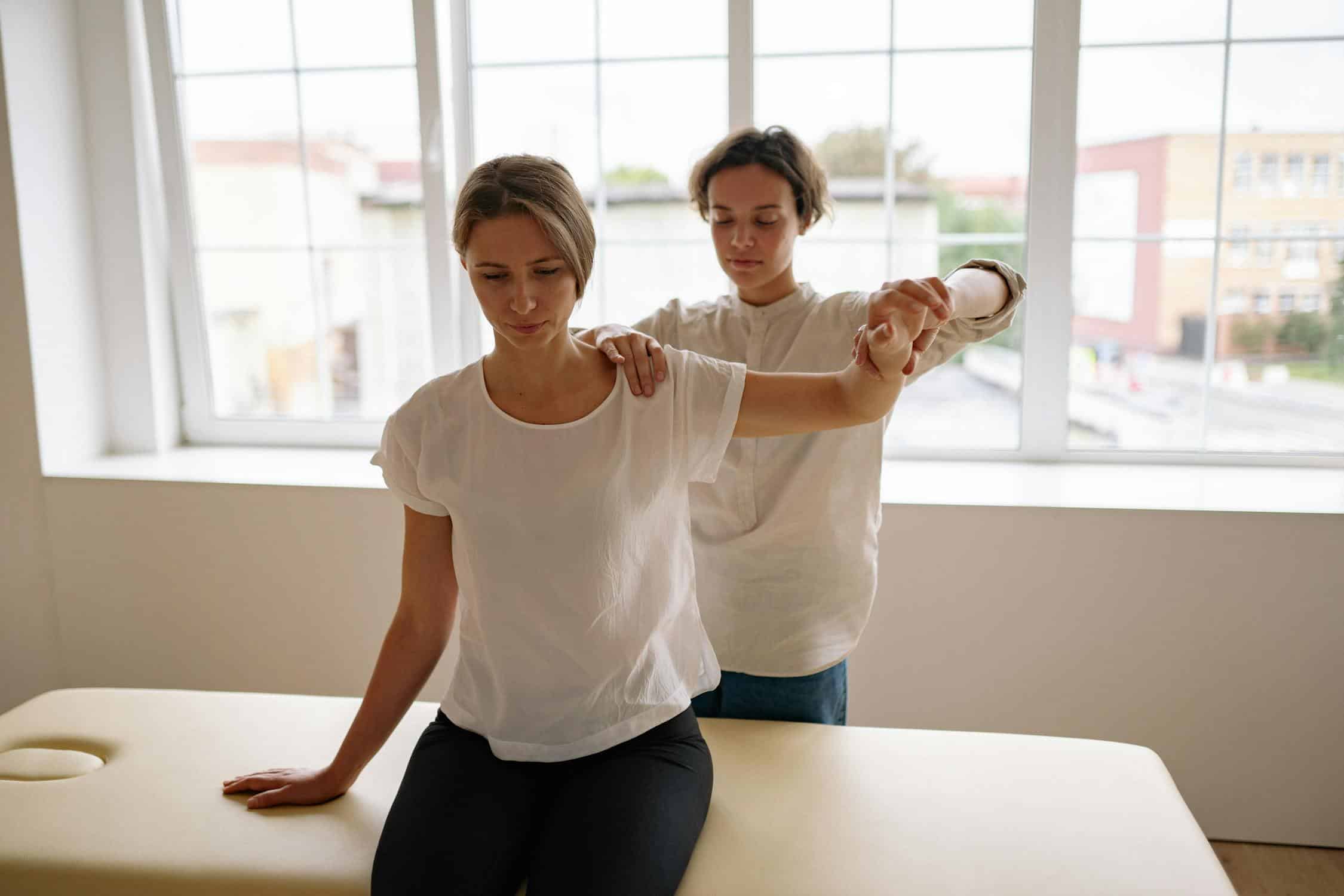
How Trinity Rehab in Doylestown Treats Golfer’s Elbow
When you come to Trinity Rehab for golfer’s elbow treatment, we approach your care with the same attention to detail you apply to your professional and recreational pursuits. We take time to understand your specific situation: Are you a golfer pursuing your swing? A professional managing demanding work? Someone renovating a historic home? Your circumstances shape your treatment plan.
Your journey begins with a comprehensive evaluation. We assess your range of motion, grip strength, pain patterns, and movement mechanics. We perform specific tests to understand which motions trigger pain and whether nerve involvement has developed. We ask detailed questions about your profession, hobbies, and what activities matter most to you.
From there, we develop a personalized three-phase treatment plan:
Phase 1: Reduce Pain and Protect the Injury (Weeks 1–2) — Early treatment protects the damaged tendon and reduces inflammation. Ice therapy, activity modification, ergonomic adjustments, and possible bracing all play roles. Manual therapy techniques—soft tissue mobilization, muscle energy methods, and joint mobilization—reduce tension in your forearm that’s compensating for the injured area. Gentle range-of-motion exercises maintain mobility without aggravating the tendon.
Phase 2: Rebuild Strength Progressively (Weeks 3–6) — As inflammation decreases, we introduce controlled resistance exercises targeting the flexor and pronator muscles. These exercises progress gradually in intensity and difficulty. For golfers, we incorporate swing mechanics and golf-specific movements. For professionals, we address postural issues and workplace ergonomics. For homeowners, we prepare your tendons for tool use and heavy lifting. Dry needling may be added to address scar tissue and muscle trigger points. Manual therapy continues as needed.
Phase 3: Return to Full Activity (Weeks 6–8 and Beyond) — We progressively increase activity demands. Golfers gradually return to full rounds and unlimited practice. Professionals resume normal work capacity without pain. Homeowners confidently return to their projects.
For cases that don’t respond fully to conventional treatment, EPAT is available. This advanced therapy uses acoustic waves to stimulate healing in resistant tendons. Many Doylestown patients with chronic golfer’s elbow have found significant relief through EPAT, enabling them to return to their hobbies and professions.
What to Expect During Your Treatment
Trinity Rehab provides one-on-one physical therapy. Your sessions are 45–60 minutes with a licensed physical therapist dedicated entirely to your care.
Your first visit is thorough. We assess your movement, test your strength and pain patterns, and take a detailed medical and activity history. We explain the anatomy of your injury and why you’re experiencing your symptoms.
Over the following weeks:
- Manual therapy: Hands-on techniques that reduce pain and improve mobility
- Active-assisted exercises: Guided movements that safely rebuild strength
- Resistance training: Progressive strengthening with resistance bands, light weights, or functional movements
- Functional training: Sport or activity-specific movements that prepare you for real-world demands
- Home exercise program: Customized exercises you perform between visits
Most patients see meaningful improvement within 3–4 weeks and return to full activity within 6–8 weeks. Your timeline depends on injury severity, your age, and how consistently you follow your home program.
Prevention Strategies for Doylestown Residents
Preventing golfer’s elbow is far easier than recovering from it. Here’s how to protect your elbows:
For Golfers at Doylestown Country Club:
- Warm up thoroughly before every round and practice session. Ten minutes of arm circles, wrist movements, and light swings prepare your muscles.
- Invest in professional instruction. Many amateur golfers use mechanics that overload their forearms. PGA instruction can identify and correct problematic patterns.
- Practice progressively. Don’t suddenly increase your swing volume. Build up gradually over weeks.
- Strengthen your core and rotational muscles. A strong core reduces the load on your arms and elbows.
- Ensure your equipment fits you properly. Clubs that don’t match your swing characteristics force your muscles to work harder. Grips should fit your hand size.
For Professionals with Demanding Careers:
- Optimize your workspace ergonomics. Your monitor should be at eye level, your desk and chair should support 90-degree elbows, and your wrists should be neutral while typing.
- Take regular breaks. Every 45–60 minutes, step away from your work and stretch your forearms.
- Strengthen your forearms proactively. Daily wrist curls and reverse wrist curls build the muscular endurance that prevents injury.
- Address your commute ergonomics. Adjust your car seat and steering wheel so your arms and shoulders are in neutral positions.
- Practice stress management. Mental stress increases muscle tension, which can contribute to overuse injuries.
For Homeowners and DIY Enthusiasts:
- Use quality, ergonomic tools with padded handles. Invest in tools designed to reduce strain.
- Plan your projects with rest in mind. Pace yourself over weeks rather than pushing intensely over a few days.
- Strengthen your forearms and core before beginning intensive projects. Strong muscles protect against injury.
- Take breaks during projects. Every 45–60 minutes, stop and rest your hands and forearms.
- Stretch daily. Tight forearm muscles are more prone to injury.
For Everyone in Doylestown:
- Perform daily forearm stretching. Spend 5 minutes daily on flexor and pronator stretches.
- Maintain proper posture. Poor shoulder and spine positioning forces elbows to compensate.
- Progress gradually with new activities or intensity increases. Don’t suddenly double your activity level.
- Ice after intense activity. 15 minutes of ice on your inner elbow reduces inflammation after a demanding day.
- Pay attention to early warning signs. Mild discomfort is your body signaling that something needs to change. Address it early.

Related Conditions & Treatments
Golfer’s elbow often accompanies or overlaps with other conditions. Trinity Rehab treats a wide range of musculoskeletal conditions:
Related Elbow Care At This Location
Elbow pain patterns can overlap depending on grip, lifting, racquet sports, work tasks, and tendon load. A related same-location page is:
Frequently Asked Questions About Golfer’s Elbow
I'm a serious golfer with a low handicap. Can I continue playing while recovering from golfer's elbow?
My job is very demanding. Will physical therapy work if I can't reduce my work hours?
How long does recovery typically take?
What's the difference between golfer's elbow and tennis elbow?
Is surgery necessary if physical therapy doesn't work?
Return to Your Game, Your Career, and Your Life
Golfer’s elbow doesn’t have to define your year or derail your ambitions. With proper physical therapy and expert guidance, you can recover fully and return stronger and more resilient than before.
Trinity Rehab in Doylestown is staffed by physical therapists who understand the demands of living and working in Bucks County. We provide one-on-one care tailored to your specific goals and lifestyle.
Don’t let elbow pain limit your potential. Contact Trinity Rehab in Doylestown today to schedule your initial evaluation. Let’s get you back to the game, the career, and the life you love.
Trinity Rehab | Doylestown, PA Location Expert Physical Therapy for Golfer’s Elbow | Professional One-on-One Care Schedule your free consultation and begin your path to pain-free performance and strength.
Visit Trinity Rehab in Doylestown
Our Doylestown clinic is conveniently located at 430 N Main St, Doylestown, PA 18901. Call us at (267) 897-4949 to schedule your golfer’s elbow evaluation today.