
Osteoarthritis Treatment in Newtown, PA — Physical Therapy Built for Bucks County Life
Newtown, Pennsylvania, is a place where history and an active lifestyle coexist beautifully. Tyler State Park’s 1,711 acres of trails, meadows, and Neshaminy Creek waterways make it one of the finest outdoor recreation destinations in Bucks County. The Newtown Historic District — anchored by the Newtown Theatre, one of the oldest continuously operating theaters in the United States — gives the town a civic character that draws residents who value deep community roots. Pickleball and youth soccer at Chandler Fields, golf at nearby Northampton Valley Country Club and Makefield Highlands, and miles of running and cycling routes make Newtown a genuinely active community.
With a median age of 45 and roughly 25% of residents over 65, Newtown’s population skews toward the ages where osteoarthritis is a common reality. Osteoarthritis — the gradual breakdown of cartilage in the joints — is the most common form of arthritis and the most prevalent degenerative joint disease in the United States, affecting more than 32.5 million adults. In a community with Newtown’s demographics, that number has real local weight.
The good news: physical therapy is the most effective, most widely recommended non-surgical treatment for osteoarthritis at every disease stage. And Trinity Rehab brings that expertise to Bucks County with the personalized, one-on-one model that produces genuinely better outcomes.
Osteoarthritis in Newtown: Who Is Most at Risk
Newtown’s population is relatively affluent, well-educated, and highly active — which means osteoarthritis risk comes primarily from the recreational and occupational patterns of an engaged, physically active community, amplified by the natural effects of aging.
Older adults and retirees make up roughly a quarter of Newtown’s population. In this group, the simple biology of aging drives osteoarthritis: cartilage loses water content and resilience with age, joint surfaces become rougher, and the cumulative mechanical loading of a lifetime becomes increasingly apparent. Women over 60 face accelerated cartilage deterioration following menopause, as estrogen plays a protective role in cartilage health. Geriatric physical therapy is a core Trinity Rehab specialty precisely because this population responds so well to the right intervention.
Active adults and working professionals at St. Mary Medical Center in Langhorne, the Council Rock School District, and local businesses face their own osteoarthritis risk. Healthcare workers who stand and move patients for long shifts accumulate significant cumulative hip and knee joint load. Teachers who spend hours on their feet on hard floors develop similar patterns.
Recreational athletes — cyclists and trail runners at Tyler State Park, youth soccer coaches at Council Rock Newtown Athletic Association, pickleball players, and golfers — put repetitive mechanical stress on knees, hips, and shoulders. Over years and decades, these patterns accelerate cartilage breakdown.
Workers in physical trades — those employed in warehouse operations and construction in and around Bucks County — experience the prolonged standing, lifting, and squatting that are among the most consistent predictors of knee and hip osteoarthritis.
Established risk factors include:
- Prior joint injuries — previous ACL tears, meniscal damage, or ankle/foot fractures significantly increase long-term arthritis risk
- Excess body weight — four pounds of extra knee force for every pound of extra body weight
- Age and hormonal change — the dominant biological drivers
- Family history — first-degree relatives with early osteoarthritis substantially raise personal risk
- Sustained occupational loading — standing, kneeling, carrying, and stair-climbing over careers
Recognizing Osteoarthritis Symptoms
Osteoarthritis builds gradually. Many patients in Newtown live with early osteoarthritis symptoms for months or years without recognizing them as arthritis — attributing the morning stiffness to sleeping position, or the knee ache after Tyler State Park hikes to “overdoing it.”
Key symptoms to recognize:
- Morning stiffness in the affected joint that resolves within 30 minutes of movement — the most classic early sign of osteoarthritis
- Activity-related pain — aching during or after exercise, prolonged walking, stair-climbing, or rising from a chair
- Grinding or crunching in the knee or hip as roughened cartilage surfaces interact
- Intermittent swelling around the joint following demanding activity
- Progressive loss of range of motion and joint flexibility — gradual difficulty fully bending, extending, or rotating the affected joint
- Pain that worsens over the day with prolonged activity, then improves with rest
Knee osteoarthritis and hip osteoarthritis account for the majority of osteoarthritis cases seeking physical therapy. Knee arthritis typically causes medial (inner) knee pain, difficulty with descending stairs, and pain with prolonged sitting that eases after a few steps of walking. Hip osteoarthritis often causes groin, anterior thigh, or buttock pain, and produces a characteristically shortened, stiffened gait.
Physical Therapy for Osteoarthritis: The Trinity Rehab Approach
Under Pennsylvania Direct Access law, Newtown residents can see a physical therapist at Trinity Rehab for up to 30 days without a physician referral. You do not need to wait for a specialist appointment to begin treatment. Here is how Trinity Rehab’s approach works.
Phase One: Reducing Pain and Restoring Mobility
Every osteoarthritis treatment plan at Trinity Rehab begins with a thorough evaluation: joint assessment, strength and flexibility testing, movement pattern analysis, and a goals conversation that anchors the plan in what matters most to you.
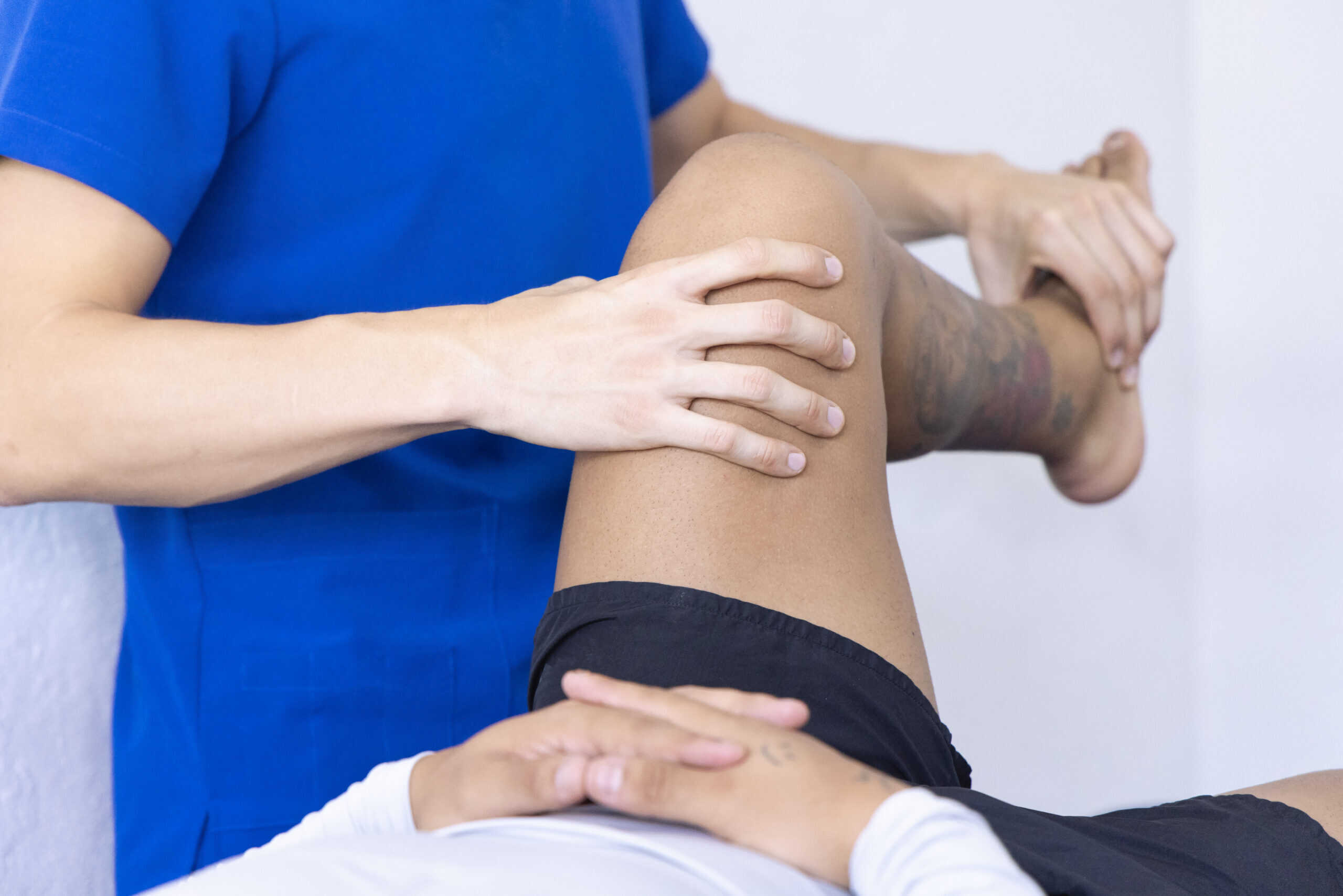
Manual therapy is typically the most immediately impactful early intervention. For a Newtown patient whose hip osteoarthritis has been gradually restricting their ability to complete Tyler State Park trail loops, posterior hip capsule mobilization and joint distraction techniques can restore a meaningful degree of hip flexion and internal rotation within the first few sessions — producing a noticeable change in the ease of walking and stair-climbing. Soft tissue manual therapy addresses the compensatory patterns in the gluteals, piriformis, and lumbar extensors that develop around a chronically painful hip, restoring normal tissue quality and range of motion. For knee osteoarthritis patients, patellar manual therapy and tibial mobilization restore the joint mechanics that make descending stairs and rising from chairs less painful.
For knee arthritis, patellar mobilization combined with distal quadriceps soft tissue work and tibial mobilization addresses the combination of capsular restriction and muscular compensation that limits function. Transcutaneous electrical nerve stimulation (TENS) is used throughout to modulate pain and allow fuller exercise participation.
Pain management in this phase isn’t just about in-clinic modalities — your therapist provides a complete activity modification and home care plan so that the progress made in session is protected in daily life.
Phase Two: Strengthening and Functional Recovery
Once mobility and pain are sufficiently addressed, the core of rehabilitation shifts to strengthening. This is where the most durable functional gains are made — and where the foundation for long-term joint protection is built.
For knee osteoarthritis, the quadriceps is the primary focus. Decades of research show that every unit of quadriceps strength added to the knee reduces medial compartment loading and slows osteoarthritis progression. Your exercise program builds quad strength progressively, alongside hamstring, hip abductor, and calf development, in a way that systematically changes the load distribution mechanics of the entire lower extremity.
For hip osteoarthritis, the gluteus medius and external rotators are central. Weakness in these muscles allows the pelvis to drop and the femur to adduct with each step — a mechanical pattern that concentrates hip joint stress and accelerates cartilage wear. Restoring gluteal strength and pelvic control dramatically reduces hip pain and improves gait efficiency.
Aerobic exercise is a non-negotiable component of osteoarthritis rehabilitation. Stationary cycling, walking programs through the Newtown Trail or Tyler State Park’s accessible paths, and aquatic exercise build cardiovascular fitness, manage weight, and maintain synovial fluid circulation. Low-impact aerobic exercise is one of the most powerful tools available for slowing osteoarthritis progression.
Phase Three: Advanced Technology for Persistent Pain
For patients with moderate to severe osteoarthritis pain, or those who need additional treatment tools to achieve their functional goals, Trinity Rehab offers two advanced technologies that significantly expand what physical therapy can achieve.
EPAT (Extracorporeal Pulse Activation Treatment) uses acoustic pressure waves delivered to the affected joint to stimulate blood flow, reduce chronic inflammation, and promote cellular-level tissue repair. It is FDA-cleared, non-invasive, and requires no recovery downtime. EPAT is particularly effective for Newtown patients seeking to delay or avoid joint replacement surgery — providing pain relief and functional improvement that outlast the treatment course.
Dry needling addresses the myofascial component of osteoarthritis pain — the trigger points and muscular compensation patterns that develop in muscles chronically guarding against joint pain. For a Newtown resident who has been compensating for a painful right knee for three years, the left hip and lumbar extensors may have developed complex patterns of restriction that contribute as much to total pain load as the knee itself. Dry needling resolves these patterns quickly, reducing overall pain management demand and accelerating the pace of rehabilitation.

Long-Term Management: Protecting Your Joints for the Long Haul
Osteoarthritis is not cured by physical therapy, but its trajectory is profoundly influenced by how well it is managed. Trinity Rehab’s treatment plans include a comprehensive self-management education component:
- Home exercise program — the specific exercises your therapist prescribes become a permanent part of your routine
- Activity modification — specific guidance for Tyler State Park hiking, golf, pickleball, and gardening, so you can stay active without accelerating joint damage
- Body weight management — the single most impactful modifiable intervention for knee and hip osteoarthritis
- Dietary supplements — your therapist can discuss the role of glucosamine, chondroitin sulfate, and omega-3 fatty acids in joint health, with medical decisions deferred to your physician
- Footwear and ergonomics — appropriate shoes and work positioning for your specific demands
- Flare management strategies — how to use ice, heat, activity pacing, and TENS to manage symptom spikes
Why Newtown Patients Choose Trinity Rehab
Newtown is a community that values quality — in its schools, its historic preservation, its parks, and its professional services. Trinity Rehab’s model matches that standard. Every treatment session is delivered one-on-one by a licensed physical therapist. No aides, no group sessions, no shortcuts. Your therapist knows you, tracks your progress personally, and adjusts your plan based on what is actually happening with your joint.
Our physical therapists are experienced in the full spectrum of osteoarthritis care — knee arthritis, hip osteoarthritis, spinal degenerative joint disease, and multi-joint presentations. We provide geriatric physical therapy for Newtown’s older adults and evidence-based arthritis treatment for patients across the age spectrum.
Under Pennsylvania Direct Access law, you can see a Trinity Rehab physical therapist for up to 30 days without a physician referral. Start treatment when you need it — not after a multi-week wait for a specialist.
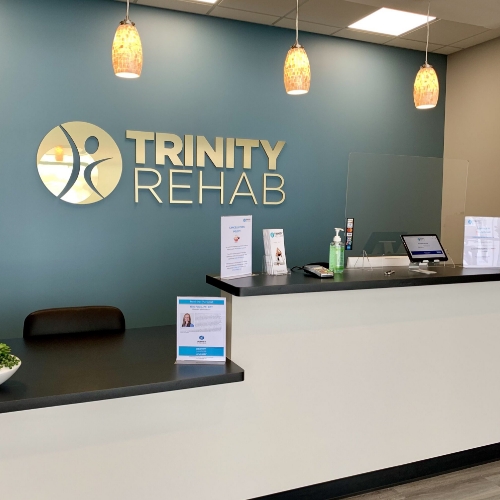
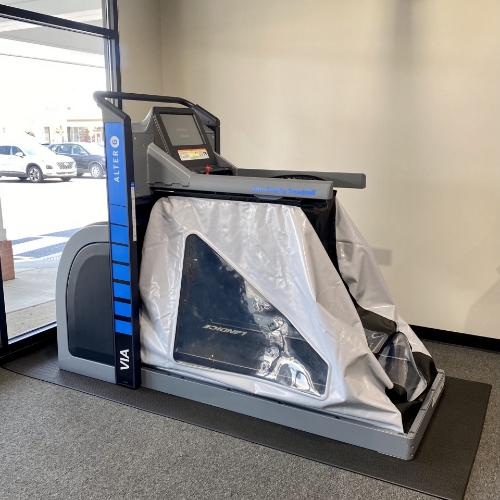
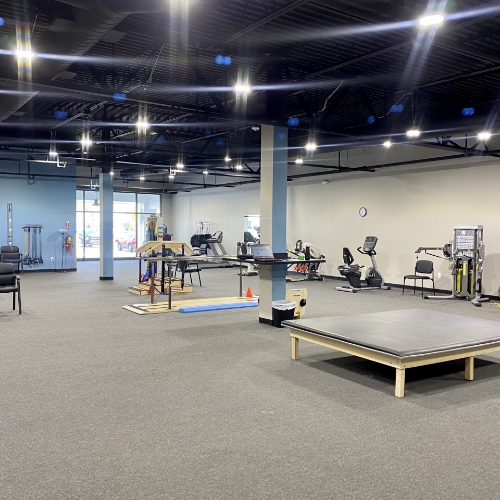
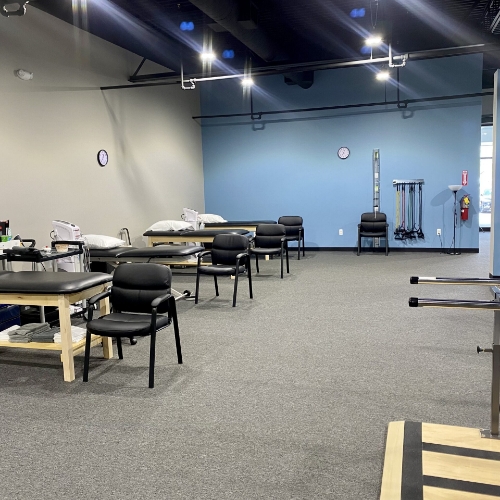
Inside Our Newtown Clinic
Related Conditions & Treatments
Osteoarthritis is just one of the many conditions we treat at Trinity Rehab Newtown. Explore our full range of conditions we treat or learn more about specific treatment approaches:
Frequently Asked Questions
Do I need a referral for physical therapy in Newtown, PA?
Is it normal for Tyler State Park hikes to cause knee pain for hours afterward?
Will physical therapy for osteoarthritis make my pain worse before it gets better?
I'm 70 years old and have osteoarthritis in both knees and one hip. Can PT still help?
What is the difference between joint replacement surgery and physical therapy for osteoarthritis?
Back to Everything Newtown Has to Offer
The Tyler State Park trail network, the Newtown Trail along Neshaminy Creek, the golf courses of Bucks County, the historic neighborhoods and farmers markets — Newtown is a place worth staying active for. Osteoarthritis is a real and progressive disease, but physical therapy gives you a genuine, evidence-backed path to managing it effectively.
Knee pain, hip and knee pain, back pain from lumbar osteoarthritis — Trinity Rehab’s physical therapists treat all of it. Learn more about our osteoarthritis programs or contact us to get started.
Your Next Steps
The earlier you begin treatment, the more function you preserve and the slower the progression.
Schedule your appointment at Trinity Rehab Newtown today.
Pennsylvania Direct Access — no referral needed for the first 30 days. One-on-one care with a physical therapist who will build a plan around your joints, your goals, and your life in Newtown.
What Our Patients Say