
Osteoarthritis Treatment in Howell, NJ — Reclaim Your Movement
Howell Township is a place people choose for space, community, and quality of life. From the wide-open trails circling Manasquan Reservoir to tee times at Howell Park Golf Course, from Little League games at Deerwood Park to weekend rides through the township’s wooded stretches near the Pine Barrens, life in Howell rewards people who stay active. When osteoarthritis pain starts stealing those moments — when the reservoir walk becomes too painful, or the morning round of golf leaves your hips aching for the rest of the week — it is time to take action.
Osteoarthritis is the most common degenerative joint disease in the United States, affecting more than 32.5 million adults. It develops when the cartilage that protects the ends of bones gradually wears away, creating bone-on-bone friction that produces pain, swelling, and stiffness. In Howell, with a population of roughly 54,000 and a median age of 40, a significant share of the community is at the age where osteoarthritis risk accelerates meaningfully. But age is only one factor — and physical therapy is the evidence-based answer.
Trinity Rehab brings proven, personalized osteoarthritis treatment to the Howell area. Here is what you need to know.
The Cascade: How Untreated Osteoarthritis Gets Worse
Many Howell residents make the mistake of treating osteoarthritis pain as something to simply tolerate. They cut back on the reservoir trail walks and stop playing in adult leagues through Howell PAL and Capelli Sport Complex. But this strategy backfires.
When you move less to protect a painful joint, the muscles surrounding it weaken. Weaker muscles transfer more of every step’s impact directly to the cartilage, accelerating its breakdown. Reduced movement also limits synovial fluid circulation — the joint’s natural lubrication mechanism — which further deprives cartilage of the nutrients it needs. Within months, a manageable ache can become a significant functional impairment.
Physical therapy interrupts this cascade early. The American College of Rheumatology, the Arthritis Foundation, and the American Academy of Orthopaedic Surgeons all recommend physical therapy as the cornerstone of osteoarthritis treatment — ahead of medication escalation and long before joint replacement surgery is considered.
Who Is at Risk in Howell
Howell’s blend of suburban commuters, active families, and outdoor recreation enthusiasts creates a specific risk profile for osteoarthritis.
Workers who commute long distances — the mean Howell commute involves considerable daily sitting — develop hip flexor tightness and reduced gluteal activation, both of which increase hip osteoarthritis progression. People employed in physical trades — construction, landscaping, warehouse work in the industrial parks near Route 9 — expose their knees, hips, and lower backs to cumulative loading that wears cartilage faster than a sedentary lifestyle.
On the recreational side, golfers at Howell Park Golf Course place significant rotational stress on their lumbar spine and hip joints with every swing. Youth sports coaches who spend hours demonstrating on hard turf, adults who play recreational basketball at Capelli Sport Complex, and residents who hike Allaire State Park trails on weekends all accumulate the joint stress that, over decades, manifests as osteoarthritis.
Risk factors include:
- Previous joint injuries — prior sprains, ligament tears, or fractures dramatically increase osteoarthritis risk at that joint
- Obesity — every extra pound adds roughly four pounds of compressive force to the knees
- Genetics — family history is a significant predictor
- Repetitive occupational stress — standing on hard surfaces, heavy lifting, squatting
- Age and hormonal changes — cartilage loses water content and resilience with age, particularly in women after menopause
Recognizing the Signs of Osteoarthritis
Osteoarthritis rarely announces itself dramatically. It tends to creep in gradually. Key symptoms to watch for:
- Morning stiffness — joints feel stiff and difficult to move after sleeping or sitting. Unlike rheumatoid arthritis, this morning stiffness in osteoarthritis typically resolves within 30 minutes of moving around.
- Activity-related pain — the affected joint aches during or after physical exertion, then improves with rest
- Reduced range of motion — gradual difficulty fully bending, straightening, or rotating the knee or hip
- Swelling — intermittent fluid accumulation around the joint, especially after more demanding activity
- Grating or clicking sensations — crepitus from roughened cartilage surfaces
Knee osteoarthritis and hip osteoarthritis are the most commonly treated forms at Trinity Rehab, though osteoarthritis also frequently affects the hands, feet, and lumbar spine. Knee arthritis often presents as inner-knee pain or difficulty descending stairs. Hip osteoarthritis commonly causes groin, buttock, or referred thigh pain that patients sometimes mistake for a hip flexor strain.
How Physical Therapy Treats Osteoarthritis
Phase 1: Reducing Pain and Restoring Foundational Movement
Trinity Rehab’s osteoarthritis treatment in Howell begins with a thorough evaluation of the affected joint, movement patterns, strength imbalances, and your specific daily activities. From this foundation, your physical therapist builds a phased treatment plan.
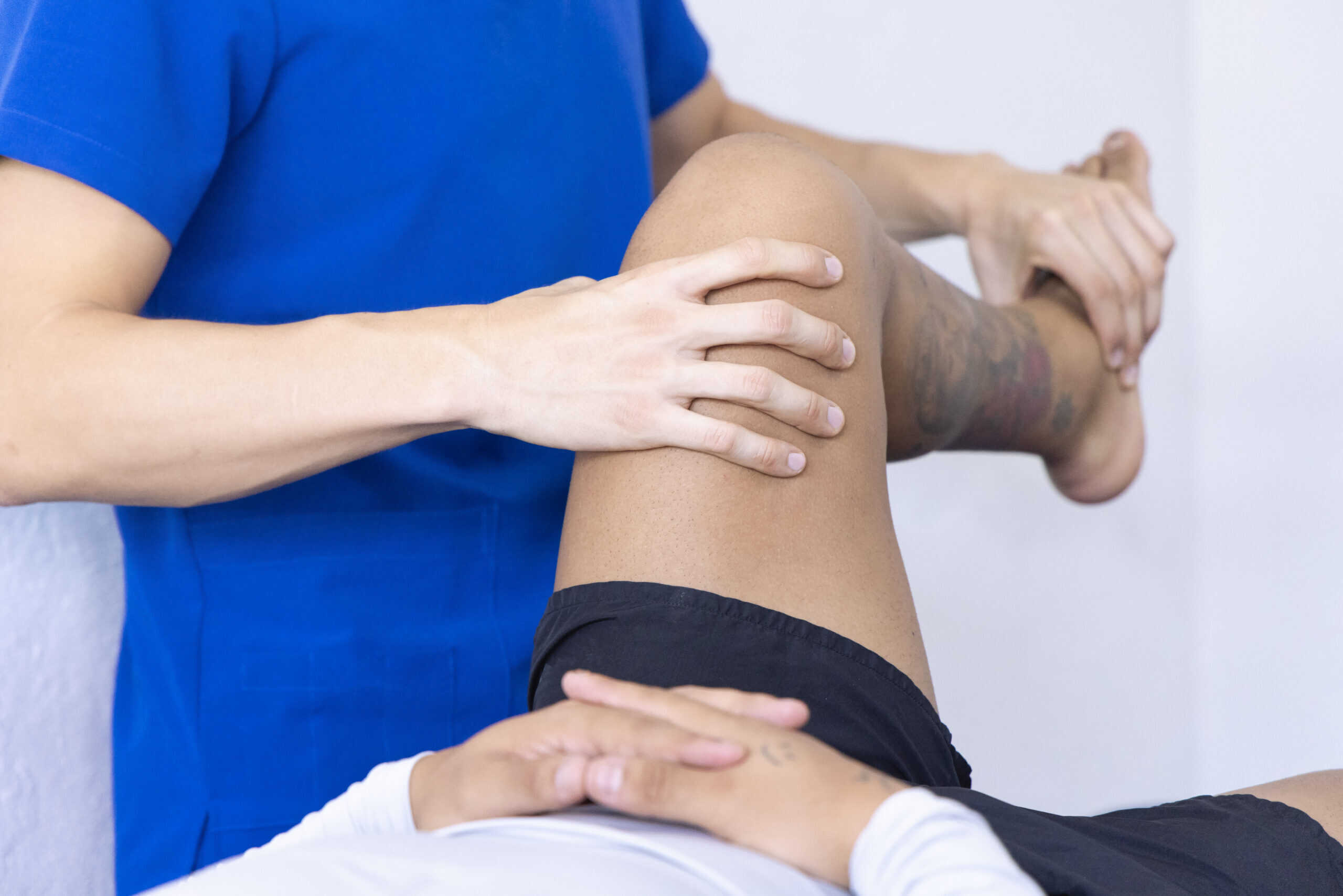
In the initial phase, the priority is calming the inflammation and pain that limit your ability to participate fully in rehabilitation. Manual therapy is central here. Joint mobilization techniques address the capsular restrictions that reduce range of motion and generate pain, while soft tissue manual therapy relieves the muscle guarding that develops around a chronically painful joint. For hip osteoarthritis, manual therapy targeting the posterior hip capsule can restore meaningful hip flexion and rotation within just a few sessions. For knee arthritis, patellar and tibial manual therapy techniques restore the joint mechanics needed for pain-free stair descent and walking.
Pain management in this phase uses a combination of approaches: transcutaneous electrical nerve stimulation (TENS) and therapeutic modalities are applied strategically to reduce inflammation and modulate pain, creating a window for meaningful exercise. Gentle range of motion work begins immediately, because even small movements help maintain the synovial fluid circulation that cartilage depends on for nourishment.
Phase 2: Building Strength Around the Affected Joint
Once foundational mobility is restored, the core of osteoarthritis rehabilitation begins: building muscle strength. Muscles are the most powerful shock absorbers in your body — far more capable of protecting cartilage than any brace or supplement.
For knee osteoarthritis, your exercise program focuses on quadriceps, hamstring, and hip abductor strengthening. A weak quadriceps is one of the strongest predictors of knee arthritis progression — every step you take with an underpowered quad transfers excess force directly to the medial compartment of the knee. For hip osteoarthritis, gluteal strengthening and hip external rotator development are foundational.
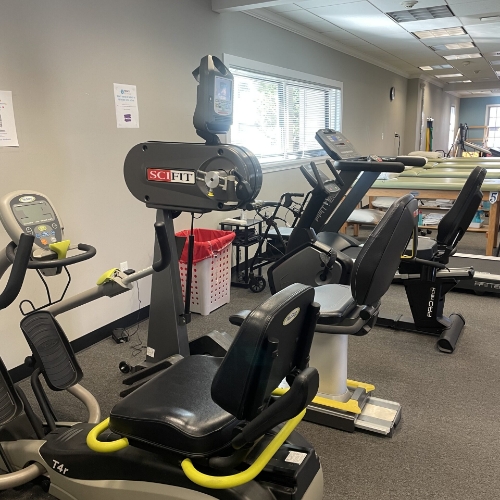
Aerobic exercise is introduced through low-impact formats: stationary cycling, walking programs, and pool-based exercise where available. These activities build cardiovascular fitness, support weight management, and promote joint health without the high-impact loading of running or jumping. Where available, the AlterG Anti-Gravity Treadmill allows patients to rebuild their walking gait at reduced body weight, making early-stage cardiovascular training possible even for those with significant knee arthritis pain.
Phase 3: Advanced Technology and Return to Activity
For patients with moderate to severe osteoarthritis pain, or those who have plateaued on conventional exercise alone, Trinity Rehab offers advanced treatment technologies.
Extracorporeal Pulse Activation Treatment (EPAT) uses calibrated acoustic pressure waves to stimulate healing at the cellular level. This FDA-cleared technology reduces chronic inflammation, promotes local circulation, and has been shown in clinical trials to reduce pain and improve function in musculoskeletal conditions that have not responded fully to other treatments. EPAT is an excellent option for Howell patients who want to avoid or delay joint replacement surgery.
Dry needling addresses the myofascial component of osteoarthritis pain. When a knee or hip hurts chronically, the surrounding musculature develops tight, restricted bands — trigger points — that contribute significantly to pain and functional limitation. Dry needling releases these points directly, reducing overall pain load and restoring normal muscular function faster than exercise alone.
The final phase of care focuses on returning you to your specific goals. Whether that is returning to the full 18-hole trail at Howell Park, completing the Manasquan Reservoir loop without stopping, or managing a physical workday without pain, your therapist guides the progression and builds a long-term maintenance strategy.

Preventing Further Joint Deterioration
Osteoarthritis is not reversible — but its progression is absolutely modifiable. The patients who maintain the best long-term outcomes combine their physical therapy with ongoing self-management:
- Daily home exercise program — the exercises your physical therapist prescribes need to become permanent habits, not just something you do during the therapy episode
- Weight management — even modest weight loss produces substantial reductions in knee joint load
- Appropriate footwear — supportive shoes with adequate cushioning reduce the ground reaction forces traveling through the knee and hip
- Dietary supplements — discuss glucosamine and chondroitin sulfate with your physician; some evidence supports their role in joint health
- Activity modification — your therapist will help you identify which activities are genuinely protective versus harmful, so you don’t have to give up more than necessary
- Regular low-impact aerobic activity — walking, cycling, and swimming maintain the muscle health that protects your joints
Why Howell Residents Trust Trinity Rehab
Trinity Rehab’s approach is fundamentally different from larger physical therapy chains. Every treatment session is one-on-one with a licensed physical therapist — not delegated to an aide or conducted in a group format. You work with the same therapist throughout your care, building a relationship that makes your treatment more targeted and your outcomes better.
Our physical therapists have deep experience with knee arthritis, hip osteoarthritis, and the full spectrum of arthritis treatment. We understand how osteoarthritis interacts with the demands of Howell life — the outdoor recreation, the commuter schedules, the physical jobs — and we build plans that work within your reality.
Under New Jersey Direct Access law, Howell residents can begin physical therapy at Trinity Rehab without a physician referral. You do not need to wait for a doctor’s visit to start your recovery.
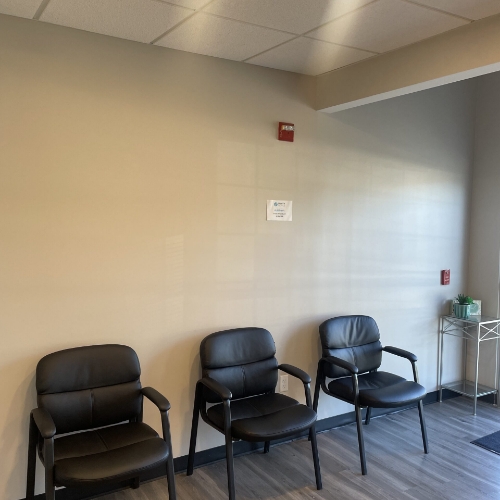
Inside Our Howell Clinic
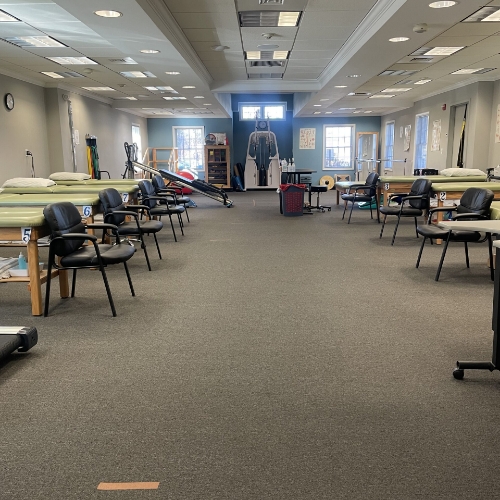
Related Conditions & Treatments
Osteoarthritis is just one of the many conditions we treat at Trinity Rehab Howell. Explore our full range of conditions we treat or learn more about specific treatment approaches:
Frequently Asked Questions
Is walking good for osteoarthritis or does it make it worse?
Can I do physical therapy while also taking pain medication for osteoarthritis?
Do I need a referral to see a physical therapist in Howell, NJ?
How do I know if my joint pain is osteoarthritis or something else?
Will I eventually need surgery if I have osteoarthritis?
Getting Back to Howell Life
The reservoir at Manasquan, the trails at Allaire, the golf courses, the ballfields at Deerwood Park — Howell is a town built for people who love to move. Osteoarthritis does not have to mean giving that up.
Trinity Rehab has helped patients across Monmouth County manage knee pain, hip and knee pain, and the broader impacts of back pain and joint disease. Our geriatric physical therapy expertise means we understand the unique challenges of aging joints — and how to keep those joints functional and pain-free for the life you want to live.
The full overview of our osteoarthritis approach is available on our website. But the best next step is simply to come in.
Your Next Steps
Joint pain responds to treatment best when addressed early. The longer you wait, the more muscle strength you lose and the more functional ground you give up.
Schedule your appointment at Trinity Rehab today.
No referral required. One-on-one care. Physical therapists who understand your goals and your life in Howell — ready to build a plan that gets you moving again.