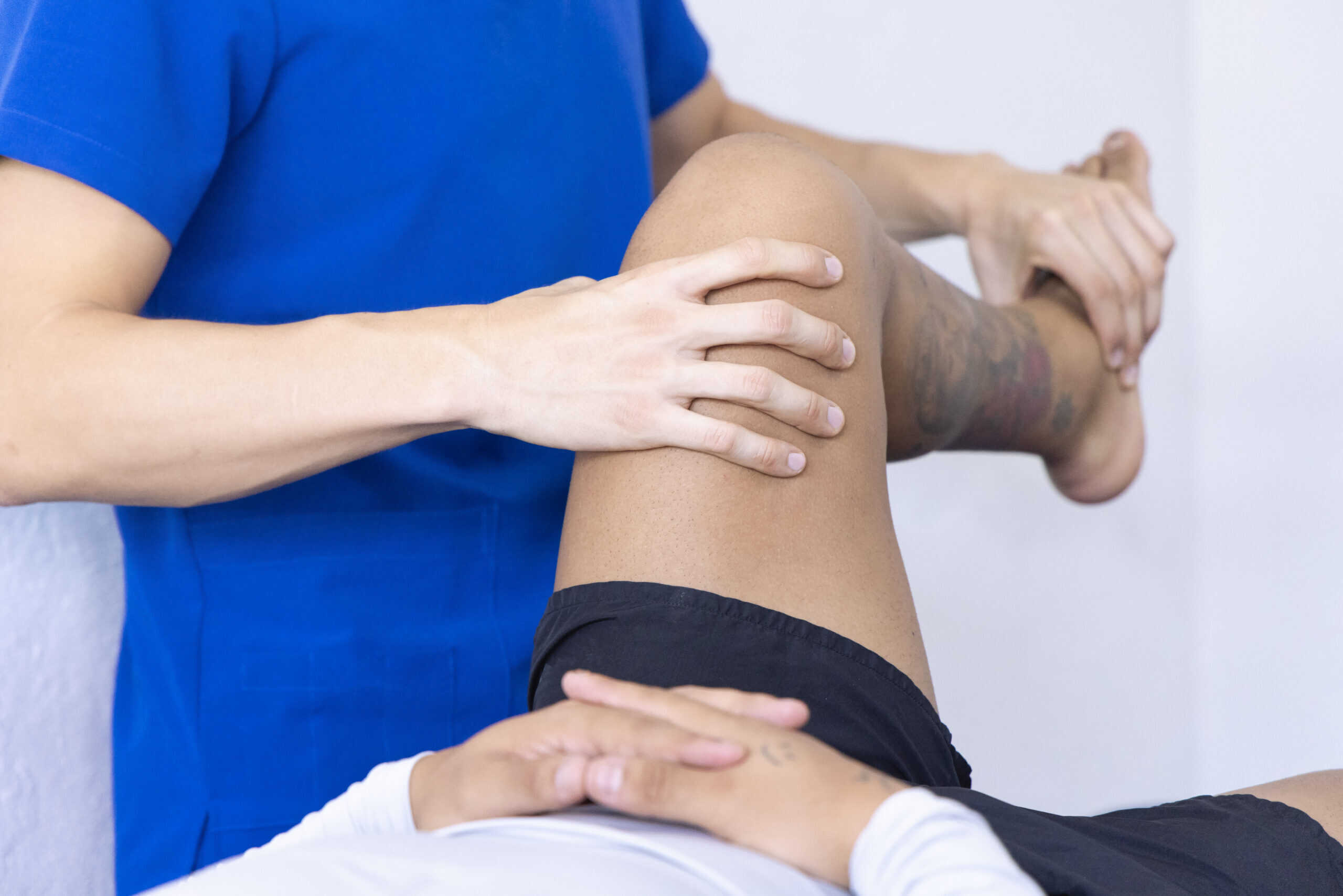
Knee Pain Treatment in Newtown, PA: Physical Therapy for an Active Bucks County Community
Newtown, Pennsylvania carries centuries of history — the preserved storefronts of the Newtown Historic District, the Friends Meeting House, and the Newtown Theatre, one of the oldest continuously operating theaters in the United States. But daily life here is thoroughly contemporary and thoroughly active. Tyler State Park’s 1,711 acres of trails attract runners, cyclists, and equestrians year-round. Council Rock High School North fields competitive teams in football, lacrosse, soccer, basketball, field hockey, and wrestling. The Newtown Trail connects neighborhoods to parks across 3.7 miles. And the surrounding Bucks County tech corridor — with EPAM Systems, SAP, and a growing presence of healthcare and professional services firms — keeps the community educated, health-conscious, and physically engaged.
Knee pain interrupts all of that. The Tyler State Park loop you run three mornings a week. The Council Rock North lacrosse season your teenager has been building toward since August. The weekend hike with your family along the Neshaminy Creek trails. At Trinity Rehab in Newtown, we provide the kind of individualized physical therapy that identifies exactly what’s happening in your knee and builds a plan to get you back to the life you lead here.
Who Gets Knee Pain in Newtown — and Why
Council Rock High School North Athletes
Council Rock North is among the most competitive academic and athletic programs in Bucks County. Its sports programs — particularly lacrosse, soccer, football, field hockey, basketball, and wrestling — involve the explosive, multidirectional demands that place the highest loads on the knee joint. ACL and MCL tears, meniscus injuries, and patellofemoral syndrome are the most common presentations from CR North athletes in our clinic.
Several specific dynamics make knee injury risk high in this community:
Club sports layered on top of school sports. Many Council Rock athletes also participate in club soccer, lacrosse, or basketball programs that operate throughout the year. Without structured rest periods, the cumulative load on developing knee structures drives overuse injuries — patellar tendonitis, Osgood-Schlatter in adolescents, and patellofemoral pain that becomes chronic without intervention.
Field hockey mechanics. CR North’s field hockey program creates a specific injury profile — the deeply bent-knee, forward-leaning posture maintained throughout field hockey play concentrates patellofemoral stress in a way that differs from upright running sports. Medial compartment overload and patellar tracking problems are common presentations in field hockey athletes.
Water polo. Council Rock North’s water polo program creates unique knee demands from the treading and eggbeater kick mechanics that generate rotational force across the knee joint — an underappreciated injury mechanism that most practitioners aren’t specifically trained to address.
Tyler State Park and Trail Community
Tyler State Park’s 1,711-acre trail network — winding through hardwood forest alongside the Neshaminy Creek — is one of the finest outdoor amenities in Bucks County. Runners, hikers, mountain bikers, and equestrians all use these trails, and each activity carries distinct knee injury risks.
Trail runners transitioning from road running to Tyler’s varied terrain often experience patellofemoral irritation and IT band syndrome as their bodies adapt to uneven surfaces and the eccentric quad loading of downhill trail running. The Newtown Trail’s 3.7-mile linear route, which connects Tyler State Park to Silver Lake Park, is a popular fitness corridor that carries its own overuse injury risk for runners who log high weekly mileage.
Mountain biking at Tyler involves the same patellar tendon demands as road cycling — compounded by the technical terrain features that require sudden weight shifts and reactive stabilization.
Affluent Active Adults and the “Knee Pain at 50” Demographic
Newtown has one of the higher median ages in Bucks County (approximately 48–51 for the borough), and its residents are overwhelmingly health-focused and physically active. The intersection of age, physical activity, and high expectations for function is the demographic most likely to present with early-to-moderate knee osteoarthritis, meniscus degeneration, and the complex presentations that follow years of high-level athletic participation.
This population often seeks care after years of managing knee discomfort independently — gradually reducing activity, modifying their trail loops, adding more ibuprofen — until function is significantly limited. Physical therapy is most effective before that point, but it also produces meaningful improvements even for patients presenting with advanced arthritis or long-standing symptoms.
Tech Sector and Professional Workers
EPAM Systems, SAP, Keller Williams, and the Bucks County Technology Park bring a professional services workforce to the Newtown area — largely desk-based and sedentary during the work week. Prolonged sitting compresses the patellofemoral joint, shortens hip flexors, and inhibits glute activation in ways that make the knee vulnerable during weekend recreational activity. Runners, cyclists, and tennis players in this demographic often present with knee pain that appeared after a period of increased activity following a sedentary stretch.
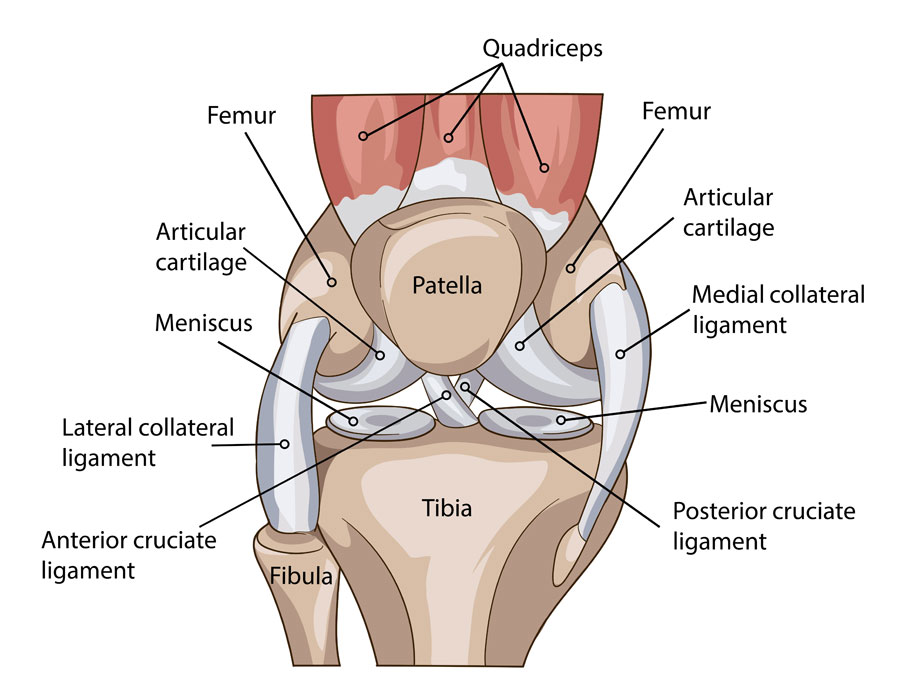
Knee Pain Symptoms: What They Mean and What to Do
Understanding what your symptoms are signaling helps you seek the right care faster:
Pain at the front of the knee during running, cycling, or after prolonged sitting (“movie-goer’s knee”) suggests patellofemoral syndrome — the kneecap tracking improperly in its groove. Common in runners, cyclists, and desk workers who’ve allowed quad and hip weakness to develop.
Pain on the outer side of the knee during or after running, particularly on the Newtown Trail or Tyler Park loops, points toward IT band syndrome — friction between the iliotibial band and the lateral femoral condyle that increases with mileage.
Swelling and medial knee pain after a pivoting movement suggests meniscus or MCL involvement — common in soccer, lacrosse, and basketball athletes.
Deep aching stiffness that improves with movement but returns after rest, particularly in adults over 45, is consistent with knee osteoarthritis.
Pain below the kneecap in a jumping or running athlete is patellar tendonitis — the Achilles tendon of the knee, and a condition that responds particularly well to EPAT shockwave therapy.
Don’t self-diagnose and wait. An early evaluation identifies the specific cause and gets you into an effective treatment program before compensations and avoidance patterns develop.
How Trinity Rehab Treats Knee Pain in Newtown
Every treatment plan begins with a thorough one-on-one evaluation by your licensed physical therapist — a comprehensive assessment of your knee mechanics, muscle function, movement quality, and activity demands. Treatment is never generic and always evolves as you respond.
Manual Therapy
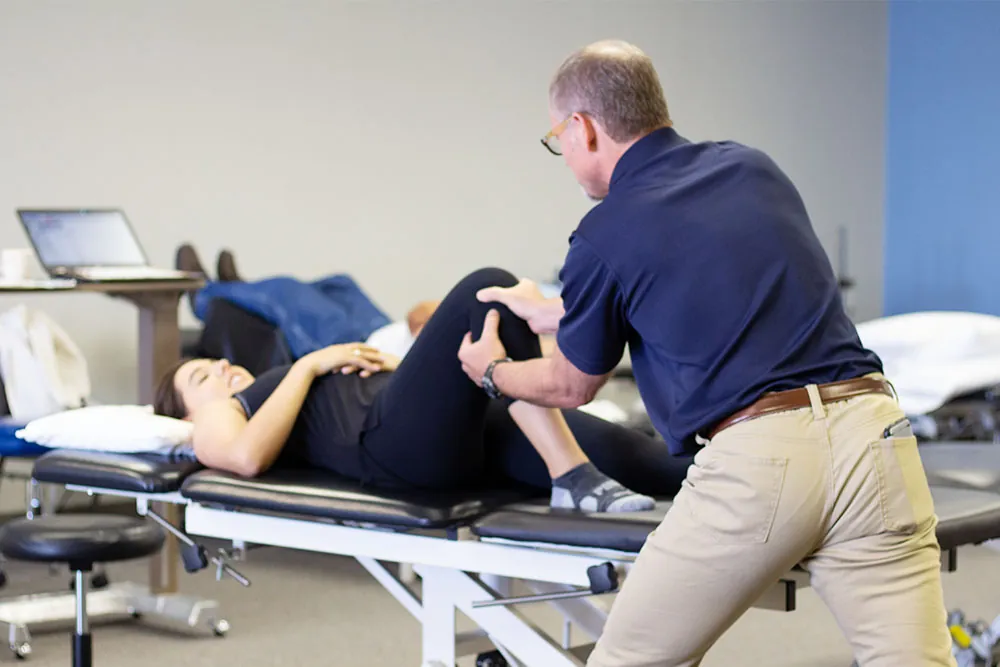
Manual therapy provides rapid, measurable relief through joint mobilization, patellar tracking correction, and targeted soft tissue work. For Newtown trail runners, manual work on the hip external rotators and IT band complex directly addresses the lateral knee tension driving pain. For athletes post-ACL surgery, joint mobilization maintains range of motion during the early phases when stiffness is a primary limiting factor.
Targeted Strengthening
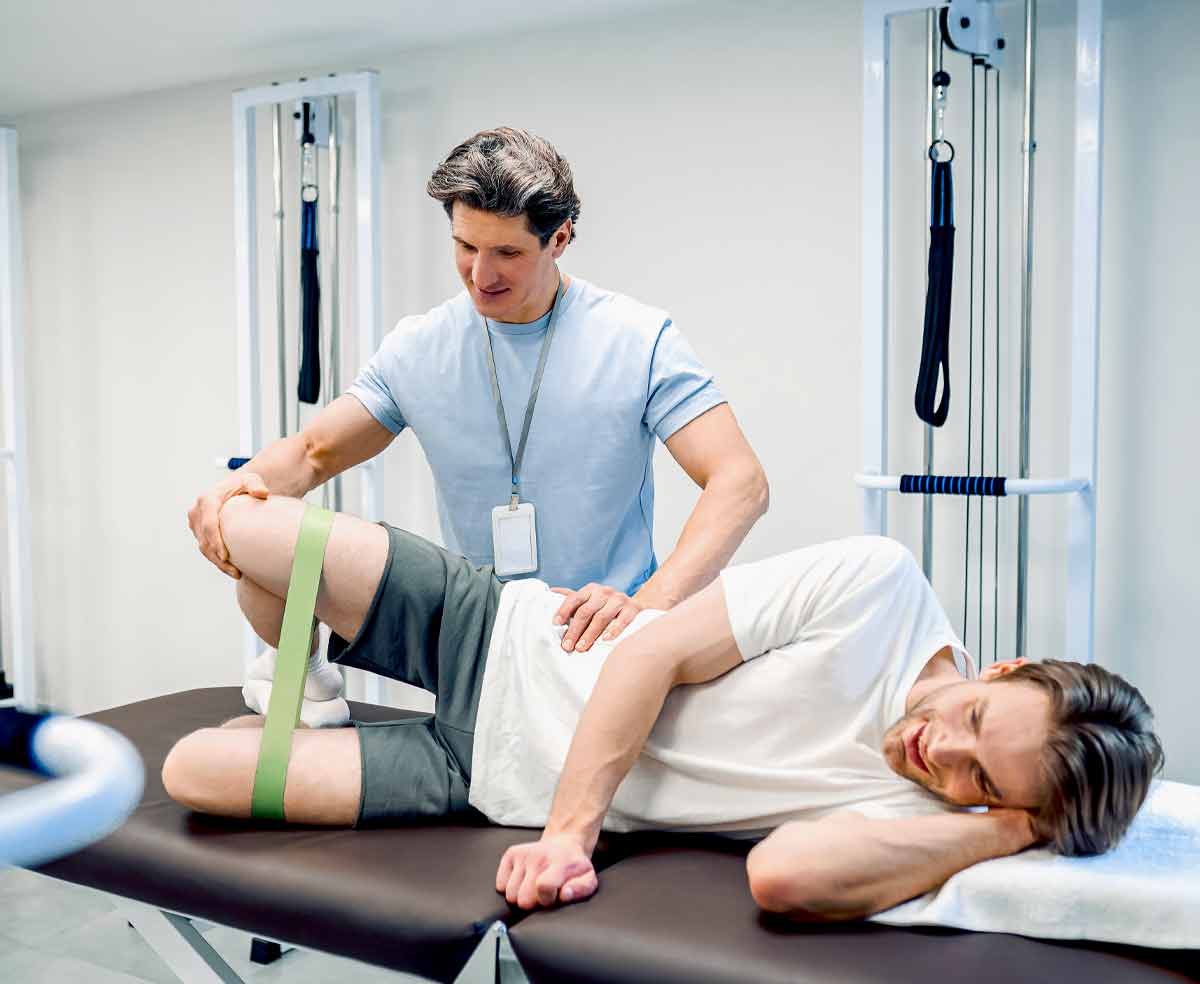
Hip abductor and quadriceps weakness is the consistent mechanical finding behind most knee pain presentations — from patellofemoral syndrome in teenagers to osteoarthritis in adults. Your therapist designs a progressive strengthening program calibrated to your current tolerance and your functional goals.
For CR North athletes, strengthening progressions follow sport-specific movement patterns — rotational stability work for lacrosse and soccer, landing mechanics for basketball and field hockey. For older adults managing arthritis, the program focuses on reducing joint load through improved muscle control and functional movement quality.
EPAT Shockwave Therapy
EPAT shockwave therapy is among our most powerful tools for patellar tendonitis, IT band syndrome, and chronic soft tissue conditions that have resisted standard treatment. Newtown’s active adult population — many of whom have been managing the same tendon issue for years — often experiences dramatic improvement after a course of EPAT.
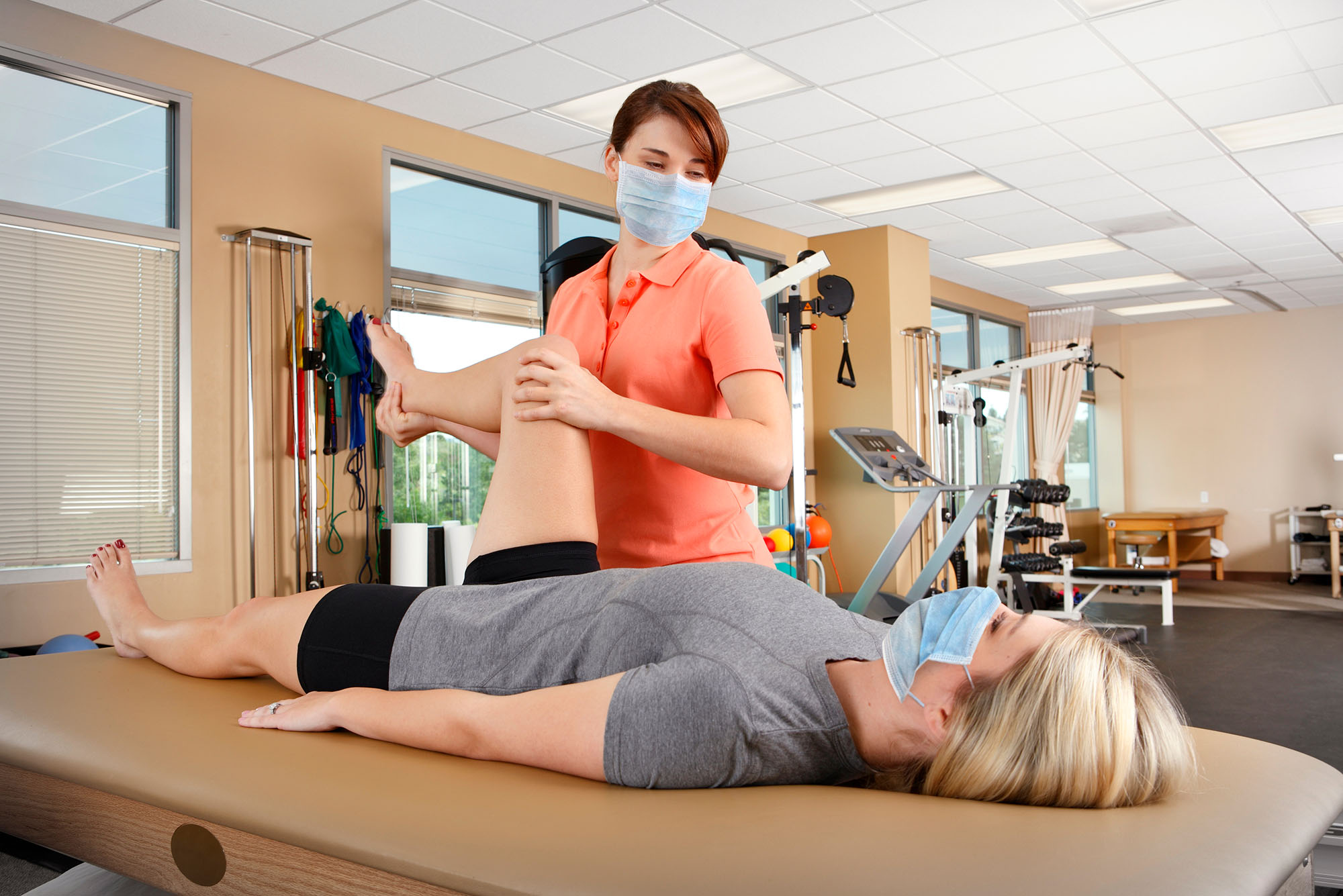
Dry Needling
Dry needling releases trigger points in the quadriceps, hamstrings, and hip complex that limit movement and inhibit muscle activation. For Newtown athletes compensating around chronic pain, and for desk workers with significant hip and posterior chain tension, dry needling improves the tissue quality that makes strengthening and manual therapy more effective.
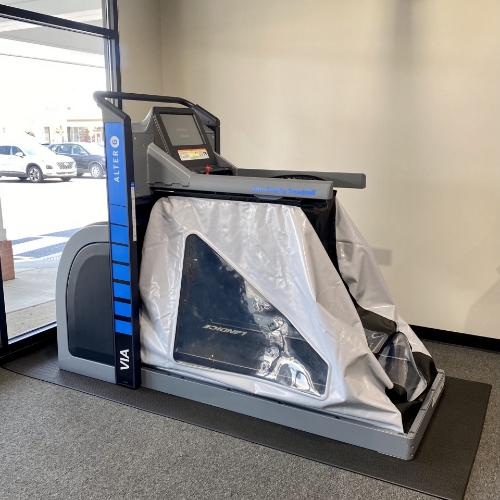
AlterG Anti-Gravity Treadmill
Post-surgical patients and those with pain severe enough to limit walking use the AlterG treadmill to rebuild gait mechanics and cardiovascular fitness at a fraction of body weight. The technology is especially valuable in the early weeks after knee replacement, when full weight-bearing is inappropriate but movement is critical to recovery.
Conditions We Treat
- ACL injuries — Surgical and non-surgical management for Council Rock athletes and active adults
- Meniscus tears — Conservative treatment is successful for many patients, avoiding surgery
- Patellofemoral syndrome — Trail running, cycling, field hockey, and desk worker presentations
- IT band syndrome — A leading overuse complaint from Tyler State Park trail users
- Patellar tendonitis — Chronic tendon pain in jumping and running athletes; outstanding EPAT outcomes
- Knee osteoarthritis — Comprehensive management for Newtown’s active older adult population
- Field hockey and water polo knee injuries — Sport-specific rehabilitation
- Post-surgical recovery — Structured rehabilitation after knee replacement or ACL reconstruction
For related conditions: sports injuries | hip and knee pain | sciatica
Why Newtown Residents Choose Trinity Rehab
Newtown is a community where quality matters. Trinity Rehab provides what quality physical therapy actually looks like: a licensed therapist with you for every session, a plan built around your specific anatomy and goals, and technology that goes beyond the standard clinic.
One-on-one, every session. Not a group exercise circuit supervised by a technician. Your therapist, with you, start to finish.
No referral required in Pennsylvania. Direct access means you can schedule your evaluation today without a physician’s order.
Most insurance accepted. We verify your coverage before your first visit.
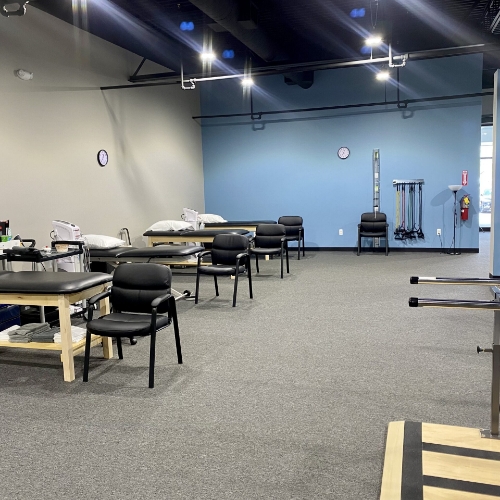
Inside Our Newtown Clinic
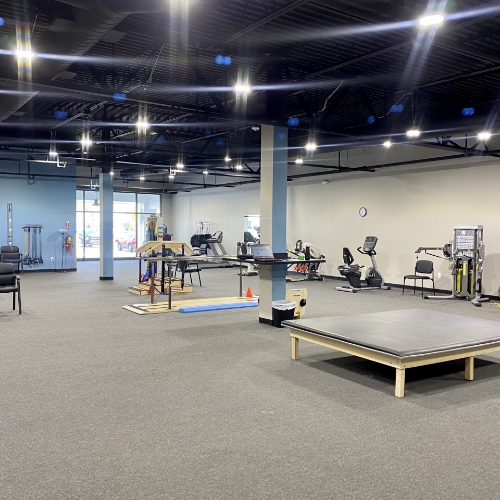
Related Conditions & Treatments
Knee pain is just one of the many conditions we treat at Trinity Rehab. Explore our full range of conditions we treat or learn more about specific treatment approaches:
Newtown Knee Rehab For Stairs, Walking, And Daily Confidence
Knee pain can make stairs, walking, exercise, work, and getting in and out of a car more difficult. Newtown rehab should identify whether strength, mobility, balance, swelling, or movement mechanics are driving the issue.
Your therapist may assess knee motion, quad and hip strength, walking mechanics, balance, and activity tolerance. The plan can progress from symptom control to stronger, more confident movement.
Related care includes ACL rehab, meniscus tear rehab, and the Newtown physical therapy clinic page.
Frequently Asked Questions About Knee Pain in Newtown
Newtown Knee Rehab For Stairs, Walking, And Daily Confidence
Knee pain can make stairs, walking, exercise, work, and getting in and out of a car more difficult. Newtown rehab should identify whether strength, mobility, balance, swelling, or movement mechanics are driving the issue.
Your therapist may assess knee motion, quad and hip strength, walking mechanics, balance, and activity tolerance. The plan can progress from symptom control to stronger, more confident movement.
Related care includes ACL rehab, meniscus tear rehab, and the Newtown physical therapy clinic page.
My teenager at Council Rock North has had knee pain since lacrosse tryouts started. How urgent is this?
Can physical therapy help me keep running at Tyler State Park with knee arthritis?
I've been sitting at a desk for years and recently started running the Newtown Trail. Now my knees hurt. Why?
Does Pennsylvania require a referral for physical therapy?
Your Next Step in Newtown
Whether it’s Tyler State Park’s trails, Council Rock’s playing fields, or simply moving through your week without knee pain limiting you — your goals are what drive our work. At Trinity Rehab in Newtown, individualized physical therapy is how we help you protect your ability to live fully in one of Bucks County’s finest communities.
Related resources: Knee Pain Treatment Hub | Hip & Knee Pain Relief | Sciatica Treatment | EPAT Therapy | Sports Injuries
What Our Patients Say



Sign up for free health tips and tricks