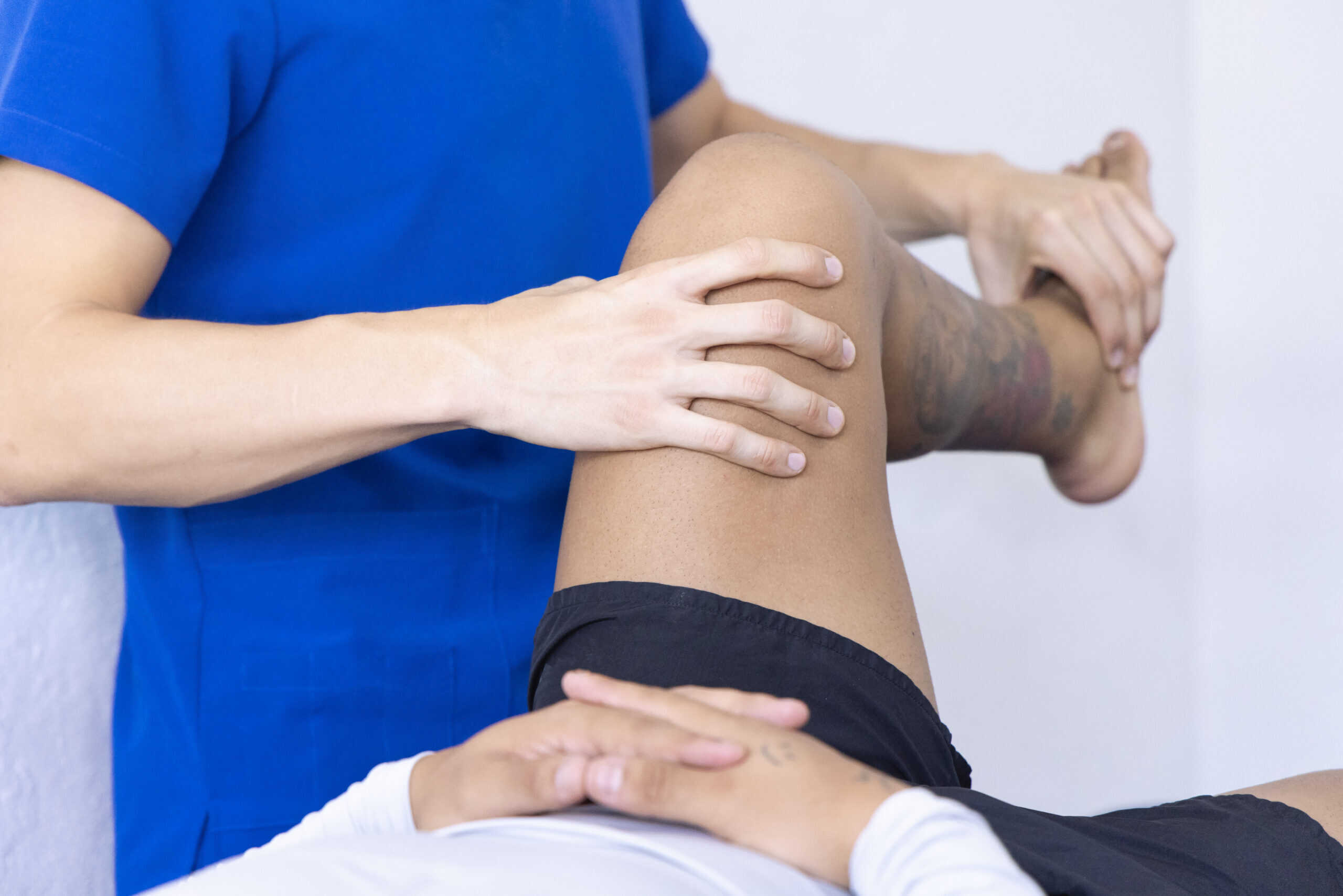
Knee Pain Treatment in Doylestown, PA: Physical Therapy Rooted in Bucks County Life
Doylestown occupies a distinctive place in Bucks County — the county seat, a cultural hub home to Fonthill Castle, the Mercer Museum, and the Michener Art Museum, and a community surrounded by 30-plus miles of trails, two Central Bucks high schools, and a family-oriented population that’s deeply invested in staying active. The 202 Parkway, the Neshaminy Greenway, and Doylestown Township’s sprawling trail network bring hikers, cyclists, and runners outdoors year-round. The YMCA of Bucks County, Doylestown Township Community Recreation Center, and PA Rush soccer draw competitive athletes of every age.
And like any active community, Doylestown deals with knee pain.
Whether it’s a Central Bucks High School West soccer player who felt something give in the second half of a sectional game, a 55-year-old Doylestown trail runner with patellofemoral pain that keeps getting worse with every mile, or a Doylestown Hospital employee whose knees ache through every 12-hour shift — knee pain here takes many forms. At Trinity Rehab in Doylestown, we bring individualized, one-on-one physical therapy to Bucks County’s most storied community.
Understanding Knee Pain in Doylestown’s Active Community
Central Bucks High School Athletes
Central Bucks School District is one of the largest and most competitive school districts in Pennsylvania. Central Bucks West and Central Bucks East both field strong programs in football, soccer, lacrosse, field hockey, basketball, and baseball. The high-velocity movements in these sports — cutting, pivoting, sudden deceleration — are the primary mechanism for the ACL tears, meniscus injuries, and patellofemoral syndrome that bring high school athletes to our clinic.
CB West’s Bucks nickname and multi-sport culture also create year-round training pressures. Athletes who participate in both school and club sports (PA Rush soccer, club lacrosse, AAU basketball) accumulate training volume without adequate recovery periodization — driving patellar tendonitis, Osgood-Schlatter in adolescents, and patellofemoral pain that becomes chronic if not addressed early.
Trail Runners, Cyclists, and Hikers on the 202 Parkway and Neshaminy Greenway
Doylestown Township maintains over 30 miles of trails, with the 202 Parkway Trail and Neshaminy Greenway among the most popular for running, hiking, and cycling. Runners who build mileage on these routes — particularly those transitioning from road to trail surfaces — commonly develop IT band syndrome, patellofemoral pain, and patellar tendonitis at the rates we see in any active trail community.
Cyclists using the Doylestown trail network face a different set of knee stresses: the repetitive rotation of pedaling, combined with cleat setup and saddle height that are rarely optimal, drives patellofemoral tracking problems and patellar tendon overload.
The pump track at Chapman Park adds another dimension — the jumps and rapid compression movements characteristic of BMX-style cycling create patellar tendon loading that’s distinct from traditional trail activity.
Doylestown Hospital and Healthcare Workers
Doylestown Hospital (Penn Medicine) is one of the area’s major employers, along with the broader Central Bucks healthcare ecosystem. Nurses and clinical staff at Doylestown Hospital follow the same occupational knee pattern seen across healthcare: prolonged standing on hard floors, patient transfer demands, and the physical load of 12-hour shifts create cumulative knee stress that eventually manifests as bursitis, tendinitis, or early arthritis exacerbation.
Older Adults Managing Knee Osteoarthritis
Doylestown Borough’s population skews older — median age in the mid-to-late 40s, with a meaningful percentage of residents 65 and older. Knee osteoarthritis is the dominant knee diagnosis in this demographic, and it responds remarkably well to the right physical therapy — even at stages where imaging shows significant cartilage loss. Managing osteoarthritis through physical therapy allows many Doylestown residents to stay on the trails, maintain their independence, and avoid or delay knee replacement surgery.
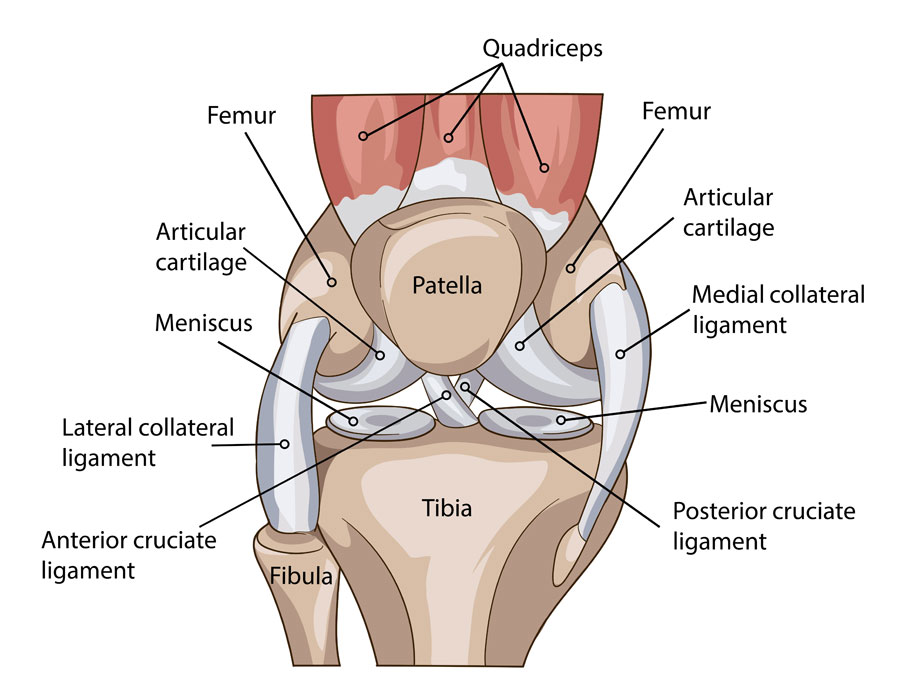
The Consequences of Letting Knee Pain Go Unaddressed
Doylestown residents are generally well-informed about health — but it’s still common to underestimate what untreated knee pain costs over time. The compensations your body makes when the knee hurts — shifting weight to the other leg, changing your gait, avoiding certain movements — don’t resolve the underlying problem. They add new ones: hip pain, lower back strain, altered movement patterns that place additional stress on the knee itself.
Research consistently shows that the window for conservative care is most effective early. A course of physical therapy for a meniscus irritation or early patellofemoral pain typically resolves in 4–8 weeks. The same condition managed with rest and avoidance for six months becomes a longer, more complex recovery.
How We Treat Knee Pain at Trinity Rehab in Doylestown
One-on-One Evaluation and Diagnosis
Every treatment plan begins with a comprehensive evaluation by your licensed physical therapist — not a standard intake form. Your therapist assesses joint mechanics, muscle strength, movement quality, and symptom behavior to identify the actual source of your pain before building your plan.
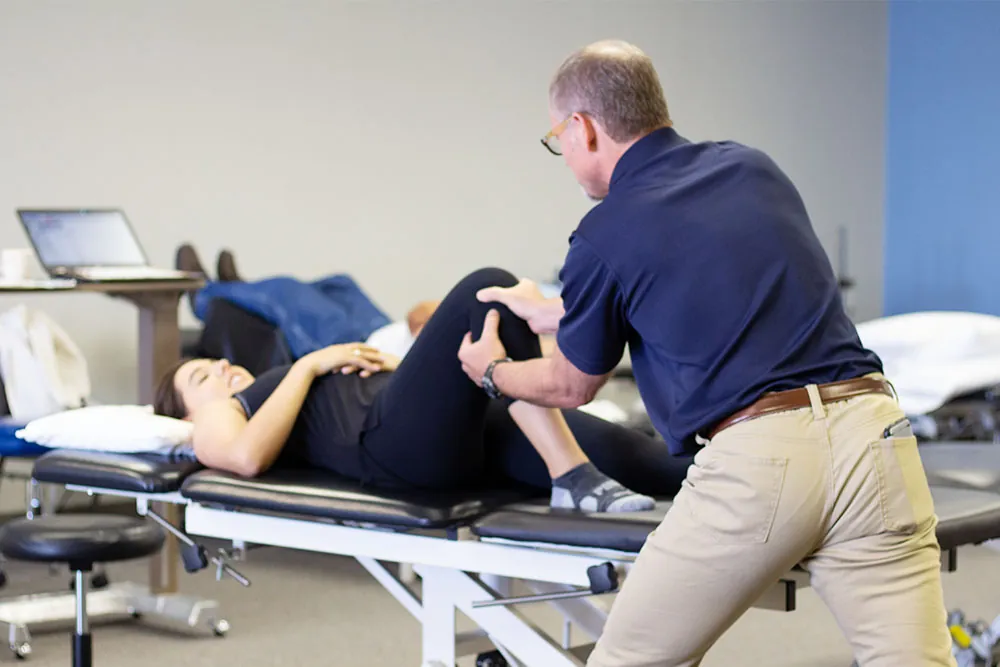
Manual Therapy: Hands-On Relief That Works Fast
Manual therapy — joint mobilization, soft tissue work, and patellar mobilization — reduces pain and restores mobility that exercise alone cannot achieve in early treatment. For Doylestown trail runners with IT band tightness or patellofemoral tracking problems, targeted manual work on the lateral structures and hip musculature often produces immediate relief. For post-surgical patients managing stiffness, joint mobilization prevents scar tissue from limiting long-term range of motion.
EPAT Shockwave Therapy for Chronic Tendon Pain
EPAT shockwave therapy is one of the most effective treatments available for patellar tendonitis and IT band syndrome that hasn’t fully resolved despite rest and stretching. For Bucks County athletes and active adults who’ve been dealing with the same tendon issue through multiple seasons, EPAT stimulates the body’s tissue repair response at a cellular level and reduces chronic pain in a way that time alone hasn’t achieved. Most patients require 3–5 sessions.
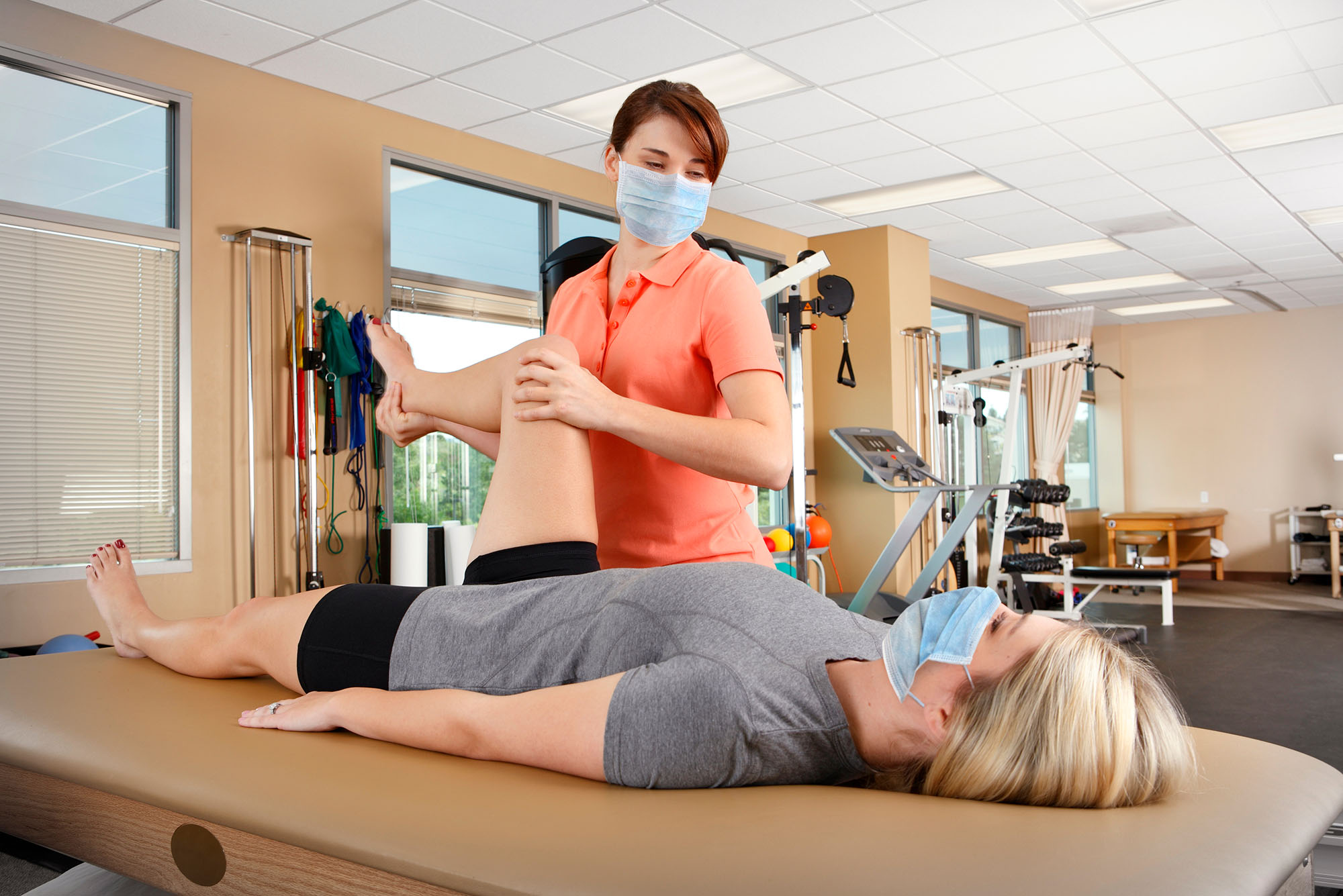
Targeted Strengthening for Quad, Hip, and Posterior Chain
The mechanical cause of most knee pain in active adults is weakness — specifically in the quadriceps, hip abductors, and external rotators that control how the knee moves during athletic and everyday activity. Your therapist designs a progressive resistance program that addresses these deficits in the context of your specific demands: the trail running mechanics of the 202 Parkway, the lateral movement requirements of field hockey, or the stair-climbing and prolonged standing of a hospital shift.
Dry Needling for Persistent Muscle Tension
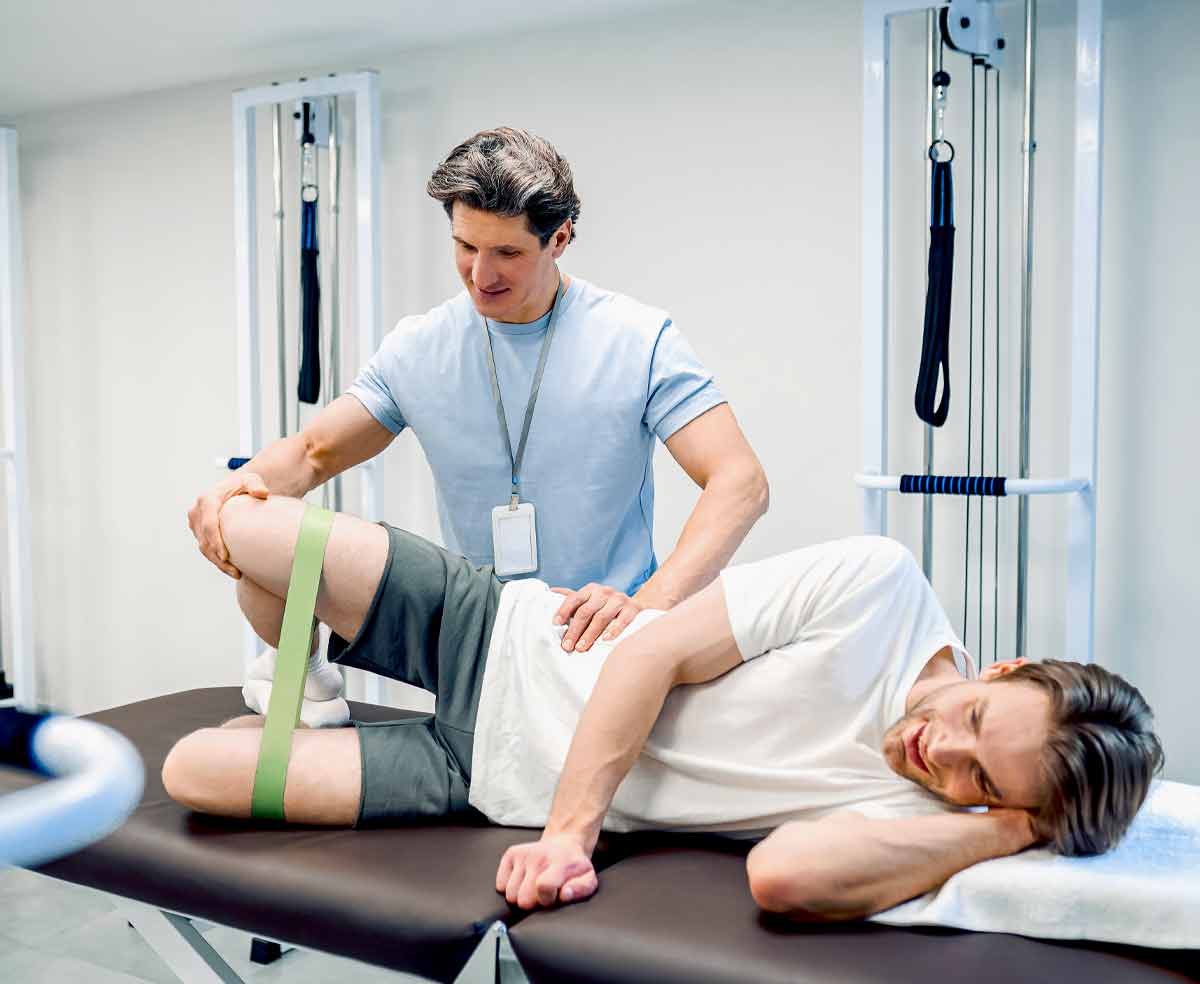
Dry needling releases tight trigger points in the quadriceps, hamstrings, and hip complex that restrict range of motion and limit muscle activation. For Doylestown’s older population managing osteoarthritis with significant quad tension, and for high school athletes compensating around chronic patellar pain, dry needling accelerates the response to strengthening and manual therapy.
Neuromuscular and Functional Training
Return to sport and activity requires more than pain-free motion — it requires the neuromuscular control to perform athletic movements safely and confidently. For CB West and CB East athletes returning after ACL reconstruction or meniscus repair, functional progressions through cutting, landing, and change-of-direction drills rebuild the movement quality needed for competition. For trail runners returning to the Neshaminy Greenway, balance and proprioception training addresses the stability demands of uneven terrain.
Conditions We Treat in Doylestown
- ACL and ligament injuries — In Central Bucks athletes and adult rec league players
- Meniscus tears — Traumatic and degenerative; conservative management effective for most patients
- Patellofemoral syndrome (runner’s knee) — Widespread among Doylestown trail runners and cyclists
- IT band syndrome — Common in the trail running community
- Patellar tendonitis — In jumping and running athletes; EPAT provides outstanding results
- Knee osteoarthritis — Comprehensive management for Doylestown’s active older adult population
- Post-surgical rehabilitation — Recovery support after knee replacement and ACL surgery
- Field hockey knee injuries — Hip and knee loading specific to field hockey mechanics
See also: sports injuries | back pain | hip and knee pain
Why Doylestown Patients Choose Trinity Rehab
Trinity Rehab in Doylestown offers what Bucks County’s health-conscious community expects from its healthcare: personalized, evidence-based care delivered by someone who takes the time to understand your situation. One-on-one means one-on-one — your licensed therapist, every session.
We also offer advanced technology that most practices don’t: AlterG anti-gravity treadmill for early post-surgical weight-bearing, EPAT shockwave for chronic tendon conditions, and dry needling for persistent soft tissue restrictions.
Most insurance plans accepted. We verify your coverage before your first visit.
No referral required in Pennsylvania. Pennsylvania allows direct access to physical therapy — you can schedule your evaluation without a physician’s order.
Request your appointment today
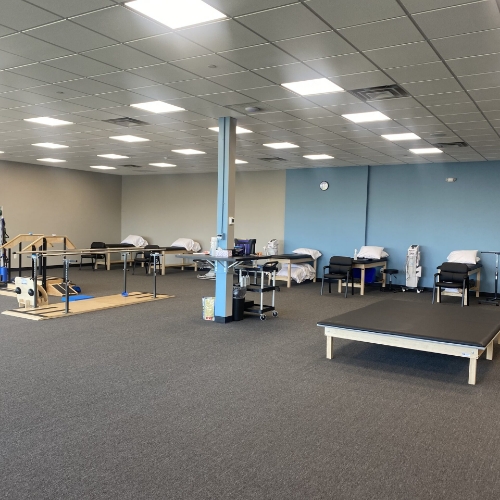
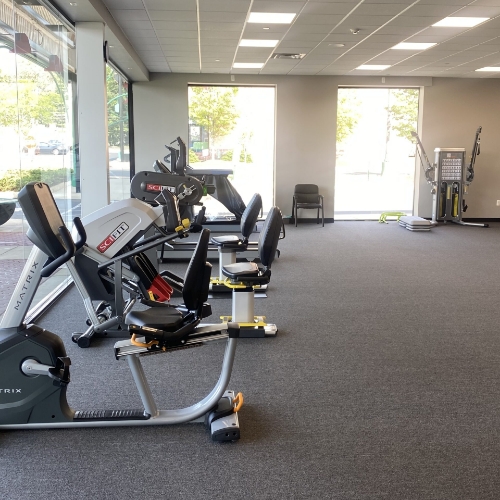
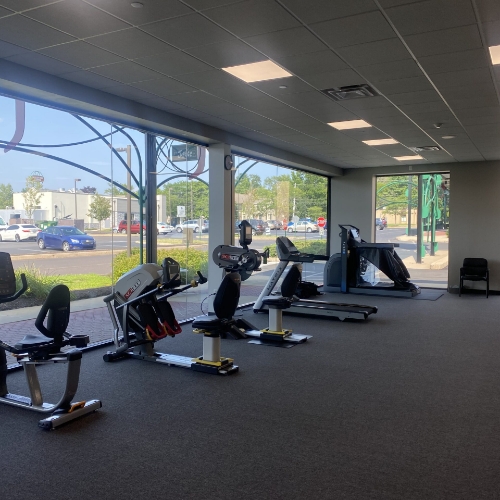
Inside Our Doylestown Clinic
Related Conditions & Treatments
Knee pain is just one of the many conditions we treat at Trinity Rehab. Explore our full range of conditions we treat or learn more about specific treatment approaches:
Doylestown Knee Rehab For Stairs, Walking, And Daily Confidence
Knee pain can make stairs, walking, exercise, work, and getting in and out of a car more difficult. Doylestown rehab should identify whether strength, mobility, balance, swelling, or movement mechanics are driving the issue.
Your therapist may assess knee motion, quad and hip strength, walking mechanics, balance, and activity tolerance. The plan can progress from symptom control to stronger, more confident movement.
Related care includes ACL rehab, meniscus tear rehab, and the Doylestown physical therapy clinic page.
Frequently Asked Questions About Knee Pain in Doylestown
Doylestown Knee Rehab For Stairs, Walking, And Daily Confidence
Knee pain can make stairs, walking, exercise, work, and getting in and out of a car more difficult. Doylestown rehab should identify whether strength, mobility, balance, swelling, or movement mechanics are driving the issue.
Your therapist may assess knee motion, quad and hip strength, walking mechanics, balance, and activity tolerance. The plan can progress from symptom control to stronger, more confident movement.
Related care includes ACL rehab, meniscus tear rehab, and the Doylestown physical therapy clinic page.
My daughter plays for a Central Bucks school and club soccer team. Is playing on both a risk for knee injury?
Can physical therapy help knee pain from hiking the 202 Parkway trails?
I've been told I need a knee replacement. Should I try physical therapy first?
Does Pennsylvania require a referral for physical therapy?
How does Trinity Rehab's approach differ from other physical therapy practices?
Start Your Recovery in Bucks County’s Heart
Doylestown’s trails, its athletic programs, its cultural richness, and its community are all worth protecting. At Trinity Rehab, our job is to help you protect your ability to fully participate in all of it.
Learn more: Trinity Rehab Knee Pain Hub
Related resources: Knee Pain Treatment Hub | Hip & Knee Pain Relief | Sciatica Treatment | EPAT Therapy | Sports Injuries
What Our Patients Say



Sign up for free health tips and tricks