Back Pain Treatment in Piscataway, NJ
Piscataway is a township that carries both deep American history and a cutting-edge present. One of the 50 oldest municipalities in the United States, Piscataway held what is recognized as the first national Fourth of July celebration in 1778. Today, it houses major portions of Rutgers University’s main campus — including SHI Stadium, home of the Scarlet Knights, and Jersey Mike’s Arena — along with pharmaceutical giants, data centers, and biotech research campuses that make it one of the most economically dynamic communities in central New Jersey.
With a population exceeding 60,000 and one of the most genuinely diverse communities in New Jersey — approximately 33% Asian, 20% African American, and 14% Hispanic — Piscataway reflects the global character of both Rutgers University and the pharmaceutical and technology industries that anchor its economy. Johnson & Johnson, Sanofi, and major logistics operators all have significant operations here. The result is a working population that spans every occupational category, from research scientists and university faculty to warehouse workers and healthcare professionals.
What unites them is that back pain doesn’t distinguish between professions — and Piscataway’s mix of sedentary professional work, physically demanding industries, and a large student and young adult population creates one of the most varied presentations of lower back pain we see across our clinics.
Physical therapy for back pain at Trinity Rehab is built to treat all of it.
Piscataway’s Back Pain Risk Landscape
The Research and Professional Worker
Rutgers University’s Busch and Livingston Campuses employ thousands of faculty, staff, and research professionals who spend significant hours at laboratory benches, computer workstations, and in lecture halls. The combination of sustained awkward postures in laboratory settings and prolonged sitting in office and academic work is a reliable recipe for lumbar muscle dysfunction and disc loading. Graduate students and postdoctoral researchers — a significant component of Piscataway’s population — are particularly prone to developing chronic lower back pain from years of academic desk work without adequate ergonomic awareness.
The Pharmaceutical and Technology Worker
Piscataway’s pharmaceutical and data center economy employs large numbers of professionals who commute via Route 287 and Route 18 and then work eight to ten hour days in seated positions. The township is home to two of the five largest data centers in the United States, and houses recovery sites for major Wall Street financial firms — a workforce that is almost entirely desk-based.
The Industrial and Logistics Worker
Piscataway’s transformation from a petrochemical hub to one of the largest logistics sites in central New Jersey has brought thousands of warehouse, distribution, and manufacturing jobs to the township. These workers face a different set of back pain risks: repetitive lifting, bending, twisting, prolonged standing on hard surfaces, and whole-body vibration from industrial equipment. Work-related lower back injuries are among the most common presentations we see from this segment of the Piscataway workforce.
The Student Athlete and Young Adult
SHI Stadium’s football games, Rutgers athletics events at Jersey Mike’s Arena, and the intramural and club sports programs at the university draw a large population of young adults who are physically active but may lack the injury awareness and recovery habits that protect the spine long-term.
Altered movement patterns from back pain can lead to secondary issues like knee discomfort. Explore our knee pain treatment options.
Common Causes We Identify in Piscataway
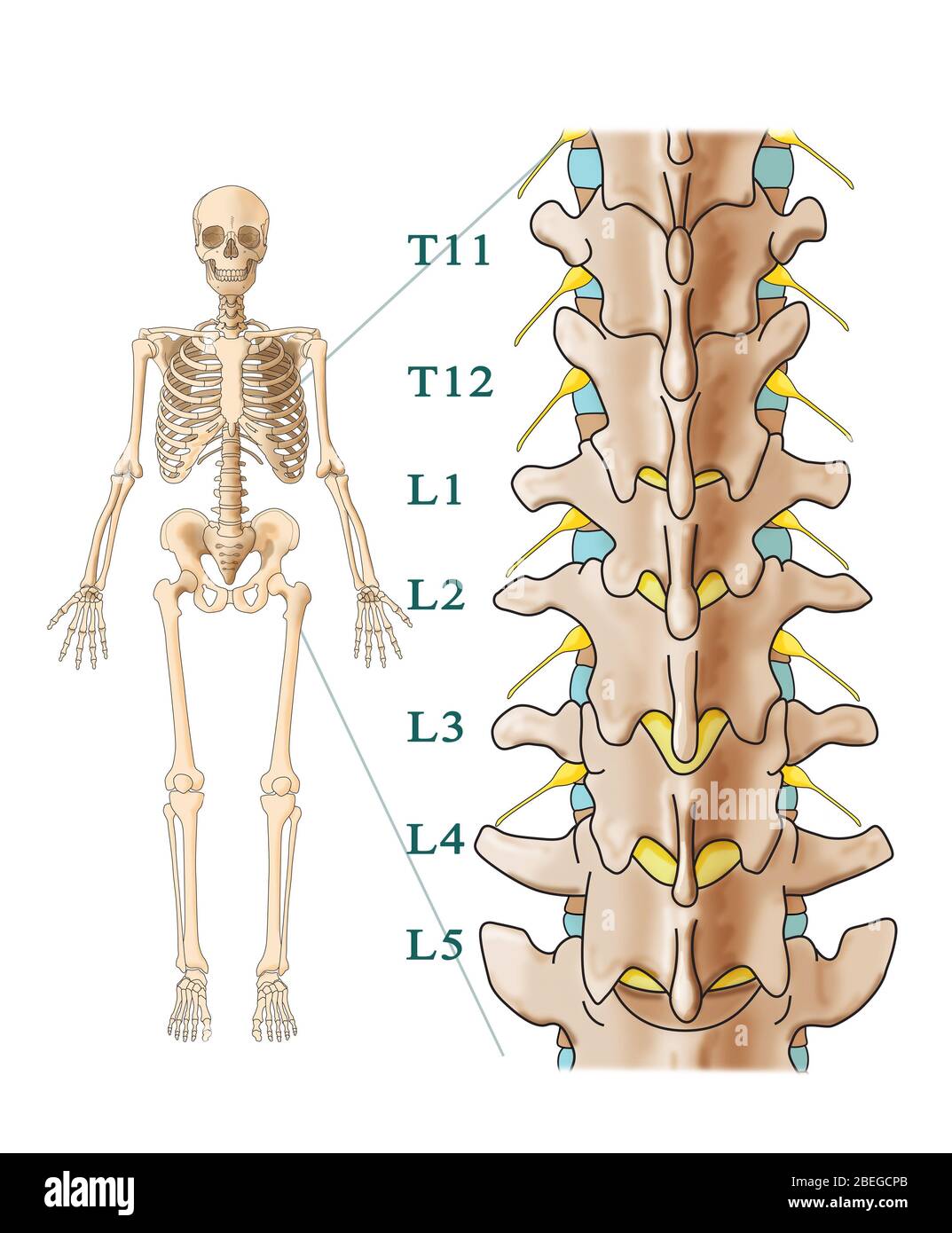
- Lumbar disc herniations and bulges — frequent in desk workers and academic professionals; often cause both back pain and radiating leg symptoms (disc herniation treatment)
- Work-related strain and injury — repetitive lifting and industrial occupations place extreme demands on the lumbar spine; we have extensive experience treating these complex presentations (work injury treatment)
- Sciatica — nerve compression producing burning, numbness, and weakness from the lower back into the leg (sciatica treatment)
- Postural dysfunction — years of sustained academic or professional desk work without corrective exercise create predictable patterns of muscle imbalance and spinal loading
- Sports-related back injuries — from Rutgers student-athletes, intramural players, and recreational athletes in Johnson Park and Piscataway’s parks (sports injury treatment)
- Sacroiliac joint dysfunction — commonly seen in physically active young adults and in workers who frequently shift between seated and standing positions
- Degenerative disc disease — a more significant issue in Piscataway’s older working population in manufacturing and logistics
What You Are Likely Feeling
Back pain announces itself differently depending on its cause. Piscataway patients commonly describe:
- Aching tension across the lower back that builds during lab or desk work
- A deep, dull pain in the lumbar region after a long shift on a warehouse floor
- Sharp pain when rising from seated positions — a desk, a car seat, a bleacher at SHI Stadium
- Radiating pain or numbness running down one leg into the calf or foot
- Morning stiffness that makes the first 30 minutes of the day difficult
- Pain that is better with walking than with sitting, suggesting disc involvement
- Muscle spasms that make it impossible to stand fully upright
These are not symptoms to push through or wait out. They are signals that the spine needs professional attention — and physical therapy is the right first call.
How Trinity Rehab Treats Back Pain
Phase 1: Immediate Pain Relief
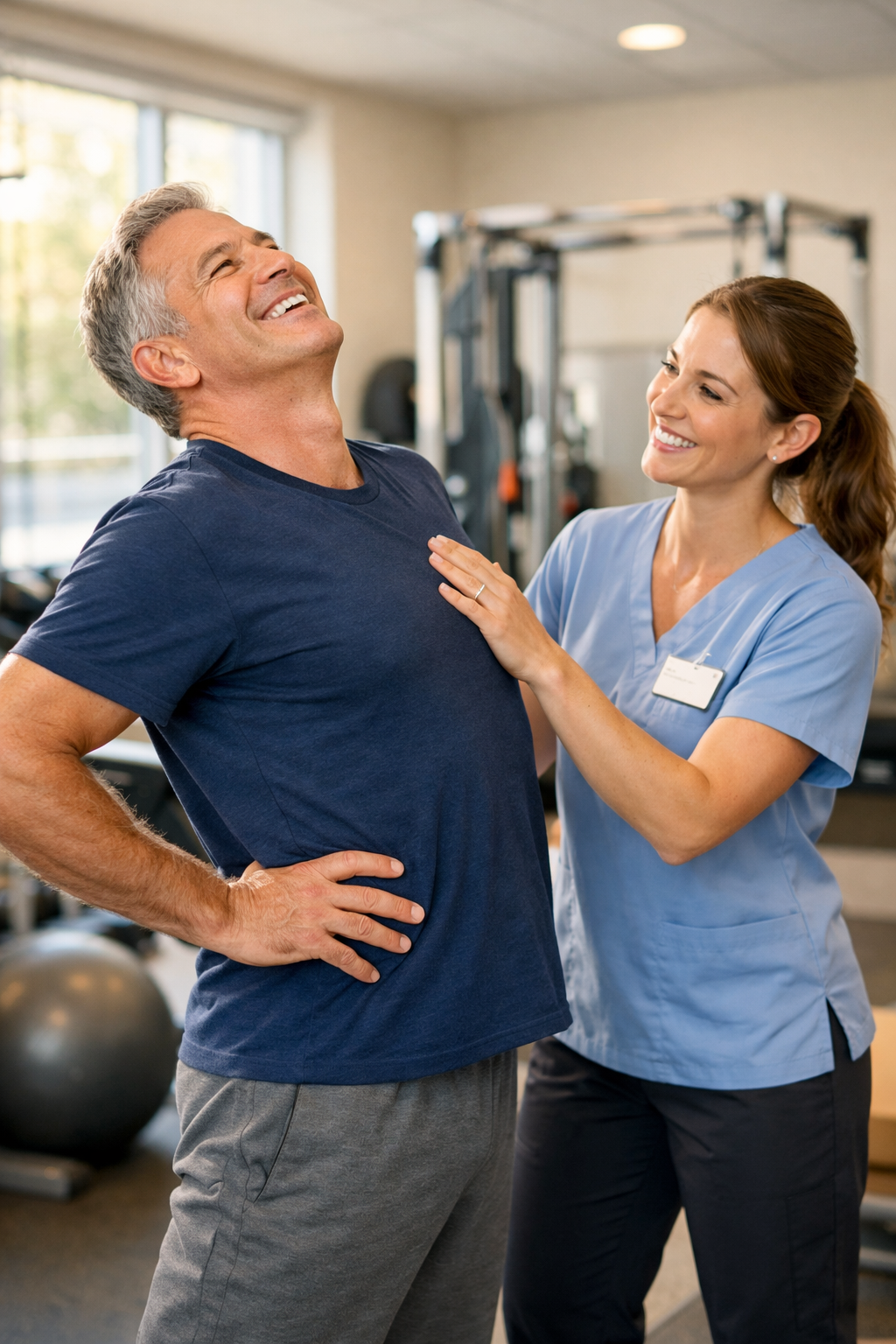
Your first sessions focus on reducing the acute pain response and restoring basic movement. Manual therapy — joint mobilization of the lumbar spine and pelvis, soft tissue work, and myofascial release targeting the paraspinals, glutes, and hip flexors — provides immediate improvement in mobility and meaningful pain relief. For patients presenting with severe muscle spasm or guarding, this hands-on component is often the most impactful element of early treatment.
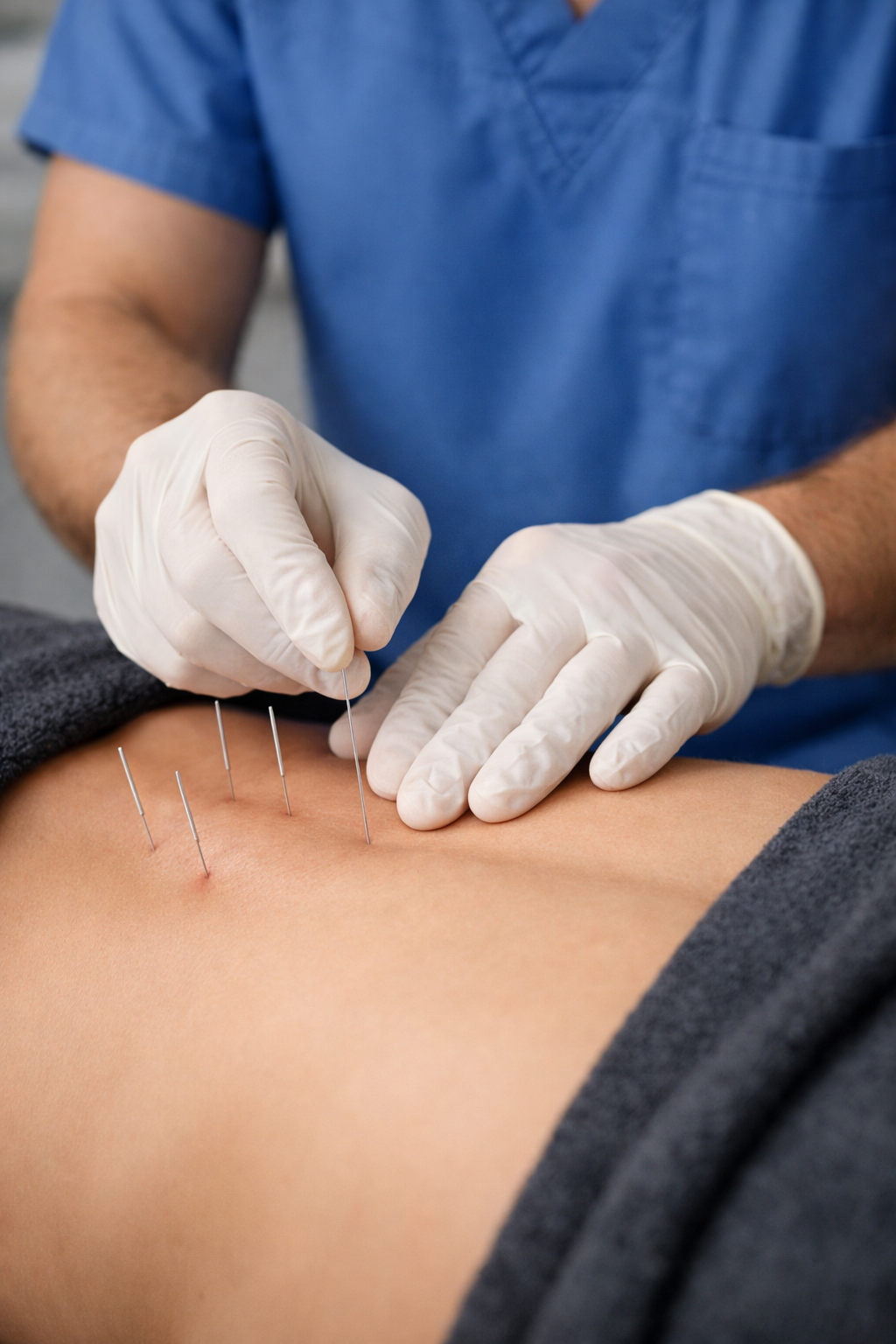
Dry needling can be introduced early in treatment to address the deep trigger points that perpetuate pain and resist conventional stretching — particularly effective in the paraspinals and gluteal muscles that are heavily involved in both sedentary and physically demanding occupational back pain.
For patients with chronic back pain that has been unresponsive to other treatments, EPAT shockwave therapy delivers focused acoustic energy to affected tissues, stimulating healing and interrupting the chronic pain cycle. This is a particularly valuable option for Piscataway’s industrial workers who have been managing pain for months or years.
Phase 2: Restoring Strength and Function
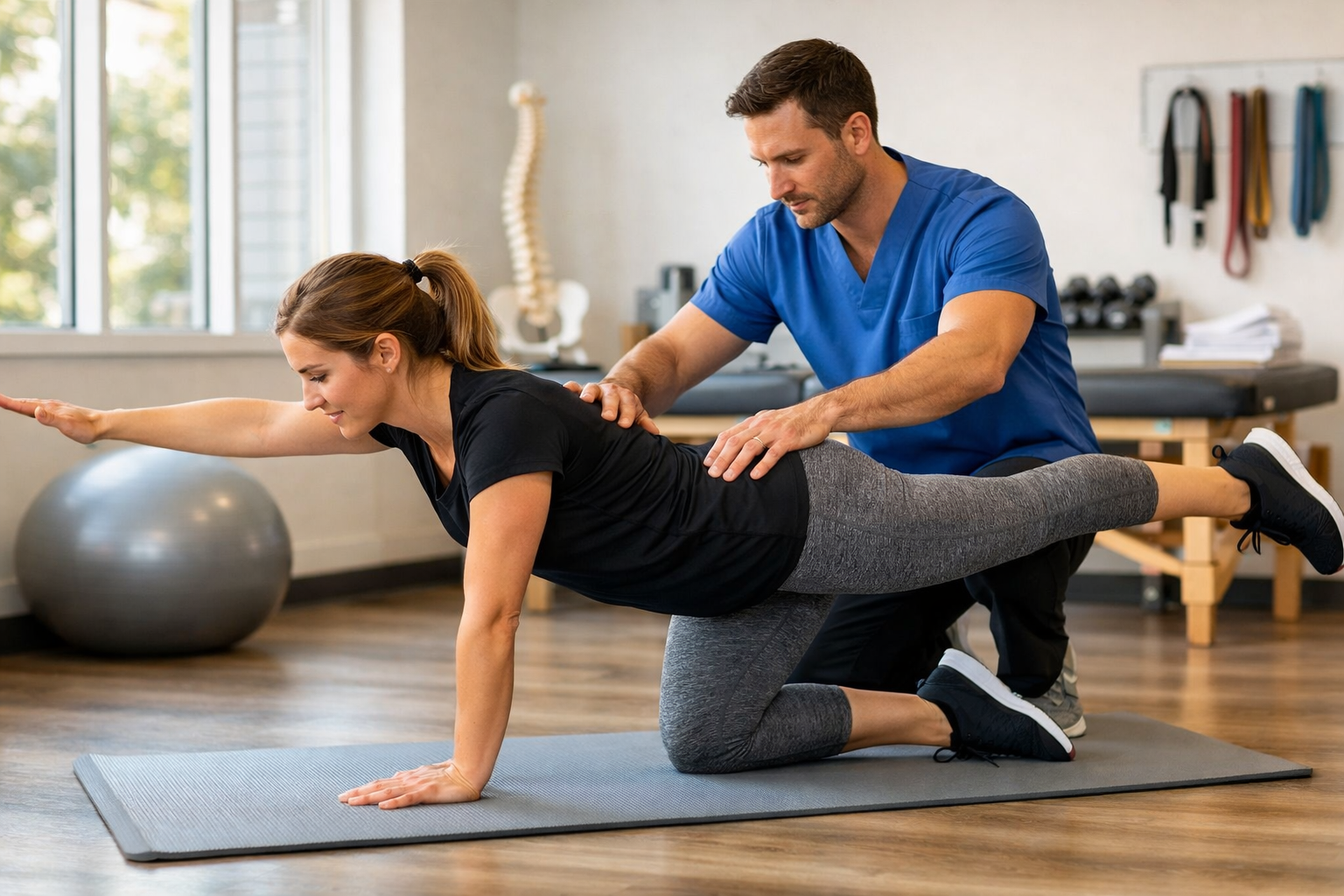
With pain under control, the treatment shifts to rebuilding the structural foundation your spine needs. Progressive core strengthening — targeting the transverse abdominis, multifidus, gluteus medius and maximus, and hip stabilizers — develops the muscular support that protects lumbar structures under the specific demands of your occupation and activities.
For Rutgers-area workers and students whose spine faces primarily sedentary loads, the emphasis is on reactivating underused stabilizing muscles and correcting the postural compensations that developed during years of desk work. For logistics and industrial workers, the program emphasizes functional loading patterns — safe lifting mechanics, controlled rotation, and the movement strategies that protect the spine during real occupational demands.
Spinal decompression techniques address disc-related nerve compression, reducing the radiating leg symptoms that can make even a short walk across Rutgers’ Busch Campus painful.
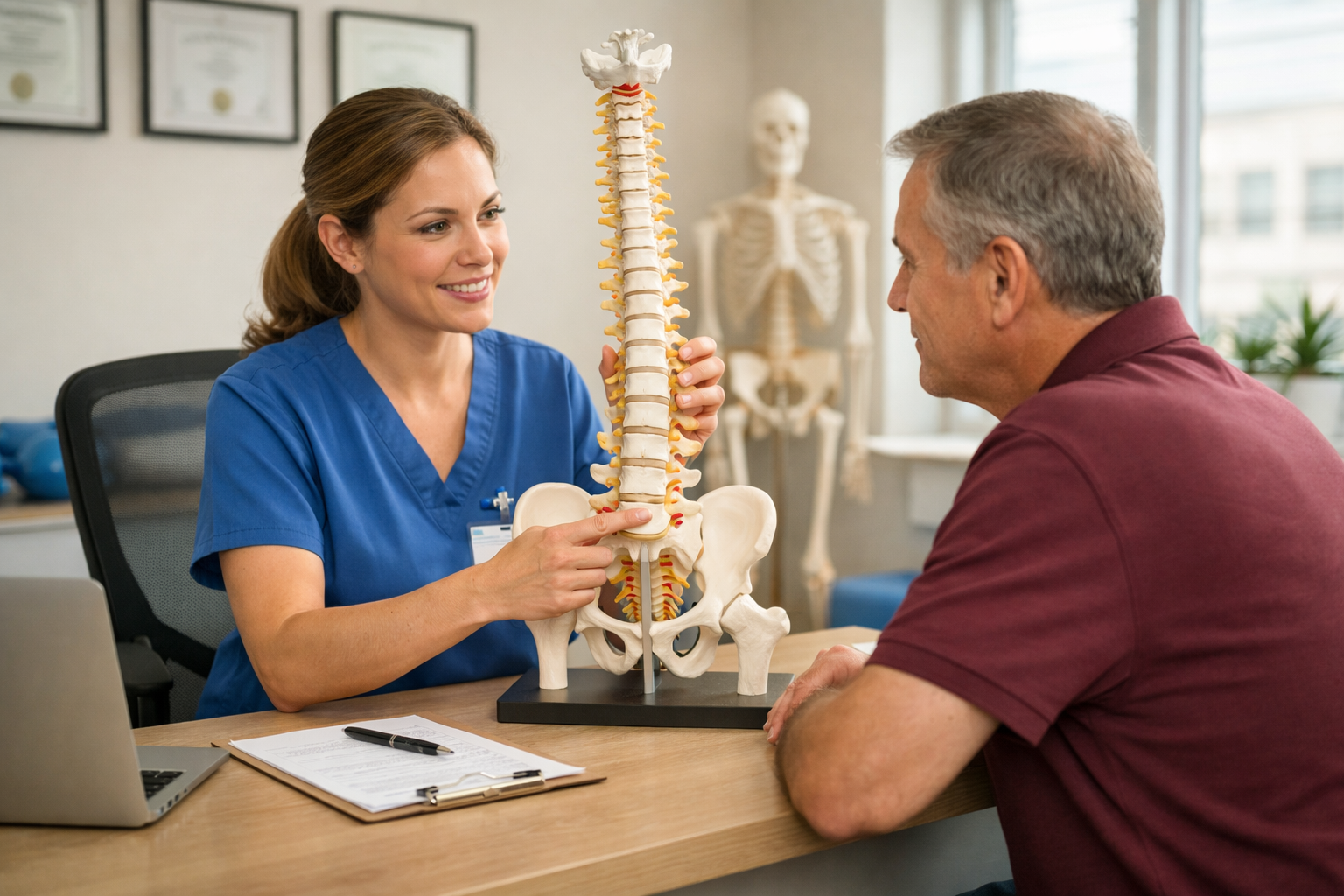
Phase 3: Return to Work and Recreation
Discharge planning at Trinity Rehab is specific and practical. For Piscataway’s professional workers, that means an ergonomic review of their workstation or laboratory setup. For industrial workers, it means practicing the body mechanics that protect the spine during the specific tasks of their job. For students and young adults, it means load management strategies for athletic and recreational activities. Everyone leaves with a personalized home program designed to maintain their results.
Preventing Back Pain in Piscataway
Piscataway offers excellent resources for spinal health maintenance — Johnson Park’s trails and open spaces, the Piscataway Community Center (home to one of the most active fitness programs in the county, with over 13,000 members), and the Raritan River greenway. Using them consistently is one of the best investments you can make in your back health:
- Regular low-impact activity — walking Johnson Park’s trails, using the Community Center, and maintaining an active lifestyle outside of work keeps spinal muscles conditioned
- Occupational ergonomics — proper workstation setup, lifting technique, and movement breaks are the most effective preventive strategies for Piscataway’s diverse workforce
- Core training consistency — continuing your home exercise program after discharge maintains the muscular protection your spine needs
- Early response to symptoms — a brief treatment course at the first sign of recurrence prevents escalation
Why Piscataway Residents Choose Trinity Rehab
Trinity Rehab’s model is built around individualized, one-on-one care — the same licensed physical therapist at every visit, tracking your exact progress, adapting your treatment, and building a genuine therapeutic relationship. This is particularly valuable in Piscataway, where the diversity of occupational backgrounds means that cookie-cutter protocols simply don’t work.
We are in-network with most major insurance plans, verify your benefits before your first visit, and offer scheduling that accommodates the full range of Piscataway work schedules — including early morning, evening, and flexible daytime options.
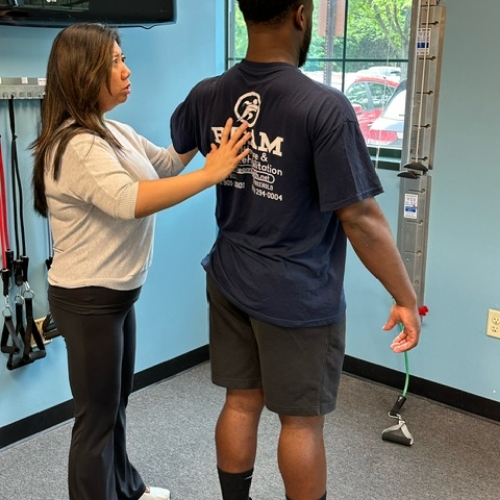
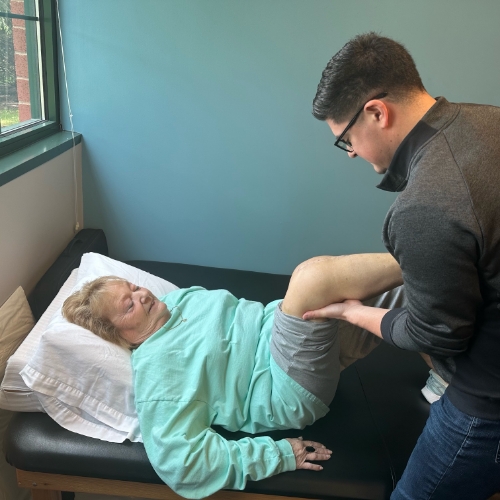
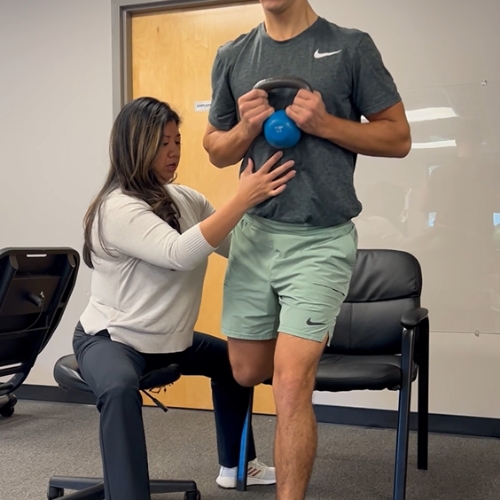
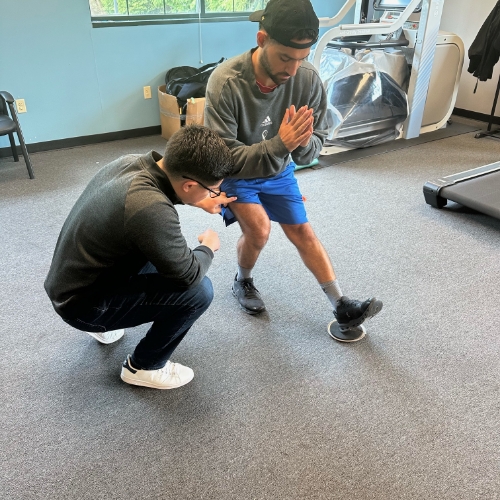
Inside Our Piscataway Clinic
Related Conditions & Treatments
Back pain is just one of the many conditions we treat at Trinity Rehab Piscataway. Explore our full range of conditions we treat or learn more about specific treatment approaches:
Piscataway Back Pain Rehab For Work, Errands, And Everyday Movement
Back pain can interrupt lifting, sitting, driving, sleep, work, and exercise. Piscataway physical therapy should connect your symptoms to the specific movement patterns and daily demands that keep flaring them up.
Your therapist may assess mobility, strength, hip contribution, nerve symptoms, posture, gait, and lifting mechanics. Treatment can include manual therapy, exercise progression, movement coaching, and a home plan you can actually follow.
Related care includes sciatica treatment, hip pain physical therapy, and the main Piscataway physical therapy clinic page.
Frequently Asked Questions
Piscataway Back Pain Rehab For Work, Errands, And Everyday Movement
Back pain can interrupt lifting, sitting, driving, sleep, work, and exercise. Piscataway physical therapy should connect your symptoms to the specific movement patterns and daily demands that keep flaring them up.
Your therapist may assess mobility, strength, hip contribution, nerve symptoms, posture, gait, and lifting mechanics. Treatment can include manual therapy, exercise progression, movement coaching, and a home plan you can actually follow.
Related care includes sciatica treatment, hip pain physical therapy, and the main Piscataway physical therapy clinic page.
Does physical therapy help with work-related back injuries?
How long does physical therapy take for lower back pain?
Can physical therapy help my sciatica?
Do I need a referral to start physical therapy in New Jersey?
What is the difference between physical therapy and just going to the gym for back pain?
Let’s Get Started
Piscataway is a community built on innovation and hard work. Your back pain treatment should reflect those same values. Trinity Rehab delivers expert, evidence-based physical therapy for back pain that produces real, lasting results — for researchers, warehouse workers, students, and everyone in between.
What Our Patients Say



Sign up for free health tips and tricks