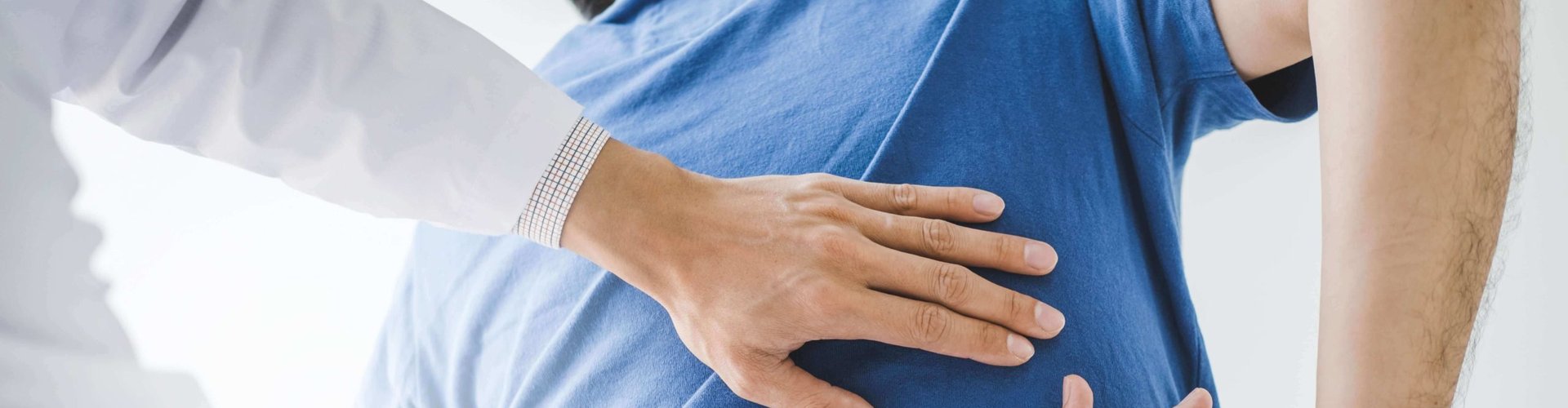
LUMBAR DISC HERNIATION TREATMENT IN TOMS RIVER, NJ
Saturday morning on Barnegat Bay is supposed to be about kayaking, not about gripping the edge of the dock because your right leg just went numb. For thousands of Toms River residents — from the young families raising kids in Silverton to the retirees walking the trails at Cattus Island County Park — lumbar disc herniation is a condition that can turn an active Shore lifestyle into a frustrating cycle of pain, limitation, and missed weekends. The good news: with the right physical therapy program, the vast majority of herniated discs heal without surgery, and Trinity Rehab’s one-on-one treatment model is built to get you back on the water, the golf course, or the sidelines at Friday night football as quickly and safely as possible.
THE ANATOMY OF A HERNIATED DISC
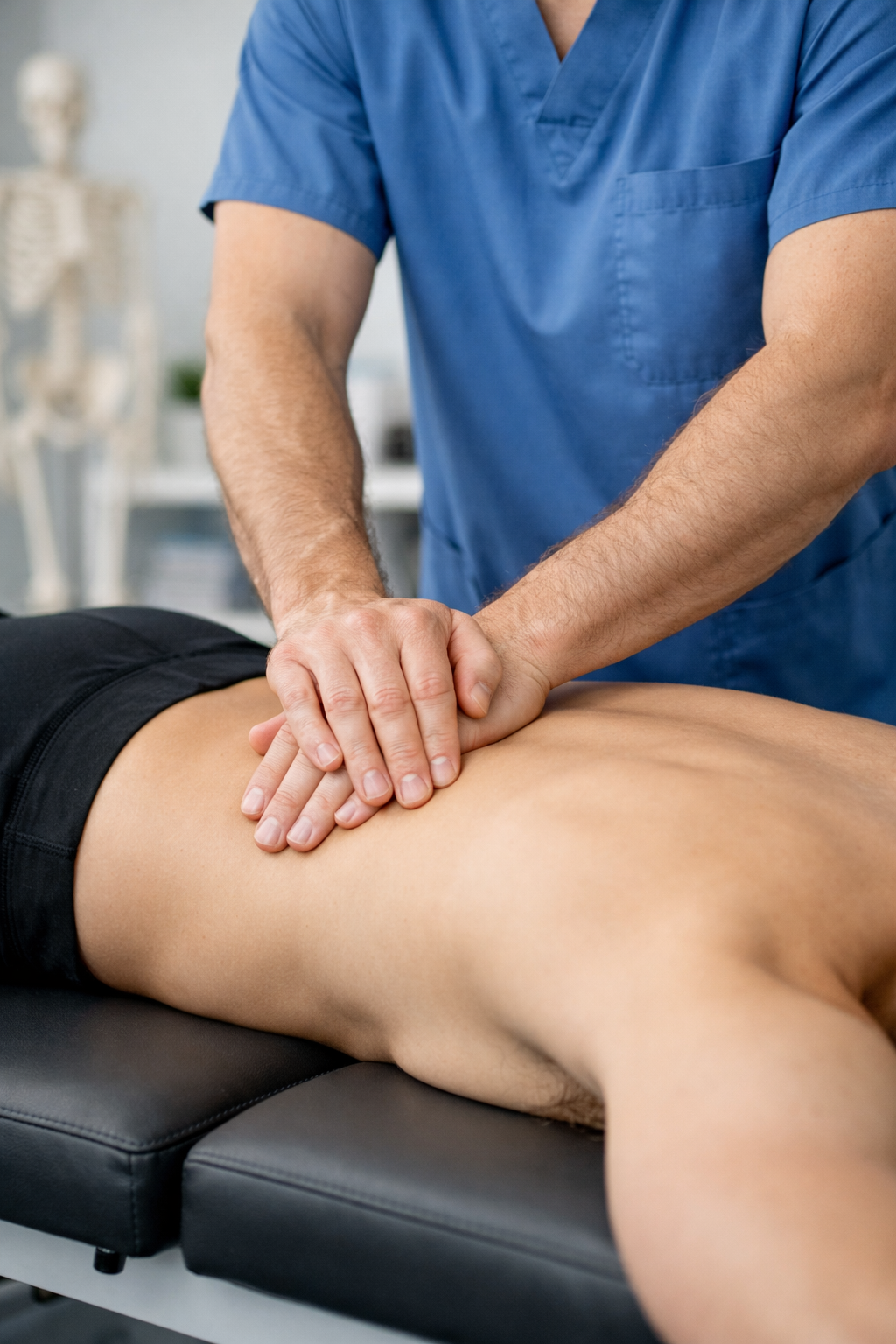
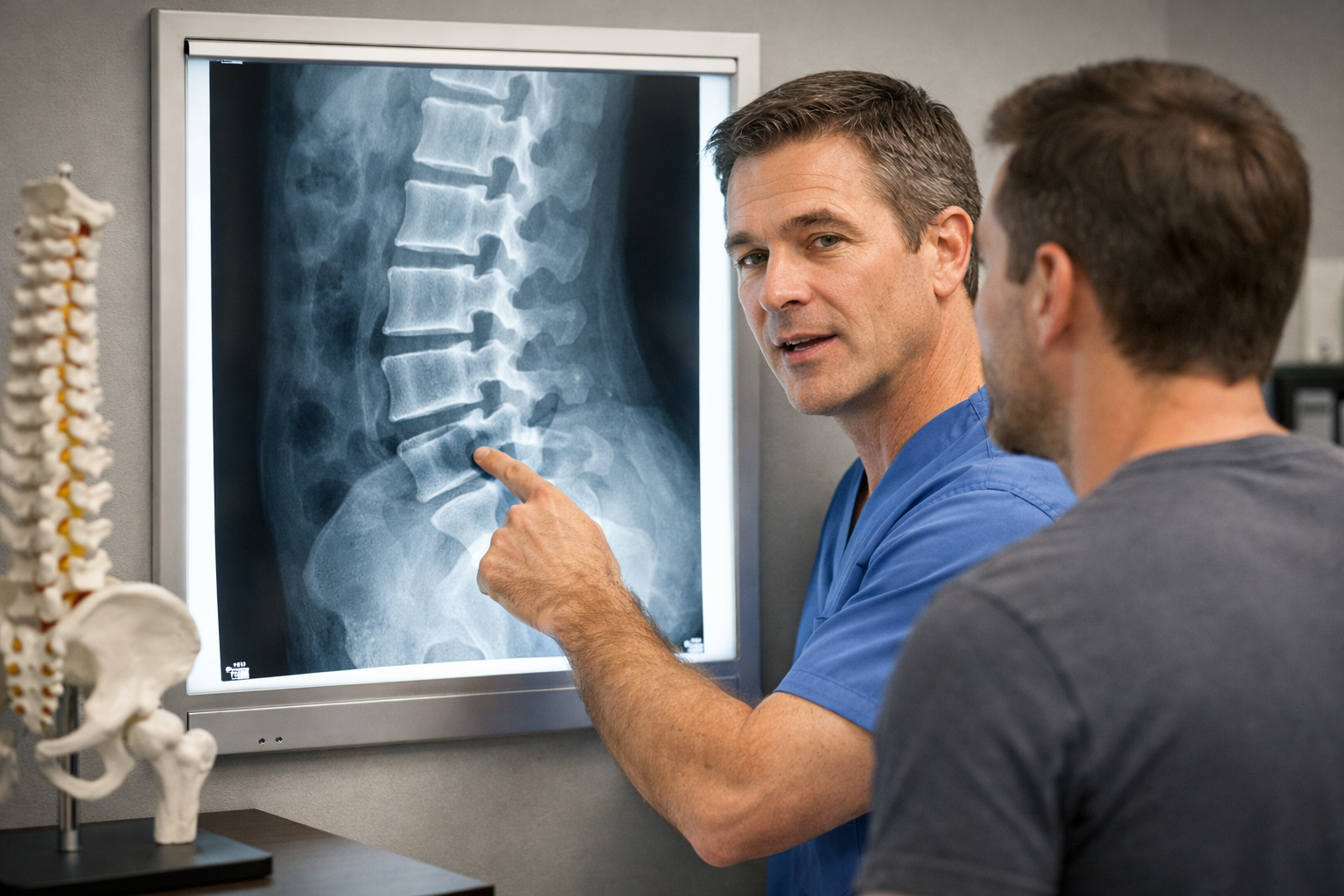
Your lumbar spine consists of five vertebrae (L1 through L5) separated by intervertebral discs. Each disc has two parts: the annulus fibrosus, a tough outer ring of layered fibers, and the nucleus pulposus, a water-rich gel center that absorbs shock. A disc herniation occurs when the nucleus breaches the annulus and encroaches on a nearby nerve root. The L4-L5 and L5-S1 segments handle the greatest mechanical load and are the most common herniation sites.
When a herniated disc compresses the nerve root, the result is radiculopathy — and if the sciatic nerve is involved, you experience sciatica: pain, tingling, or weakness radiating from the low back through the buttock and down the leg.
Clinical evidence compiled in StatPearls demonstrates that conservative treatment is effective for the overwhelming majority of patients (source). A 2024 review in Deutsches Ärzteblatt International reinforces physical therapy as first-line management (source).
WHY TOMS RIVER RESIDENTS ARE VULNERABLE
WAREHOUSE AND INDUSTRIAL LABOR
The Route 9 corridor running through Toms River supports a growing number of warehouse and distribution operations. Workers who spend shifts lifting, pushing, and pulling loads — often under time pressure — are at elevated risk. Poor body mechanics combined with fatigue can overwhelm the annulus fibrosus and initiate a herniation in a single moment.
LONG COMMUTES ON THE PARKWAY
With a median commute of more than 30 minutes (and many residents driving north on the Garden State Parkway toward Central Jersey or beyond), Toms River commuters log significant time in a seated, spine-loaded posture. Road vibration compounds the effect, and a quick twist to check the blind spot can be the last straw for an already weakened disc.
MULTI-GENERATIONAL SPORTS CULTURE
Toms River’s three high schools — North (Mariners), East (Raiders), and South (Indians) — feed a robust sports culture that stretches from youth leagues through adult recreation. Football, basketball, track, soccer, baseball, and golf at Bey Lea Golf Course all place distinct demands on the lumbar spine. Rotational sports generate shear forces across the disc; contact sports deliver axial compression; and running sports accumulate impact load mile after mile.
COASTAL LIVING ACTIVITIES
Boating, kayaking, surfcasting on Ortley Beach, and hauling beach gear across soft sand all require trunk flexion and rotation under load — the exact recipe for disc injury. Add weekend yard work on a large township lot, and the lumbar spine rarely gets a rest.
HOW TO RECOGNIZE LUMBAR DISC HERNIATION
Symptoms can appear suddenly after a specific event or develop gradually over weeks. Watch for:
- Deep, aching back pain in the lower lumbar region
- Sciatica — sharp or burning pain traveling from the buttock down the back or side of one leg
- Tingling, numbness, or a “pins and needles” sensation in the foot or toes
- Weakness when pushing off the ground or climbing stairs
- Pain that intensifies with sitting, bending, or coughing and eases with standing or walking
If these symptoms sound familiar, do not wait. New Jersey allows direct access to physical therapy — no referral required — so you can book an appointment at Trinity Rehab today.
TRINITY REHAB’S THREE-PHASE TREATMENT PROGRAM
At Trinity Rehab, you are never passed to an aide or shared with another patient. Every minute of every session is spent one-on-one with your licensed physical therapist. Our three-phase protocol is grounded in current evidence and adapted to the realities of life on the Jersey Shore.
PHASE 1: PAIN REDUCTION AND NERVE CALMING
The immediate goal is to quiet the inflamed nerve root and bring pain down to a level that allows you to sleep, drive, and function.
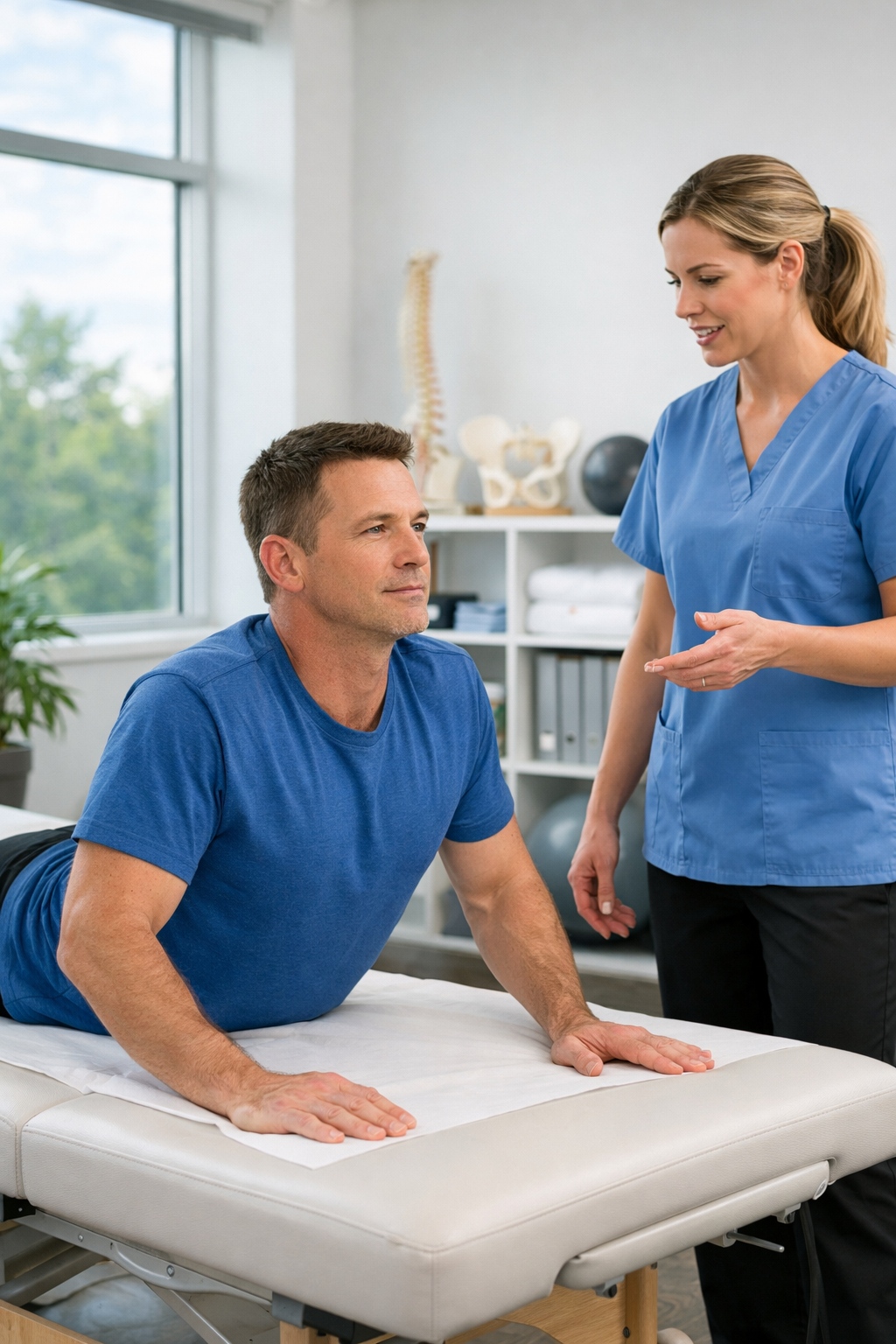
- McKenzie method / directional preference — Your therapist performs a structured mechanical assessment to identify the movement direction that centralizes your symptoms. Repeated movements in that direction can encourage the displaced nucleus pulposus away from the nerve root, often producing noticeable relief within the first few visits.
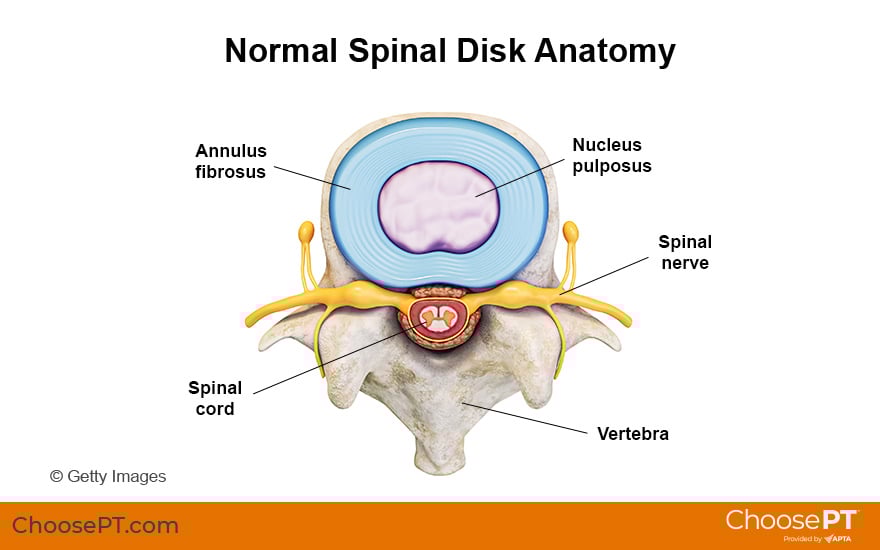
- Manual therapy — Hands-on joint mobilization and soft tissue work reduce segmental stiffness and muscle guarding throughout the lumbar spine and pelvis.
- Neural mobilization — Gentle nerve-gliding techniques restore the sciatic nerve’s ability to move freely through the tissues of the hip and thigh, decreasing radiculopathy symptoms.
- Dry needling — Thin monofilament needles are inserted into paraspinal and gluteal trigger points to release deep muscle tension that traditional stretching cannot reach.
PHASE 2: CORE STABILIZATION AND PROGRESSIVE STRENGTHENING
Once the acute flare has settled, rebuilding the muscular scaffolding around the lumbar spine becomes the priority.
- Deep core activation — Isolated training of the transversus abdominis, multifidus, and diaphragm teaches your trunk to brace instinctively before any movement.
- Hip and posterior chain strengthening — Bridges, deadlift patterns, and lateral band walks develop the gluteals and hamstrings that share the load with the lumbar discs.
- Progressive functional loading — Exercises are scaled to replicate the demands of your life: bending to pick up a child, pulling a kayak onto a trailer, or carrying bags of mulch across the yard.
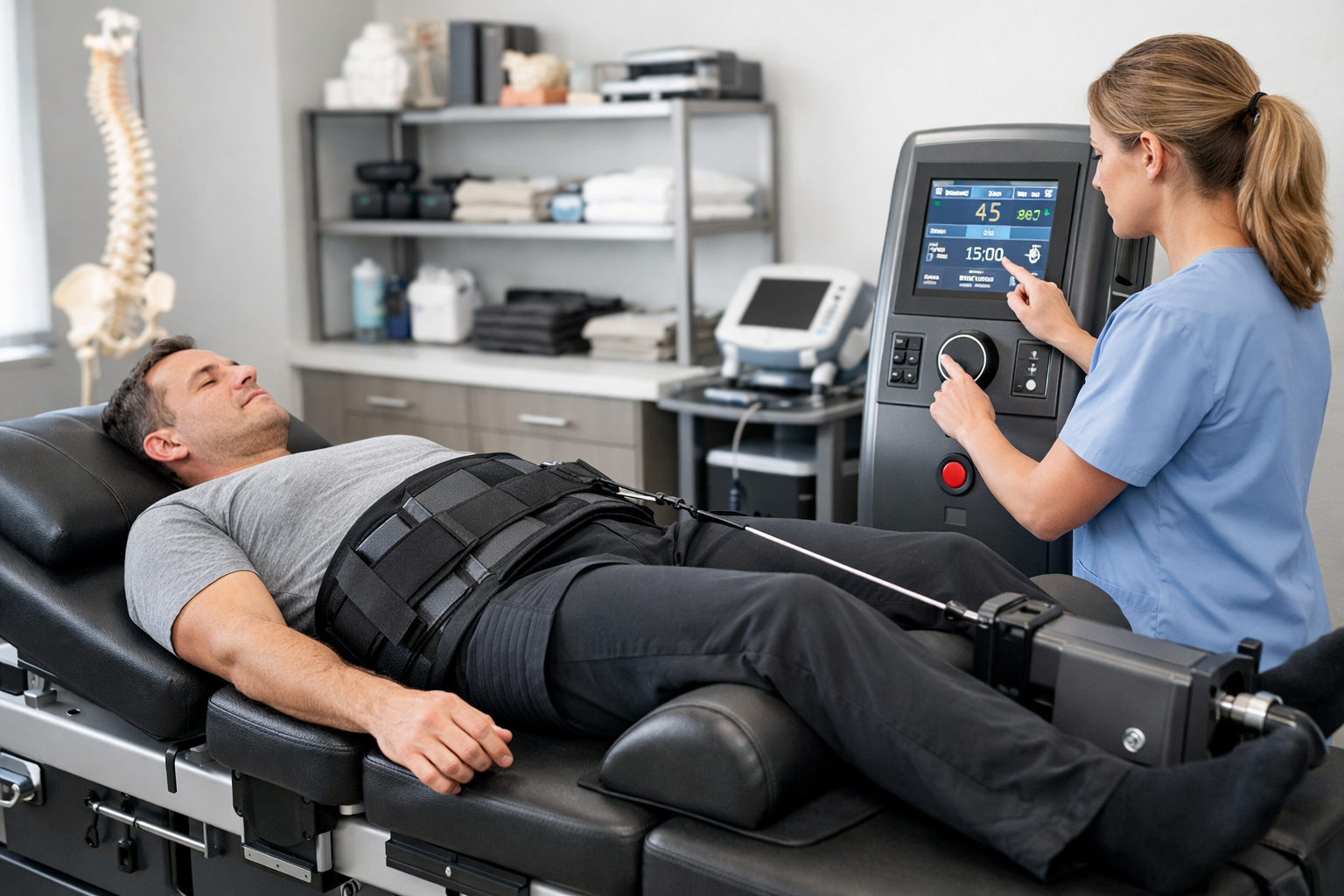
- EPAT (shockwave therapy) — For patients with persistent soft tissue restriction, EPAT delivers acoustic energy to promote healing and reduce chronic inflammation.
PHASE 3: RETURN TO ACTIVITY AND LONG-TERM PREVENTION
The final phase prepares you for the specific activities that matter most. For Toms River residents, that often includes:
- Golf-specific training — Rotational power and thoracic mobility drills so you can return to Bey Lea or Toms River Country Club with a swing that protects, rather than punishes, your lumbar spine.
- Water sport readiness — Kayak-specific core endurance, paddling mechanics, and boat-entry/exit strategies.
- Running and track programs — Graduated return-to-run protocols for athletes from all three Toms River high schools and adult recreational runners.
- Ergonomic coaching — Seat position, mirror adjustment, and lumbar support techniques tailored to your Parkway commute.
- Home exercise program — A sustainable routine you can maintain long after discharge to prevent recurrence.
STAYING HEALTHY ALONG THE SHORE
Toms River’s landscape lends itself to spine-friendly activity when you know what to choose:
- Walk the trails at Cattus Island County Park — Seven miles of flat, well-groomed paths along Barnegat Bay offer ideal low-impact cardiovascular exercise.
- Swim at the township beaches or community pools — Aquatic exercise decompresses the spine while building core and hip strength.
- Cycle on flat coastal roads — A properly fitted road or hybrid bike allows you to maintain aerobic fitness without the impact of running.
- Stretch and strengthen at home — Your Trinity Rehab therapist will equip you with a targeted home program requiring minimal equipment.
WHY TOMS RIVER RESIDENTS CHOOSE TRINITY REHAB
- Dedicated one-on-one treatment — Your therapist’s full attention, every session.
- Direct access — No referral, no waiting for a doctor’s note.
- Evidence-based methods — McKenzie method, manual therapy, neural mobilization, dry needling, and EPAT.
- Shore-savvy clinicians — We understand the physical demands of coastal living, from boating to beach maintenance.
- Convenient scheduling — Morning, midday, and evening slots to accommodate shift workers, commuters, and retirees alike.
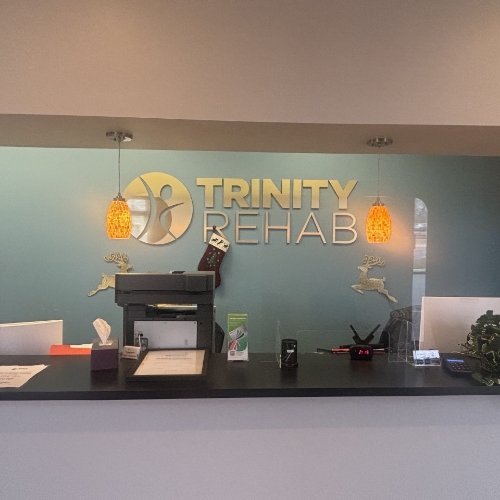
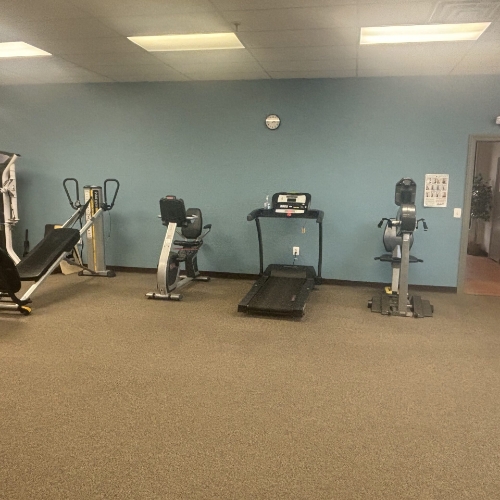
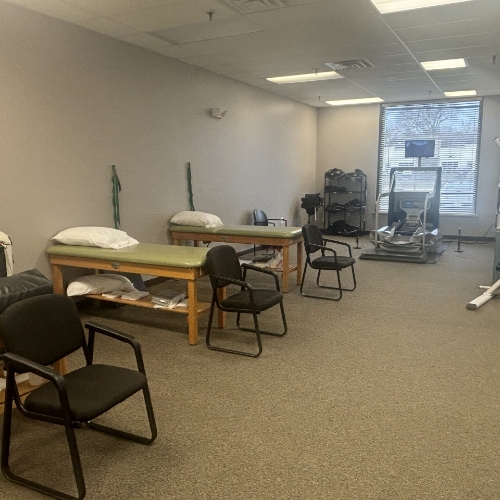
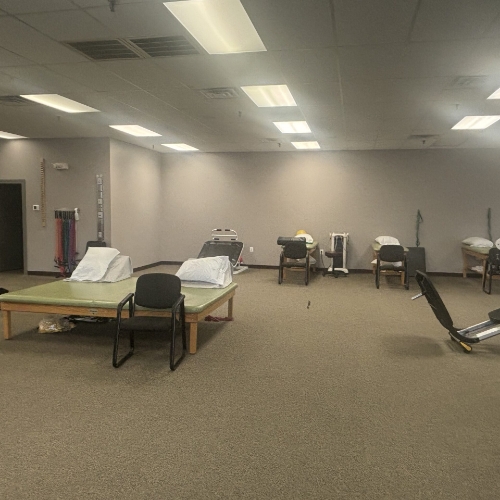
INSIDE OUR TOMS RIVER CLINIC
RELATED CONDITIONS & TREATMENTS
Lumbar disc herniation is just one of the many conditions we treat at Trinity Rehab Toms River. Explore our full range of conditions we treat or learn more about specific treatment approaches:
FREQUENTLY ASKED QUESTIONS
How quickly can I expect pain relief?
I’m retired and fairly active — is disc herniation common at my age?
Can I still go fishing or boating during treatment?
Will my insurance cover physical therapy at Trinity Rehab?
What if physical therapy doesn’t help?
GET BACK TO LIFE ON THE SHORE
From cheering on the Mariners under the lights to launching your kayak at sunrise on Barnegat Bay, Toms River living is too good to spend it sidelined by back pain. Trinity Rehab’s one-on-one model gives you the focused, expert care you need to recover fully and stay that way.
Schedule your appointment today and reclaim your active life.
SOURCES
- StatPearls — Disc Herniation: https://www.ncbi.nlm.nih.gov/books/NBK560878/
- Deutsches Ärzteblatt International — Conservative Treatment of Lumbar Disc Herniation: https://pmc.ncbi.nlm.nih.gov/articles/PMC11465477/
What Our Patients Say



Sign up for free health tips and tricks